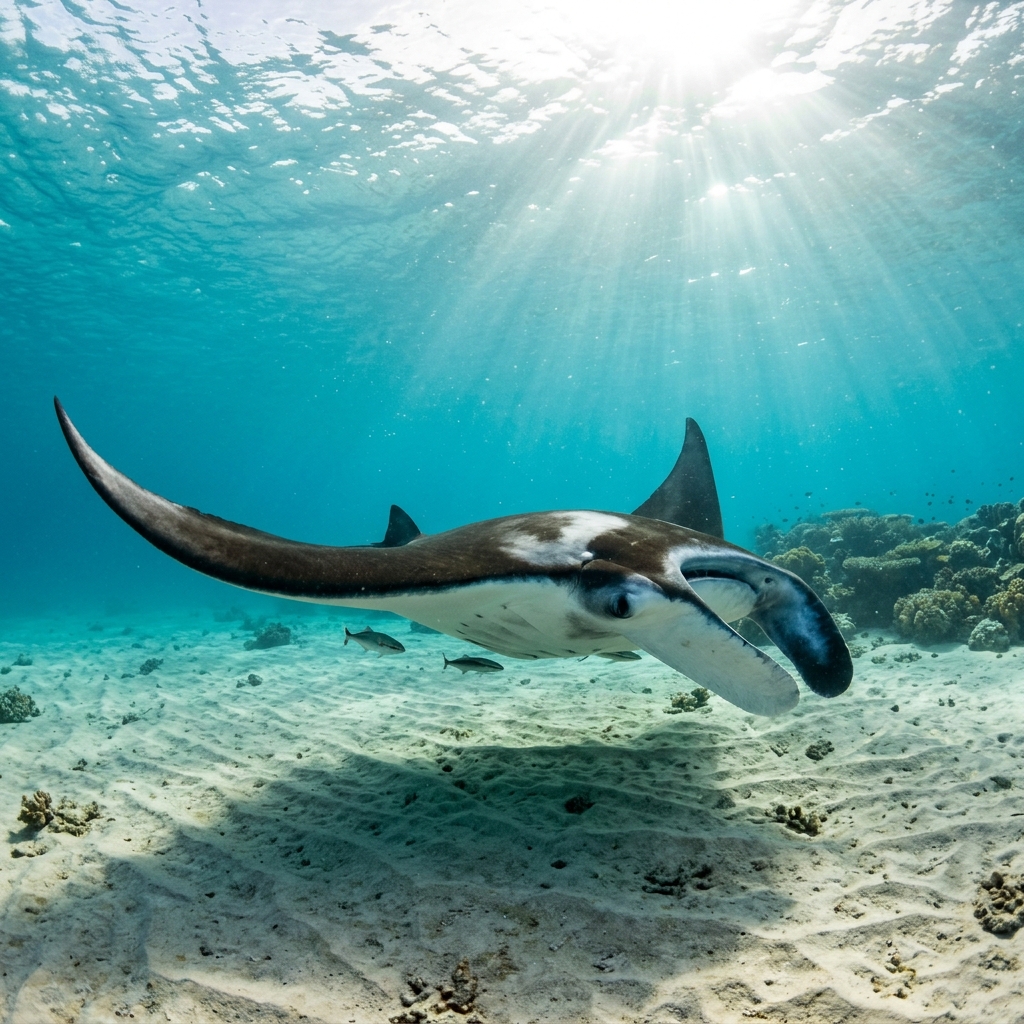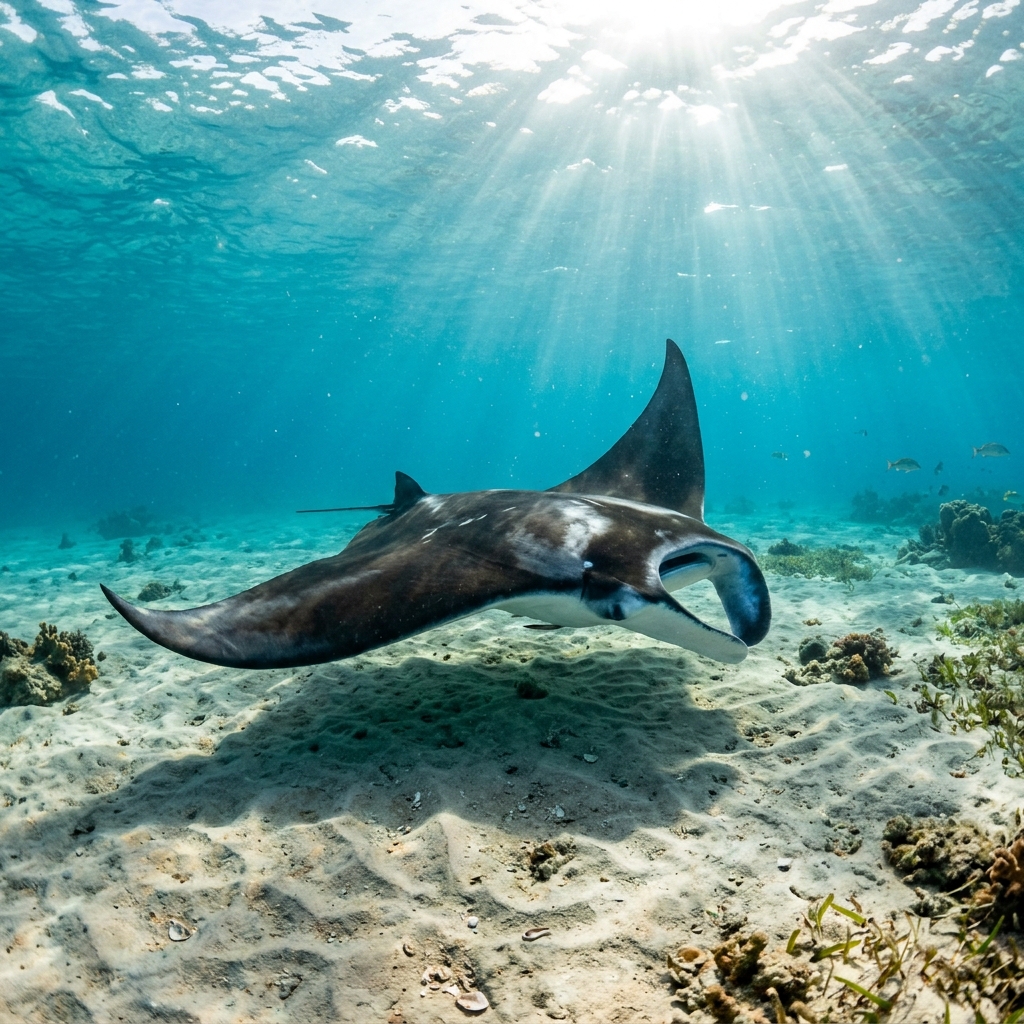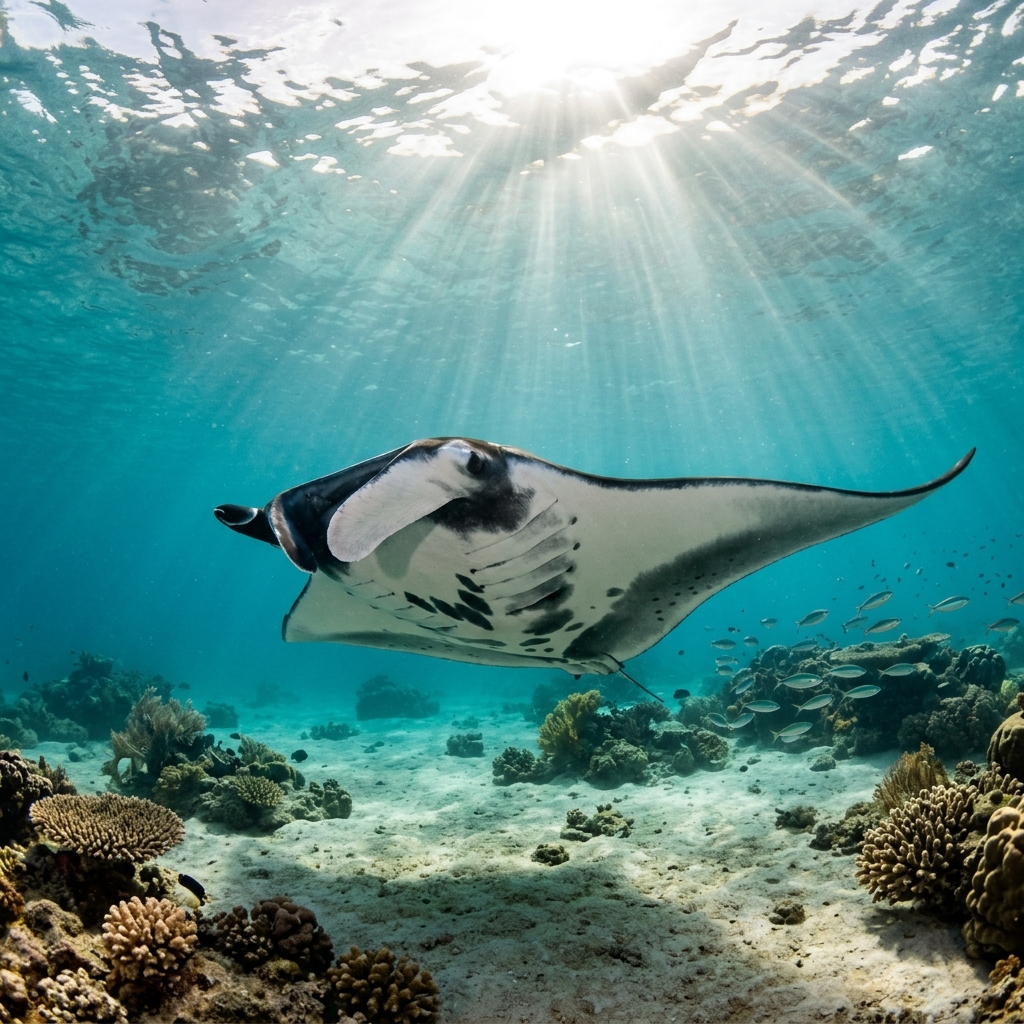
Mobula alfredi
Spot reef manta rays in the Maldives, Philippines and Indonesia. Sightings concentrate Jun, Aug in southern sites. Water temps 24-29 °C.
A broad, diamond-shaped body with a distinctive dark dorsal surface and a white or pale underside make this ray recognisable even from a distance. Look for the two horn-like cephalic fins (fleshy lobes beside the mouth that funnel water in for feeding) curled or extended at the front of the head, and a short whip-like tail without a barb. The key ID mark underwater is the pattern of dark shoulder patches on the back and corresponding dark blotches on the white belly, which vary between individuals. Compared with the oceanic manta ray, the reef manta is generally smaller and more frequently seen close to reef structures rather than in open water.
Reef mantas are most often encountered cruising slowly along reef edges or hovering at cleaning stations (dedicated reef spots where smaller fish remove parasites), where they tilt and turn with spread cephalic fins and show little concern for patient divers who keep their distance. When feeding, they barrel-roll repeatedly through plankton-rich water near the surface or at depth. Approach calmly from the side rather than from above or below, as sudden movement from directly beneath tends to push them off.
Each reef manta ray has a unique belly spot pattern, as individual as a fingerprint, which researchers use to identify and track individuals across years. Citizen-science photo submissions from divers have contributed significantly to long-term population studies at sites like the Maldives.
In Southern Hemisphere sites, sightings concentrate in the austral winter months of June through August. Northern Hemisphere and equatorial locations like the Maldives and Philippines host the species throughout the year, consistent with its preference for water temperatures of 24 to 29 °C across tropical reef systems.
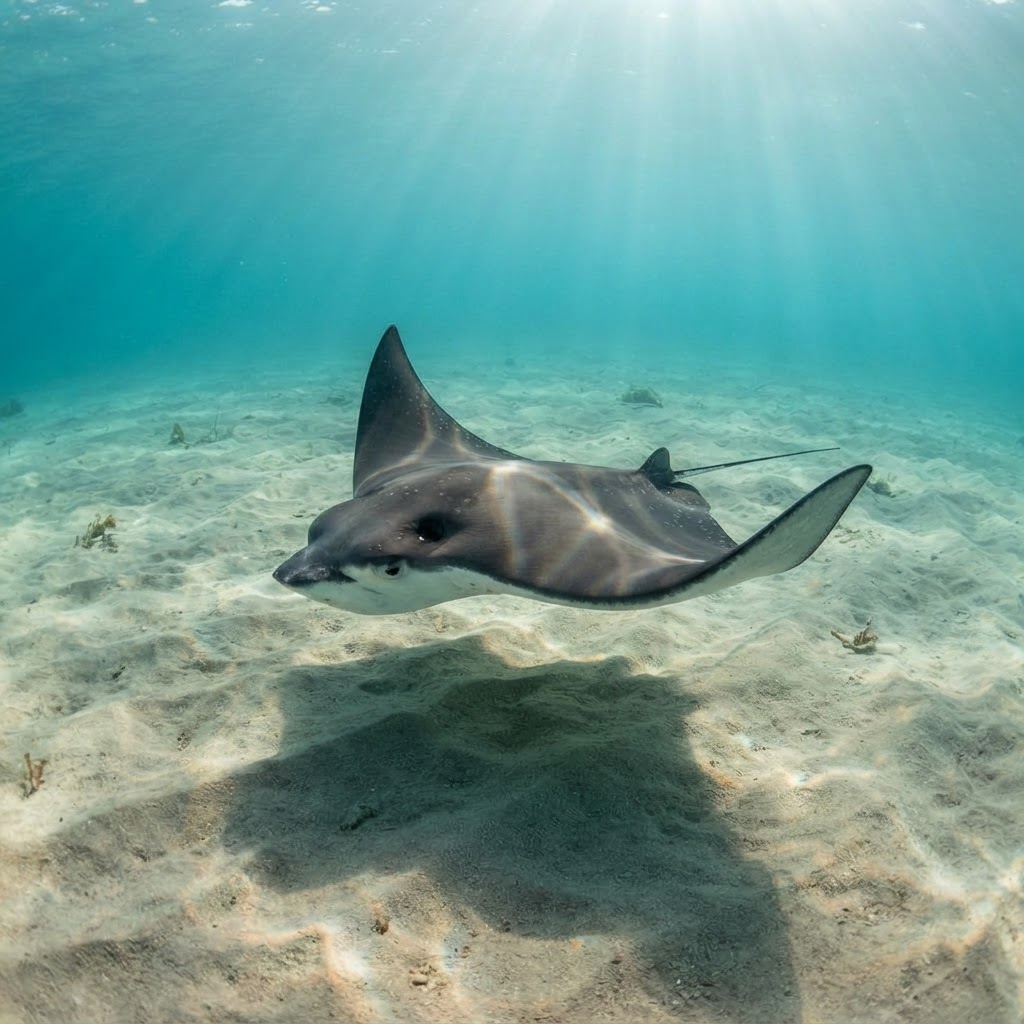
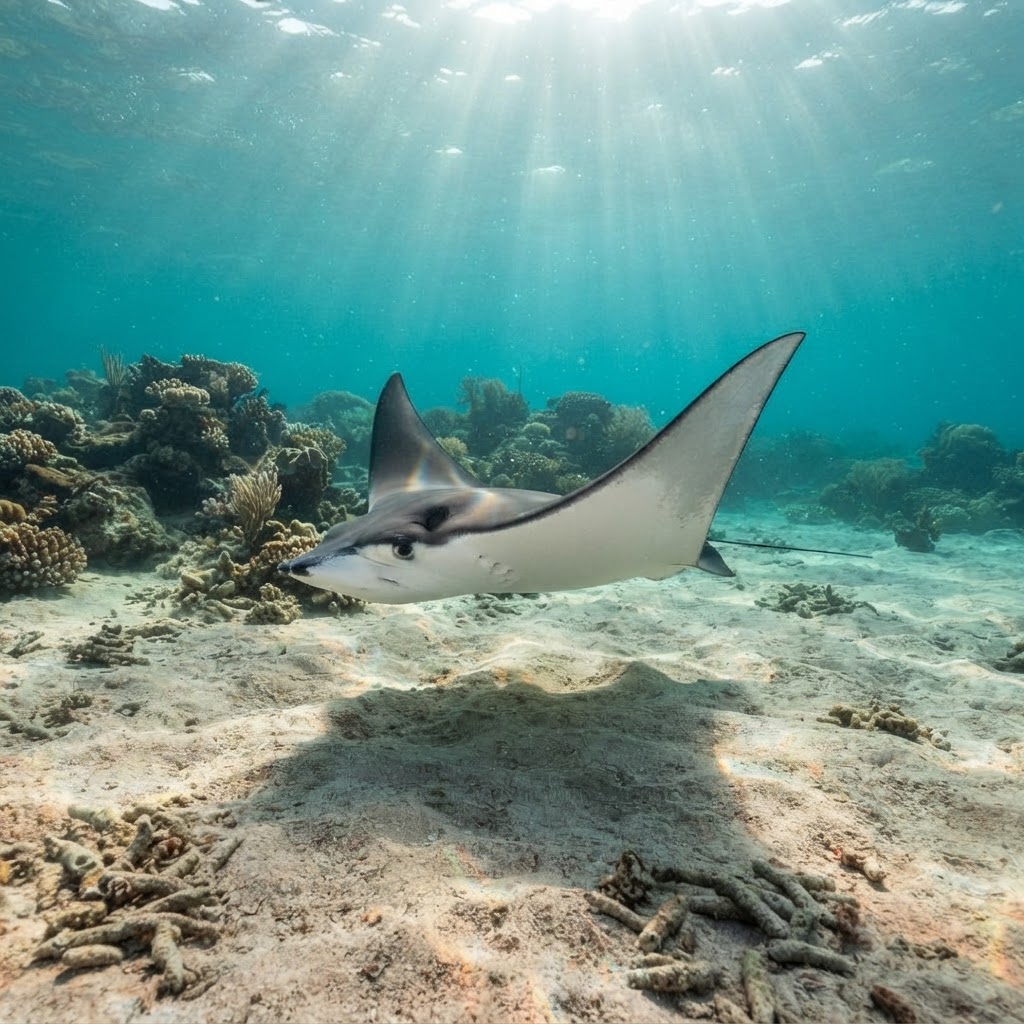
Reef neighbours a diver could mistake it for. Use the identification notes above to tell them apart.
Most commonly logged in the Maldives, where the North and Central Atolls and the Felidhoo and Mulaku regions account for a large share of records, making it the single strongest destination for this species. The Philippines (especially the Visayas and Palawan), Indonesia (Bali, Lombok and the Maluku and Papua regions), and Queensland, Australia are all well-documented areas. Mozambique, Malaysia, French Polynesia, and Brazil's northeast coast round out the global spread.
Mapping where Reef Manta Ray is logged…
The Maldives is the most reliably logged destination, particularly the North and Central Atolls and the Felidhoo and Mulaku regions. Strong populations are also found across the Philippines, Indonesia, Queensland in Australia, Mozambique, Malaysia, French Polynesia, and the northeast coast of Brazil.
At Southern Hemisphere sites, June through August is the peak window for sightings. In tropical equatorial destinations like the Maldives and Philippines, reef mantas are present year-round thanks to consistently warm water between 24 and 29 °C.
Reef mantas are generally smaller and typically seen close to reef structures rather than in open water. The most reliable field mark is the shoulder patch pattern on the back: reef mantas show two distinct triangular dark patches, while oceanic mantas tend to have a more continuous dark band across the shoulders. Belly blotch patterns differ too, but the shoulder marking is the quickest check.
Reef mantas are the smaller of the two manta ray species. Wingspan typically reaches around 3 to 3.5 metres, with some individuals approaching 5 metres, though encounters at the larger end are uncommon.
No. Reef mantas have no barb on their tail and pose no threat to divers. They are filter feeders and are generally tolerant of calm, respectful divers near cleaning stations. The main risk is an accidental bump from a large, moving animal, which is easily avoided by keeping a sensible distance.
They are listed as Vulnerable on the IUCN Red List. Slow reproduction, with females typically giving birth to one pup every two years or so, means populations recover slowly from any pressure. Divers can help by submitting belly-pattern photos to citizen-science ID projects and observing responsible approach guidelines.
The Reef Manta Ray is listed as vulnerable by the IUCN. Observe from a distance, avoid touching or feeding it, and report sightings to local marine research organisations.
Listed as Vulnerable on the IUCN Red List, reef manta populations face pressure from targeted fishing, bycatch, and habitat degradation. Divers can help by submitting clear photos of the belly pattern to manta identification databases, following no-touch and respectful distance guidelines, and supporting reef conservation initiatives at local dive sites.
Site and sighting data is aggregated from diver logs, iNaturalist and GBIF. For taxonomy and conservation status:
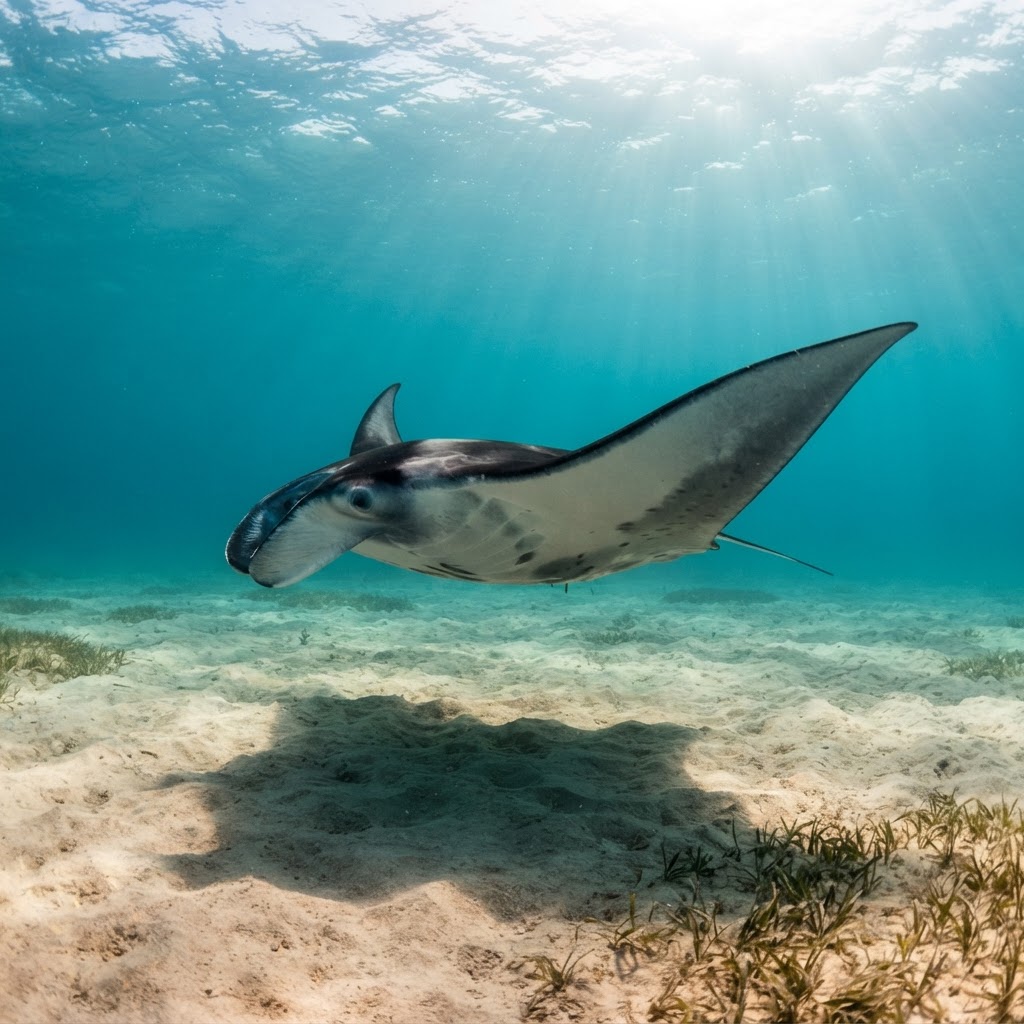
Atlantic Manta Ray
4 sites