Orectolobus halei
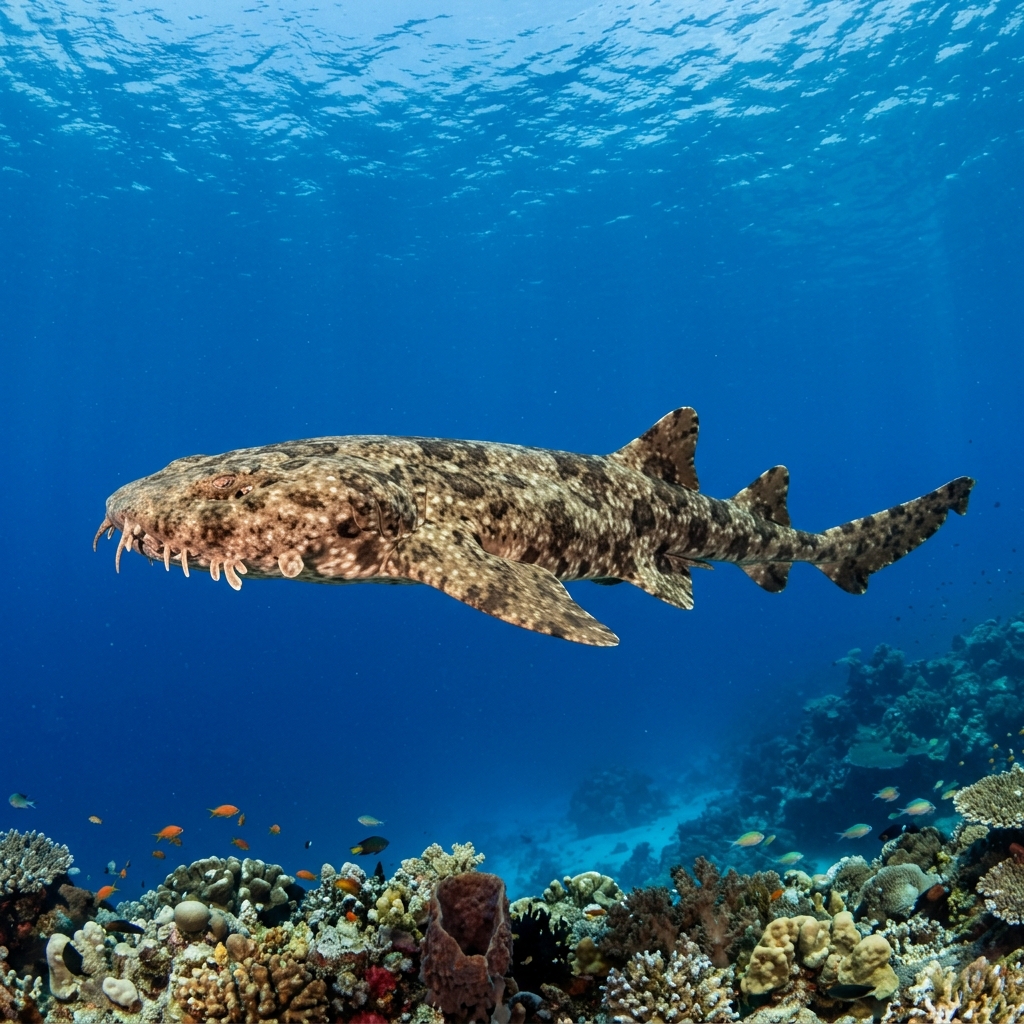
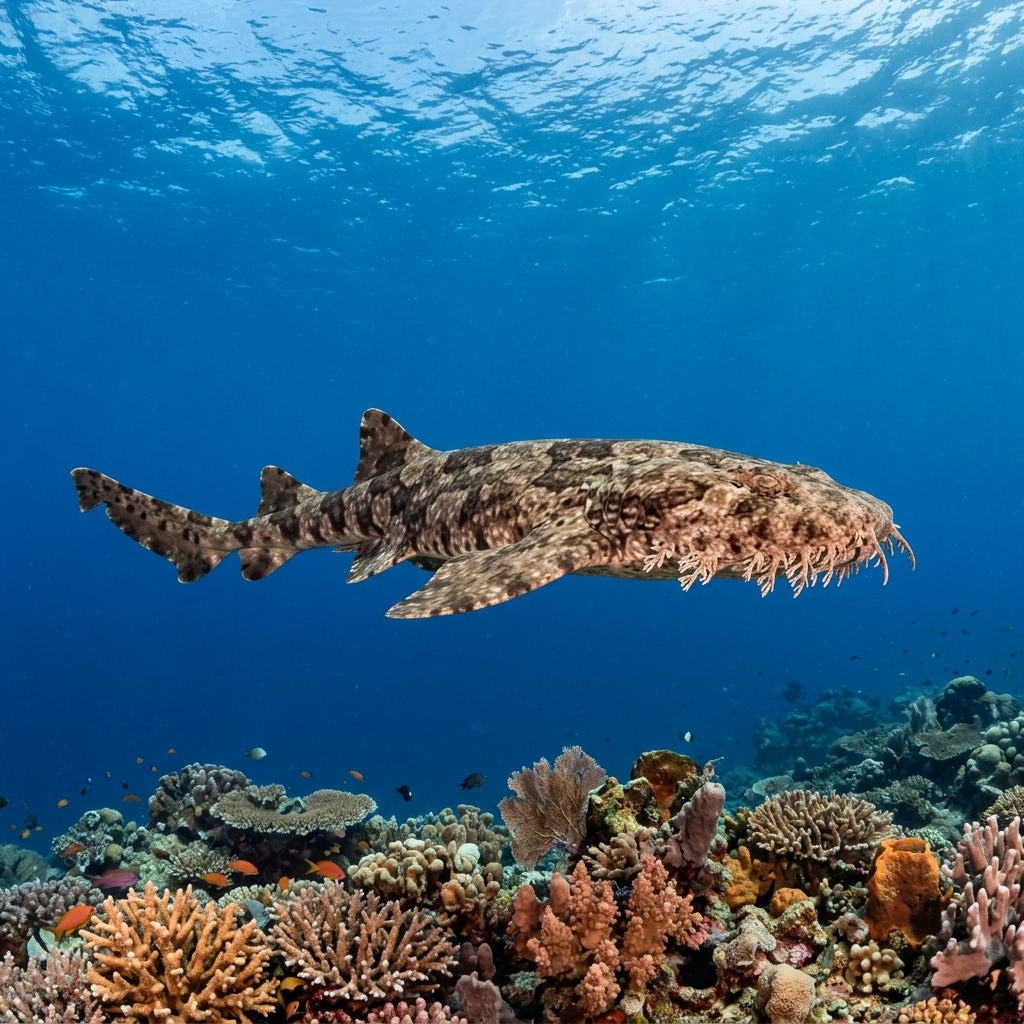
Flat, camouflaged and easy to miss: Gulf Wobbegong is a reliable find on ledges in New South Wales year-round in 18 to 23C water.
Grows to around 179 cm, with a flattened body covered in a mottled brown, tan and cream pattern that breaks up its outline against rock and sand. Look for the dermal lobes (branching skin flaps) fringing the jaw and head, which help it disappear against reef ledges. It sits motionless on the bottom rather than swimming in open water, so divers usually spot it as a still, carpet-like shape under an overhang.
Spends most of its time lying still on rocky ledges, under overhangs or on sand patches, relying on camouflage rather than movement to avoid notice. Divers typically log it as an uncommon to common find rather than something seen on every dive, tucked into a crevice or resting in the open during the day. It shows little reaction to divers unless approached very closely, staying put while you look it over.
Wobbegongs are ambush predators: that flat, camouflaged body lets them lie motionless until a fish or small shark swims close enough to be taken in a fast, sideways strike.
No clear seasonal pattern shows up in the sightings, and it's found across a fairly narrow, cool-to-mild temperature band of 17.7 to 23.2C, so it's treated as a year-round sighting on the reefs and ledges where it lives.
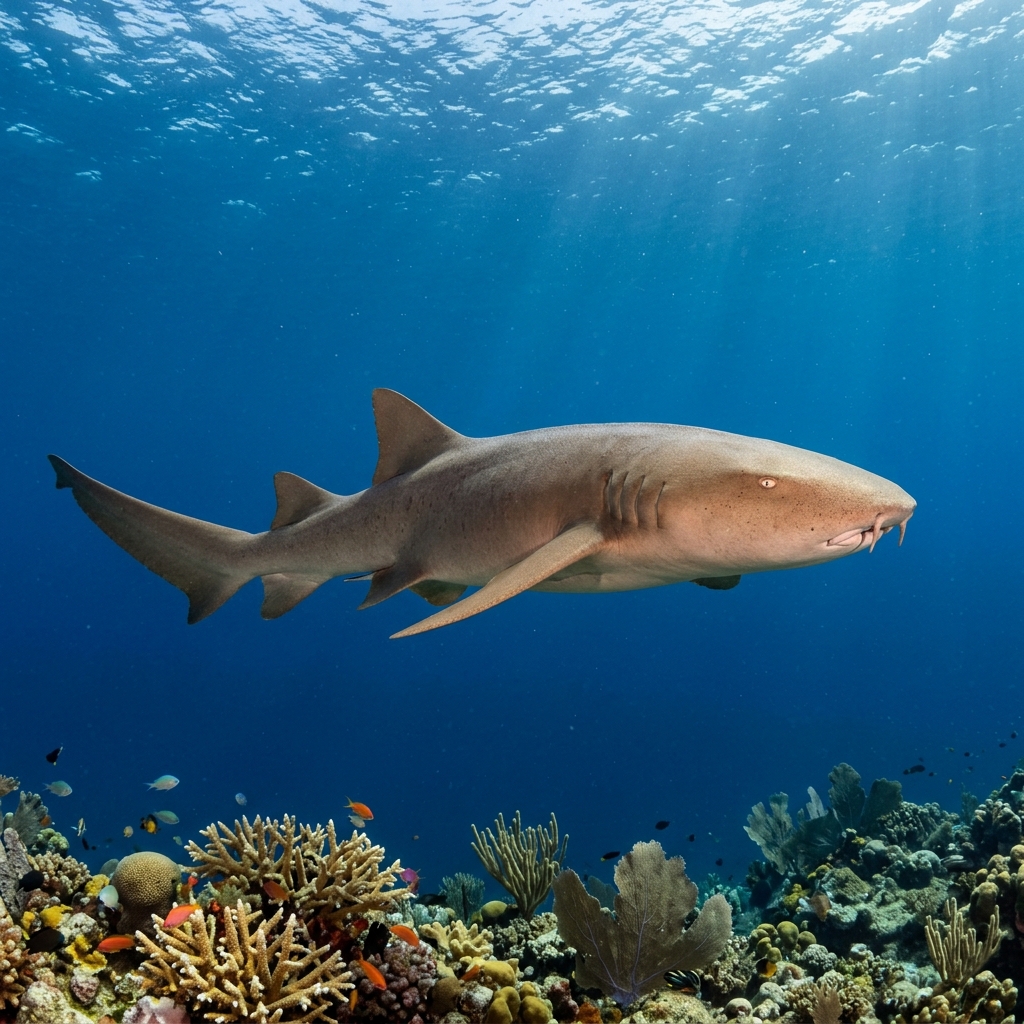
Reef neighbours a diver could mistake it for. Use the identification notes above to tell them apart.
Most reliably logged in New South Wales, Australia, which accounts for the bulk of sightings, with Western Australia a distant second and smaller numbers reported from South Australia, Queensland and Victoria. This is currently an Australia-only species on the dive-site record.
Mapping where Gulf Wobbegong is logged…
New South Wales, Australia is by far the strongest region for sightings, with Western Australia a secondary spot. Smaller numbers turn up in South Australia, Queensland and Victoria.
There's no strong season in the data, so it's a year-round sighting. It's logged in water from about 17.7 to 23.2C, cooler and more temperate than a typical tropical reef species.
Look for a flat-bodied shark up to around 179 cm long, mottled brown and cream, lying motionless on a ledge or under a rock overhang. The branching skin flaps around its jaw are a key giveaway once you know to look for them.
They reach roughly 179 cm, making them one of the larger wobbegong species divers encounter on Australian reefs.
They're not considered dangerous to divers and typically stay still even when approached closely. As with any wobbegong, avoid touching or cornering it, since a threatened animal can strike quickly.
Site and sighting data is aggregated from diver logs, iNaturalist and GBIF. For taxonomy and conservation status:
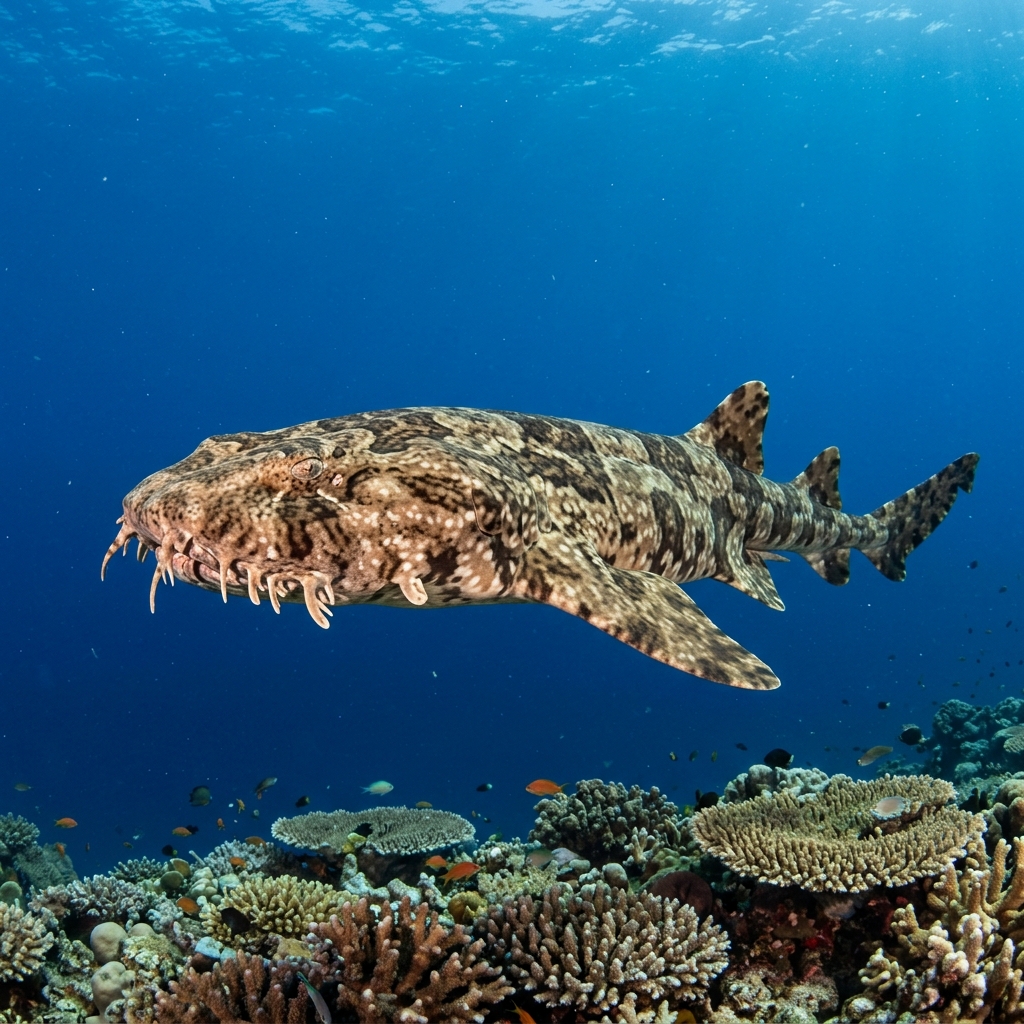
Ornate Wobbegong
291 sites