Neotrygon spp.
Sandy-bottomed reefs in Sulawesi and Queensland hide this small ray year-round in 23-30C water. Here's how to spot one.
If you're stung
Venomous tail barbGeneral first-aid guidance, not a substitute for professional medical care. In an emergency, call your local emergency number.
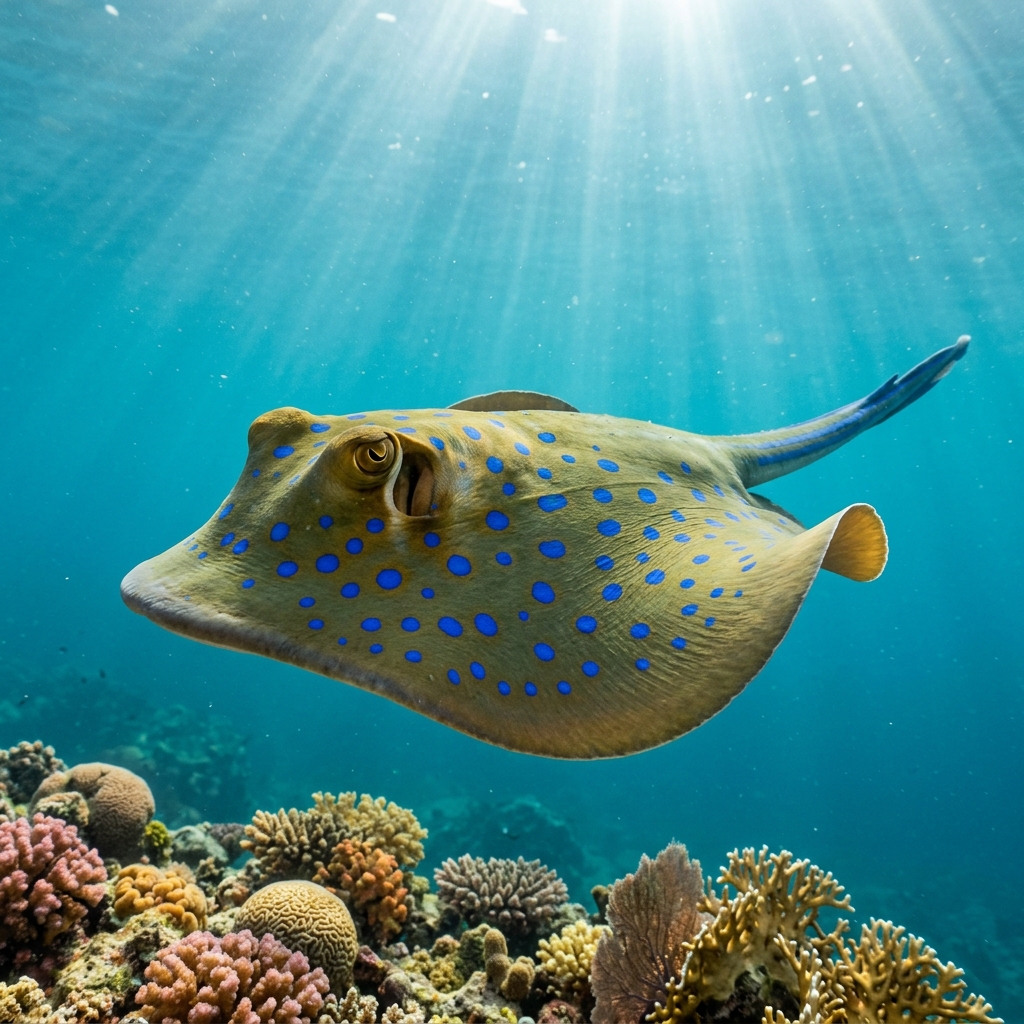
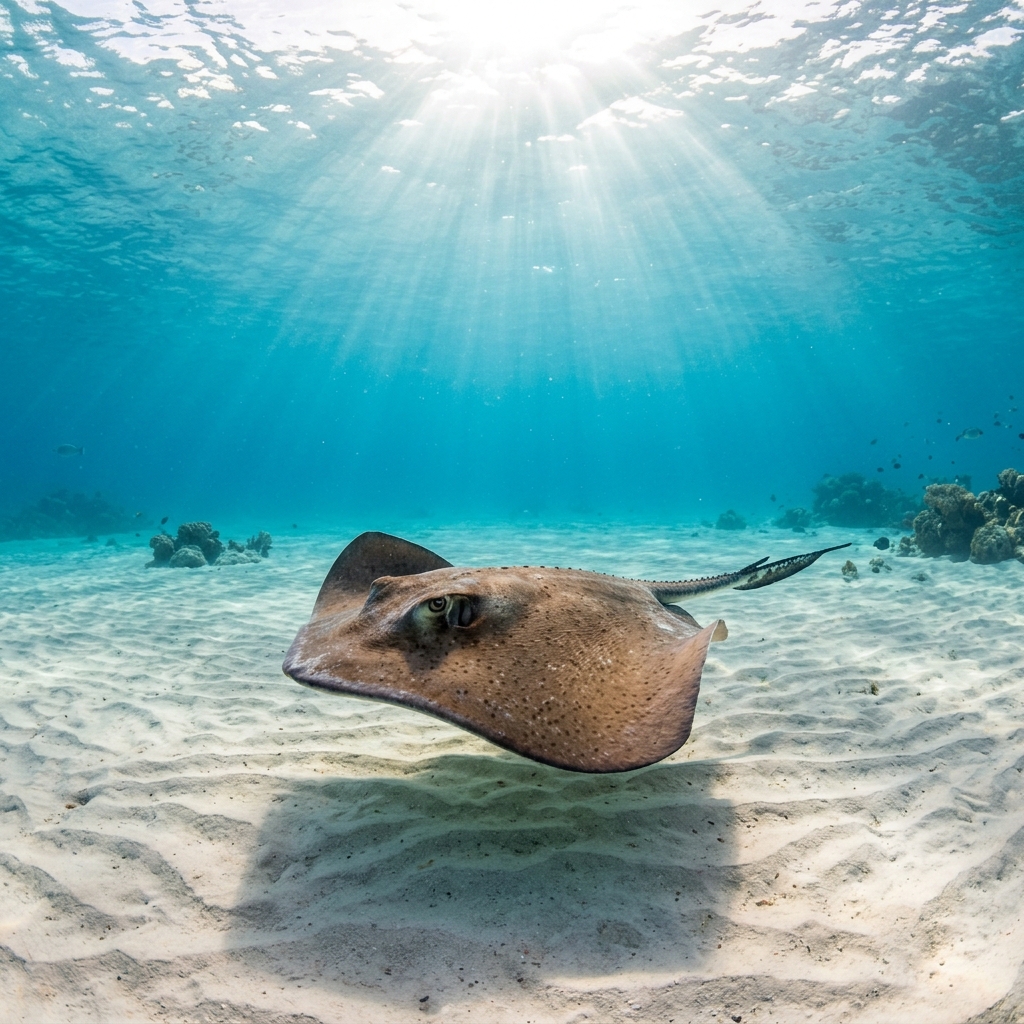
Small disc-shaped ray, typically around 24 cm across, with a sandy to olive-brown body scattered with vivid blue spots. A dark mask-like band crosses the eyes, which is where the common name comes from, and the tail carries one or two venomous spines with pale and dark banding. It sits flush against sand between coral heads, often with only the eyes and spiracles showing.
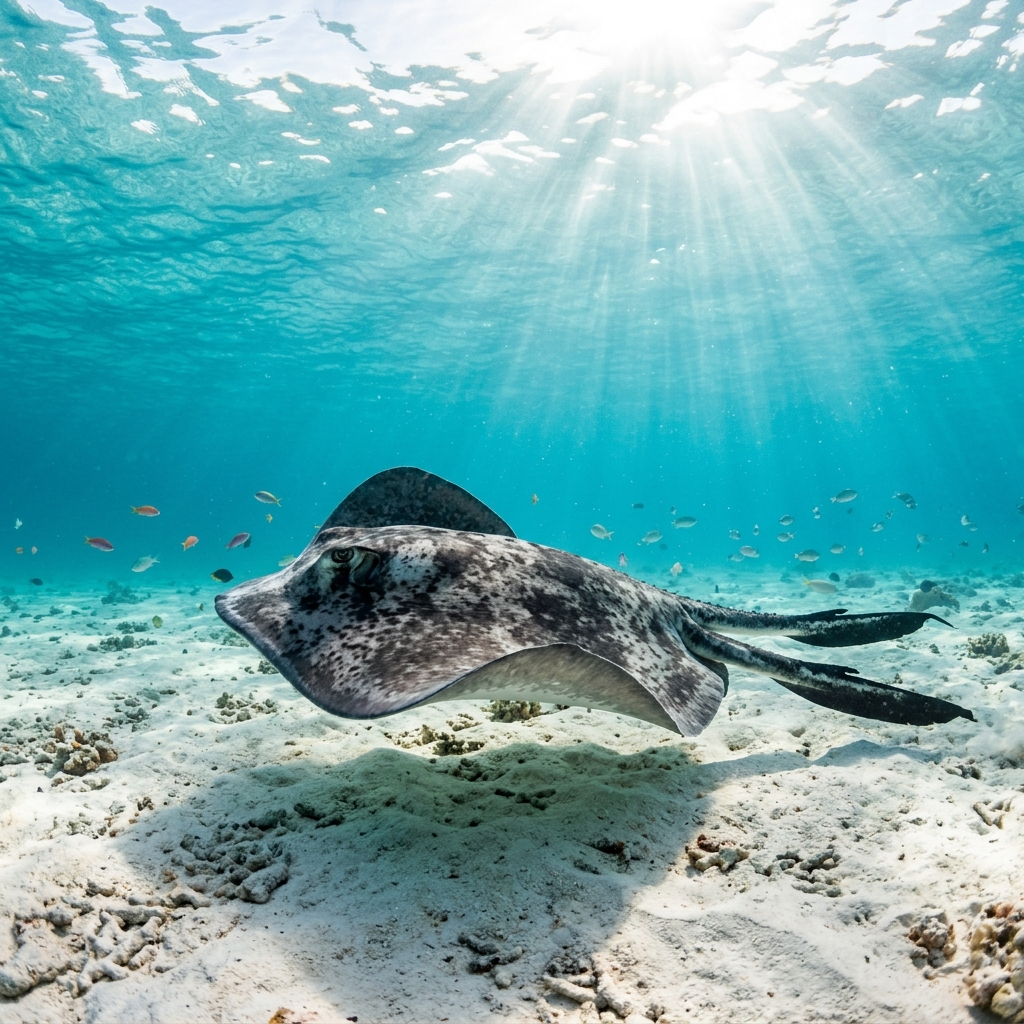
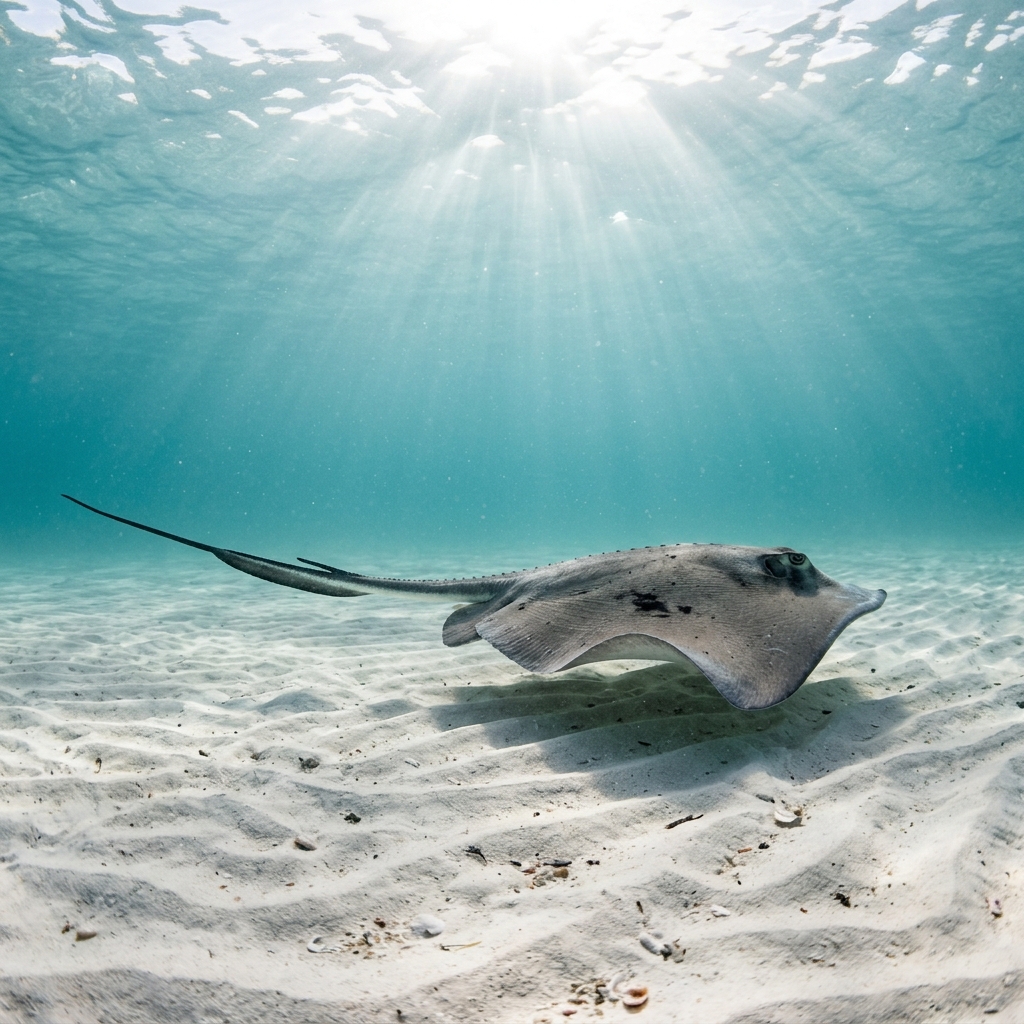
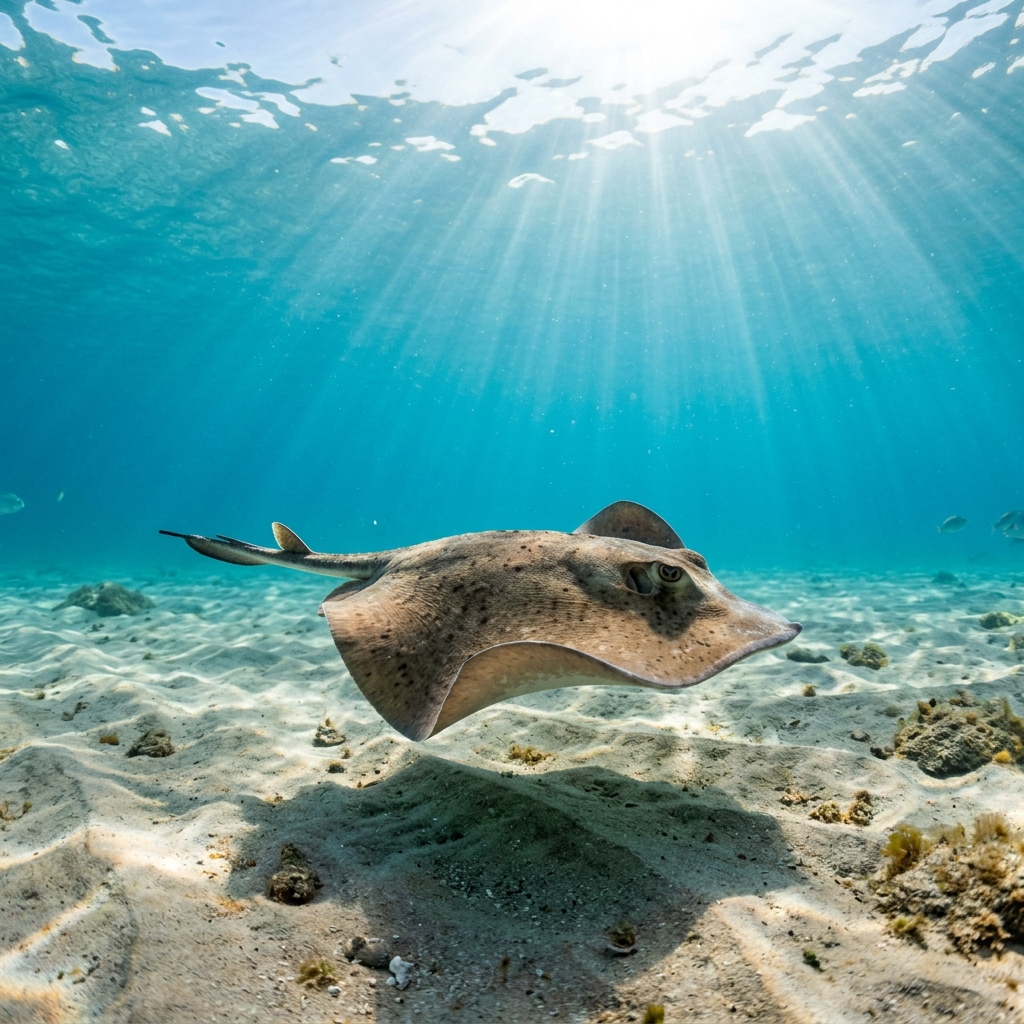
Expect to find it parked on a sandy patch between coral heads rather than out swimming, often lying so still that it's easy to swim straight over without noticing. Divers who move slowly and scan the sand tend to get close before it reacts, and even then it usually just glides a short distance off before settling again rather than bolting.
Those blue spots aren't just decoration underwater; they break up its outline against the mottled sand and coral rubble, which is a big part of why it's logged as uncommon rather than common even on reefs where it's actually present in good numbers.
No clear seasonal pattern shows up in the sightings, and with a comfortable range of 23.3 to 29.7C it's present on tropical reefs throughout the year, so any month works for a dive trip aimed at finding one.
Reef neighbours a diver could mistake it for. Use the identification notes above to tell them apart.
Most reliably found on reef-associated sand patches across Indonesia and the Philippines, with Sulawesi, Luzon, Visayas, Bali, and Palawan among the strongest regions. Queensland in Australia also turns up frequently, alongside good numbers on Malaysia's east coast and in Sabah, plus records from Thailand, Japan, Mozambique, and Cambodia.
Mapping where Blue-spotted Maskray is logged…
Sulawesi and Bali in Indonesia, Luzon, Visayas, and Palawan in the Philippines, Queensland in Australia, and Malaysia's east coast including Sabah are all strong regions for sightings.
There's no strong seasonal pattern in the sightings data, and its water-temperature range of roughly 23 to 30C is met year-round on the tropical reefs it favours, so it can turn up on any dive at any time of year.
Look for a small, roughly 24 cm ray lying flat on sand between coral heads, sandy-olive in colour with scattered bright blue spots and a dark mask-like band over the eyes.
They're on the small side for a ray, typically around 24 cm across the disc, which makes them easy to overlook against sand and rubble.
They're not considered dangerous to divers and tend to tolerate a quiet approach well, but like all stingrays they carry venomous tail spines and should never be grabbed or cornered.
Its scattered blue spotting acts as camouflage against dappled sand and coral rubble, which is likely why it's logged as uncommon at most sites even where it's actually fairly present.
Site and sighting data is aggregated from diver logs, iNaturalist and GBIF. For taxonomy and conservation status:
Porcupine Ray
1,536 sites