Spirula spirula
Rarely seen alive: this pelagic squid's coiled internal shell washes up worldwide, from Fuerteventura to KwaZulu-Natal, all year round.
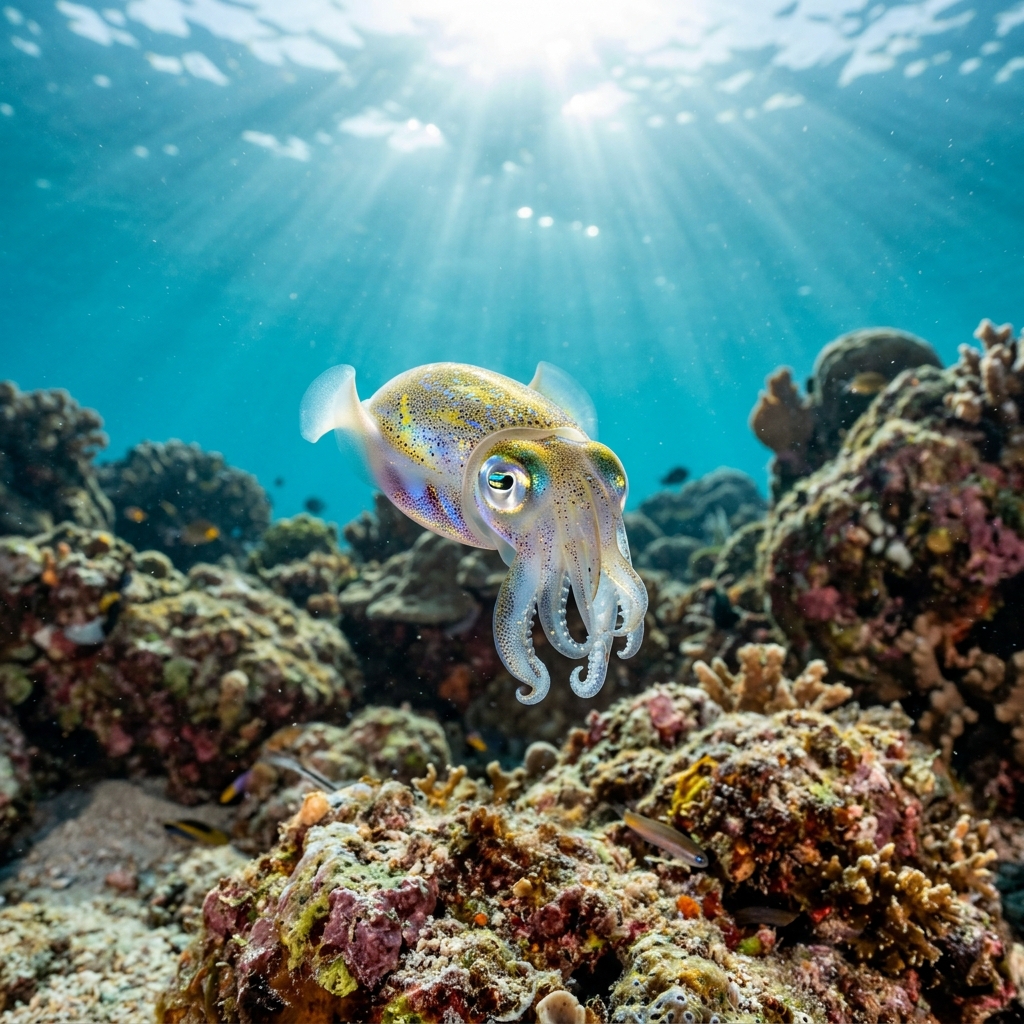
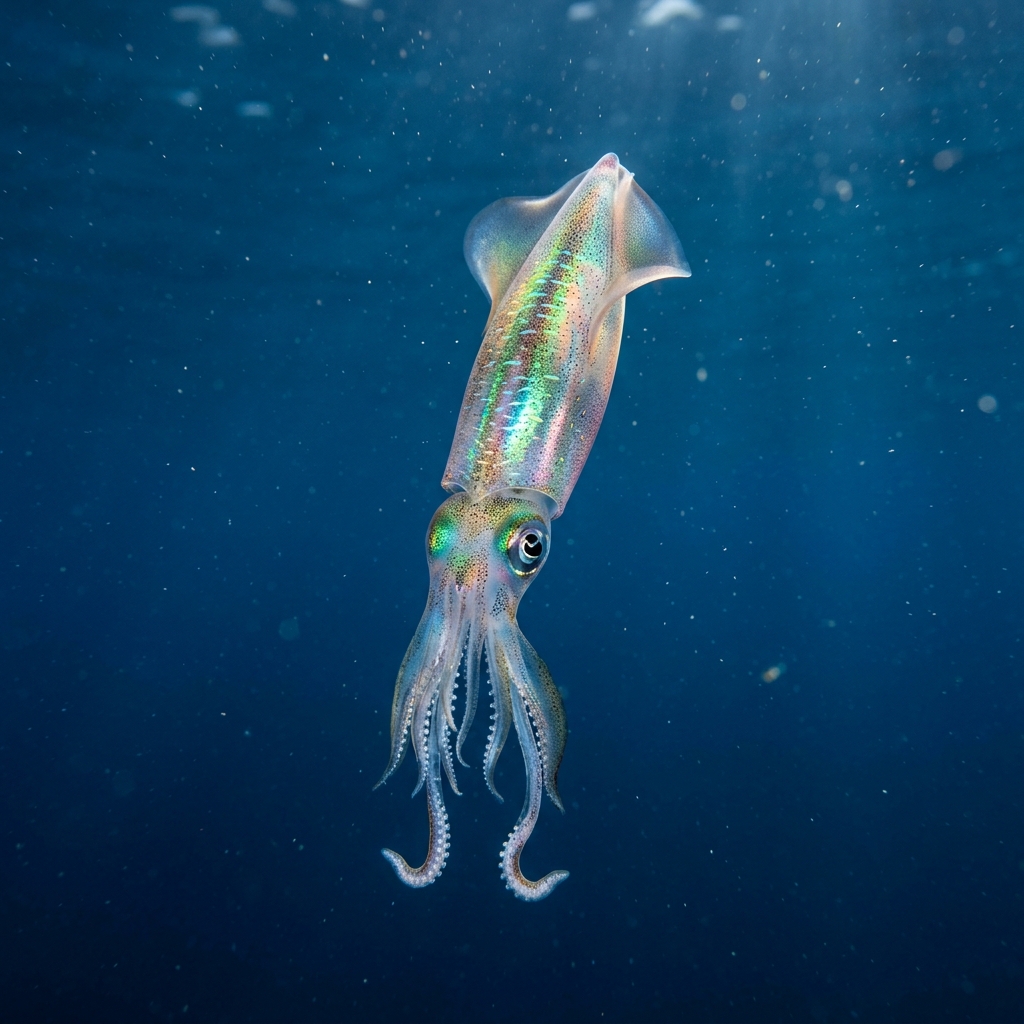
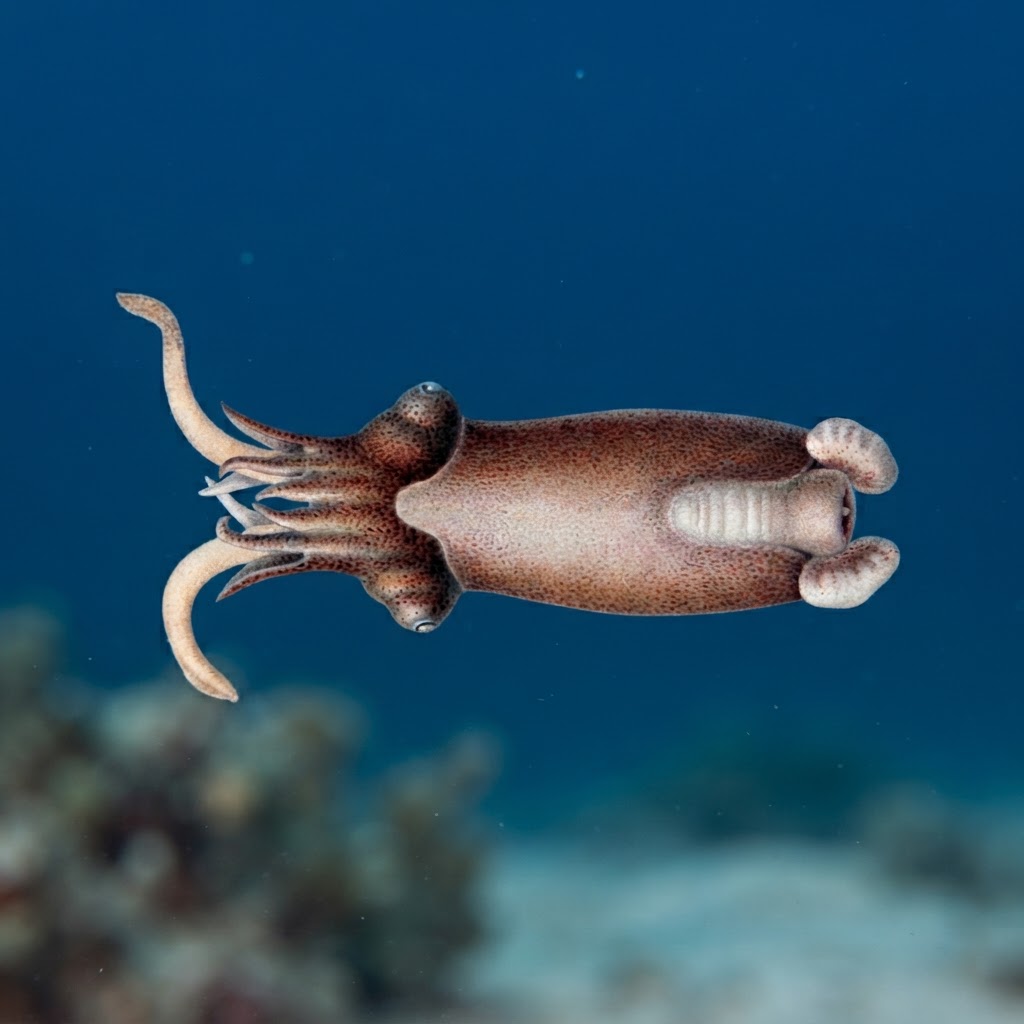
Barely 2cm long, this animal is easy to miss entirely, appearing as a small translucent blob with a rounded, coiled internal shell visible through its body. Look for photophores (light-producing organs) near the tail end, which give off a faint glow in deep, dark water. It has no obvious fins to speak of at this size, more a soft, jelly-like sac than a typical squid silhouette, so most divers only ever encounter the empty coiled shell washed up on a beach rather than the animal itself.
This is a deep, open-ocean animal by day, living far below normal recreational dive limits, so most in-water sightings happen when individuals drift up into shallower water, often at night or in unusual current conditions. When divers do see one it is typically hanging motionless in mid-water, adjusting its buoyancy rather than swimming with purpose. It shows little to no reaction to divers, most likely because encounters are brief and accidental rather than any real habituation.
Its internal shell is coiled like a tiny ram's horn and chambered with gas-filled compartments that the animal uses to control buoyancy, letting it hover at depth without constant swimming, a trick unique among living cephalopods.
No clear season shows up in the data, and with a tolerated temperature range from 14.3 to 25.7C, encounters happen year-round wherever conditions bring it into diver depth range. Treat any month as fair game rather than planning a trip around it.
Most consistently logged in the Canary Islands, particularly Fuerteventura and Gran Canaria, and around Carriacou in Grenada, with strong records also coming from KwaZulu-Natal in South Africa and North Island, New Zealand. Sightings also occur in Western Australia and at Ponta do Ouro in Mozambique, usually as an incidental find rather than a targeted dive.
Mapping where Ram's Horn Squid is logged…
Most reliably reported from the Canary Islands (Fuerteventura and Gran Canaria), Carriacou in Grenada, KwaZulu-Natal in South Africa, and North Island, New Zealand. Sightings are always a bonus rather than a guaranteed encounter.
There is no detected season in the sighting data, so encounters happen year-round. It tolerates a wide temperature range from about 14 to 26C, which fits with sightings turning up across very different regions and months.
Look for a tiny, translucent, blob-shaped animal only around 2cm long with a visible coiled shell inside its body. Faint light organs near the tail are another giveaway in low-light conditions.
Barely 2cm, making it one of the smallest cephalopods a diver could plausibly encounter. Most people only ever find its empty coiled shell washed up on shore, not the living animal.
It carries a small coiled, chambered shell inside its body that it fills with gas to control buoyancy, letting it hover at depth without swimming. This buoyancy trick is unlike anything else in living cephalopods.
No. It is a tiny, harmless carnivore with no venom or defence relevant to divers, and encounters are brief and passive.
Site and sighting data is aggregated from diver logs, iNaturalist and GBIF. For taxonomy and conservation status:
Inshore Squid
390 sites