Orectolobus ornatus
Spot Australia's Ornate Wobbegong across Queensland and Western Australia reefs. A reef-dwelling ambush shark, active at dusk and dangerous if disturbed.
Safety warning
Ornate Wobbegongs have a well-documented bite record, almost always triggered by a diver who handles, steps on, or crowds the animal. The jaws are short but powerful, with recurved teeth designed for gripping prey, and releasing a bite can be difficult. Give at least one to two metres of clearance, never reach into a crevice where one might be resting, and back away slowly rather than hovering directly above the shark.
If you're bitten
BiteGeneral first-aid guidance, not a substitute for professional medical care. In an emergency, call your local emergency number.
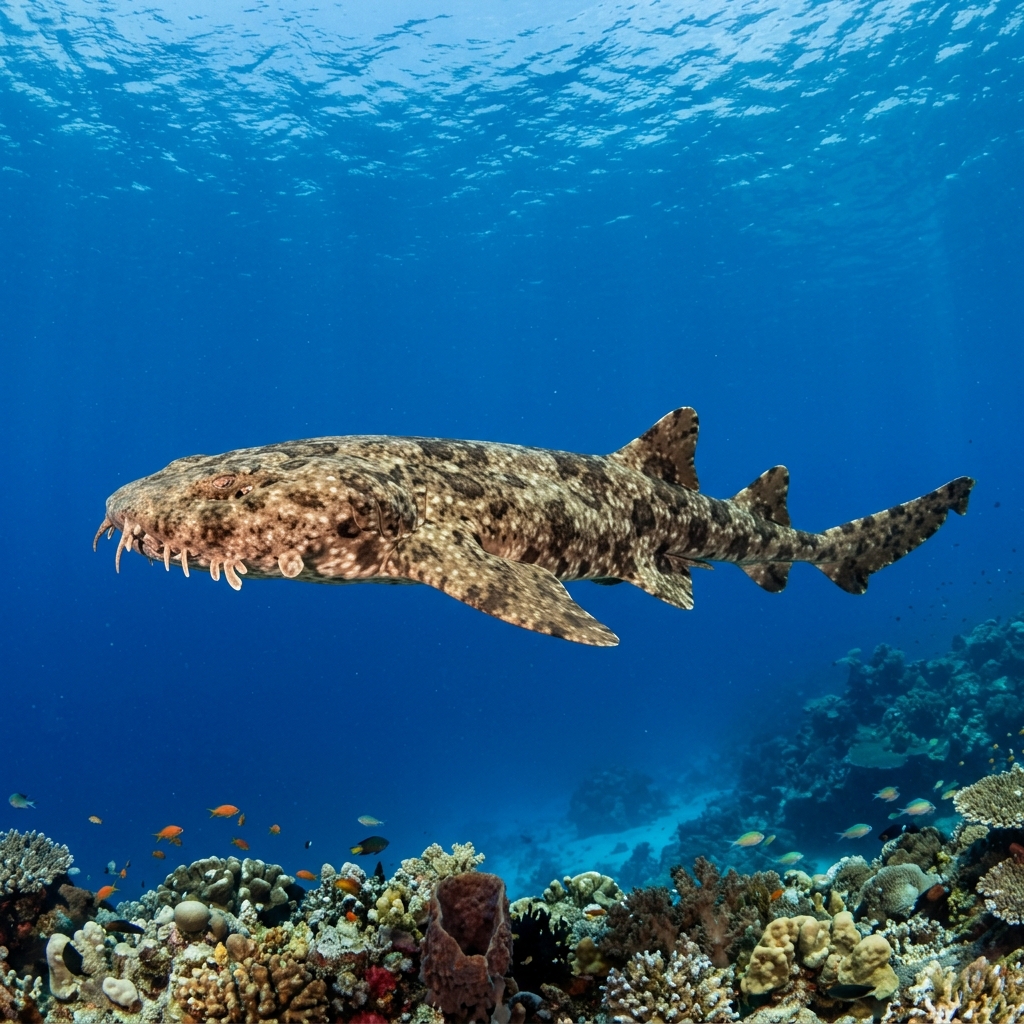
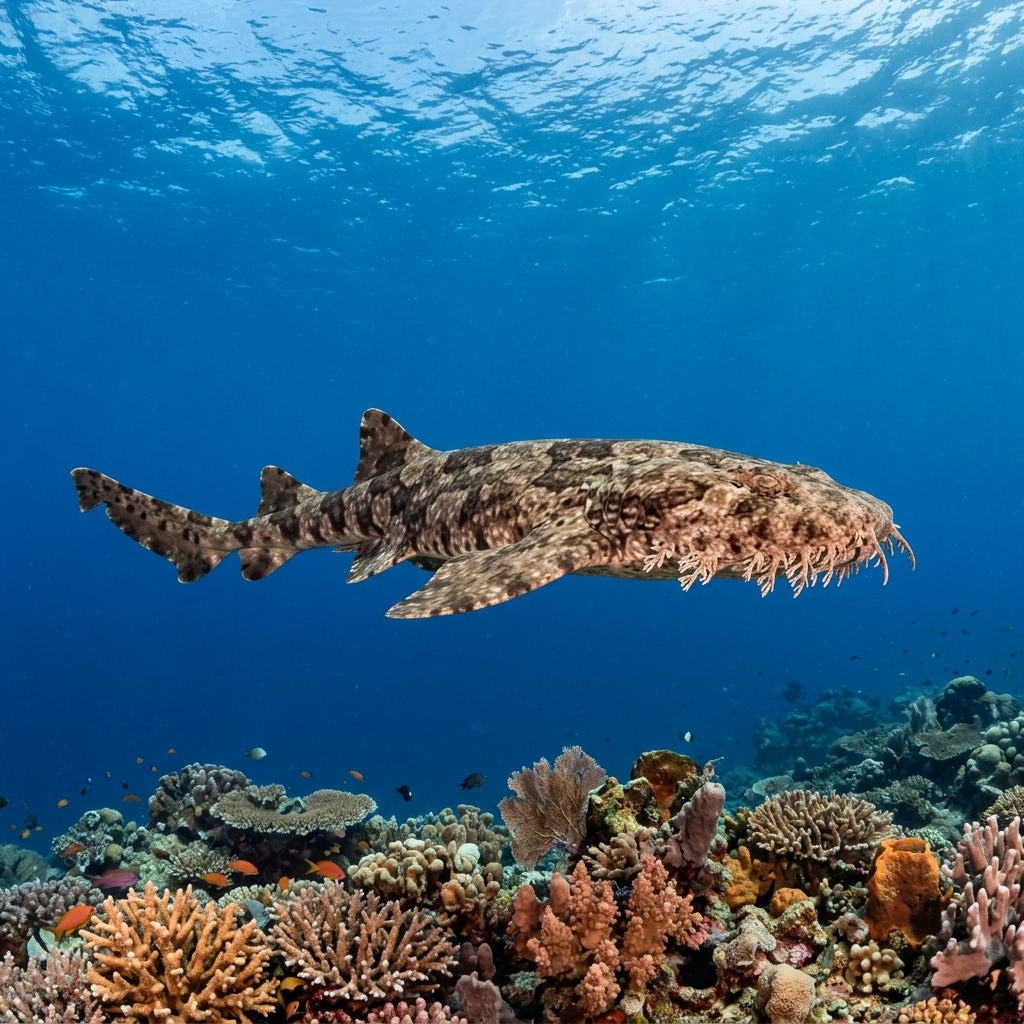
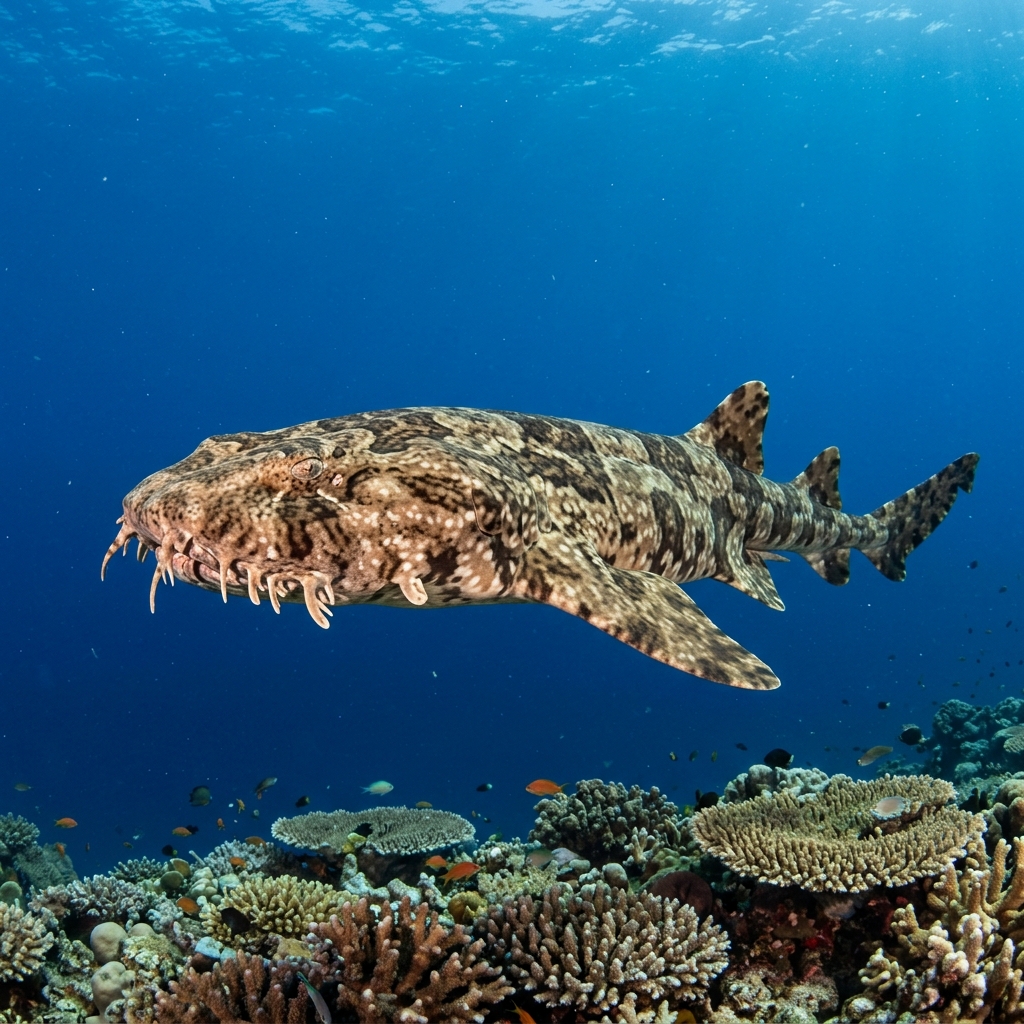
A large, dorsoventrally flattened (top-to-bottom flattened) shark that lies pressed against the reef and reaches around two metres in length. The body is covered in a complex reticular pattern of dark brown, cream, and orange-tinged blotches that mimics encrusting reef growth almost perfectly. The most distinctive feature is the fringe of branched dermal lobes around the head, which breaks up the outline so effectively that you can swim right over one without noticing it. Look for the broadly rounded head, small spiracles behind the eyes, and a thick, fleshy tail.
Expect to find one absolutely motionless on a ledge, under a table coral, or flat on a sandy-rubble patch, relying entirely on camouflage rather than flight when approached. During the day it is essentially inert and ignores divers who keep a respectful distance; dusk and dawn are when it becomes alert and begins actively patrolling for fish, crustaceans, and other invertebrates. Resist the urge to touch or hover directly above it, as even a shark that appears completely relaxed will bite if it feels cornered.
Wobbegongs are ovoviviparous (the pups develop inside the mother and are born live), and litters can number up to 12 pups. The pups are already fully patterned at birth, tiny but equipped with the same reef-matching camouflage as the adults.
No clear seasonal peak has emerged from the sighting data, so treat it as a year-round target across its range. It tolerates water temperatures from around 15 to 27 °C, meaning it is at home on both the subtropical reefs of Western Australia in winter and the warmer Queensland reef systems throughout the year.
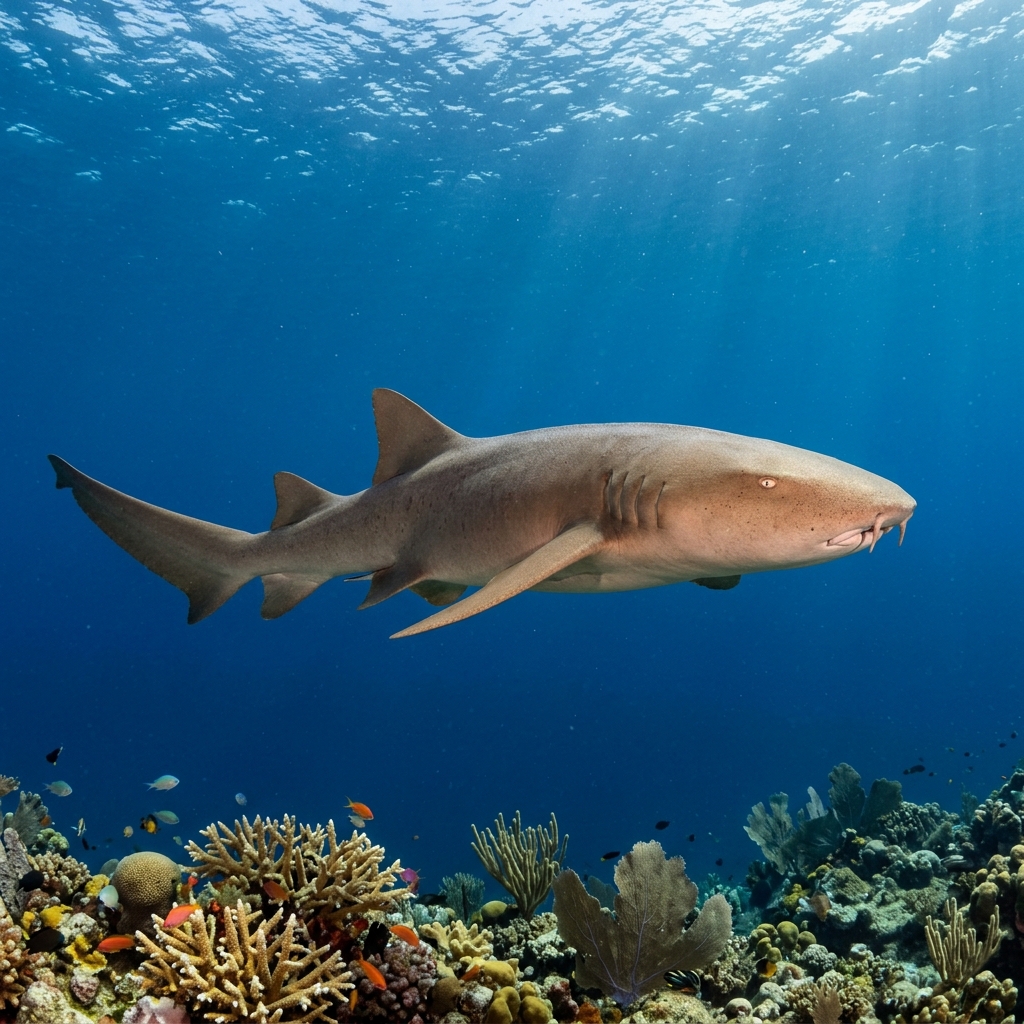
Reef neighbours a diver could mistake it for. Use the identification notes above to tell them apart.
Almost all sightings come from Australia, making it one of the most Australia-centric sharks on Fin's database. Queensland and Western Australia hold the strongest representation, with South Australia and New South Wales also well documented. A small number of range-model sites extend into Canadian waters, but reef encounters are overwhelmingly an Australian experience.
Mapping where Ornate Wobbegong is logged…
They are recorded at dive sites across Australia, with the strongest representation in Queensland and Western Australia, followed by South Australia and New South Wales. Reef sites in Tasmania and Victoria also hold records. Encounters are overwhelmingly an Australian experience.
Sighting data shows no strong seasonal peak, so they can be encountered year-round. Their temperature tolerance of roughly 15 to 27 °C covers most Australian reef conditions across all seasons. Your best chance within any dive is around dusk or dawn when they become more active.
Yes, they have a documented bite record. Bites are almost always defensive, triggered by a diver touching, crowding, or accidentally standing on a camouflaged animal. Keep your distance, watch where you place your hands on the reef, and never reach into crevices blind.
Both species share the flattened body shape and fringed head, making them tricky to separate underwater. The Ornate Wobbegong has a denser, more intricate reticular (net-like) pattern without the large, well-defined white-ringed spots that characterise the Spotted Wobbegong. Range overlap in New South Wales and Queensland is where confusion is most likely.
Adults typically reach around two metres in length. That puts them among the larger wobbegong species, though their flat, broad-bodied form means they look more like a rug than a conventional shark when resting on the reef.
It is a sit-and-wait ambush predator that uses its camouflage to become effectively invisible on the reef. When prey moves within range, it lunges with a rapid strike, relying on speed and surprise rather than pursuit. Fish, crustaceans, and invertebrates all feature in its diet. Most active hunting happens at night and around dusk.
Site and sighting data is aggregated from diver logs, iNaturalist and GBIF. For taxonomy and conservation status:
Gulf Wobbegong
199 sites