Aetobatus spp.
Dark disc with white spots gliding over sand flats in the Maldives' Central Atolls, uncommon year-round in 23-29C water.
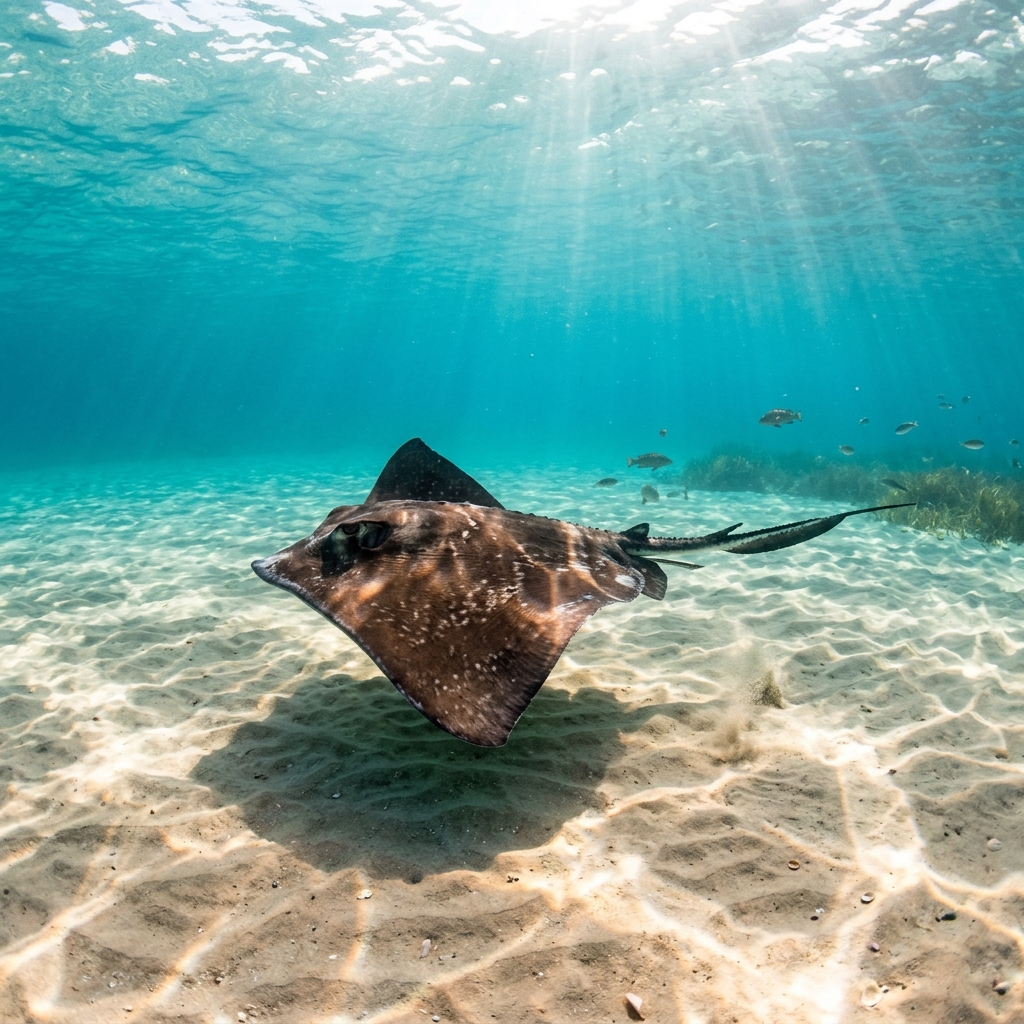
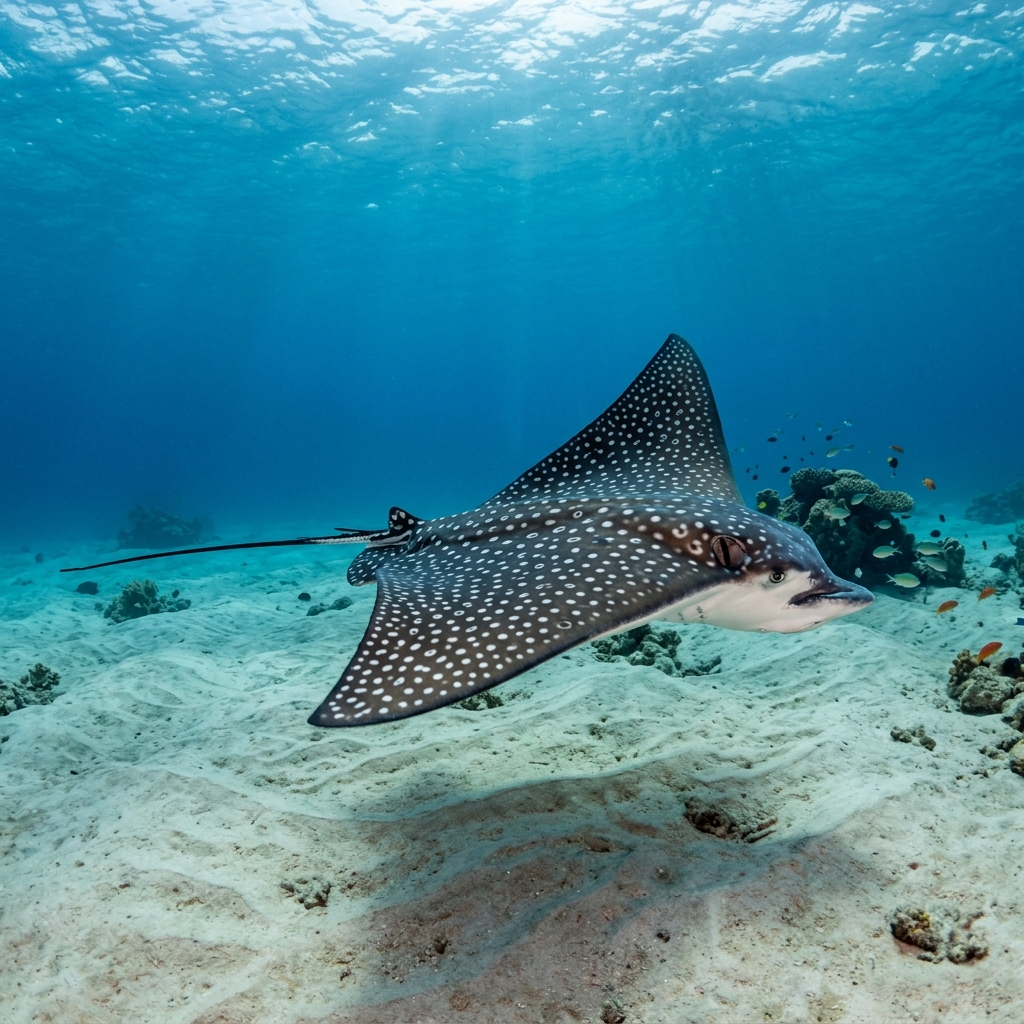
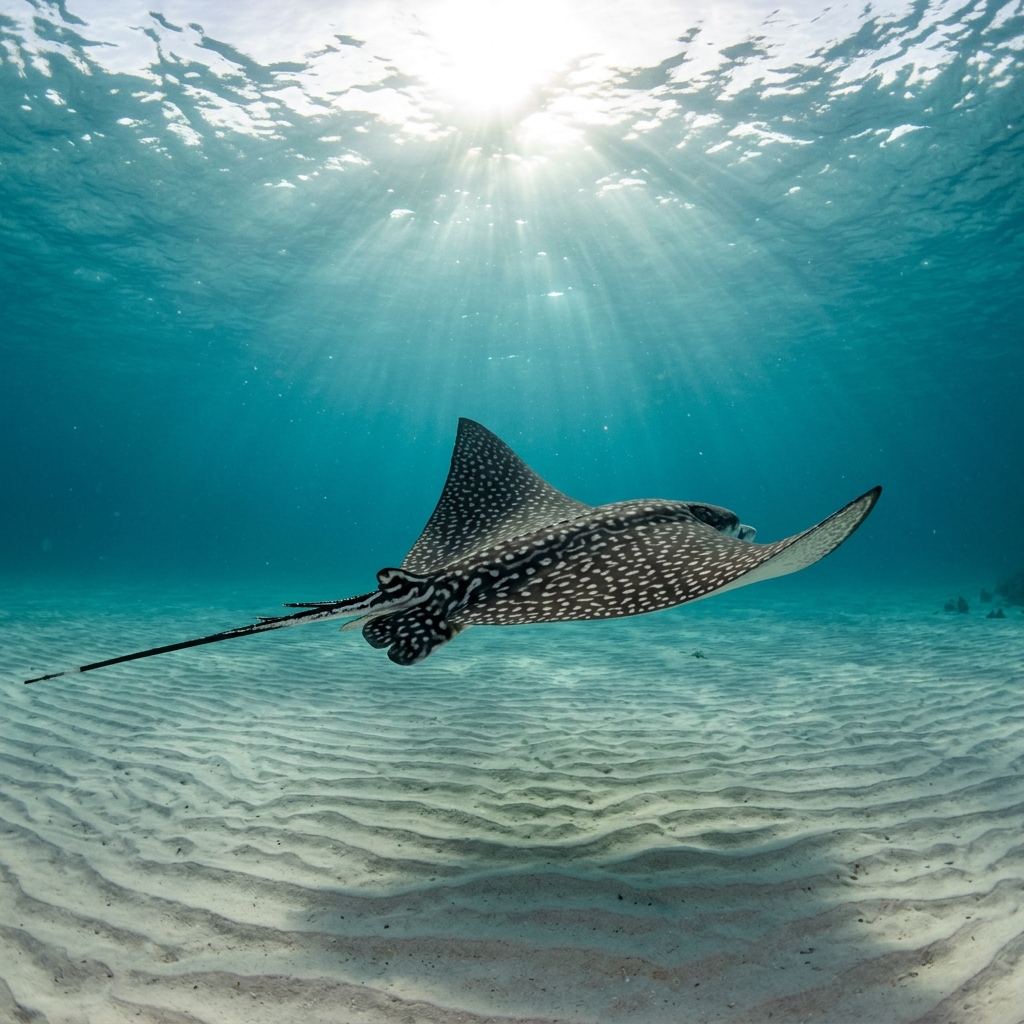
Dark grey to black disc-shaped body covered in bright white spots, with a long whip-like tail trailing behind and a distinctive duck-bill snout that sets the genus apart from most other rays. Wing tips are pointed and swept back, and the swimming style is a slow, deliberate flap rather than a bottom-hugging glide. Size varies across the genus's member species, so treat any individual you see as somewhere between a large dinner-plate ray and a big animal with a wingspan stretching well over a metre.
Usually spotted cruising over sand flats, lagoons, or open water just off the reef, often solo or in small loose groups, sometimes digging its snout into sand to root out buried molluscs and crustaceans. Generally unbothered by divers at a respectful distance, though it will peel away with a few strong wingbeats if approached head-on or too fast. Most encounters happen mid-water rather than close to the bottom, so keep an eye on the blue as much as the reef.
That duck-bill snout is a specialised tool for digging into sand and crushing shelled prey, a feeding style that leaves visible feeding pits on sand flats divers sometimes notice before they spot the ray itself.
Sightings run year-round with no strong seasonal pattern in the data, which fits a genus comfortable across 23.4 to 29.0C, essentially the full range of tropical and warm subtropical reef temperatures. Plan around the destination's general dive season rather than chasing a specific month for this ray.
Reef neighbours a diver could mistake it for. Use the identification notes above to tell them apart.
Most reliably logged in the Maldives, especially the Central Atolls, with strong numbers also out of Queensland in Australia, Florida in the United States, and the Society Islands in French Polynesia. Other consistent spots include the Inner Islands of Seychelles, the Galápagos Islands, and the Philippine regions of Luzon and Palawan.
Mapping where Whitespotted Eagle Ray is logged…
The Maldives, particularly the Central Atolls, is the most consistent place to find them, alongside Queensland in Australia, Florida in the US, and French Polynesia's Society Islands. Seychelles, the Galápagos, and the Philippines also turn up regular sightings.
There's no detected seasonal pattern, so they're logged year-round on the reefs and sand flats where they occur. Their comfortable range of roughly 23 to 29C covers most tropical dive seasons, so just plan around your destination's usual conditions.
Look for a dark grey to black disc covered in white spots, a long trailing tail, and a protruding duck-bill snout. They swim with slow, powerful wingbeats and are typically seen cruising in open water over sand rather than resting on the bottom.
Size varies by species within the genus, but divers commonly encounter individuals with wingspans from about a metre up to well over two metres. Even mid-sized animals look large in open water thanks to their long tail and broad wings.
They use a flattened, duck-bill-shaped snout to dig through sand for buried molluscs and crustaceans, then crush the shells with powerful plates in their mouth. Divers sometimes spot the feeding pits left in the sand before they spot the ray.
Site and sighting data is aggregated from diver logs, iNaturalist and GBIF. For taxonomy and conservation status: