Orectolobus maculatus
Find spotted wobbegongs along New South Wales and Western Australia reefs, with sightings peaking Dec, May. Tips to spot one in its perfect camouflage.
Safety warning
Spotted wobbegongs bite, and the data flags them as dangerous to divers. Bites almost always result from a diver touching, cornering, or inadvertently sitting on one they didn't see. Keep a clear distance, never reach into a cave or under a ledge without checking first, and do not attempt to handle or provoke one. A large specimen has strong jaws and may not immediately release. Treat any encounter with respect and give it an obvious exit route.
If you're bitten
BiteGeneral first-aid guidance, not a substitute for professional medical care. In an emergency, call your local emergency number.
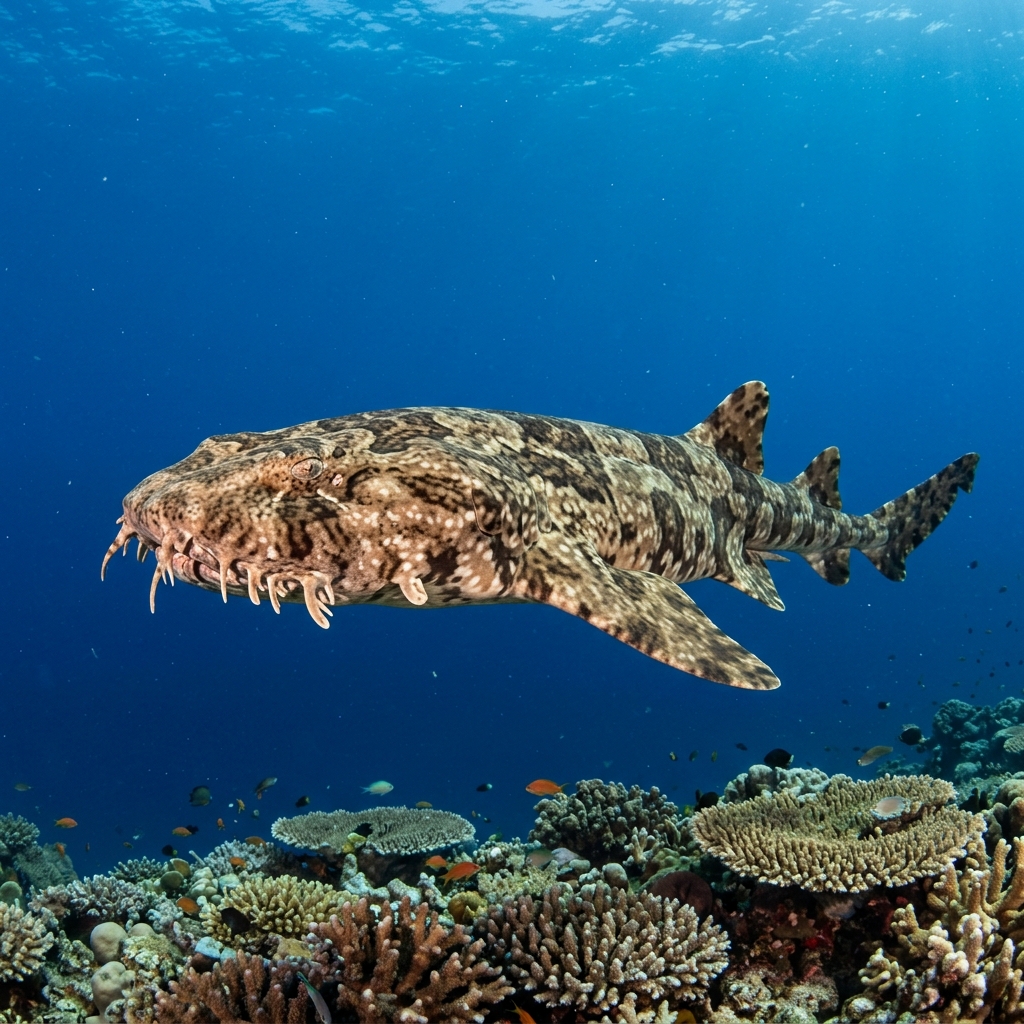
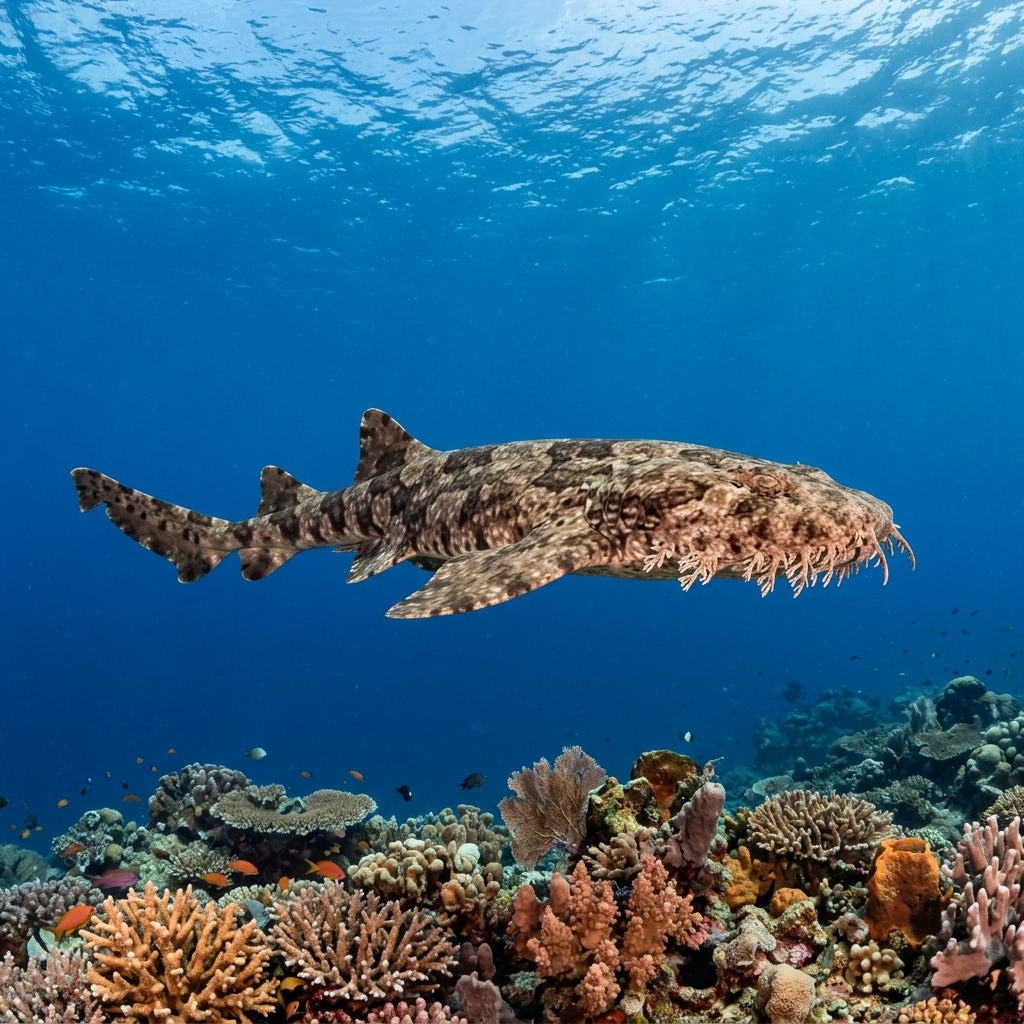
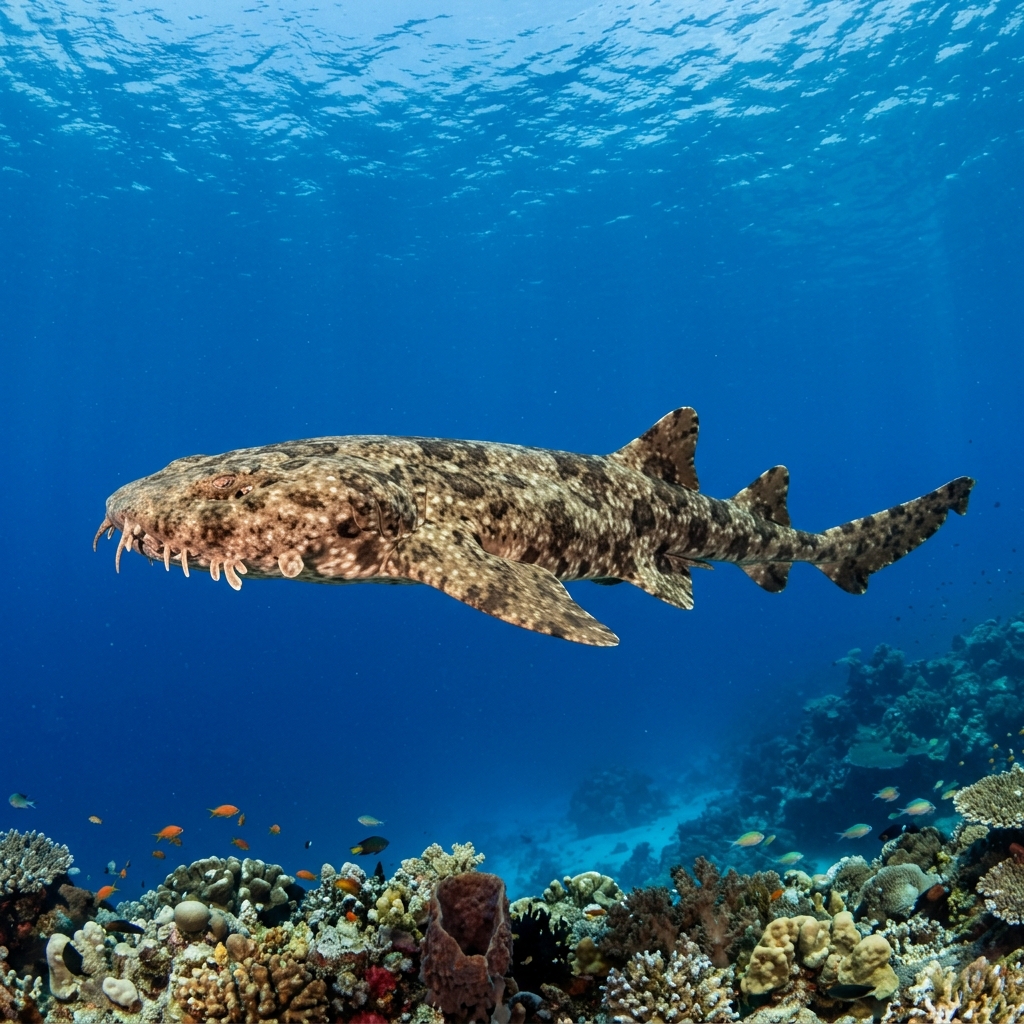
Reaching up to around 2.2 metres, this is a broad, flattened shark with a patterned body of brownish saddles, pale spots, and darker blotches that blend almost perfectly with rocky reef. The most reliable feature is the fringe of branched, leaf-like dermal flaps (skin lobes) around the head and along the sides of the snout, no other common Australian shark has this. At rest under a ledge it can look like part of the reef itself, so check any mottled, immobile shape carefully.
During the day you will almost always find one motionless under a ledge, in a cave, or pressed against a rocky wall, relying entirely on camouflage rather than flight. At night it shifts into hunting mode, slowly working the reef for fish, crustaceans, and occasionally smaller sharks. Divers often swim past one without noticing it at all, if something on the reef looks oddly textured and hasn't moved, look for the fringe of dermal flaps.
Wobbegongs are suction feeders capable of an extraordinarily fast strike; a large spotted wobbegong can engulf prey in a fraction of a second despite spending most of the dive looking completely inert.
Sightings concentrate between December and May, the Australian summer and autumn. This aligns with warmer inshore water temperatures and likely increased activity at shallower reef sites.
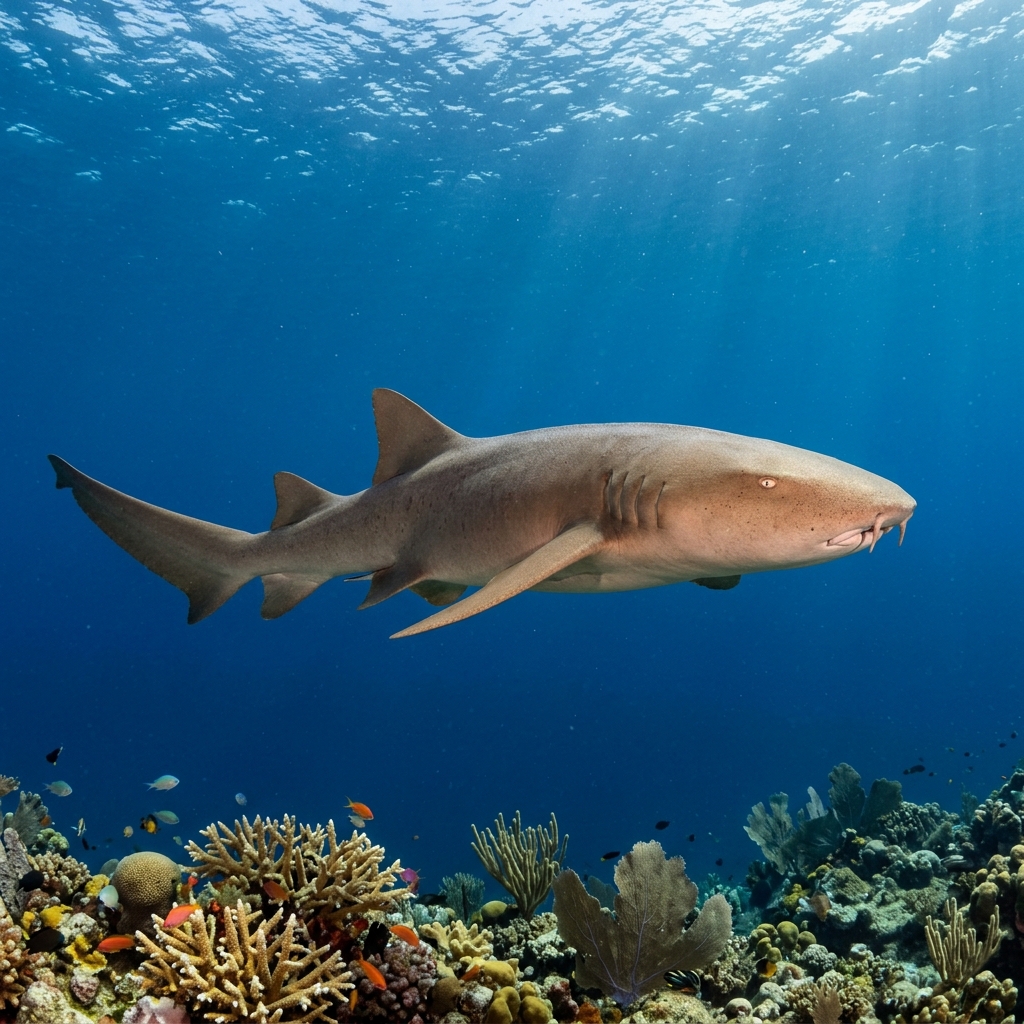
Reef neighbours a diver could mistake it for. Use the identification notes above to tell them apart.
Almost entirely an Australian animal, with the strongest presence in New South Wales, followed by Western Australia and Queensland. South Australia and Tasmania also have regular sightings. New South Wales sites collectively account for the biggest share of diver observations, making the southeast coast the most reliable area to target.
Mapping where Spotted Wobbegong is logged…
Spotted wobbegongs are almost exclusively found in Australian waters. New South Wales has the highest concentration of logged sightings, with strong records also from Western Australia and Queensland. South Australia and Tasmania round out the main areas. Rocky reef and kelp environments in the southeast are a particularly reliable habitat.
Based on diver sighting data, December through May is the peak window. This covers the Australian summer and autumn when water temperatures at shallower reef sites are warmest. They are present year-round but encounters are reported less frequently outside this period.
Yes, they are listed as dangerous. Spotted wobbegongs do not actively chase divers, but they bite hard and fast if touched, cornered, or accidentally disturbed. Most incidents involve a diver who failed to notice one due to its camouflage. Never reach blindly into crevices, never touch one, and always give the shark room to move away.
Both species share the flat body and dermal fringe, but the ornate wobbegong has a more vivid, contrasting pattern with distinct white-edged dark blotches, and its range overlaps mainly in Queensland and New South Wales. The spotted wobbegong tends toward a subtler, more muted brown-and-cream patterning. Habitat depth and geography can help, but the two can look very similar at a casual glance.
Typical adults reach around 1.5 to 1.8 metres, with a recorded maximum of about 2.2 metres. They are broad and very flat, so they look considerably larger than their length suggests when encountered face-on under a ledge.
Its camouflage works on two levels: the skin pattern of spots, saddles, and blotches mirrors encrusted rock and algae, while the lobed dermal flaps around the head break up the outline of the shark's shape entirely. On a rocky reef covered in sponge and weed, a resting wobbegong can be essentially invisible until you are right on top of it.
Site and sighting data is aggregated from diver logs, iNaturalist and GBIF. For taxonomy and conservation status:
Gulf Wobbegong
199 sites