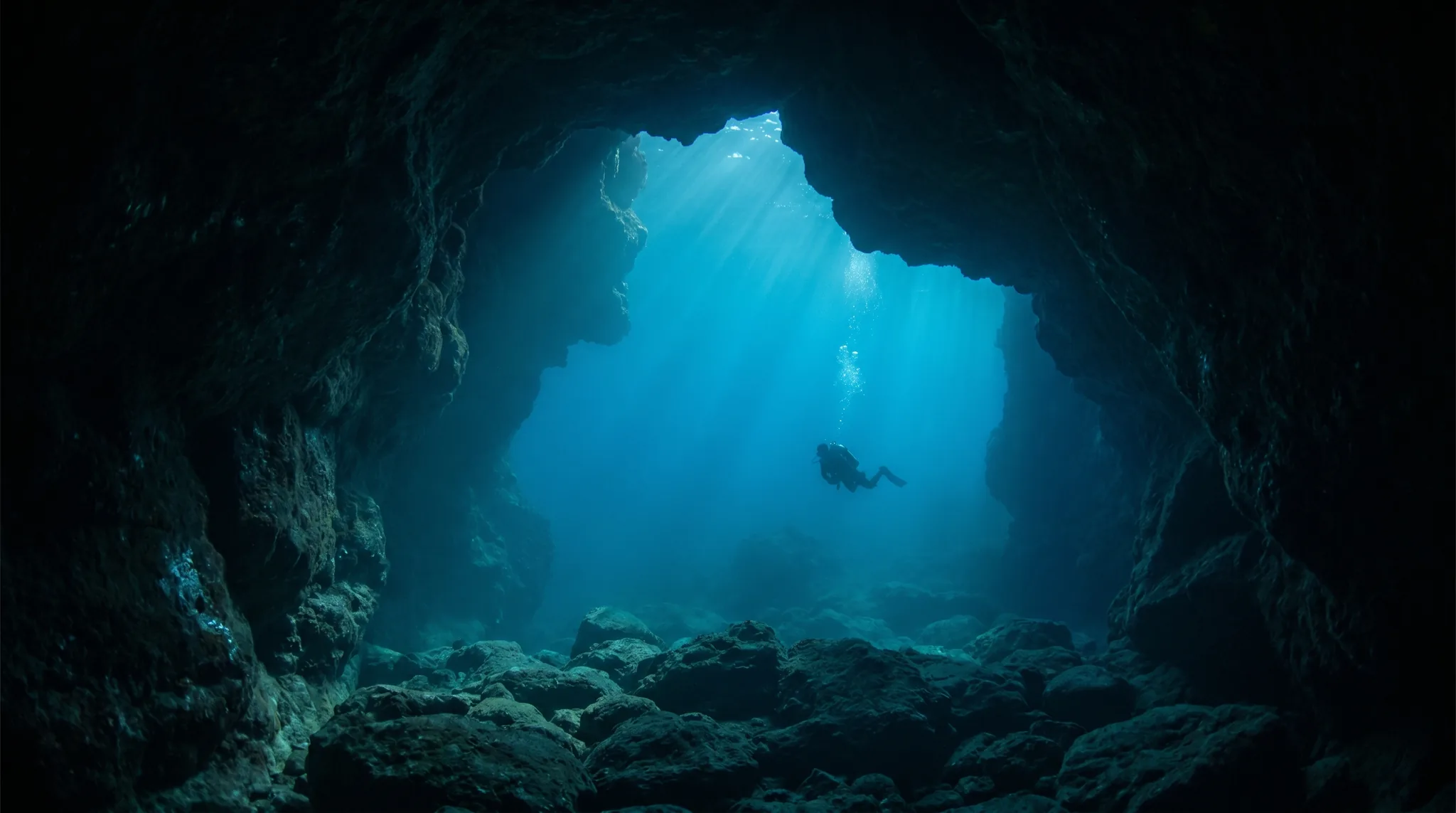
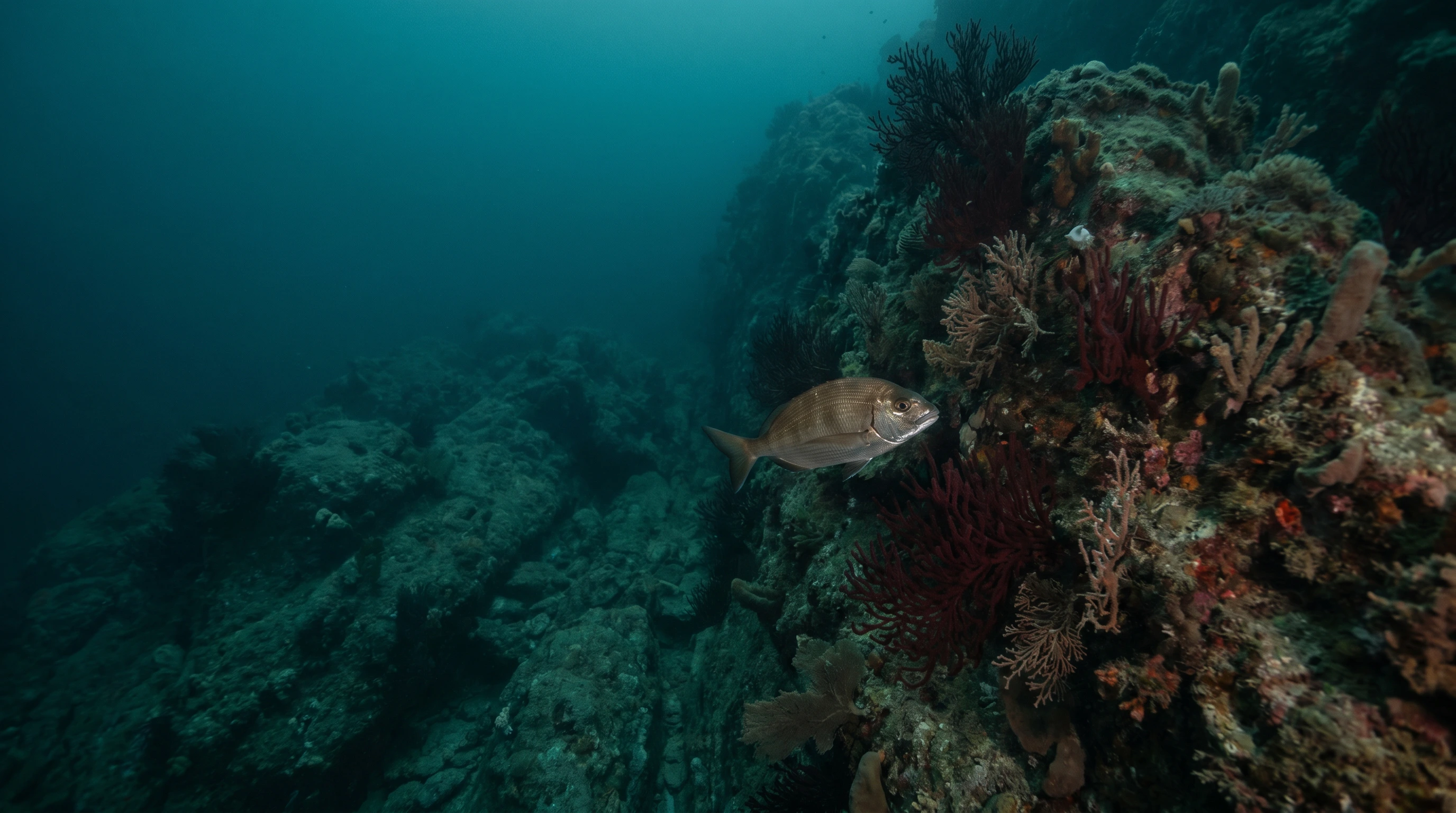
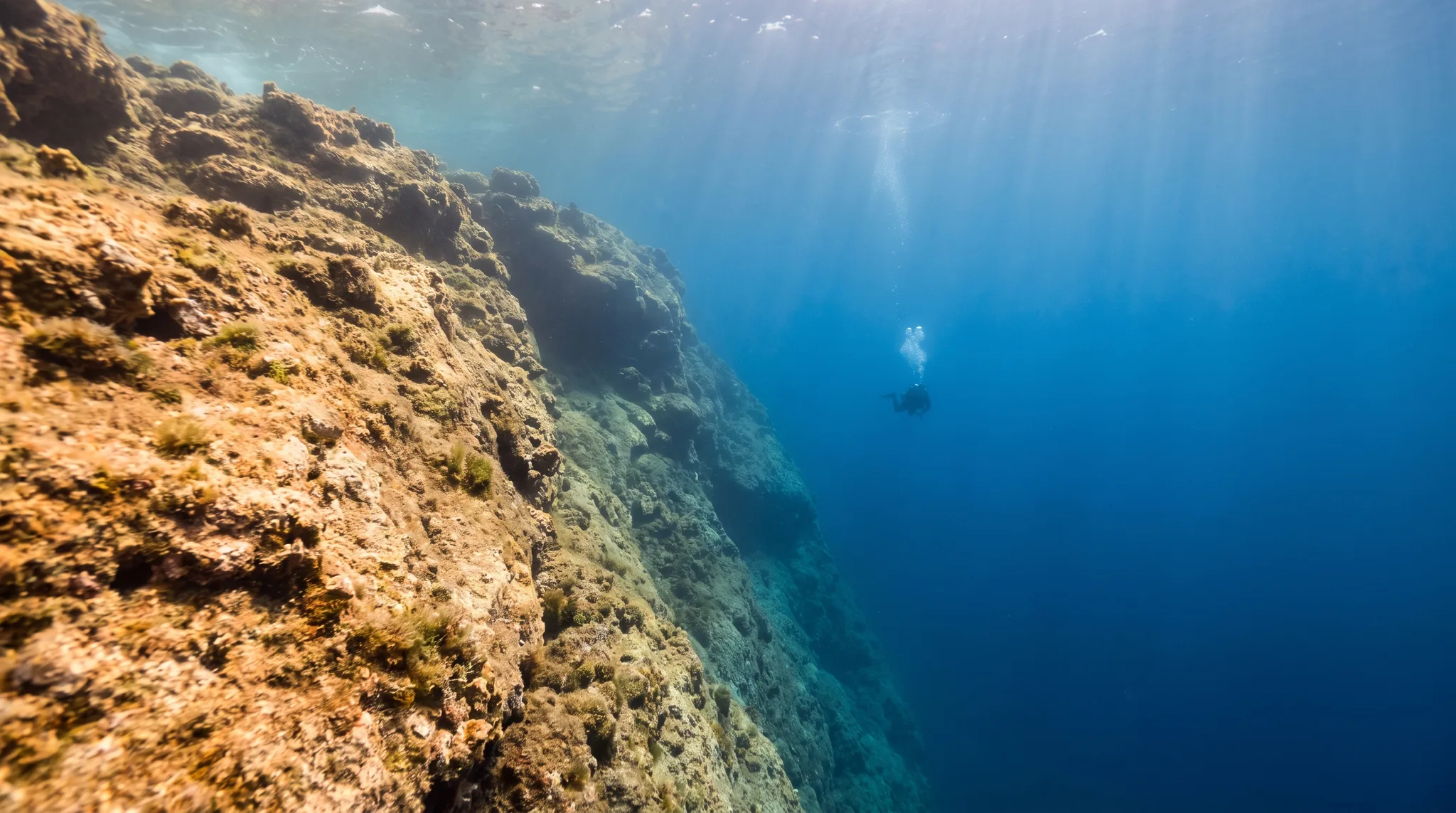
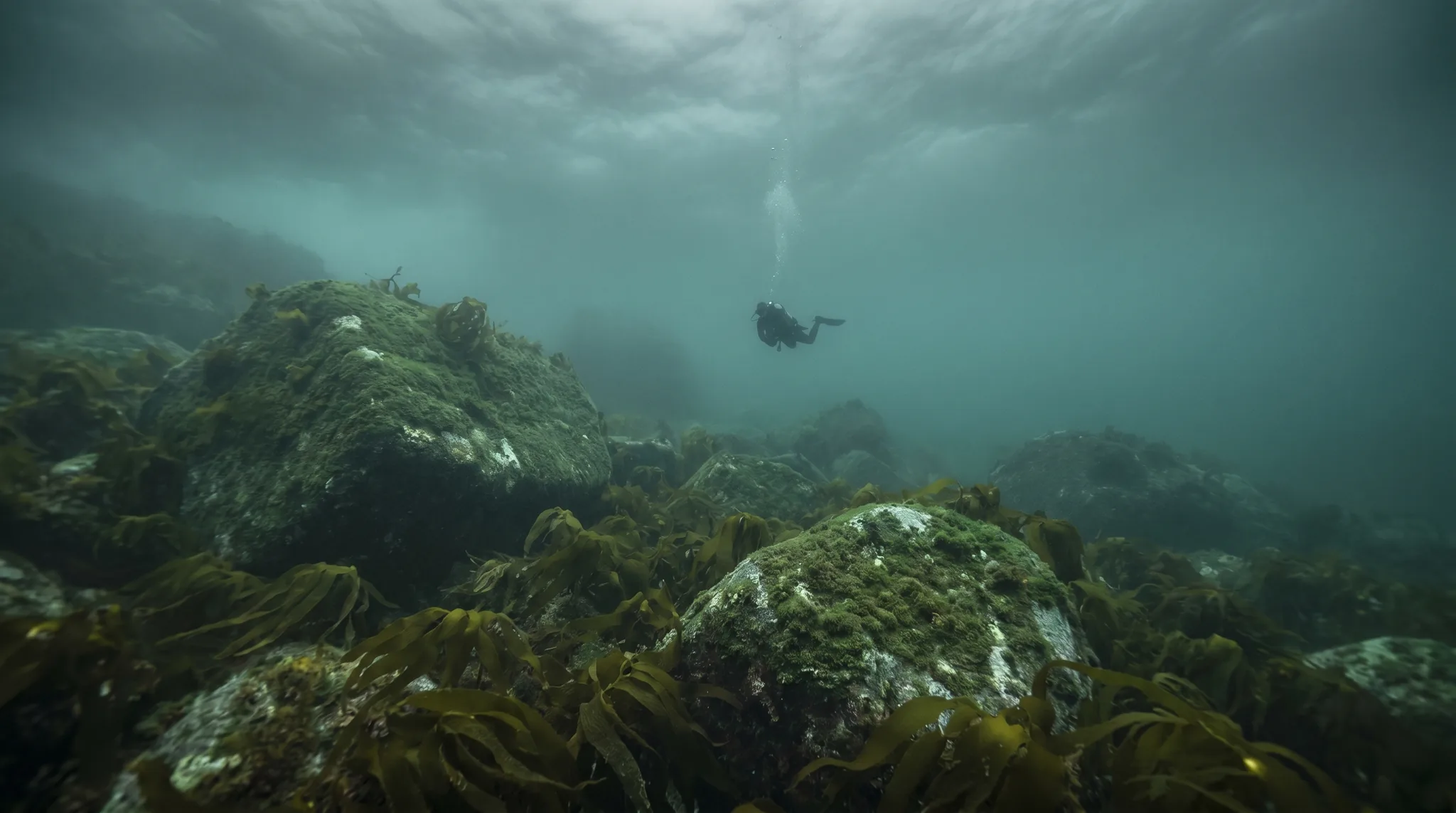
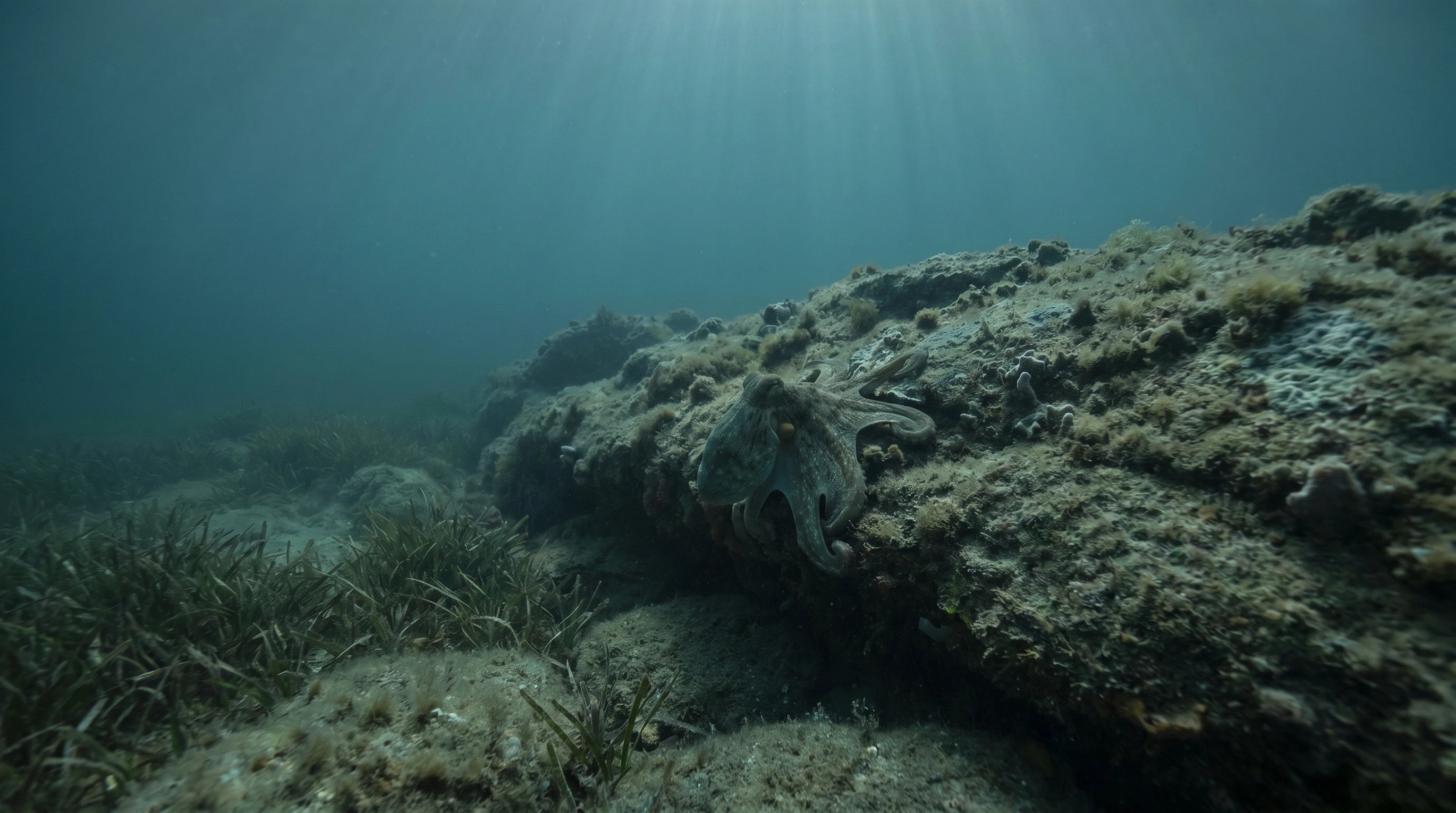
Cerbère's diving centres on rocky reefs, canyons and seagrass meadows within France's oldest marine protected area. Sites range from sheltered shallows suited to beginners through to drop-offs and canyon walls that reward more experienced divers. The species list is dominated by wrasse in several forms, Common Octopus, Mediterranean Moray and European Common Cuttlefish, with Black Scorpionfish tucked into the reef. Water is coolest from winter into spring, warming through summer when conditions and visibility are at their most favourable.
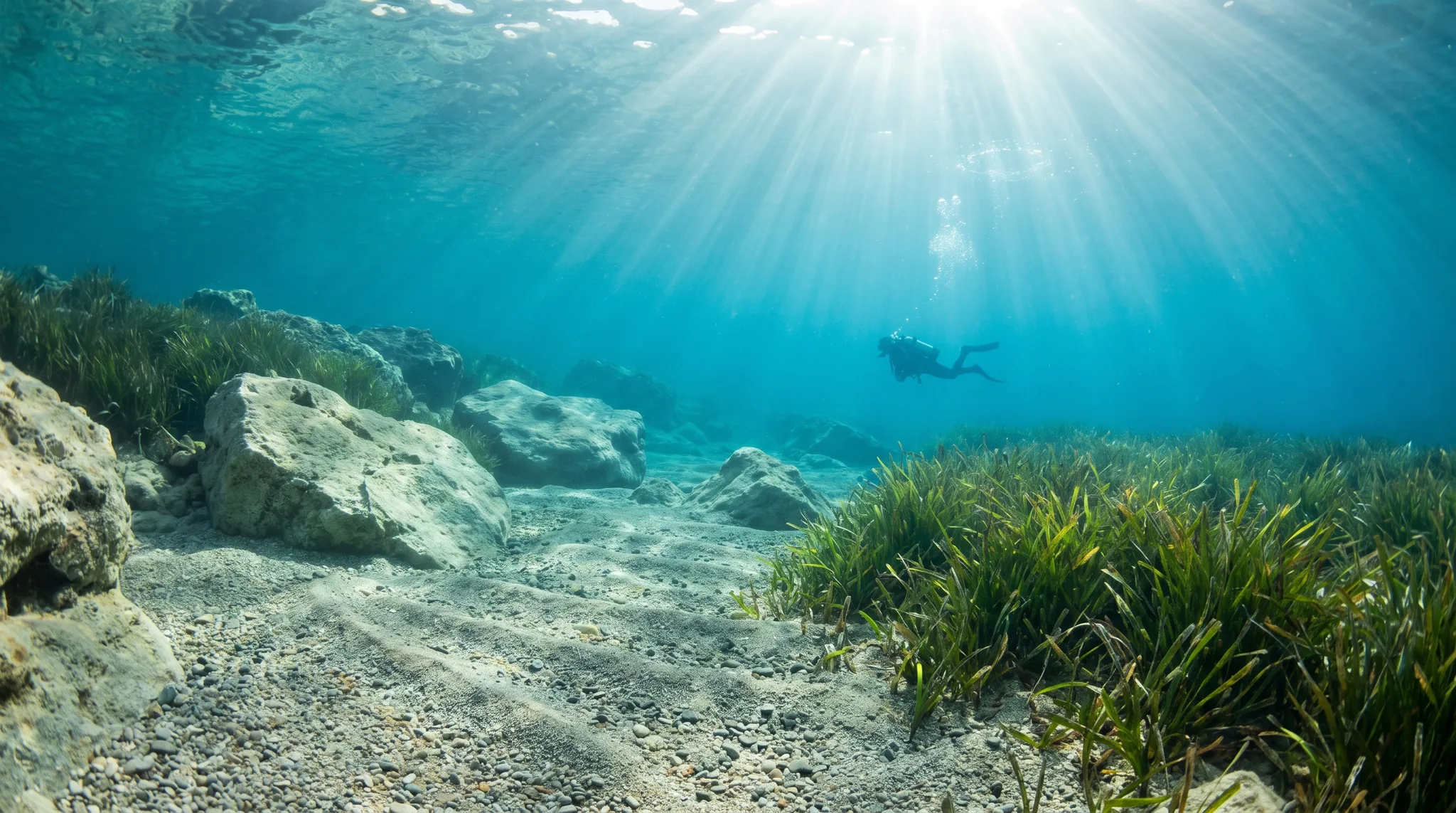
Monthly water temperature across Cerbère's sites, from satellite sea-surface data corrected for depth. The band shows the site-to-site spread.
Water temperatures sit at their lowest through winter and early spring before climbing steadily from May onward, reaching their peak across July and August. The warmest and most settled window runs from late spring through to October, which aligns with the best-months data and typically brings the clearest visibility. Outside this period, diving remains possible but cooler water and more variable conditions call for appropriate exposure protection.
9 operators
Banyuls de la Marenda, France
Cervera de la Marenda, France
18 more sites to explore
Water temperature around Cerbère ranges from about 13°C in January to 20°C in July, based on satellite sea-temperature data for its dive sites.
In the warm season (about 20°C) a 5mm suit is comfortable in Cerbère; in the coldest months (about 13°C) step up to a 7mm or semi-dry suit.
Fin maps 23 sites in Cerbère (20 scuba diving sites and 4 snorkelling spots, with some suited to both).
Across Cerbère's dive sites, June, July, August, September and October are most often reported as the best months to visit.
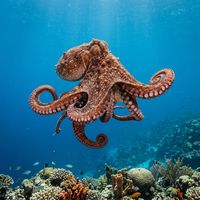
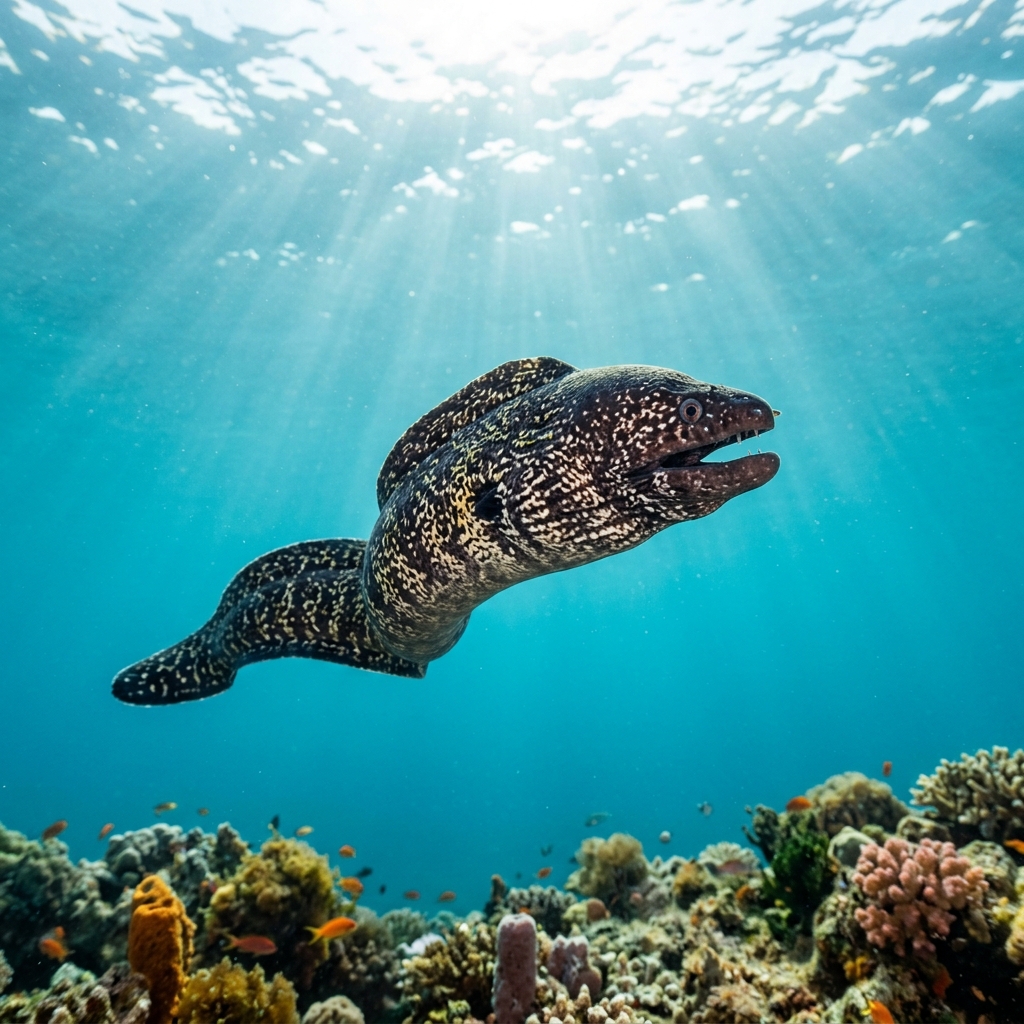
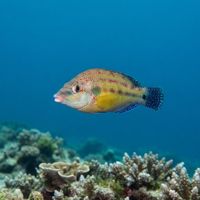
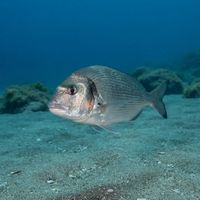
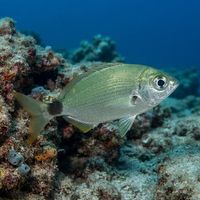
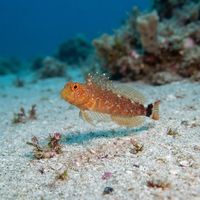
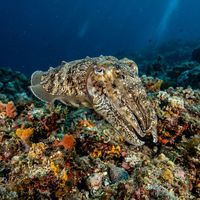
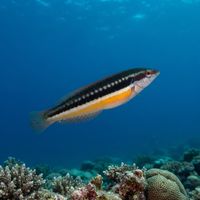
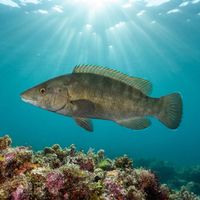
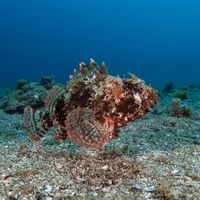
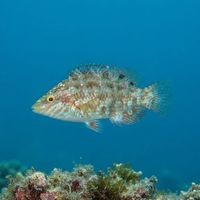
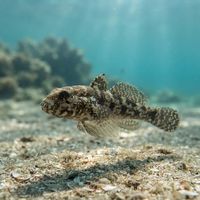
The reefs are consistently home to Common Octopus, Mediterranean Moray and a wide variety of wrasse including Peacock Wrasse, Mediterranean Rainbow Wrasse and Brown Wrasse. Gilthead Seabream, Saddled Bream and Comber are also very commonly observed. Look carefully among the rocks for Black Scorpionfish and European Common Cuttlefish, and keep an eye out for signature species such as the Violet Sea Slug and Diaphorodoris papillata on encrusted surfaces.
A good proportion of Cerbère's sites are rated for beginners, including Les Tignes, which offers a calm, current-free environment accessible from shore or boat. The Réserve Marine Banyuls-Cerbère site also accommodates beginners across its shallower zones. More advanced topography, such as the canyon and drop-off at Cabail Bernat or the moderate currents at Ile Canadell, gives experienced divers something to progress toward.
Entry options vary across the site mix: several sites are accessible from shore, others require a boat, and some offer both. Multiple local dive operators are based in the area, including Aloès Plongée, Plongée Cap Cerbère, Rédéris Plongée and Aquablue Plongée, among others. Guided access through one of these operators is the most straightforward way to reach the boat-only sites.
The predominant terrain is rocky reef, often combined with seagrass meadow in shallower areas. Several sites add canyon and drop-off features, giving dives a more dramatic vertical character at depth. This variety means that a single trip to Cerbère can take in sheltered reef exploration, seagrass habitats and wall diving without travelling far between sites.