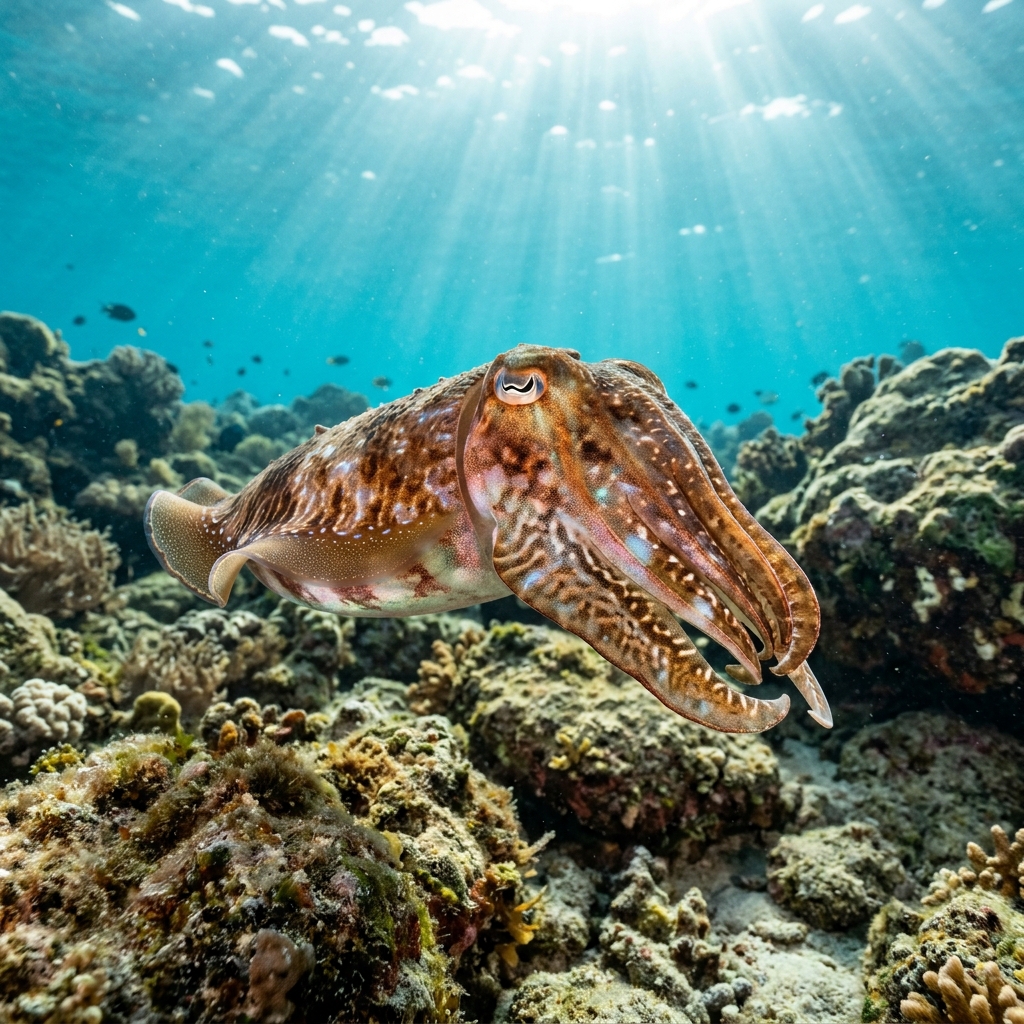
Sepia officinalis
Spot European common cuttlefish across the French Riviera, Costa Blanca and South Coast England. Present year-round in 9-20 °C waters. ID and dive tips inside.
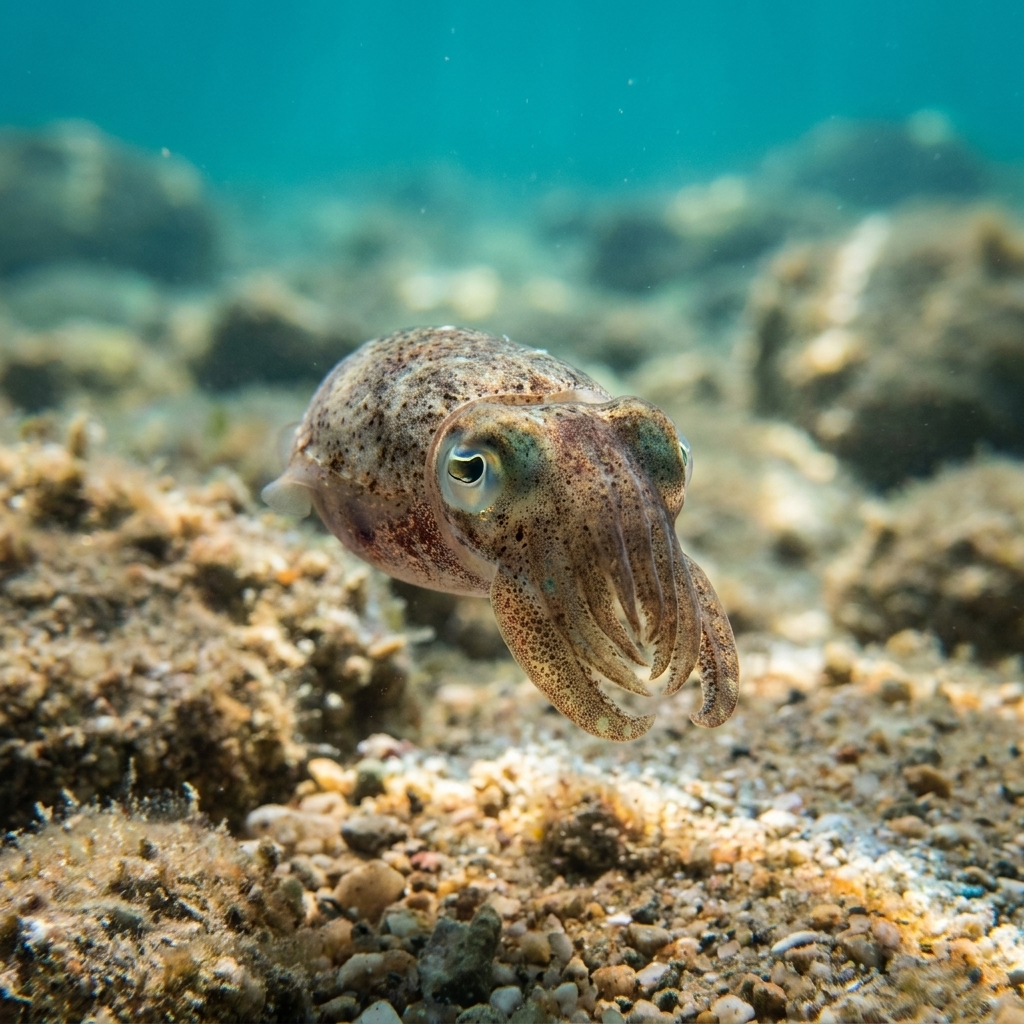
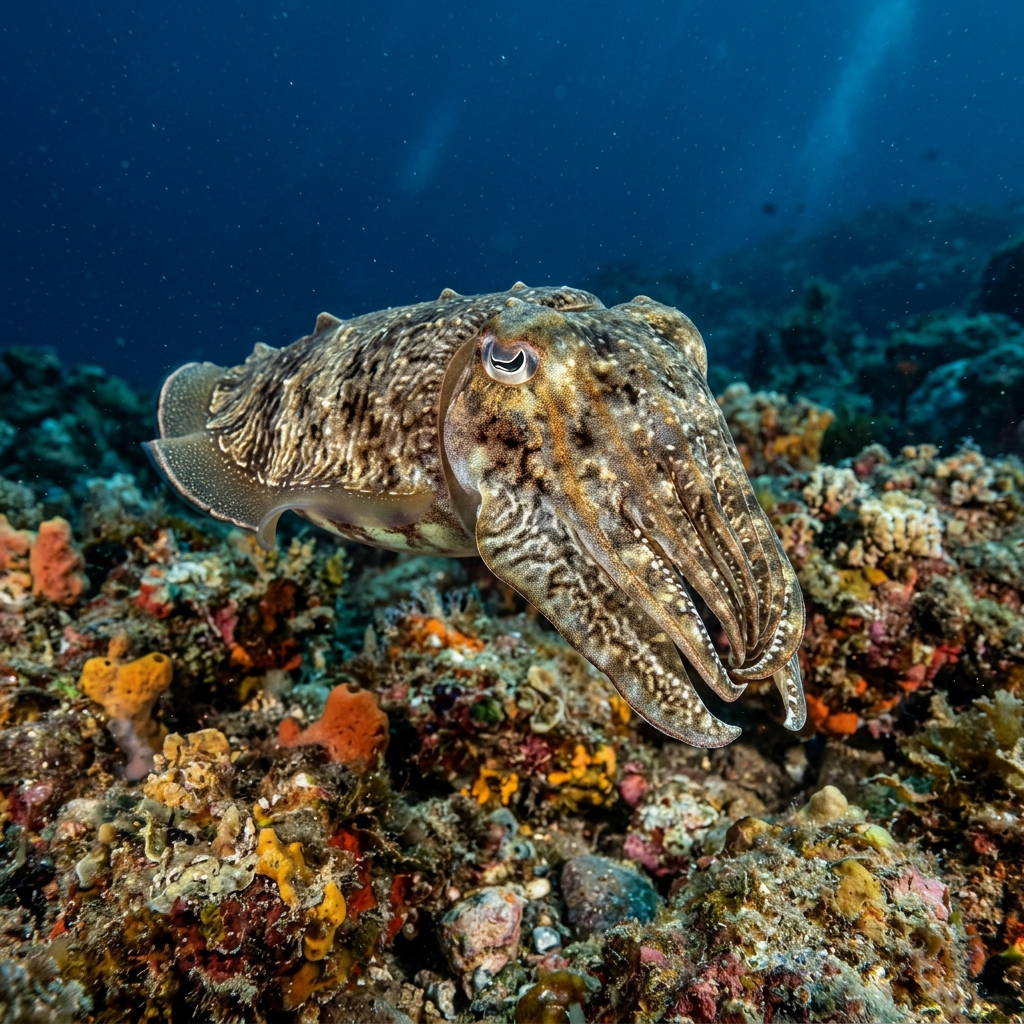
Roughly 34 cm long, the European common cuttlefish has a broad, flattened mantle (body) fringed along both sides by a continuous rippling fin, which is the easiest shape clue underwater. Skin colour shifts constantly, but resting individuals typically show mottled brown, grey, and white patterning against sand or rock. The eight arms and two longer tentacles are visible at close range, held neatly in front. During courtship, males pulse vivid zebra-stripe patterns across the mantle, making them unmistakable at that moment.
Most encounters happen during daylight hours, when cuttlefish actively patrol sandy and mixed-substrate shallows for small fish and crustaceans, occasionally freezing and mimicking the background to ambush prey. They tend to be cautious at first and may jet away if approached quickly, but a slow, non-threatening approach often triggers curiosity rather than flight. The most memorable sightings are spring courtship gatherings, where males flash rapid high-contrast zebra stripes across their mantles in competition for females.
Cuttlefish use a unique internal shell called the cuttlebone to control buoyancy by adjusting gas-to-liquid ratios inside it, a far more precise system than a simple swim bladder, which lets them hover motionless at any depth without effort.
Sightings are spread across all twelve months in Northern Hemisphere waters, reflecting the species' tolerance for cold-to-temperate conditions between roughly 9 and 20 °C, so any time of year works in its core range.
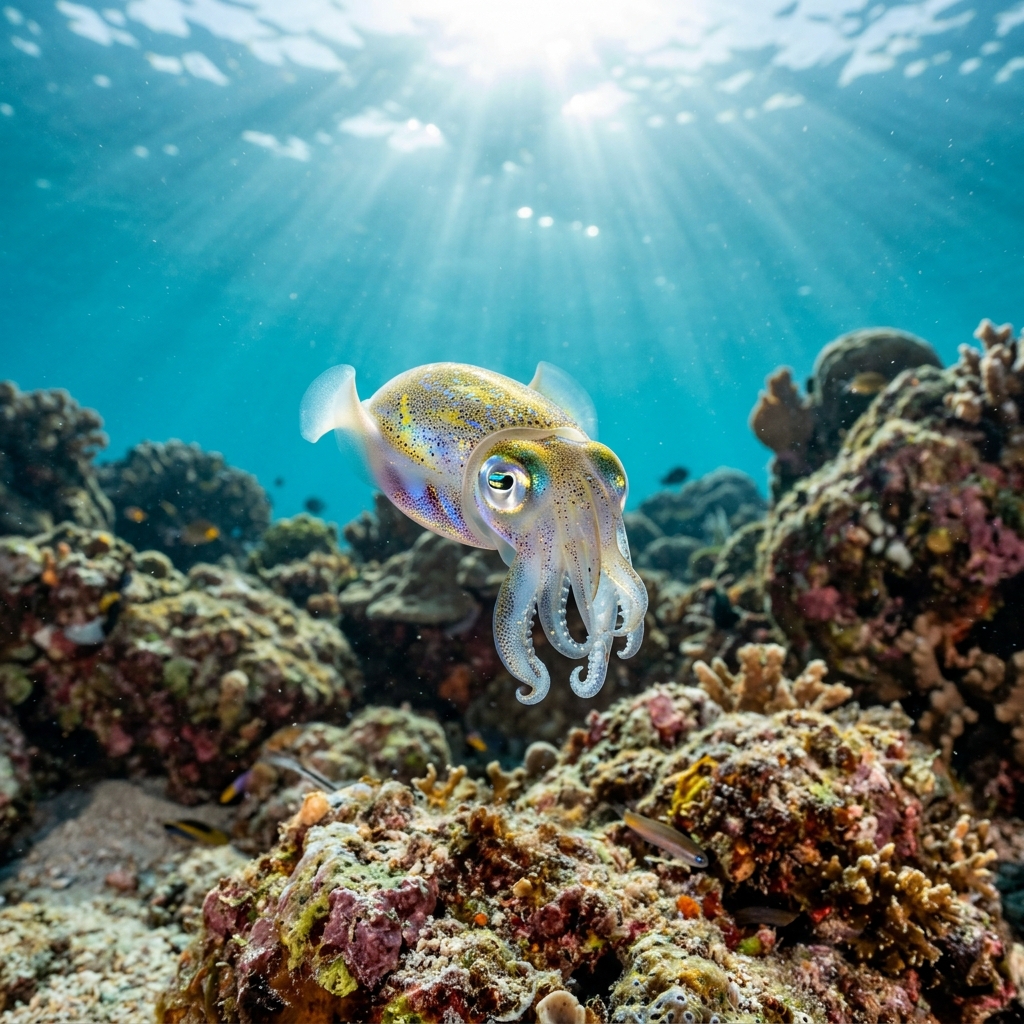
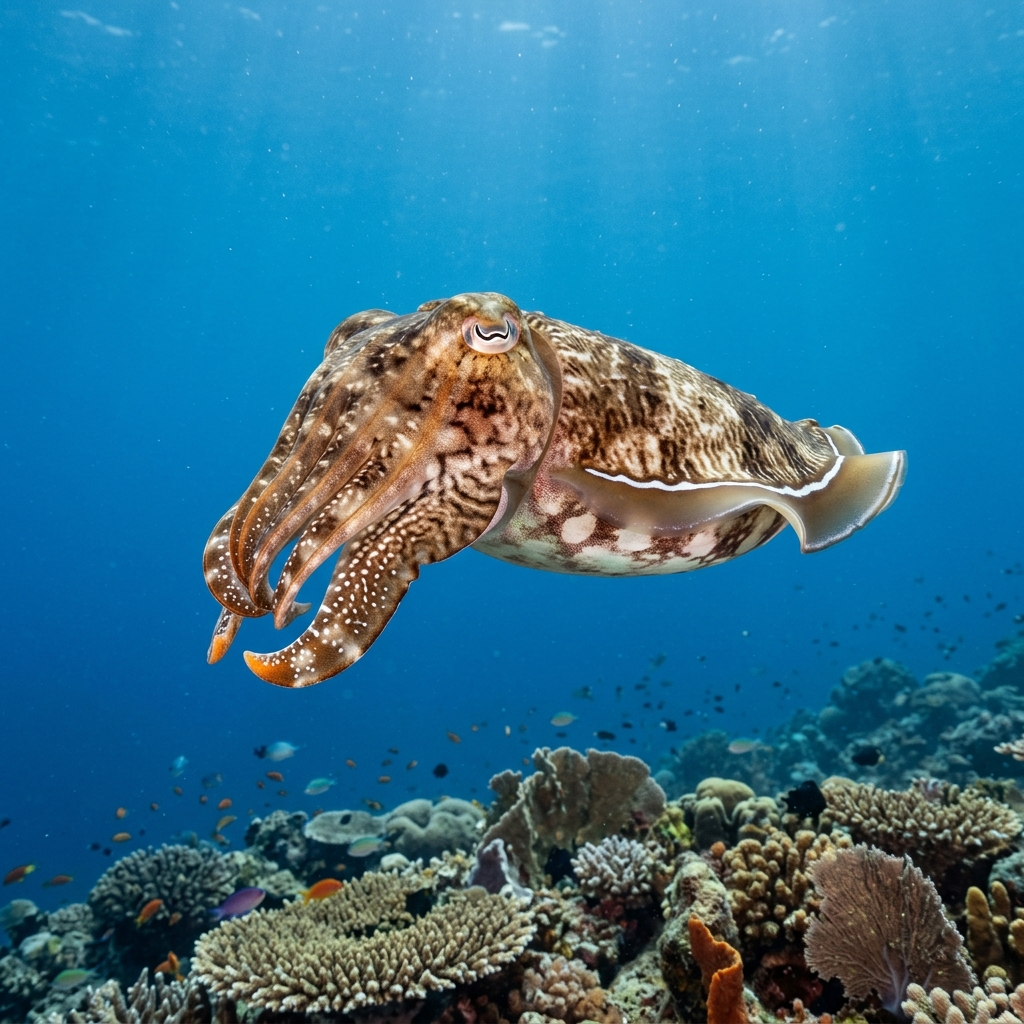
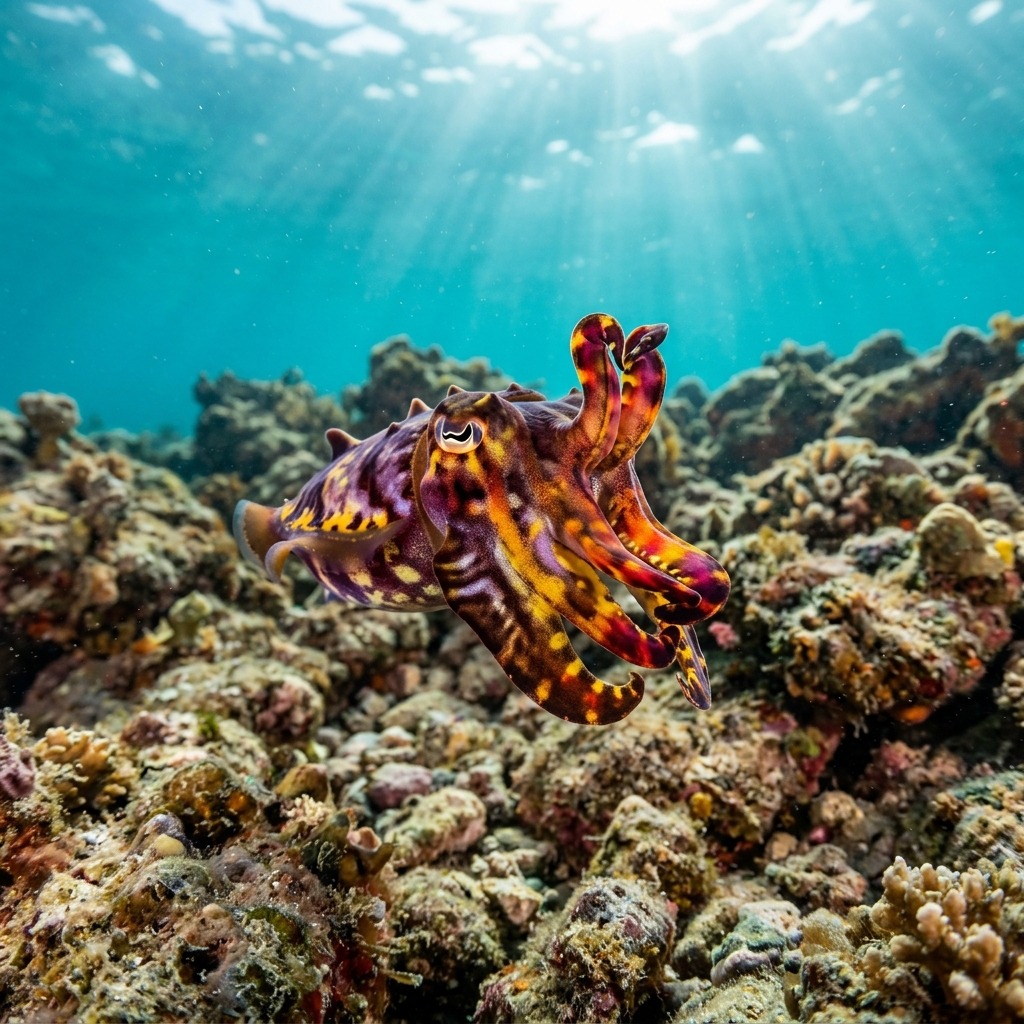
Reef neighbours a diver could mistake it for. Use the identification notes above to tell them apart.
Most commonly logged in France, Spain, Italy, and the United Kingdom, with particularly strong sighting records along the French Riviera and Provence, Costa Blanca, Brittany and Normandy, and the South Coast of England. Croatia, Greece, and the Netherlands, especially Zeeland's sheltered inlets, are also reliable areas. The species is a European Atlantic and Mediterranean specialist, so these are the waters to target.
Mapping where European Common Cuttlefish is logged…
The strongest records come from France, Spain, Italy, Croatia, and the United Kingdom. Top regions include the French Riviera, Costa Blanca, Brittany and Normandy, South Coast England, and Zeeland in the Netherlands. The species is essentially a European Atlantic and Mediterranean animal, so it is rarely encountered outside that range.
In their Northern Hemisphere range they are recorded in every month, so there is no single best season. Spring is worth targeting specifically if you want to watch courtship behaviour, when males aggregate and display to females in shallow water.
Look for a broad, flattened body about 30 cm long with a continuous rippling fin running the full length of both sides, and a habit of hovering just above the seabed. Skin colour varies but resting animals are usually mottled brown and grey. A male in courtship mode will be showing pulsing black-and-white zebra stripes, which is unmistakable.
They typically reach around 34 cm in mantle length, making them one of the larger cuttlefish species in European waters. That is roughly the size of a large dinner plate, substantial enough to be clearly visible from a few metres away.
Their skin contains thousands of pigment-filled cells called chromatophores, each controlled by a tiny muscle that expands or contracts it within milliseconds. Below those sit iridophores that reflect light structurally. The brain coordinates all of these simultaneously, producing patterns that shift faster than the human eye can fully track.
Site and sighting data is aggregated from diver logs, iNaturalist and GBIF. For taxonomy and conservation status:
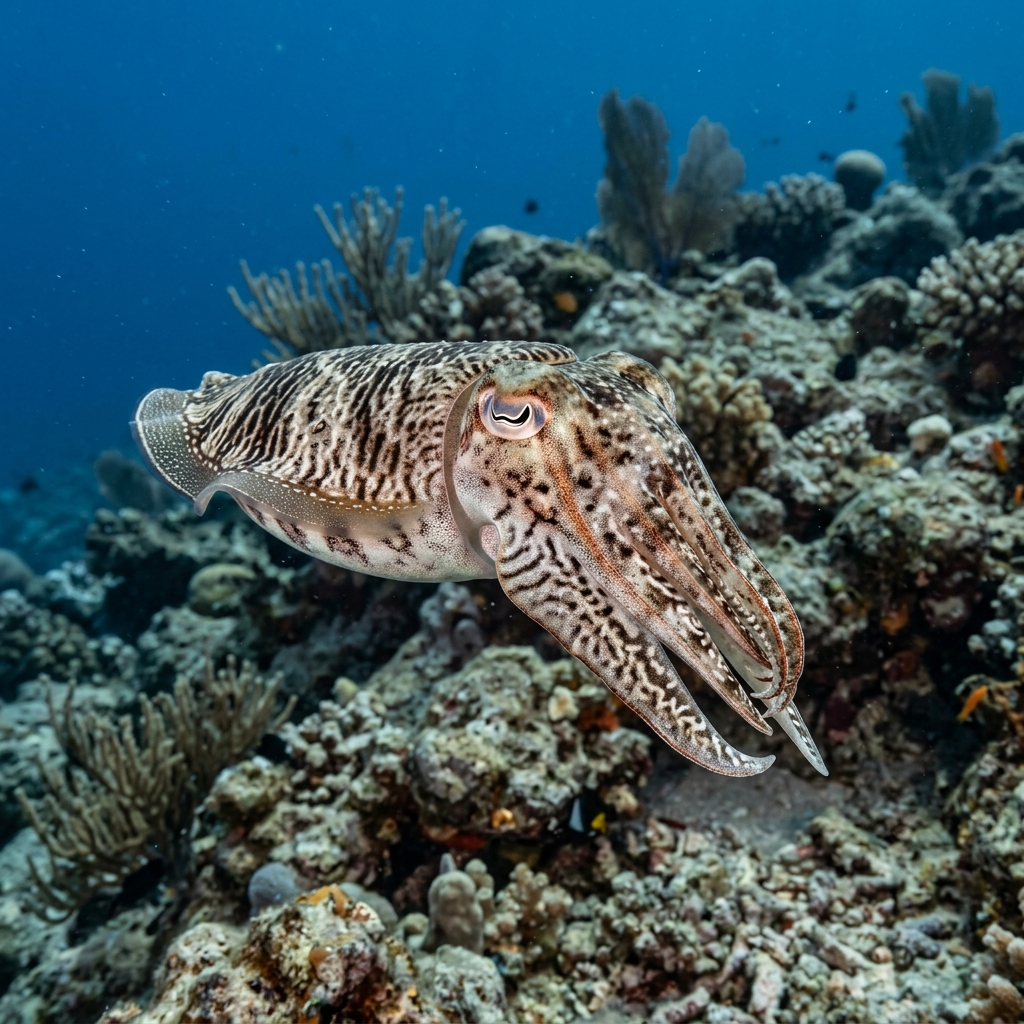
Pharaoh Cuttlefish
925 sites