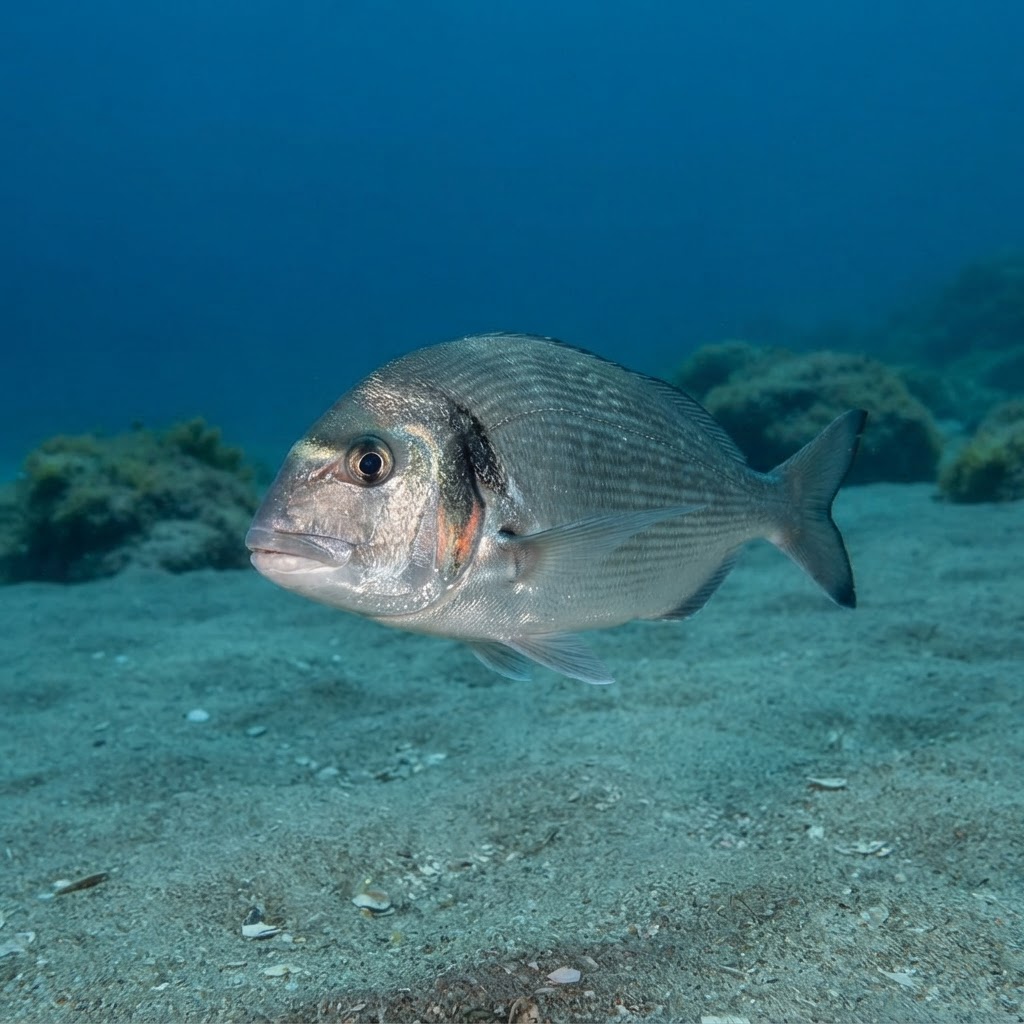
Sparus aurata
A golden cheek patch and steady presence over sand make this bream a reliable find in Catalonia, Kvarner and the French Riviera year-round.
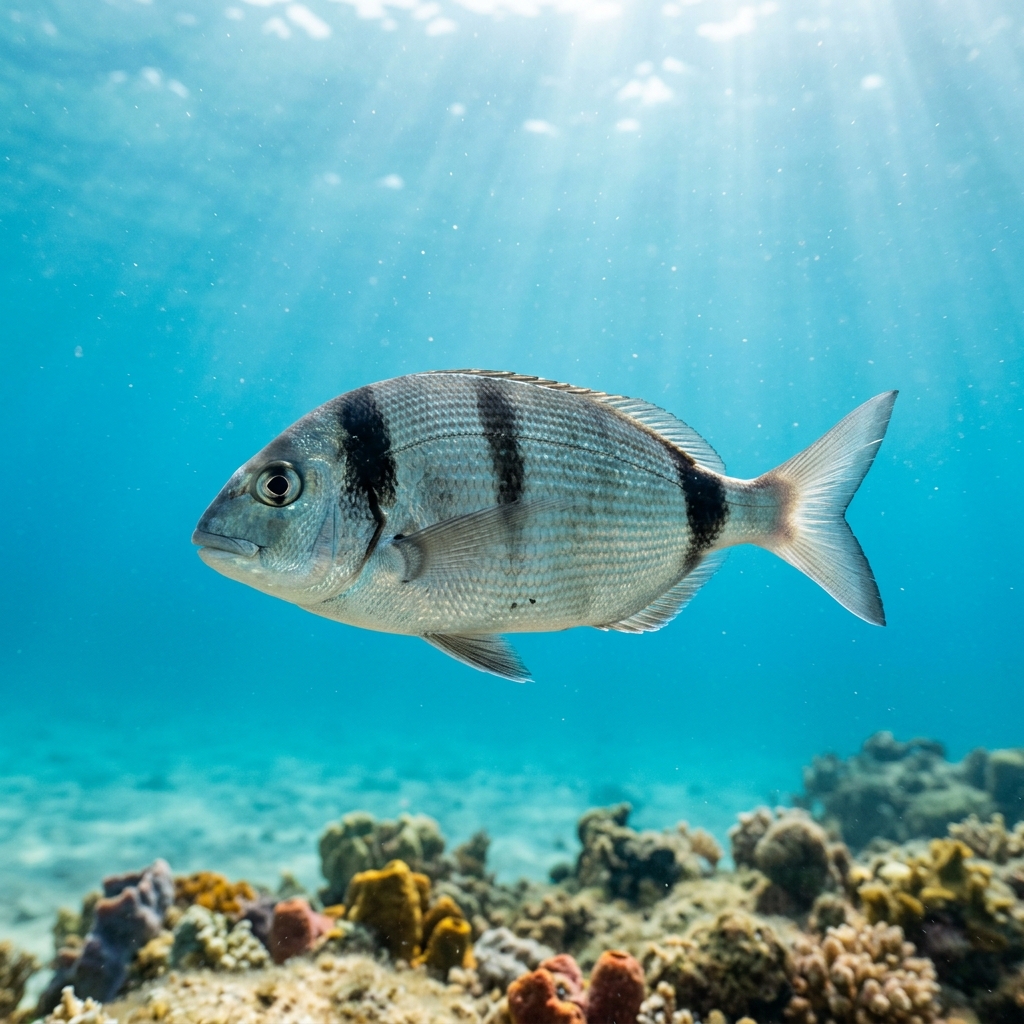
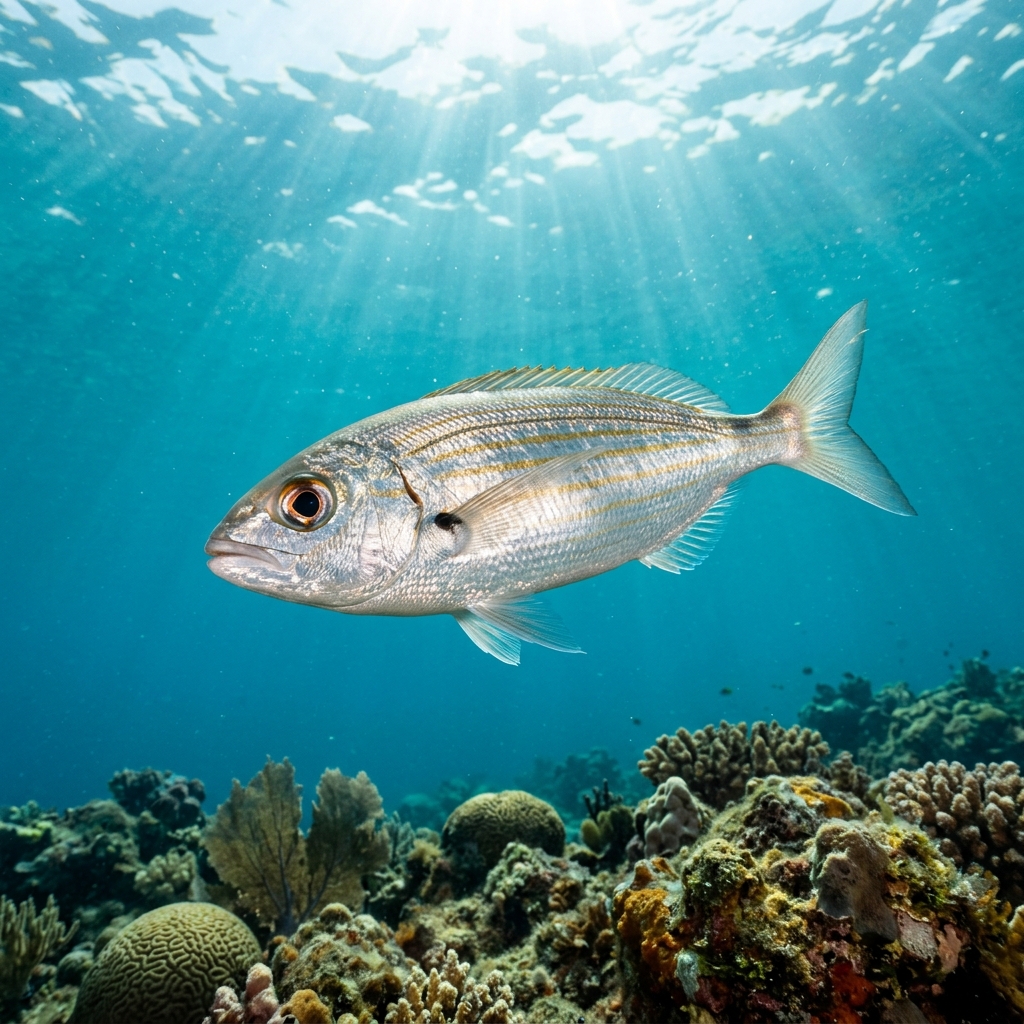
Look for a silver-grey, deep-bodied fish with a distinctive golden band running between the eyes, which gives the species its name. A dark, crescent-shaped patch sits just above the gill cover, and the tail carries a black edge. Adults reach around half a metre and often hang singly or in loose small groups just off the bottom, cruising with an unhurried, deliberate stroke rather than darting.
Expect to find it hovering or slowly patrolling just above sand, seagrass beds or mixed rocky bottom, often alone or in small loose gatherings rather than tight schools. It's a carnivore that forages by picking at shellfish and small invertebrates on the substrate, using strong jaws to crush shells, and it tends to keep a cautious but not panicked distance from divers, drifting off rather than bolting.
Gilthead seabream are protandrous hermaphrodites, meaning many individuals start life as males and later switch to female as they mature, a reproductive strategy that shapes population structure more than most divers realise.
Sightings don't show a strong seasonal spike in the data, and with a comfortable range of roughly 12 to 21 C this bream is a candidate for encounters across most of the diving season rather than one narrow window. In practice divers log it steadily through spring, summer and autumn wherever water temperatures sit in that range.
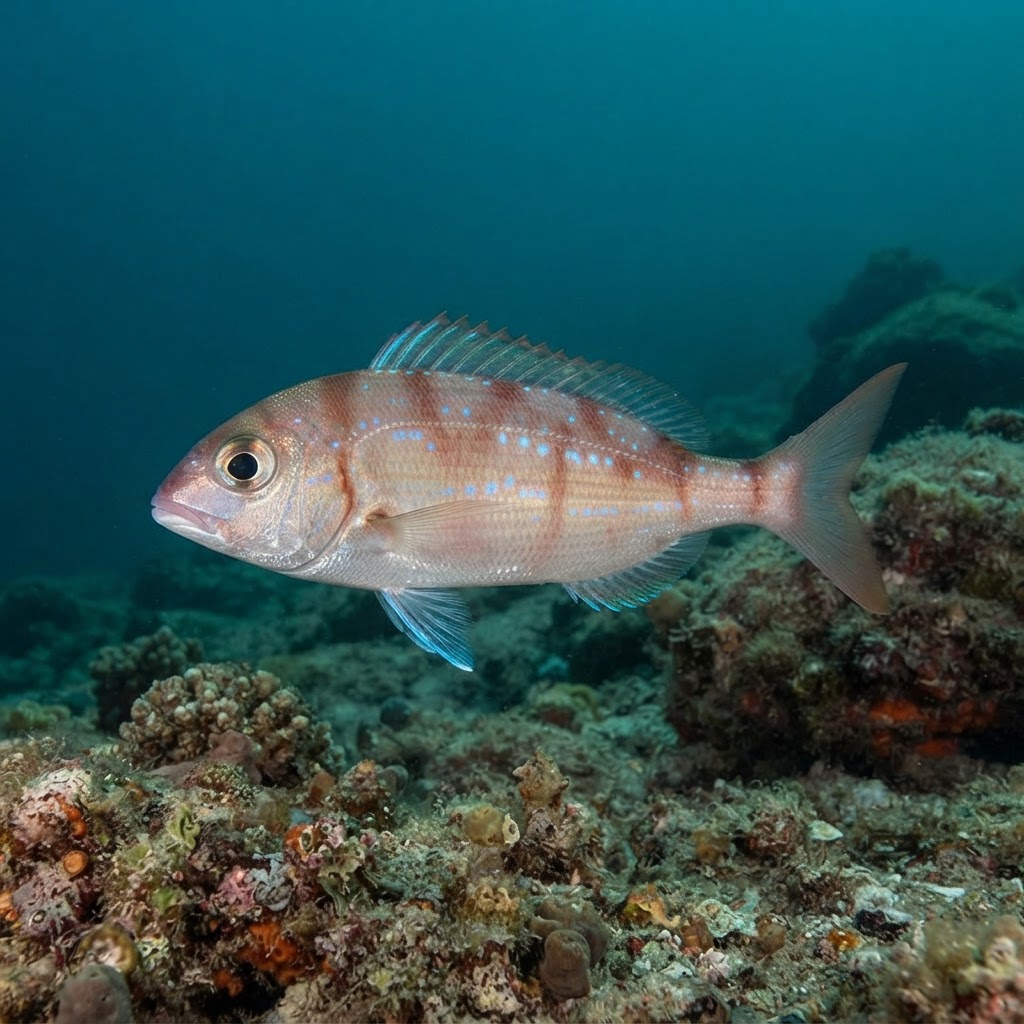
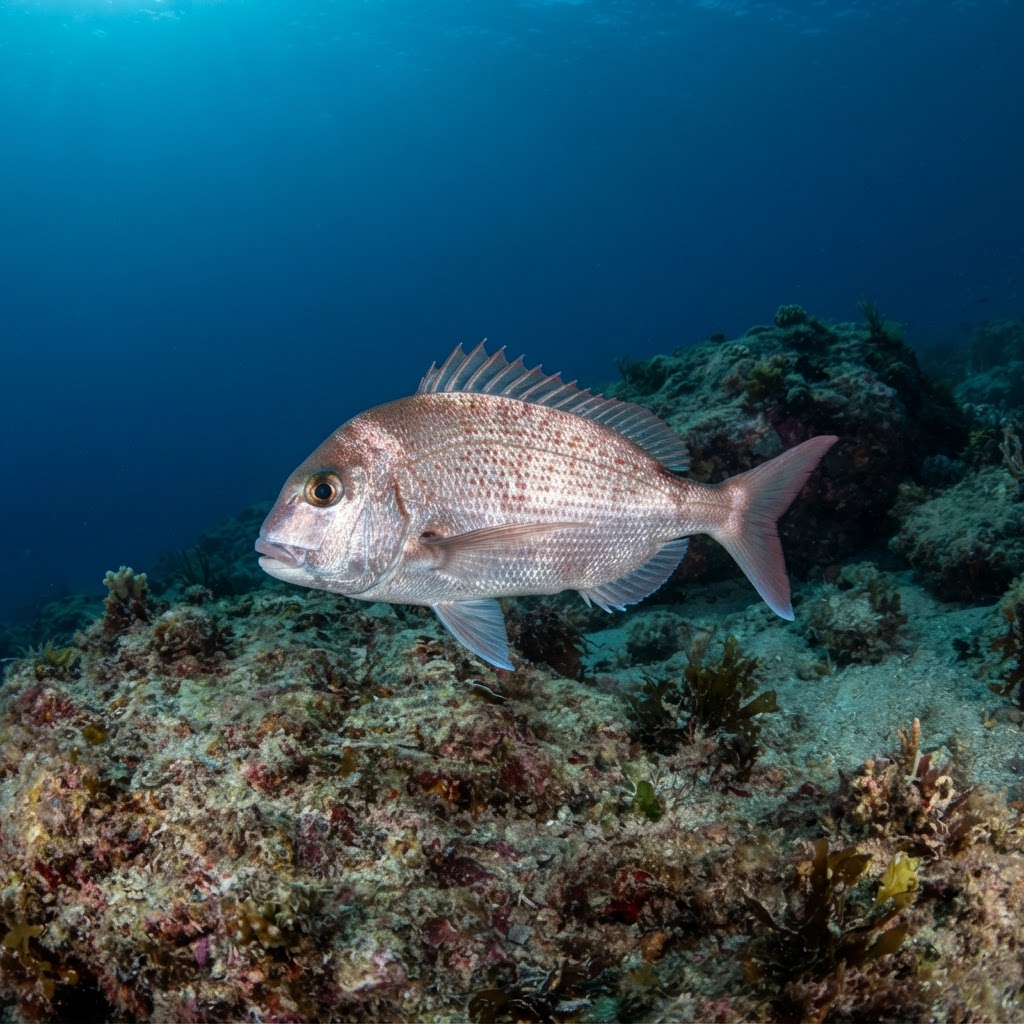
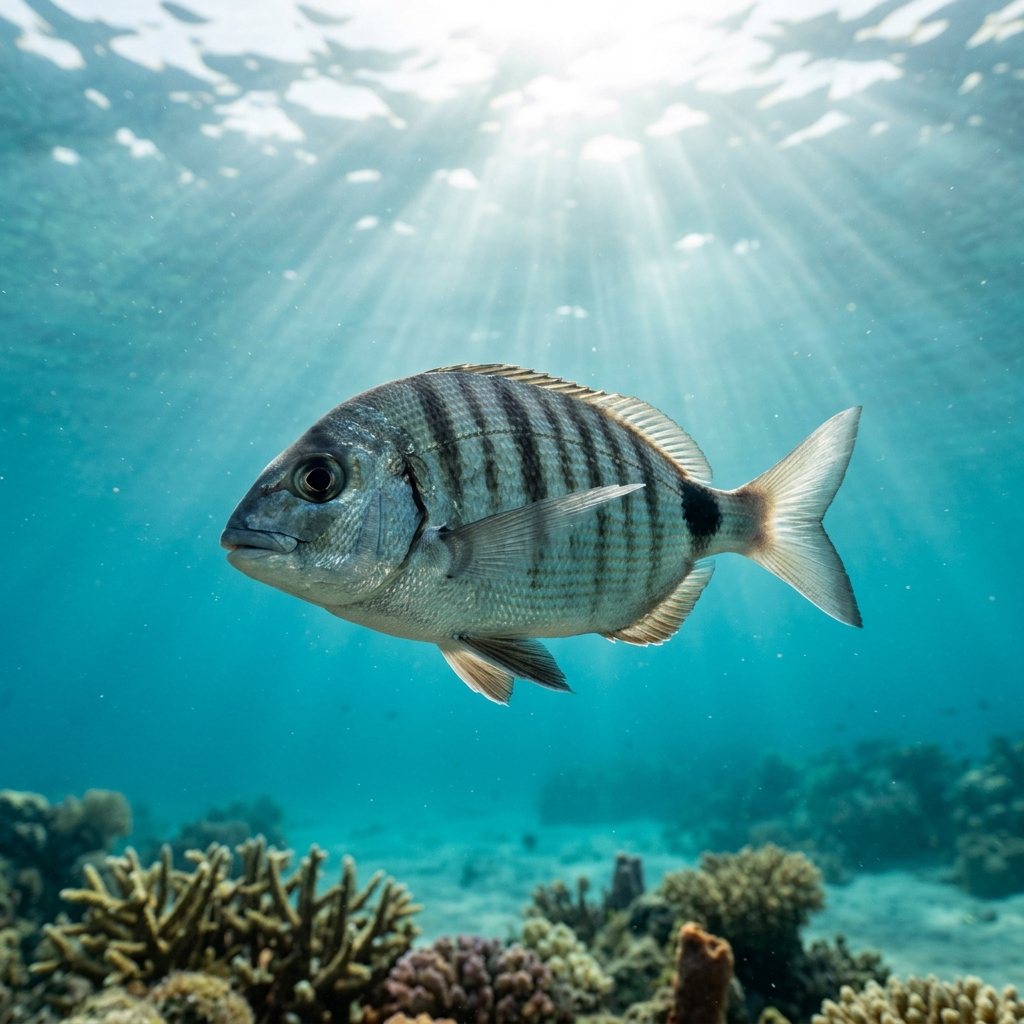
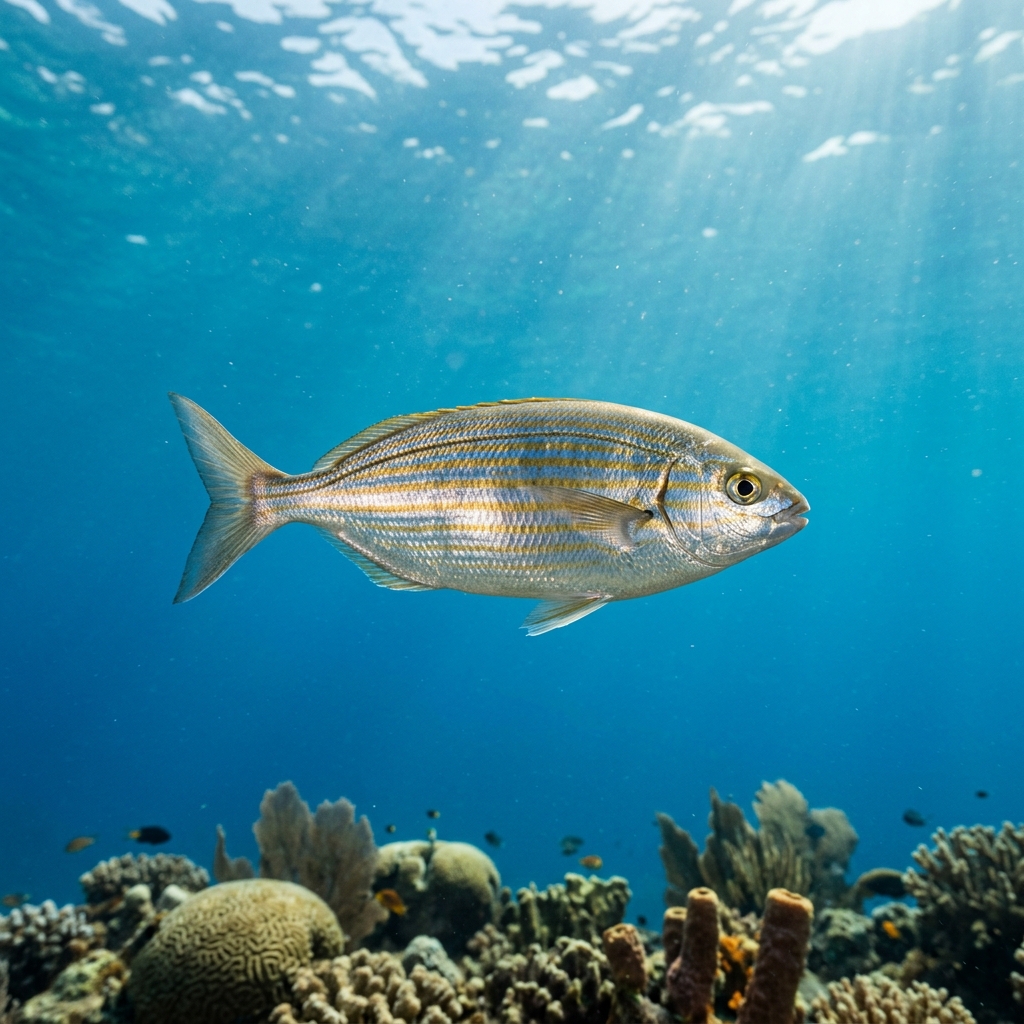
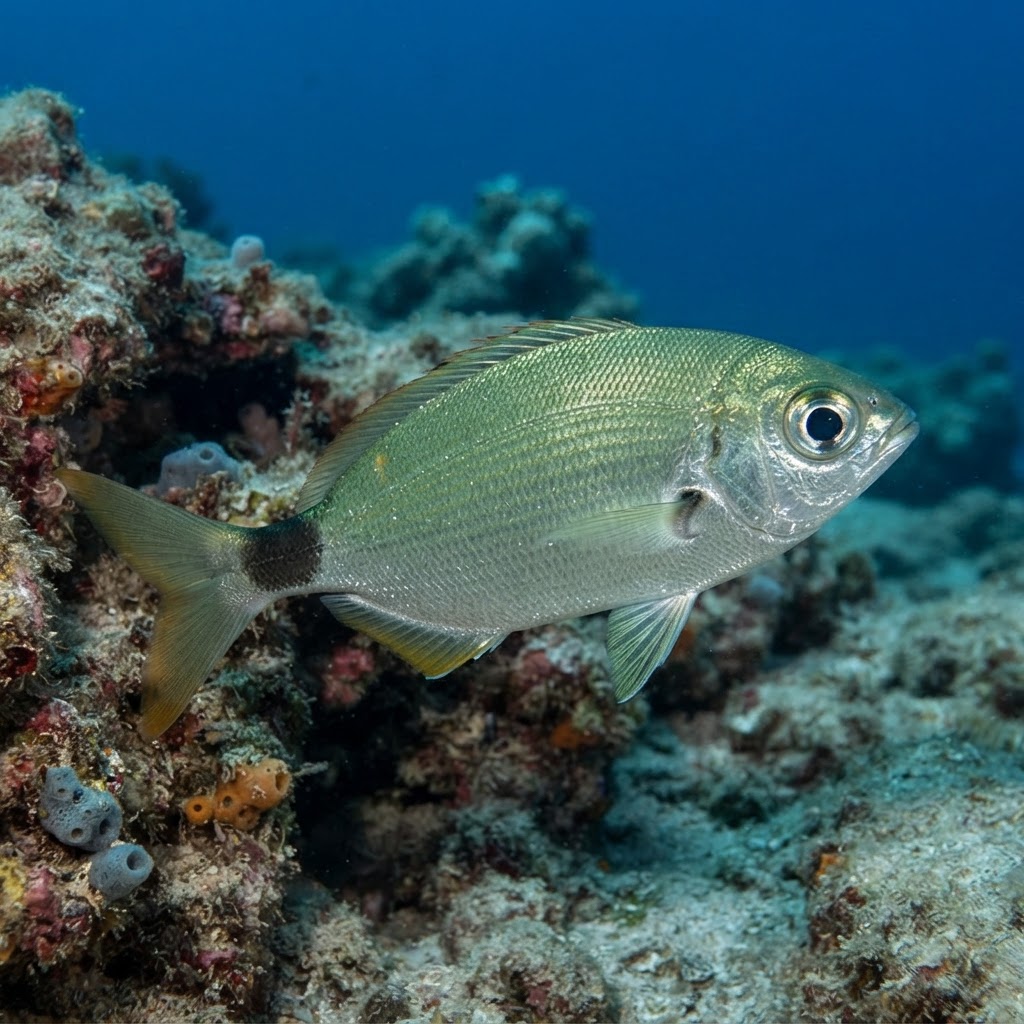
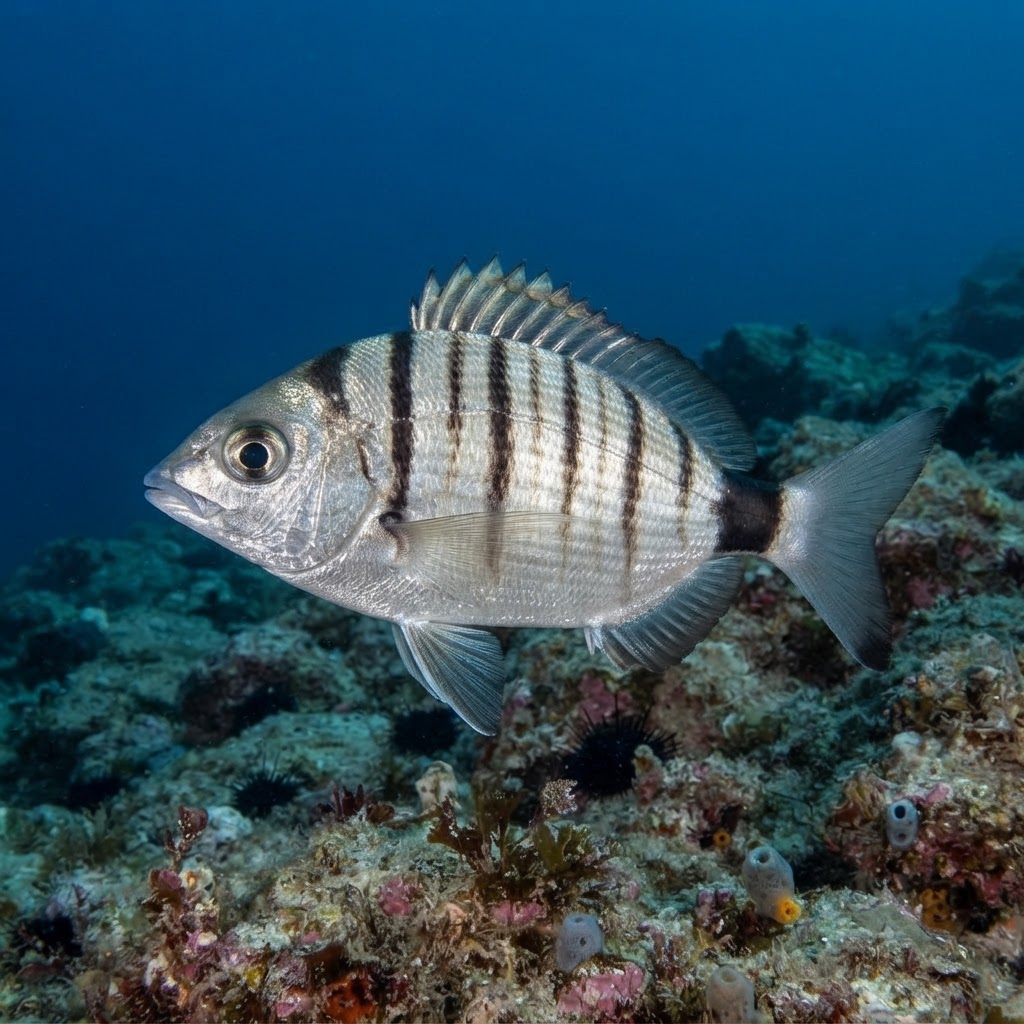
Reef neighbours a diver could mistake it for. Use the identification notes above to tell them apart.
This is one of the more dependable sparids across the Mediterranean, with strong logs from Catalonia and the Balearic Islands in Spain, the French Riviera and Provence in France, and Kvarner and Istria in Croatia. It also turns up reliably along the Ligurian coast of Italy and around Portugal's coastline and the Canary Islands, usually over sand, seagrass or rocky-sand transitions rather than deep reef.
Mapping where Gilthead Seabream is logged…
They are most reliably logged in Catalonia and the Balearic Islands in Spain, the French Riviera and Provence in France, and Kvarner and Istria in Croatia, plus steady sightings along Liguria in Italy and Portugal's coast.
There is no sharp seasonal peak in the sighting data, so they are a fair bet across the warmer diving months whenever water sits within their comfortable 12 to 21 C range, roughly spring through autumn in the Mediterranean.
Check for a silver-grey body with a golden band across the forehead between the eyes and a dark crescent mark near the gill cover. It moves with a slow, steady cruise over sand or seagrass rather than tight reef cover.
Adults typically reach around 49 cm, making them one of the larger, chunkier sparids a diver is likely to spot cruising over Mediterranean sand flats.
They are protandrous hermaphrodites, often starting life as males before switching sex to female as they grow older, a trait shared with several other sea bream species.
No, they pose no threat to divers and typically just drift away if approached too closely rather than showing any defensive behaviour.
Site and sighting data is aggregated from diver logs, iNaturalist and GBIF. For taxonomy and conservation status:
Saddled Bream
3,846 sites