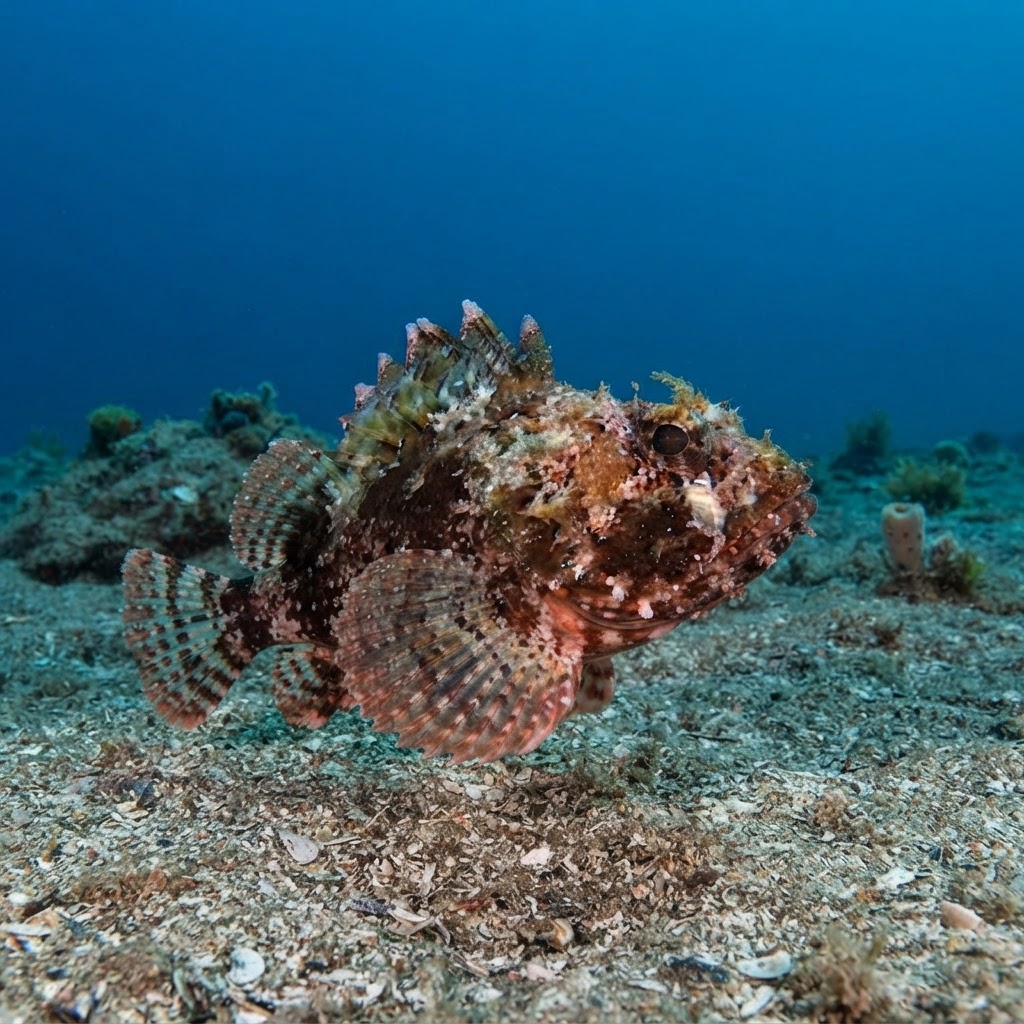
Scorpaena porcus
Mottled and motionless on rocky reefs from Catalonia to Kvarner, this scorpionfish hides in plain sight in 11-16C water year-round.
Safety warning
Venomous spines along the dorsal fin can deliver a painful sting if you put a hand or knee down on one, which is easy to do given how well it blends into rubble and rock. Keep your hands off the bottom in areas with loose rock or weed, and if stung, get out of the water and seek treatment as the pain from scorpionfish venom can be severe even though it is not usually life-threatening.
If you're stung
Venomous spinesGeneral first-aid guidance, not a substitute for professional medical care. In an emergency, call your local emergency number.
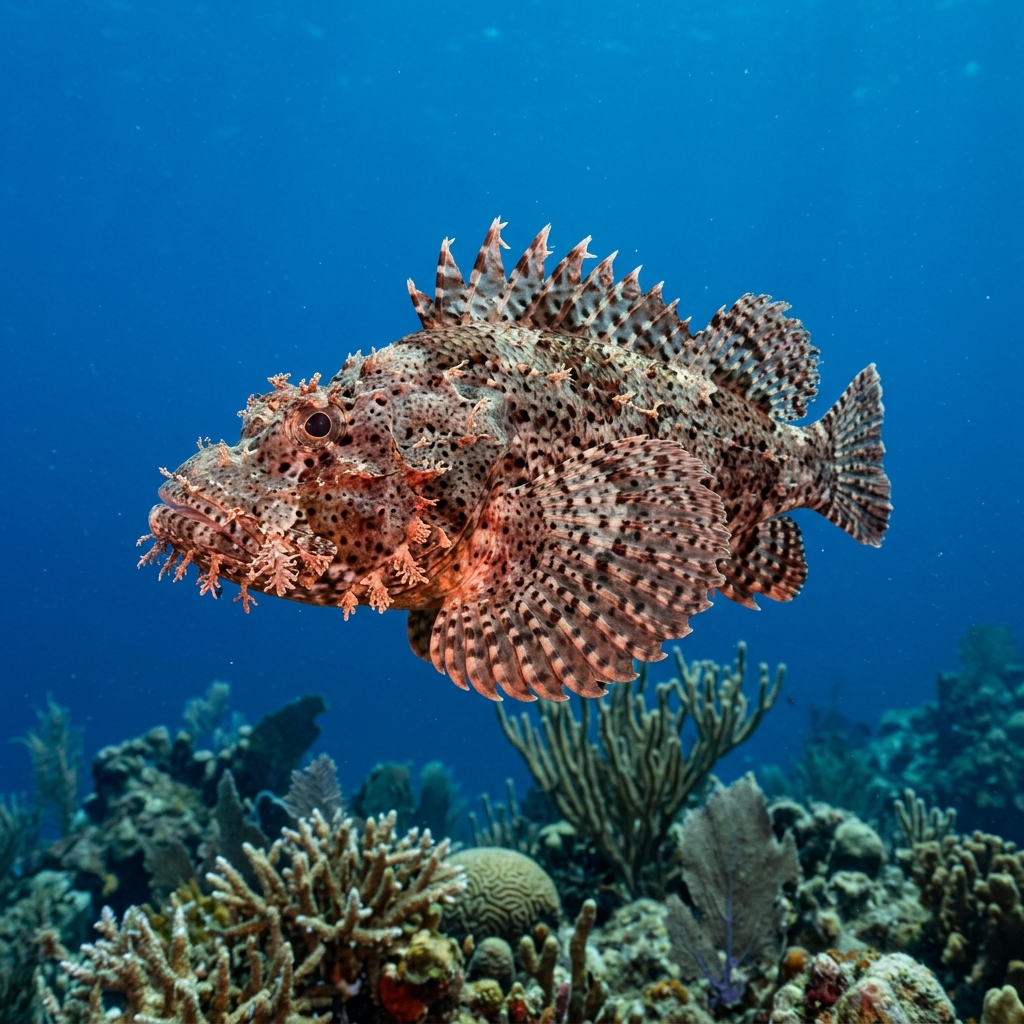
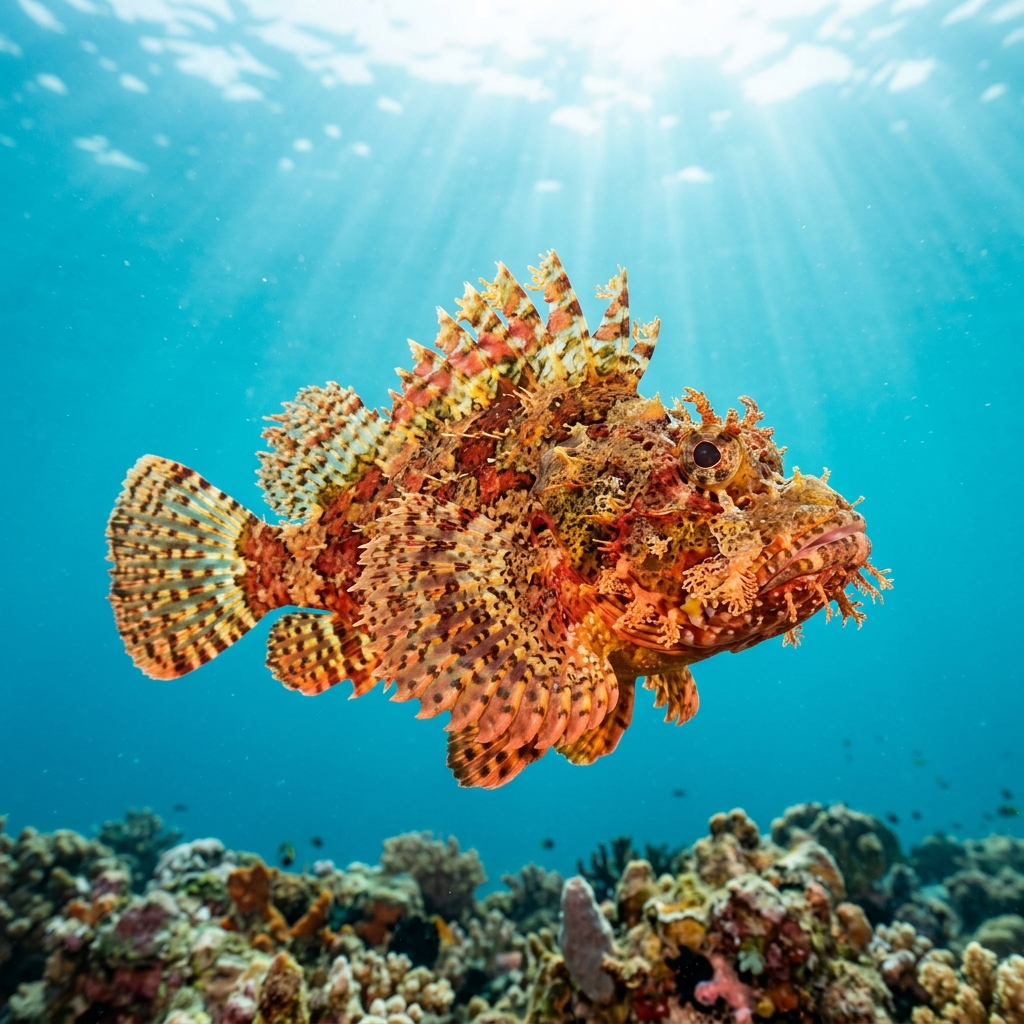
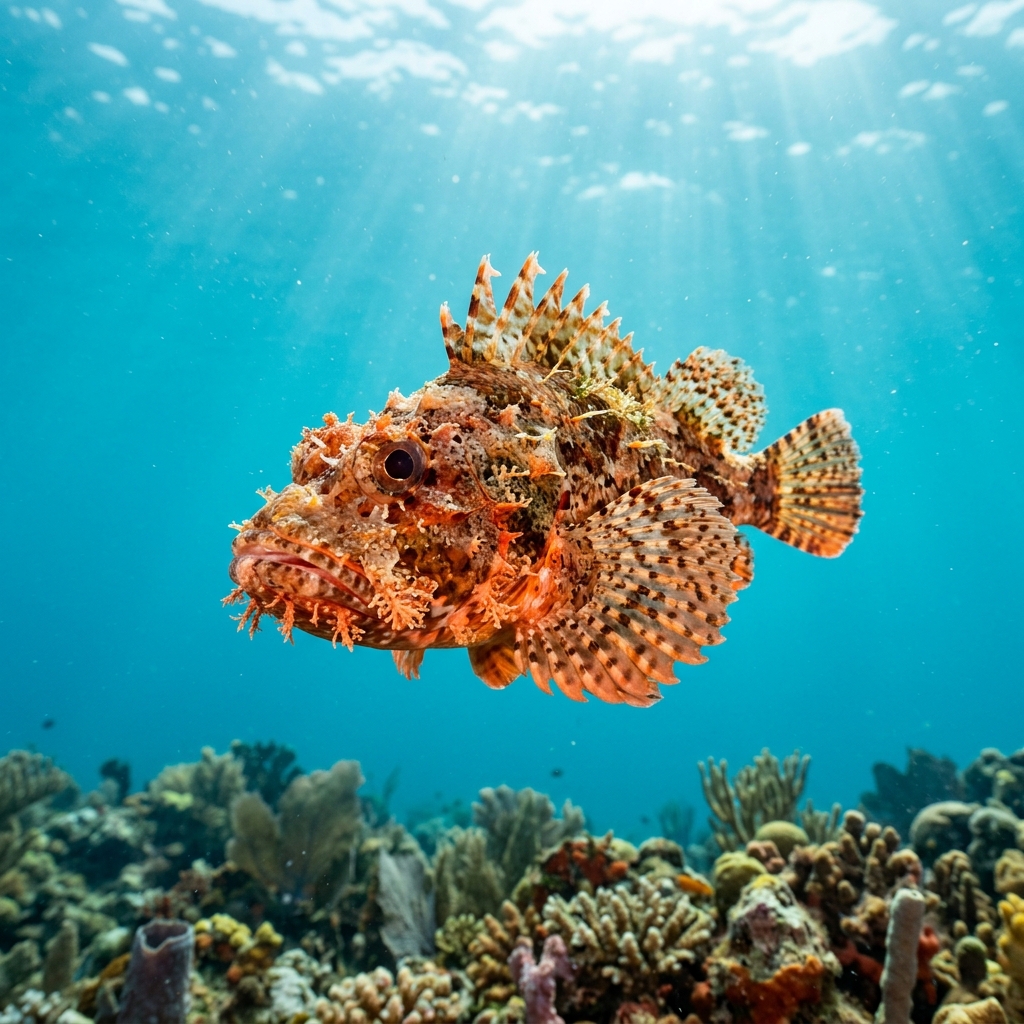
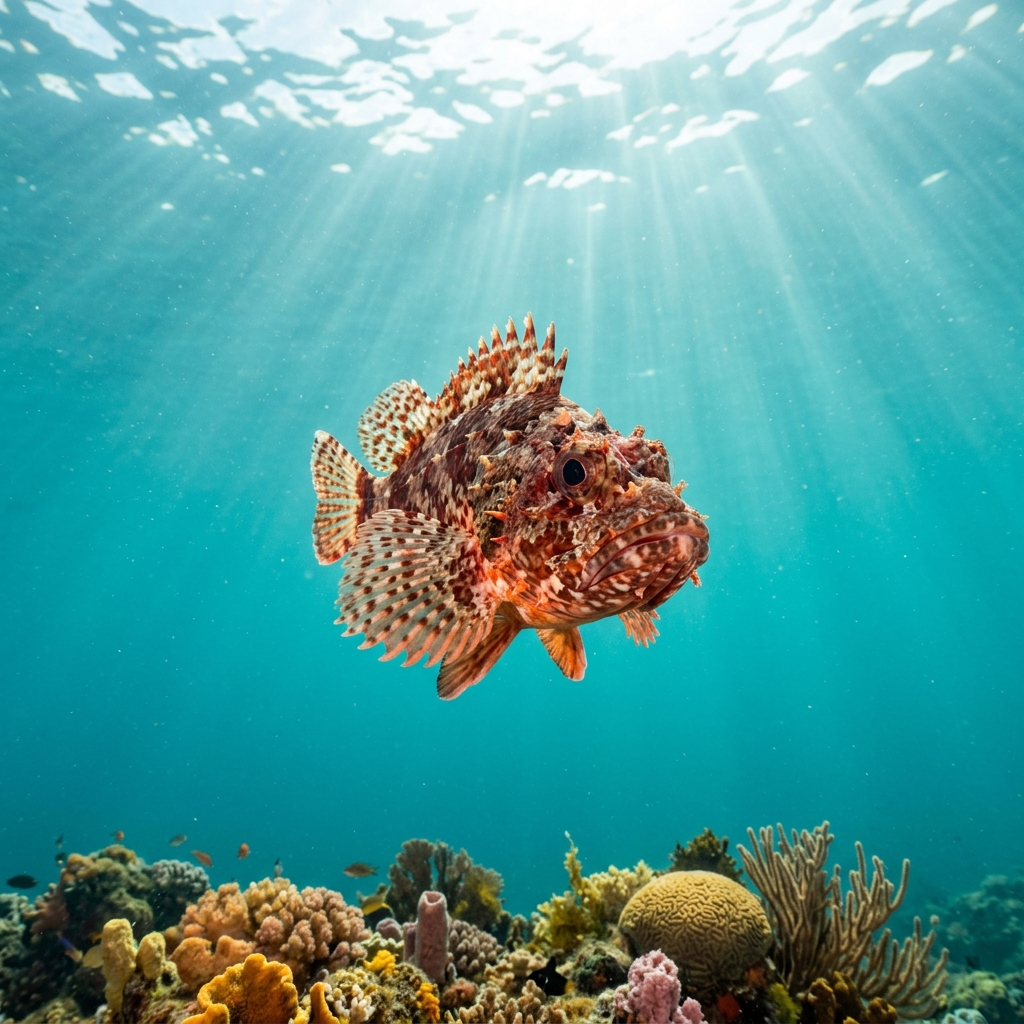
Squat, heavy-bodied fish around 28 cm with a large spiny head and mottled brown, grey and rust colouring that blends almost perfectly into rock and rubble. Look for the fleshy skin flaps (cirri) above the eyes and along the jaw, and the way it sits dead still on the bottom rather than swimming. No fins visible unless it flares them when disturbed, and the body texture reads more like a rock than a fish until it blinks or the gills move.
Expect to find it parked on rock, rubble or sand, often half tucked against a ledge, relying on stillness and camouflage rather than fleeing when a diver approaches. It is an ambush predator, waiting for small fish or crustaceans to wander close before striking in a fraction of a second, so most sightings are of a fish doing absolutely nothing until that strike happens. Most divers log it as a rare to uncommon find, which usually means you have to actively scan the bottom rather than expect it to swim into view.
Its camouflage is good enough that most sightings happen because a diver notices the eyes or the outline rather than any colour or movement, making it a favourite test of a diver's ability to actually look at the reef rather than over it.
Sightings show no clear seasonal pattern, and with a comfort range of roughly 11 to 16C it tolerates the cooler end of Mediterranean water, so divers log it across the year rather than in one particular window.
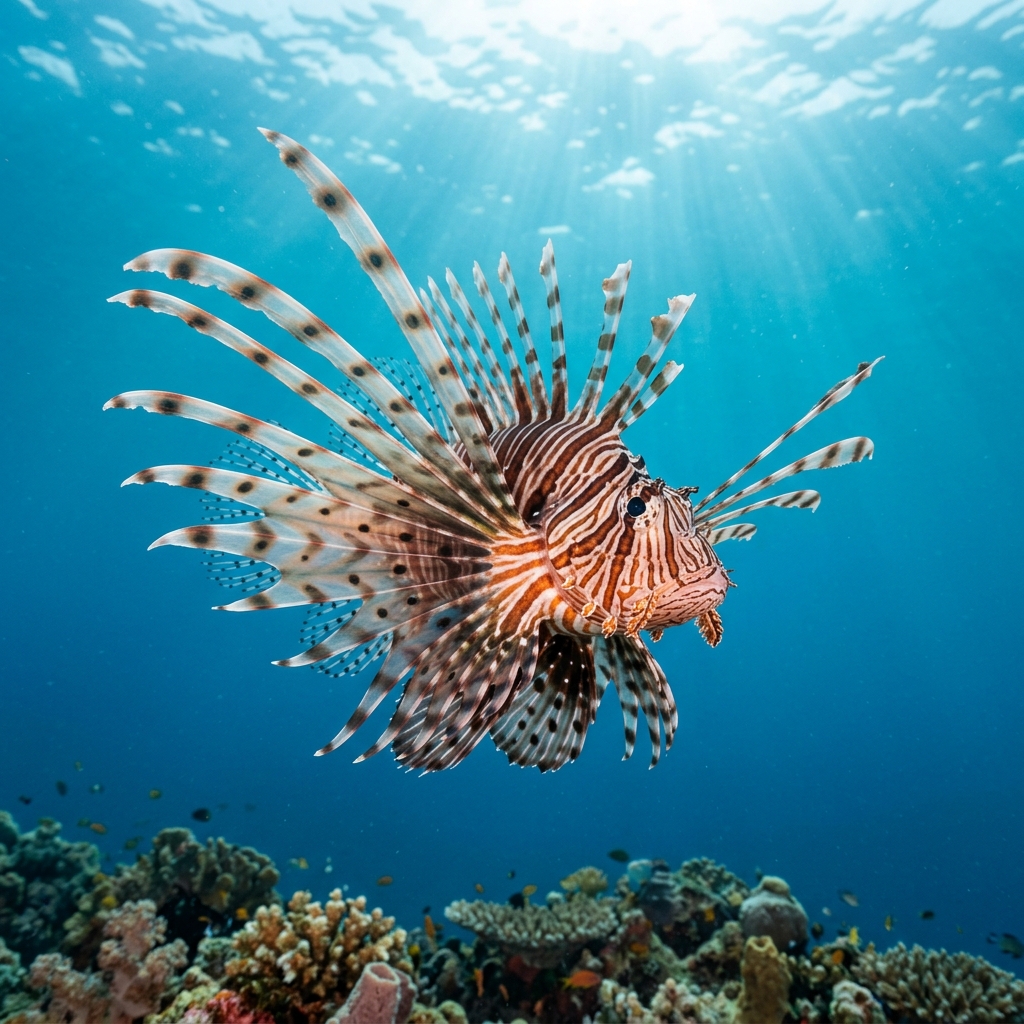
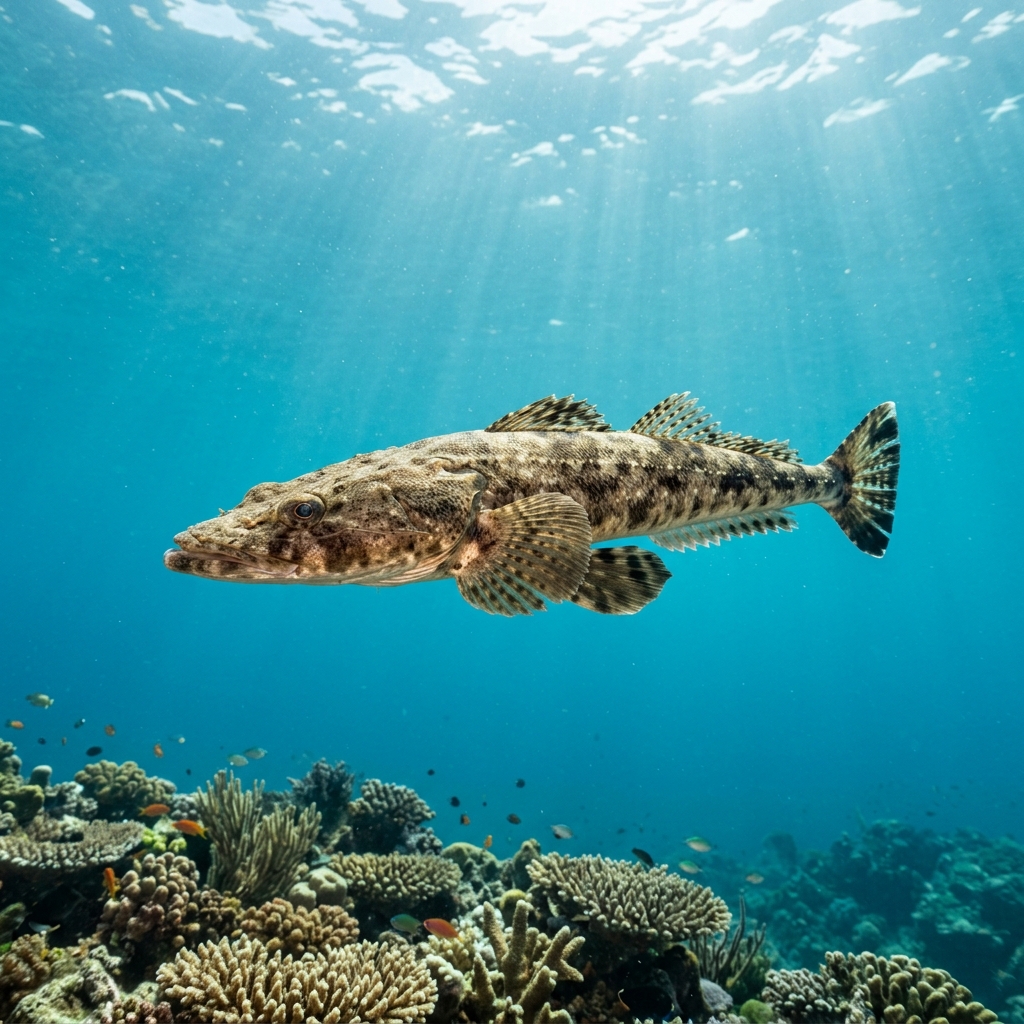
Reef neighbours a diver could mistake it for. Use the identification notes above to tell them apart.
This is a Mediterranean staple, most heavily logged in Spain and France, with the French Riviera and Provence and Catalonia standing out as the strongest regions. It also turns up reliably in Croatia's Kvarner and Istria, along Portugal's Algarve, and around Italy, the Canary Islands, Malta and Greece.
Mapping where Black Scorpionfish is logged…
It is a Mediterranean regular, most often logged in Spain and France, particularly the French Riviera and Provence and Catalonia. It is also a solid find in Croatia's Kvarner and Istria, Portugal's Algarve, Italy, the Canary Islands, Malta and Greece.
There is no strong seasonal pattern in sighting data, and it tolerates cool water down to around 11C, so divers find it year-round rather than in a specific season.
Yes, its dorsal spines carry venom that causes a painful sting if touched, which is a real risk given how well it camouflages against rock and rubble. Keep hands and knees off the substrate in areas where it is known to occur.
Look for a squat, spiny-headed fish around 28 cm long, mottled brown and grey, sitting motionless on rock or rubble with small fleshy flaps above the eyes. It relies on blending in rather than swimming away, so it is often spotted by its outline or eyes rather than colour.
They typically reach around 28 cm in length, with a heavy-bodied, large-headed shape that makes them look bulkier than that size suggests.
Despite sitting still for most of a dive, it is an ambush predator capable of striking and swallowing prey in a fraction of a second once something wanders close enough, making the stillness itself part of the hunting strategy.
Site and sighting data is aggregated from diver logs, iNaturalist and GBIF. For taxonomy and conservation status:
Madeira Rockfish
2,773 sites