Gobius paganellus
Common in rockpools and shallow reefs from Catalonia to Brittany, the rock goby turns up year-round in water from 10 to 20 C.
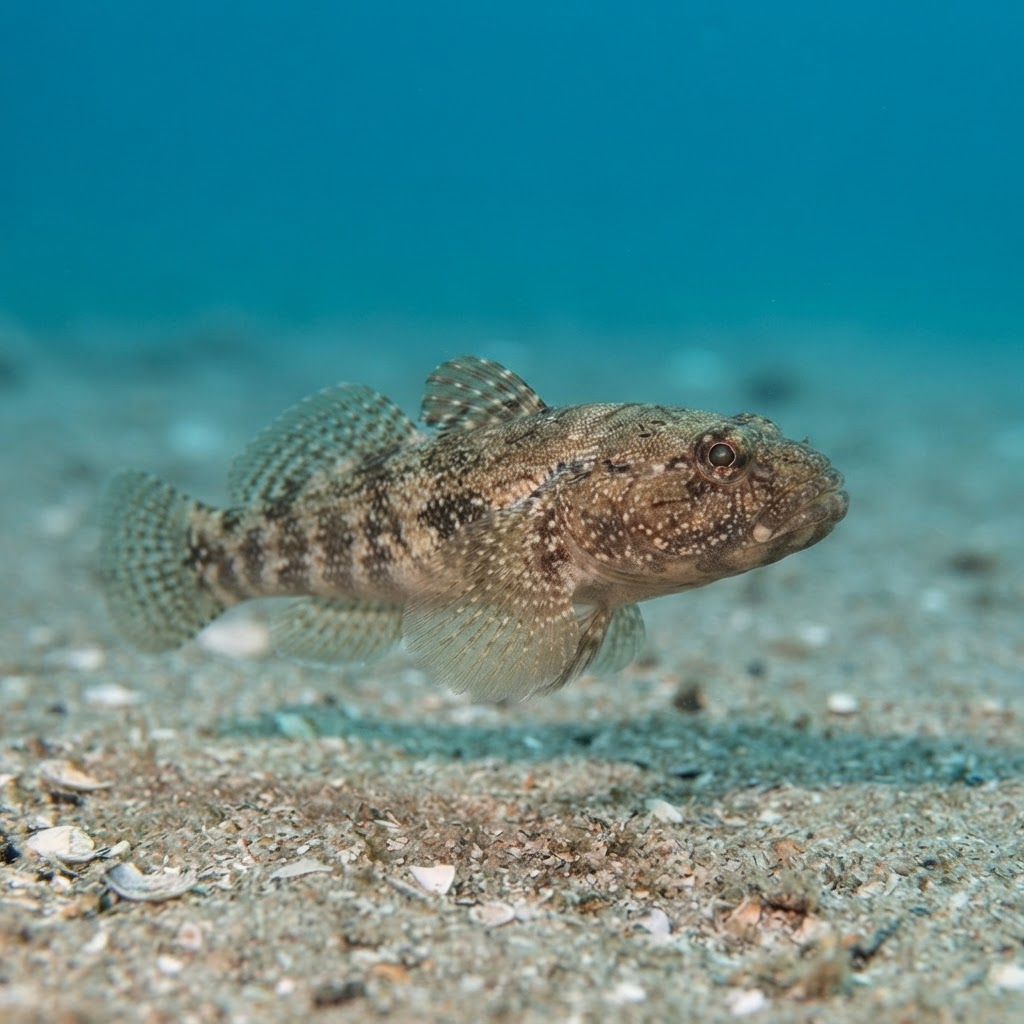
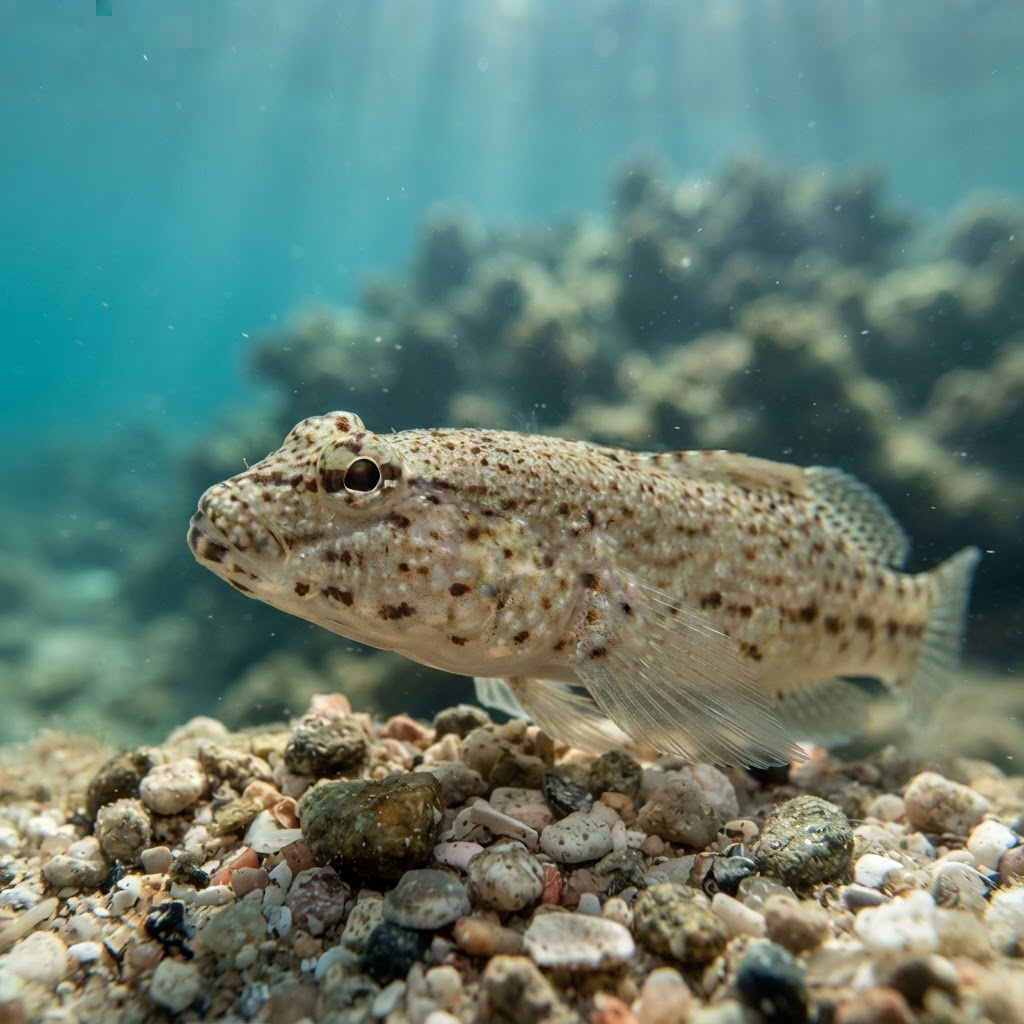
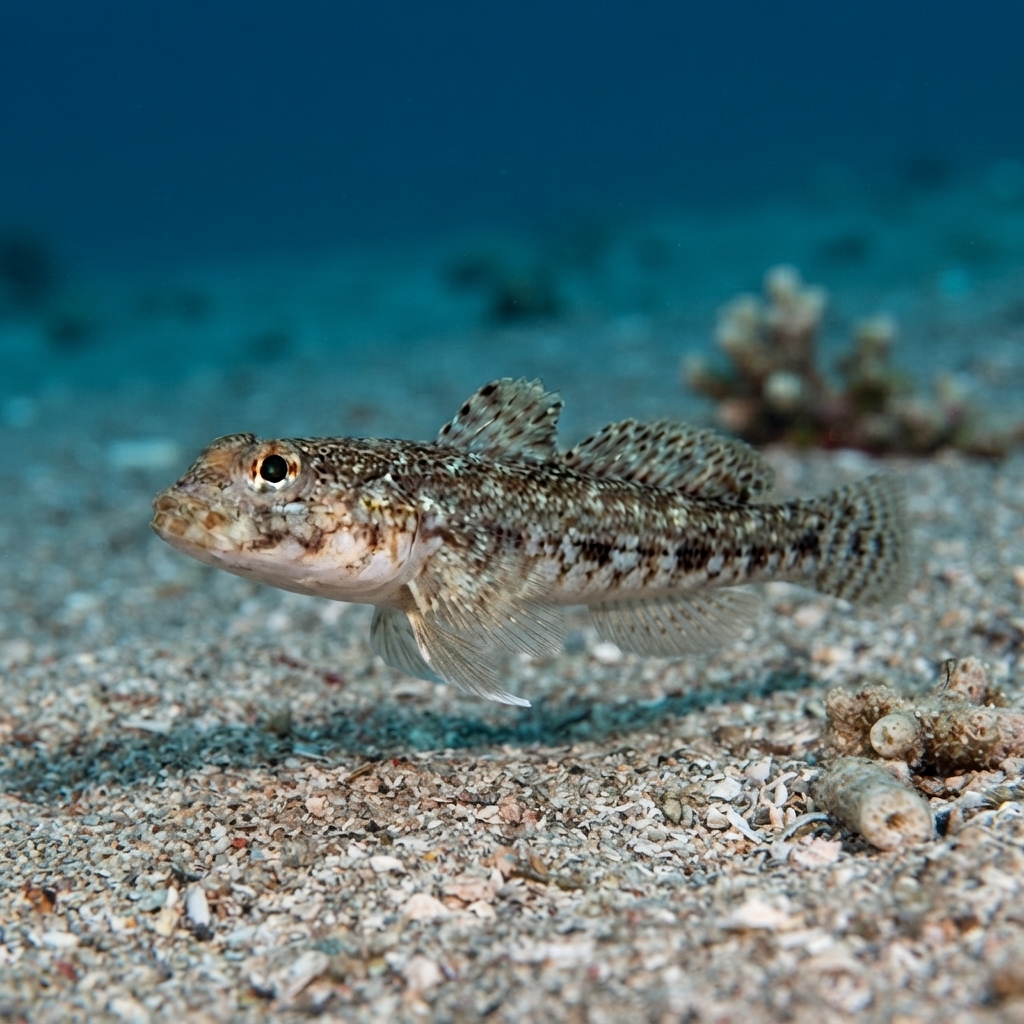
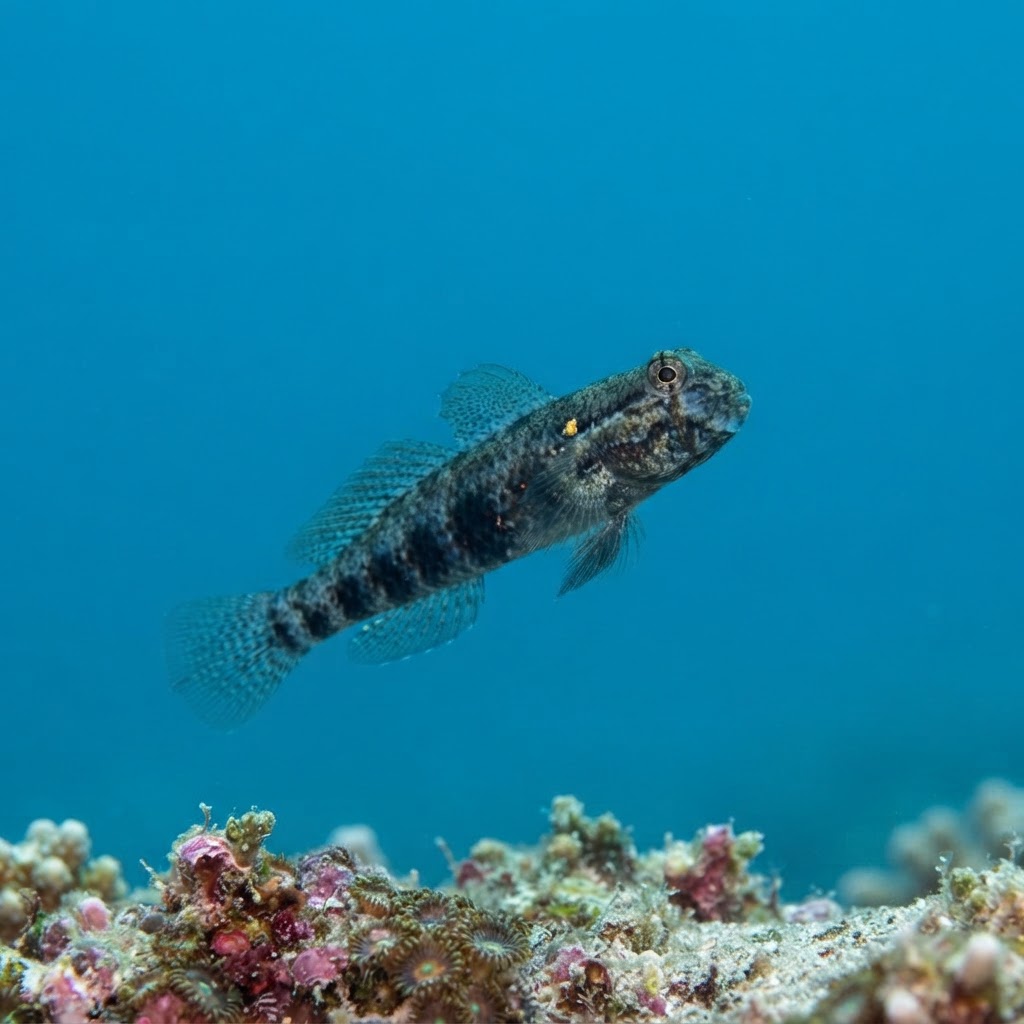
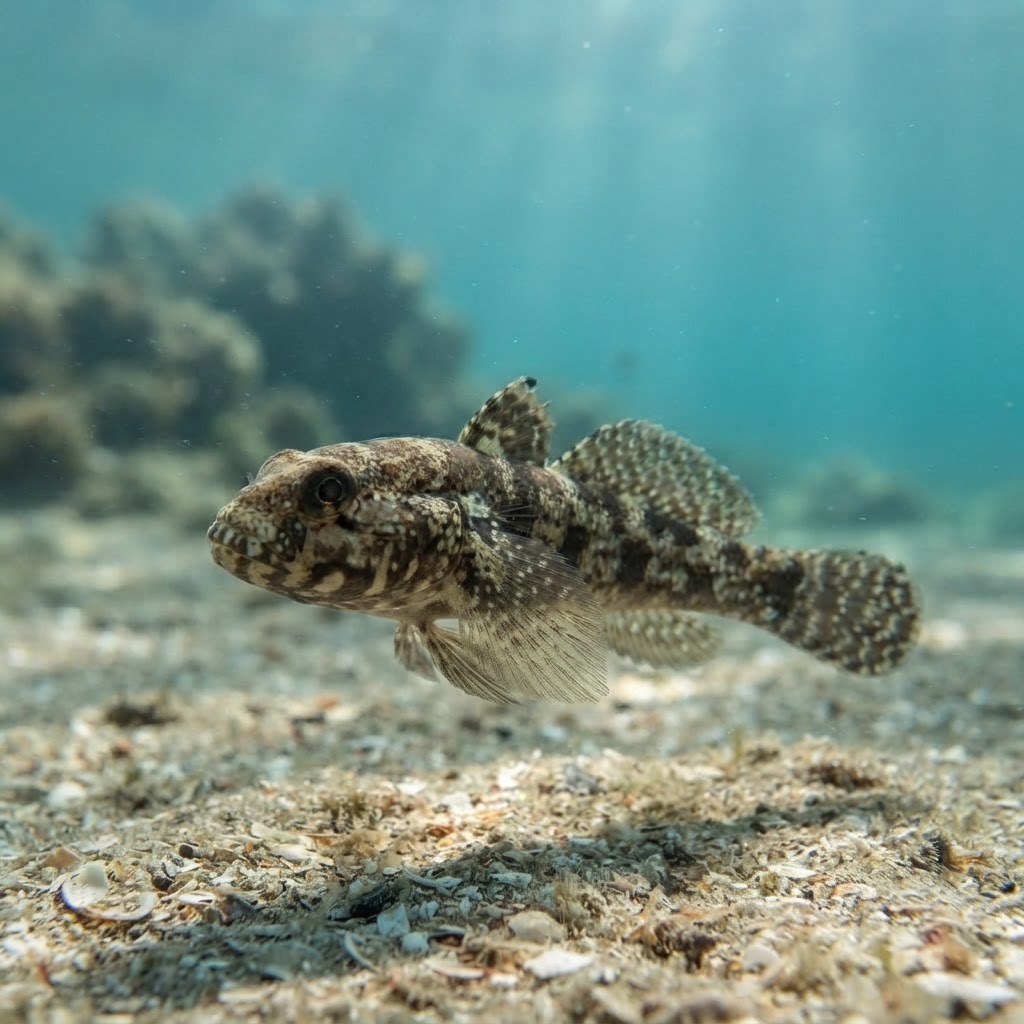
Small, thickset goby, usually around 9 cm, with a mottled brown to olive body that blends into rock and rubble. The clearest ID mark is a pale-edged dark blotch on the front of the first dorsal fin, visible even at a glance as you swim past. It sits propped on its fused ventral fins rather than hovering, a habit typical of gobies in general, and its head looks broad and slightly flattened compared with the slimmer body behind it.
Look for it tucked into crevices, under boulders or sitting still on ledges in the shallows, rarely far from cover. It tends to hold its ground rather than bolt when a diver or snorkeller approaches, relying on camouflage and a quick dart into a crack if pressed. Most sightings come from very shallow rocky reef and tide-pool-adjacent terrain, well within recreational snorkelling depth as much as diving depth.
Rock goby lays eggs on the underside of rocks and the male guards the clutch until they hatch, a common but easily overlooked bit of parental care among small demersal (bottom-dwelling) gobies.
No clear seasonal pattern shows in the sightings, and its temperature range of roughly 10 to 20 C covers most of the year across its range, so it is fair to treat this as a year-round species wherever you find suitable rocky shallows.
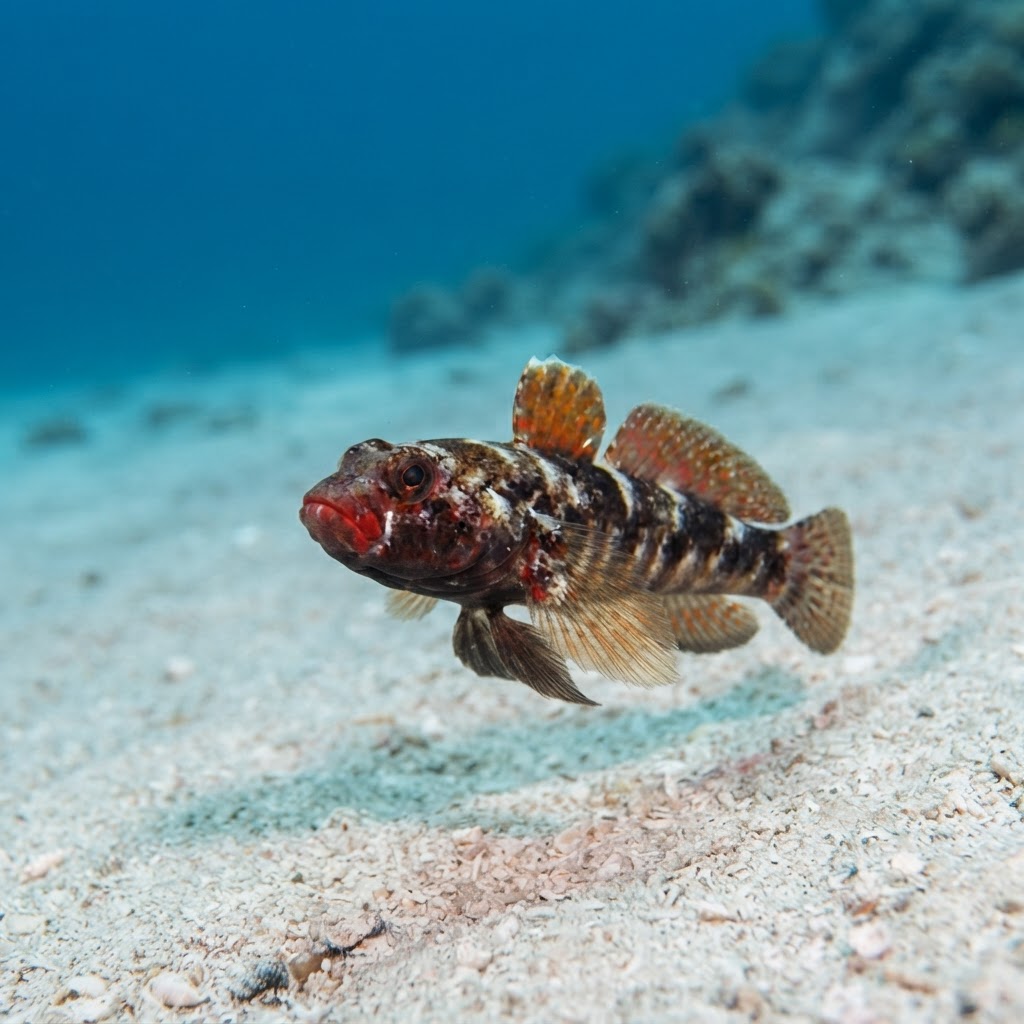
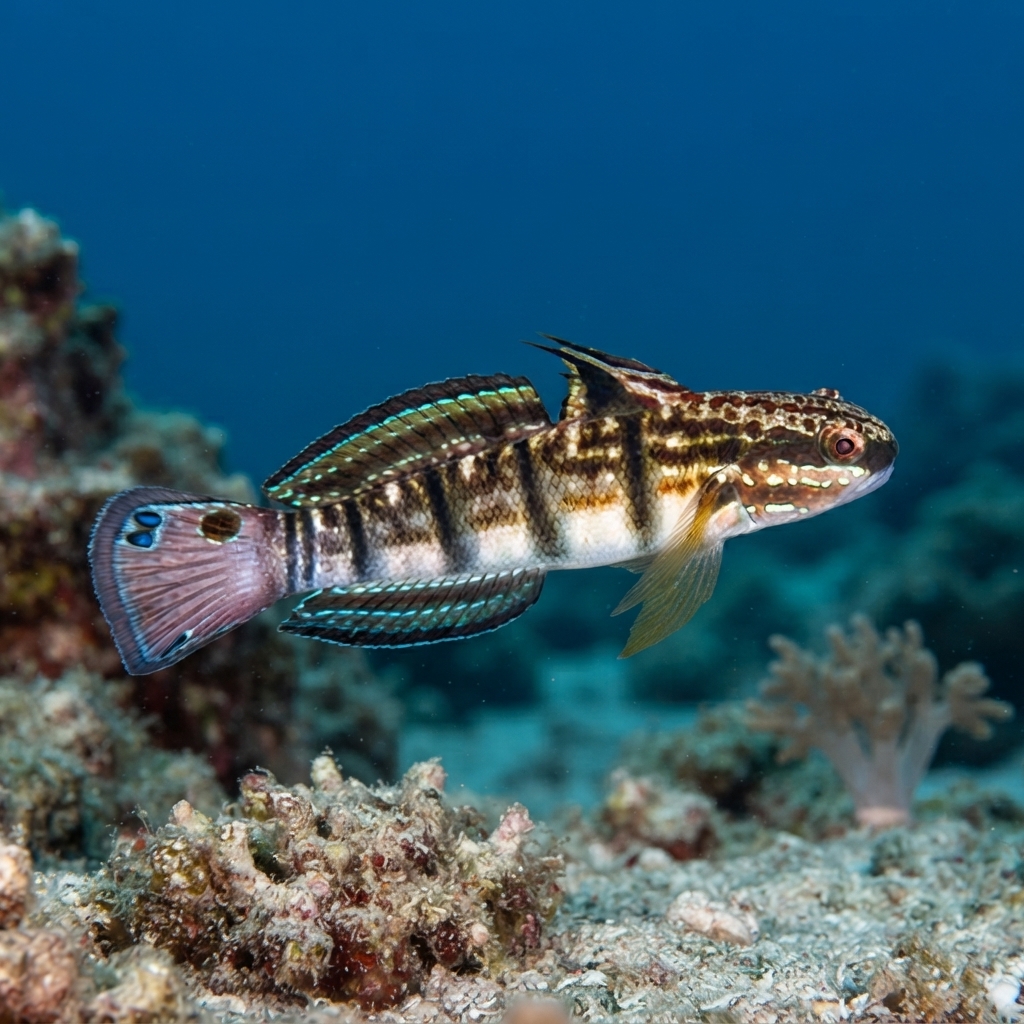
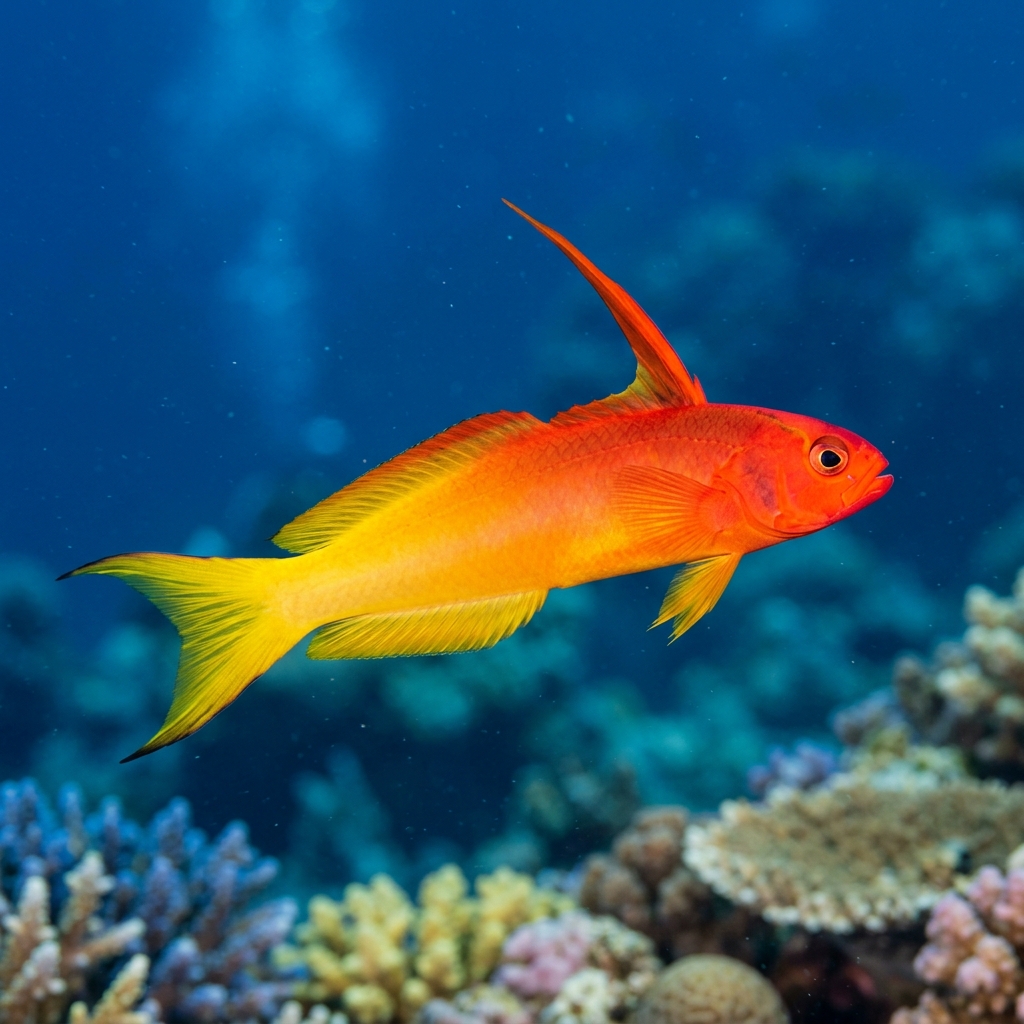
Reef neighbours a diver could mistake it for. Use the identification notes above to tell them apart.
Rock goby is a reliable find in shallow rocky habitat across Spain and France, with especially strong logging in Catalonia, Murcia and Valencia in Spain and Brittany, Occitanie and the French Riviera in France. It also turns up widely along Portugal's Algarve, around Croatia's Kvarner region, in Italy, the Azores, the Canary Islands and the United Kingdom.
Mapping where Rock Goby is logged…
It is most commonly logged along the Mediterranean and Atlantic coasts of Spain and France, particularly Catalonia, Murcia, Valencia and Brittany, and it is also regularly seen in Portugal's Algarve, Croatia's Kvarner region, the Azores and the Canary Islands.
There is no strong seasonal signal in the data, and its comfort range of roughly 10 to 20 C spans most of the year in its range, so it can be found in shallow rocky habitat year-round.
Check for a small, mottled brown goby around 9 cm long, propped on rocky ledges or wedged into crevices, with a distinctive pale-edged dark spot on the front of its first dorsal fin.
They typically reach about 9 cm, making them one of the smaller, easy-to-overlook fish on rocky reefs and in tide pools.
Males guard egg clutches laid on the underside of rocks until the young hatch, a form of parental care that is easy to miss unless you spot a male stationed protectively over a crevice.
Site and sighting data is aggregated from diver logs, iNaturalist and GBIF. For taxonomy and conservation status:
Slender Goby
806 sites