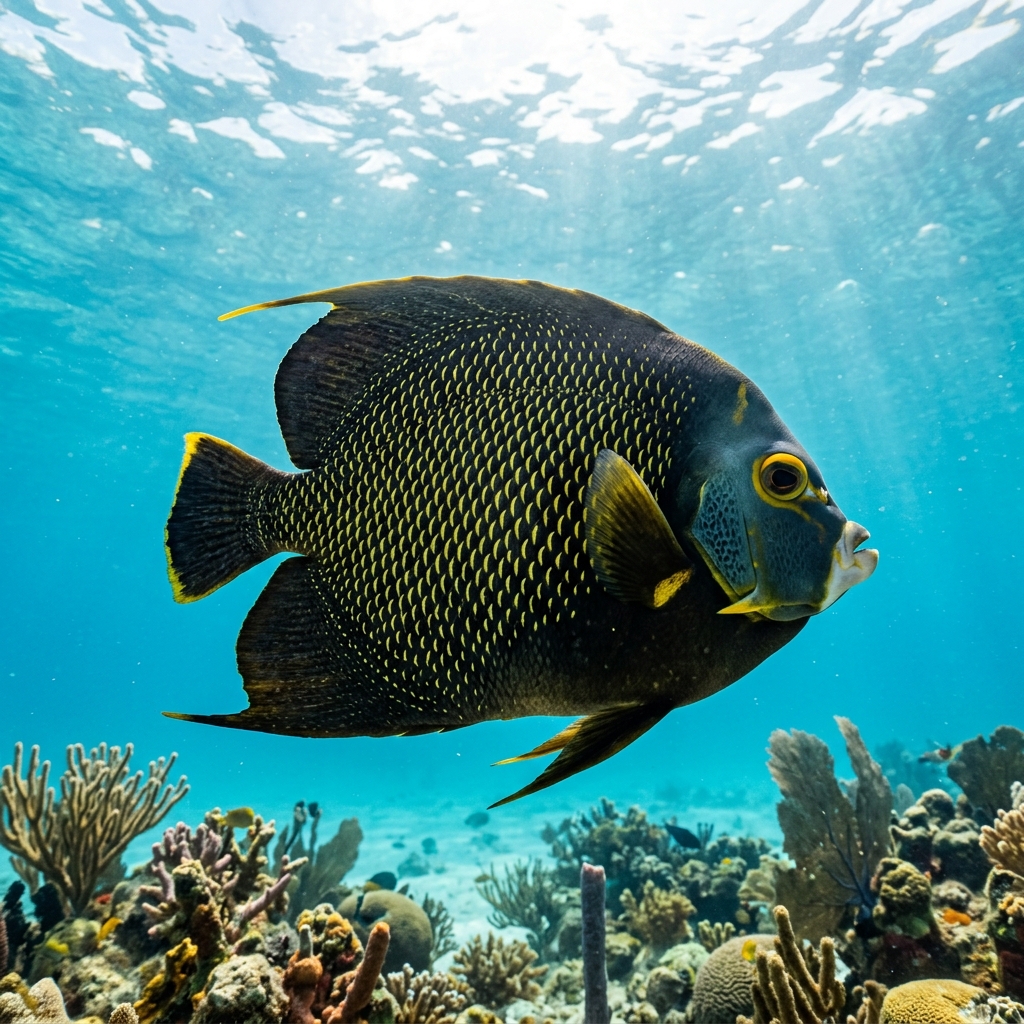
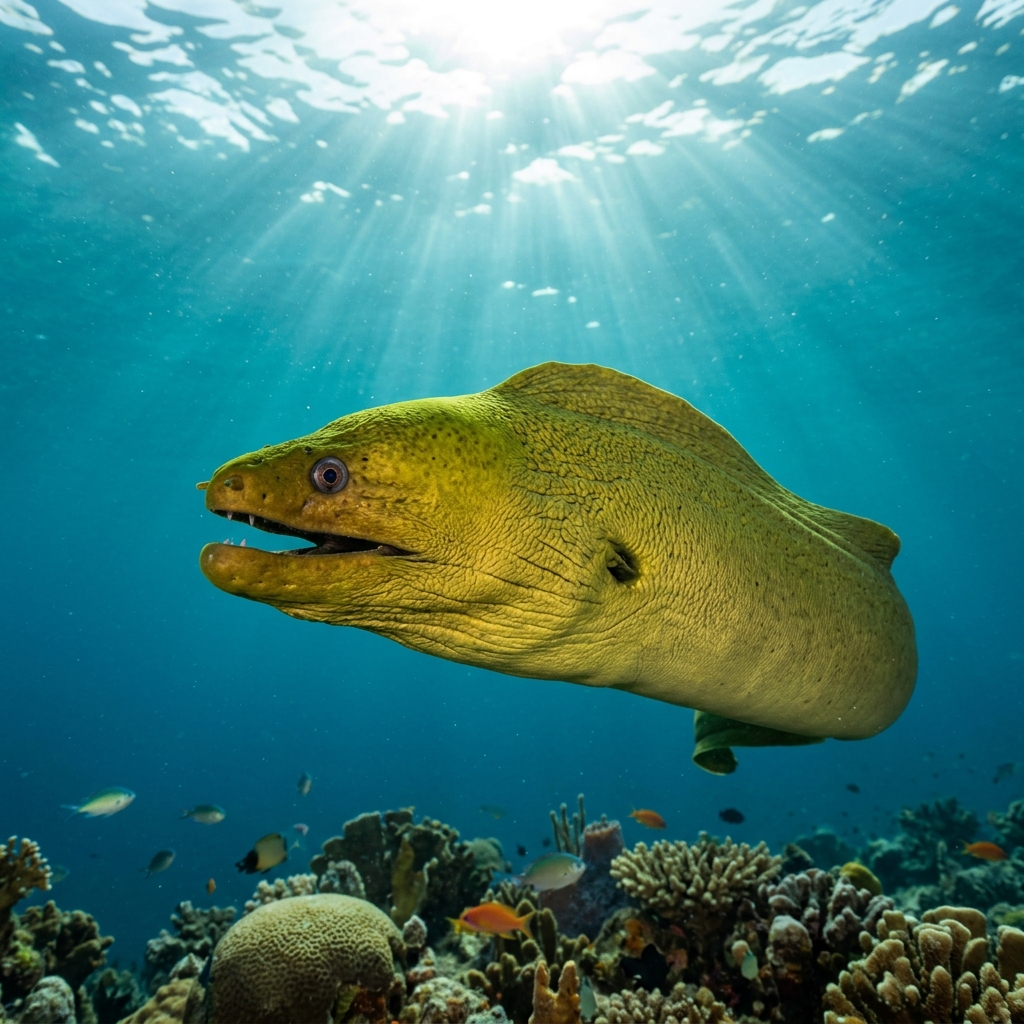
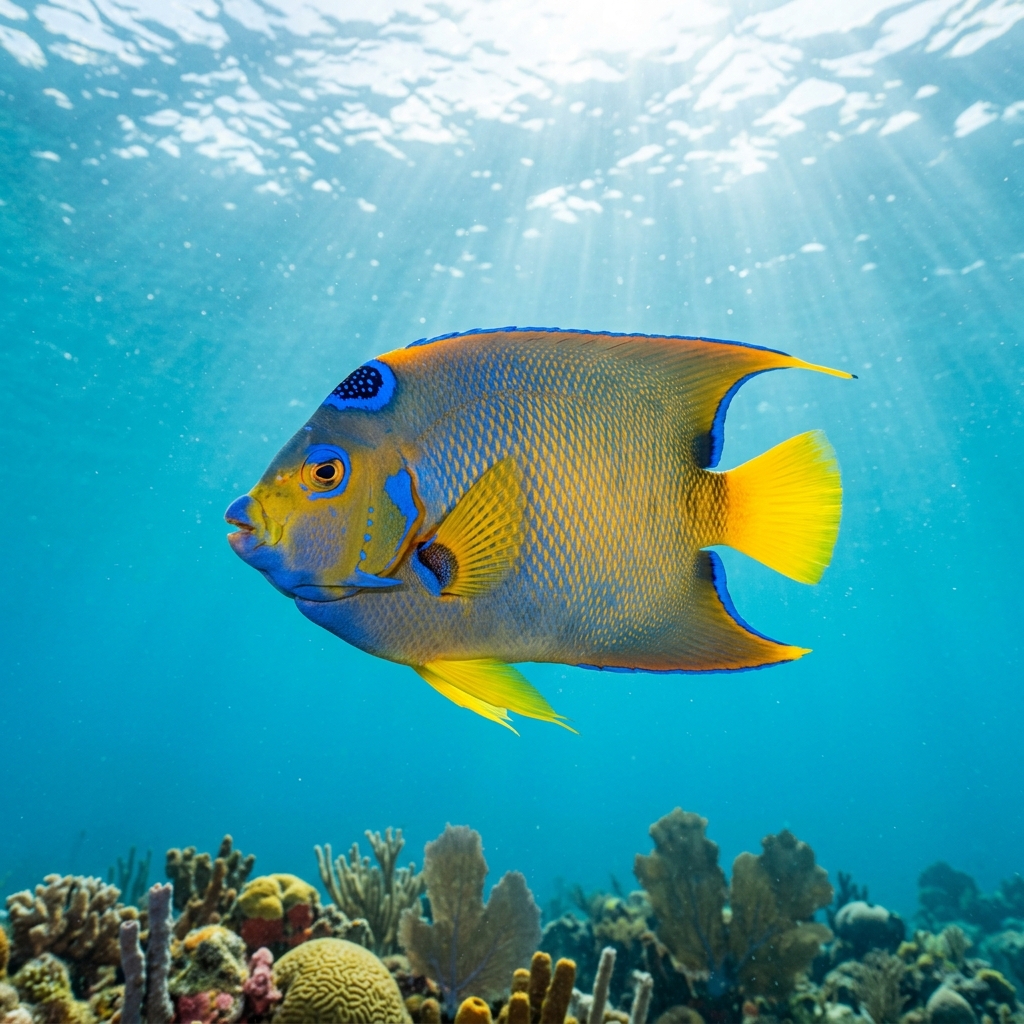
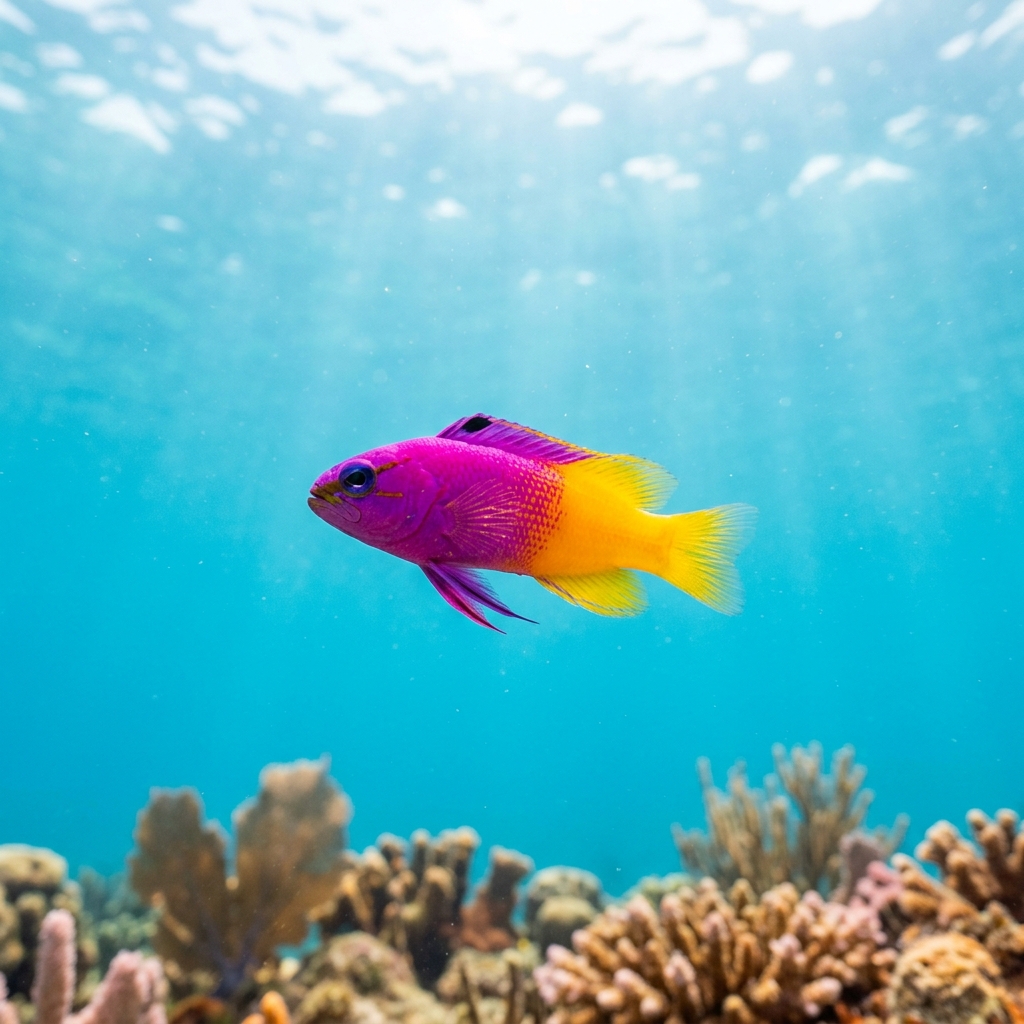
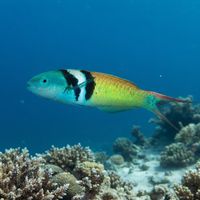
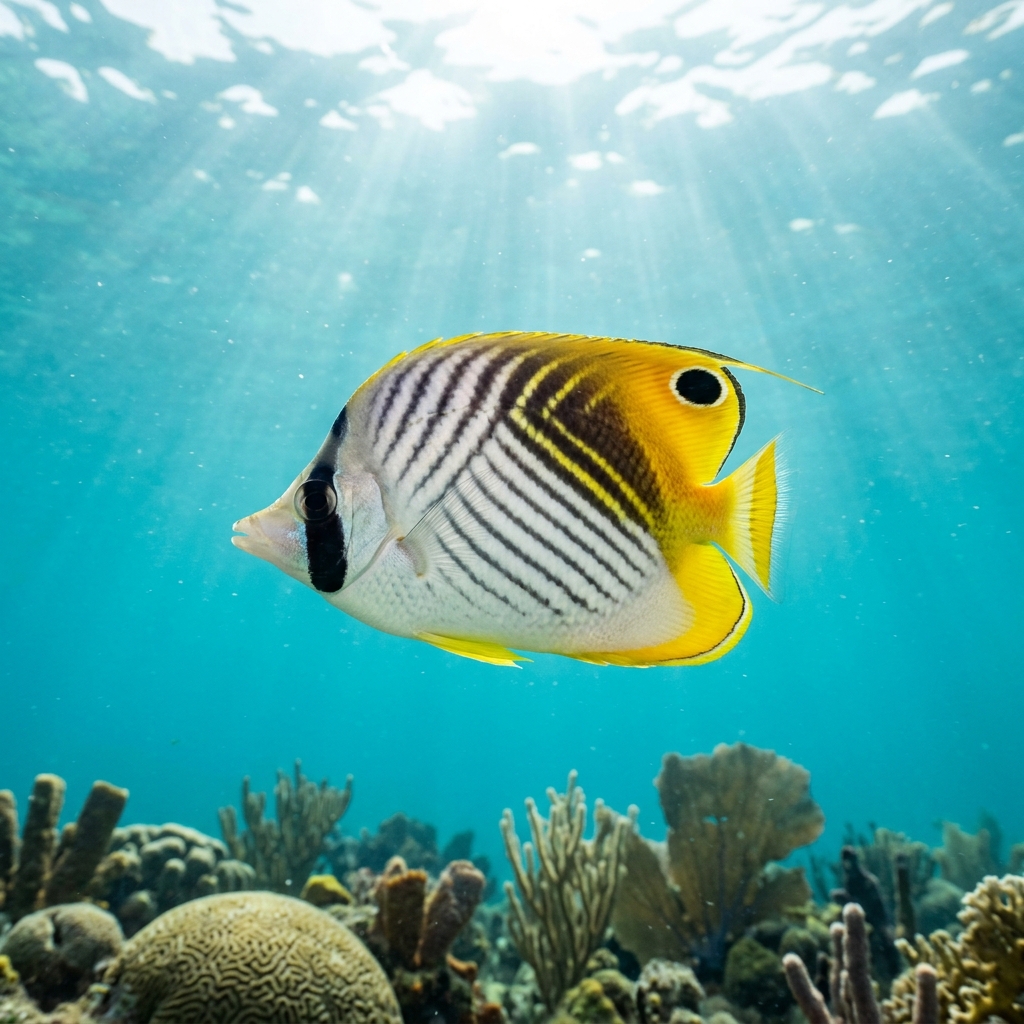
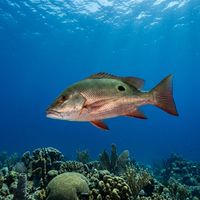
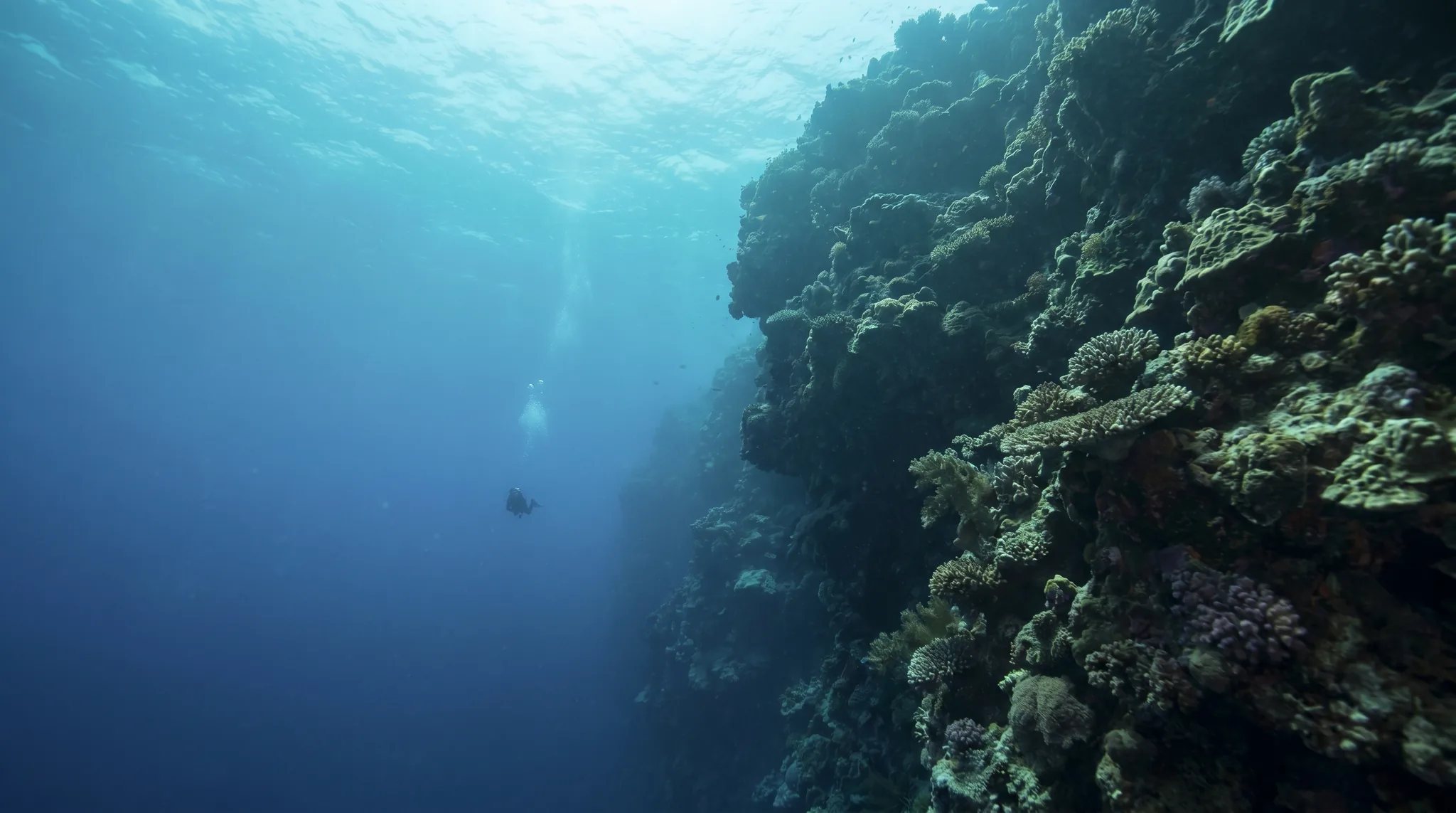
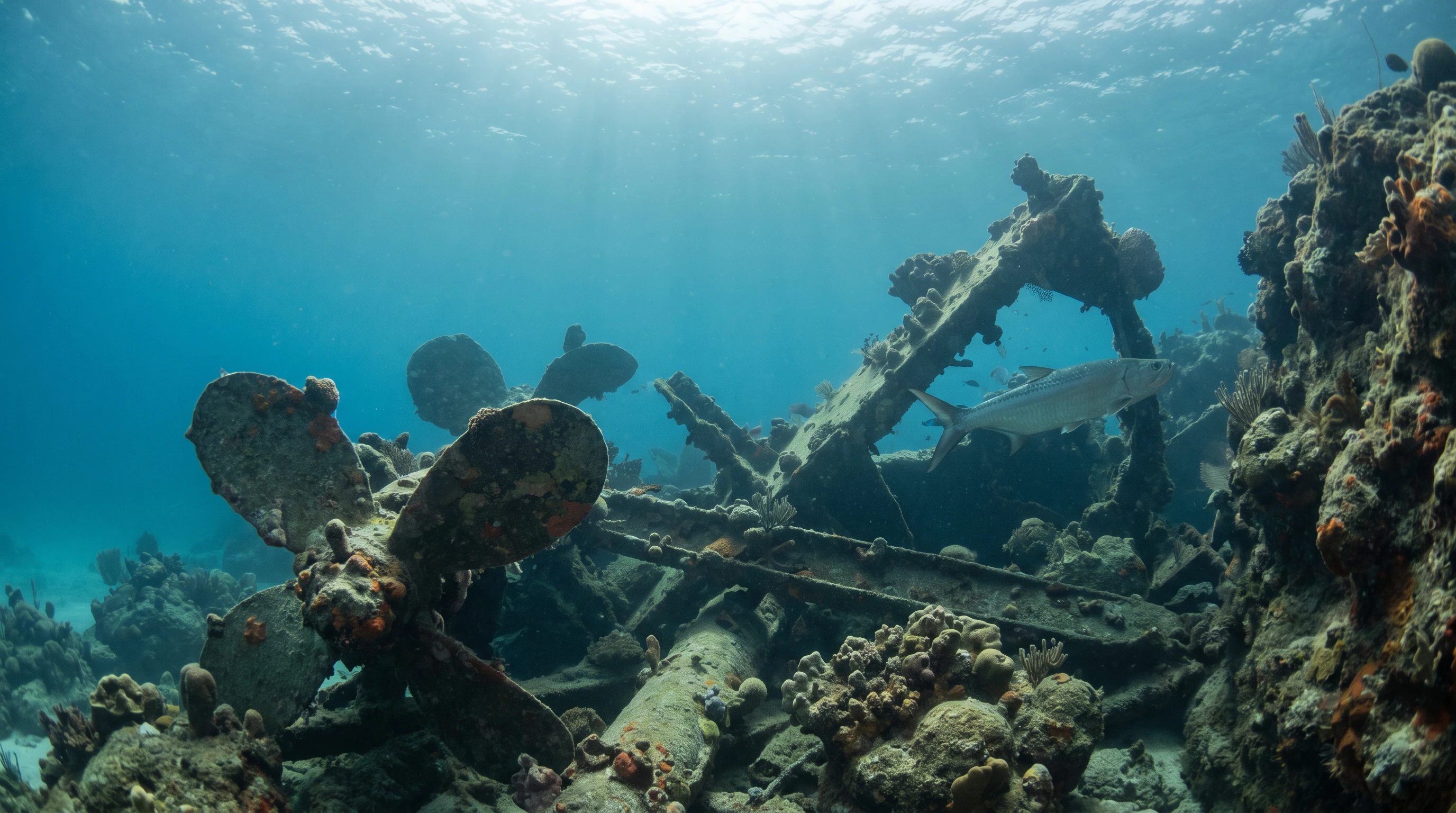
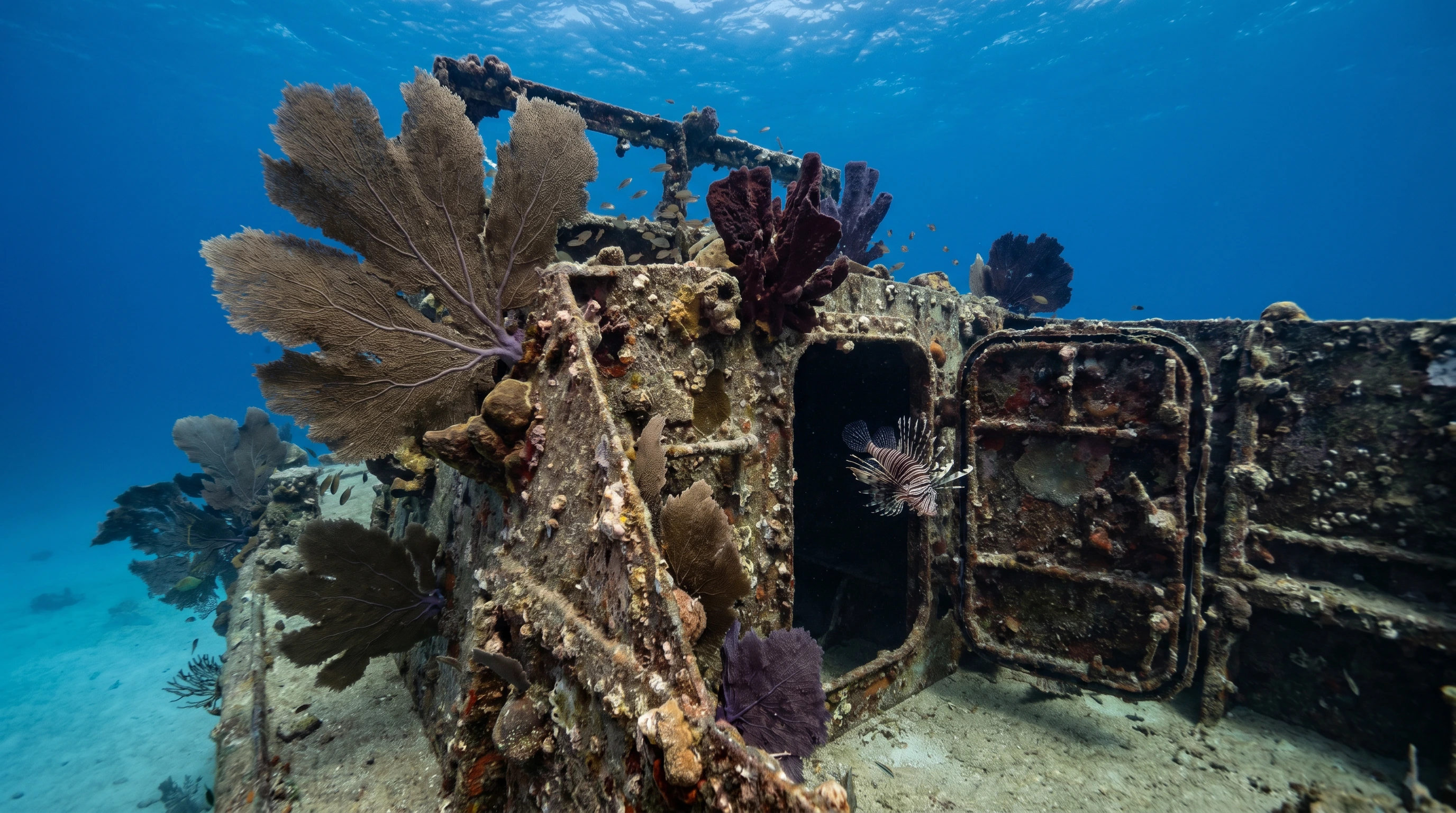
Grand Cayman offers one of the Caribbean's most varied underwater landscapes, with wall dives, wrecks, cavern systems, shallow reefs and pinnacles spread across four distinct sub-areas. East End holds the largest concentration of sites, while West Bay and Seven Mile Beach is the hub for shore entries and artificial reefs. George Town draws divers to dramatic wall drop-offs such as Orange Canyon, and North Side offers a quieter alternative. Wrasse, Grouper, French Angelfish and Great Barracuda are encountered across nearly every site, with Indian Lionfish, Green Moray and Fairy Basslet adding character to the walls and crevices. Visibility is consistently generous year-round, and water stays warm throughout all seasons.
4 areas
 46
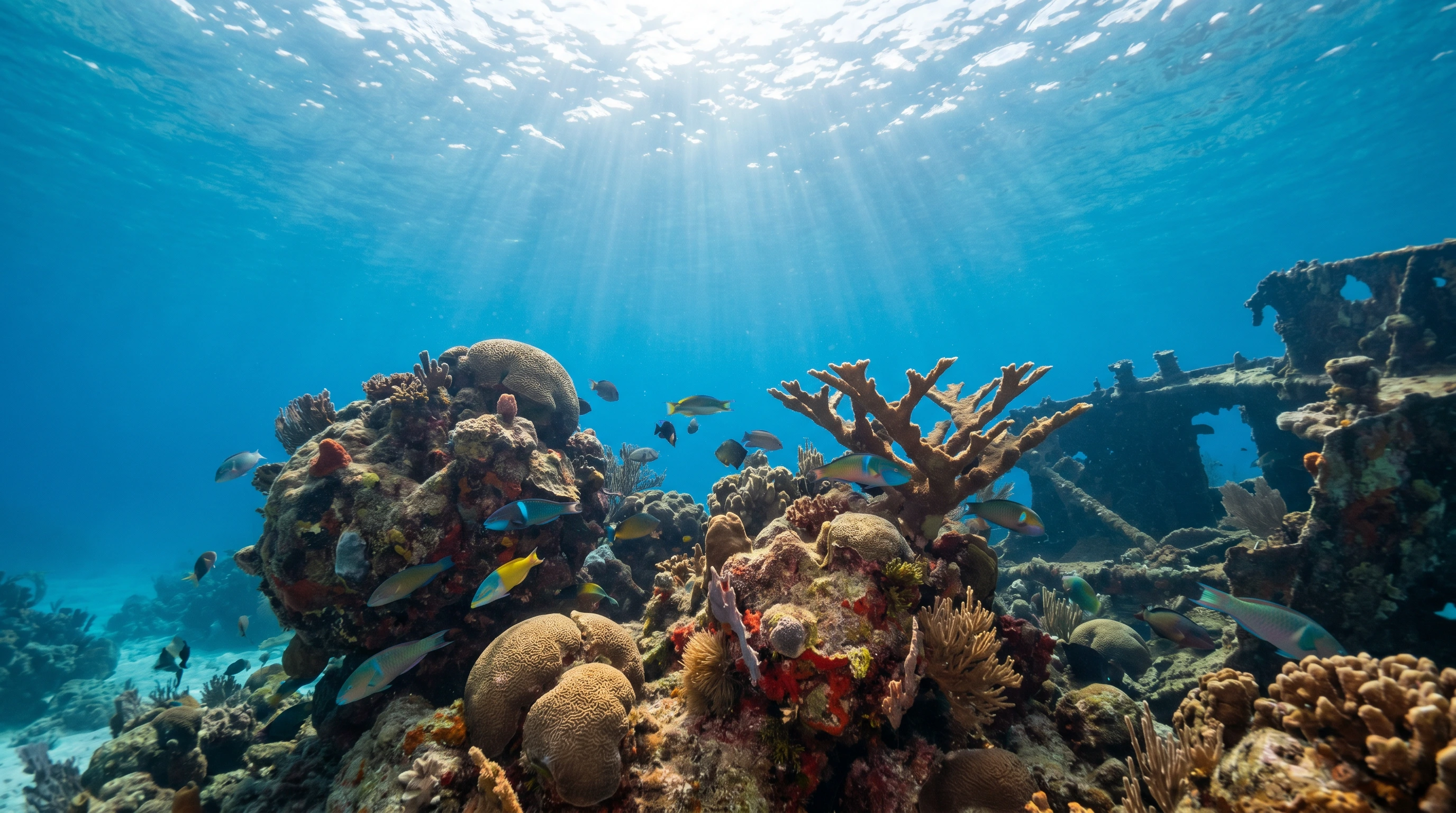
46Boat-access wall and reef diving with abundant barracuda, tarpon and moray eels across a wide range of skill levels.
 42
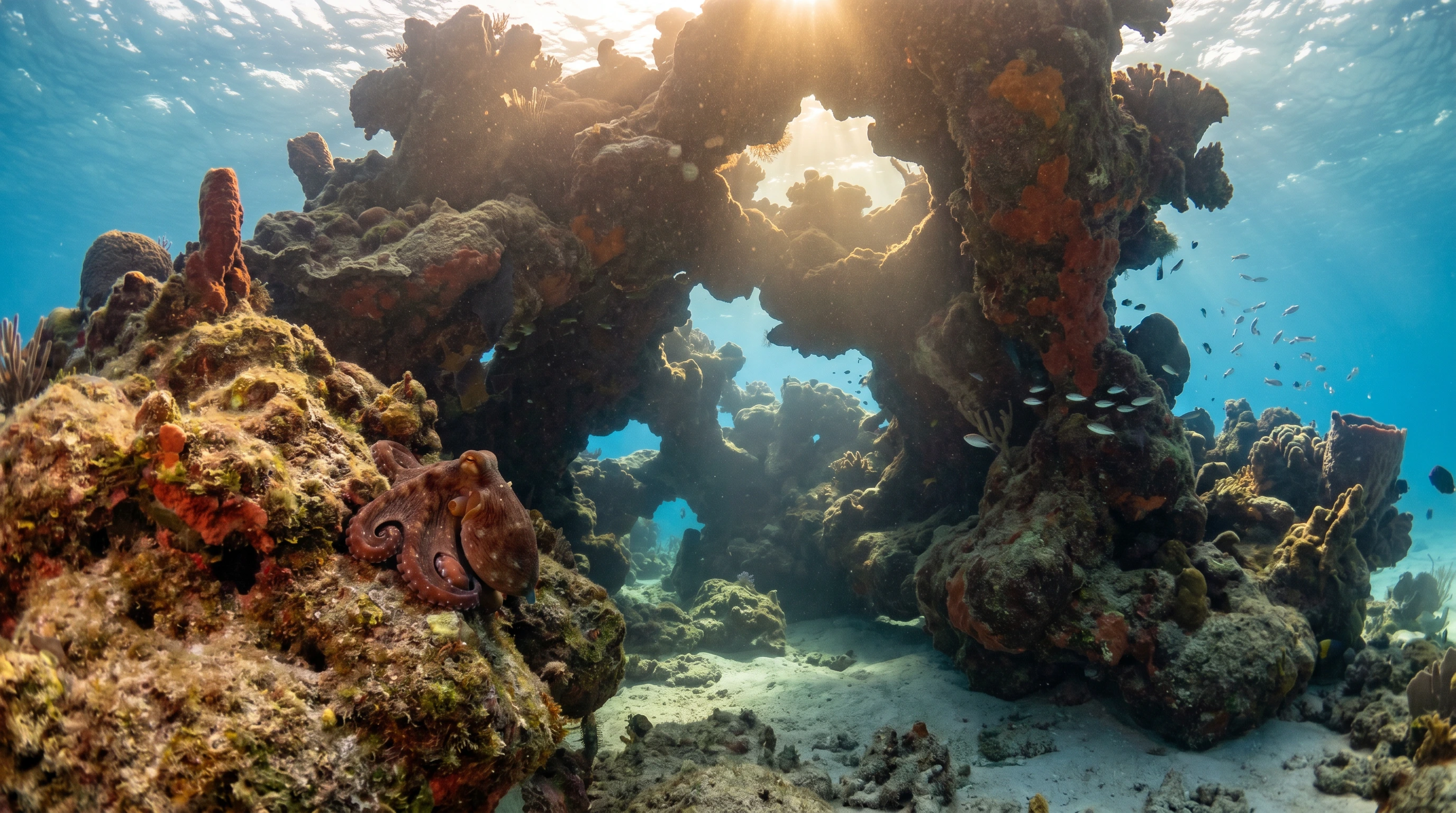
42Wall dives, wreck sites, and rich angelfish populations across three distinct sub-areas off Grand Cayman's west coast.
 36
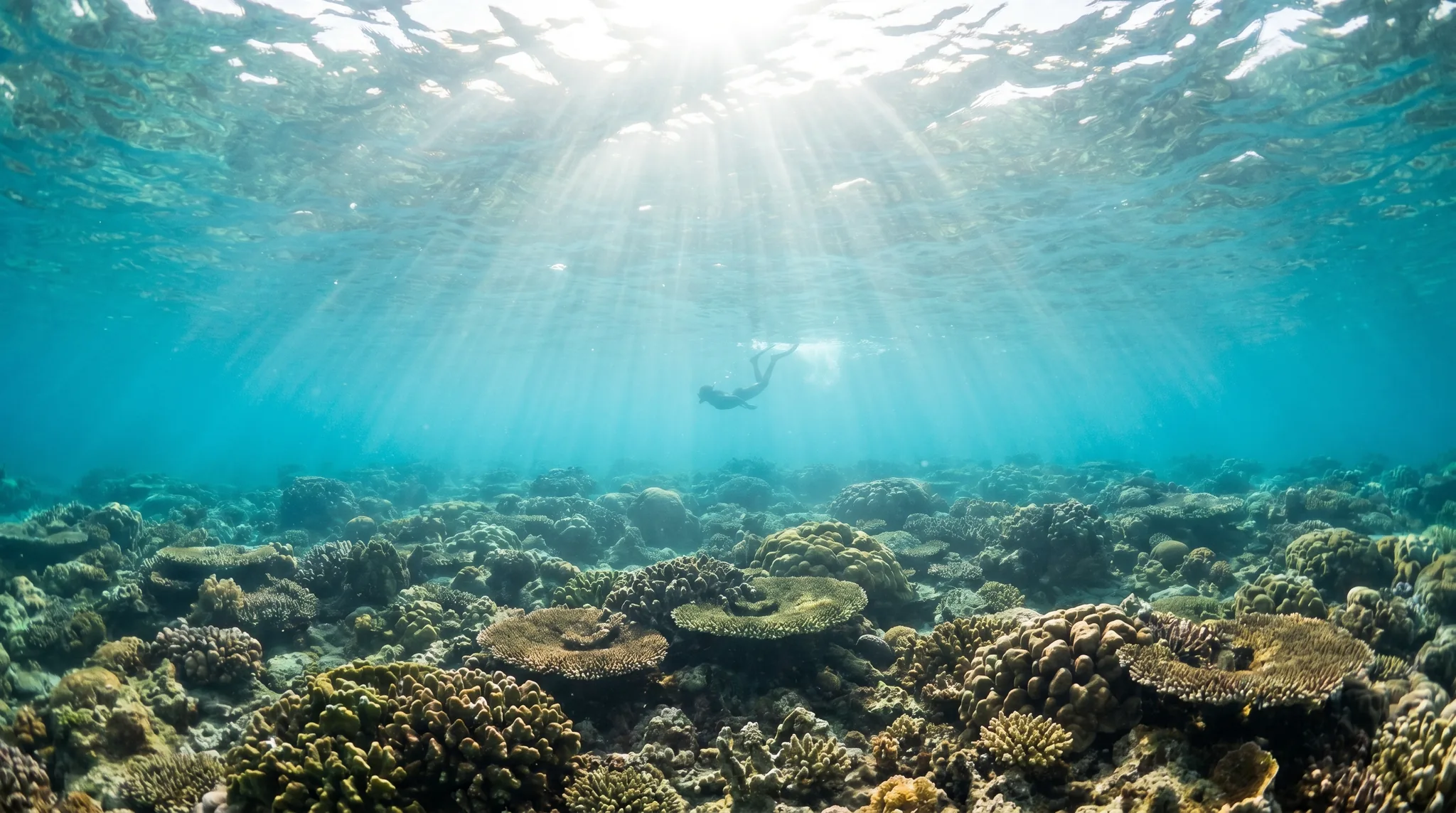
36Walls, wrecks and caverns with reliable French Angelfish, Barracuda and Tarpon sightings across shore and boat dives.
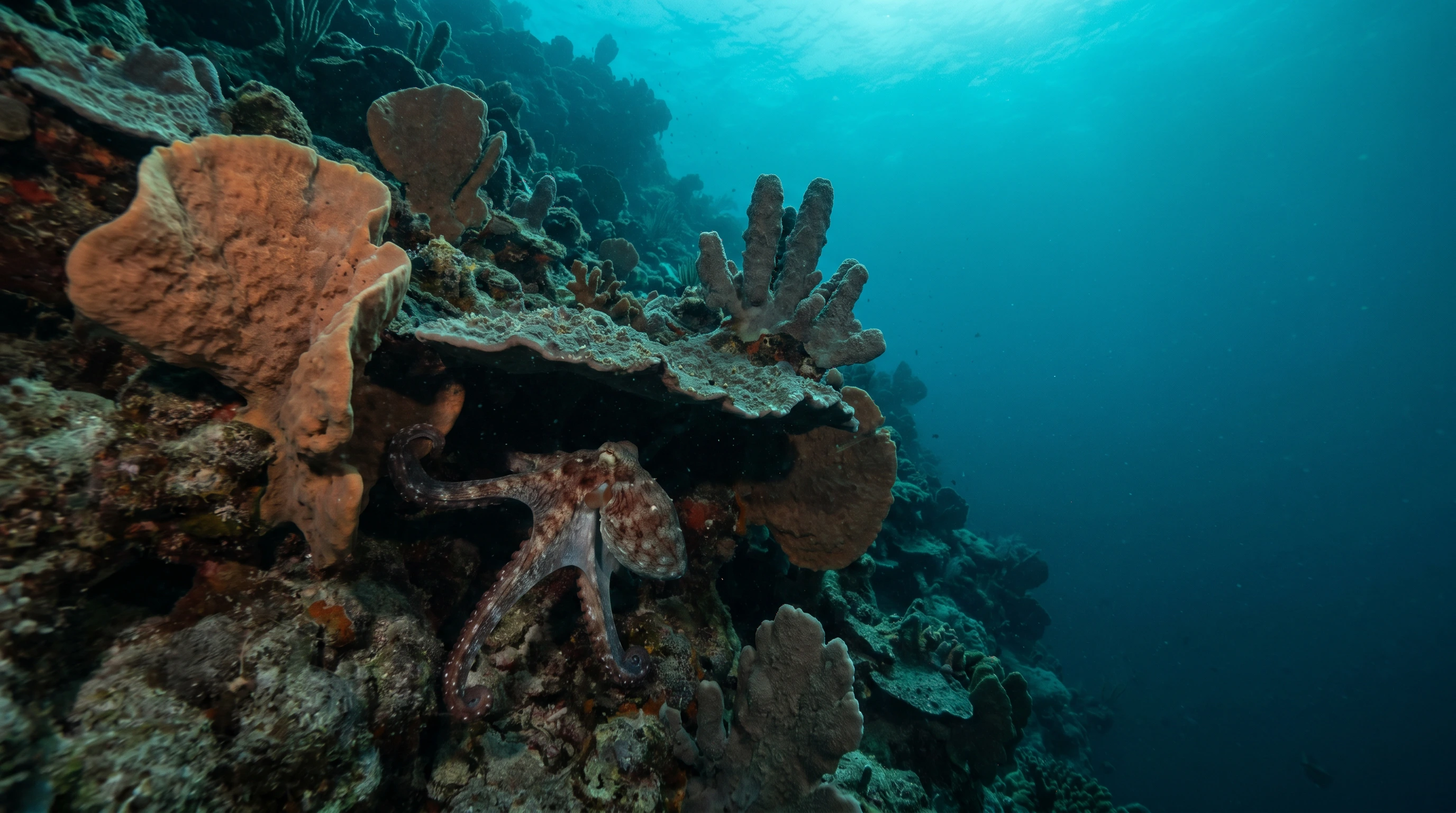
Monthly water temperature across Grand Cayman's sites, from satellite sea-surface data corrected for depth. The band shows the site-to-site spread.
Water temperature stays warm throughout the year, rising to its peak from July through October and settling at its coolest, though still very comfortable, between January and March. The best-months data points strongly to spring, particularly March through May, as the prime window, when conditions are settled and visitor numbers moderate. East End and the north-west walls can be exposed to surge when trade winds pick up, so divers should check local conditions before heading to more open sites.
42 operators
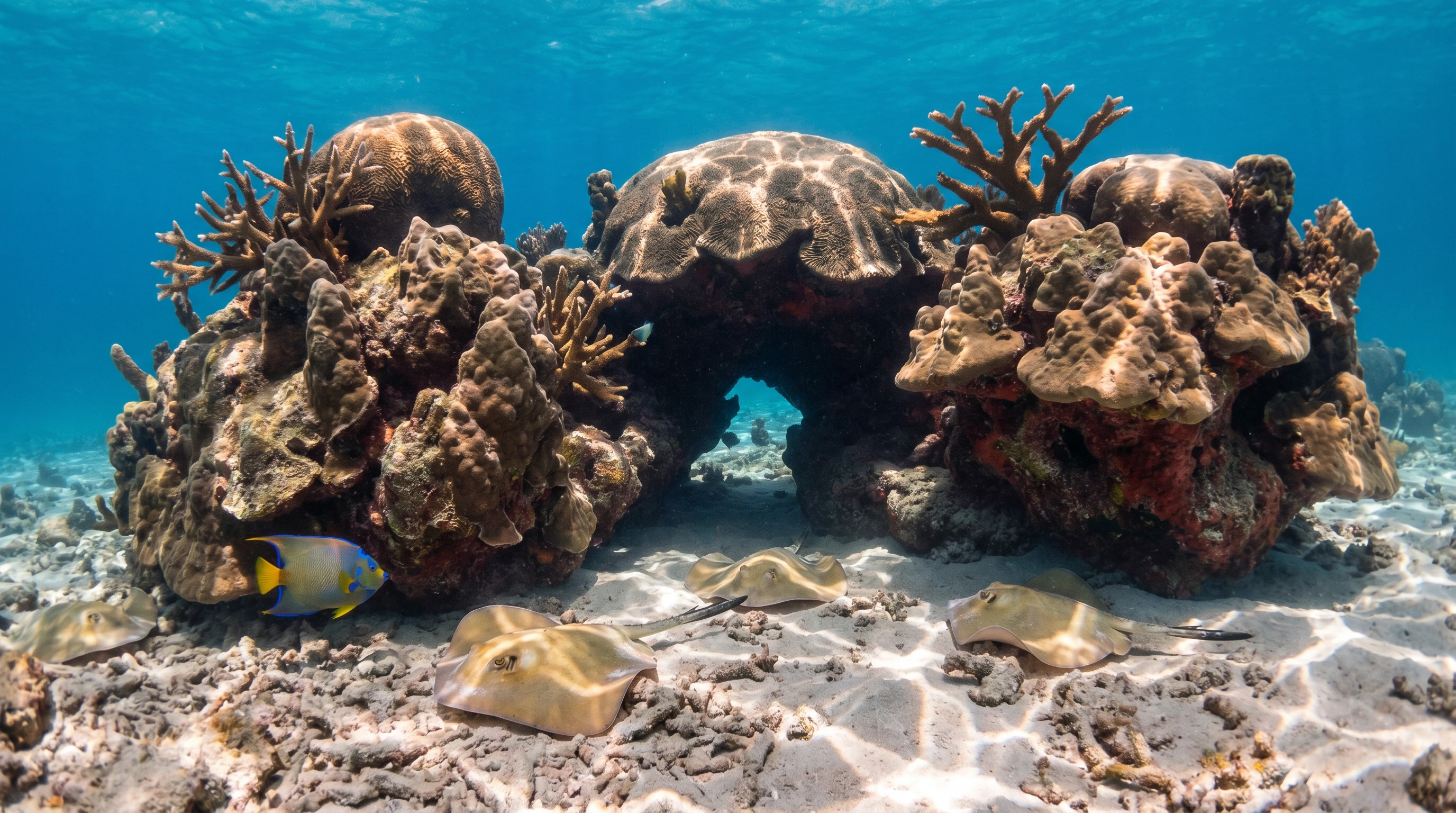
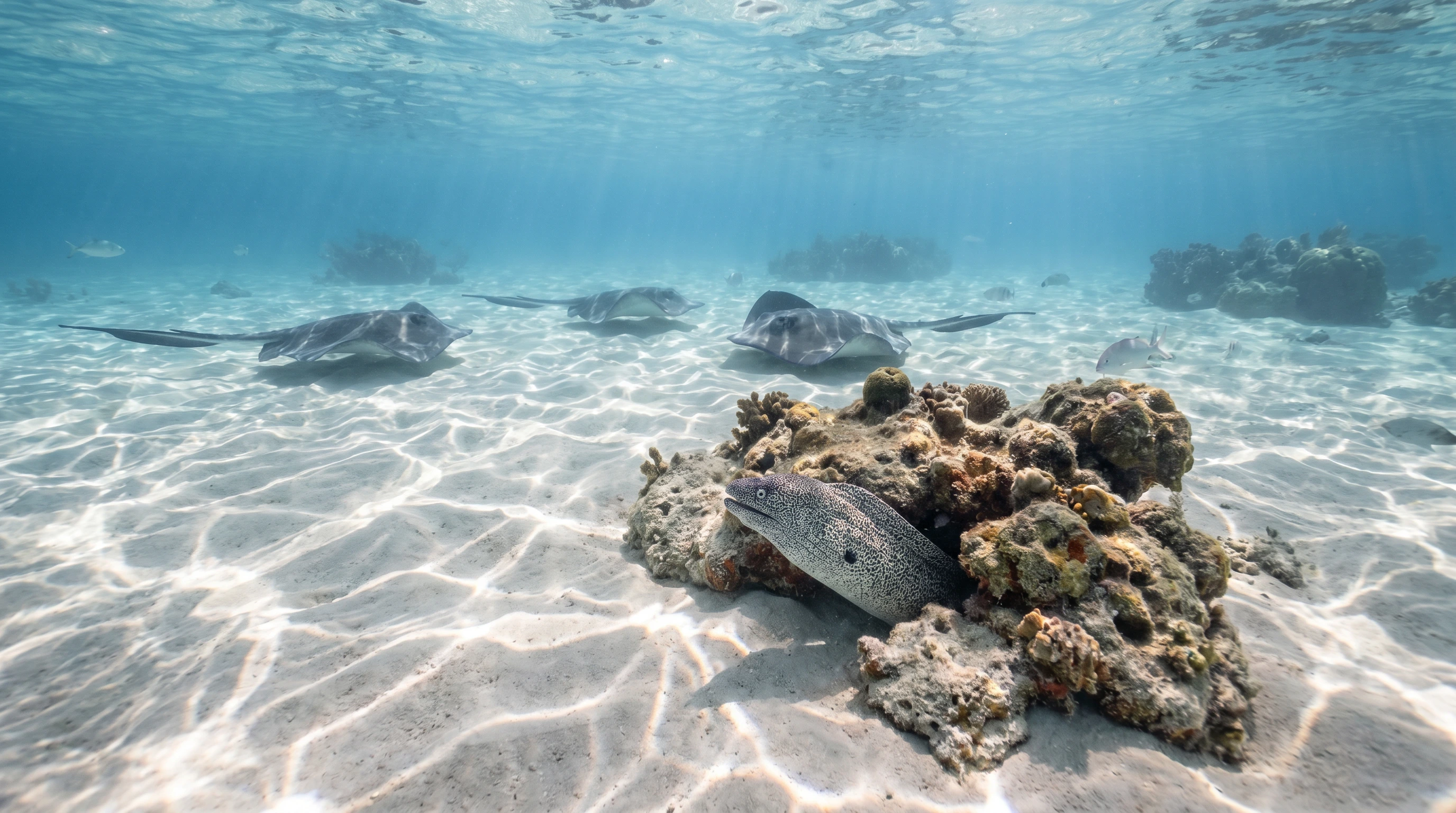
Boat-access walls, pinnacles, and the famous stingray sandbar make North Side one of Grand Cayman's most varied diving areas.
Water temperature around Grand Cayman ranges from about 27°C in January to 30°C in July, based on satellite sea-temperature data for its dive sites.
With water around 27–30°C, a rash guard or 3mm shorty works in Grand Cayman year-round.
Fin maps 143 sites in Grand Cayman (143 scuba diving sites and 11 snorkelling spots, with some suited to both), organised into 4 areas.
Across Grand Cayman's dive sites, March, April and May are most often reported as the best months to visit.
Grand Cayman's reefs and walls are home to a wide range of observed species. French Angelfish, Great Barracuda, Stoplight Parrotfish and Foureye Butterfly Fish are seen on the vast majority of sites. Walls and crevices regularly produce Green Moray, Fairy Basslet and Indian Lionfish, while Whiptail Stingray, Caribbean Spiny Lobster and Porcupinefish round out a typical dive.
A good number of sites across Grand Cayman are rated for beginners, including shallow reef dives such as Wildlife Reef, Paradise Reef and The Coral Garden. Shore entries at Devil's Grotto South make independent access straightforward for those with an open-water qualification. More experienced divers can progress to the deeper walls and canyon sites rated at intermediate level.
West Bay and Seven Mile Beach has the widest mix of site types, including wrecks like the Balboa and LCM David Nicholson alongside shore-accessible cavern sites. George Town is the place for dramatic wall dives such as Orange Canyon and Playing Fields. East End carries the largest number of sites overall, while North Side offers a smaller, quieter selection away from the main boat traffic.
Both options exist, though boat access is by far the more common route. Paradise Reef and Devil's Grotto South are among the sites that can be reached from shore, making them practical for divers who prefer independent entry. The majority of Grand Cayman's sites, including all the deeper walls and offshore reefs, require a boat, and operators such as Eden Rock Diving Center Ltd, Divetech and Ocean Frontiers run regular trips.