Thalassoma bifasciatum
Common on Yucatán and Bay Islands reefs in 25-28C water, year-round: here's how to spot a bluehead wrasse.
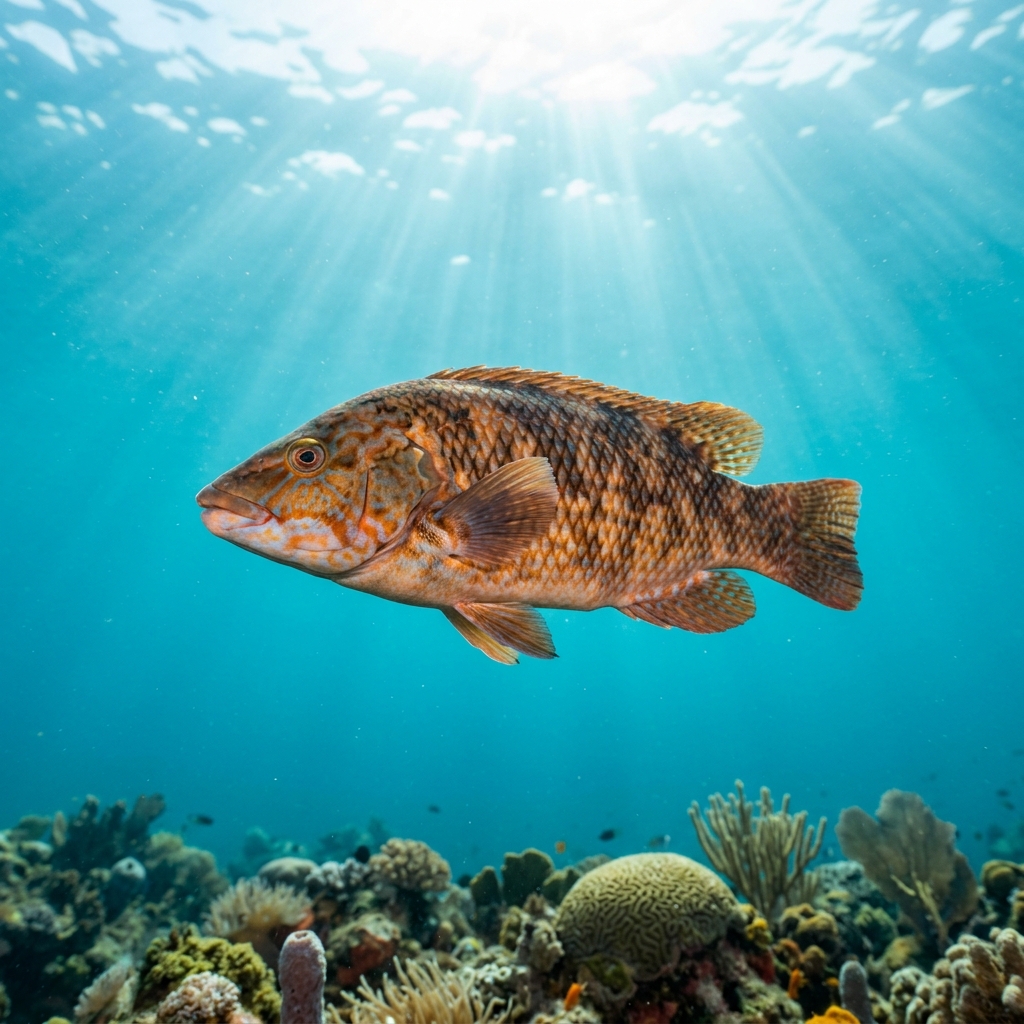
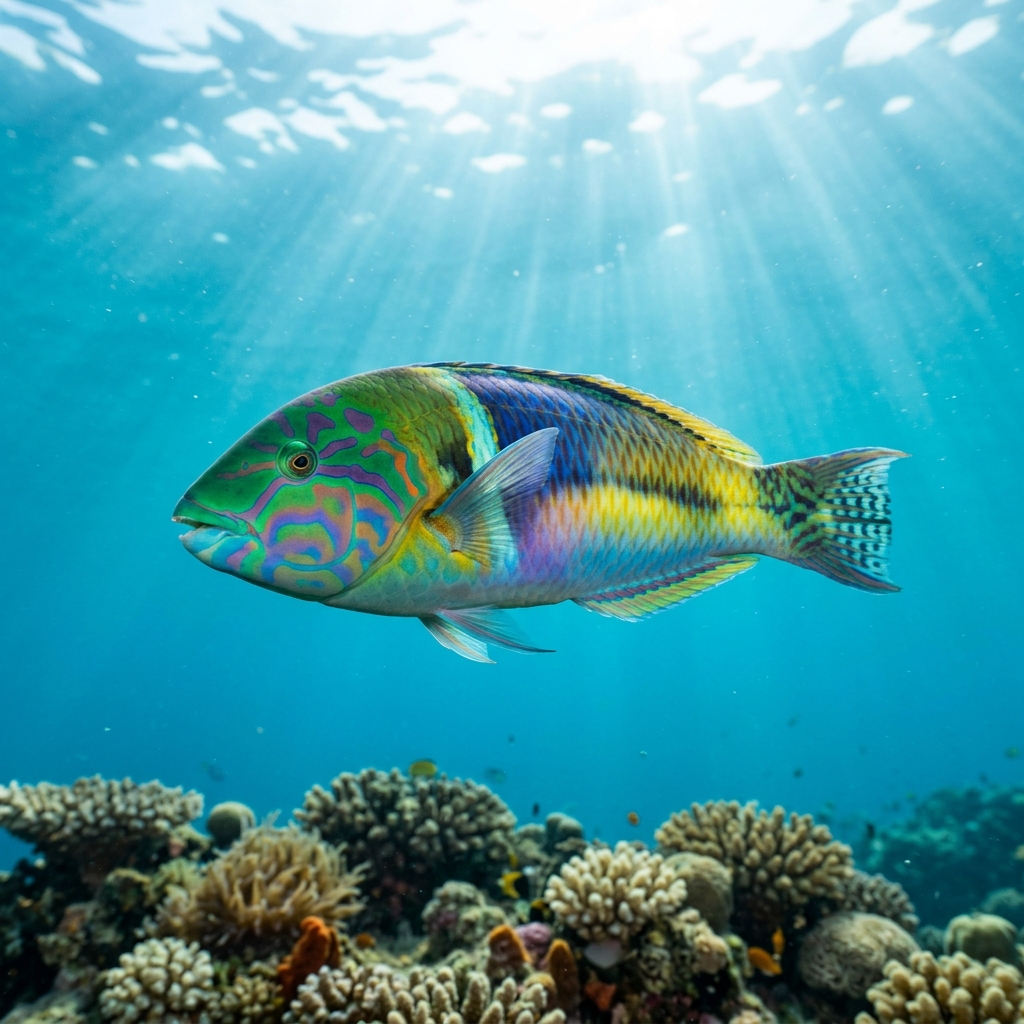
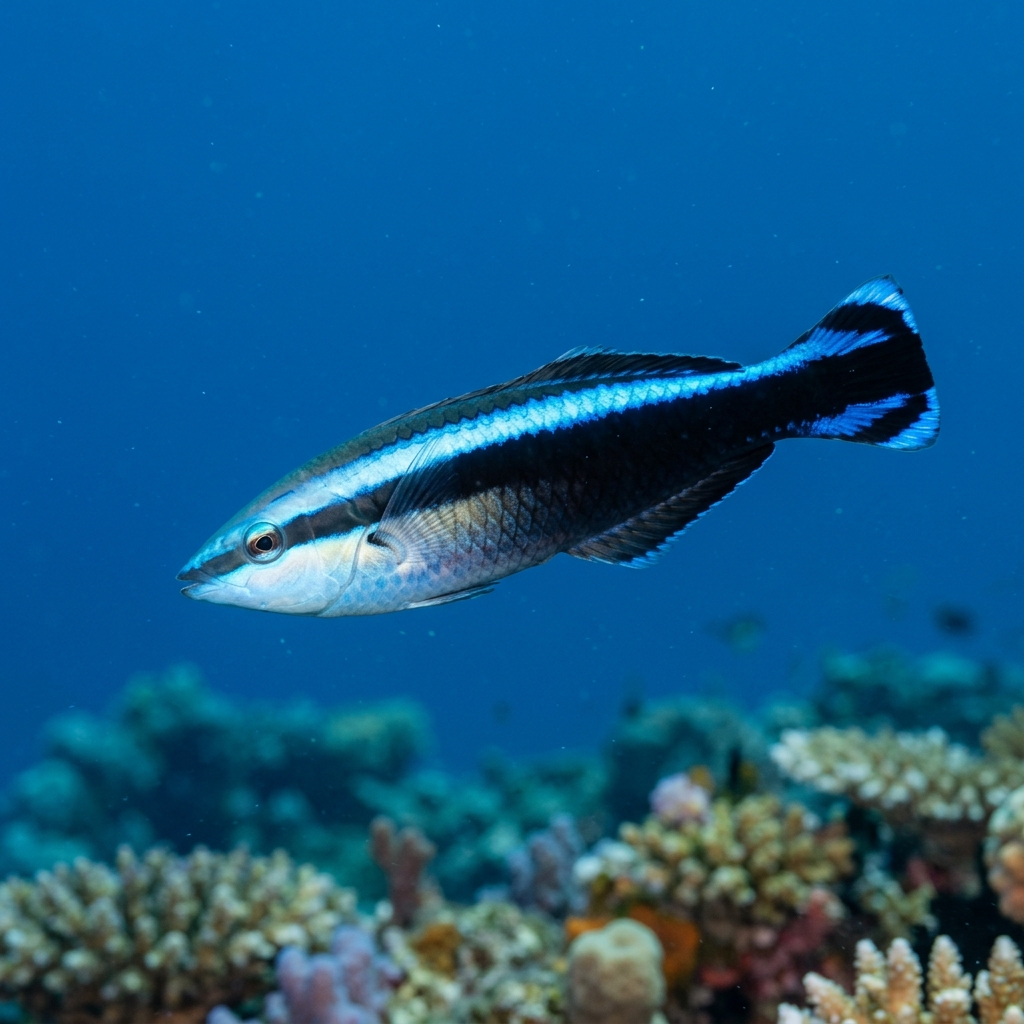
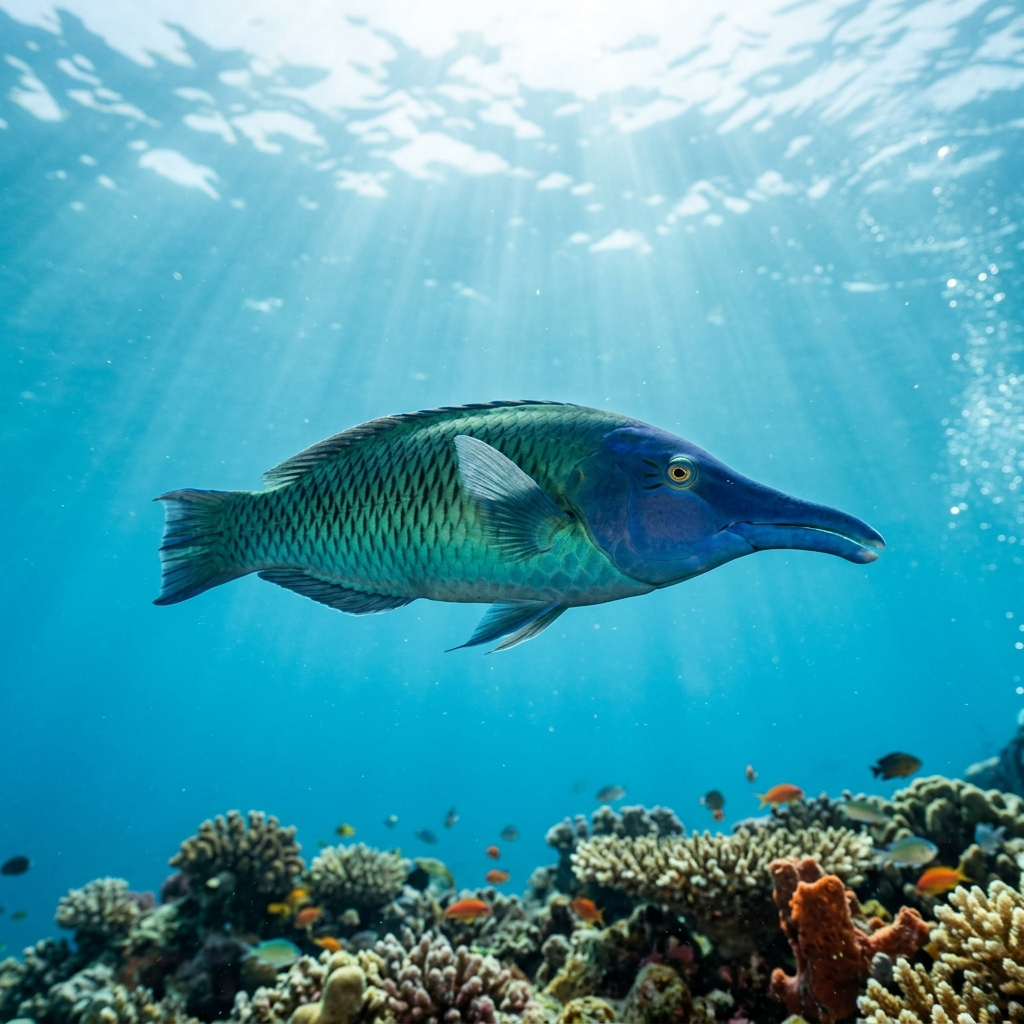
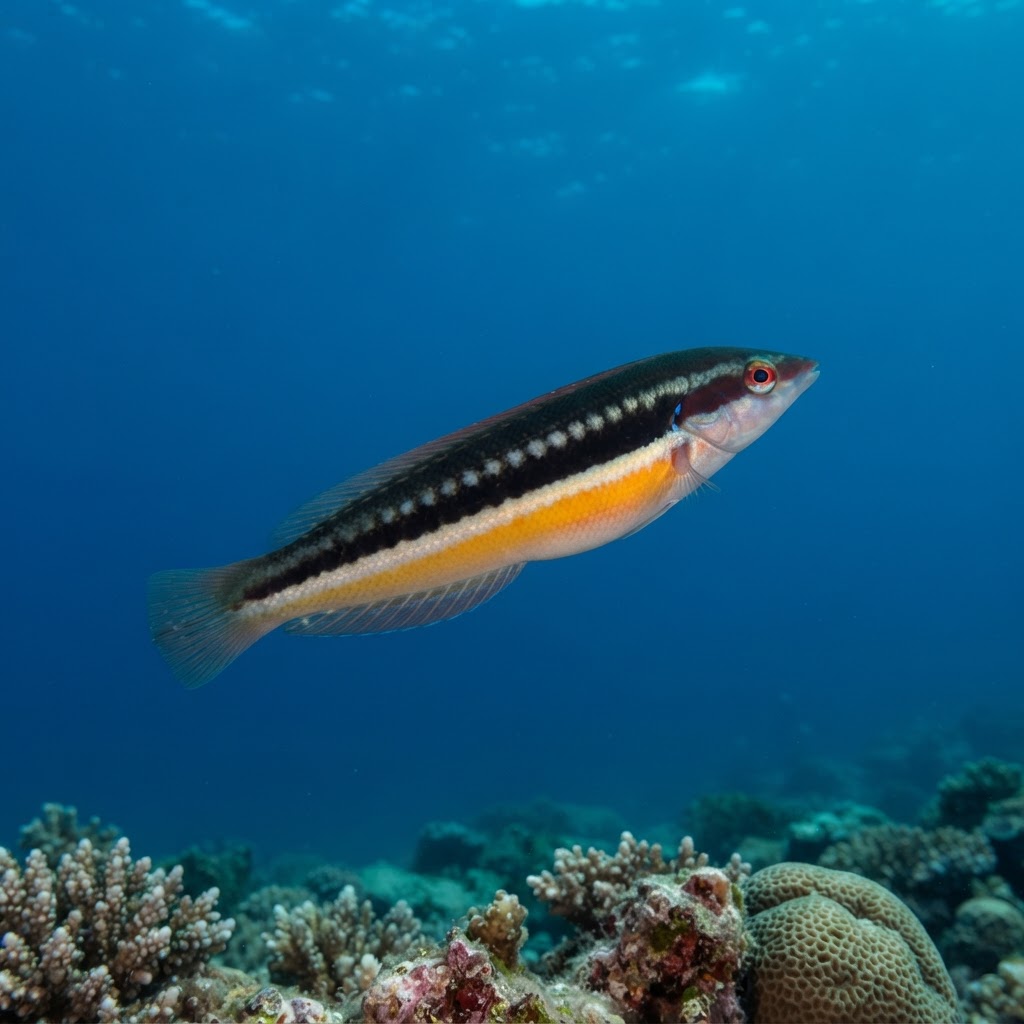
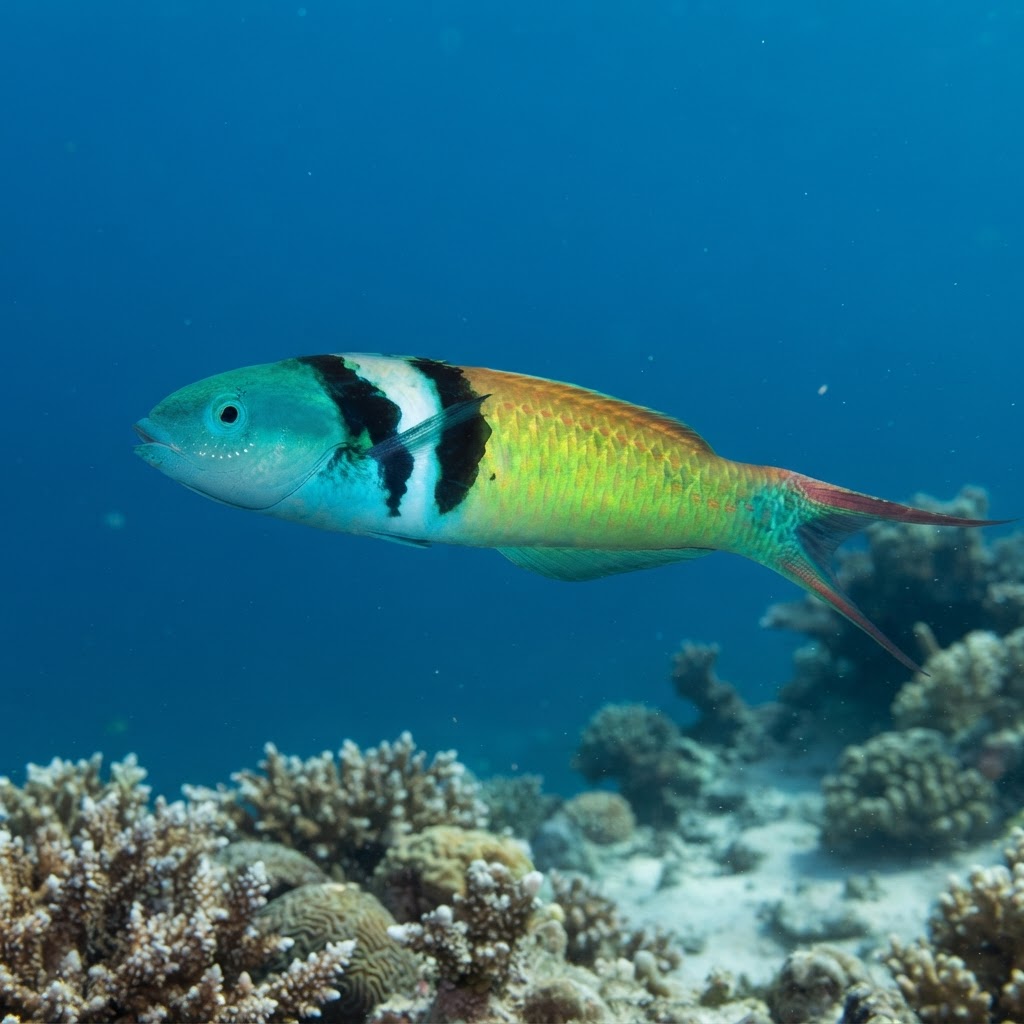
Adult terminal males show a sharp blue head separated from a green-and-black-banded body by two black bars, a look you won't mistake once you've seen it. Small, quick, and slender at around 17 cm, they're usually seen darting just above the reef rather than cruising open water. Females and juveniles look completely different: plain yellow above and white below, which is why the same 'species' can seem to show up in two unrelated forms on a single dive.
Expect small groups picking plankton and tiny invertebrates from the water just off the reef, often hovering a metre or so above coral heads rather than hiding in it. They're unbothered by divers and will keep feeding right through a passing group, making them an easy, reliable subject for slow, close observation. Look for them active through the day over shallow reef flats and coral rubble, from the surface down to recreational depths.
Bluehead wrasse change sex: most start out yellow females, and some later transform into the blue-headed terminal males that control small mating territories and spawn with multiple females at dusk.
No real seasonal pattern shows in the data, and with a comfortable range of 25 to 28.1C year-round across its Caribbean range, it's a dive-any-month species.
This is a Caribbean and western Atlantic reef fixture, most reliably logged in Mexico's Yucatán Peninsula, Florida, and the Bay Islands of Honduras. Strong numbers also turn up in Grand Cayman, Bonaire's Leeward Coast, the British Virgin Islands, and along Colombia's Caribbean coast, so it's a near-certain sighting on any healthy reef across the region.
Mapping where Bluehead Wrasse is logged…
They're a staple of Caribbean reef diving, seen most often around Mexico's Yucatán Peninsula, Florida, the Bay Islands of Honduras, Grand Cayman, and Bonaire's Leeward Coast.
Any time of year works. They stay active in warm reef water year-round and there's no strong seasonal pattern in sighting data.
Look for a small, fast-moving fish with a bright blue head split from a green-and-black barred body by two black bands. Females and juveniles are plain yellow on top and white below, so the same species can look totally different depending on which one you spot.
They top out around 17 cm, making them one of the smaller, quicker fish you'll notice hovering over Caribbean reefs.
They're sequential hermaphrodites: most start life as yellow females and some later change sex and colour into the blue-headed males that dominate territories and do most of the spawning at dusk.
Site and sighting data is aggregated from diver logs, iNaturalist and GBIF. For taxonomy and conservation status:
Bird Wrasses
3,632 sites