Pomacanthus paru
French angelfish are logged year-round across the Yucatán Peninsula, Roatán and the Cayman Islands. Here's how to spot and identify them underwater.
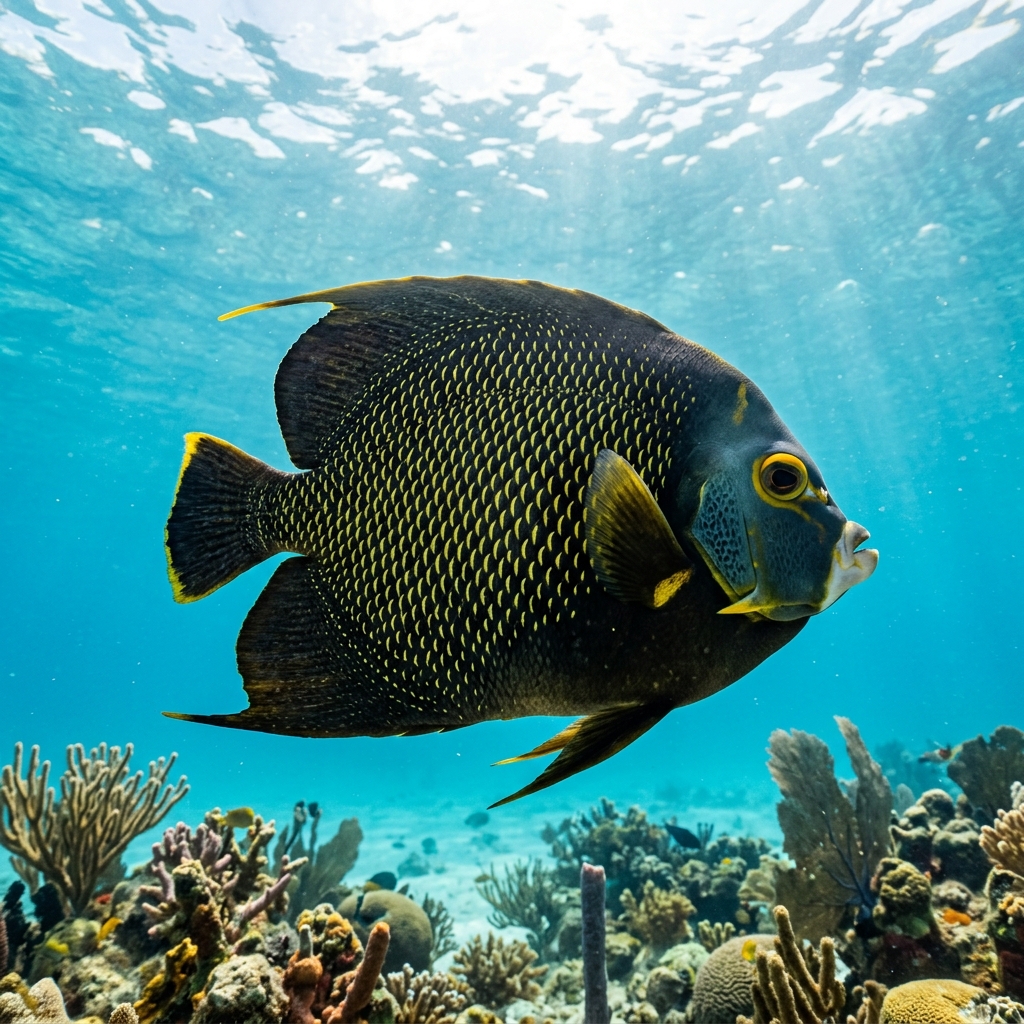
A large, disc-shaped fish dressed in jet-black scales each trimmed with a vivid yellow edge, giving the body an almost sequined look underwater. The face is dark with a yellow patch around the eye, and the caudal fin (tail fin) has a yellow trailing margin. Juveniles are strikingly different: jet black with bold vertical yellow stripes and a yellow-ringed tail, easily mistaken for a different species altogether. Adults typically swim in bonded pairs, which is one of the quickest recognition cues on the reef.
French angelfish are almost always seen in pairs, bonded partners that hold long-term territories and patrol the reef together, grazing on sponges and algae. They are relatively unfazed by divers and will often continue feeding or cruising slowly along the reef without bolting, making calm, unhurried observation easy. Look for them picking at encrusting sponges on coral heads, typically from the shallows down through the mid-reef.
French angelfish are one of the few reef fish documented to form long-term, monogamous pair bonds. Partners defend a shared territory together and have been observed cooperating to chase off rival fish, which is unusually sophisticated social behaviour for a reef species.
In the Northern Hemisphere they are present year-round with no concentrated season, which makes sense given they are most observed at water temperatures between 26 and 29 °C on stable tropical reefs. Southern Hemisphere sightings, including Brazilian sites, tend to concentrate between January and May and again in August to October.
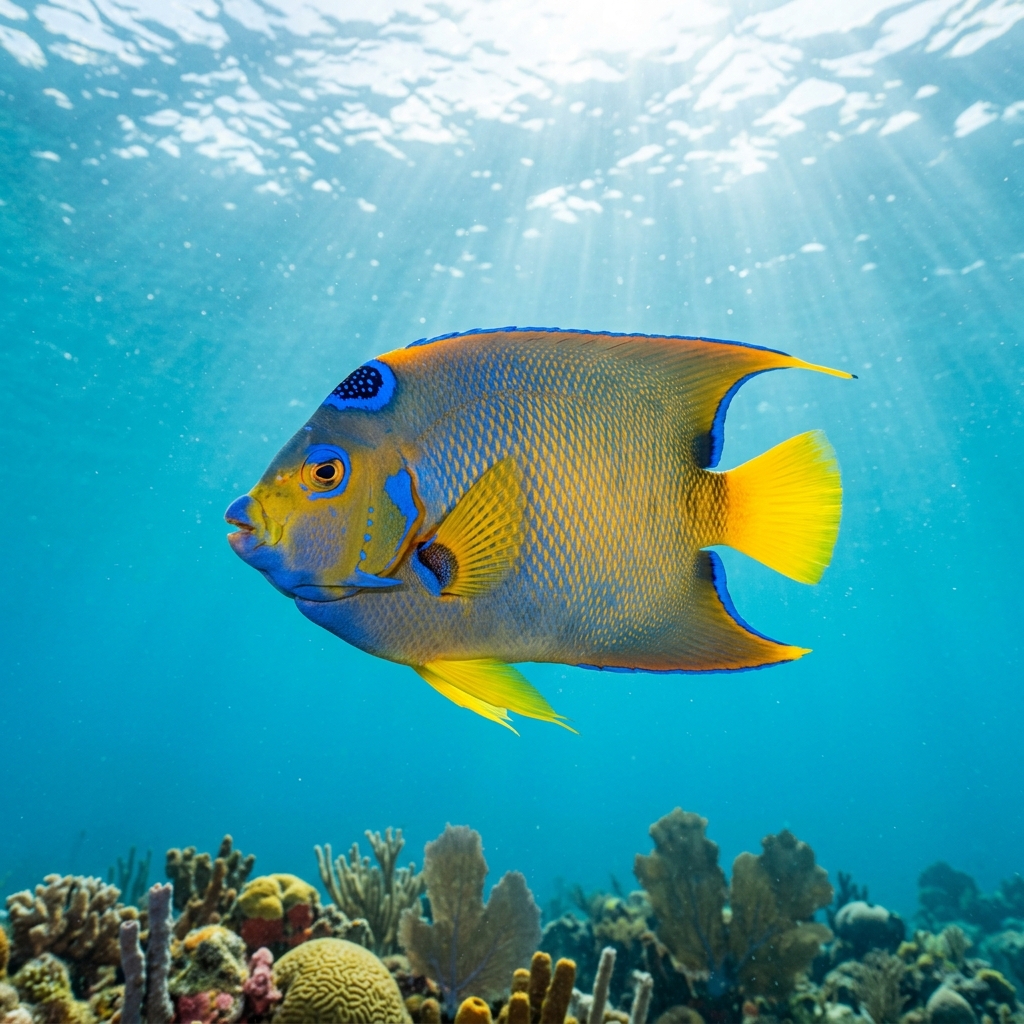
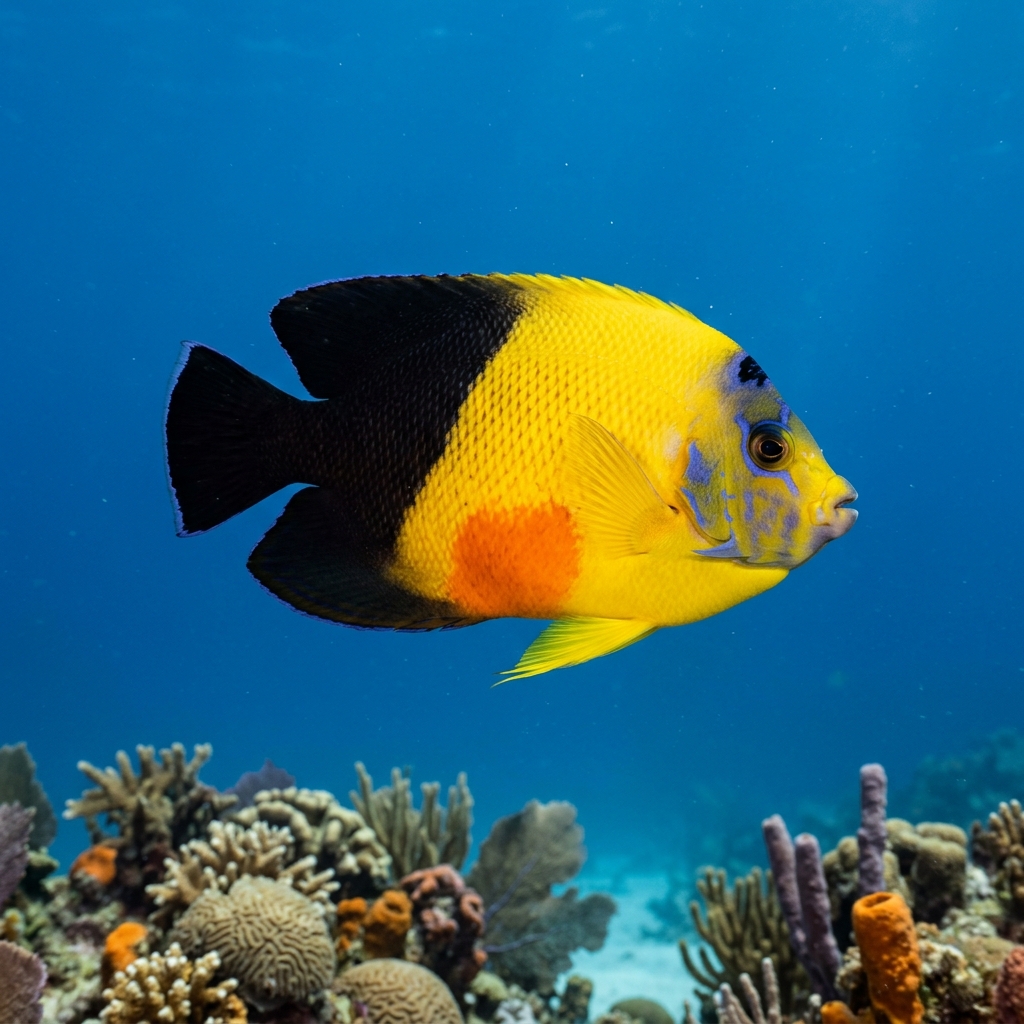
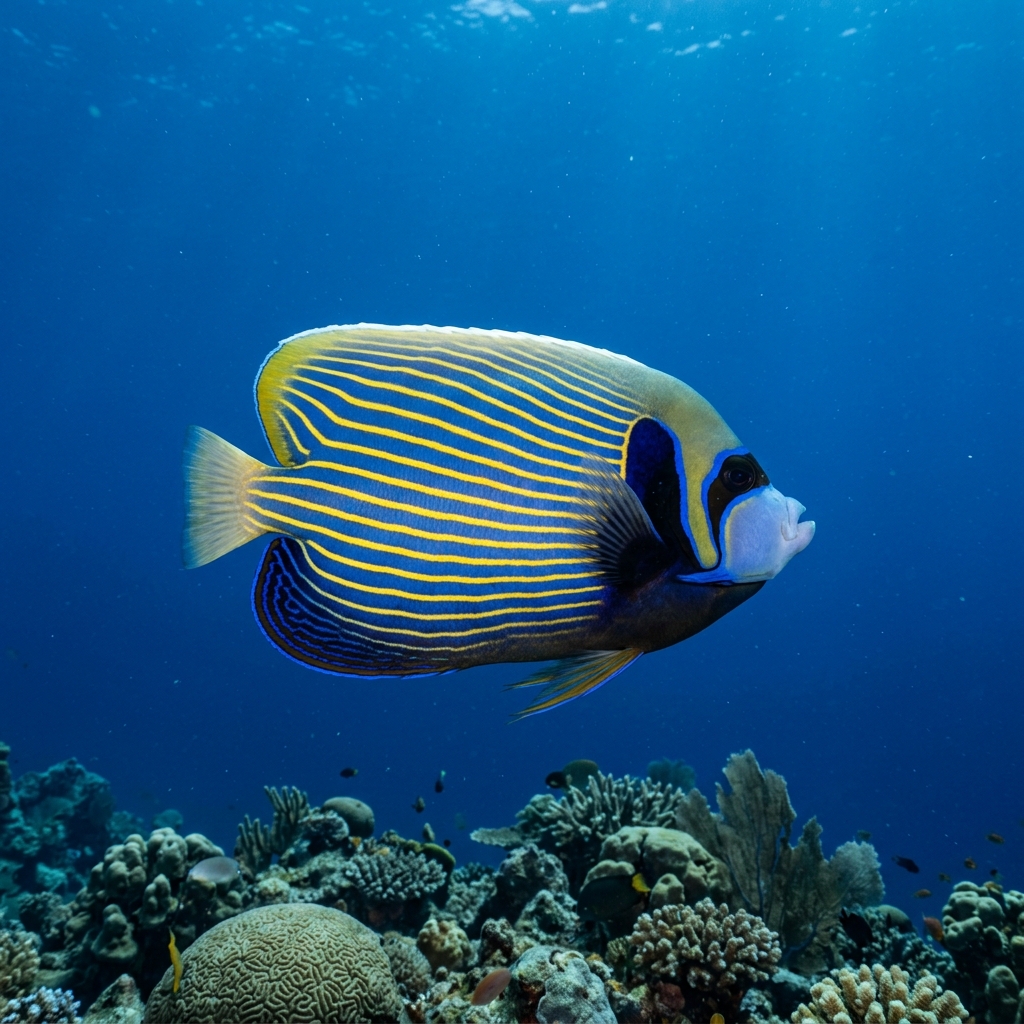
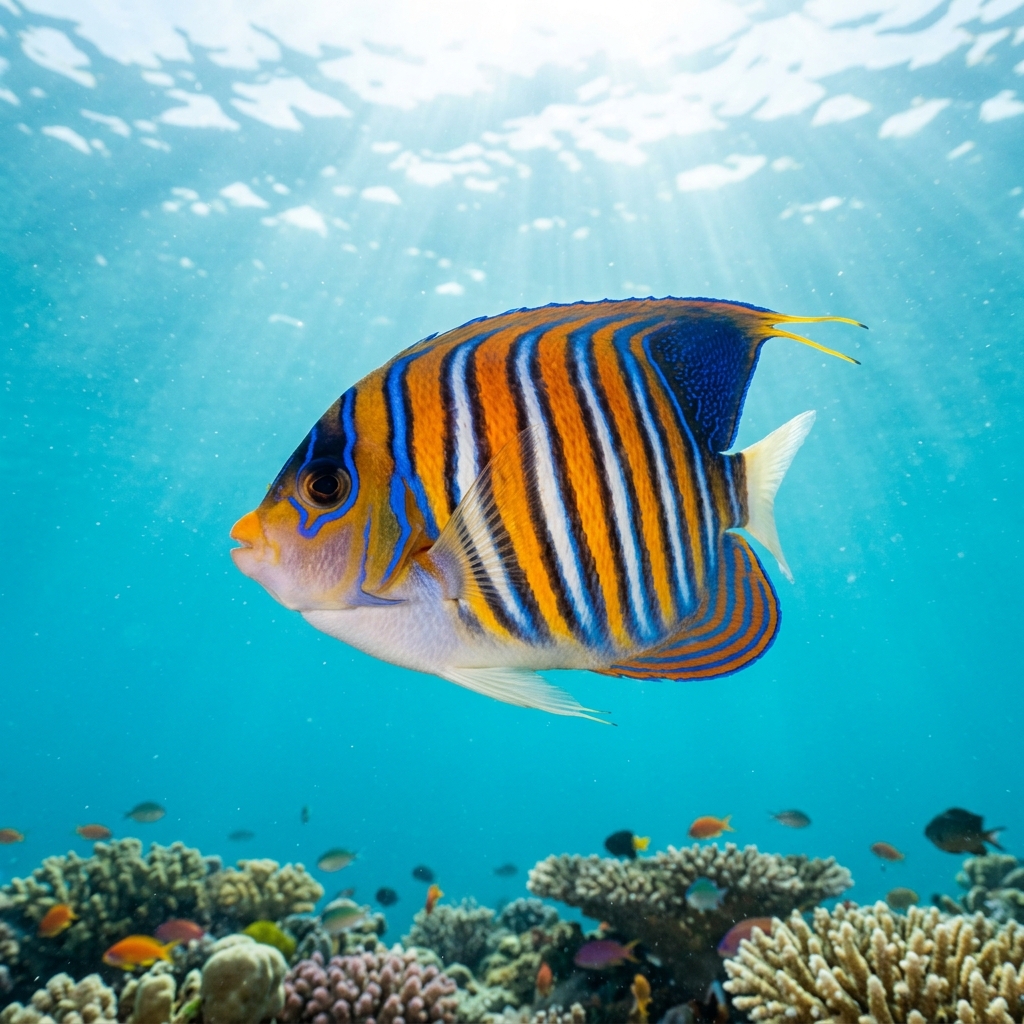
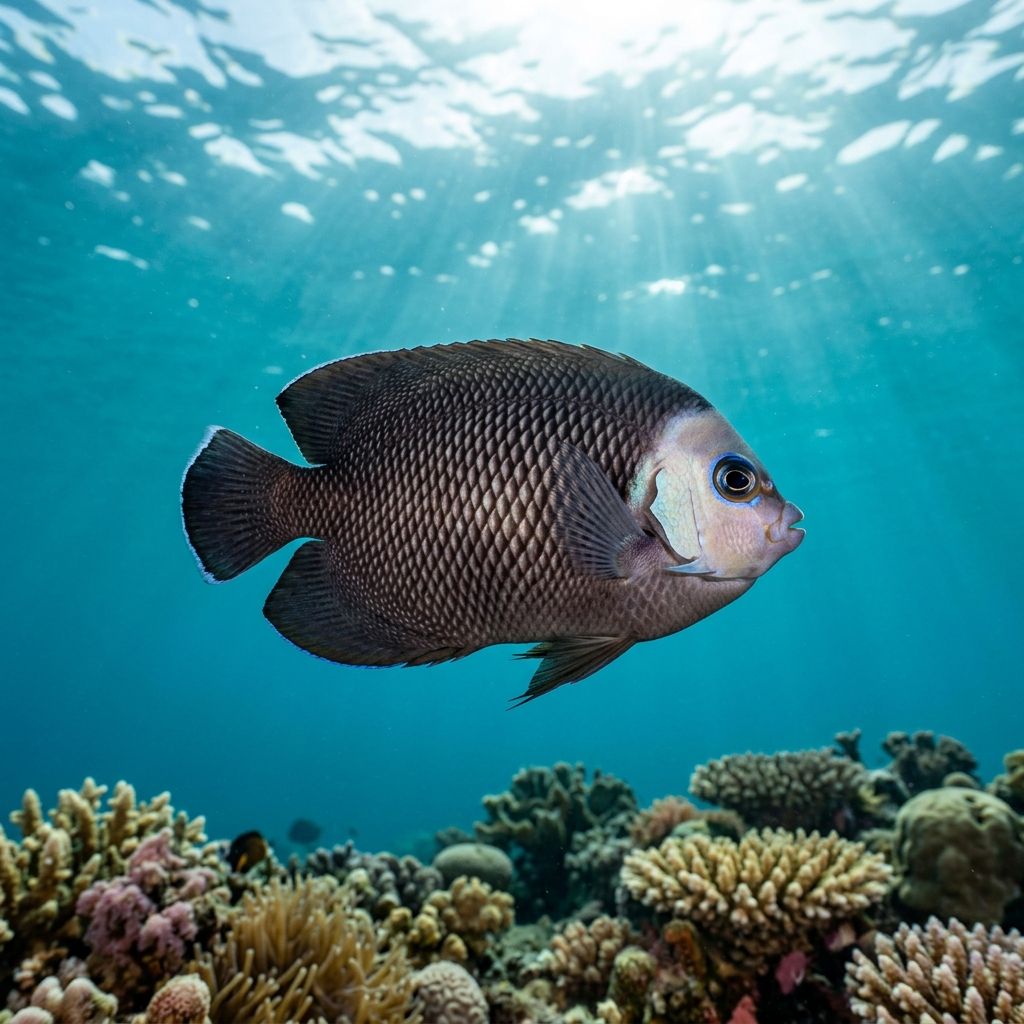
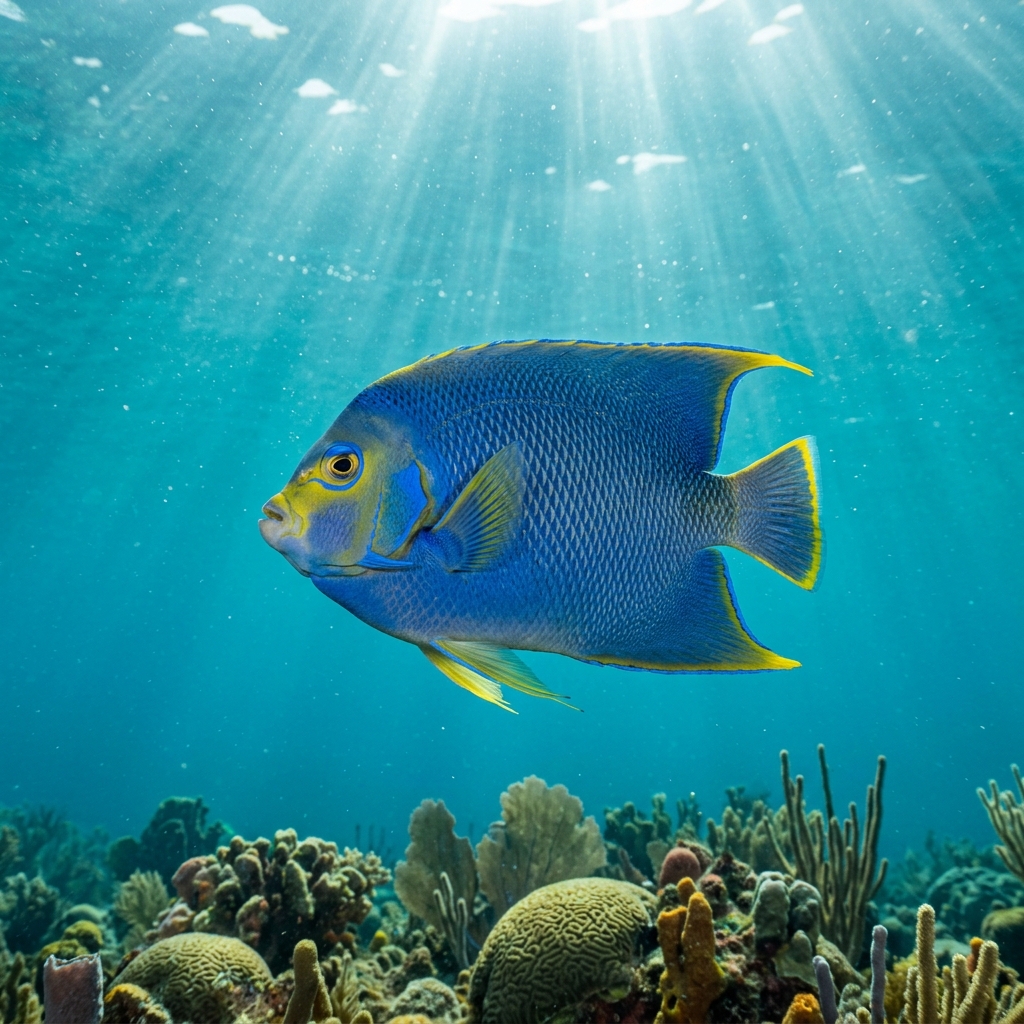
Reef neighbours a diver could mistake it for. Use the identification notes above to tell them apart.
Most commonly logged throughout the Caribbean and western Atlantic, with the strongest records from the Yucatán Peninsula and the rest of Mexico's Caribbean coast. The Cayman Islands, Bonaire, Roatán in Honduras, and Grenada are all reliable locations, and there are strong populations in Brazil further south. Florida divers also encounter them regularly along the southeast coast.
Mapping where French Angelfish is logged…
They are logged across a wide stretch of the Caribbean and western Atlantic. The Yucatán Peninsula and the rest of Mexico's Caribbean coast have the most records, followed closely by Florida, the Cayman Islands, Roatán in Honduras, Bonaire, and Grenada. Brazil is the standout location outside the Caribbean.
In the Caribbean and Florida they are present year-round with no real peak season. At Brazilian and other Southern Hemisphere sites, sightings tend to cluster between January and May and again from August to October.
Look for a large, disc-shaped black fish whose scales each have a bright yellow rim, giving it a sequined appearance. A yellow eye patch and yellow tail margin seal the ID. Adults almost always travel in pairs, which is itself a useful field cue.
Adults typically reach around 30 to 38 cm in length, making them one of the larger angelfish species in the Caribbean. Their broad, flattened body shape makes them look even more imposing when they drift past at close range.
They are one of the few reef fish that form long-term monogamous pair bonds. Partners share and defend a territory together for extended periods, which is why you almost always see them in twos. This pairing behaviour has been well documented in scientific studies of Caribbean reef communities.
Site and sighting data is aggregated from diver logs, iNaturalist and GBIF. For taxonomy and conservation status:
Pearl-scaled Angelfish
1,326 sites