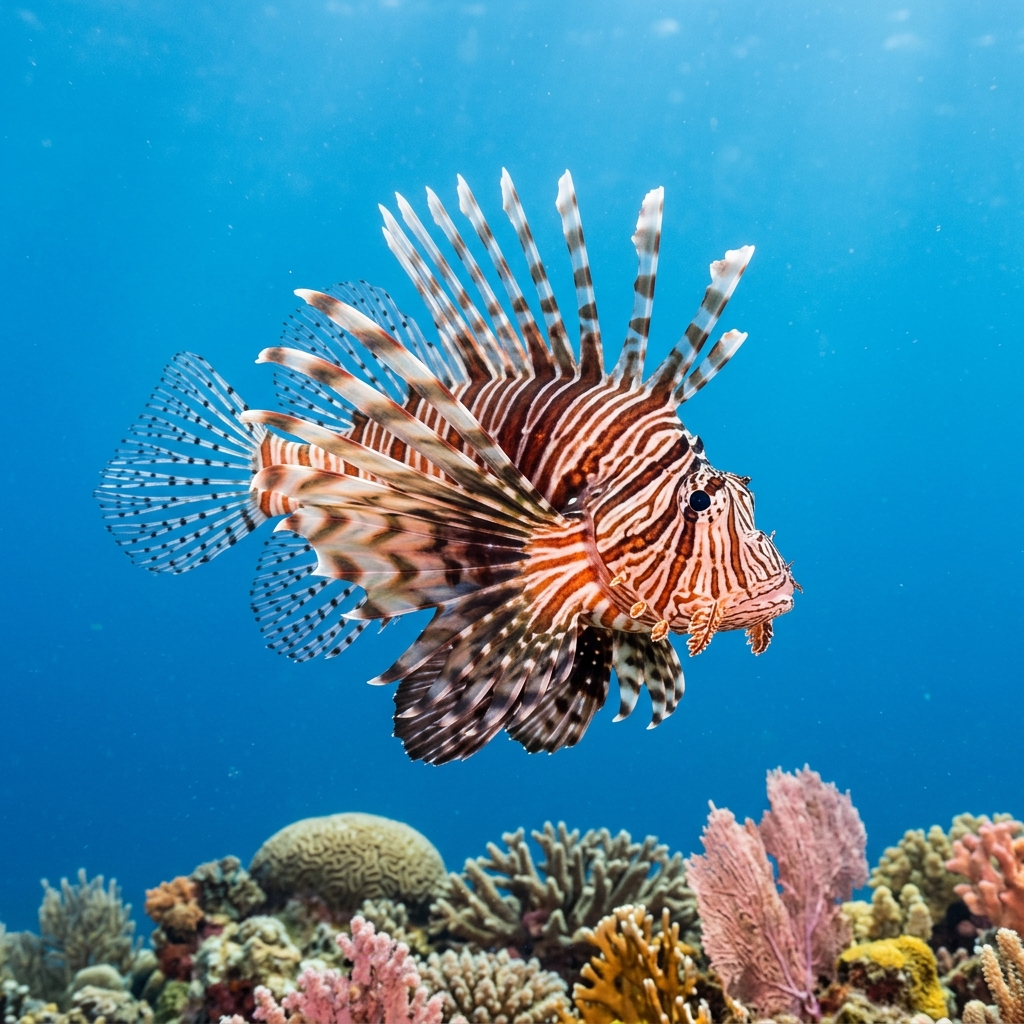
Pterois spp.
Spot lionfish across West Sabah reefs in Malaysia and Jeju Island, South Korea. Know the fins, the spines, and the Jul, Sep peak season.
Safety warning
The dorsal, pelvic, and anal spines all carry venom delivered through grooves in the spine rather than an active injection. A puncture causes intense, immediate pain, swelling, and can occasionally trigger a serious systemic reaction. Keep a clear buffer around any lionfish you photograph; never corner one or reach into crevices where one may be hiding. If stung, immerse the affected area in hot water (as hot as tolerable) to break down the protein-based venom and seek medical attention.
If you're stung
Venomous spinesGeneral first-aid guidance, not a substitute for professional medical care. In an emergency, call your local emergency number.
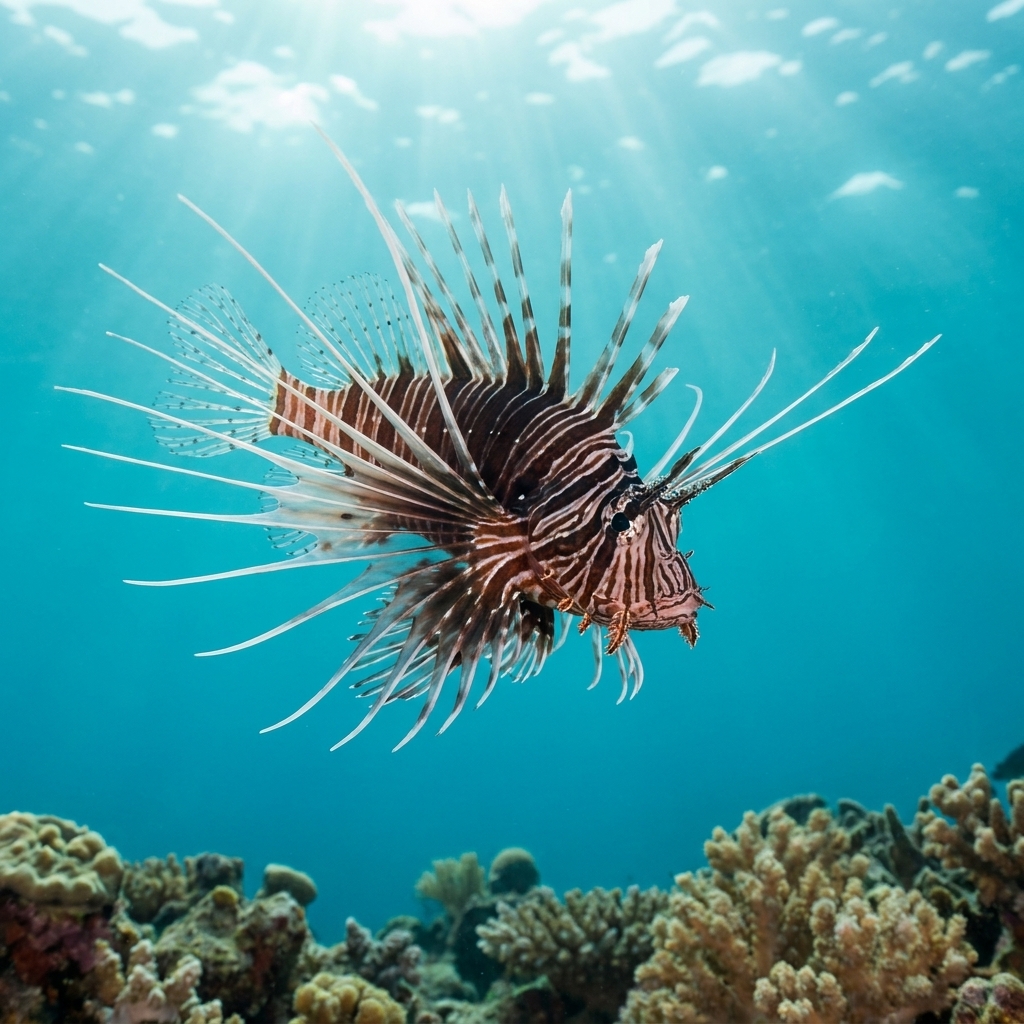
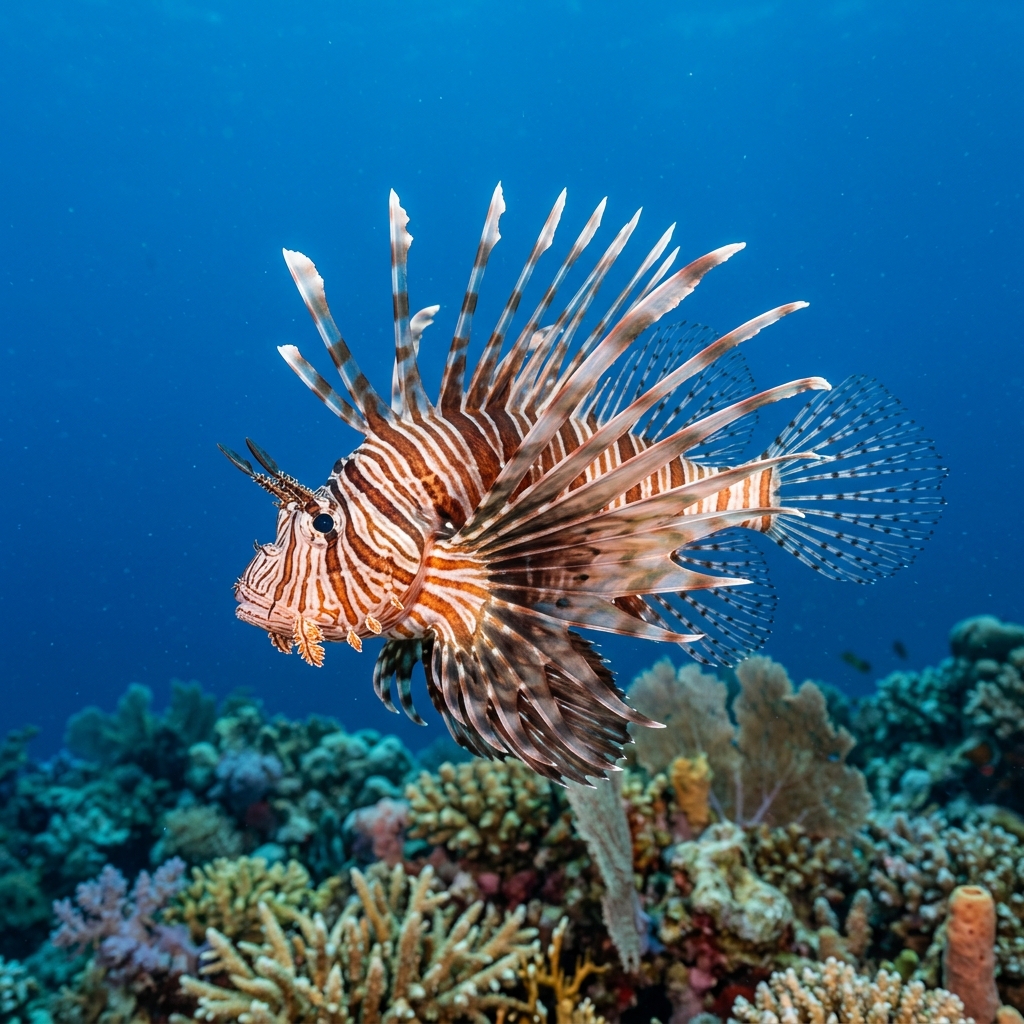
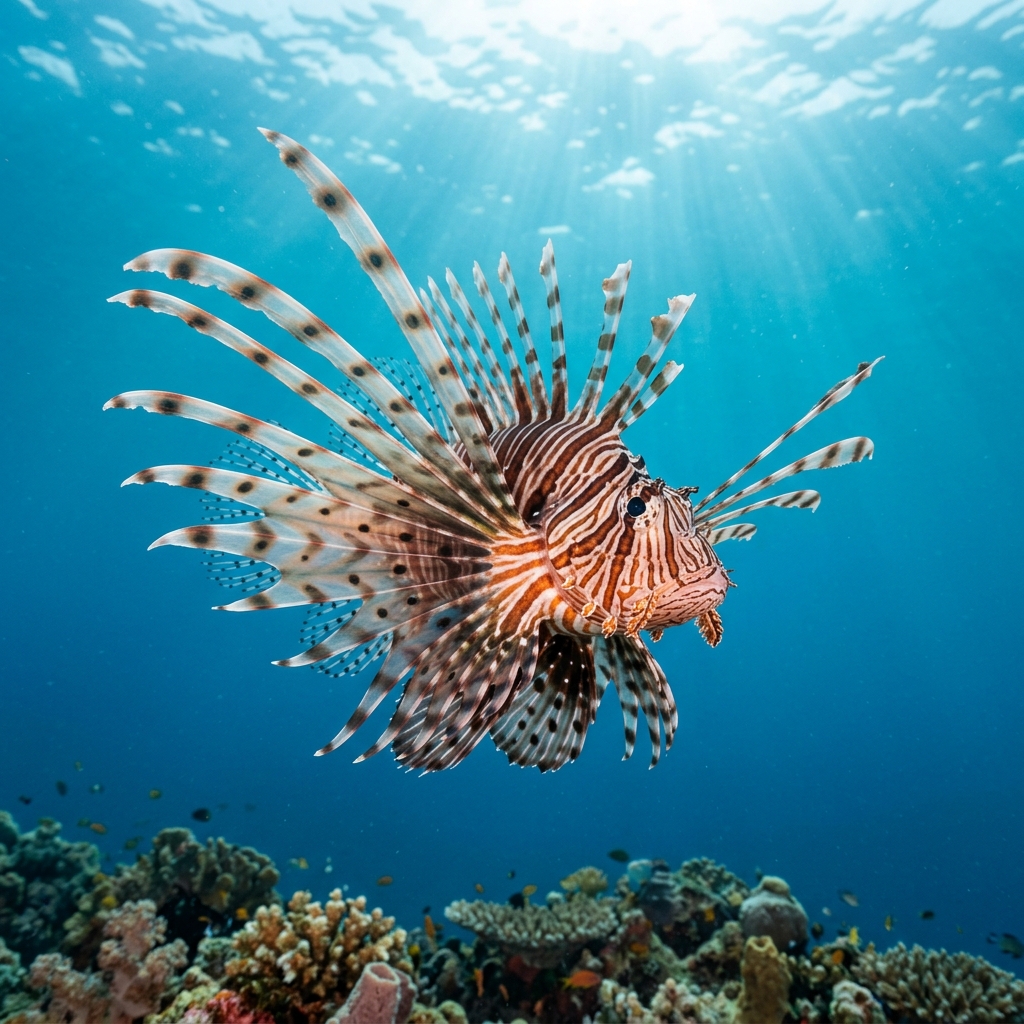
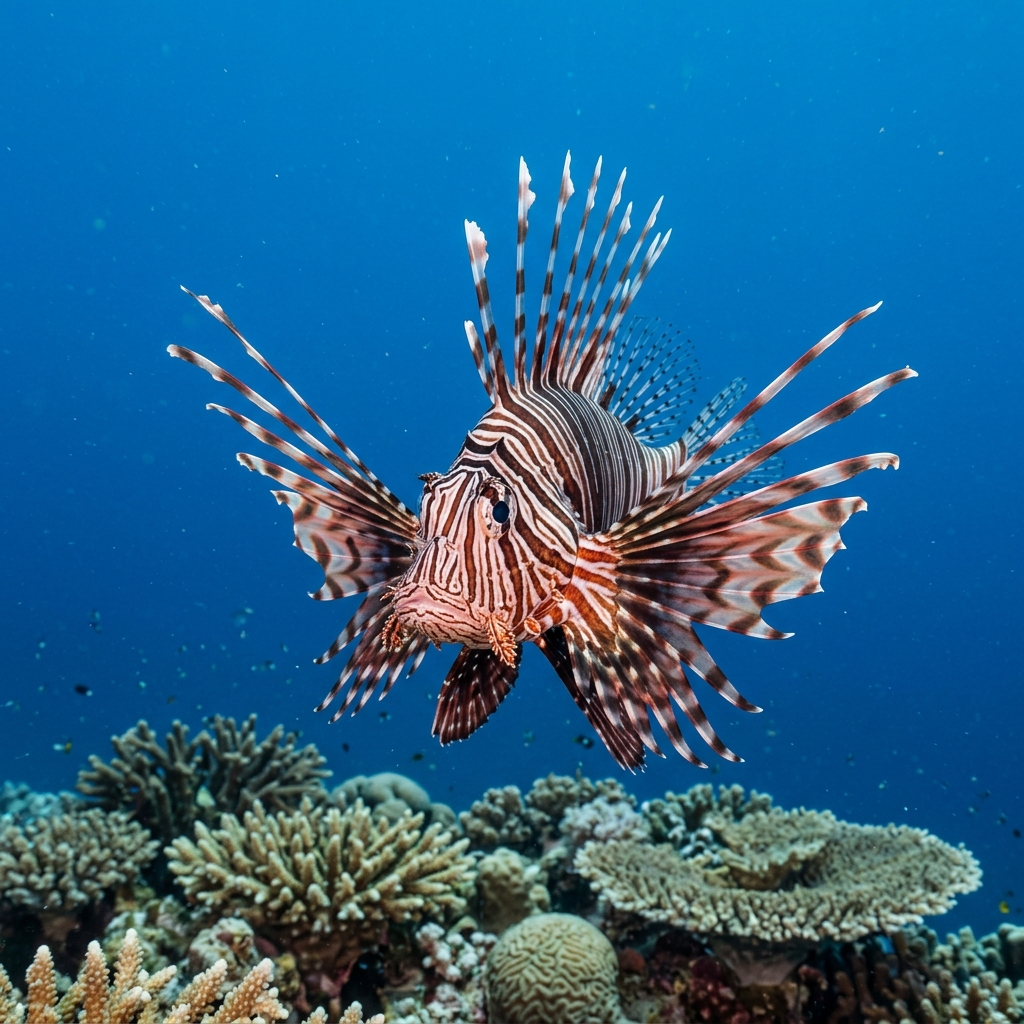
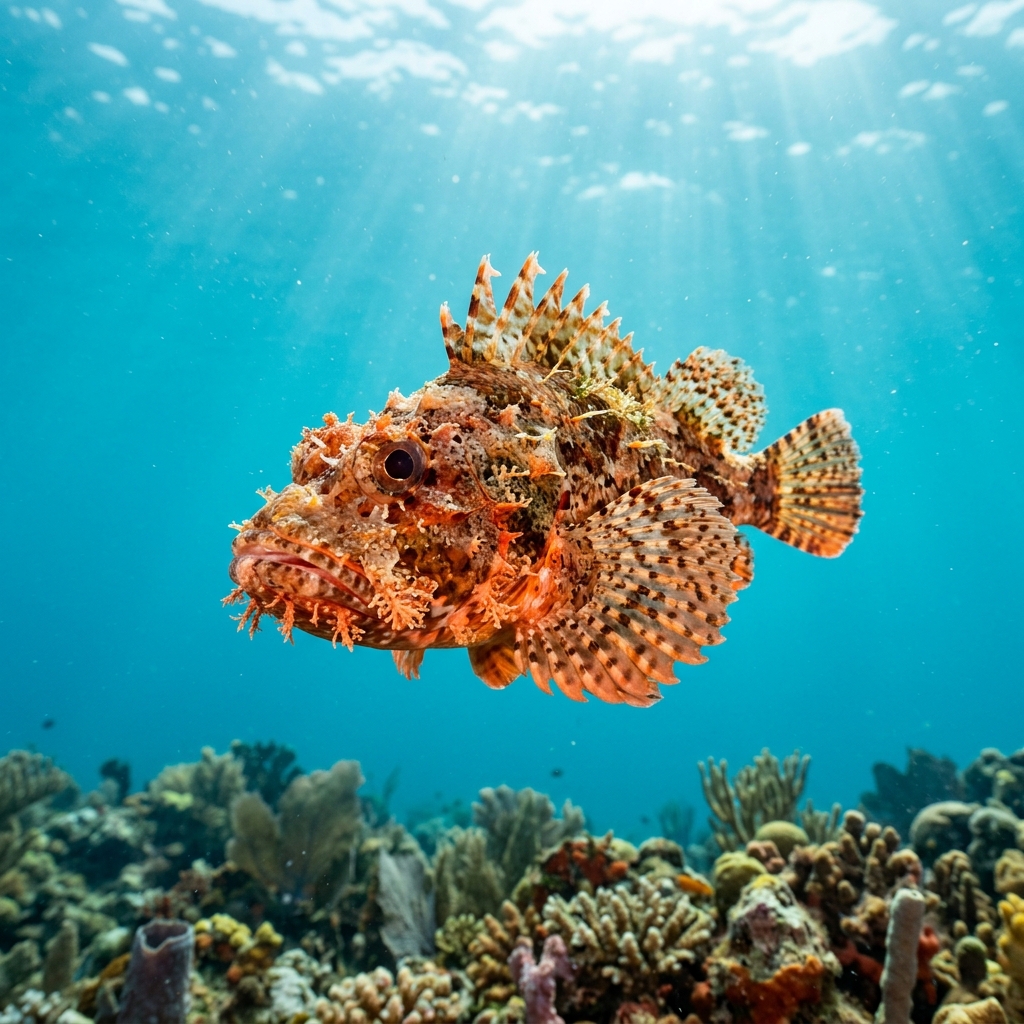
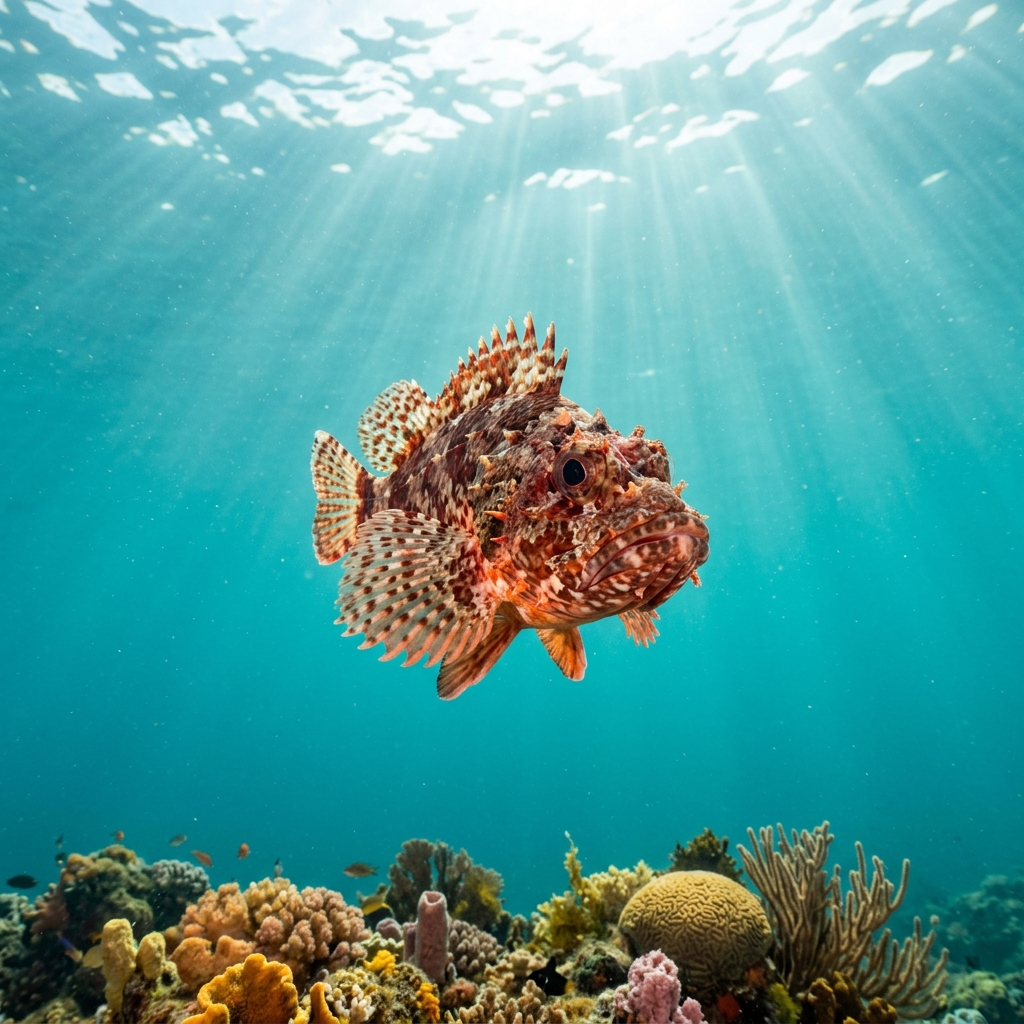
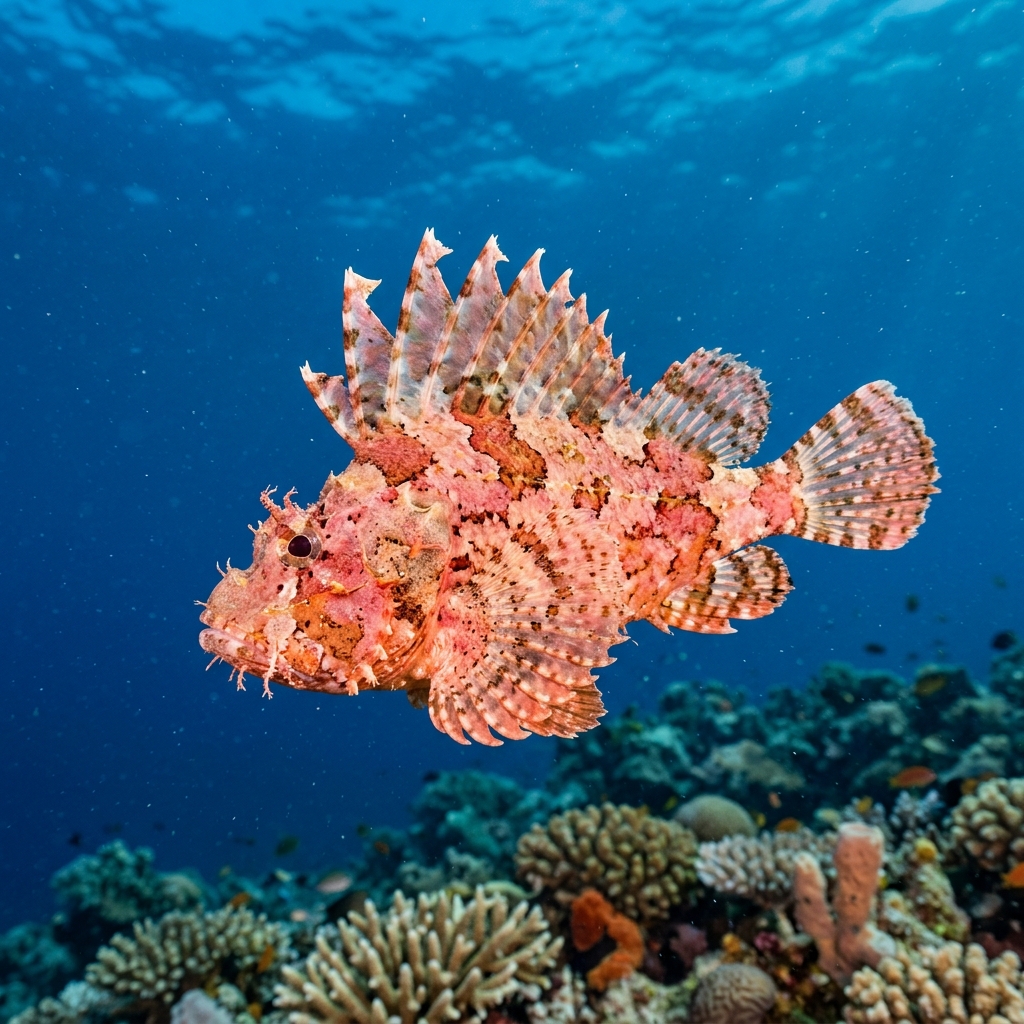
Few reef fish are as immediately recognisable as a lionfish: bold alternating red, white, and brown vertical bands cover the body, and a dramatic fan of long, streamer-like pectoral fins fans out on either side. At around 35 cm, they are a sizeable fish, typically seen hovering motionless near overhangs or coral heads. The rows of elongated dorsal spines, each one venomous, are the signature feature that distinguishes the group from every other banded reef fish. Juveniles share the same banded pattern but are notably smaller and often paler.
Lionfish are unhurried hunters: when you find one, it is usually hovering nearly motionless in the water column or pressed into a coral overhang, watching for prey. They are not aggressive towards divers, but they do not bolt either; approach too closely and they will slowly turn to face you, sometimes fanning their pectoral fins wide, before drifting away. During active hunting, you may catch one herding small fish into a corner with those outstretched fins before lunging forward in a surprisingly fast strike.
Lionfish are voracious, opportunistic predators that have become ecologically significant invasive species in the Atlantic and Caribbean, where they were introduced through the aquarium trade and now outcompete native predators with no natural checks on their population.
In Northern Hemisphere sites, sightings concentrate between July and September, suggesting summer months are the most productive time to look. The species is observed across a water temperature range of roughly 23 to 29 °C, so tropical sites with stable warm water can produce encounters outside this window.
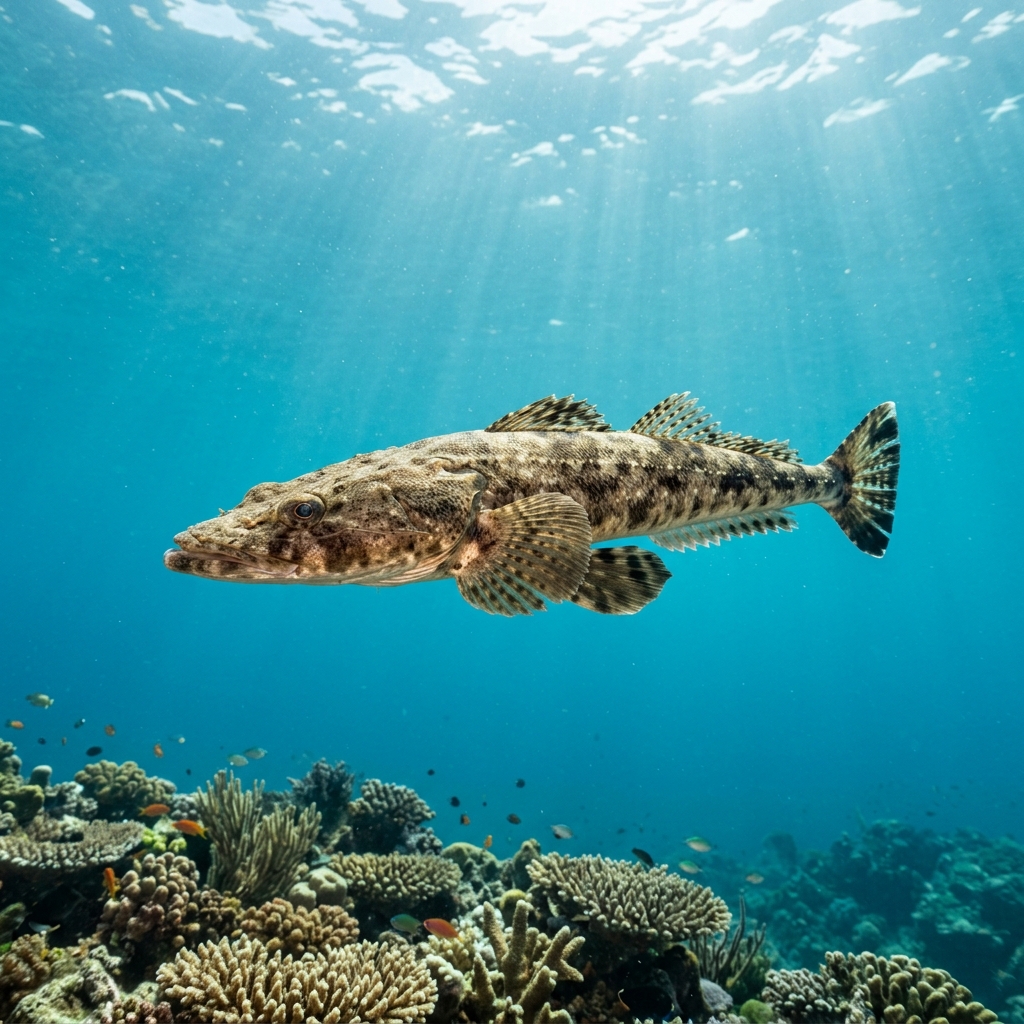
Reef neighbours a diver could mistake it for. Use the identification notes above to tell them apart.
The vast majority of diver sightings come from West Sabah and Labuan in Malaysian Borneo, which accounts for by far the strongest concentration of logged encounters. Thailand's Gulf of Thailand north coast and Jeju Island in South Korea also contribute regular sightings, with smaller numbers of records from Bali and Lombok in Indonesia and Western Australia.
Mapping where Lionfish is logged…
Most logged sightings come from West Sabah and Labuan in Malaysian Borneo, making that the top destination. South Korea's Jeju Island, northern Gulf of Thailand, Bali and Lombok in Indonesia, and Western Australia also have confirmed records.
At Northern Hemisphere sites, sightings peak between July and September. Lionfish are observed in water temperatures from around 23 to 29 °C, so warm tropical reefs can yield encounters year-round, but summer months give you the best odds.
Yes. Their spines are venomous and a sting is extremely painful, causing localised swelling and, in some cases, a stronger reaction. They will not attack you, but cornering one or accidentally touching a spine in a crevice are real risks. Keep a respectful distance and never handle them.
Look for bold red, white, and brown vertical bands on a fish roughly 35 cm long, with fan-like streamer pectoral fins and a row of long venomous dorsal spines. That combination of striped body and dramatic fin spread makes them one of the easier reef fish to name with confidence.
Most individuals encountered by divers are around 30 to 35 cm in length. Some species within the Pterois group can reach up to 38 cm, though they are more commonly seen at the smaller end of that range.
Native to Indo-Pacific reefs, lionfish were released or escaped into the Atlantic and Caribbean, where they have no natural predators to keep numbers in check. They reproduce rapidly and eat a wide range of small reef fish, putting significant pressure on native marine communities.
Site and sighting data is aggregated from diver logs, iNaturalist and GBIF. For taxonomy and conservation status:
Dendrochirus zebra
Indian Lionfish
2,604 sites