Holacanthus ciliaris
Spot queen angelfish on Caribbean reefs from the Yucatán to Roatán. Learn the blue crown, neon body, and when sightings peak across the region.
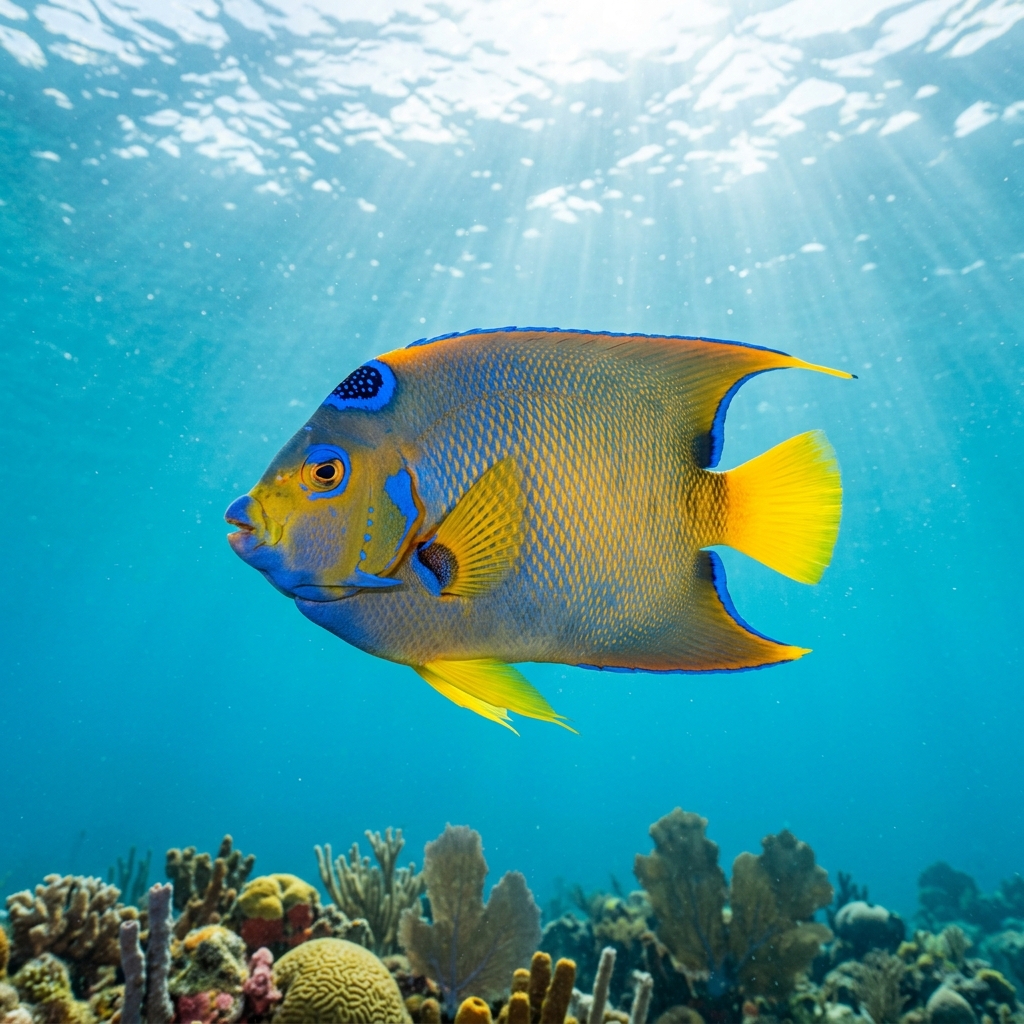
A vivid splash of electric blue and yellow, with a body that shifts from deep blue-green at the face to rich gold and orange toward the tail. The single most reliable marker is the dark blue spot on the forehead ringed with bright blue, forming a distinctive 'crown'. Adults are large-bodied and disc-shaped, moving slowly and deliberately across the reef. The trailing edges of the dorsal and anal fins are drawn out into long, flowing filaments that flutter as the fish swims.
Usually encountered alone or in a loosely paired adult couple, moving steadily along the reef face picking at sponges with a small, beak-like mouth. It tends to maintain a comfortable distance from divers, circling away if approached directly but rarely bolting outright, which makes for good observation if you move slowly and stay low. Look for it on deeper sections of the fore-reef slope and around large barrel sponge formations, which are among its preferred feeding sites.
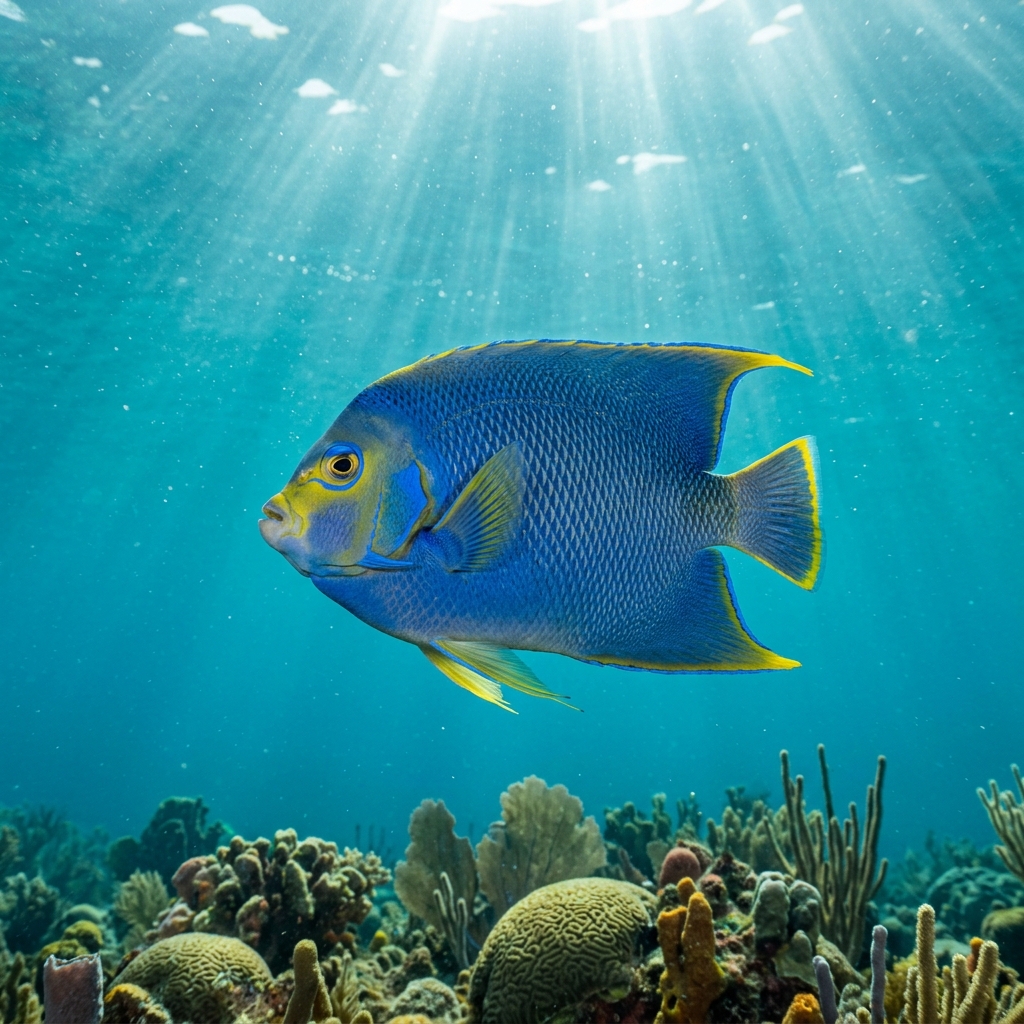
The crown spot that makes this fish so easy to recognise is not just an ID shortcut for divers; juveniles carry completely different colouration (dark blue with vivid yellow vertical stripes and blue-ringed tail) and only develop the adult pattern as they mature, meaning juveniles and adults on the same reef can look like entirely different species.
Northern Hemisphere sighting data concentrates from October through August, suggesting a dip in logged encounters during September but broadly good odds across most of the year. This fits the species' preference for warm tropical water in the 25 to 29 °C range that Caribbean reefs maintain year-round.
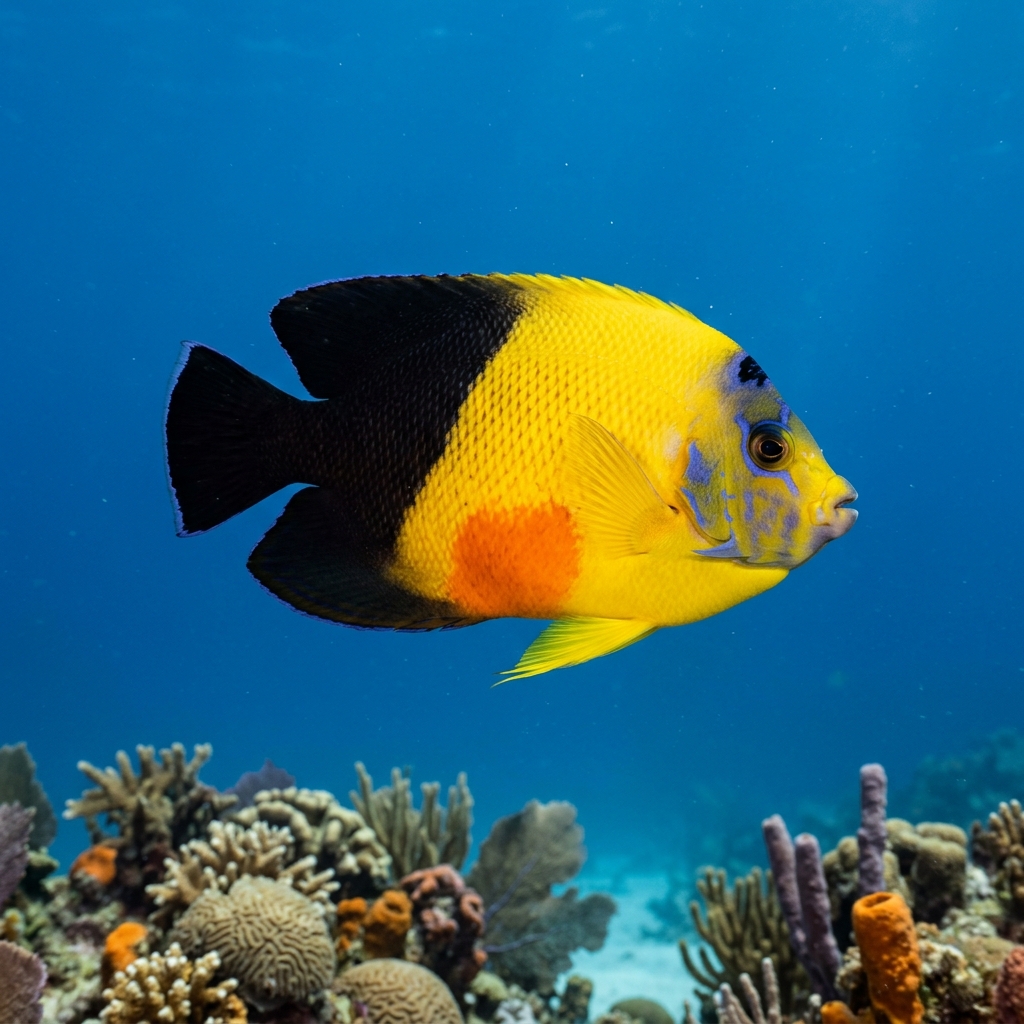
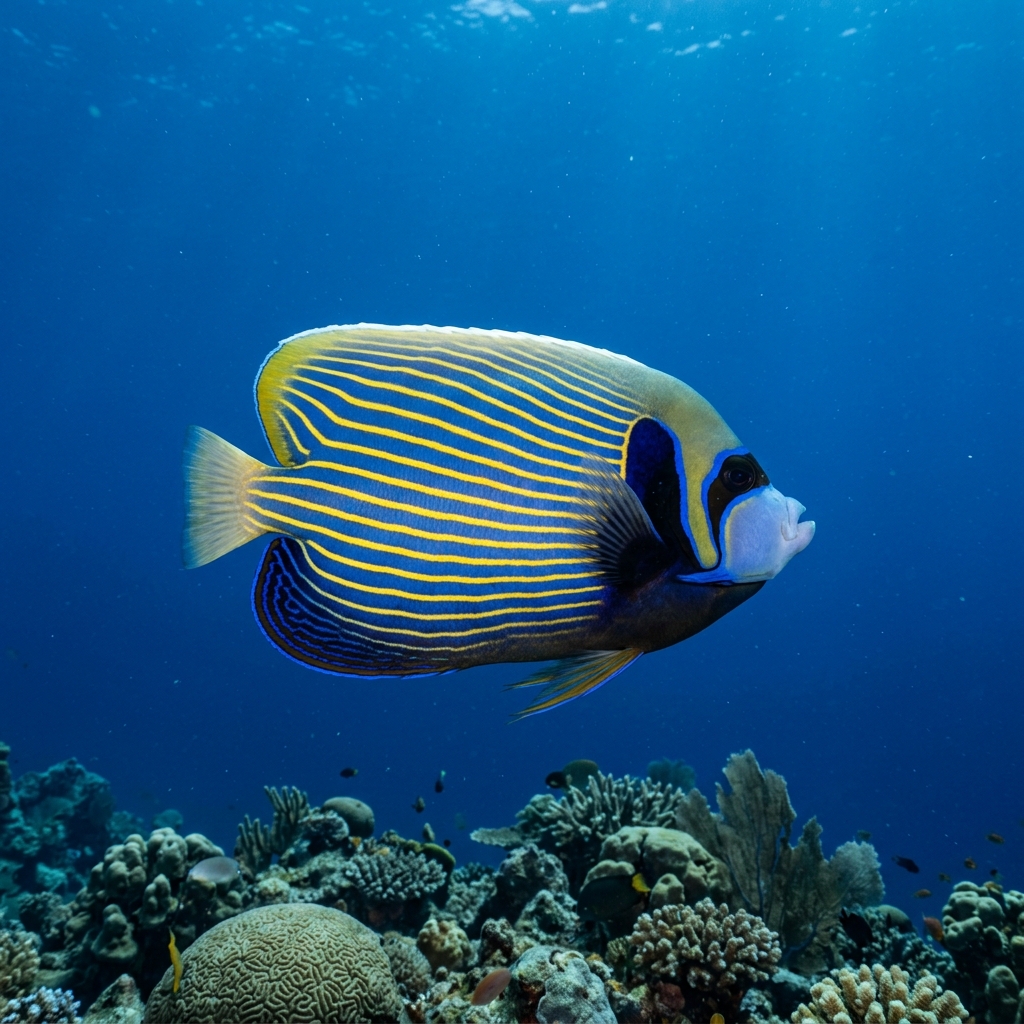
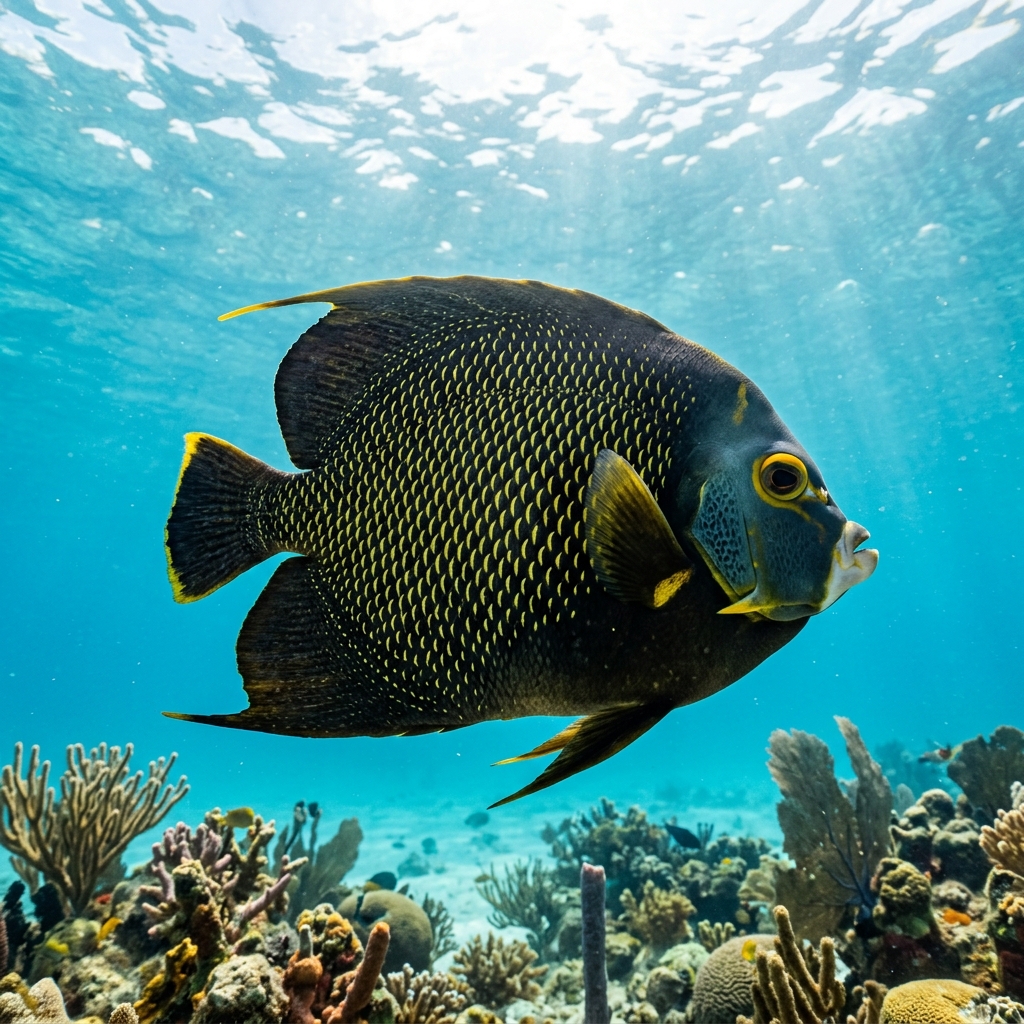
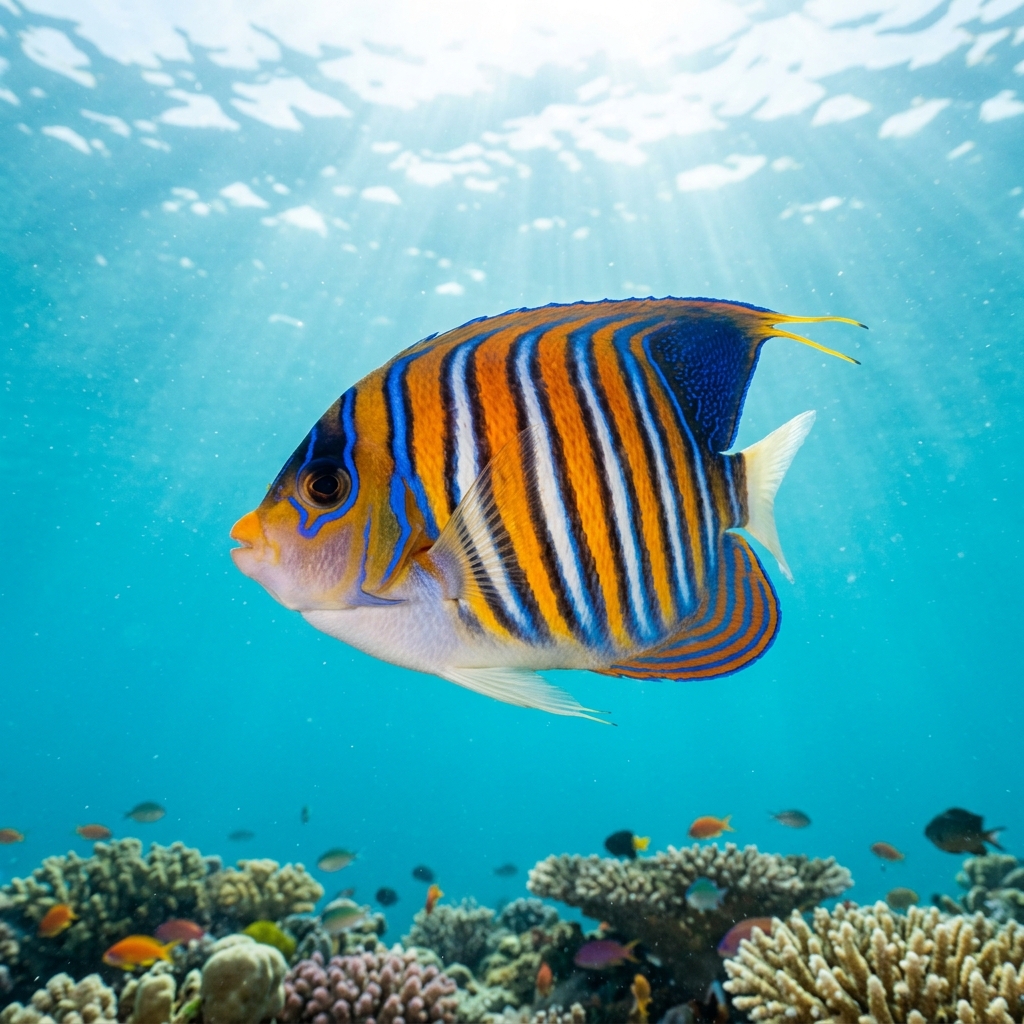
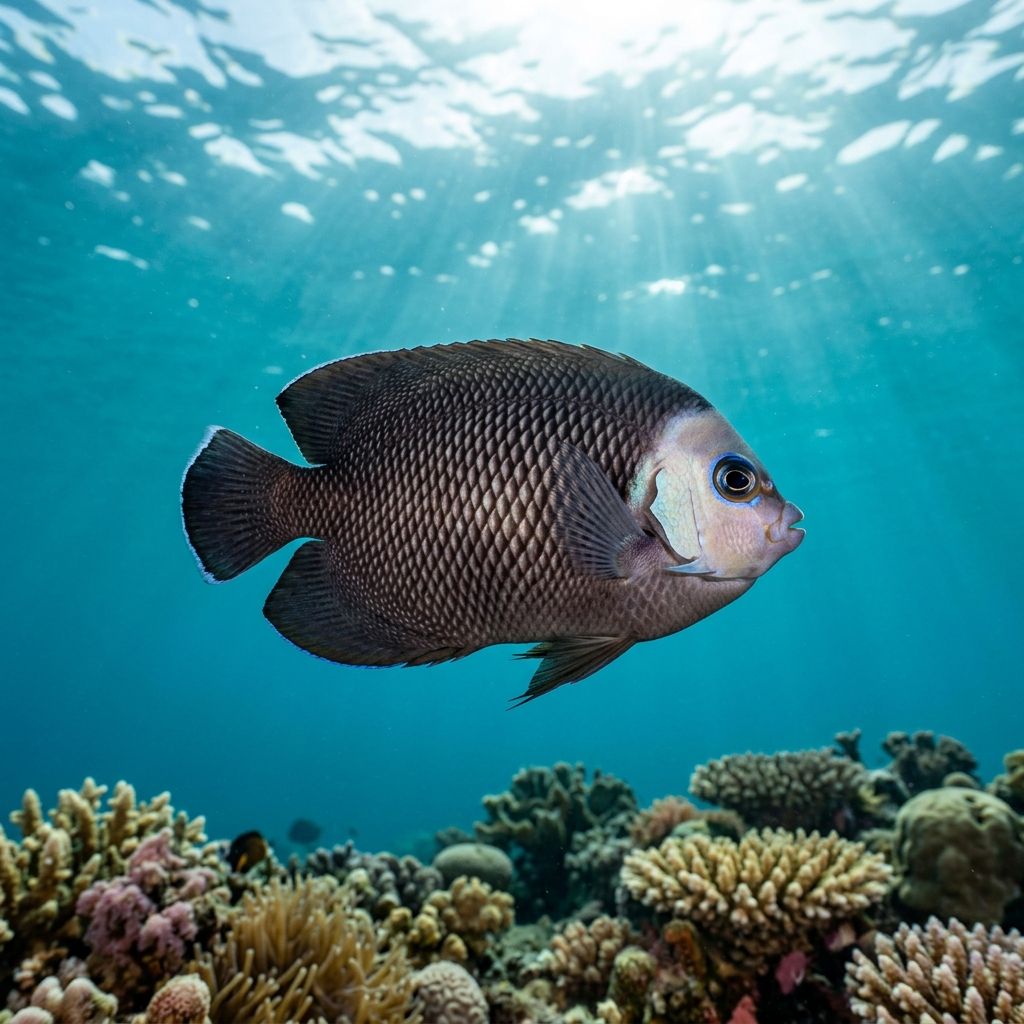
Reef neighbours a diver could mistake it for. Use the identification notes above to tell them apart.
Most consistently logged across the wider Caribbean and Gulf of Mexico, with the strongest records in the Yucatán Peninsula and Florida on the north side of the range, and Roatán, the Cayman Islands, and Bonaire further south. The British Virgin Islands, the US Virgin Islands, and Colombia's San Andrés & Providencia archipelago also produce reliable sightings. Mexico and the United States together account for more logged sites than anywhere else.
Mapping where Queen Angelfish is logged…
Queen angelfish are a Caribbean and Gulf of Mexico species, most reliably encountered in the Yucatán Peninsula, Florida, Roatán in Honduras, the Cayman Islands, Bonaire, and the British Virgin Islands. Colombia's San Andrés & Providencia also produces strong records. They are not found in the Indo-Pacific.
Sighting data from across the Caribbean shows encounters spread from October through August, with September appearing quieter. Because the species lives on tropical reefs with stable warm water year-round, the timing of your dive matters less than picking a site with known populations and spending time around sponge-rich reef sections.
Look for the blue 'crown': a dark blue spot on the forehead ringed with bright electric blue. The body is a striking mix of deep blue, yellow, and orange-gold, with long trailing fin filaments. No other Caribbean angelfish combines that crown mark with this colour palette, making it one of the easier large angelfish to confirm.
Adults typically reach around 35 to 45 centimetres in length, making them one of the larger angelfish in the Caribbean. Their disc-shaped body and flowing fin extensions make them look even bigger in the water, especially when viewed head-on.
Sponges make up the bulk of the diet, which is unusual since most reef fish avoid them. This sponge-heavy feeding habit means queen angelfish help regulate sponge growth on Caribbean reefs, playing a role in keeping reef structure balanced. You will often spot them grazing on large barrel or tube sponges.
Site and sighting data is aggregated from diver logs, iNaturalist and GBIF. For taxonomy and conservation status:
Rock Beauty
1,573 sites