Gymnothorax funebris
Spot green moray eels year-round across the Yucatán Peninsula, Roatán, and Grand Cayman. Here's how to ID one and where divers log them most.
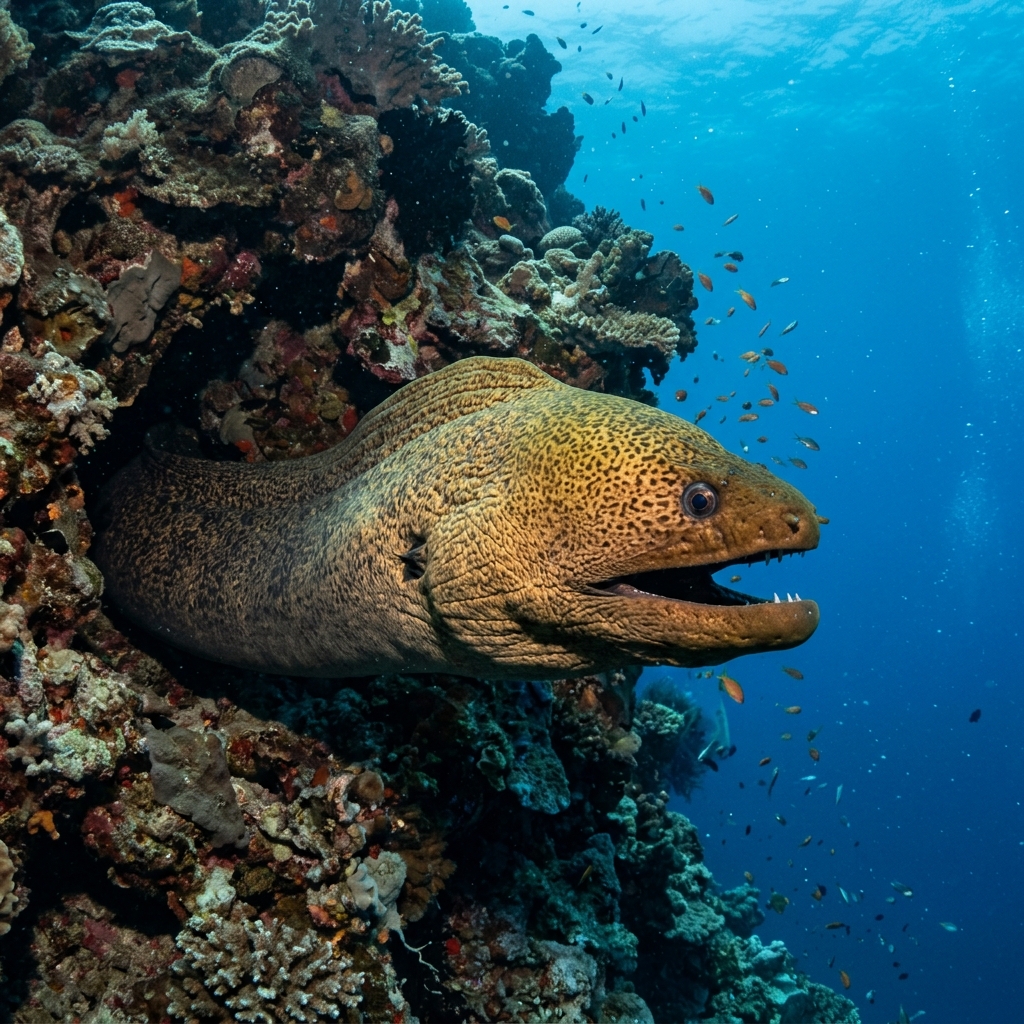
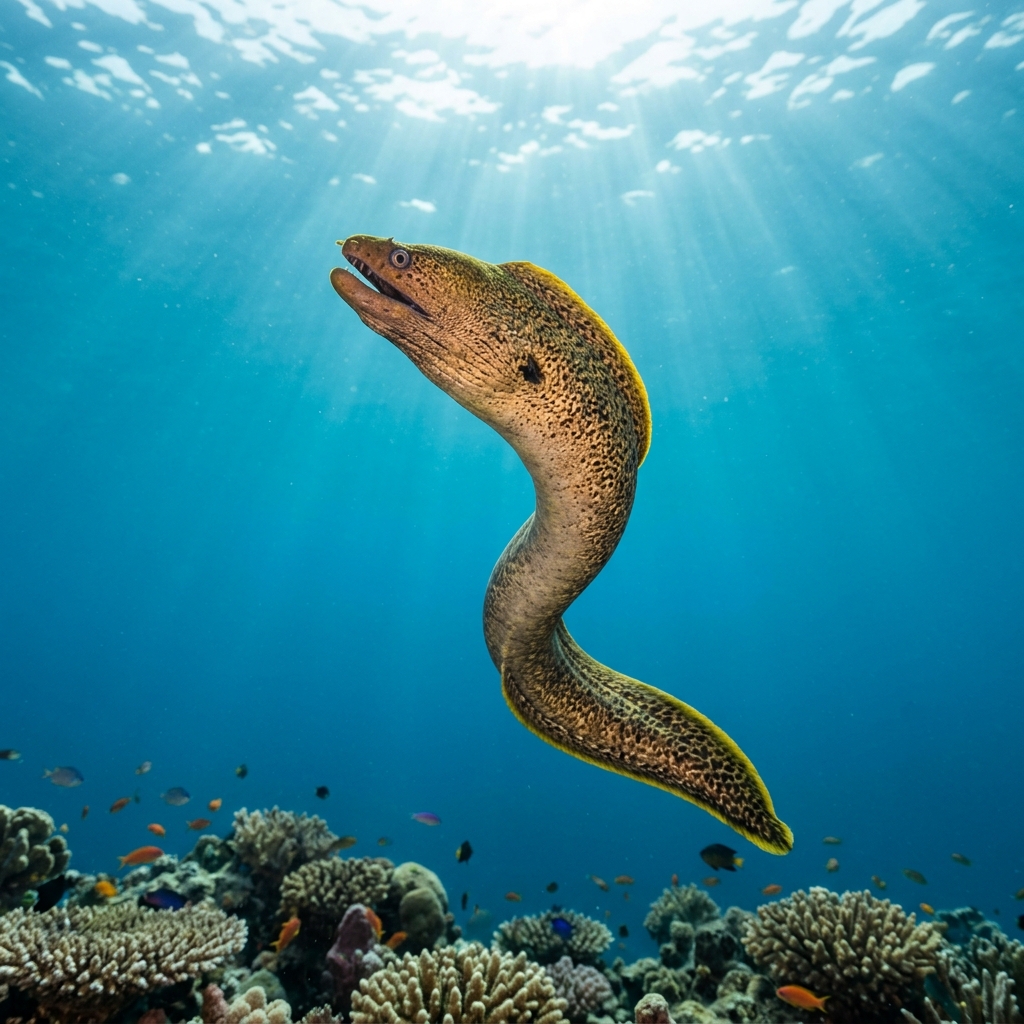
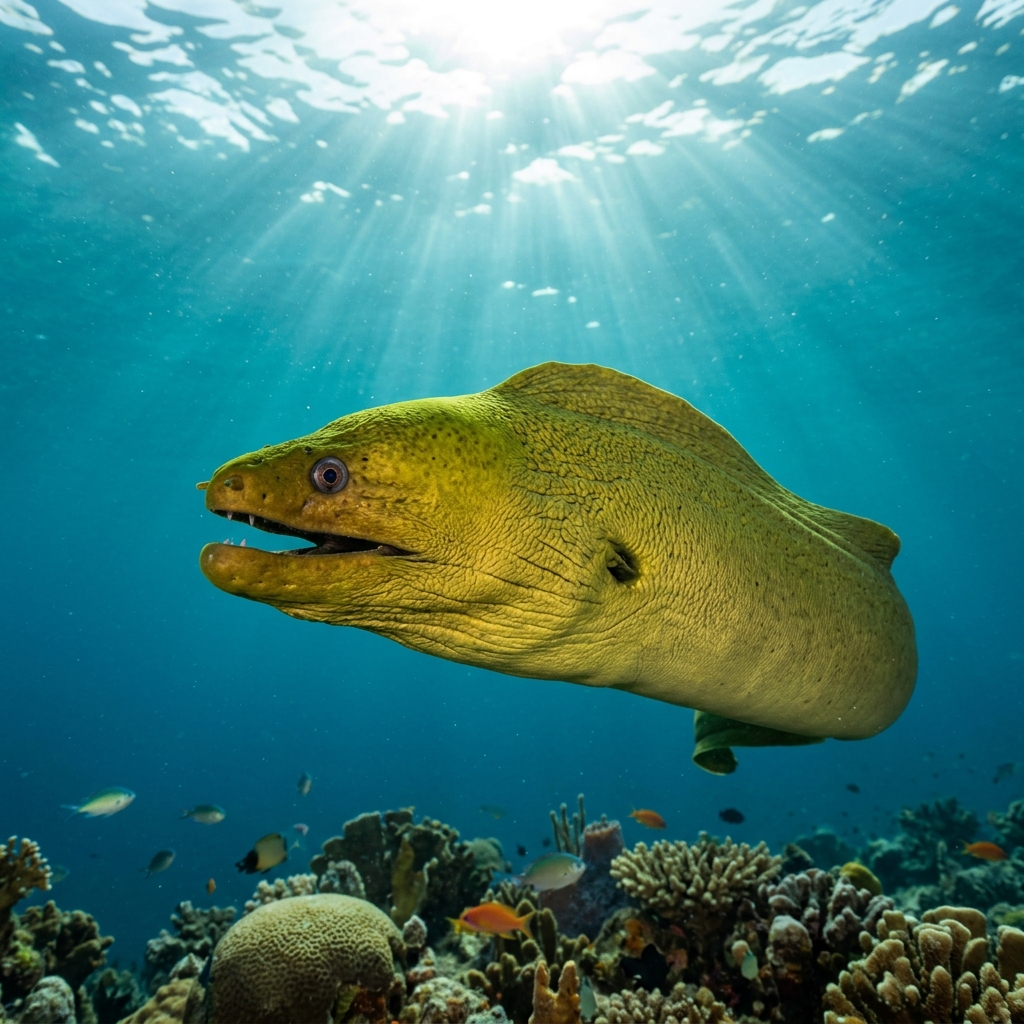
That uniform olive to yellow-green colour across the entire body is the key field mark underwater, no spots, no bands, no contrasting edges, just a thick, muscular eel wrapped in a continuous wash of green. The colour actually comes from yellow mucus overlying blue-grey skin, which becomes obvious if you ever see a freshly handled specimen out of water. In the water, adults are large and heavy-bodied, easily reaching 1.5 m or more, with a blunt snout and the characteristic open-and-closing mouth that helps them breathe rather than signals aggression. Look for them wedged into reef ledges, with the head and anterior third of the body exposed.
Most encounters involve a moray parked in a reef crevice or under a coral head, head out and mouth cycling rhythmically, that movement is ventilation, not a threat display. They are generally indifferent to divers who maintain distance, though a bold individual will sometimes slide partway out of its hole to investigate a light or a diver hovering nearby. Feeding occurs mostly at night, so a day dive gives you the stationary, posing shot, while a night dive has a real chance of catching one actively hunting across the reef.
Green morays possess two sets of jaws: the standard oral jaws and a second set, the pharyngeal jaws, that shoot forward from the throat to pull prey in. This is why they are able to swallow large, struggling fish whole despite looking as though there is nowhere for the food to go.
In the Northern Hemisphere, green morays are present year-round with no concentrated season, which makes sense given their tolerance for water temperatures between about 18 and 28 °C across a wide range of tropical and warm-temperate reefs. In the Southern Hemisphere, the limited data points to September through March as the period when sightings peak.
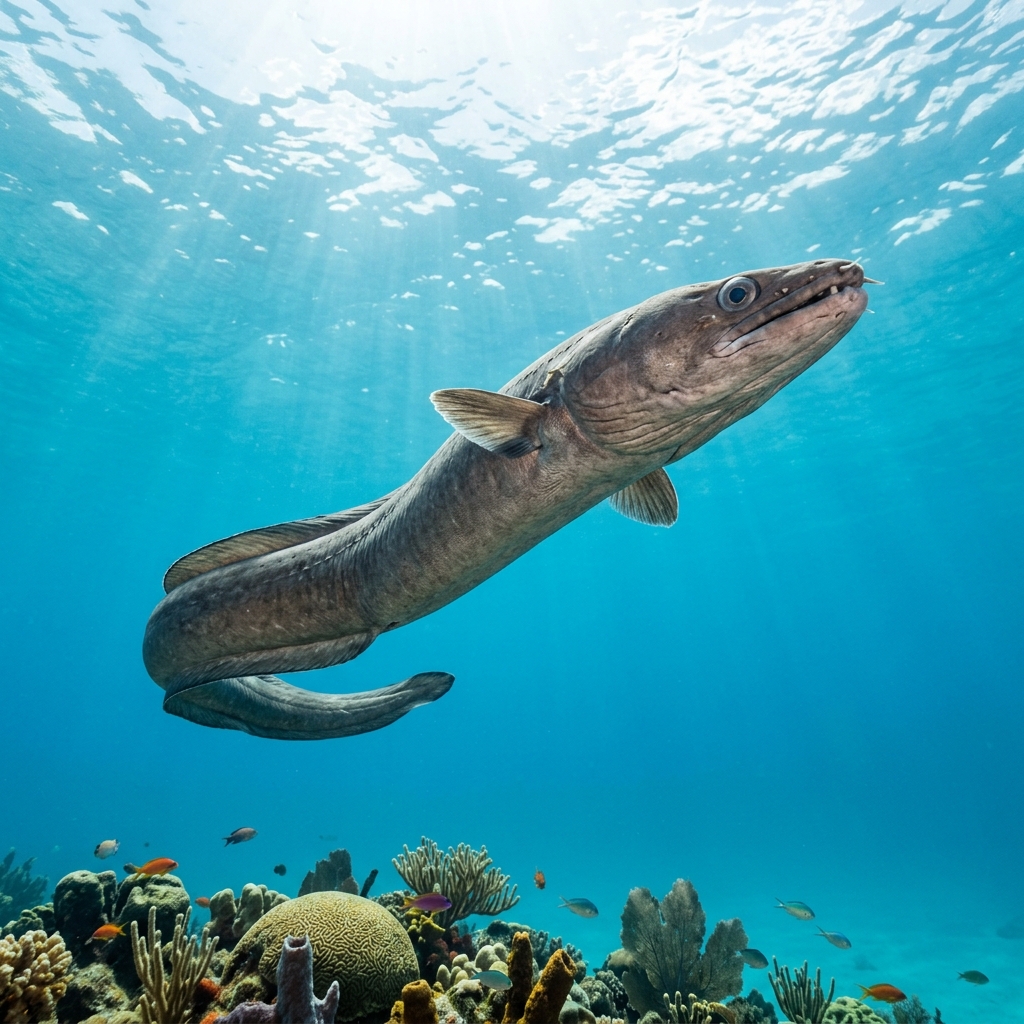
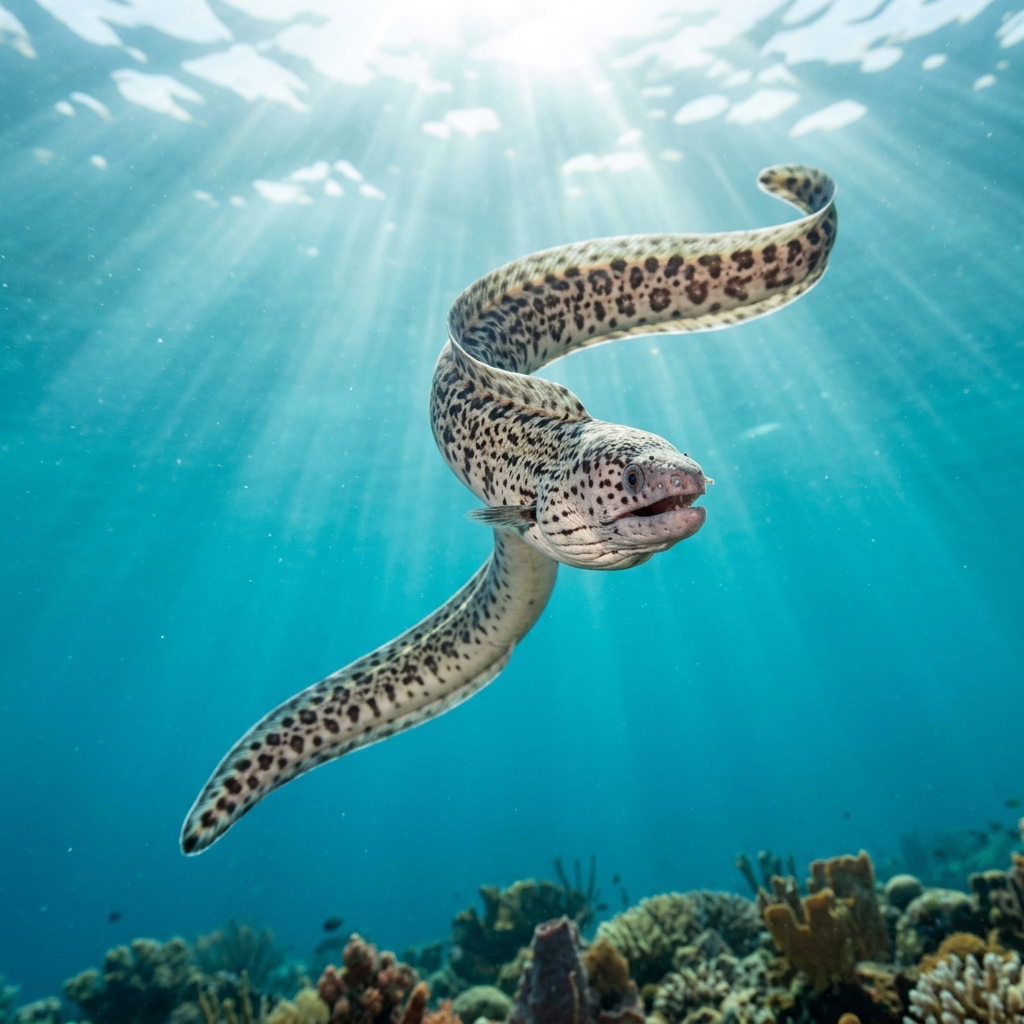
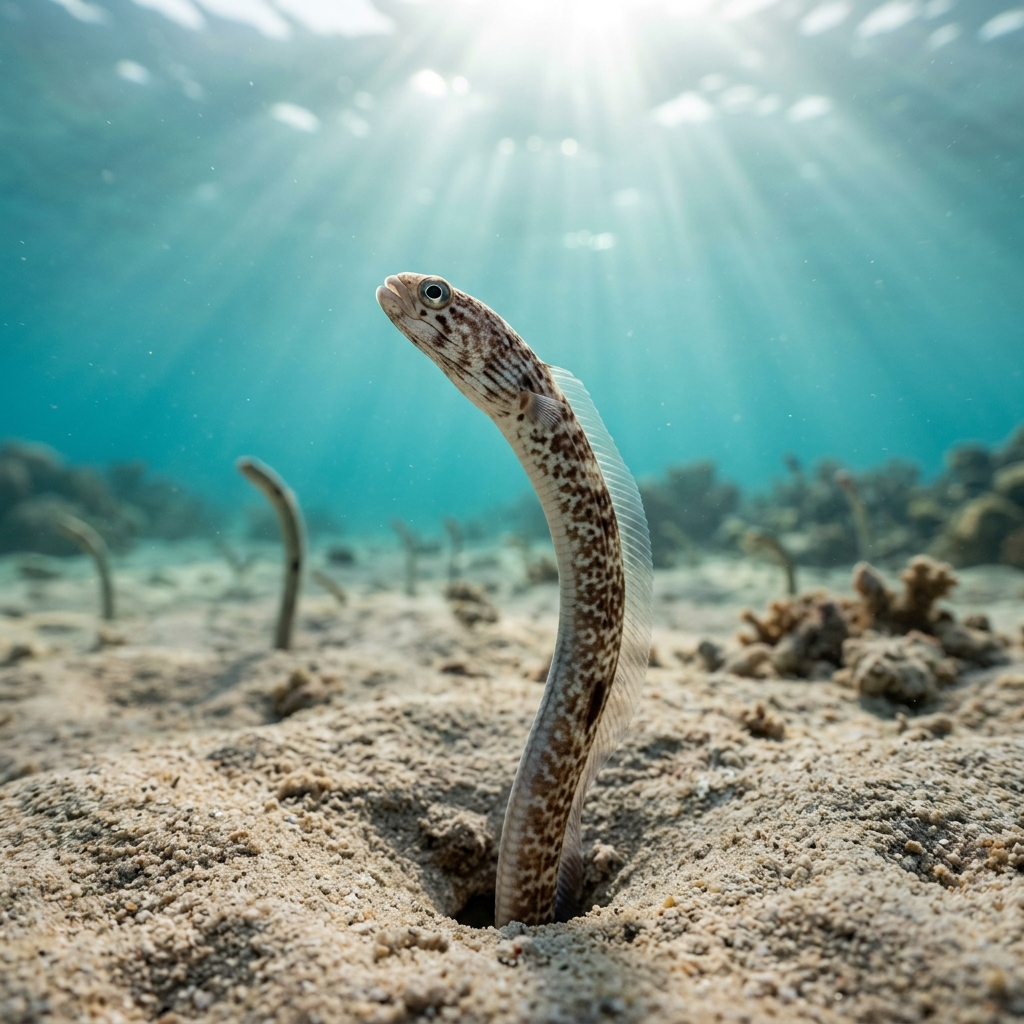
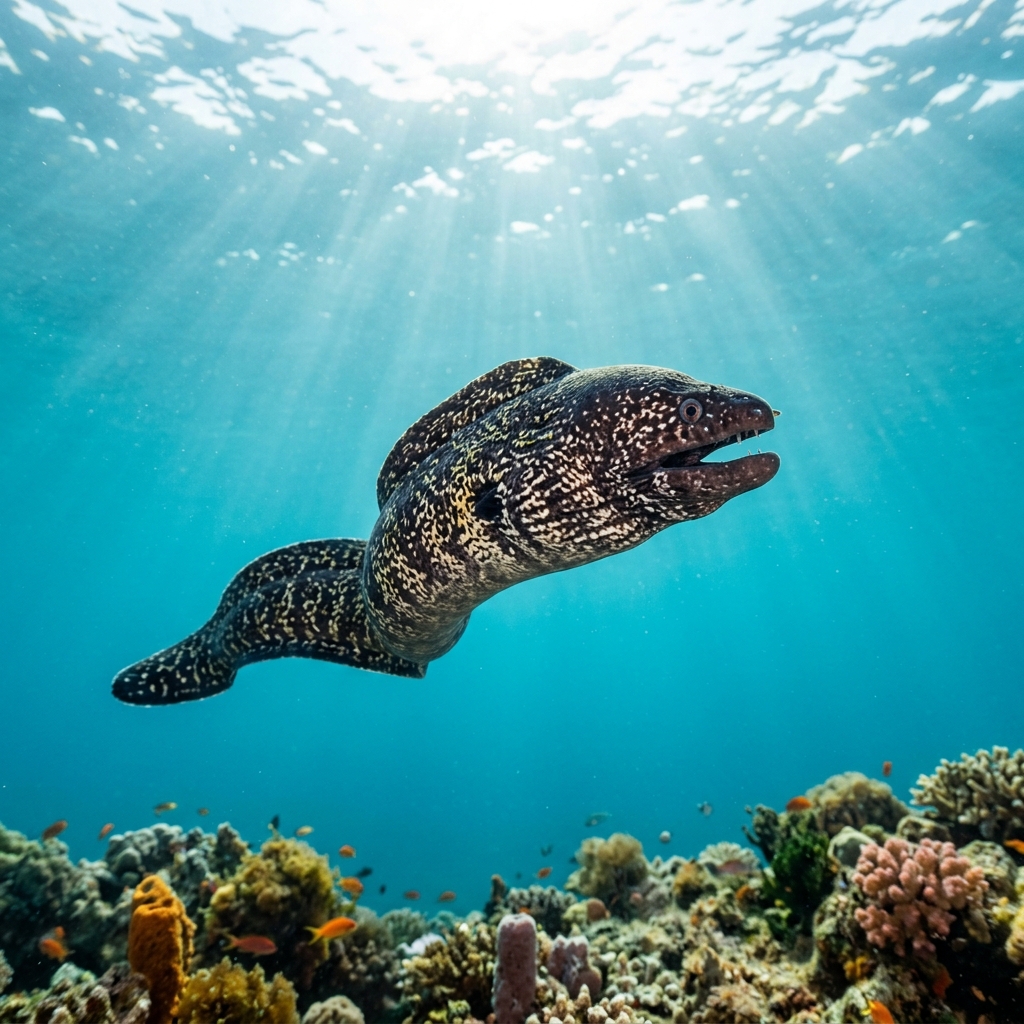
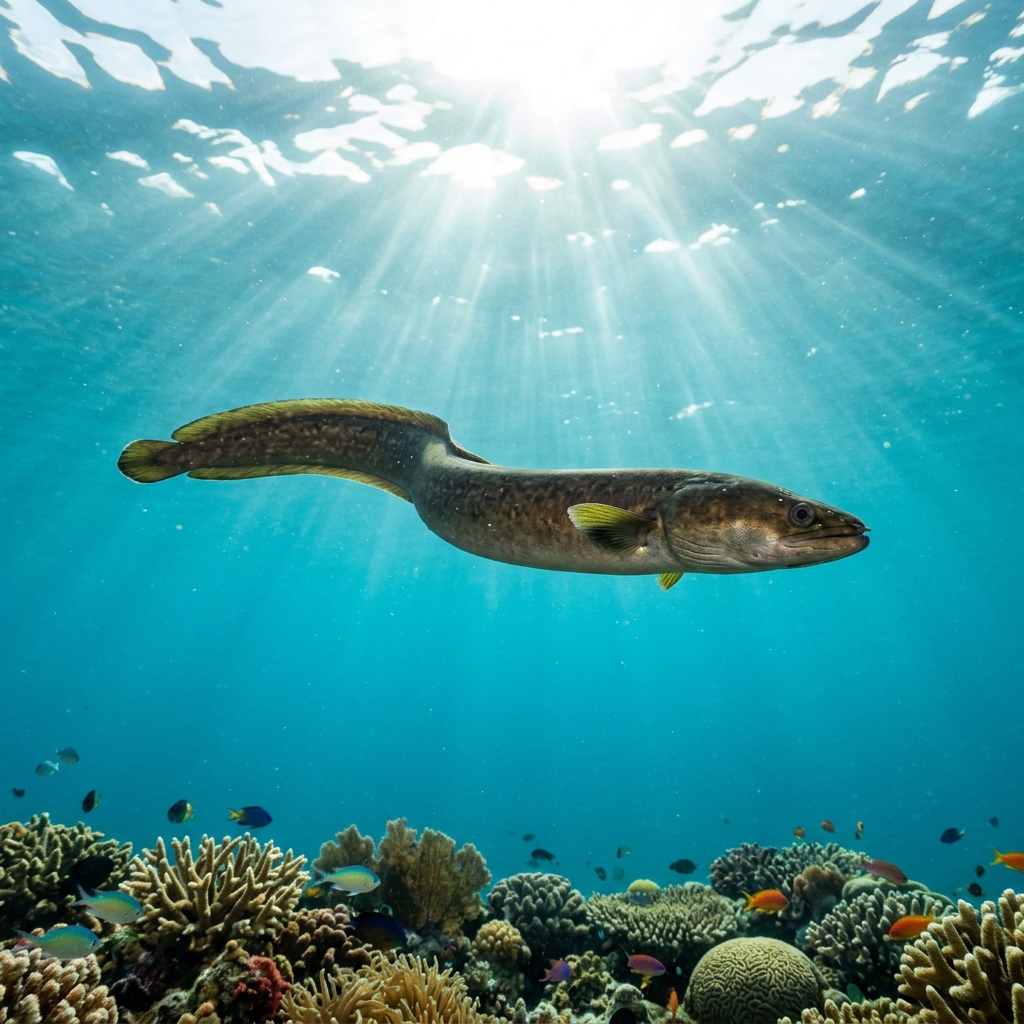
Reef neighbours a diver could mistake it for. Use the identification notes above to tell them apart.
Most commonly logged across the Caribbean and western Atlantic, with the Yucatán Peninsula, Roatán, and Grand Cayman consistently producing the highest number of sightings. Strong populations are also recorded along the Florida and southeast US coast and throughout Grenada. Outside the Americas, divers log it regularly off New South Wales in Australia and Western Australia, suggesting a broader Pacific range worth checking on local reef dives.
Mapping where Green Moray is logged…
Green morays are most reliably found across the Caribbean, with the Yucatán Peninsula, Roatán in Honduras, and Grand Cayman among the top locations where divers log them. Florida's reefs and Grenada are also strong bets. Divers also encounter them off the coasts of New South Wales and Western Australia.
In the Northern Hemisphere they are present year-round, so there is no single best month. In the Southern Hemisphere, sightings concentrate between September and March. A night dive at any time of year increases your chances of seeing one actively hunting rather than resting in a crevice.
They are not considered dangerous. The open-and-closing mouth that looks threatening is simply how they pump water over their gills. They rarely bite unless directly harassed or accidentally grabbed. Keep a comfortable distance, avoid putting hands into crevices, and interactions are typically relaxed.
Look for a large, uniformly olive-green or yellow-green eel with no distinct spots, bands, or contrasting fin edges. The solid, unmarked colour across the whole body is the quickest field mark. Up close the skin often looks slightly slimy, which is the yellow mucus responsible for the green appearance.
Green morays are among the larger moray species in the Atlantic and Caribbean. Adults commonly reach around 1.5 m in length and can exceed 2 m, with a noticeably thick, heavy body compared to slender morays. Underwater they appear substantial, a full-grown individual is roughly the length of a tall person.
Site and sighting data is aggregated from diver logs, iNaturalist and GBIF. For taxonomy and conservation status:
Garden Eel
2,448 sites