Sparisoma viride
Spot the vivid green terminal males on reefs across Roatán, Grand Cayman and Bonaire year-round in 25-28 °C water. ID guide inside.
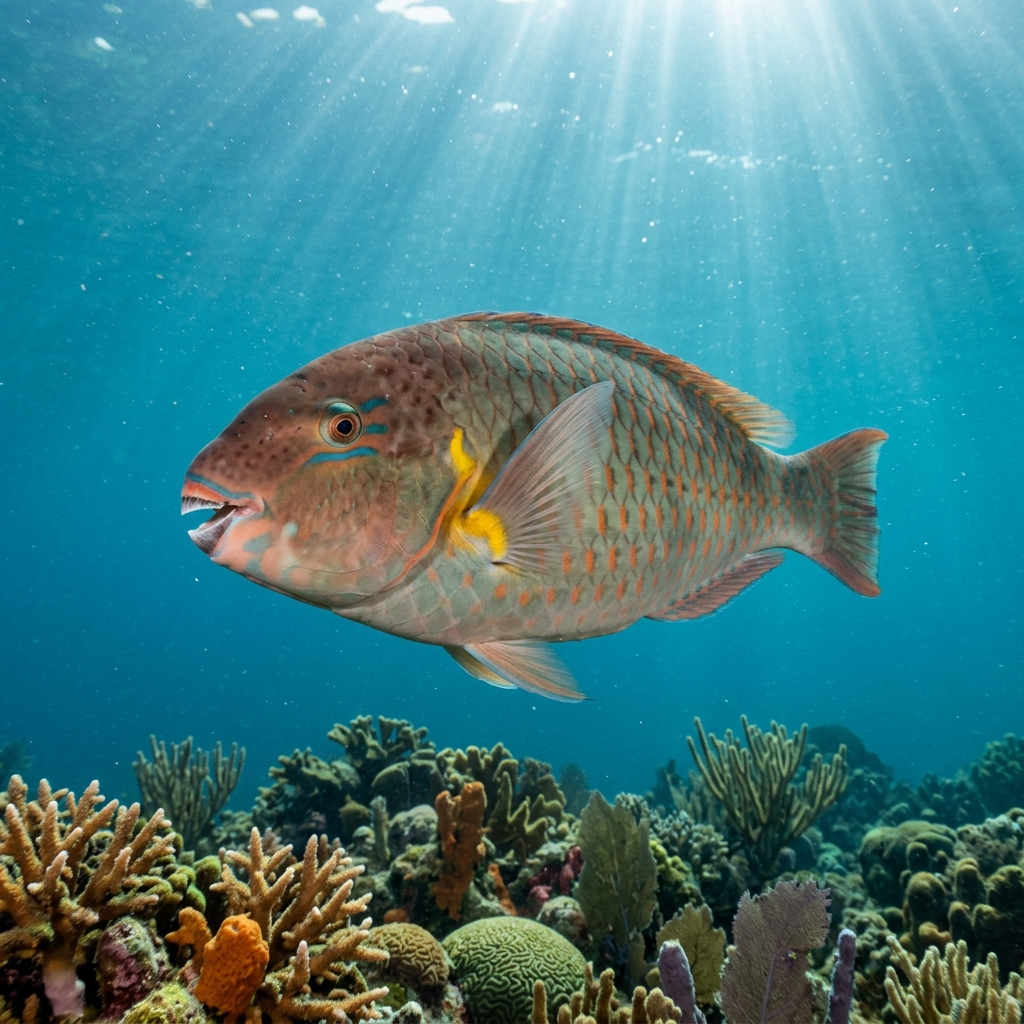
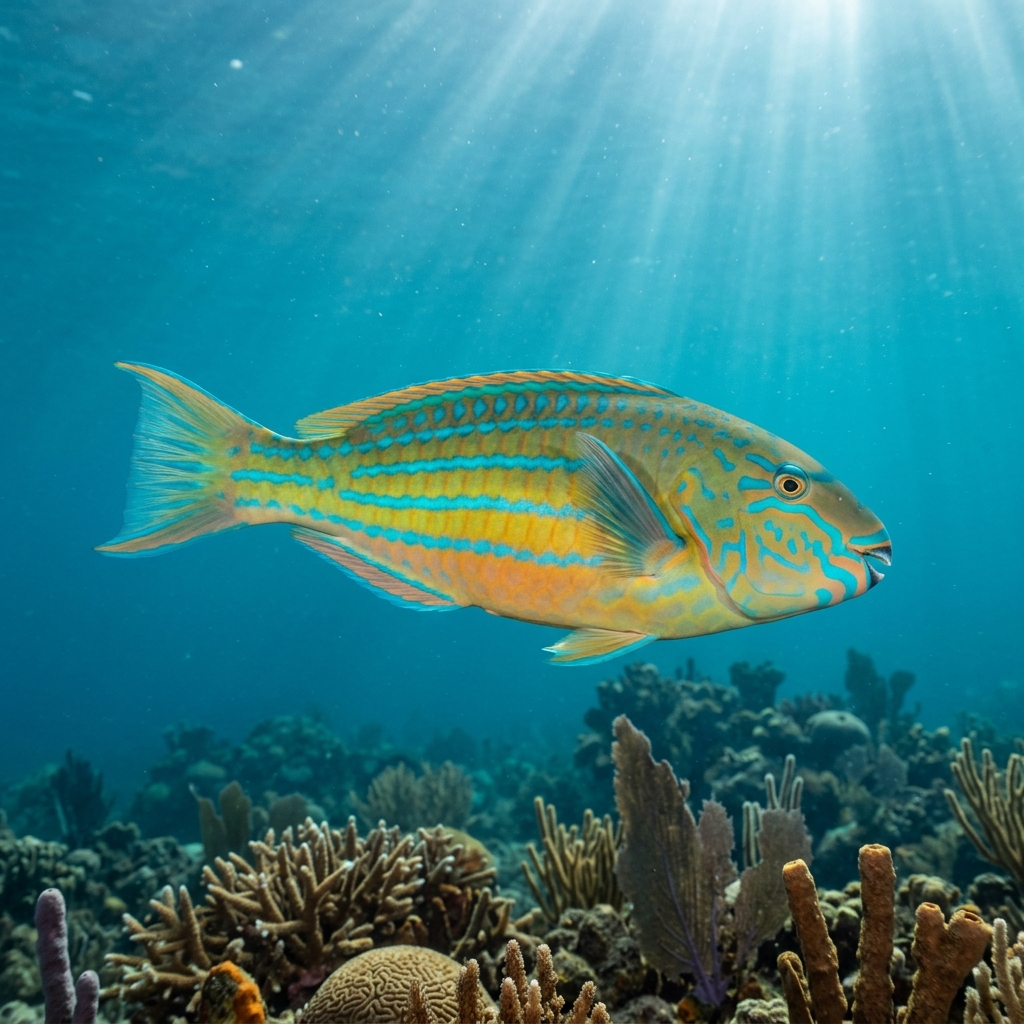
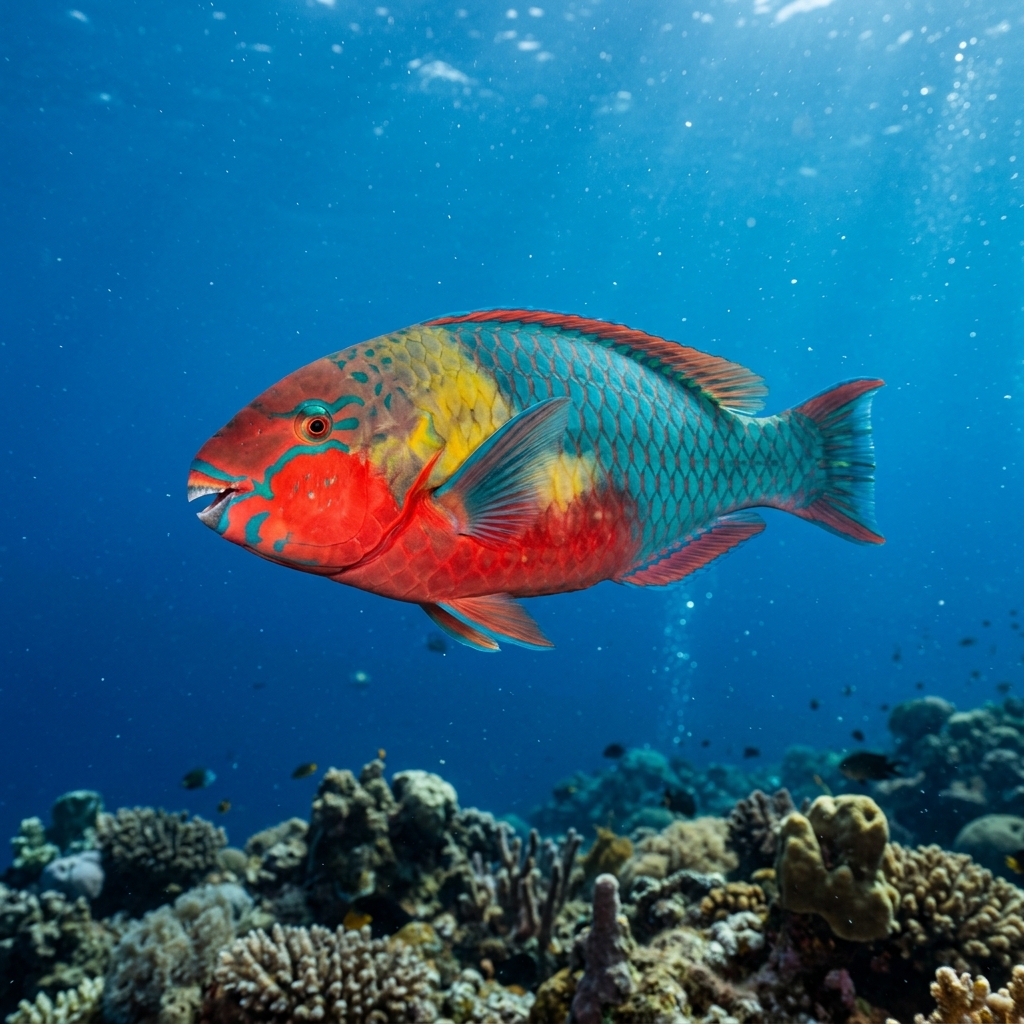
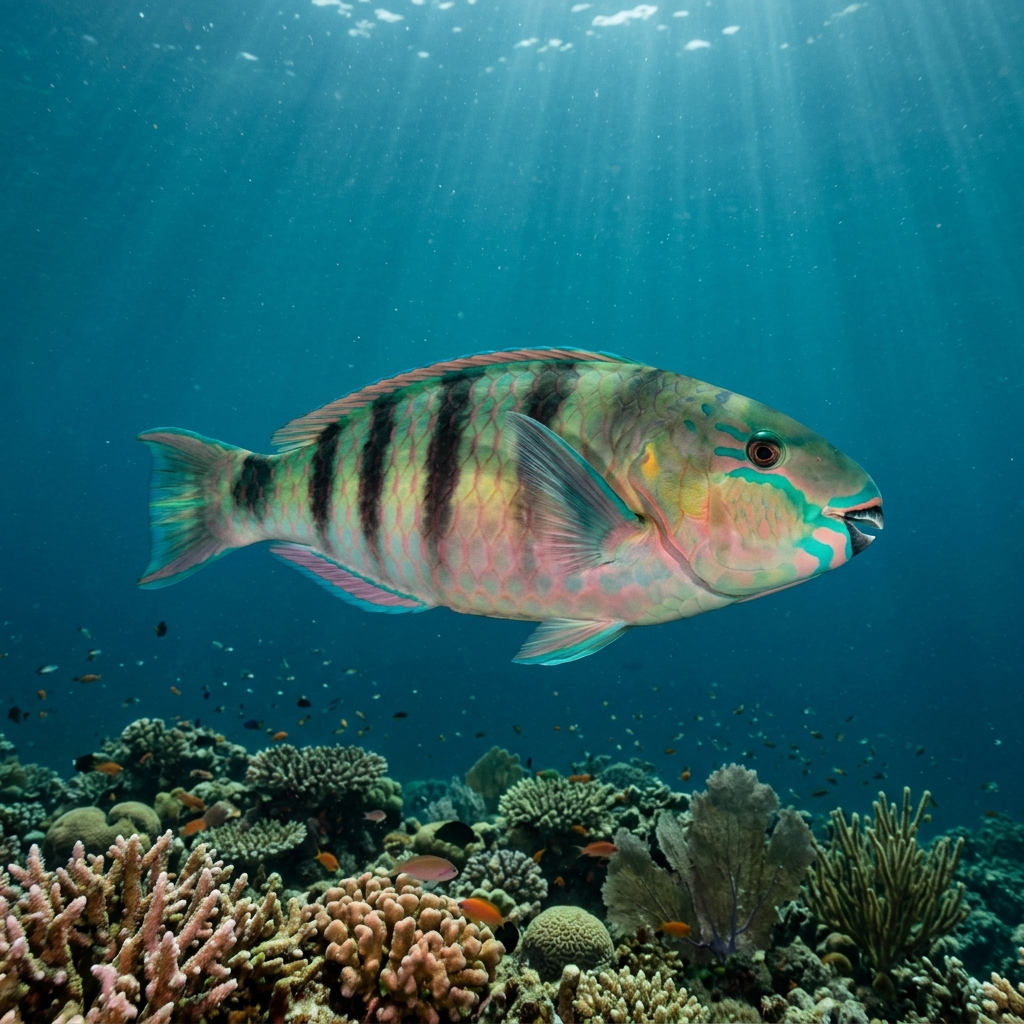
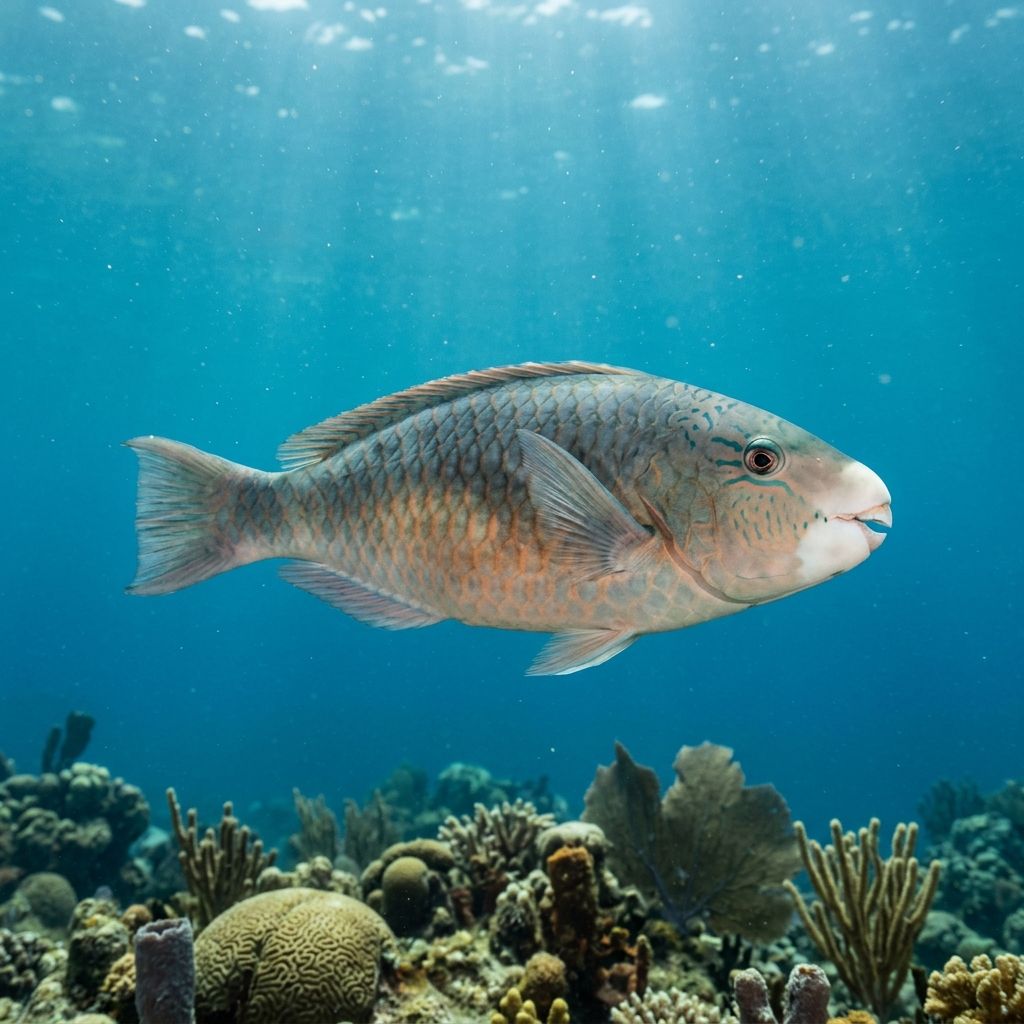
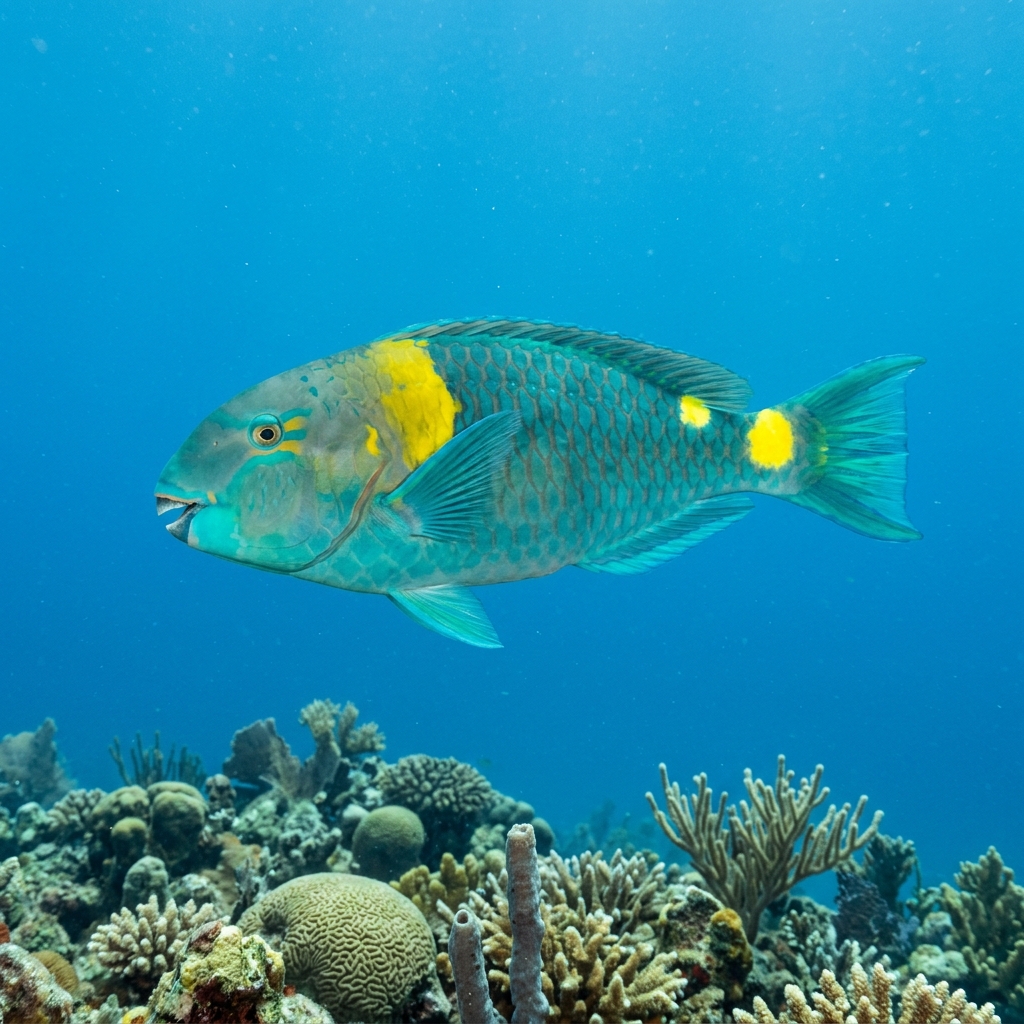
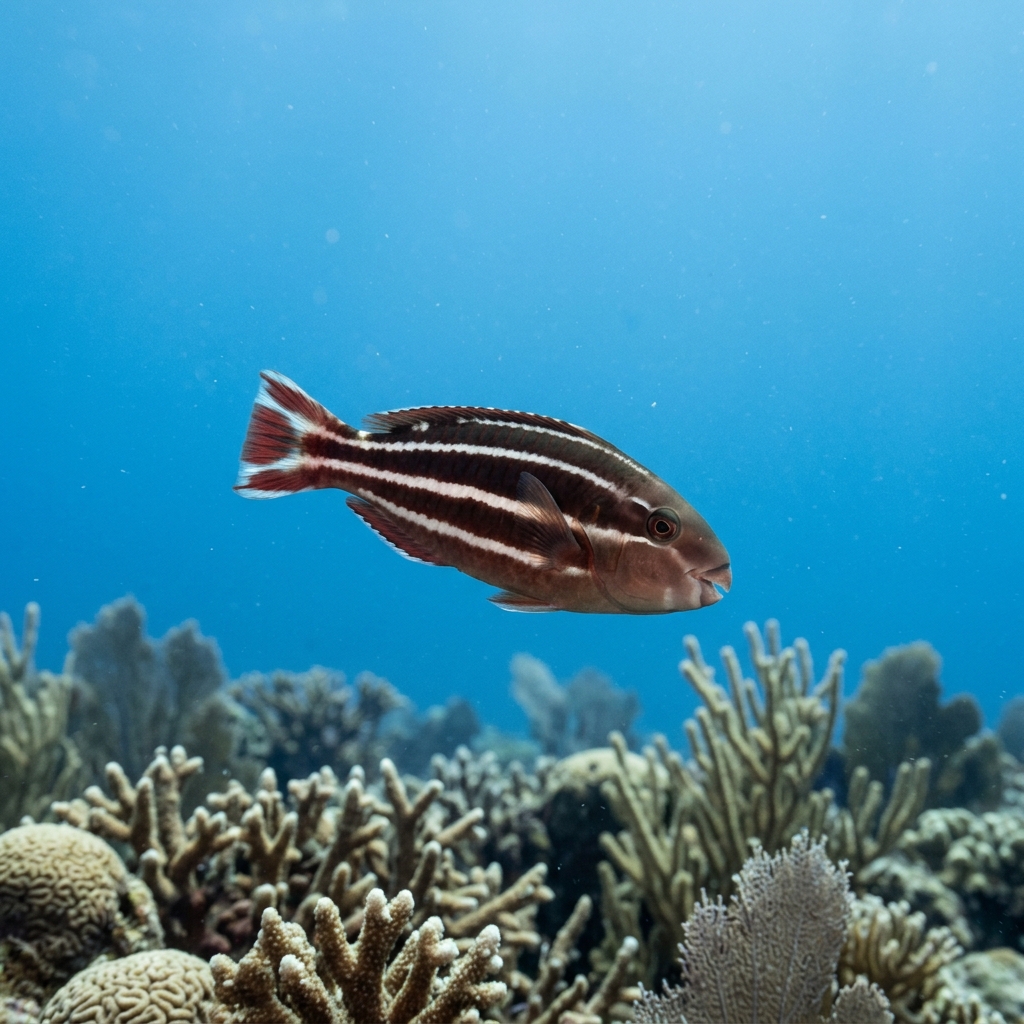
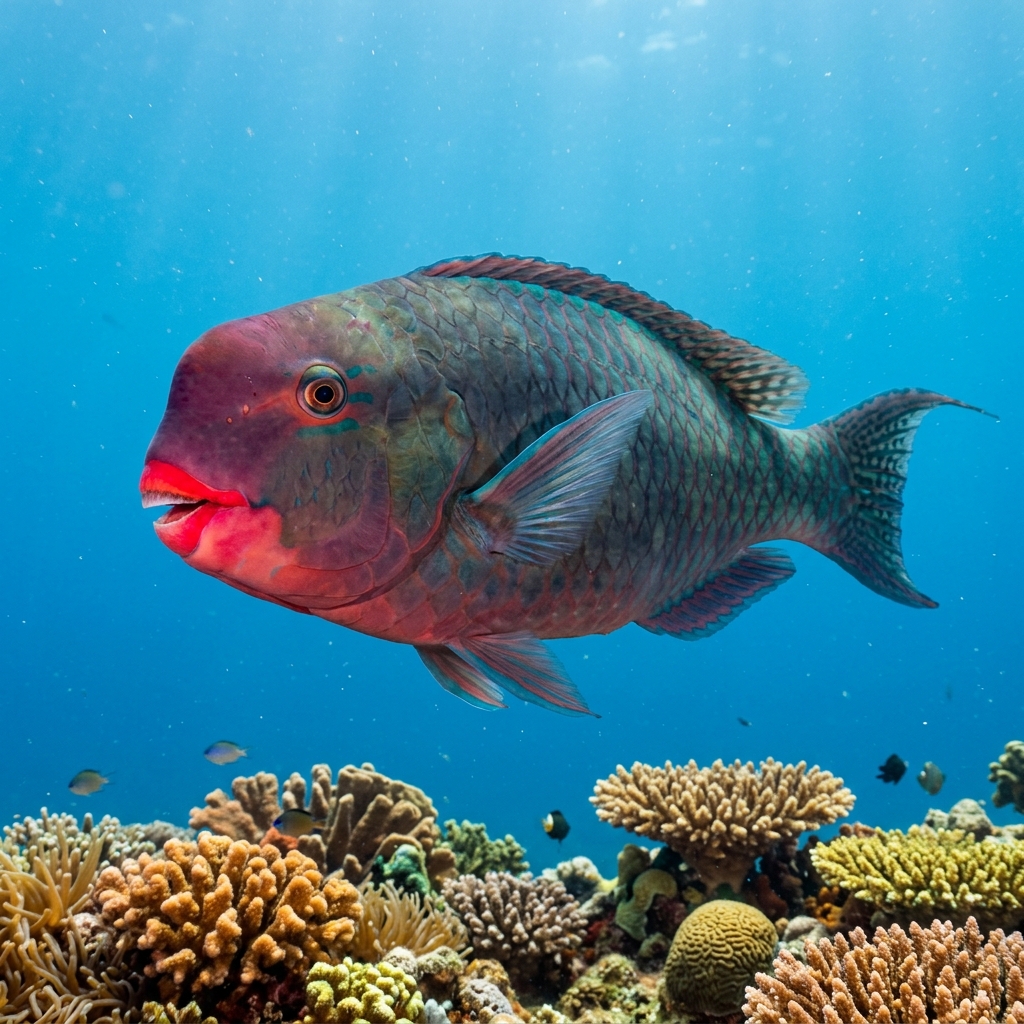
Terminal phase males are hard to miss: bright green all over with pink-orange scale edges and a vivid red-orange patch at the tail base, reaching around 44 cm. Initial phase fish, which include females and younger males, are dark reddish-brown with a white belly and white streaking on the tail edge. The fused beak-like teeth typical of parrotfish are visible even at a distance, and you can often hear the scraping sound of feeding before you spot the fish. Juveniles are dark brown with three pale horizontal stripes along their sides.
During a dive you'll typically encounter one actively grazing, biting chunks of algae off hard coral and rock with an audible scrape you can hear through the water. They are notably unbothered by divers and will carry on feeding at arm's length if you approach slowly. Larger terminal males can display to rivals, particularly around spawning aggregations, but show no interest in threatening humans.
Like many parrotfish, stoplight parrotfish produce a mucus cocoon around themselves when resting at night, thought to mask their scent from predators. Reef cleaners with a practical twist: the coral rubble and sand they excrete after digesting algae-covered rock contributes measurably to Caribbean white sand.
Present year-round with no concentrated season, which fits its preference for warm tropical reef water in the 25-28 °C range. Pick any month and plan around reef conditions rather than seasonality.
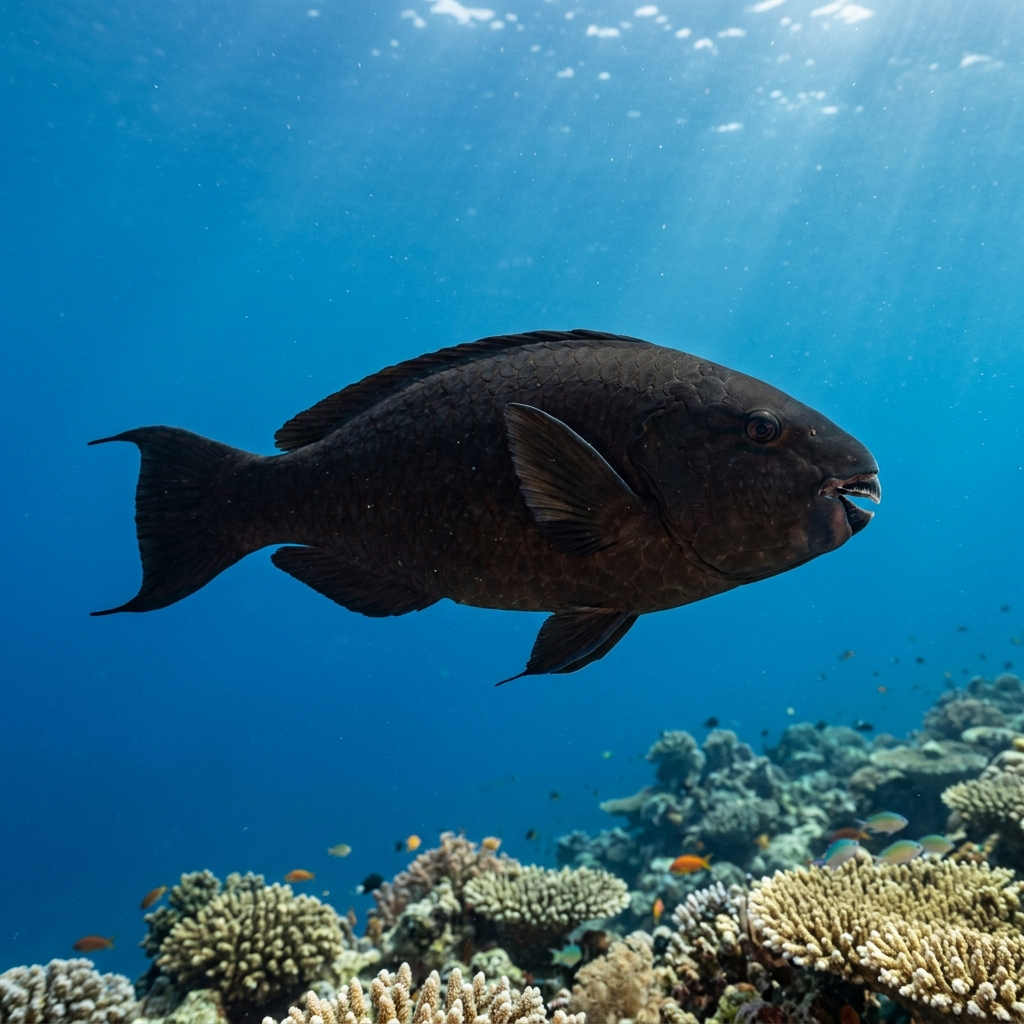
Reef neighbours a diver could mistake it for. Use the identification notes above to tell them apart.
Most commonly logged across the wider Caribbean, with the strongest populations recorded in Florida and the South-eastern United States, Roatán in Honduras, and Grand Cayman. Bonaire, the Bahamas, Curacao and Colombia also deliver reliable sightings, and the species turns up throughout the Yucatán Peninsula, the British Virgin Islands and Grenada.
Mapping where Stoplight Parrotfish is logged…
The species is widely distributed across the Caribbean and tropical western Atlantic. Strong sighting records come from Roatán, Grand Cayman, Bonaire, the Bahamas and Florida. It also appears regularly along the Yucatán Peninsula, in the British Virgin Islands, Curacao and Grenada.
There is no concentrated season. Sighting data shows the species present on Caribbean reefs throughout the year, consistent with its comfort in the 25-28 °C water temperatures that persist in these regions year-round. Any time of year works; plan around local sea conditions instead.
Look for the terminal phase male's all-green body with pink-orange scale edges and a vivid red-orange tail base patch, that colour combination is distinctive. Initial phase fish are dark reddish-brown with a white belly and white tail edging. The fused beak-like teeth and the audible scraping as they graze also help confirm the family.
Typical adults reach around 44 cm in length. Terminal phase males tend to be the largest individuals you'll encounter on a reef, while initial phase fish are generally somewhat smaller.
They feed by biting directly into reef rock and coral rubble with their fused beak-like teeth to access the algae growing on and within the surface. The scrape is loud enough to hear clearly underwater. The ingested material is ground up internally and excreted as fine sand, making parrotfish significant contributors to the white sandy beaches and seabeds of the Caribbean.
Site and sighting data is aggregated from diver logs, iNaturalist and GBIF. For taxonomy and conservation status:
Redlip Parrotfish
2,789 sites