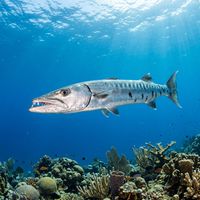
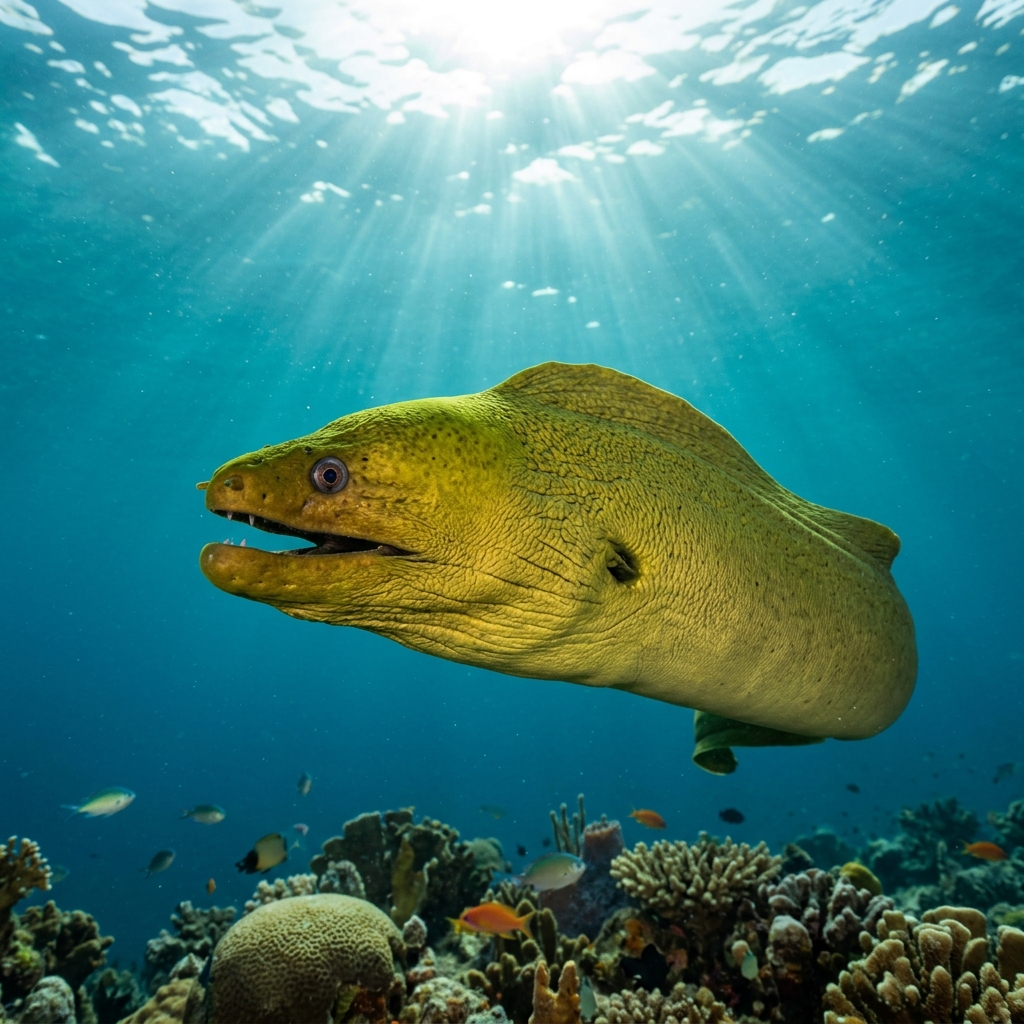
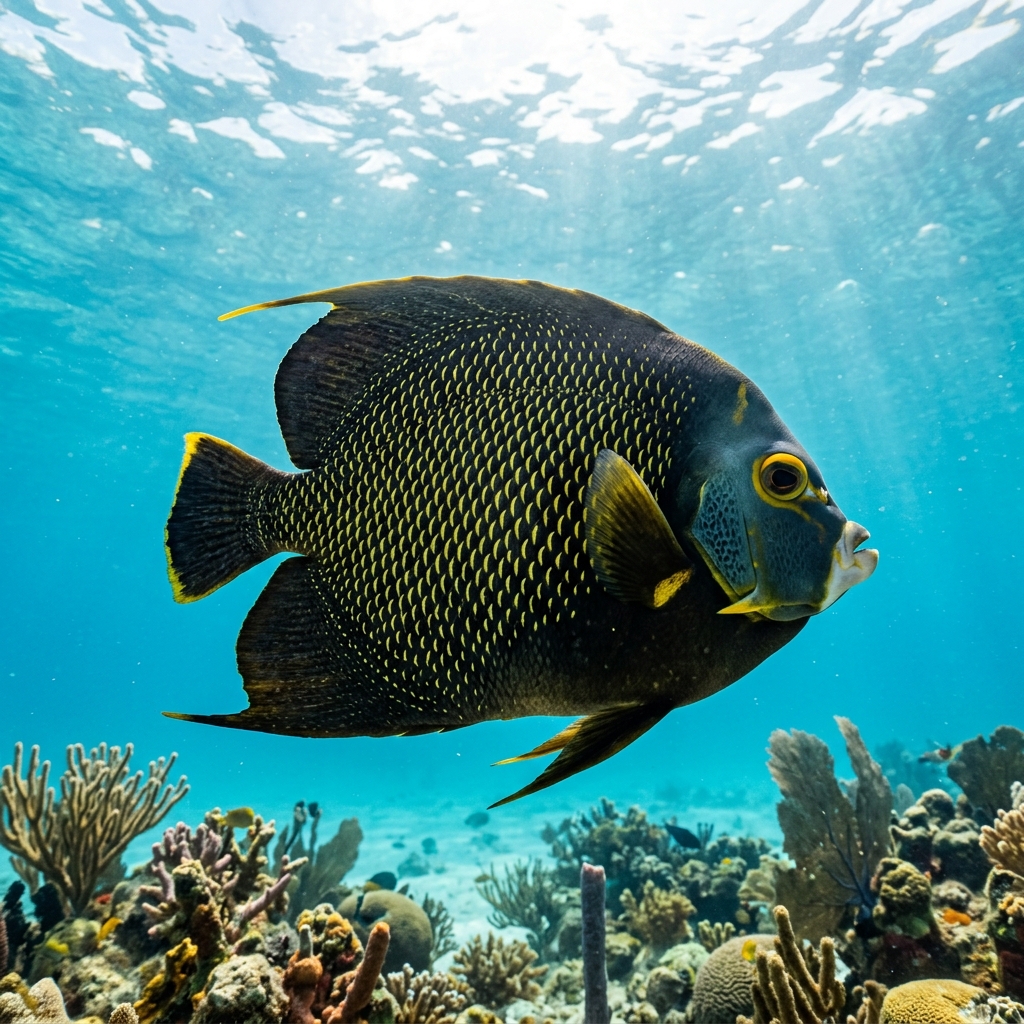
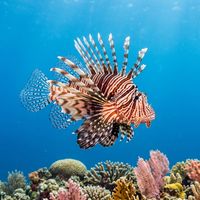
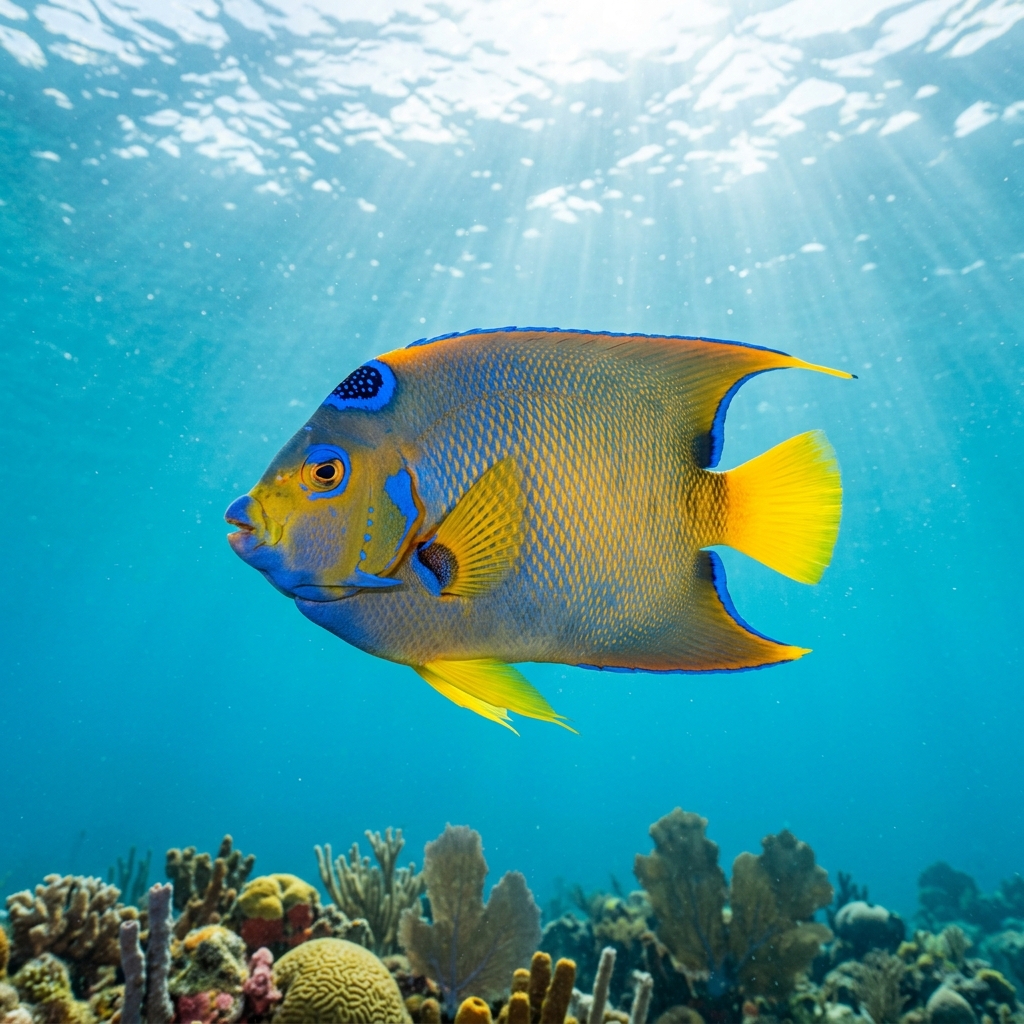
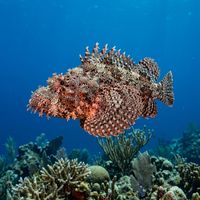
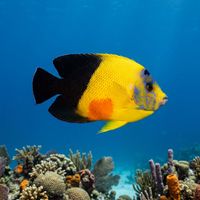
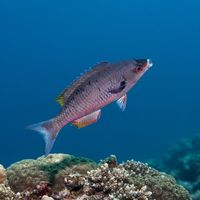
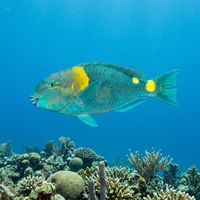
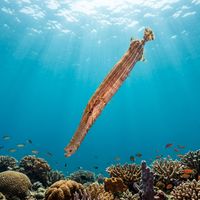
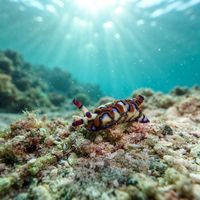
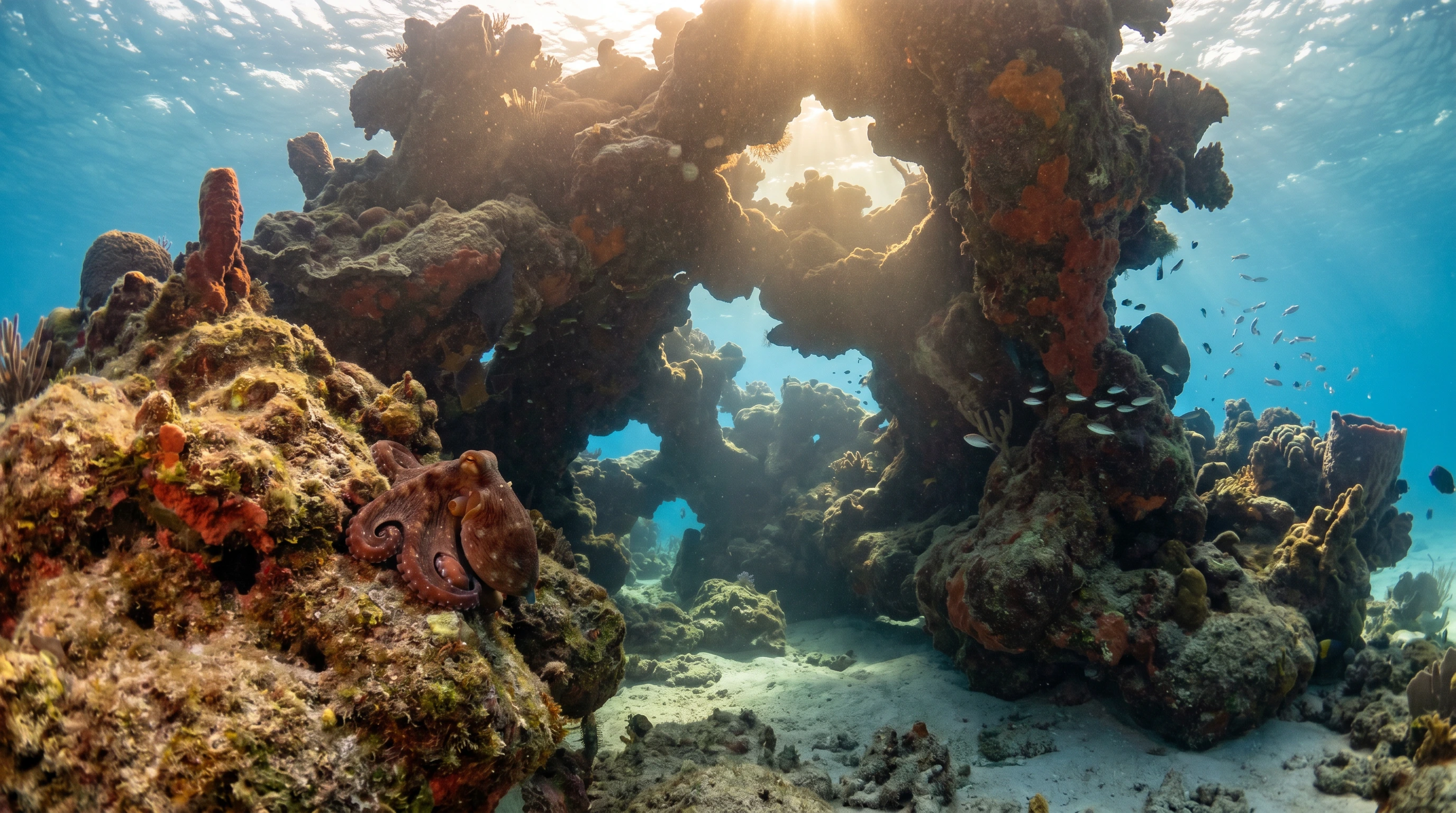
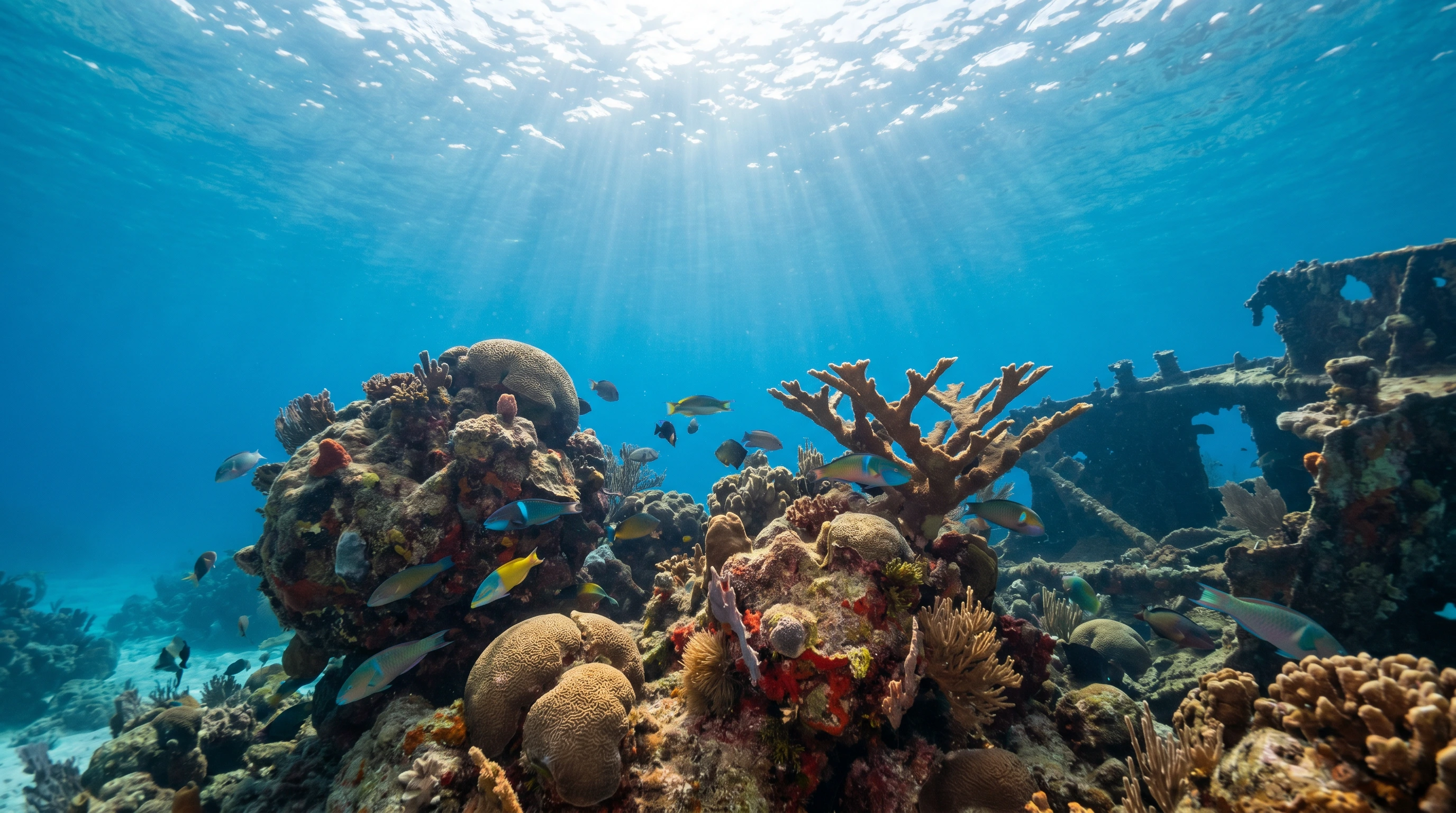
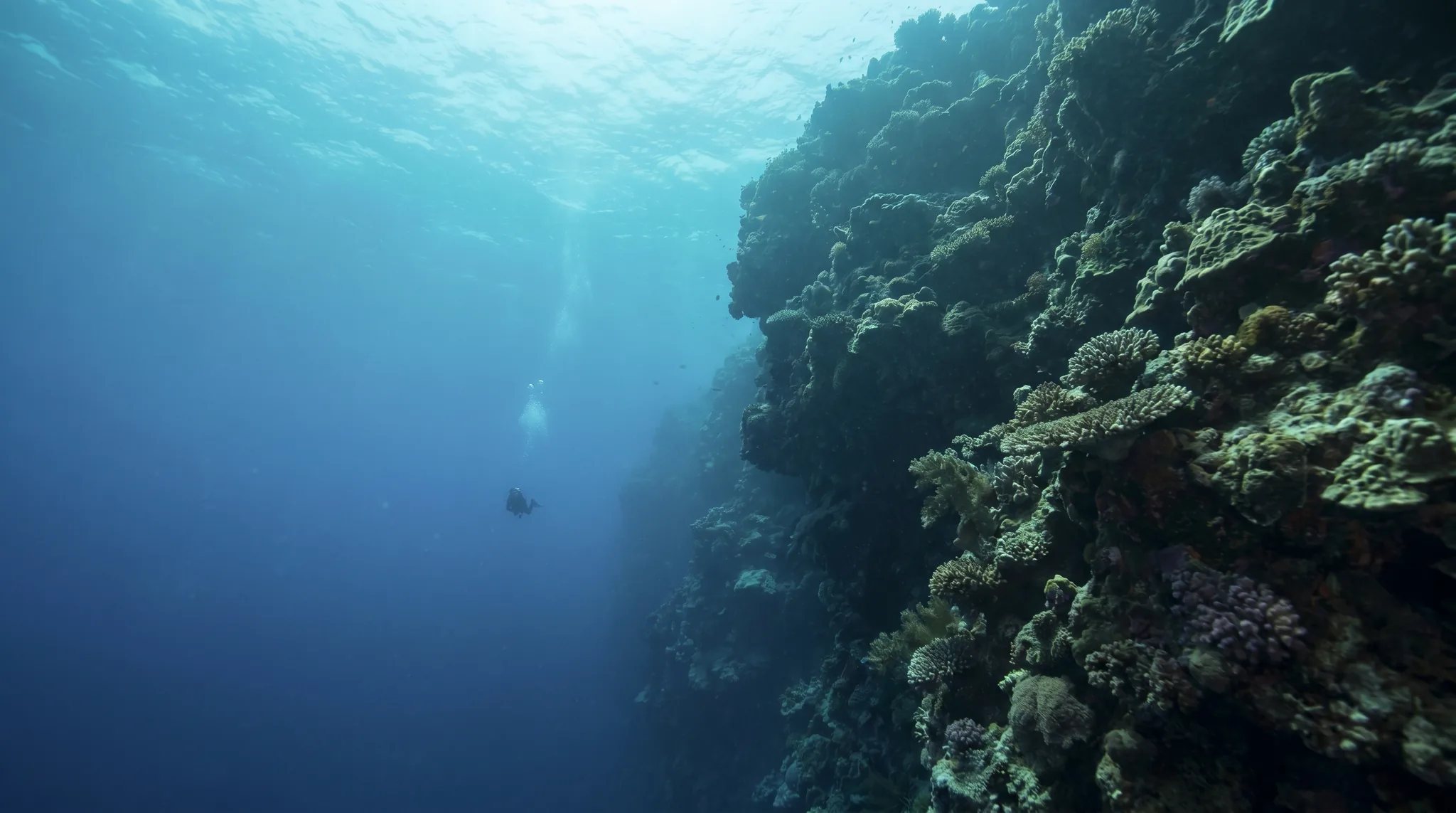
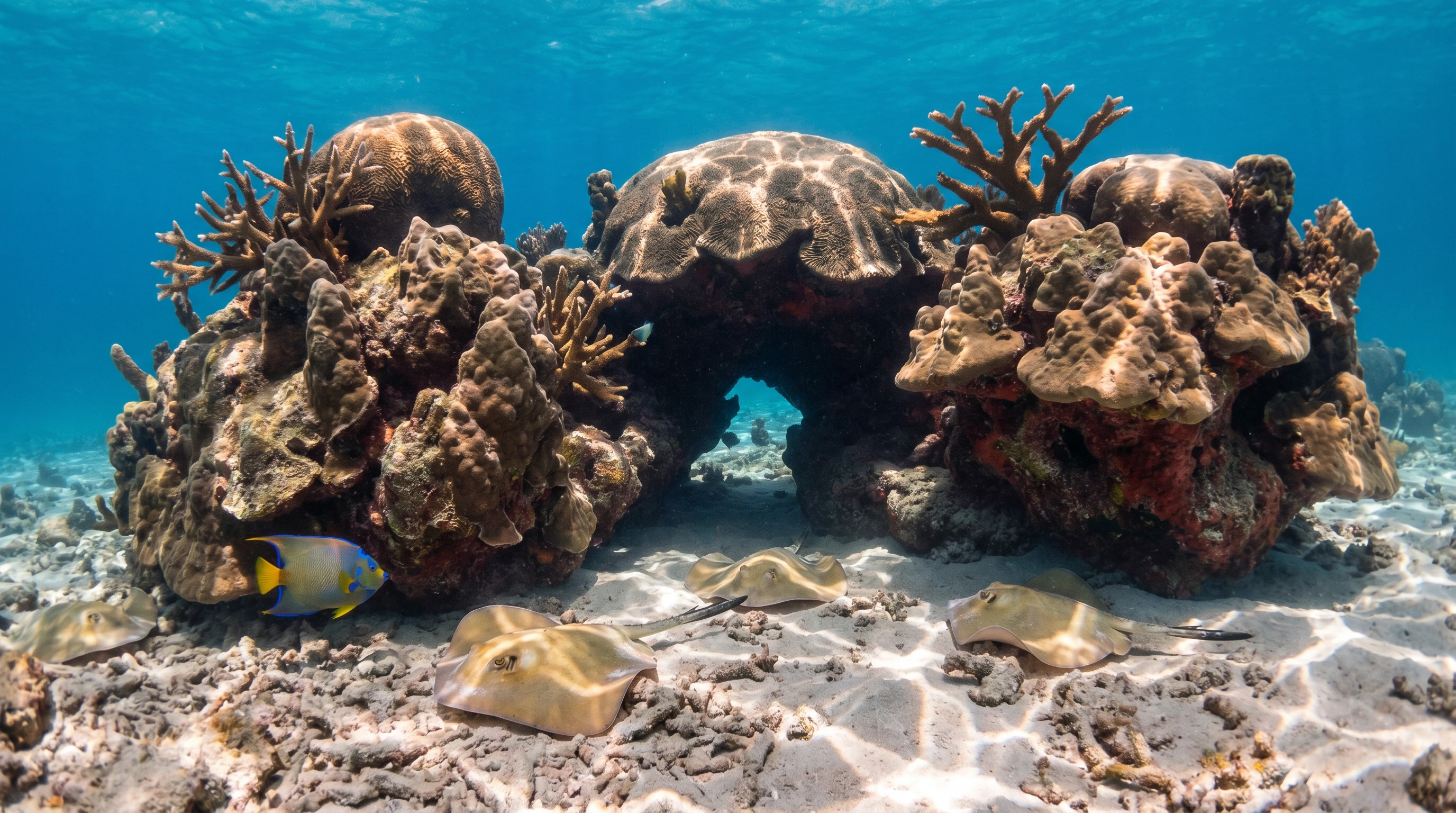
East End is defined by wall and reef diving reached entirely by boat. The site mix ranges from shallow cavern systems and archways suited to beginners through to deep walls, drift dives and cavern passages that demand more experience. Marine life is rich and consistent: Great Barracuda, Atlantic Tarpon, Green Moray, Spotted Moray and Queen Angelfish are observed across the area, alongside Flamingo Tongue, Caribbean Spiny Lobster and Purple Sea Fan on the reef structure.

Monthly water temperature across East End's sites, from satellite sea-surface data corrected for depth. The band shows the site-to-site spread.
Water stays warm throughout the year, peaking in the summer and early autumn months and cooling only slightly through winter, remaining comfortable even then. Conditions favour diving from late winter through spring, when calmer weather and good visibility combine. Drift diving is a feature at several sites, so divers should be comfortable with moderate currents at exposed locations.
34 more sites to explore
Water temperature around East End ranges from about 27°C in January to 30°C in July, based on satellite sea-temperature data for its dive sites.
With water around 27–30°C, a rash guard or 3mm shorty works in East End year-round.
Fin maps 46 sites in East End (46 scuba diving sites and 1 snorkelling spots, with some suited to both).
Across East End's dive sites, March, April and May are most often reported as the best months to visit.
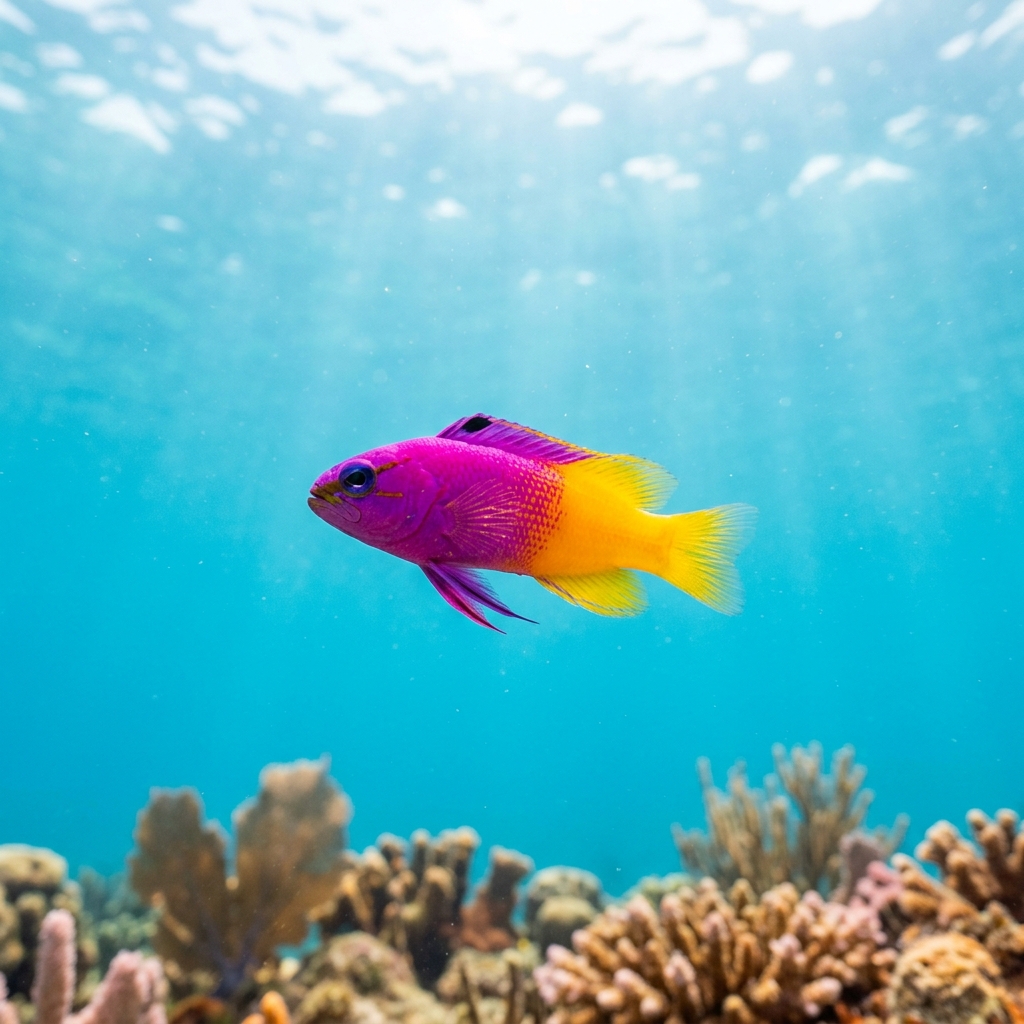
East End has a strong cast of regularly observed species. Great Barracuda and Atlantic Tarpon are seen across the area, while Green Moray, Spotted Moray and Chain Moray are found on the reef structures. Angelfish are well represented, with both French Angelfish and Queen Angelfish common sightings, and the Fairy Basslet adds colour to wall faces. Caribbean Spiny Lobster, Arrow Crab and Flamingo Tongue are also consistently recorded.
Several East End sites are rated for beginners, including shallow reef and cavern dives such as Cinderella's Castle, The Arch, Valley of the Dolls and Playing Fields. These offer manageable depths and interesting topography without the demands of the deeper wall and drift sites. Intermediate and advanced divers have plenty of options too, from wall dives like Pat's Wall and Barrel Sponge Wall to the more complex reef and cavern system at Old Wreck Head.
Almost all dive sites in East End are reached by boat, and this is the standard way to dive the area. One site, Anchor Point, also has a shore entry option alongside its boat access. There are currently no listed dive operators based in East End, so divers will need to arrange boat access through operators serving the wider Grand Cayman area.
Walls and reefs are the dominant site types in East End, often combined at the same location. Several sites add distinct features: cavern networks at Cinderella's Castle and Gigglin Marlin Legacy, a prominent archway at The Arch, canyon structure at Pat's Wall, and drift conditions at Lost Valley and Old Wreck Head. This variety means the area suits divers looking for both relaxed reef sessions and more technical topography.