Lutjanus analis
Spot Mutton Snapper year-round across Florida, the Yucatán Peninsula, and the Cayman Islands. Here's how to ID this cautious reef fish underwater.
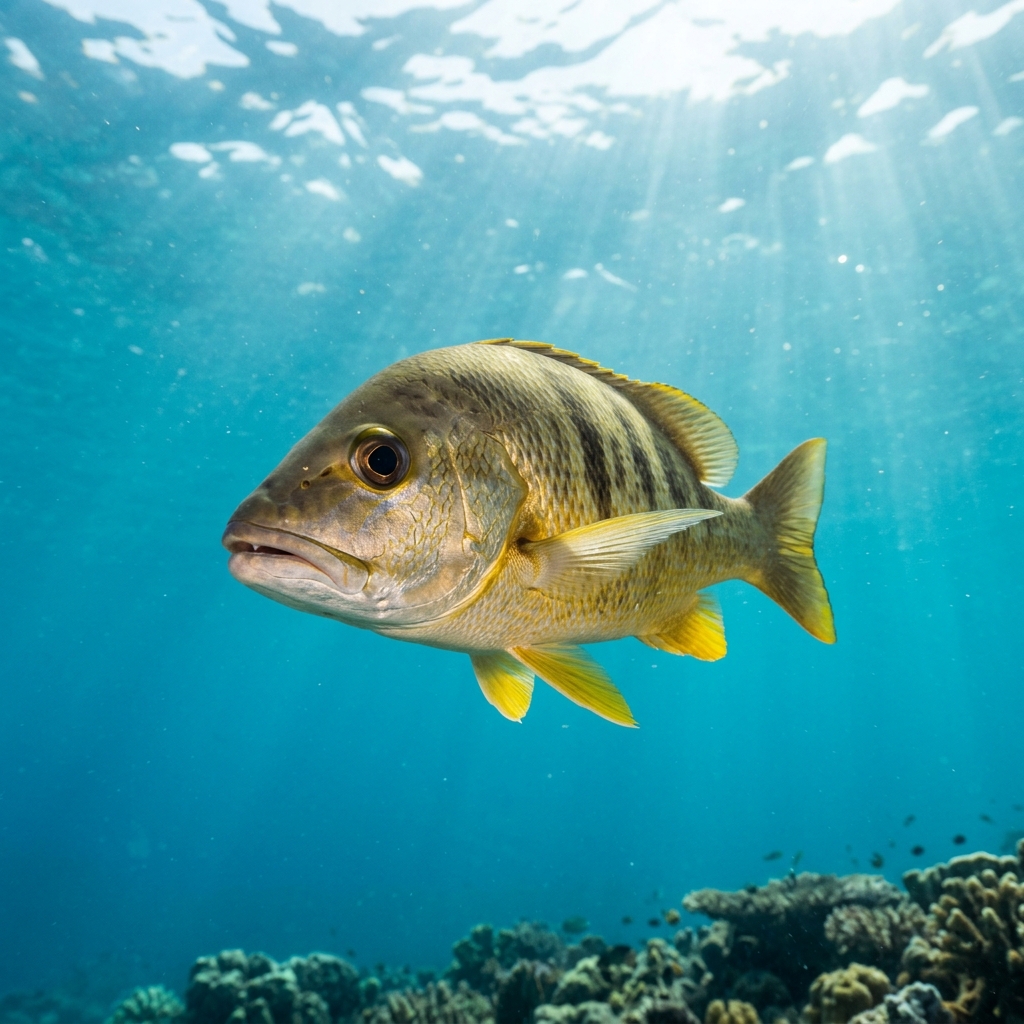
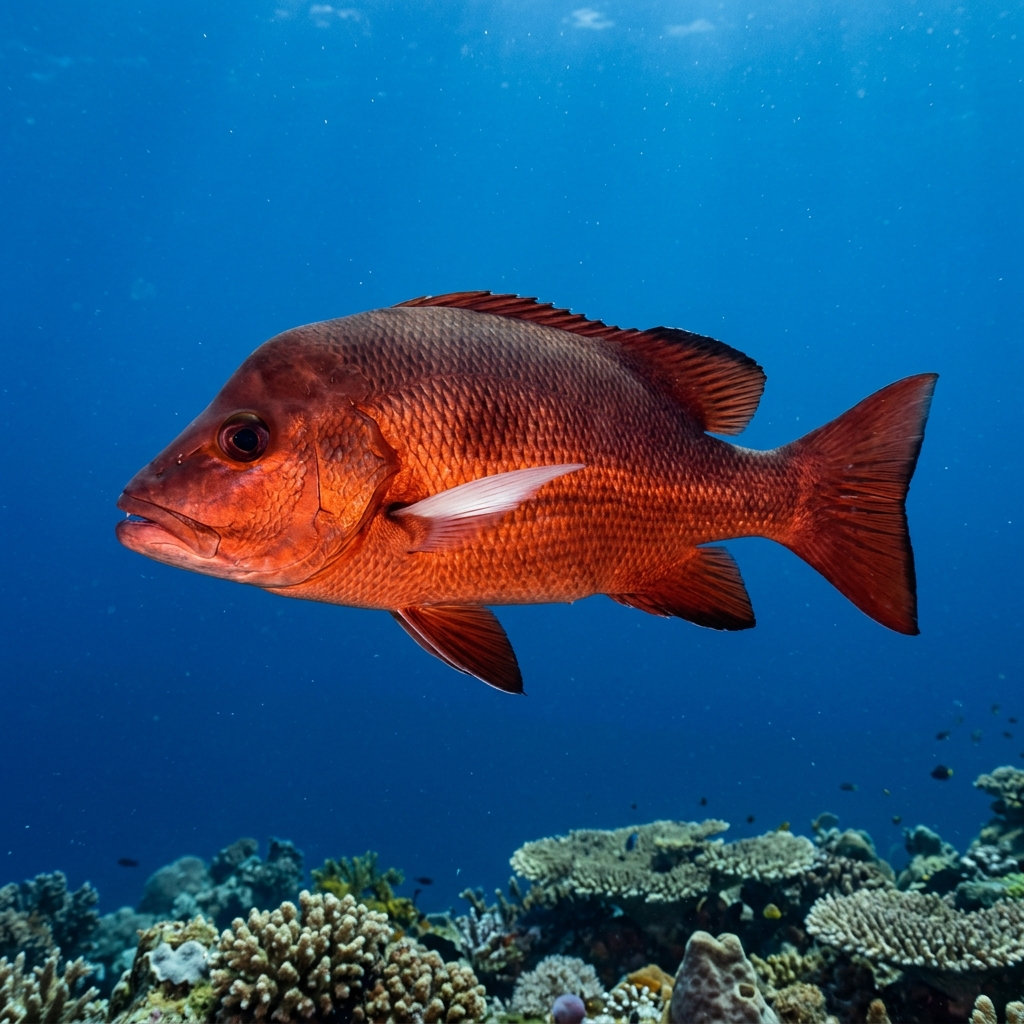
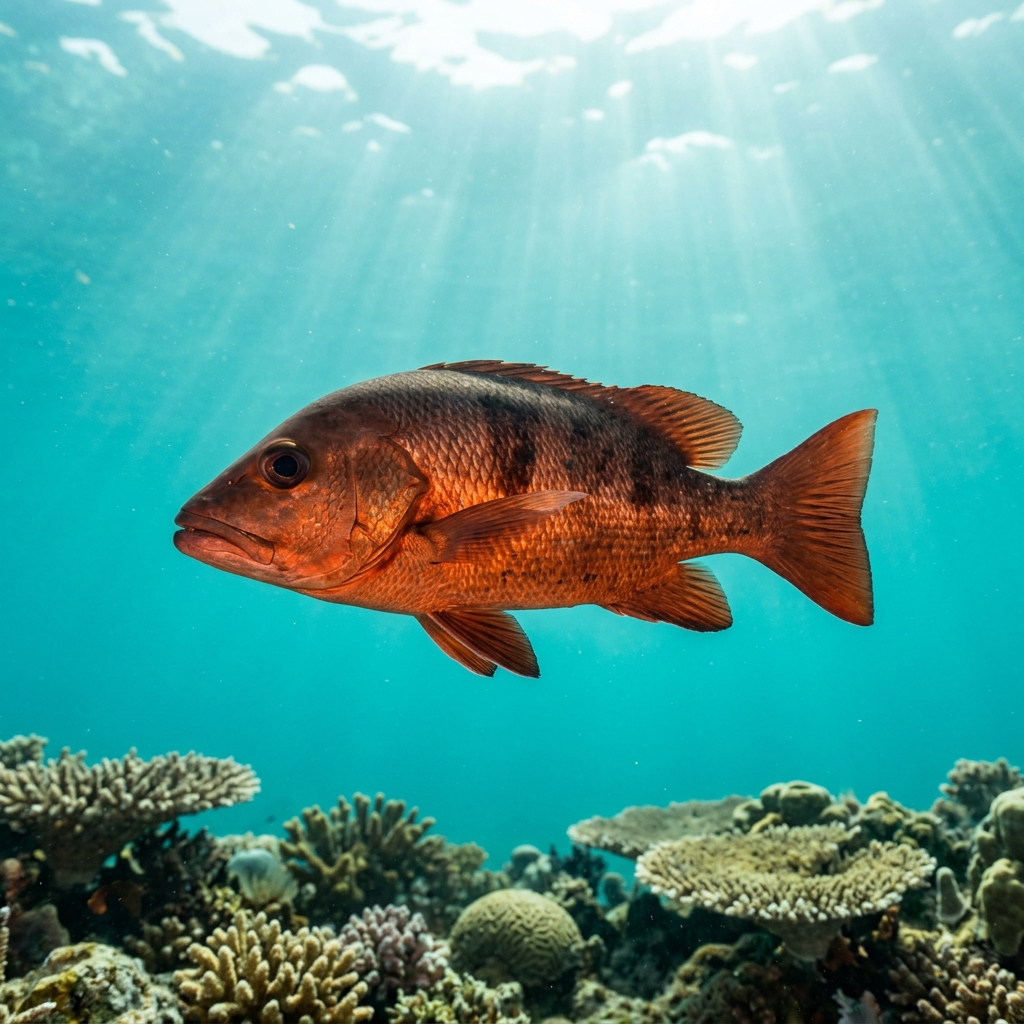
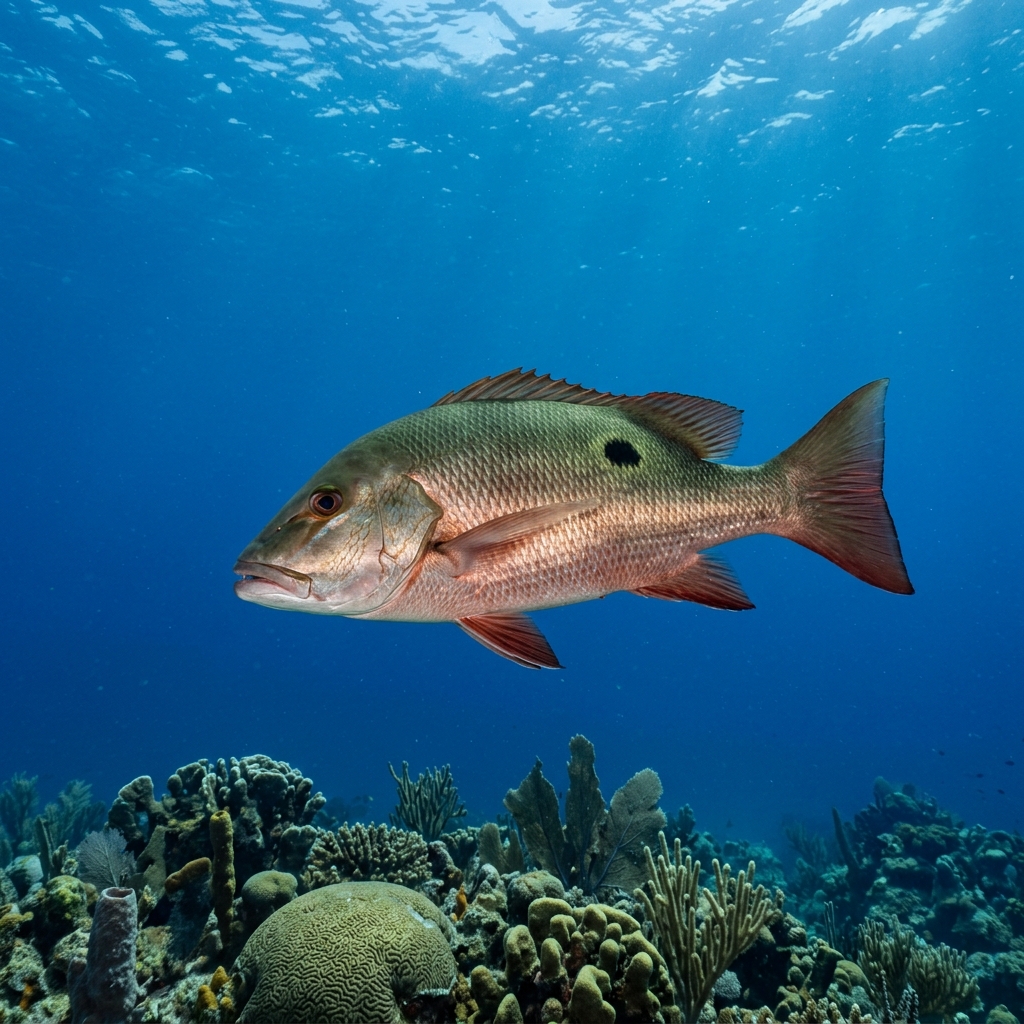
A chunky, deep-bodied snapper reaching around 65 cm, with a warm pinkish-red back fading to silvery-pink flanks and a tell-tale black spot just above the lateral line near the tail, look for that spot first. A thin, bright blue stripe runs below each eye along the cheek, contrasting sharply with the reddish body. The fins carry a reddish-orange tint, and the tail is distinctly forked. At depth, the red tones can look duller or brownish, but the black spot and blue facial stripe remain reliable markers.
Cautious is the word, mutton snapper tend to keep a few metres between themselves and approaching divers, circling away rather than holding still for a long look. They are predominantly solitary hunters working the reef, though small groups occasionally forage together. Your best chance of watching them actively moving and feeding is early morning or late afternoon, when they are at their most alert and purposeful.
Mutton snapper are one of the few snapper species known to undertake large, predictable spawning aggregations, gathering in significant numbers at specific reef promontories during full moons, a behaviour that, while spectacular, also makes them highly vulnerable to concentrated fishing pressure at those sites.
Mutton Snapper are present year-round across their range, with no concentrated season recorded in the data. Their comfort across water temperatures from around 19 to 27 °C keeps them on tropical and subtropical reefs through all months.
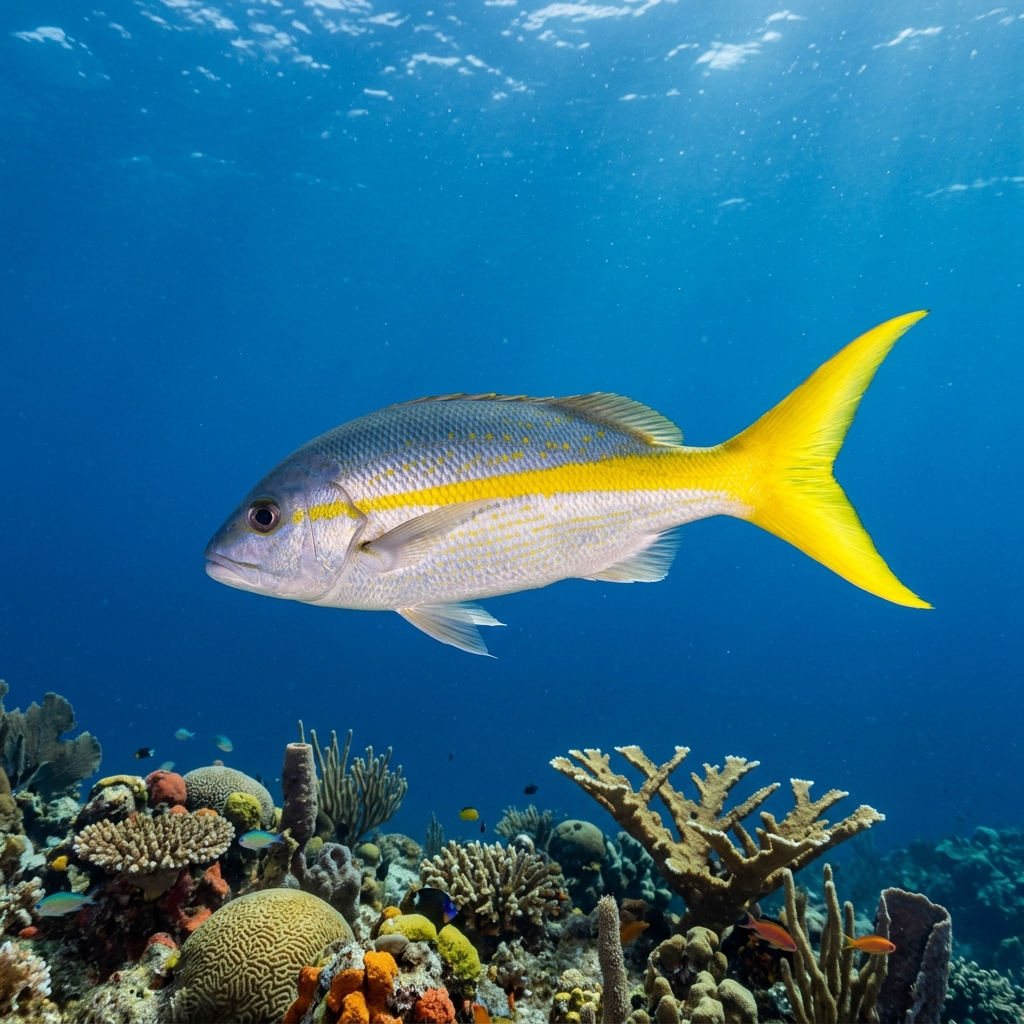
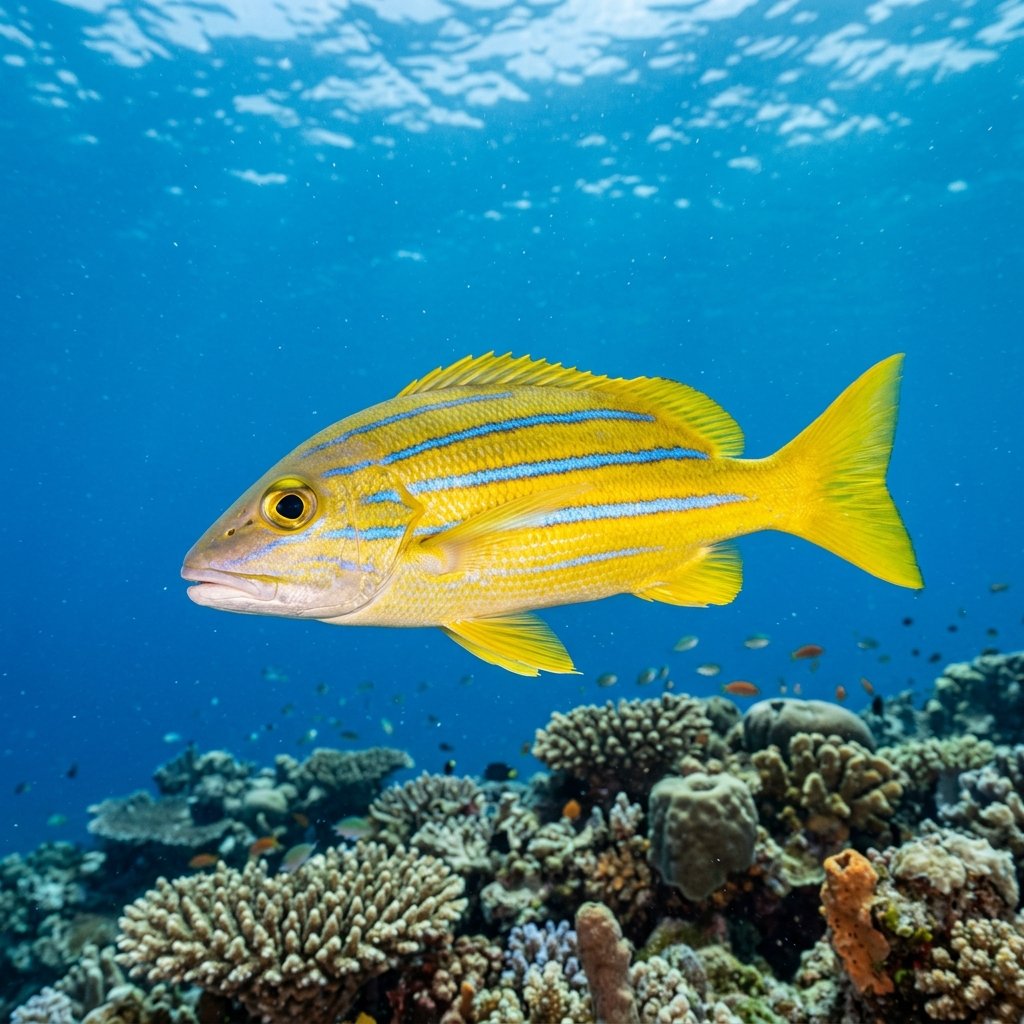
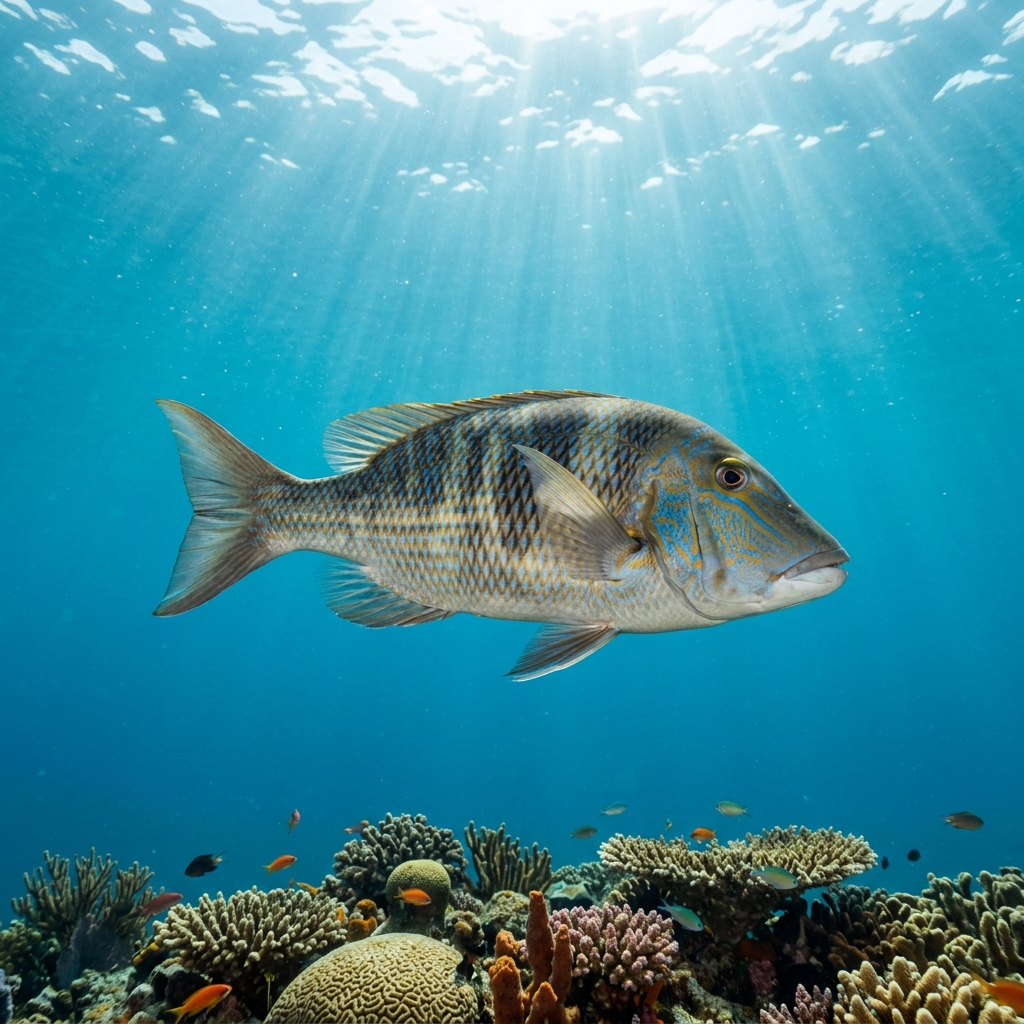
Reef neighbours a diver could mistake it for. Use the identification notes above to tell them apart.
Mutton Snapper are most consistently logged across the wider Caribbean and Gulf of Mexico, with Florida and the broader US southeast accounting for the largest share of sightings by far. The Yucatán Peninsula in Mexico and Grand Cayman are also strong areas, followed by Roatán in Honduras and the Bahamas. Brazil's northeast coast provides a solid Atlantic option outside the Caribbean core.
Mapping where Mutton Snapper is logged…
The best-documented diving for mutton snapper is across Florida and the US southeast, the Yucatán Peninsula in Mexico, Grand Cayman, Roatán in Honduras, and the Bahamas. Brazil's northeast coast is the main Atlantic option outside the Caribbean.
They are present year-round with no single peak season. On any given dive, early morning and late afternoon are the best windows, as that is when they are most actively hunting across the reef.
Focus on two marks: a solid black spot on the upper flank just above the lateral line near the tail, and a thin blue stripe running below the eye across the cheek. The body is pinkish-red to silvery-pink with a forked tail. At depth the red can look brownish, but the black spot and blue cheek stripe hold up.
They typically reach around 65 cm in length. On the reef they look like a solid, deep-bodied fish, noticeably chunkier than the slender yellowtail snapper but similar in build to other large Caribbean snappers.
They are listed as Near Threatened on the IUCN Red List. Predictable spawning aggregations make them especially vulnerable, as large numbers concentrate in the same spots during full moons each year, drawing heavy fishing pressure at those sites.
Site and sighting data is aggregated from diver logs, iNaturalist and GBIF. For taxonomy and conservation status:
Bluestriped Snapper
2,054 sites