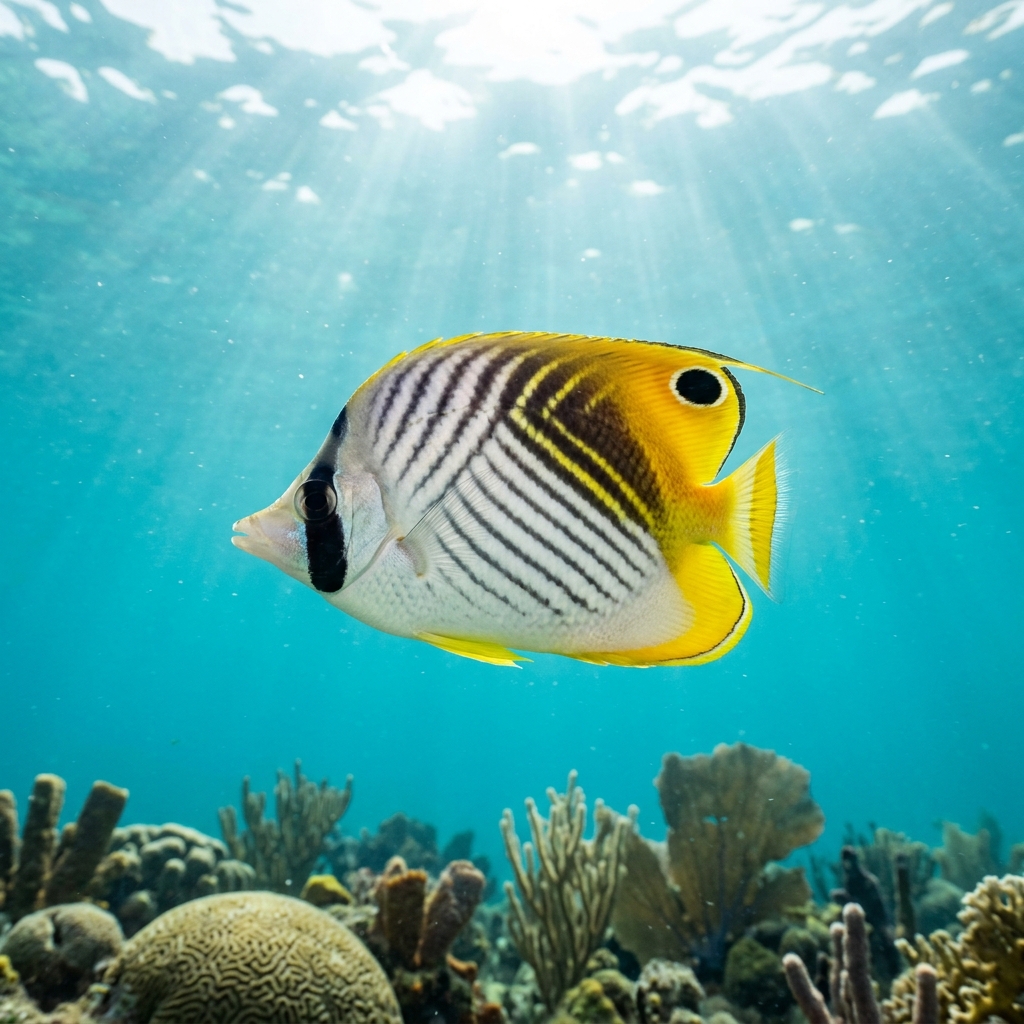
Chaetodon capistratus
Spot the foureye butterflyfish year-round across the Caribbean, most reliably logged from the Yucatán Peninsula to the Cayman Islands in 26-29 °C water.
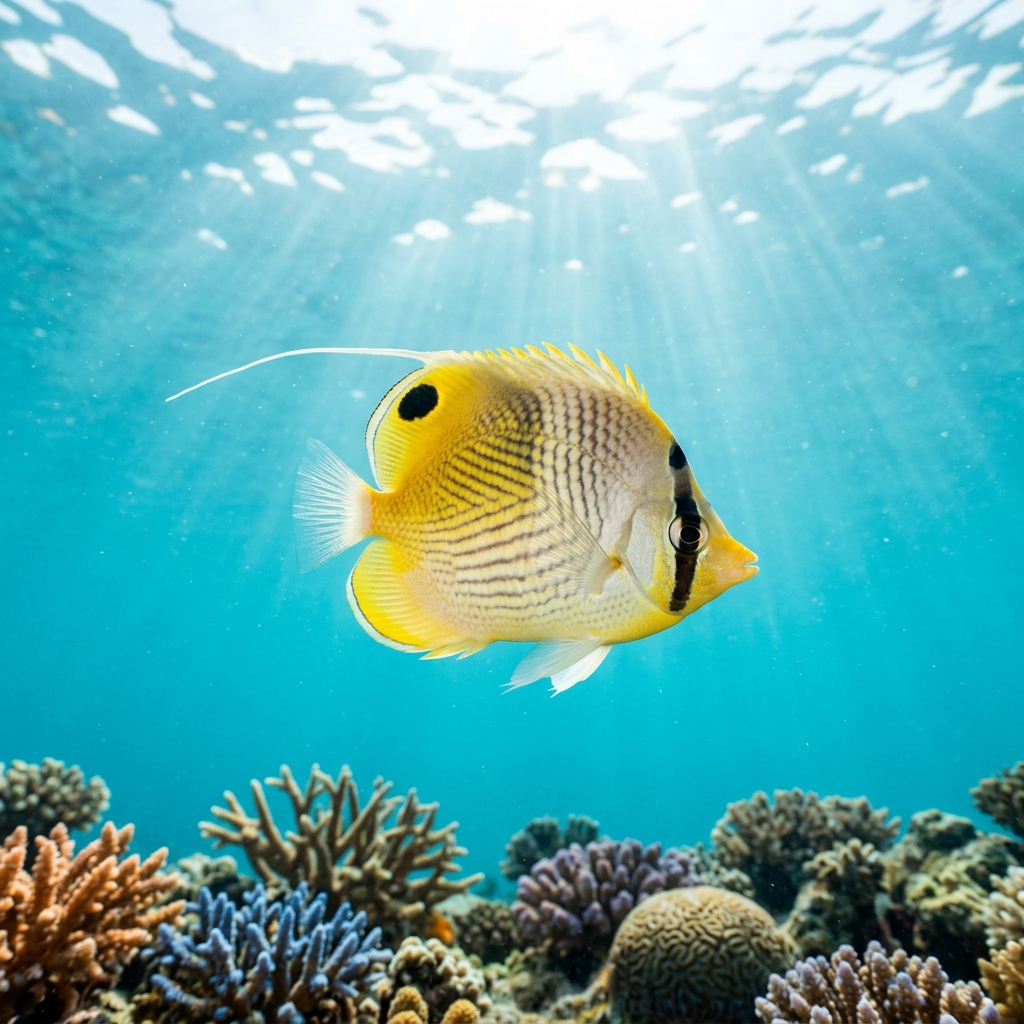
A disc-shaped, laterally compressed fish covered in fine chevron-like lines of dark dots that give the body a scaly, textured look underwater. The clinching mark is a large, white-ringed black spot near the base of the tail, the fake 'eye' that gives the species its name, paired with a real black eye bar crossing the face. Background colouration is pale yellow to off-white, often with a faint yellow wash toward the rear. Juveniles carry a second dark spot at the base of the dorsal fin that fades as they mature.
Typically encountered in pairs, foureye butterflyfish mate for life and patrol reef sections together, picking at coral polyps and small invertebrates with their fine, pointed snouts. They stay relatively close to the reef structure, often at shallow to mid-water depths, and tend to keep a cautious distance from approaching divers without bolting dramatically. Early morning dives can catch them actively feeding before reef traffic picks up.
The oversized false eyespot near the tail is thought to confuse predators about which end to strike, buying the fish a split second to dart to safety in the opposite direction, a strategy made more effective by the black bar that helps conceal the real eye.
Present year-round with no concentrated season, the species sits comfortably in the 26-29 °C water that Caribbean reefs hold throughout the year, so there is no strong reason to time a trip around it.
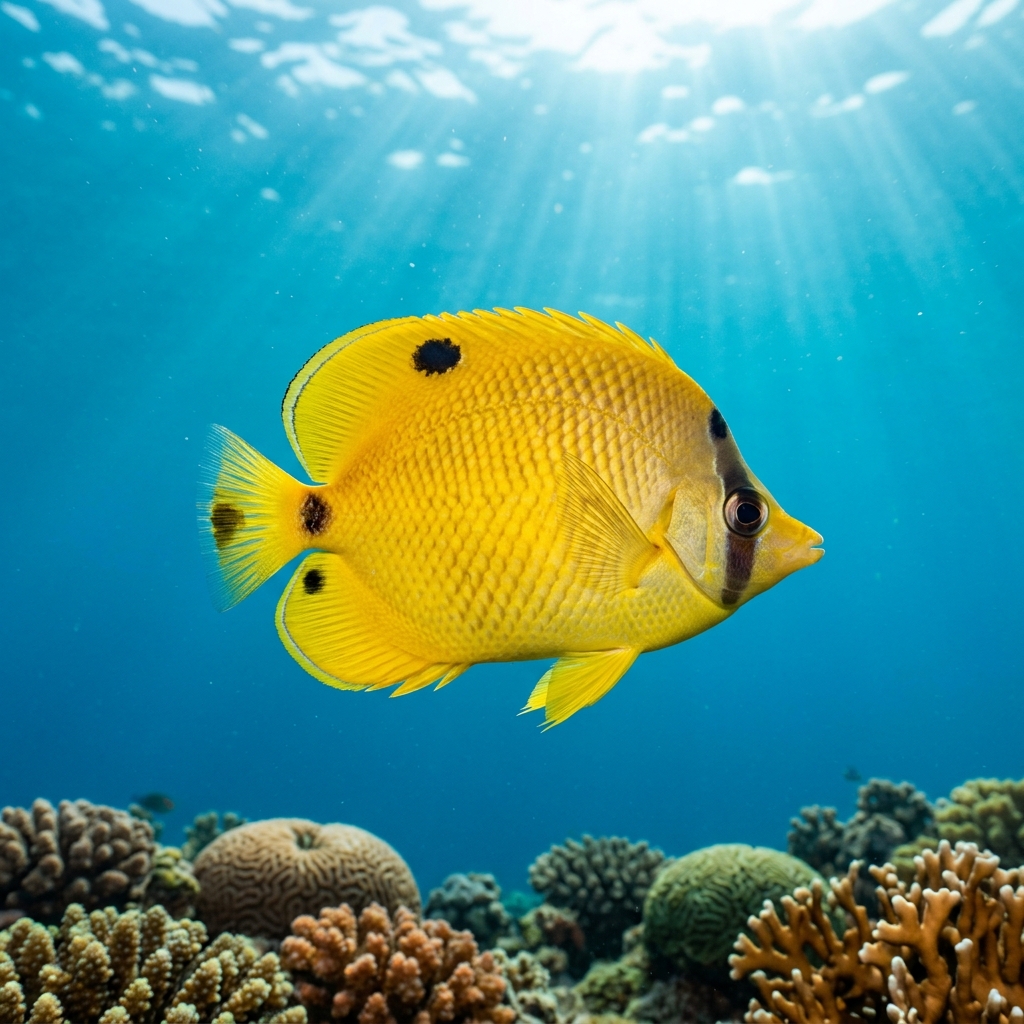
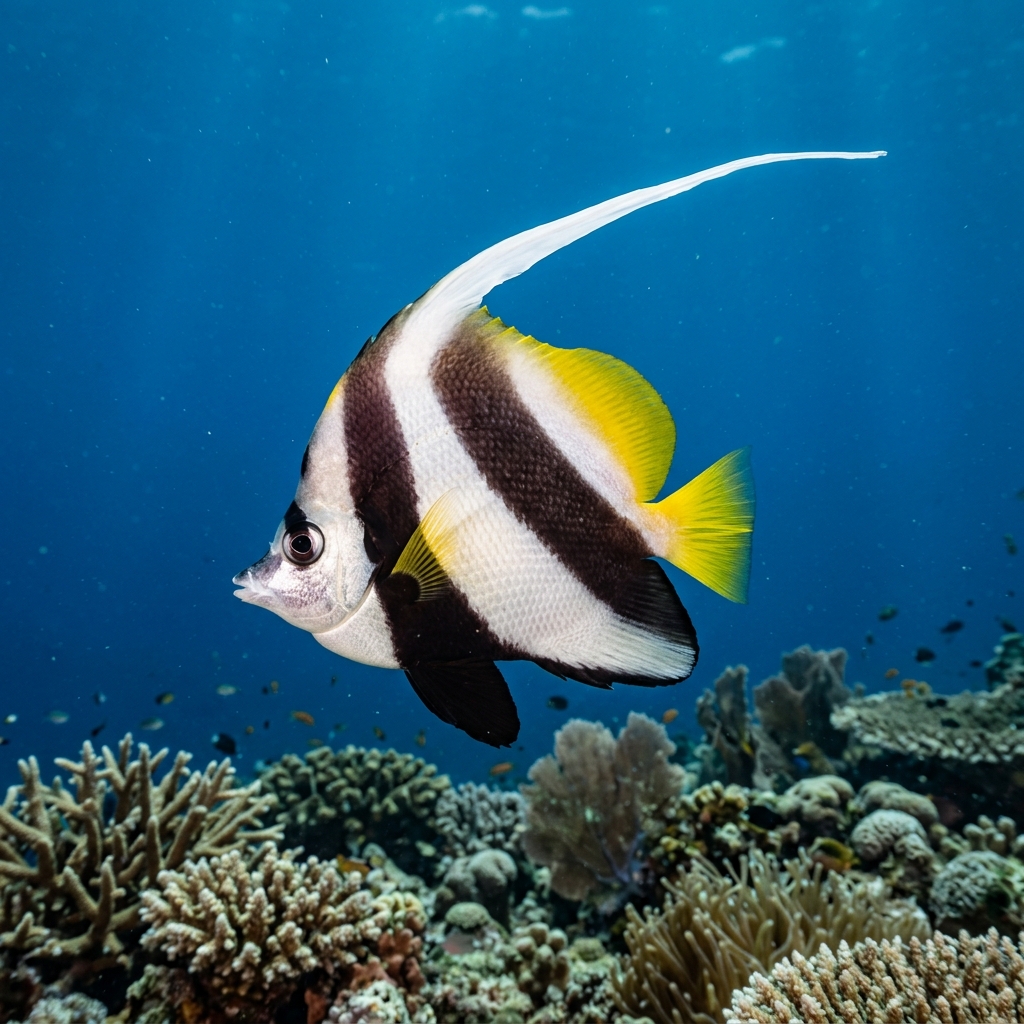
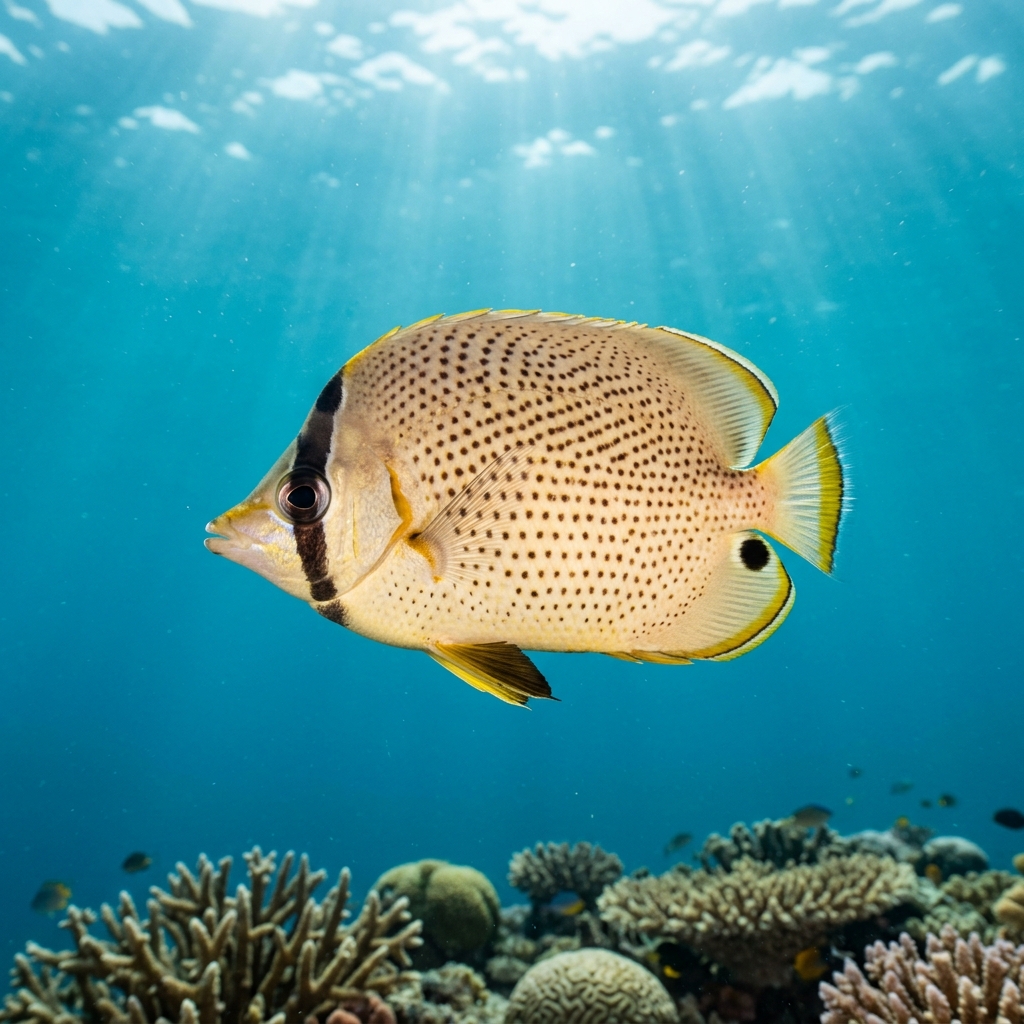
Reef neighbours a diver could mistake it for. Use the identification notes above to tell them apart.
Overwhelmingly a Caribbean and western Atlantic species, with the strongest sighting records across the Yucatán Peninsula and the rest of Mexico, Florida, the Cayman Islands, and Roatán in Honduras. Bonaire, Grenada, Colombia, and the US and British Virgin Islands also log it consistently, making virtually any healthy Caribbean reef a viable spot to look.
Mapping where Foureye Butterfly Fish is logged…
They are most reliably logged across the Caribbean and western Atlantic. The Yucatán Peninsula, Florida, the Cayman Islands, Roatán in Honduras, and Bonaire are among the strongest locations. Colombia, Grenada, and the US and British Virgin Islands also return consistent sightings.
Any time of year works. Data from across their range shows no concentrated season, and their preferred water temperature of roughly 26-29 °C is maintained on Caribbean reefs throughout the year.
Look for a pale, disc-shaped fish covered in fine dot-chevron lines, with a black eye bar across the face and, most importantly, a large black spot ringed in white near the tail. That false eyespot is unique among Caribbean butterflyfish and is the quickest field mark at any depth.
Adults typically reach around 15 cm in length, making them a small to medium-sized reef fish. Their disc-shaped, laterally flattened body makes them appear broader than they are long when viewed head-on.
The white-ringed black spot mimics an eye, misleading predators about which direction the fish will flee. When a predator lunges for what it thinks is the head, the butterflyfish darts the opposite way, buying crucial escape time.
Site and sighting data is aggregated from diver logs, iNaturalist and GBIF. For taxonomy and conservation status: