Acanthurus coeruleus
Bright blue and constantly grazing, this surgeonfish turns up year-round on reefs from the Yucatán Peninsula to Bonaire's Leeward Coast.
Safety warning
The tail spine can slice skin if you grab or corner one, so don't chase or handle it; a graze can sting and is prone to infection like any reef cut. Give it space and it will simply swim off rather than engage.
If you're cut
Tail scalpelGeneral first-aid guidance, not a substitute for professional medical care. In an emergency, call your local emergency number.
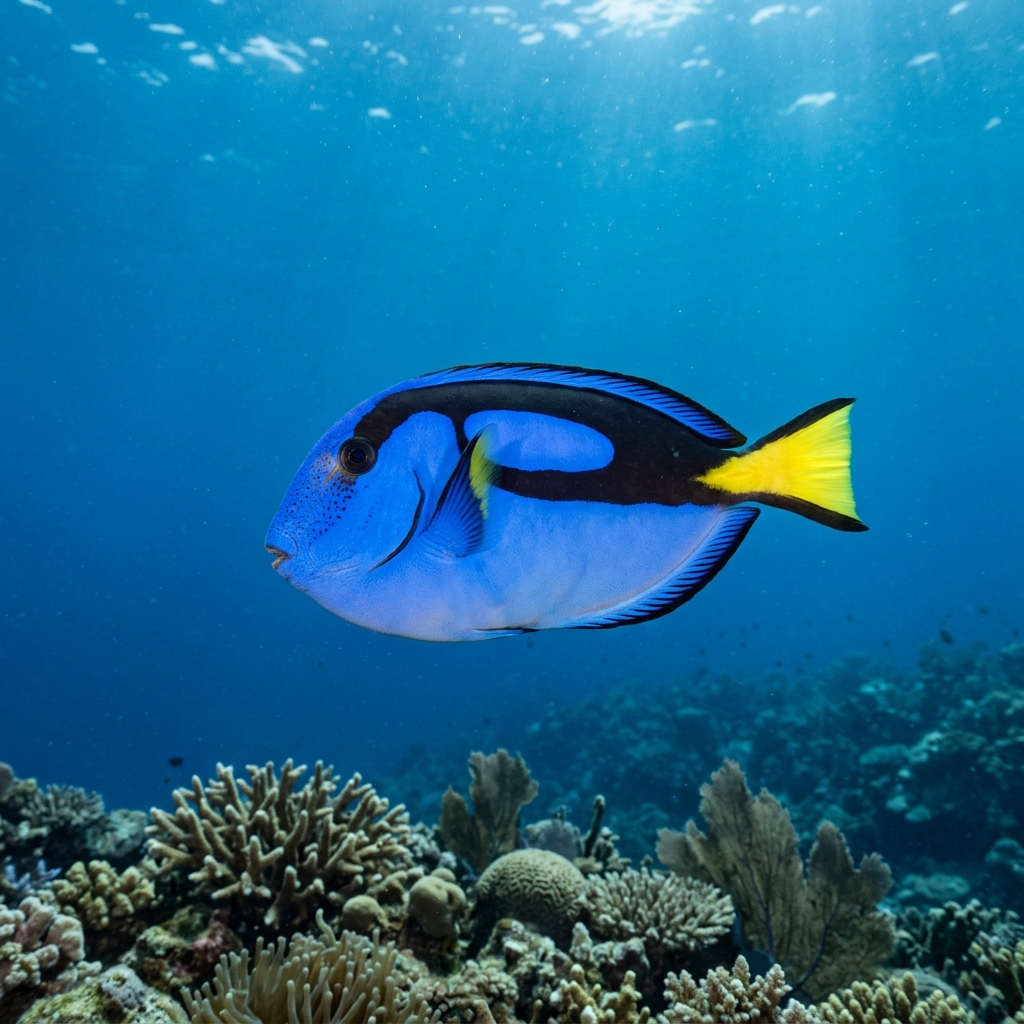
Adults are an even powder-to-deep blue all over, with a slim oval body, a small pointed snout, and a sharp yellow-white scalpel-like spine tucked at the base of the tail. There's no bold stripe or eye mask to key on, just the flat, uniform blue and the disc-shaped profile as it grazes side-on to the reef. Juveniles are bright yellow, a completely different look from the blue adults, so a yellow version on the same reef is very likely the same species at an earlier stage.
Usually seen grazing alone or loosely scattered over algae-covered rock and reef, rasping at turf algae rather than schooling tightly. It's generally unbothered by divers and will keep feeding as you approach, darting for cover in a crevice only if pressed. Most sightings are on shallower reef sections, from just a few metres down to reef edges well within recreational depths.
That yellow tail spine isn't decoration, it's a locking blade the fish can flick outward from a groove near the tail for defence, which is the reason surgeonfish get their common name.
No clear season shows up in the sightings data, and it's comfortable in water from about 25 to 29 C, so it's a fair bet on Caribbean and western Atlantic reefs any month of the year.
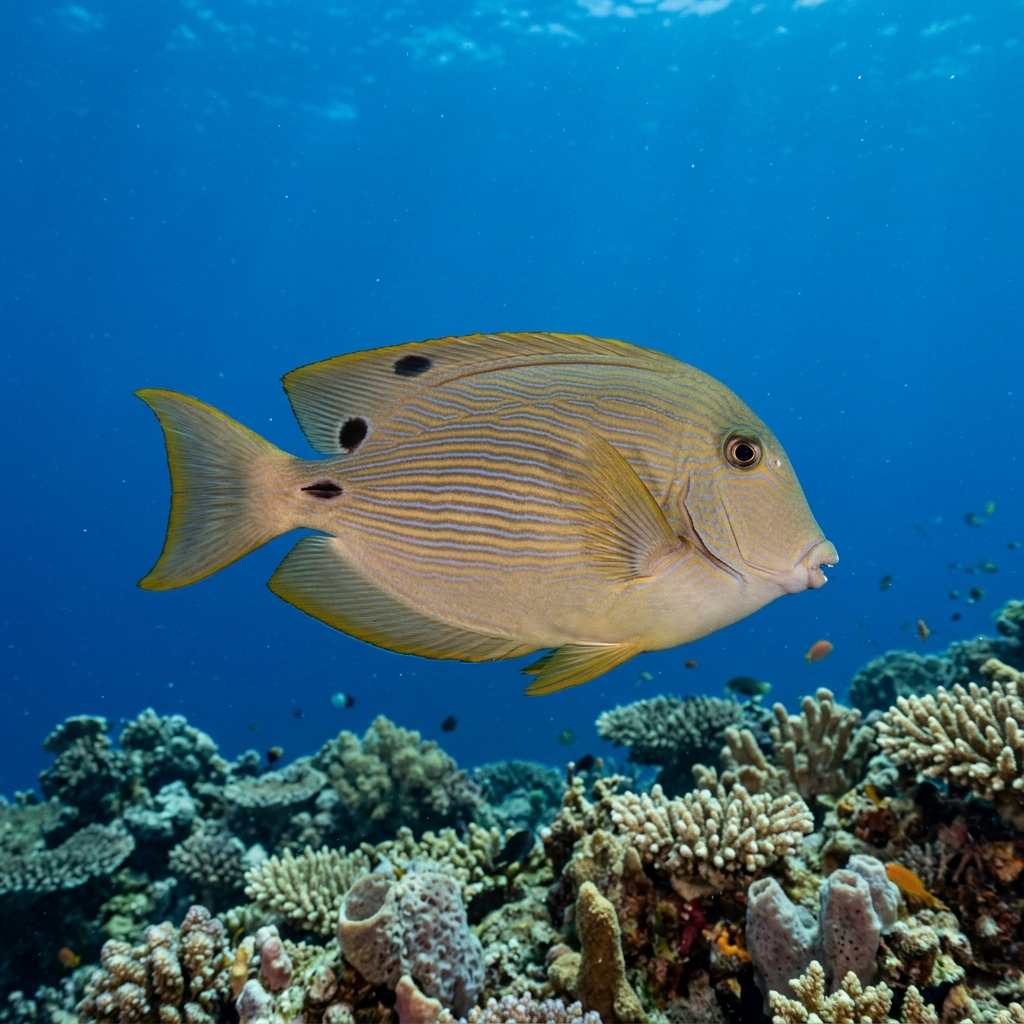
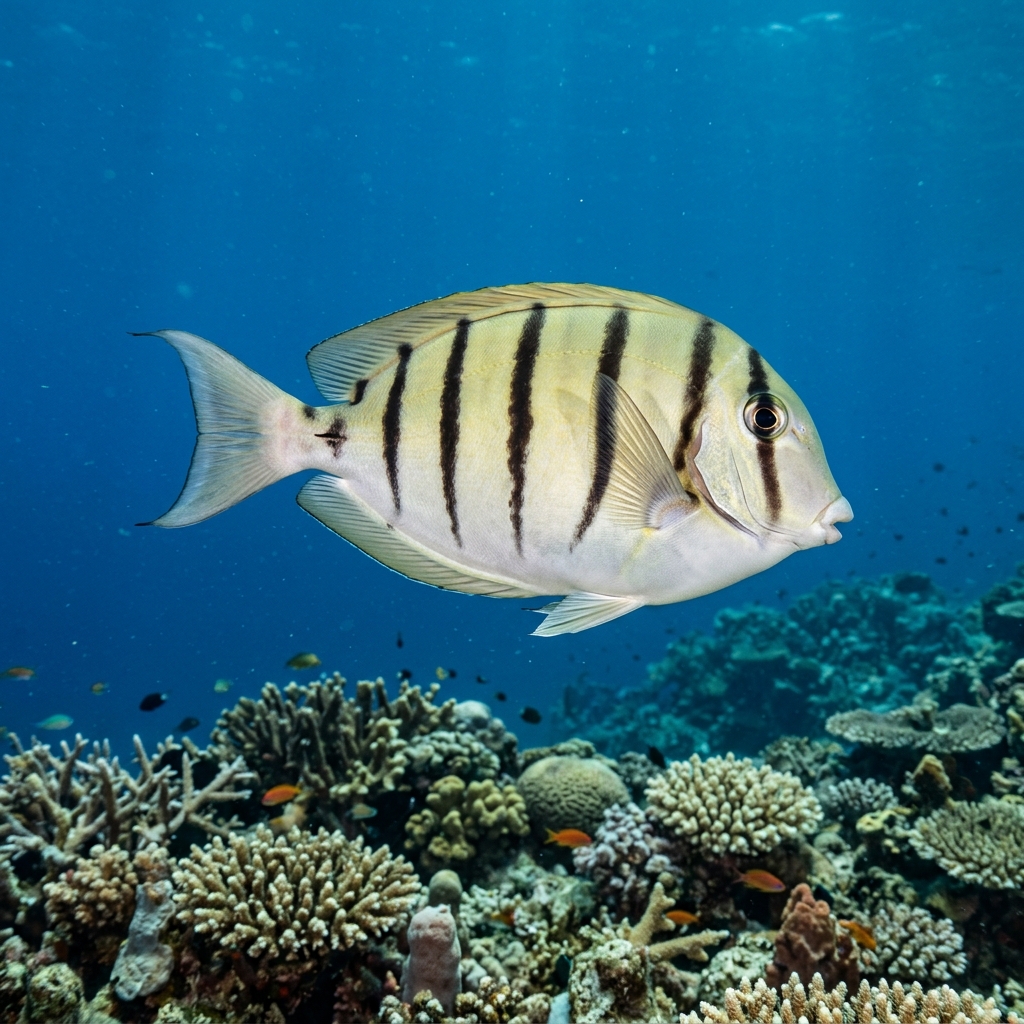
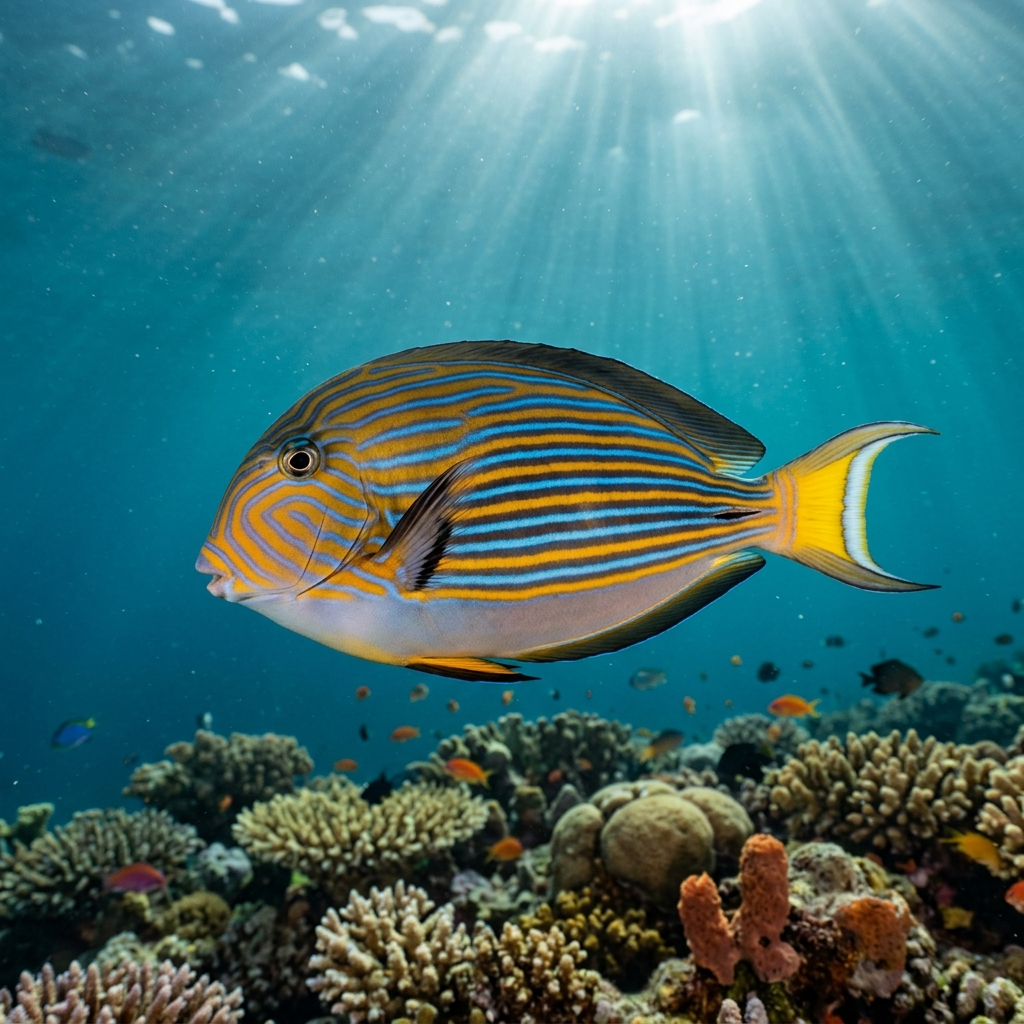
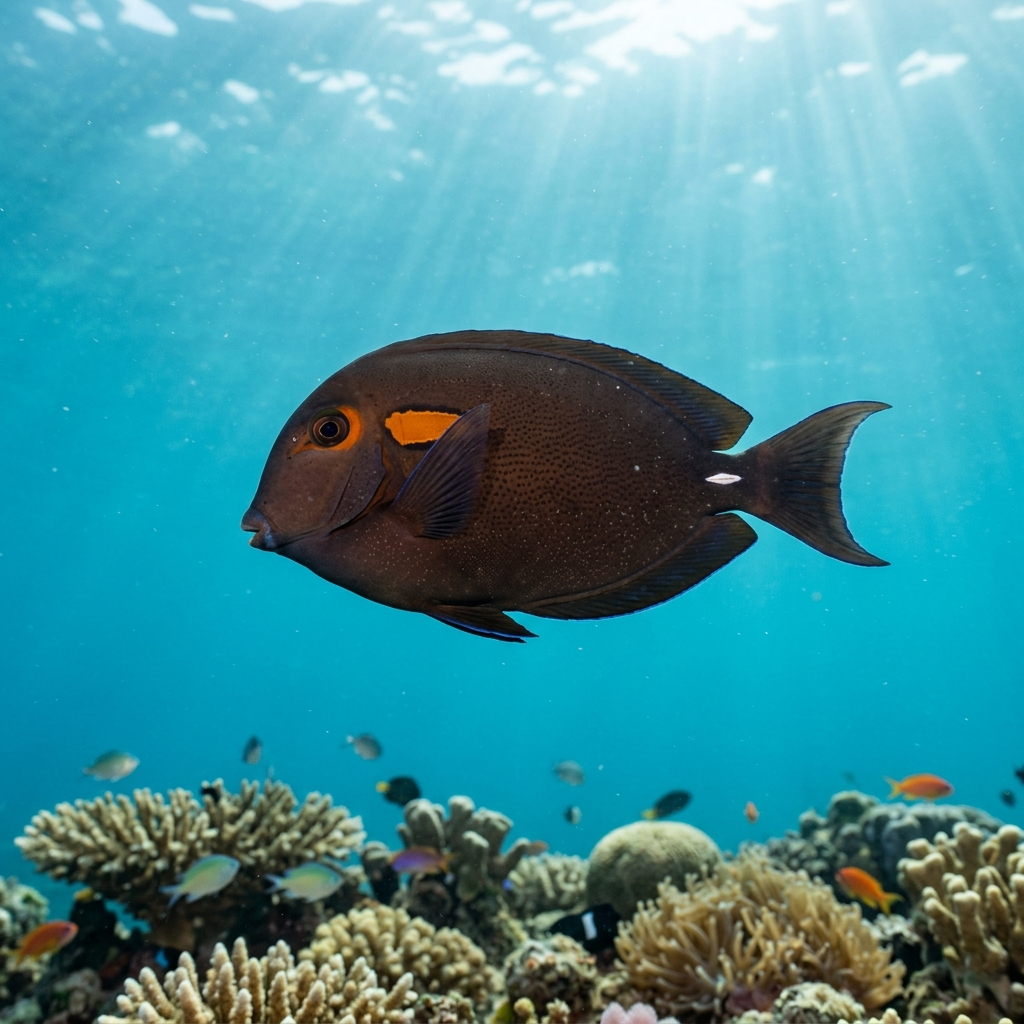
Reef neighbours a diver could mistake it for. Use the identification notes above to tell them apart.
Most consistently logged across the Caribbean and western Atlantic, with the strongest numbers in the Yucatán Peninsula in Mexico and Florida in the United States, plus reliable sightings in the Bay Islands of Honduras, the Caribbean Coast of Colombia, Grand Cayman, and Bonaire's Leeward Coast. It also shows up well in Cuba, Brazil, and around Tortola in the British Virgin Islands.
Mapping where Atlantic Blue Tang is logged…
Best odds are in the Caribbean and western Atlantic, particularly the Yucatán Peninsula in Mexico and Florida, with strong showings in the Bay Islands of Honduras, Grand Cayman, and Bonaire's Leeward Coast.
There's no strong seasonal pattern in the sightings, and it tolerates a wide warm-water range, so it's a year-round sighting on Caribbean and western Atlantic reefs.
Only if you handle or corner one. The sharp spine at the base of the tail can cut skin, so admire it from a distance and don't try to touch it.
Look for a flat, oval-bodied fish in an even shade of blue with a small pointed face and a yellow-tipped spine near the tail. Bright yellow individuals on the same reef are juveniles of the same species.
They typically reach around 27 cm, roughly the size of a dinner plate held on edge, making them easy to spot but not huge against the reef.
Its common name comes from a scalpel-like spine that locks out from a groove near the tail, used purely for defence rather than feeding or display.
Site and sighting data is aggregated from diver logs, iNaturalist and GBIF. For taxonomy and conservation status:
Striped Surgeonfish
3,289 sites