Sphyraena barracuda
Spot Great Barracuda year-round in Florida, the Yucatán, and the Canary Islands. Learn how to identify this silver predator and how it behaves around divers.
Safety warning
Bites are rare but on record, usually involving a diver who accidentally presented a shiny object (ring, watch, dive computer) that mimicked a flashing fish. Keep jewellery covered, move calmly, and do not corner or chase the animal. If one approaches closely, hold still and let it lose interest rather than retreating quickly, as rapid movement is more likely to provoke it than slow, deliberate positioning.
If you're bitten
BiteGeneral first-aid guidance, not a substitute for professional medical care. In an emergency, call your local emergency number.
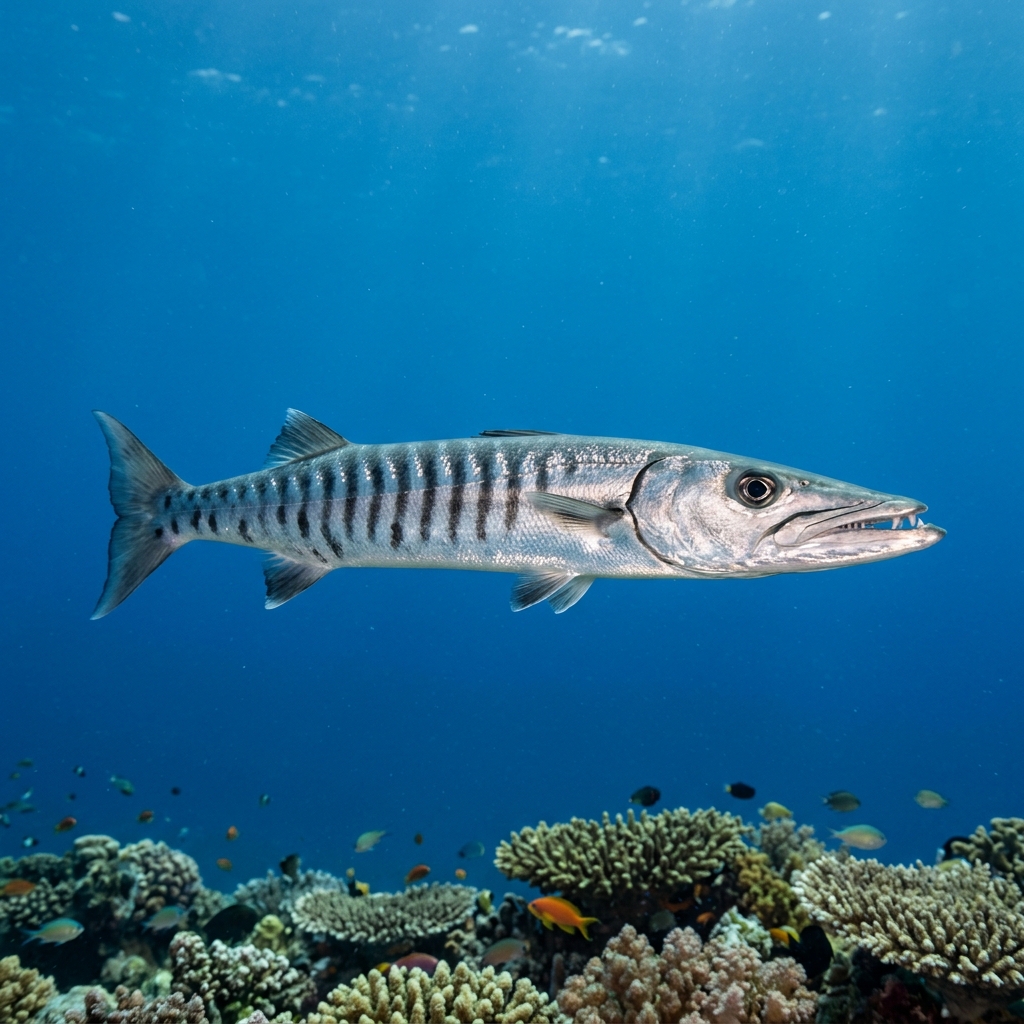
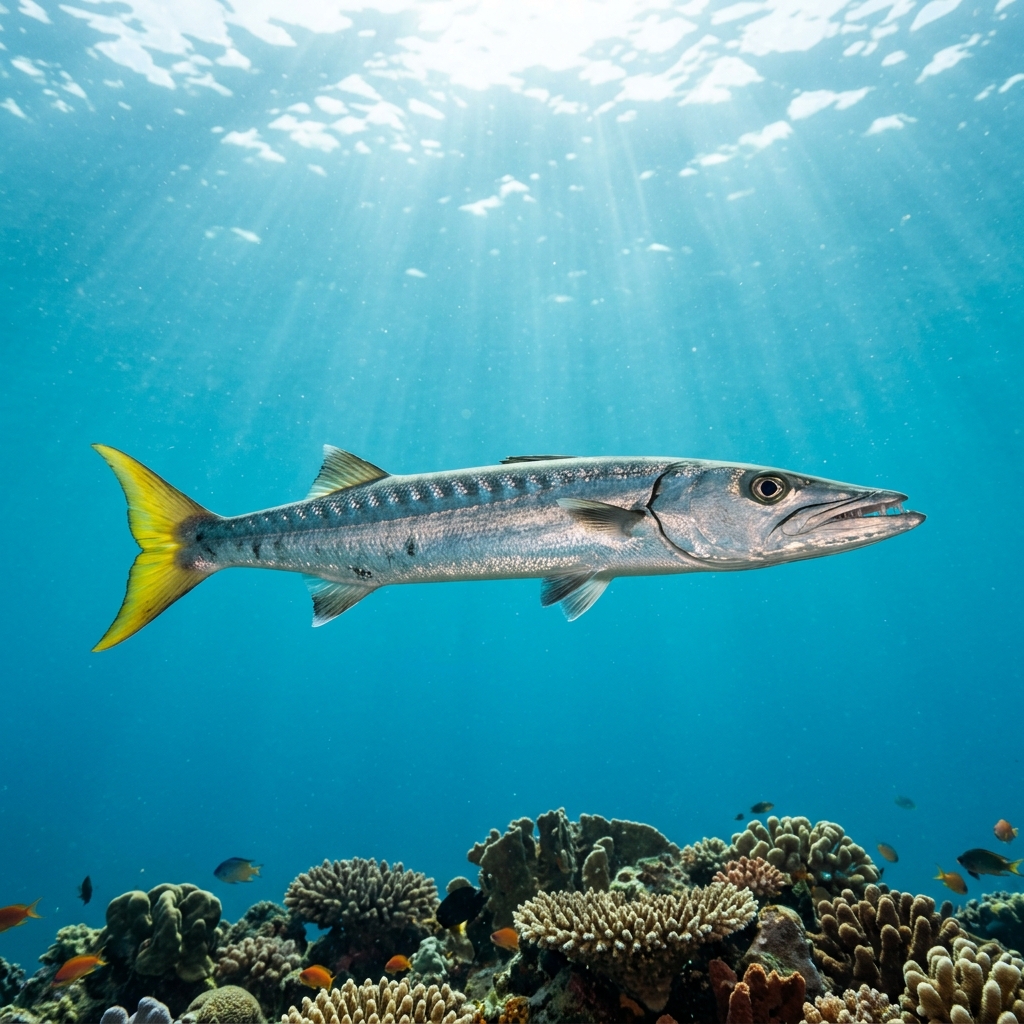
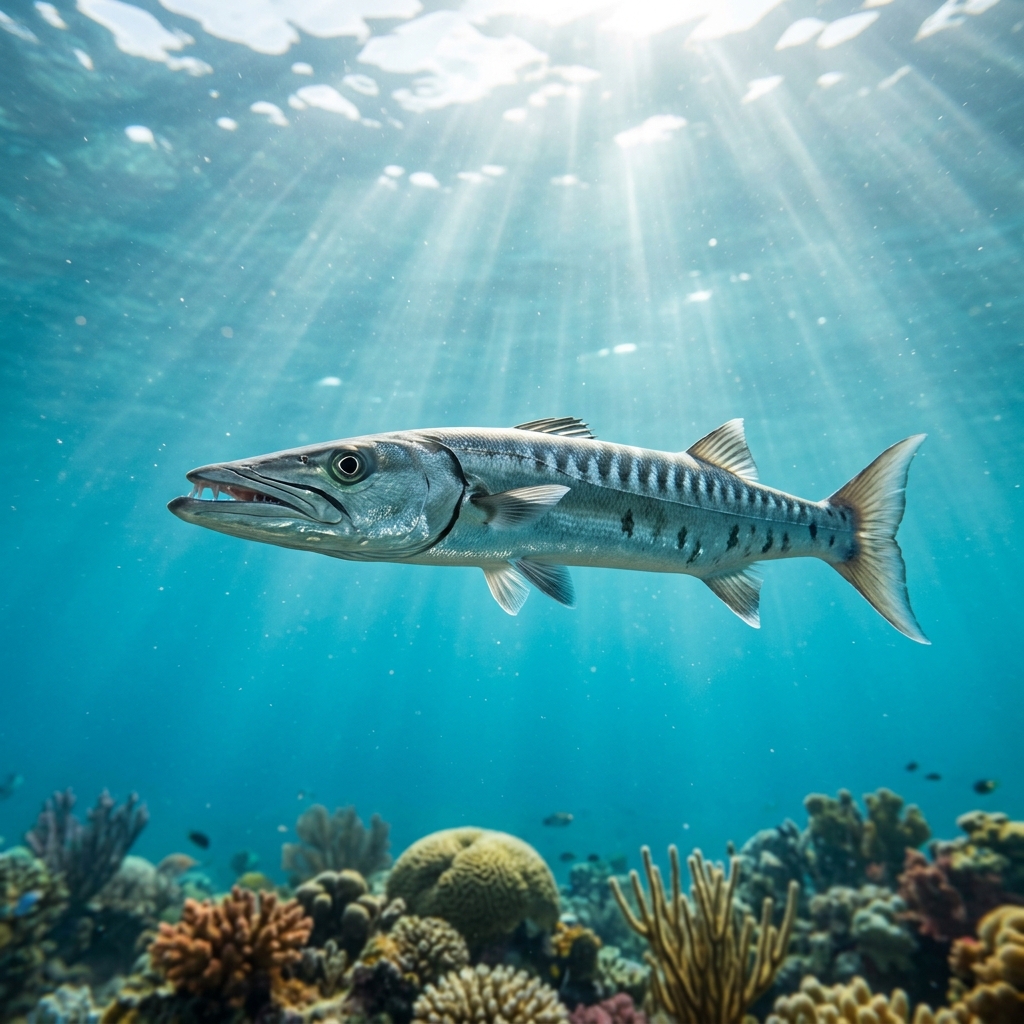
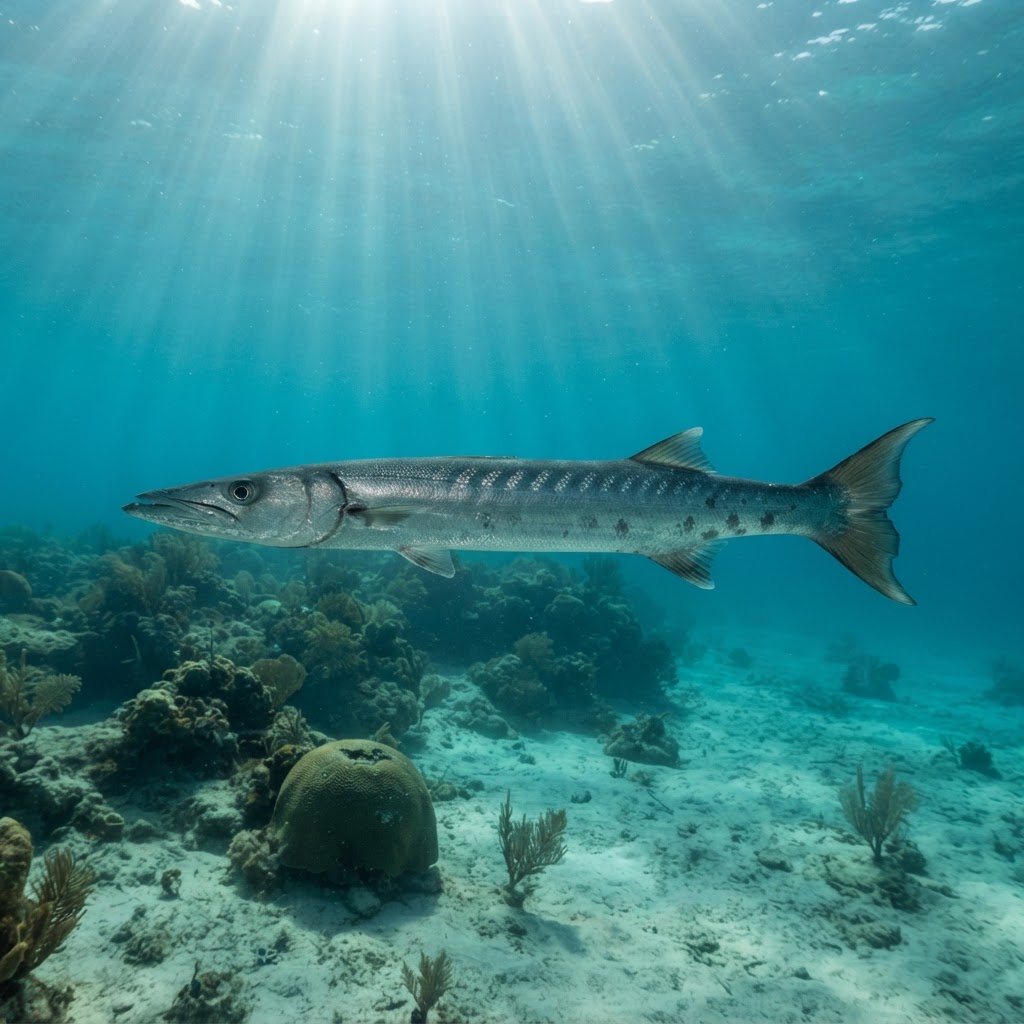
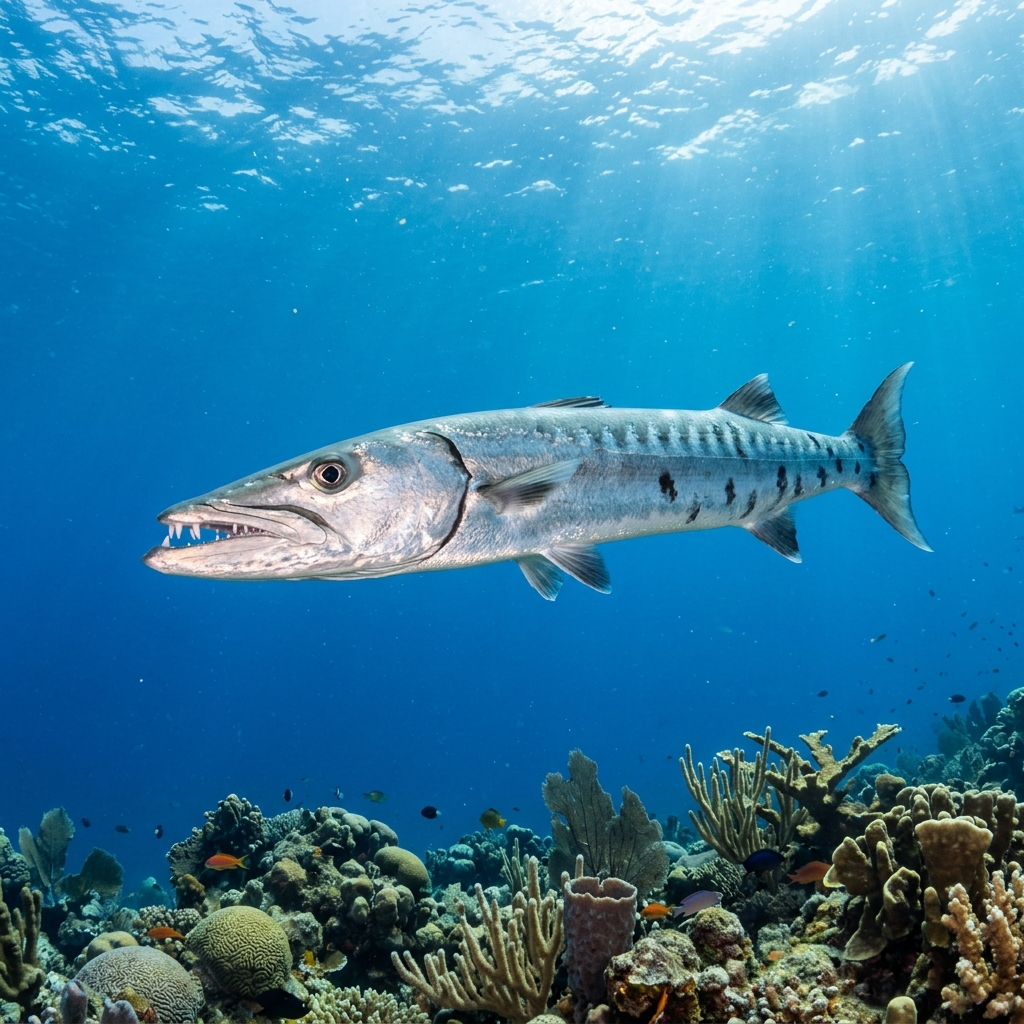
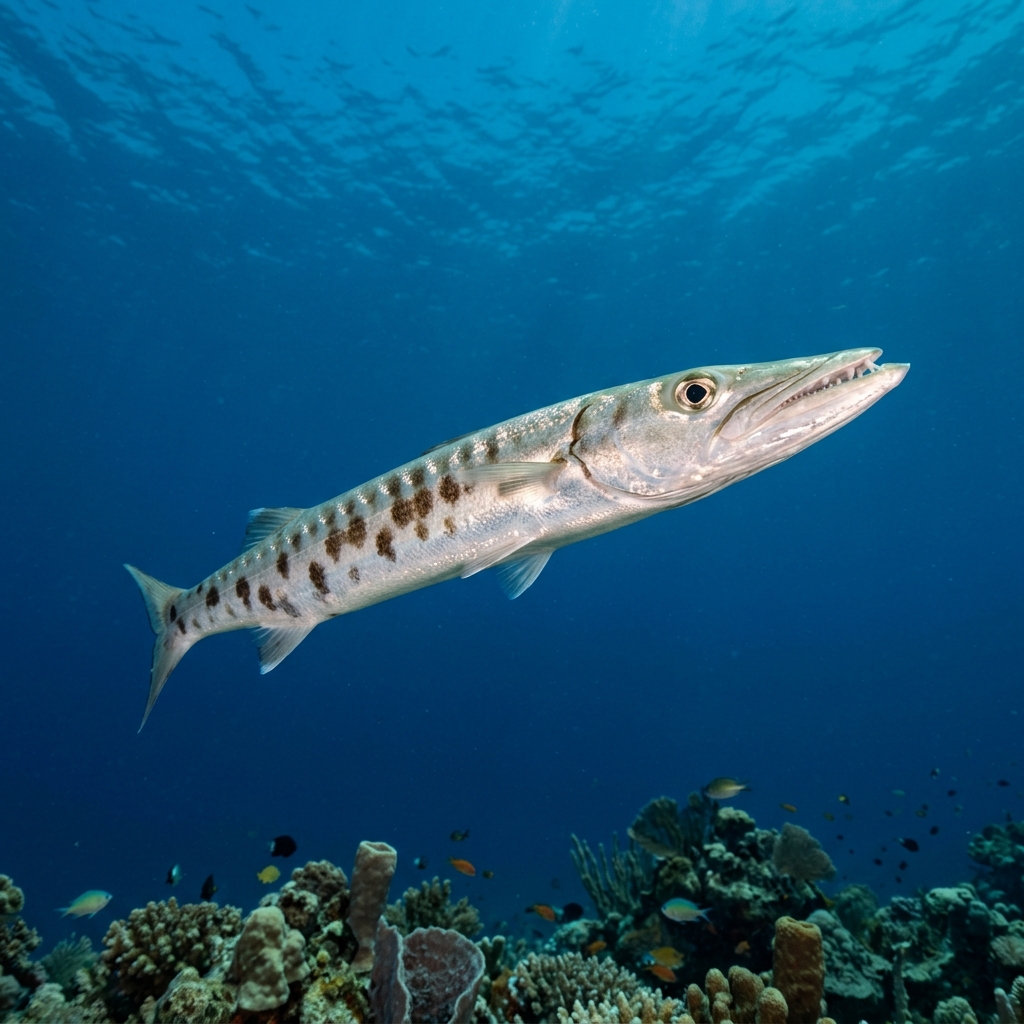
Silver-grey along the back shading to a pale belly, with a torpedo-shaped body that at 140 cm is noticeably larger than most reef fish around it. The key marks are the two dorsal fins set well apart, a noticeably jutting lower jaw lined with large, visible teeth, and scattered dark blotches or bars along the flanks, strongest near the tail. Underwater it typically hangs motionless or moves in a slow, deliberate glide, which makes it look more like a hovering log than an active hunter until it accelerates.
Typically encountered alone, hanging in mid-water or near a reef edge, facing into the current and eyeing passing fish. It is a curious animal and will often turn to watch divers, sometimes closing the distance to a few metres before holding steady. Avoid flashing shiny jewellery or dive kit, as reflective objects can trigger a closer inspection, and resist the urge to make sudden movements that might provoke a defensive response.
Great barracuda can accelerate to around 43 km/h in short bursts, one of the fastest sprints of any reef predator, which is why prey fish rarely escape once a charge begins.
Present year-round on tropical and subtropical reefs, which fits its observed temperature niche of roughly 22 to 29 °C. There is no concentrated season in the Northern Hemisphere data, so timing a trip around other species will not cost you a great barracuda sighting.
Reef neighbours a diver could mistake it for. Use the identification notes above to tell them apart.
Most commonly logged in Florida and the broader US Southeast, the Yucatán Peninsula in Mexico, and across Spain including the Canary Islands and Balearics. Strong populations are also recorded in the Cayman Islands, the Maldives, and Roatán, Honduras, making it one of the most widely encountered barracuda across both the Atlantic and Indo-Pacific.
Mapping where Great Barracuda is logged…
They are widely distributed across tropical and subtropical seas. The most reliable sightings come from Florida, the Yucatán Peninsula, the Canary Islands, the Cayman Islands, and Roatán in Honduras. Spain's Mediterranean coast, including the Costa Brava and Balearic Islands, also records frequent encounters.
Year-round. The species is present across all months in the Northern Hemisphere data with no distinct peak season. Its comfort range of roughly 22 to 29 °C means most tropical and subtropical dive destinations hold them throughout the year.
They can bite, though attacks on divers are uncommon. Most incidents involve shiny objects that the fish mistakes for prey. Keep jewellery tucked away, move calmly, and never chase or corner one. A barracuda that approaches is usually just curious and will move on if you stay relaxed.
Look for a large, torpedo-shaped silver fish with a protruding lower jaw and scattered dark blotches along its flanks, especially near the tail. The two dorsal fins are set wide apart, and its sheer size, up to around 140 cm, separates it from smaller barracuda species at a glance.
Adults commonly reach around 140 cm in length, and large individuals can exceed 1.5 metres. Their bulk and length make them one of the more imposing fish a diver will encounter on a coral or rocky reef.
Site and sighting data is aggregated from diver logs, iNaturalist and GBIF. For taxonomy and conservation status:
Pickhandle Barracuda
1,020 sites