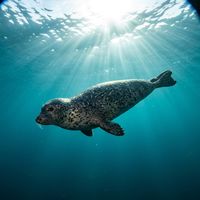
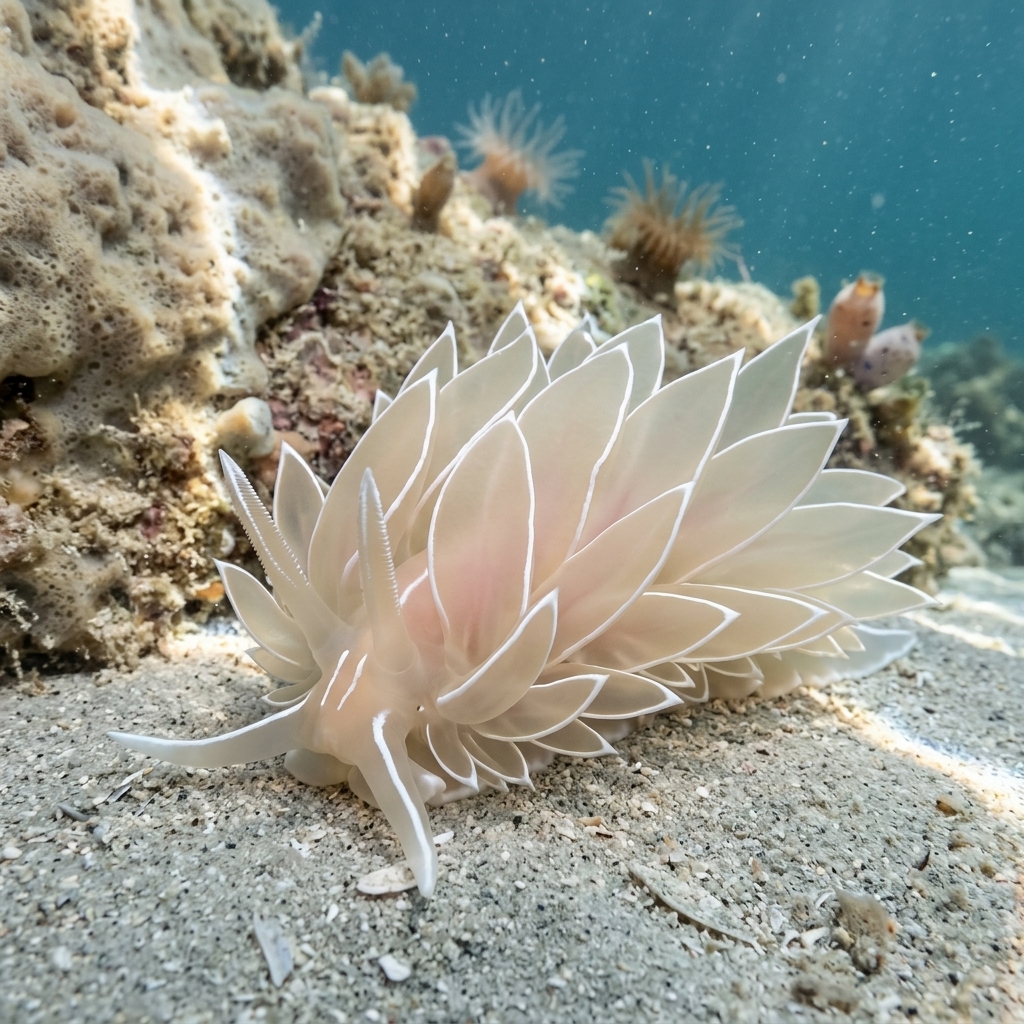
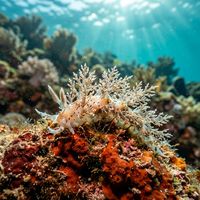
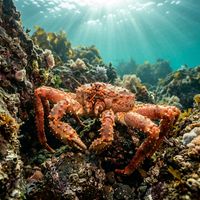
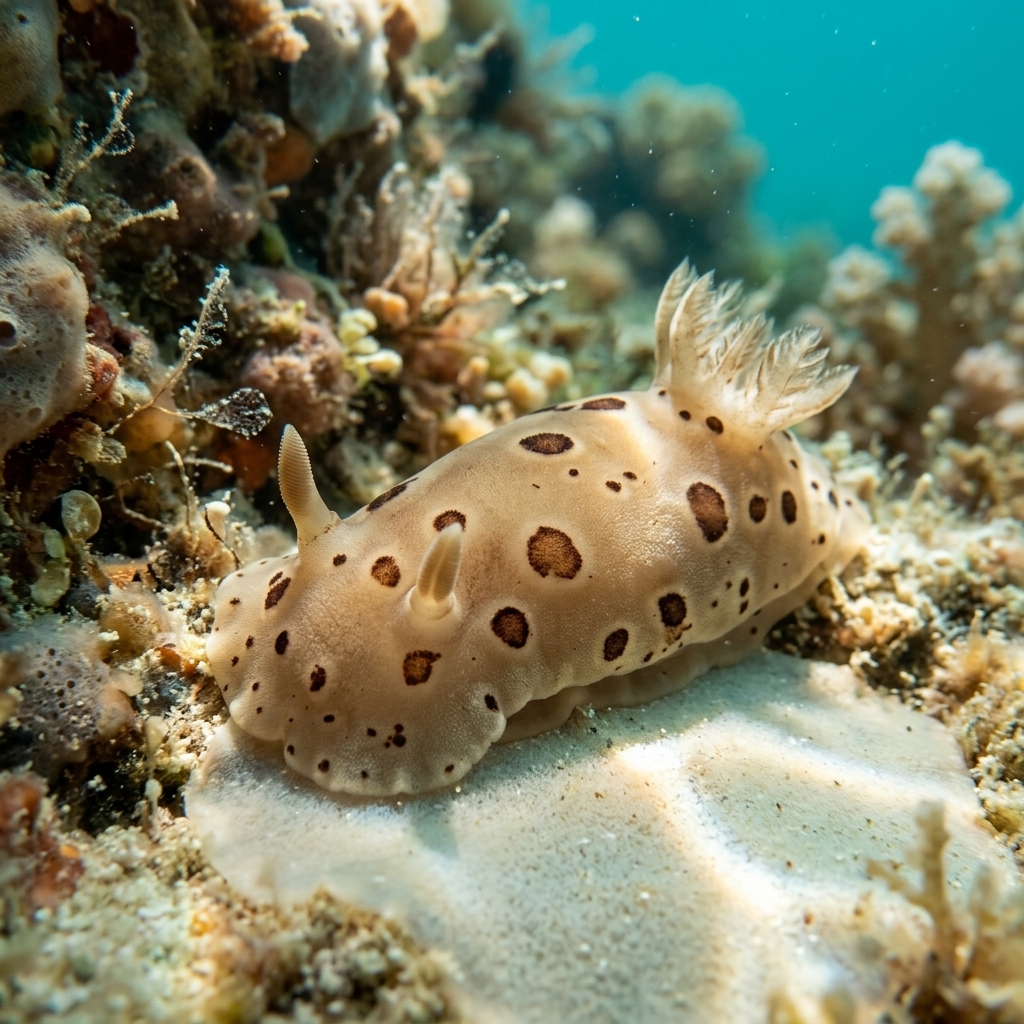
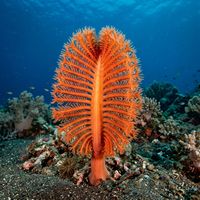
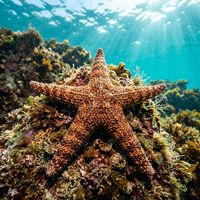
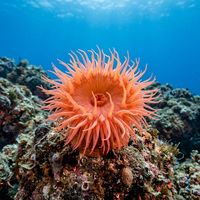
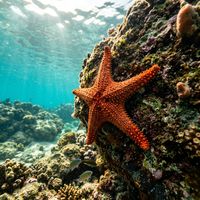
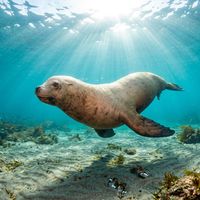
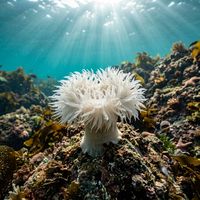
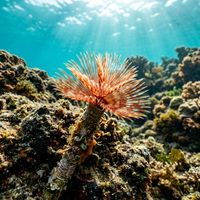
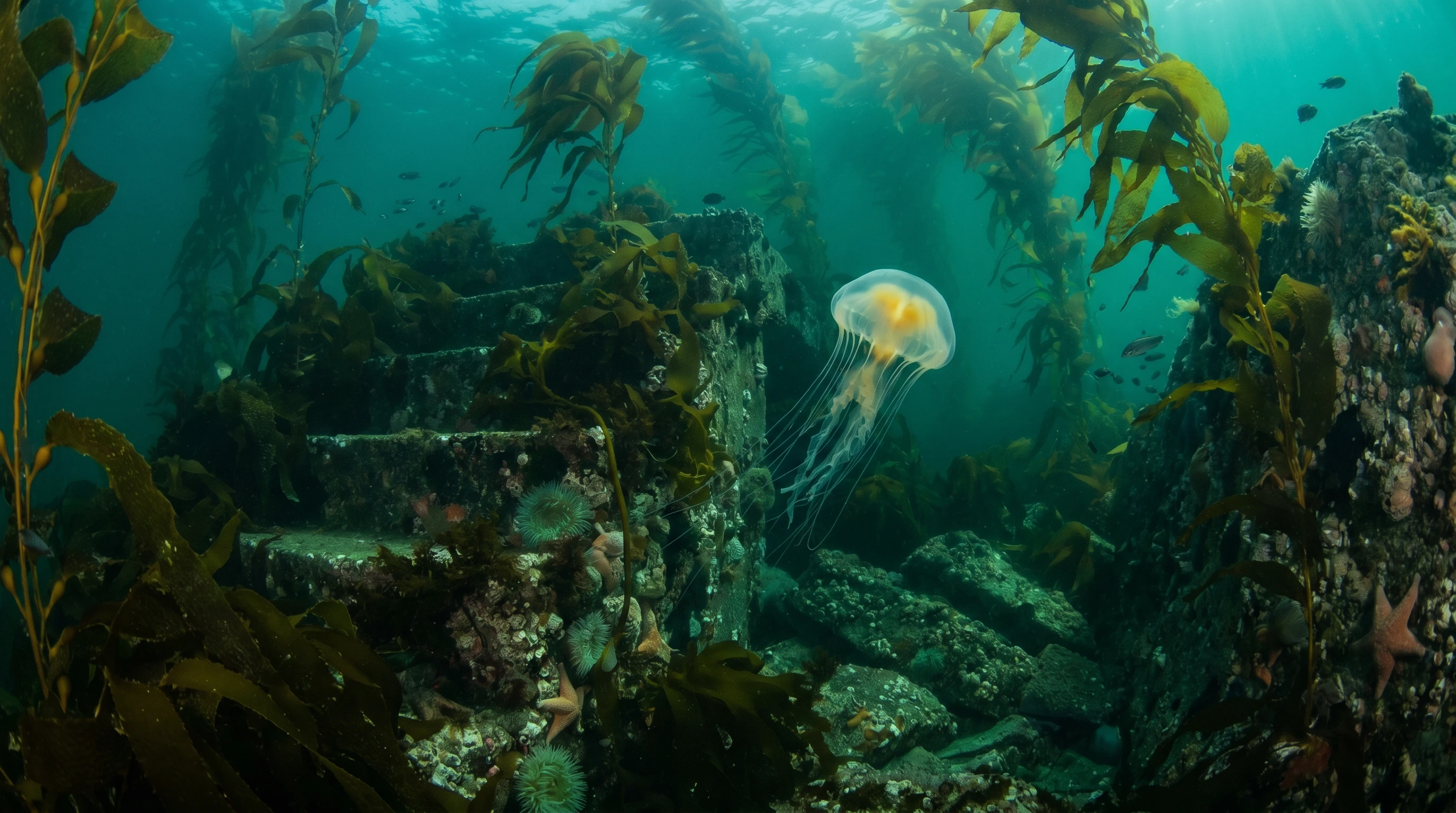
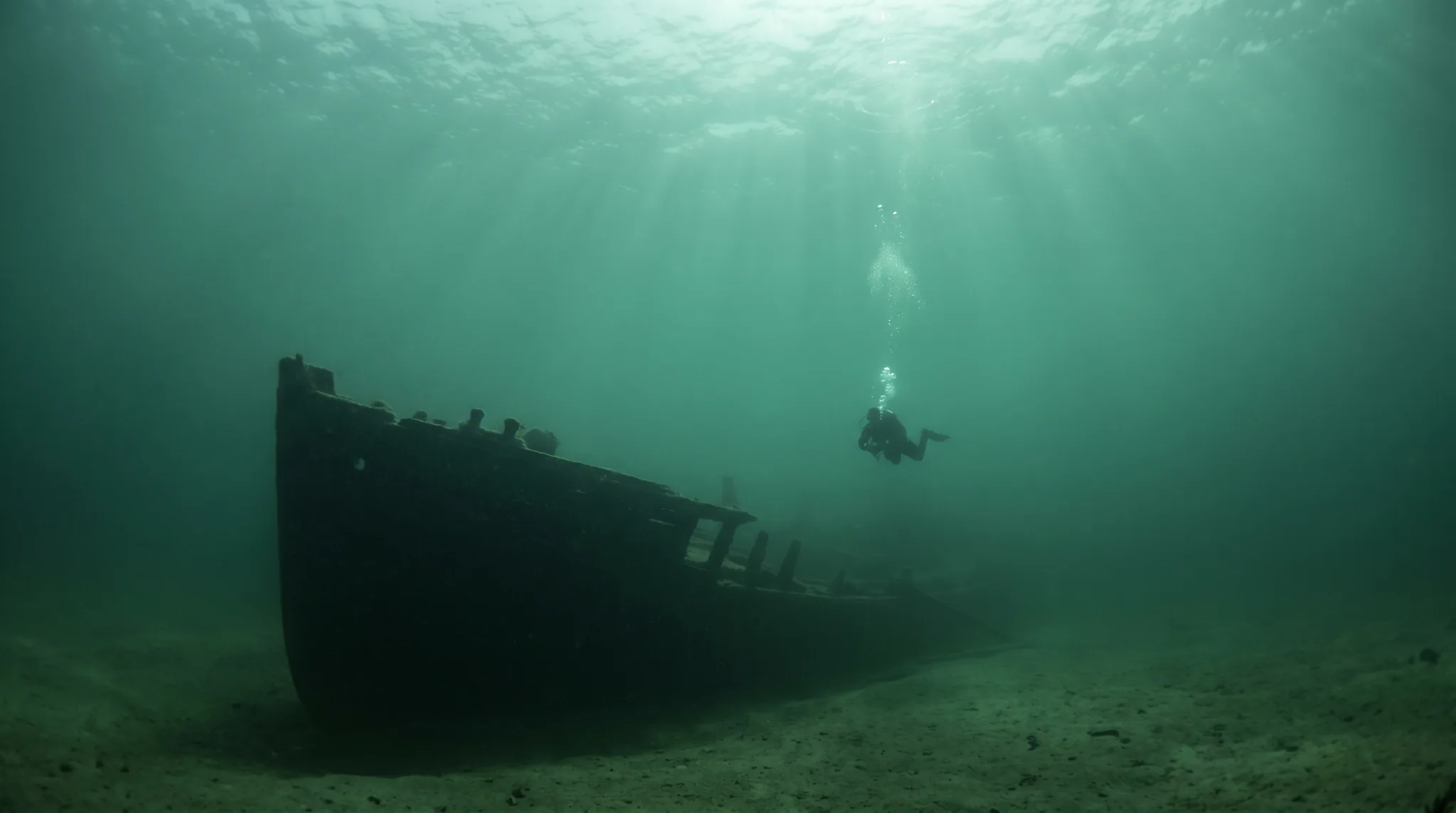
Port Hardy sits within Browning Pass, a single sub-area that contains all of the region's sites. The diving ranges from intermediate wall and drift dives to expert-only tidal runs, with Nakwakto Rapids among the fastest-current sites around. Snorkelling is also available at shallower spots. Invertebrate life dominates: Mottled Star, Sea Anemone, Plumose Anemone, King Crab and nudibranchs such as White-lined Dirona are observed across virtually every site. Harbor Seal is frequently encountered, with Humpback Whale, Orca and Steller Sea Lion appearing occasionally.
1 areas
Monthly water temperature across Port Hardy's sites, from satellite sea-surface data corrected for depth. The band shows the site-to-site spread.
Water is cold year-round, warming slightly through summer before dropping again into autumn. The warmer months from late spring through early autumn bring conditions most divers find comfortable and coincide with the peak of logged visits. Currents can be extreme at sites like Nakwakto Rapids, so timing dives to tidal windows is essential regardless of season.
14 more sites to explore

Cold-water drift diving through current-swept walls and reefs, with dense invertebrate life and occasional encounters with Humpback Whale and Orca.
Water temperature around Port Hardy ranges from about 7°C in February to 14°C in July, based on satellite sea-temperature data for its dive sites.
In the warm season (about 14°C) a 7mm or semi-dry suit is comfortable in Port Hardy; in the coldest months (about 7°C) step up to a drysuit.
Fin maps 16 sites in Port Hardy (12 scuba diving sites and 7 snorkelling spots, with some suited to both).
Across Port Hardy's dive sites, May, June, July, August and September are most often reported as the best months to visit.
Invertebrates are the constant highlight: Mottled Star, Sea Anemone, Plumose Anemone, King Crab, Orange Cup Coral and multiple nudibranch species including White-lined Dirona and Northern Leopard Dorid are observed across the sites. Copper Rockfish, Sculpin and Cod are regular fish encounters. Larger animals such as Harbor Seal, Steller Sea Lion, Humpback Whale and Orca have all been observed, though the latter three appear occasionally rather than reliably.
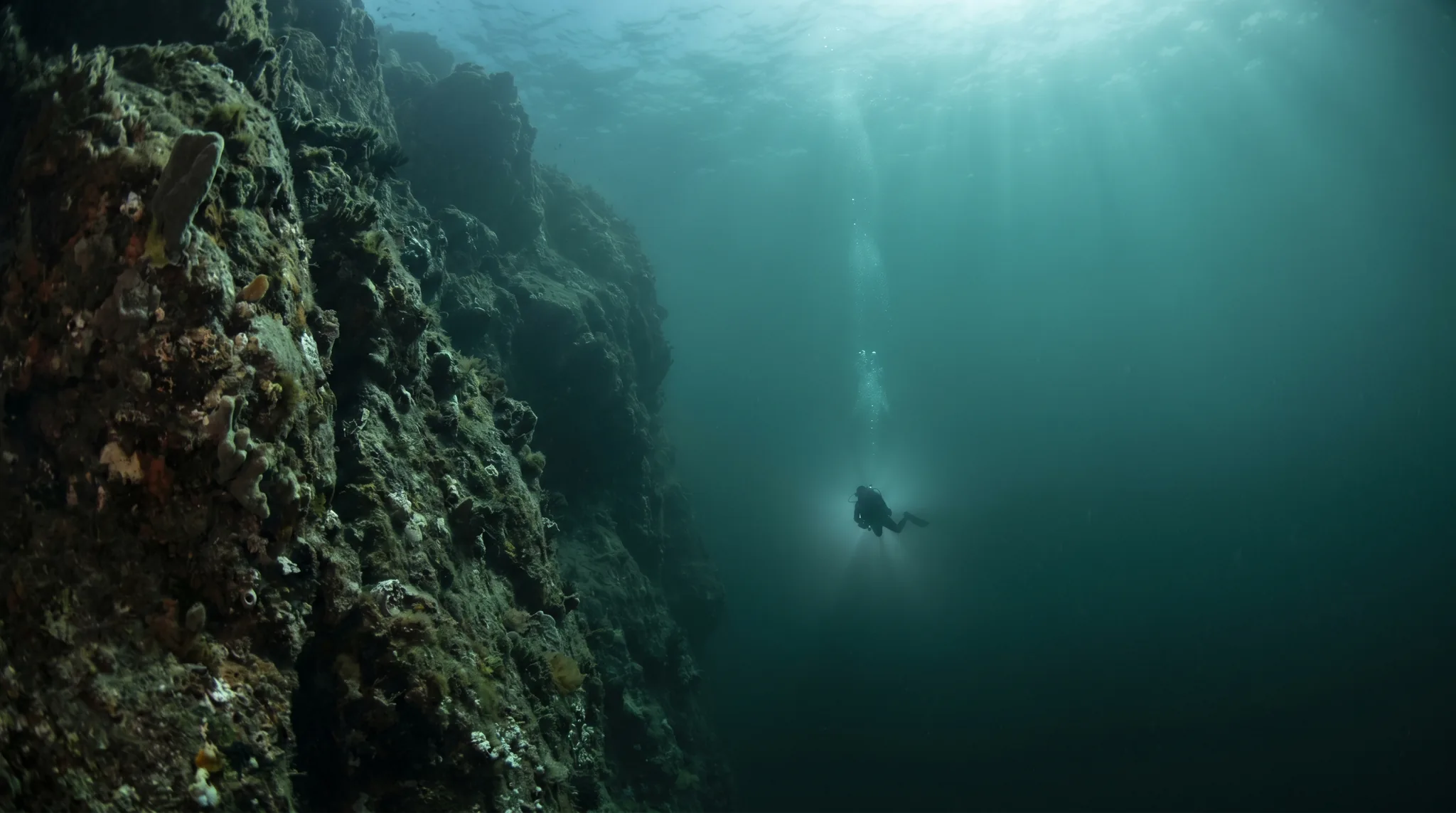
Most sites in Port Hardy are rated intermediate or expert. Browning Wall is accessible to intermediate divers comfortable with drift diving, while Nakwakto Rapids is strictly for experts due to extremely powerful tidal currents. Beginners would be better served building experience elsewhere before visiting. The snorkelling sites offer a gentler entry point to the area's marine life.
Both of the featured dive sites, Browning Wall and Nakwakto Rapids, require boat access. There are currently no listed dive operators based in the region, so visiting divers should arrange a liveaboard or charter before arriving. Shore-access snorkelling options exist within Browning Pass alongside the boat-access sites.
Browning Pass is the single sub-area containing all of Port Hardy's sites, and it offers a range of underwater terrain. Wall dives, reef dives and drift dives are all represented. Browning Wall offers a vertical reef face with manageable drift for intermediate divers, while Nakwakto Rapids delivers an intense high-current experience for experts only. Shallower reef sites serve snorkellers and less experienced divers.