Lithodidae spp.
King crabs are most commonly logged in British Columbia and Norway in cold 2-15 °C water. Here's where and when divers actually spot them.
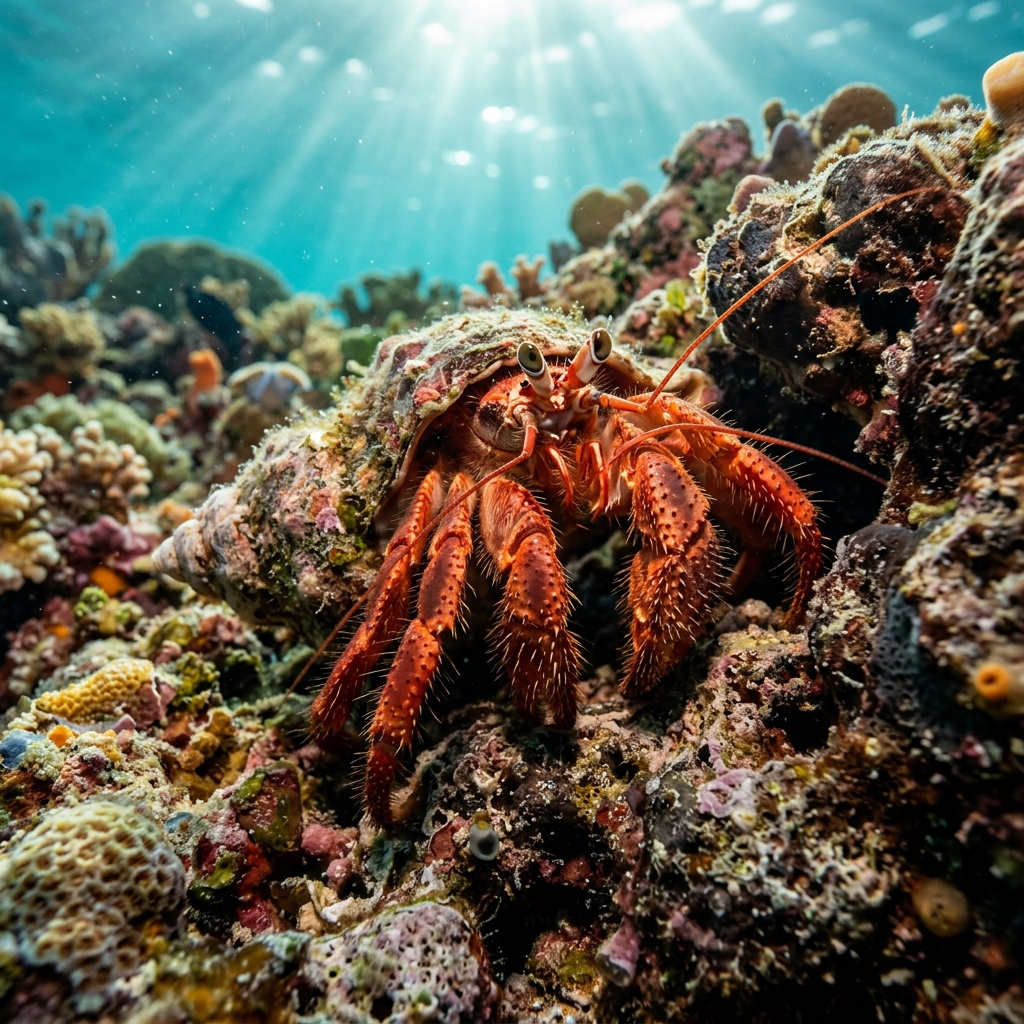
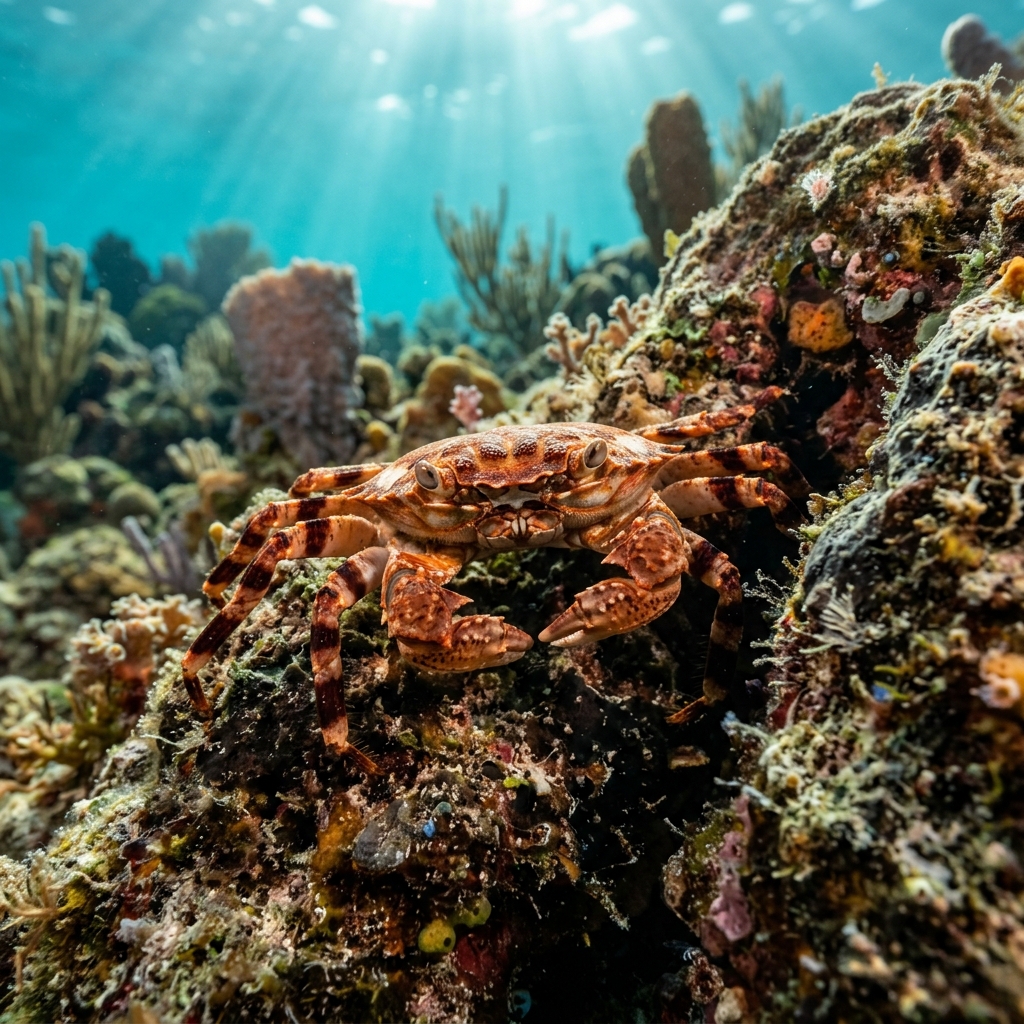
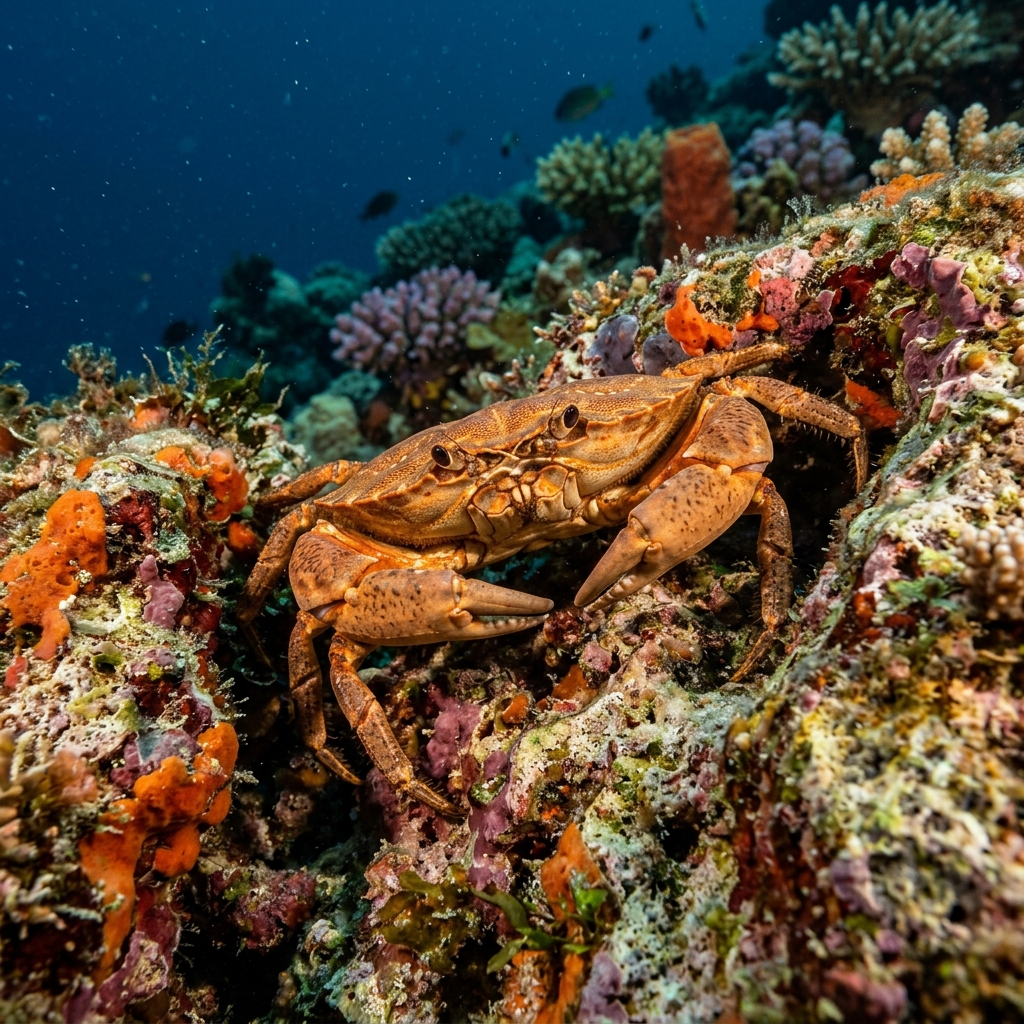
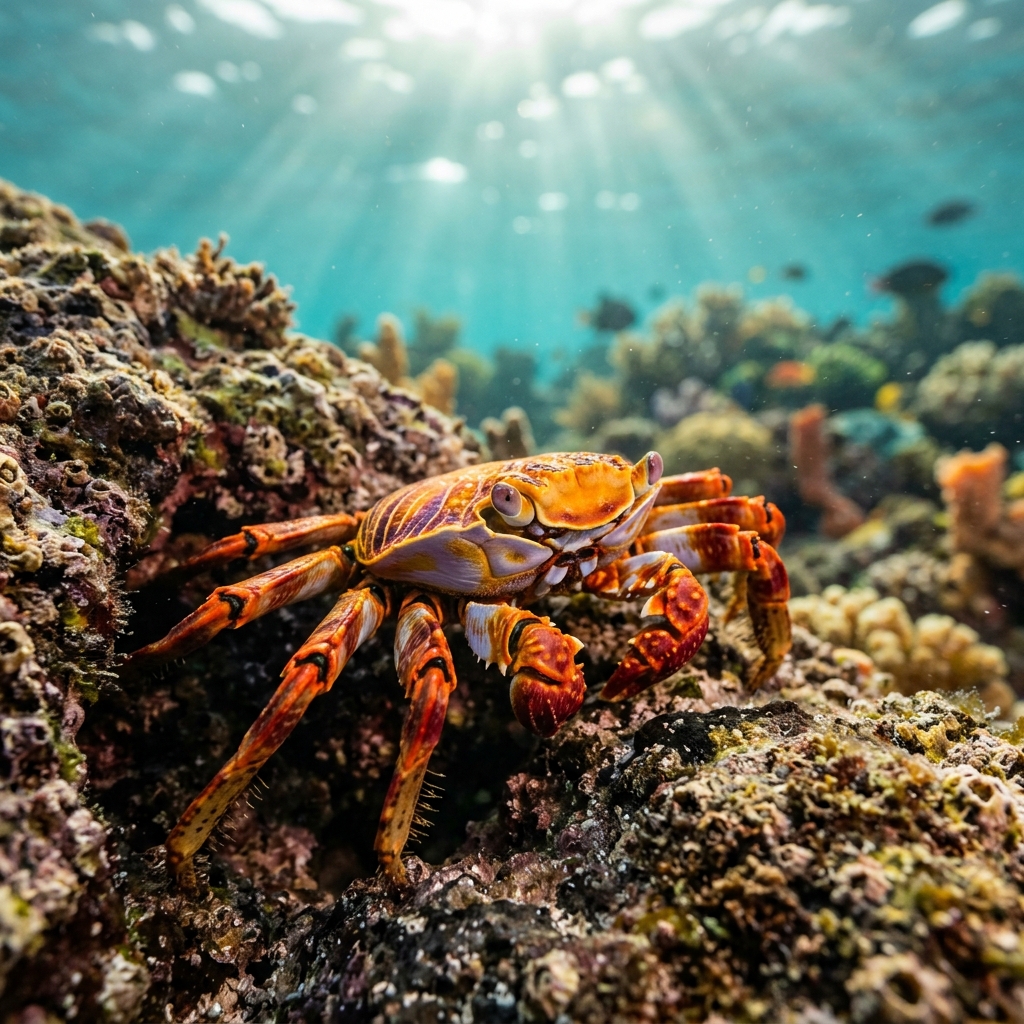
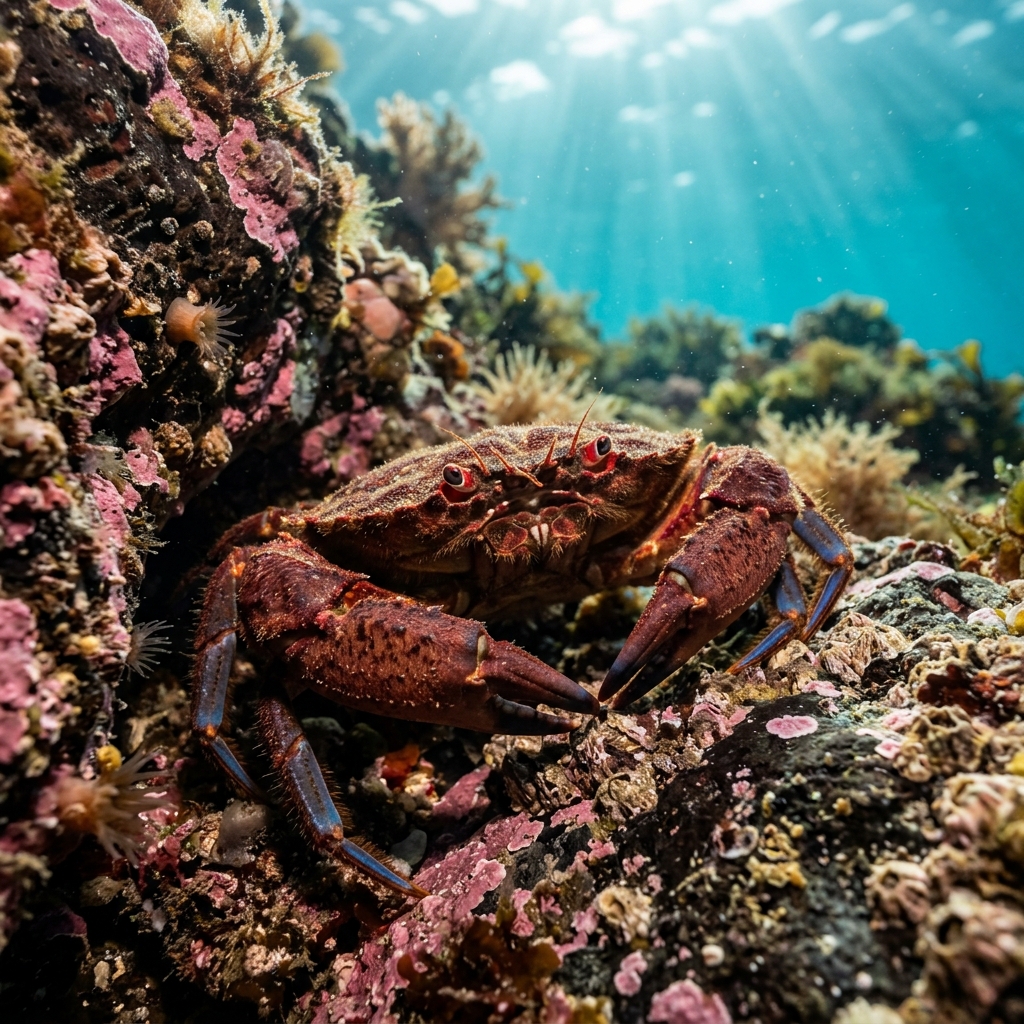
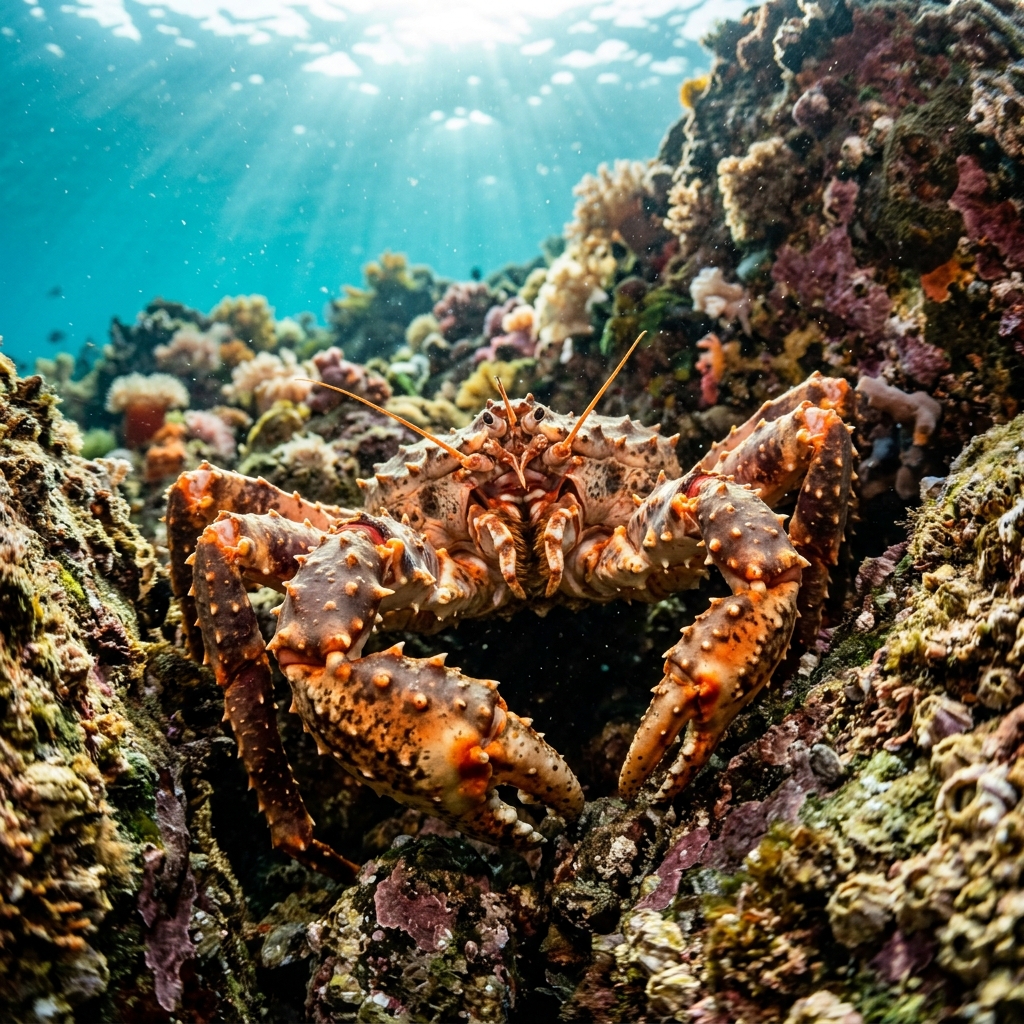
Spiny, roughly triangular carapace (the fused upper shell) covered in sharp tubercles (spiky projections) and legs that seem almost too long for the body give these animals an unmistakable silhouette. Colouration runs from deep brick-red and orange to purplish-brown depending on species, and the legs typically show banding. Unlike true crabs, lithodid king crabs appear to have only three pairs of walking legs visible rather than four, because the fourth pair is reduced and tucked under the body. Males are noticeably larger with proportionally bigger claws; females carrying eggs show a dense orange or yellow mass tucked beneath the folded abdomen.
King crabs are typically encountered walking slowly across rocky or sandy seafloor in cold, deeper water, often in the open rather than tucked into crevices. They tend to ignore divers at close range, going about their business foraging across the bottom, which gives you time to observe and photograph them without much reaction. Encounters are most often solitary animals rather than groups.
Despite their familiar crab shape, lithodids are thought to have evolved from hermit-crab ancestors, and their asymmetric abdomen is a vestige of the spiral shell-carrying anatomy of that lineage.
Northern Hemisphere sighting data concentrates between January and June, suggesting the colder months and early spring are the most productive window to look for them.
King crabs are most commonly logged in Canada and the United States, with British Columbia and the Pacific Coast standing out as the strongest regions; Nova Scotia and the Bay of Fundy add solid Atlantic encounters. European divers find them along Norway's coast, around the British Isles, and across the North Sea into Germany and Sweden, reflecting the family's preference for cold northern waters.
Mapping where King Crab is logged…
The strongest dive regions are British Columbia in Canada, the Pacific Coast of the United States, and Norway in Europe. Canadian Atlantic sites around Nova Scotia and the Bay of Fundy also produce regular sightings, and populations are logged across the British Isles, Sweden, and northern Germany.
Sighting data from Northern Hemisphere sites concentrates in January through June, so the colder months of winter and early spring appear to be the most reliable window. Their preferred water temperature range of roughly 3 to 16 °C means that cold-season diving in northern regions aligns well with their activity.
Look for the spiny, triangular carapace, very long banded legs, and brick-red to orange colouration. The apparent three pairs of walking legs (the fourth is hidden) is a useful distinguishing trait compared with true crabs. They're usually found walking on cold rocky or sandy bottoms at depth.
Size varies across the Lithodidae family, but some species are among the largest crustaceans a diver will encounter, with leg spans reaching well over a metre in bigger individuals. Males grow considerably larger than females.
No, king crabs are not considered dangerous to divers. Their claws are powerful and built for crushing prey, so it's sensible not to handle them, but they show no aggressive behaviour towards people and will generally ignore you.
Lithodid king crabs evolved from hermit-crab-like ancestors, and a remnant of that ancestry is a reduced fourth pair of walking legs that folds out of sight beneath the carapace. This leaves only three visible pairs, which is one of the quickest ways to confirm you're looking at a king crab rather than a true crab.
Site and sighting data is aggregated from diver logs, iNaturalist and GBIF. For taxonomy and conservation status:
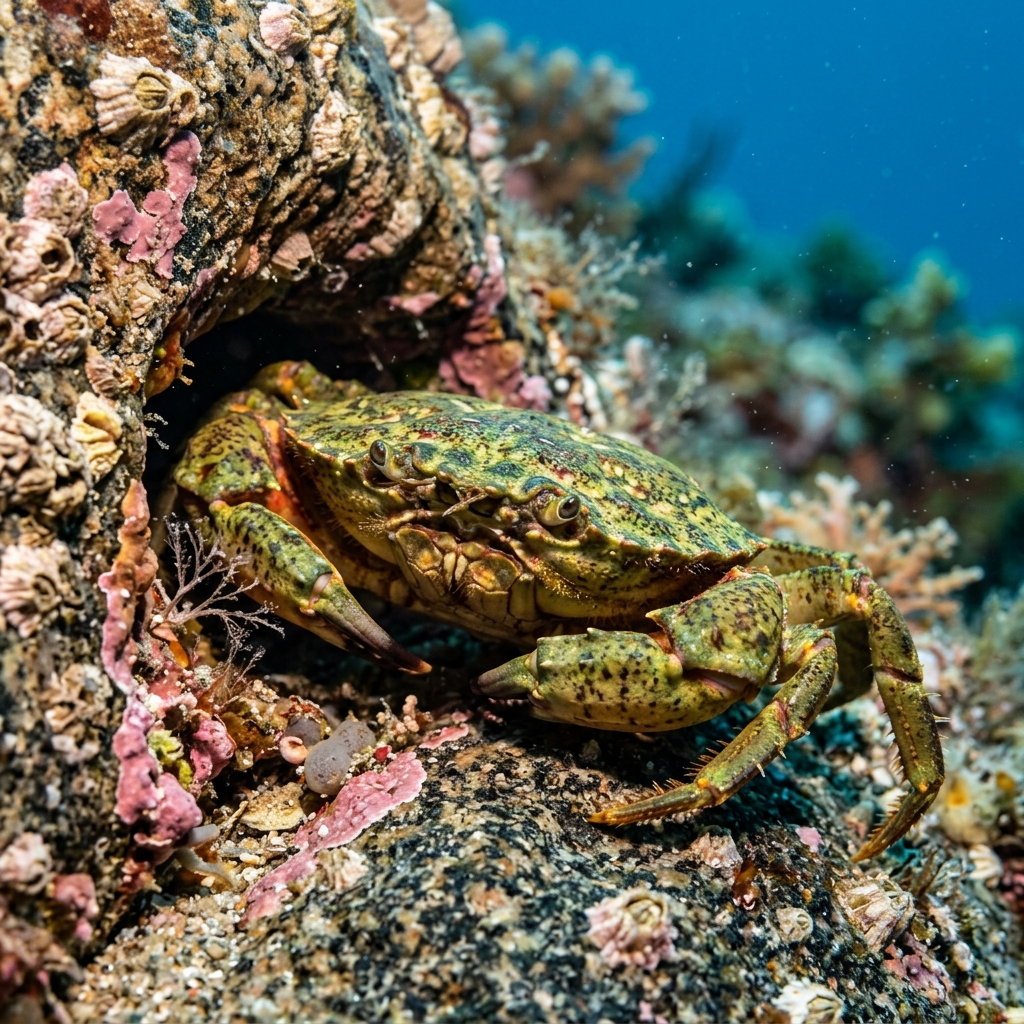
European Green Crab
2,469 sites