Eumetopias jubatus
Spot Steller Sea Lions along British Columbia and the US Pacific Coast in waters from 4-14 °C. Best sightings Jan, Mar and Jun, Nov.
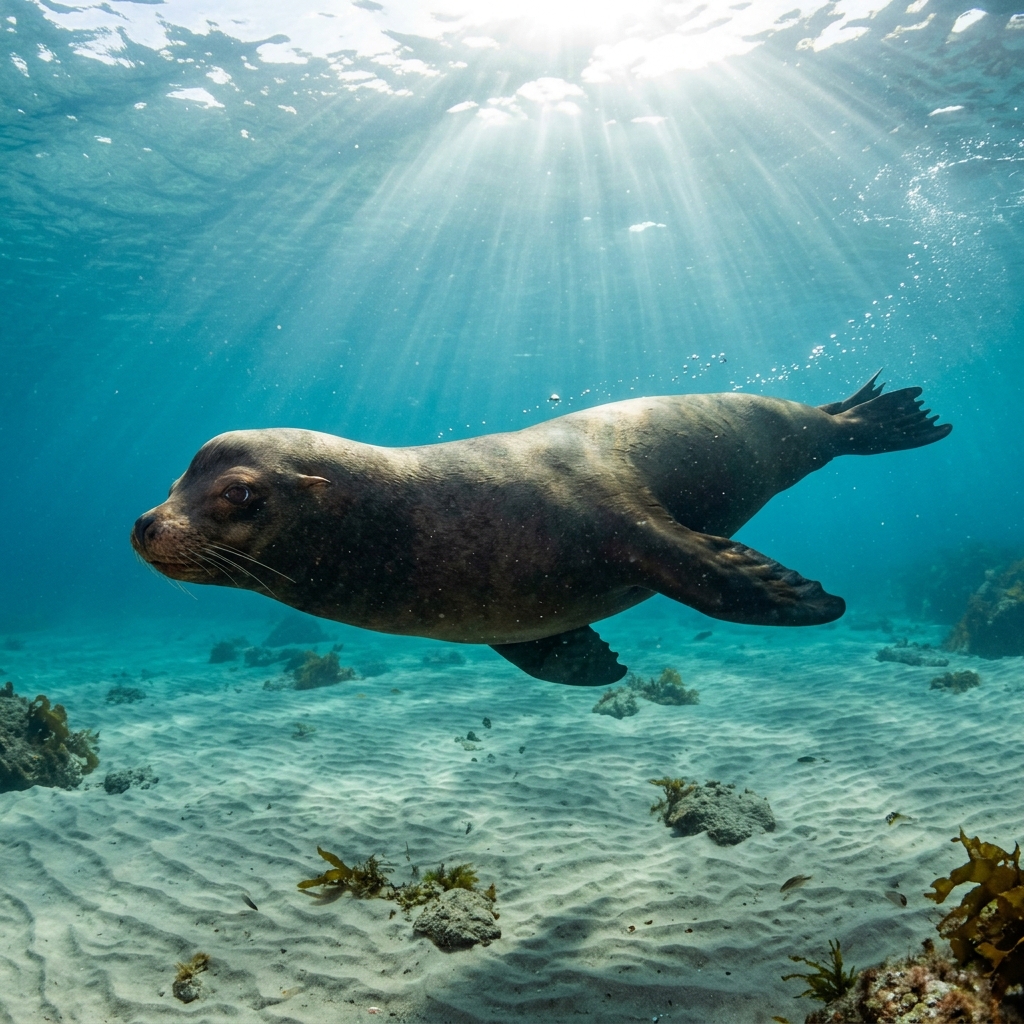
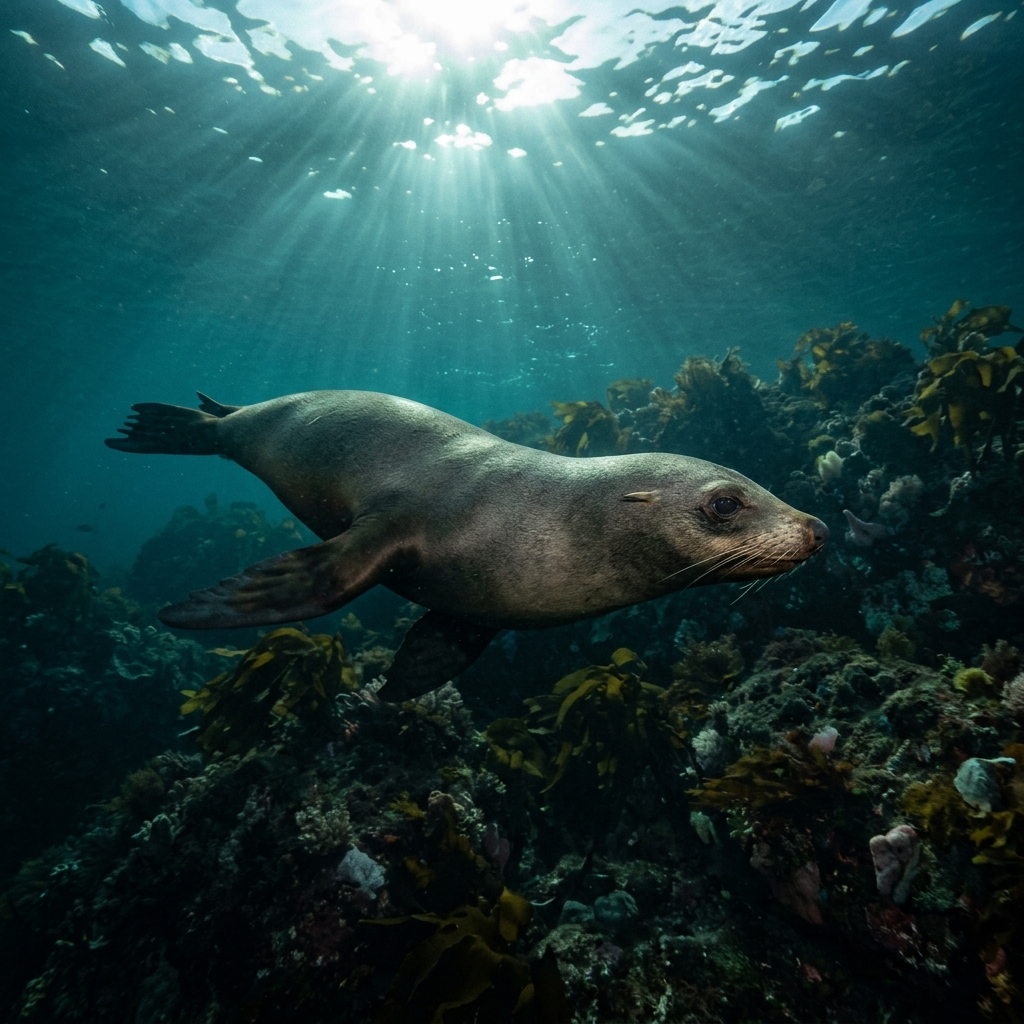
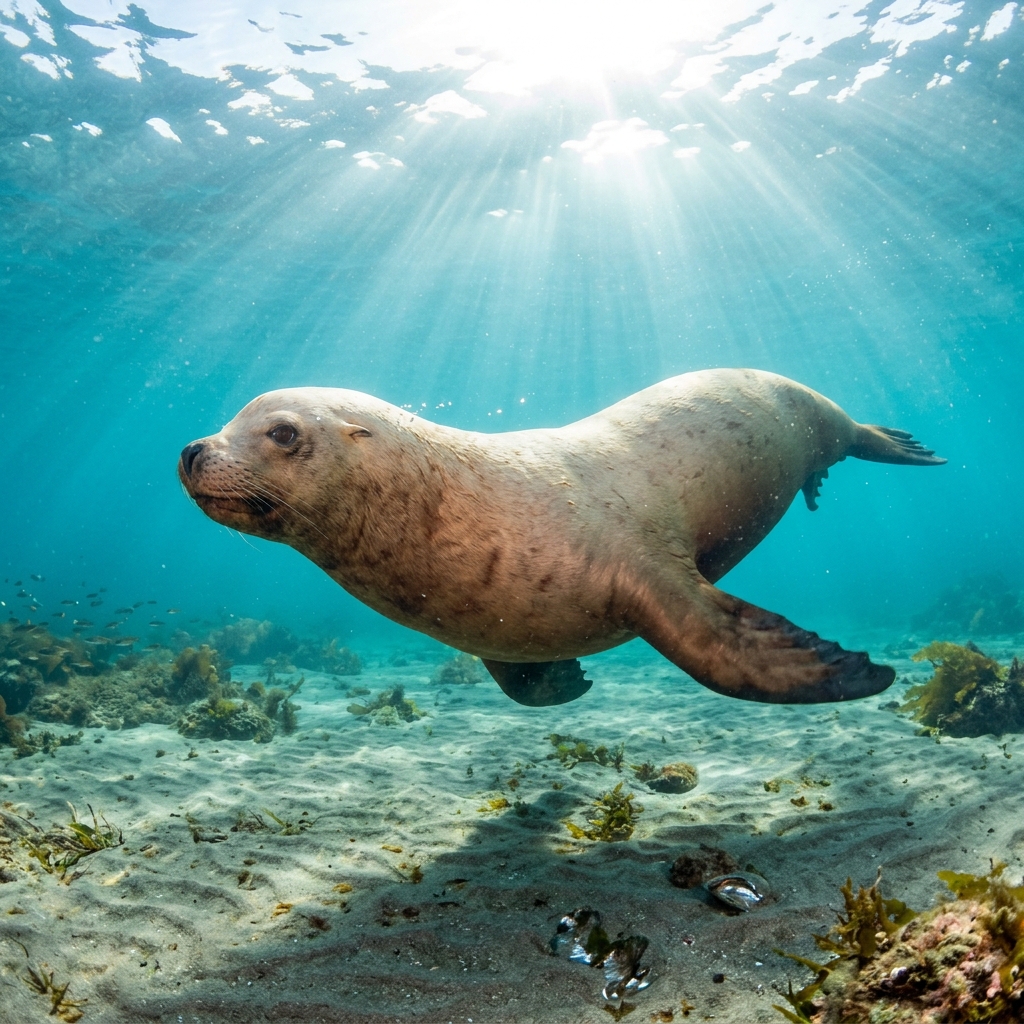
Pale golden to tawny brown, these are very large animals, adults look almost bear-sized in the water, with a blunt, wide-muzzled head and thick, muscular neck. Males are noticeably bull-like, with a heavily maned neck and chest that dwarfs their body compared to the slender, smaller females. They move with surprising agility underwater, using their large front flippers to 'fly' through the water column much like a sea bird in flight.
Most encounters happen while they are foraging or resting near rocky reefs and kelp; juveniles in particular are notoriously curious and will spiral around divers, blow bubbles, and make mock charges that are more play than threat. Adults can be more cautious and may simply observe from a distance before deciding whether to engage. Give males a wide berth near haul-out sites, loud barking and raised-head posturing are clear signals to back off.
Males can reach roughly 230 cm and weigh over a tonne, making them the largest of all sea lions and one of the bulkiest pinnipeds in the North Pacific.
In the Northern Hemisphere, sightings concentrate from January through March and again from June through November, suggesting a lull around April and May. These animals inhabit cold water, typically 4 to 14 °C, so cold-water gear is essential year-round.
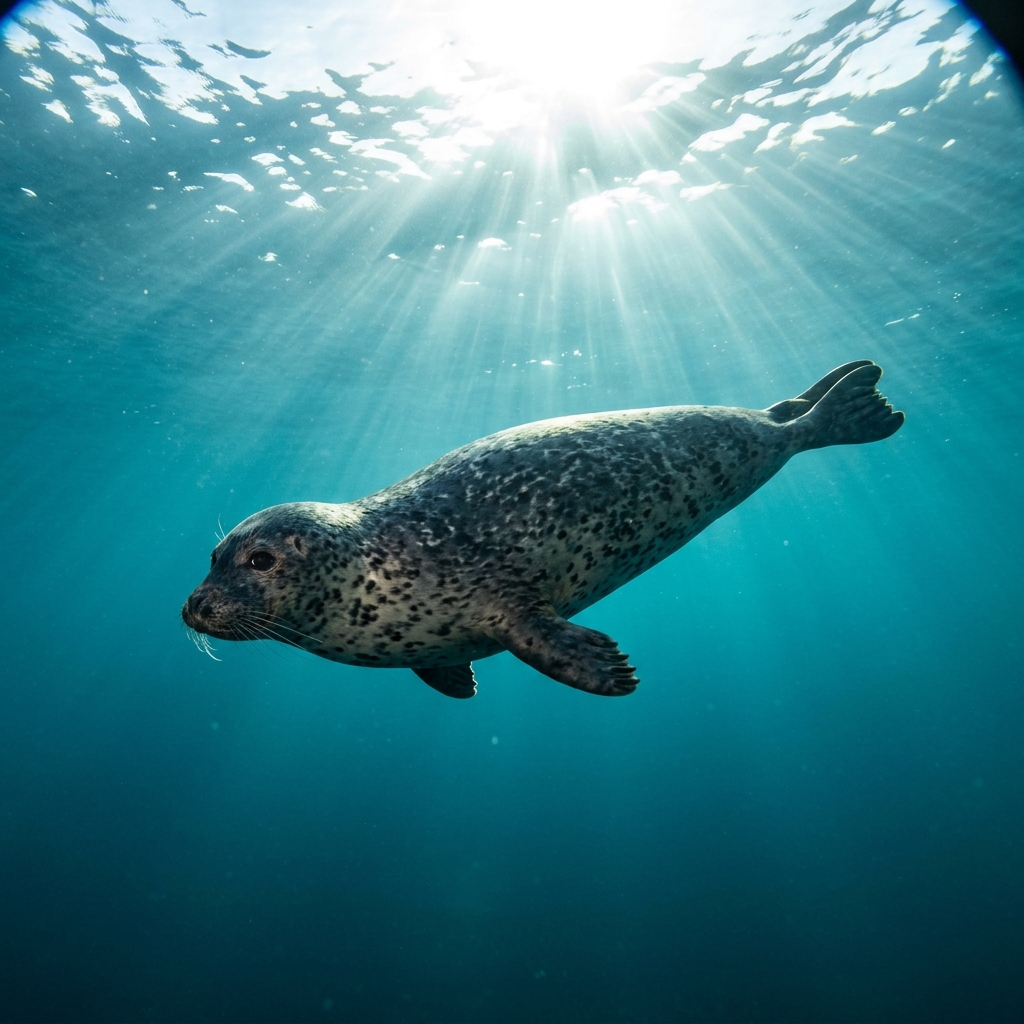
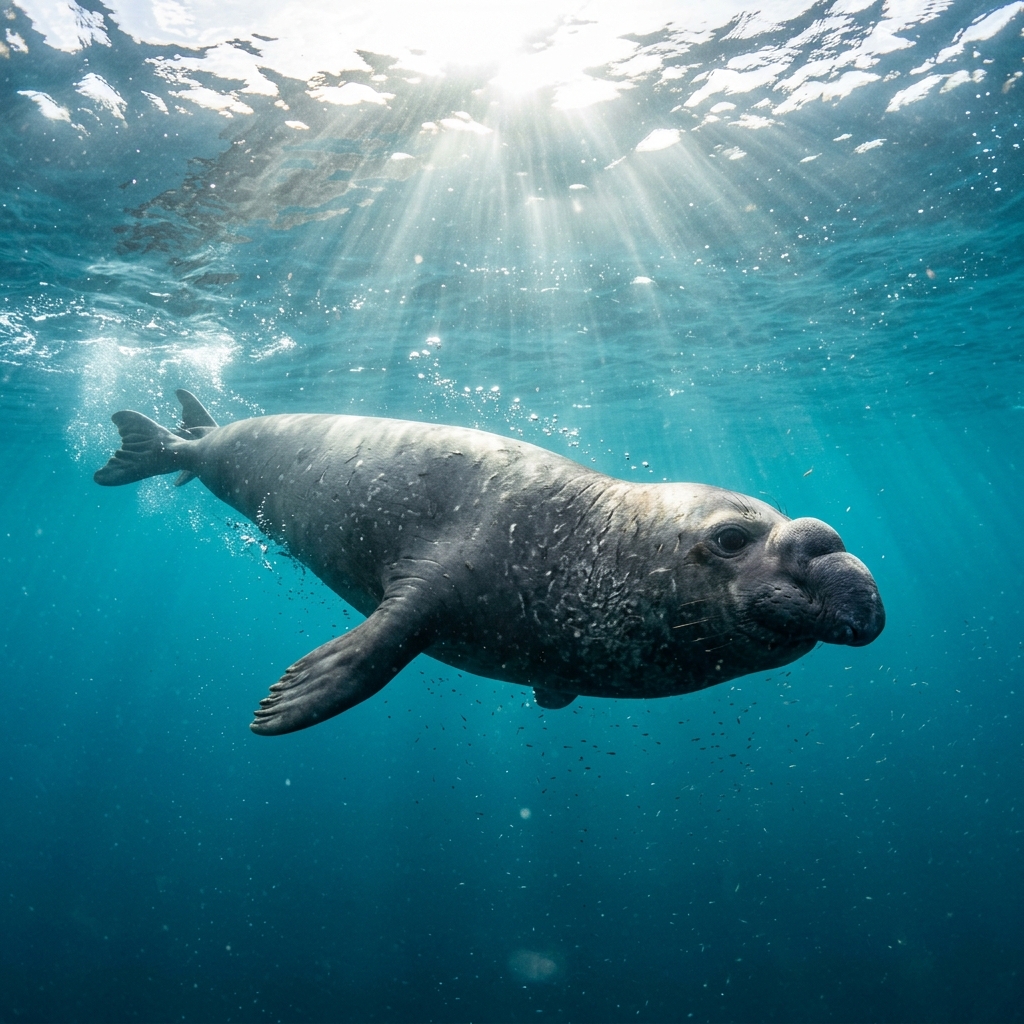
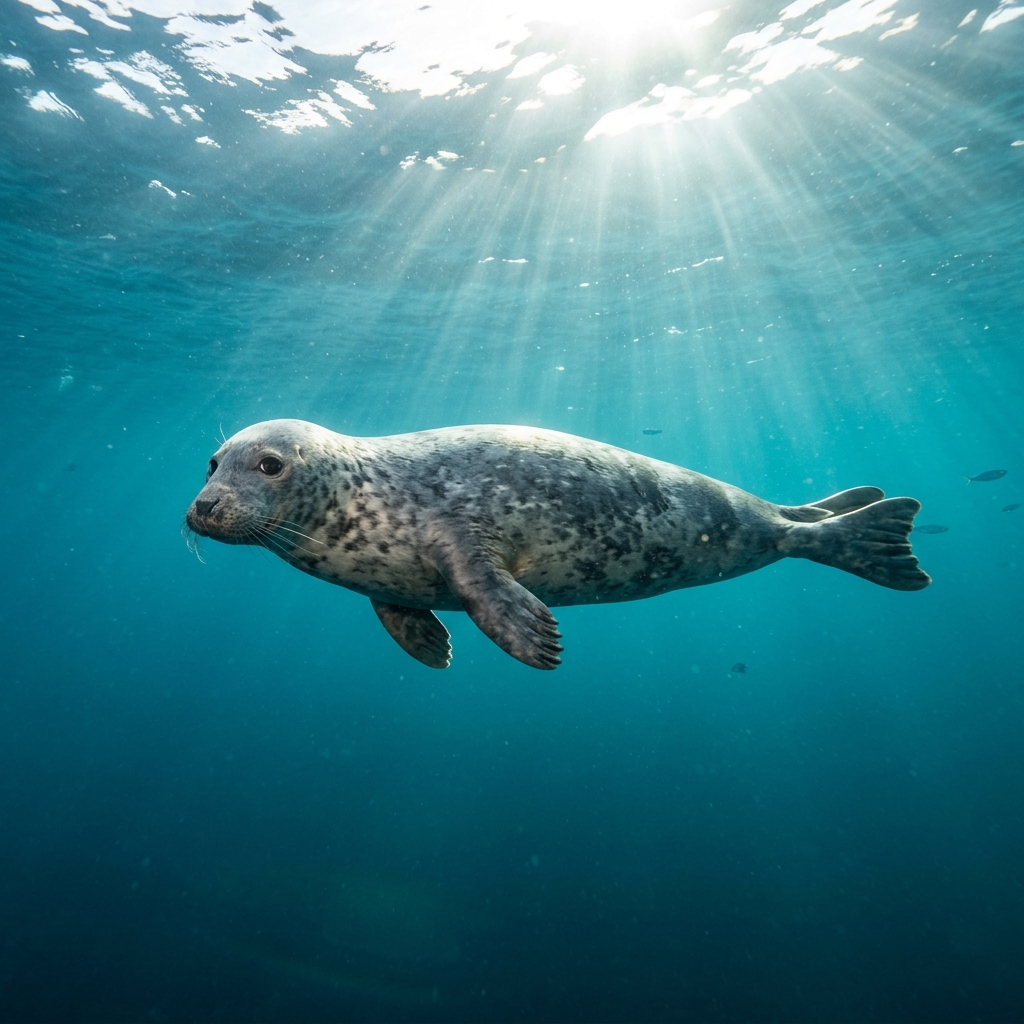
Reef neighbours a diver could mistake it for. Use the identification notes above to tell them apart.
The vast majority of sightings come from the British Columbia Coast and the US Pacific Coast, making these two regions by far the strongest options for an encounter. Smaller numbers are logged around Newfoundland, Alaska, and the Russian Far East. Sightings in places like the British Virgin Islands and Iceland are likely range-model predictions rather than reliable encounter spots.
Mapping where Steller Sea Lion is logged…
The strongest diving is along the British Columbia Coast in Canada and the US Pacific Coast, where they are most consistently logged by divers. Smaller populations are encountered around Newfoundland, Alaska, and the Russian Far East. Stick to BC and the US Pacific for the best realistic chance of a sighting.
Sightings in the Northern Hemisphere concentrate from January to March and from June through November. There appears to be a quieter window around April and May, though the data covers a modest number of timed observations so results may vary by site.
Adults typically reach around 230 cm in length. Males are dramatically larger than females, a large bull can weigh well over a tonne, while females are considerably smaller and lighter. Underwater, even the females look impressively large compared to most marine life you will encounter.
Steller Sea Lions are noticeably larger and paler, tawny to golden-brown rather than the darker chocolate-brown of California Sea Lions. Males have a lion-like mane around the neck and a massive, block-like head. California Sea Lions have a more domed forehead (sagittal crest) that becomes prominent in adult males. Habitat overlap is limited but does occur along the US Pacific Coast.
They are not considered dangerous to divers, but their size and power demand respect. Juveniles are playful and curious; large males near haul-out or breeding sites can be territorial. Loud vocalisations or aggressive posturing are cues to increase your distance calmly and avoid making sudden movements.
They are listed as Near Threatened. The western population in Alaska and Russia declined sharply in the latter half of the 20th century, though the eastern population along the BC and US Pacific coast has shown recovery. Disturbance of colonies remains a concern, so divers should observe from a distance and never approach haul-out sites.
Site and sighting data is aggregated from diver logs, iNaturalist and GBIF. For taxonomy and conservation status:
Long-nosed Fur Seal
347 sites