Metridiidae
Find plumose anemones in the cold waters of Nova Scotia, Northern Germany, and Scotland. A year-round presence in 7-16 °C seas across the North Atlantic.
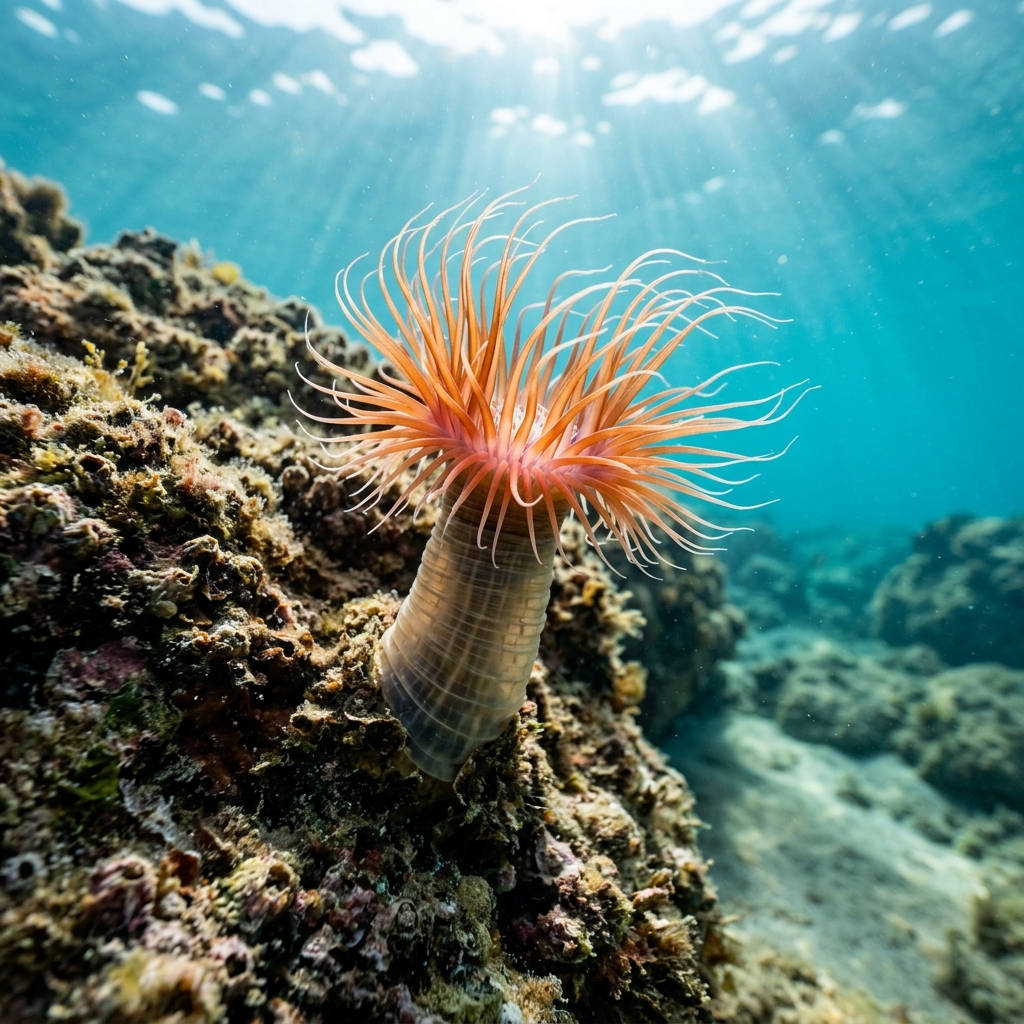
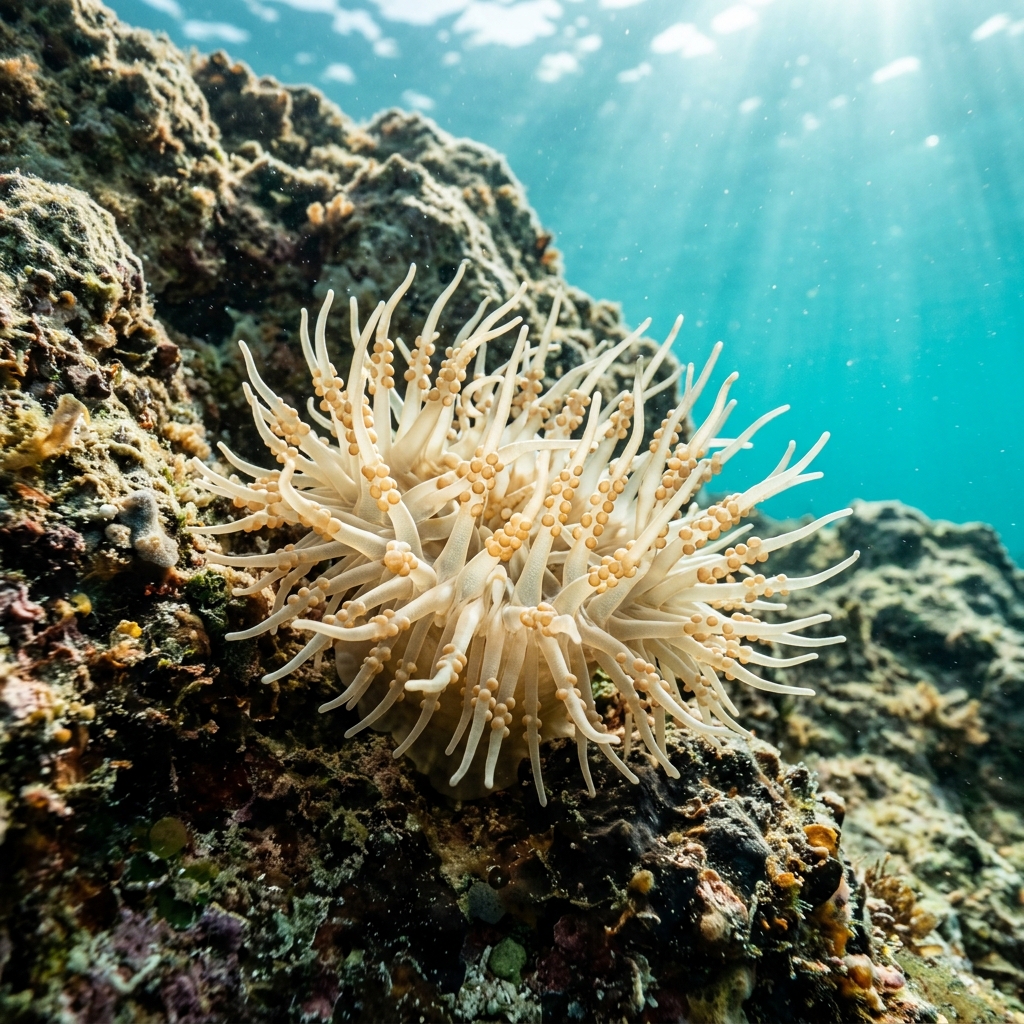
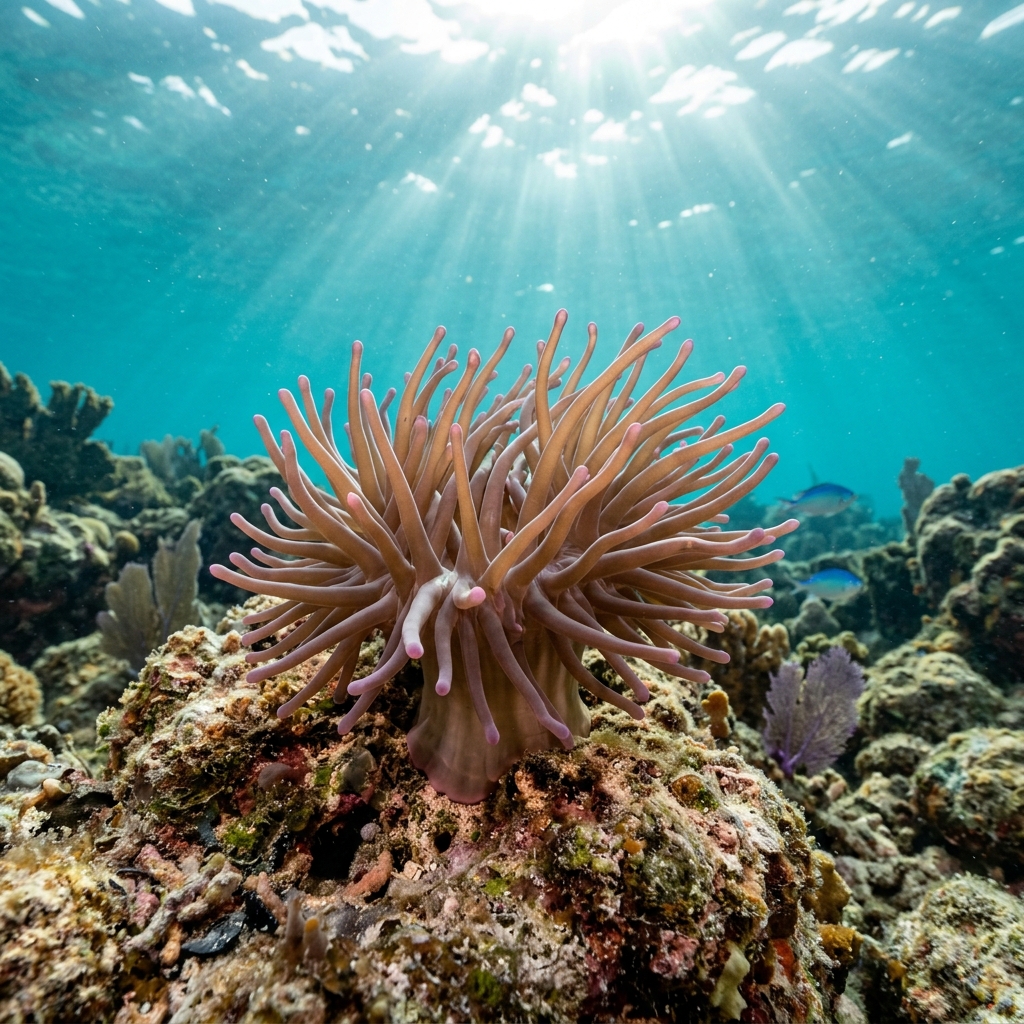
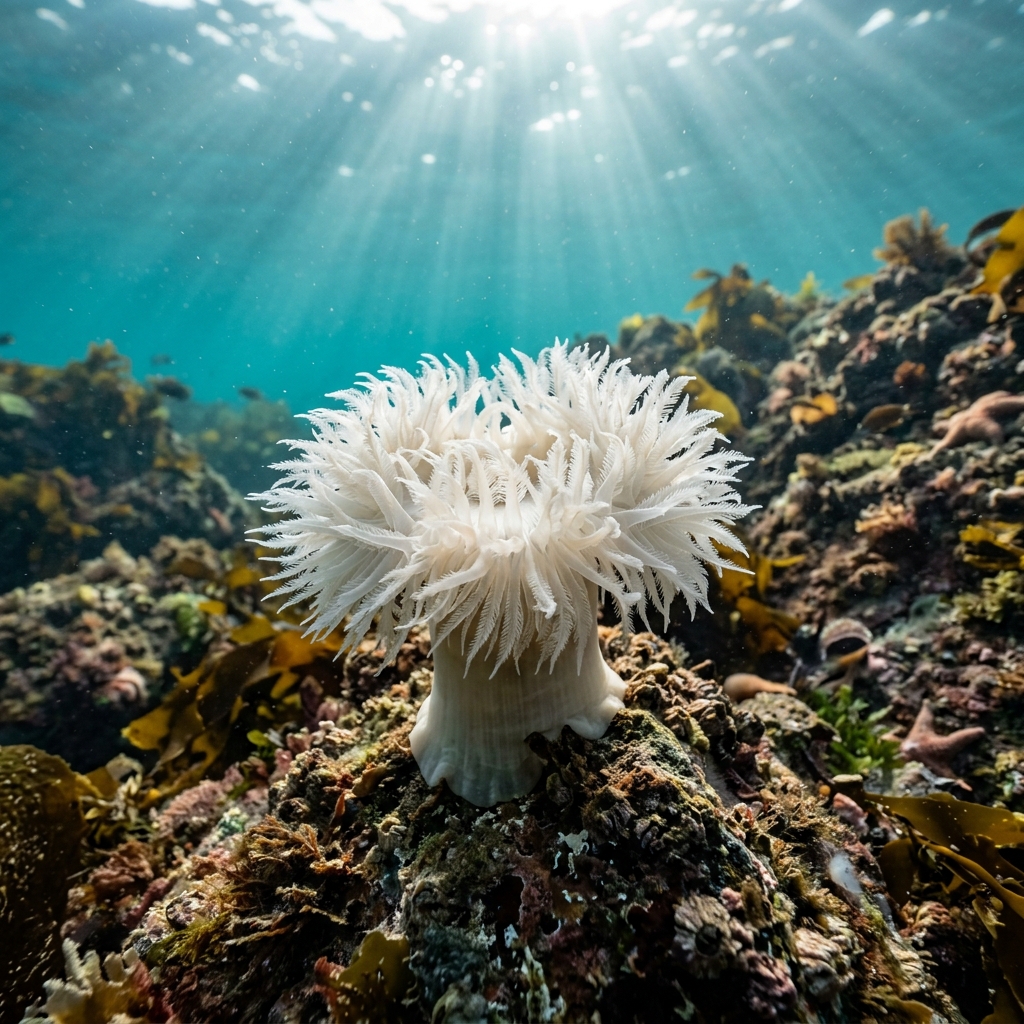
Plumose anemones are named for their feathery appearance: hundreds of fine, hair-like tentacles radiate from the column top, giving the animal a fluffy, almost cloud-like silhouette when fully expanded. Colour ranges from bright white to orange and occasionally pale brown, making white colonies on dark rock walls especially striking. The column can stretch to 10 cm or more tall, giving them a distinctly tall, cylindrical profile compared to most squat anemones. Look for dense aggregations carpeting vertical rock faces and kelp holdfasts in cold, current-swept water.
When undisturbed, plumose anemones hold their tentacles fully fanned out to filter particles and small plankton from the current, which is when they look their best for photography. A diver passing close or stirring up sediment causes the column to contract rapidly into a compact, wrinkled blob, so a slow, hovering approach rewards patience. They tend to colonise high-current walls and overhangs where food delivery is constant, so look down as well as up on a wall dive.
Plumose anemones can reproduce by laceration, as the adult moves slowly across a surface it leaves behind tiny fragments of its base tissue that each grow into a new individual, allowing a single anemone to seed an entire rock face over time.
Sighting data does not show a concentrated season, so plumose anemones can be treated as a year-round encounter across their range. Their observed water-temperature niche of roughly 8 to 16 °C matches the persistent cold of North Atlantic and North Sea dive sites in all seasons.
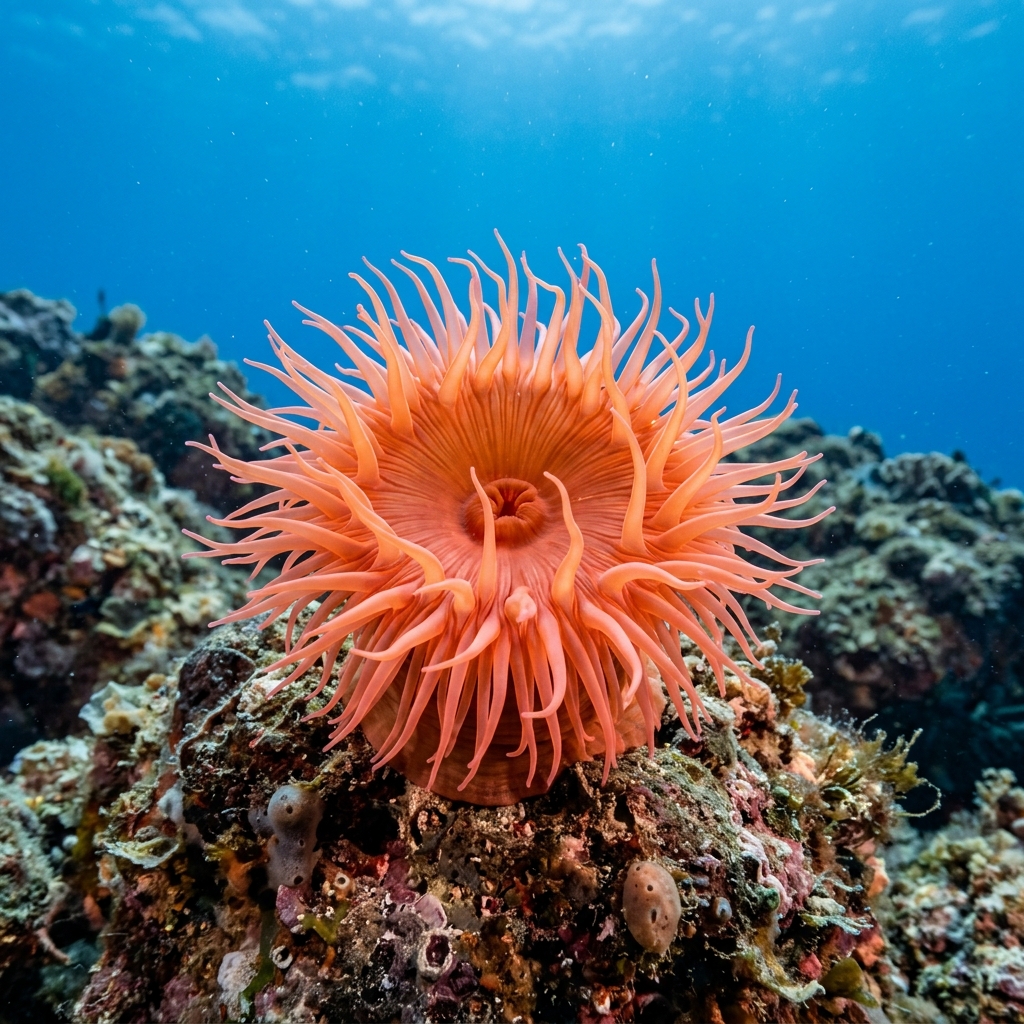
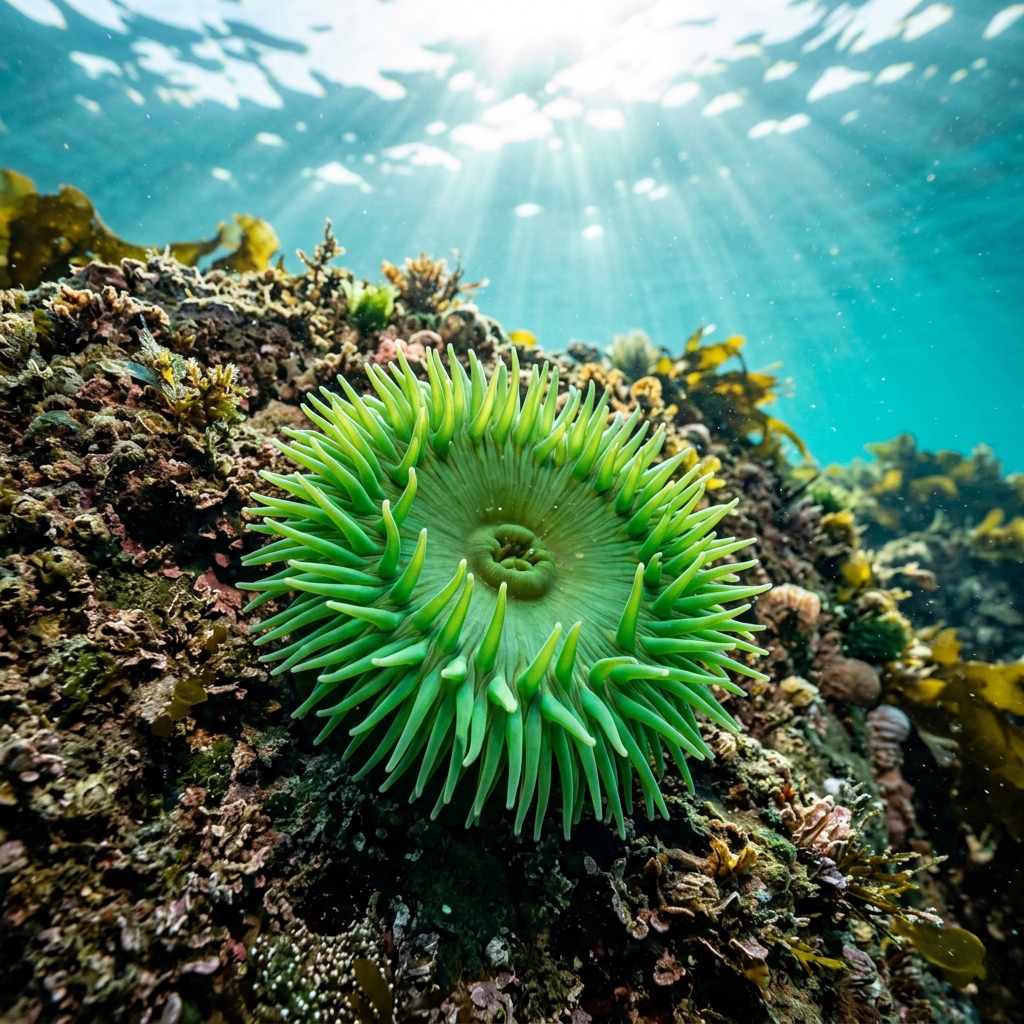
Reef neighbours a diver could mistake it for. Use the identification notes above to tell them apart.
Plumose anemones are most reliably logged across the United Kingdom, Canada, and the United States, with particularly strong site coverage in Nova Scotia and the Bay of Fundy, Northern Germany, and Brittany and Normandy. Ireland, Sweden, Norway, and Denmark also have widespread records, making the entire North Atlantic and North Sea temperate zone prime territory. Scotland's west coast and the south coast of England are well-represented UK options.
Mapping where Plumose Anemone is logged…
The strongest concentrations are logged in Nova Scotia and the Bay of Fundy in Canada, Northern Germany, Brittany and Normandy in France, and along the south coast of England and Scotland's west coast. Ireland, Norway, Sweden, and Denmark also have well-documented populations, making the North Atlantic and North Sea the heartland of this family.
There is no defined peak season in the data, and plumose anemones are considered a year-round encounter. Their preferred water temperature of 8 to 16 °C matches the cold temperate seas of the North Atlantic across all seasons, so timing your dive around current and visibility conditions matters more than the month.
Look for the distinctive feathery column of fine, hair-like tentacles that gives the animal its name. Colour is usually white or orange, and the tall cylindrical body sets it apart from flatter anemone types. They are commonly found in dense colonies on current-swept vertical rock faces in cold water.
The column of a plumose anemone can extend to around 10 cm in height when fully open, with the spread of tentacles adding considerably to its apparent size underwater. In high-current sites with good food supply, individuals can appear quite imposing compared to smaller anemone species on the same reef.
One of their notable tricks is asexual reproduction by basal laceration: as an individual moves slowly across a surface, it leaves behind tiny fragments of tissue that develop into new anemones. This allows a single animal to colonise a large patch of rock over time, producing the dense carpets divers often encounter on walls and boulders.
Site and sighting data is aggregated from diver logs, iNaturalist and GBIF. For taxonomy and conservation status:
Cerianthus
1,879 sites