Actiniaria
Sea anemones thrive in cold temperate waters from Brittany to British Columbia. Find out where to see them and how to tell species apart underwater.
Safety warning
Anemone tentacles carry specialised stinging cells (nematocysts) that fire on contact. For most divers the result is a mild skin irritation or localised rash, but sensitive individuals can have a stronger reaction. The simple rule is never to touch them: even a brush from a wetsuit glove can damage both you and the animal. If you do make contact, rinse the area with seawater rather than fresh water, and avoid rubbing, which can trigger unfired cells.
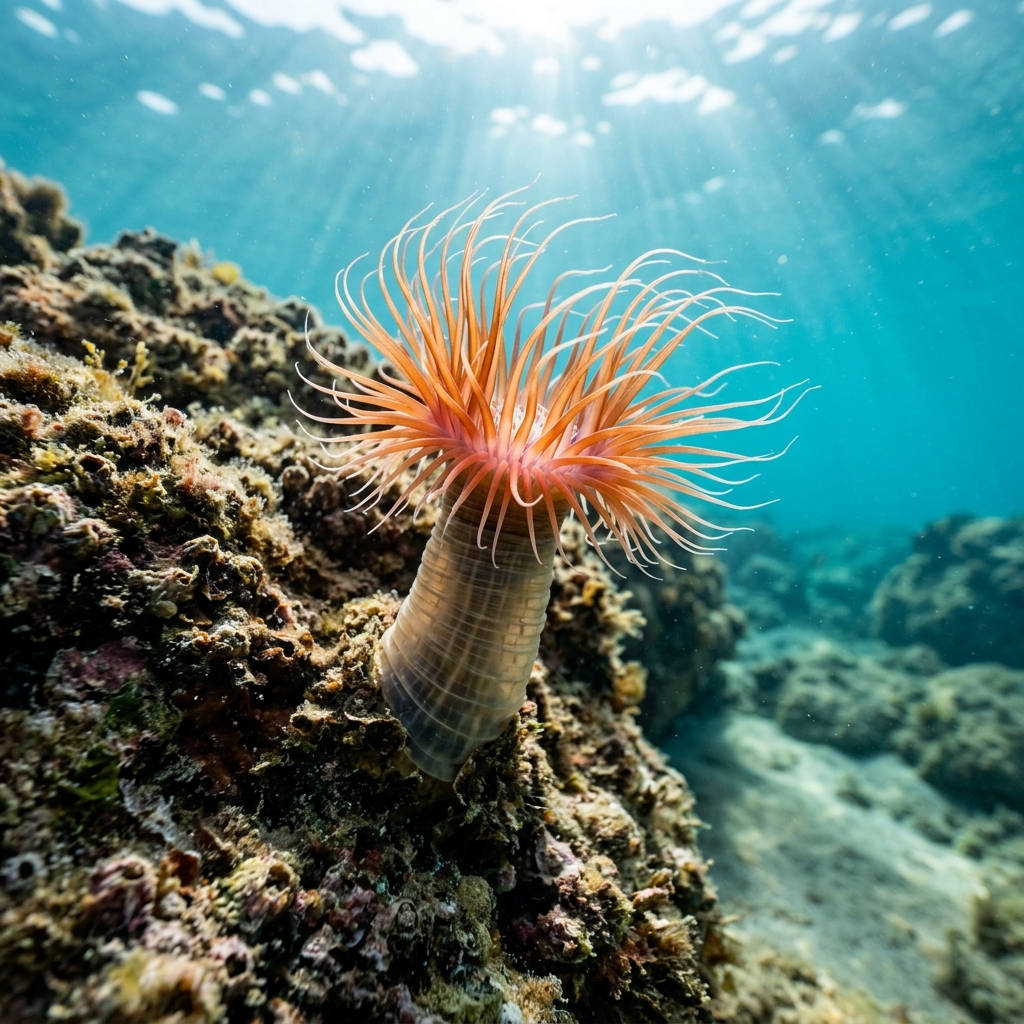
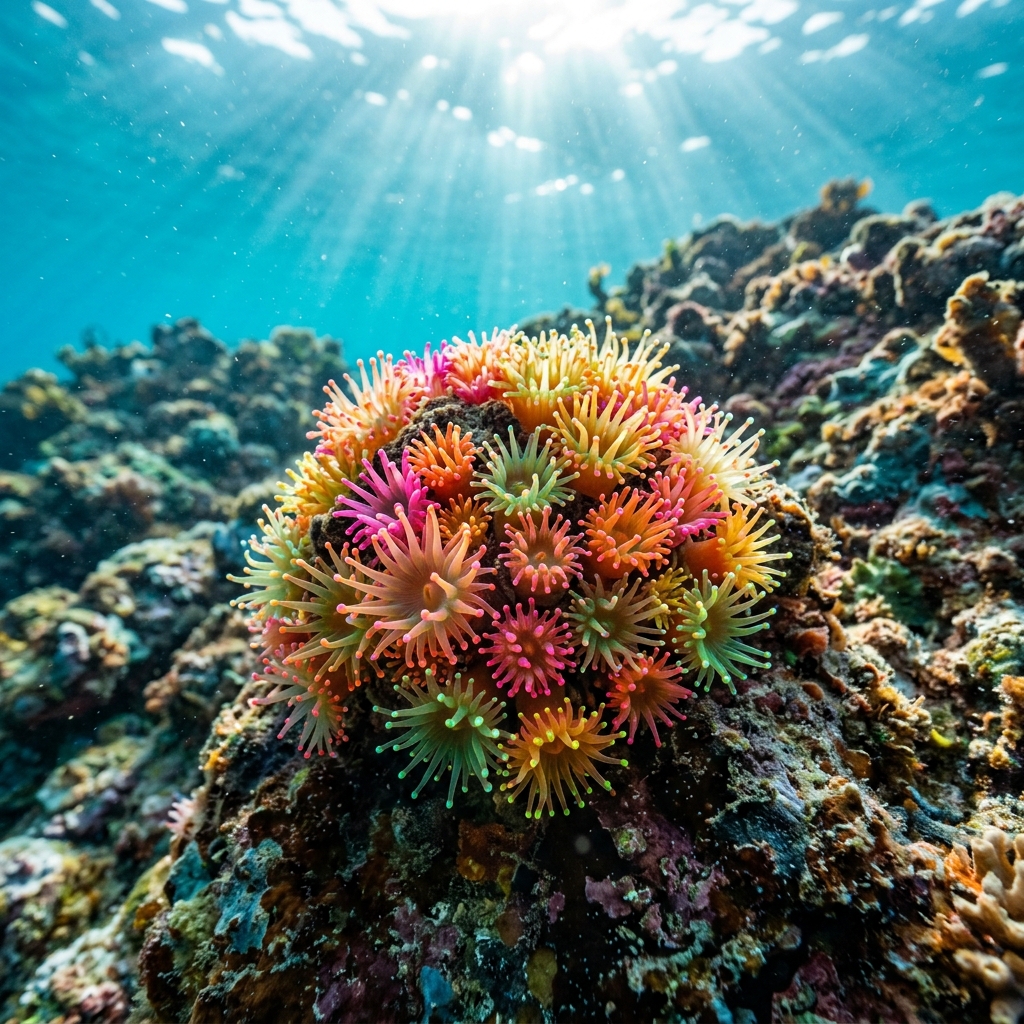
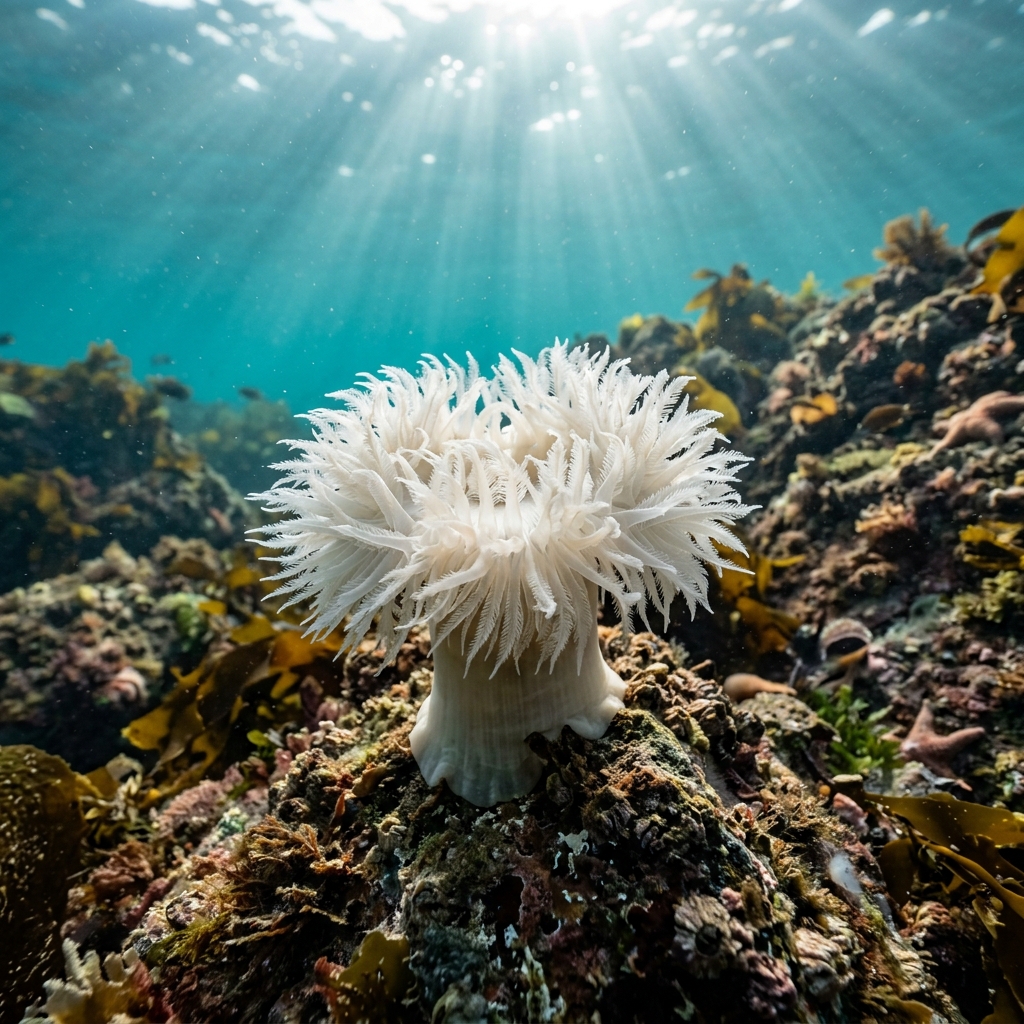
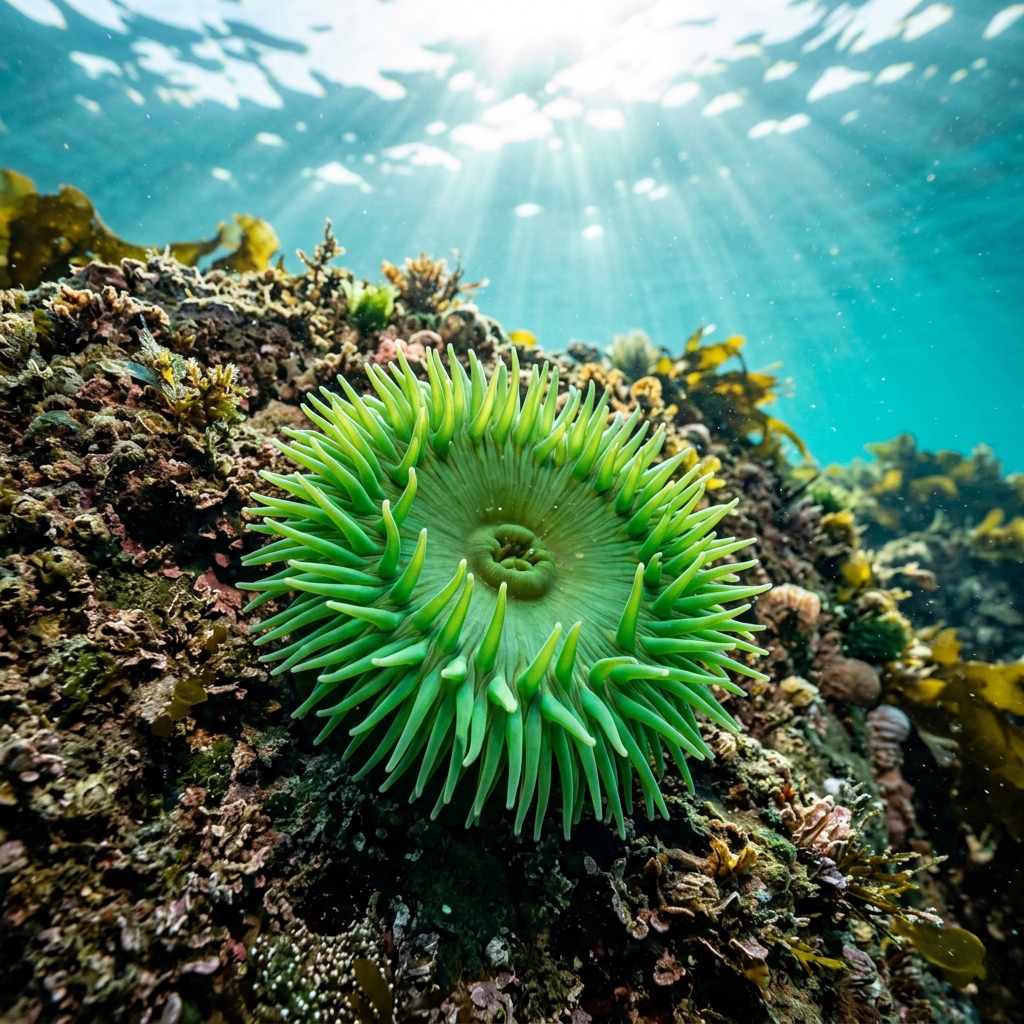
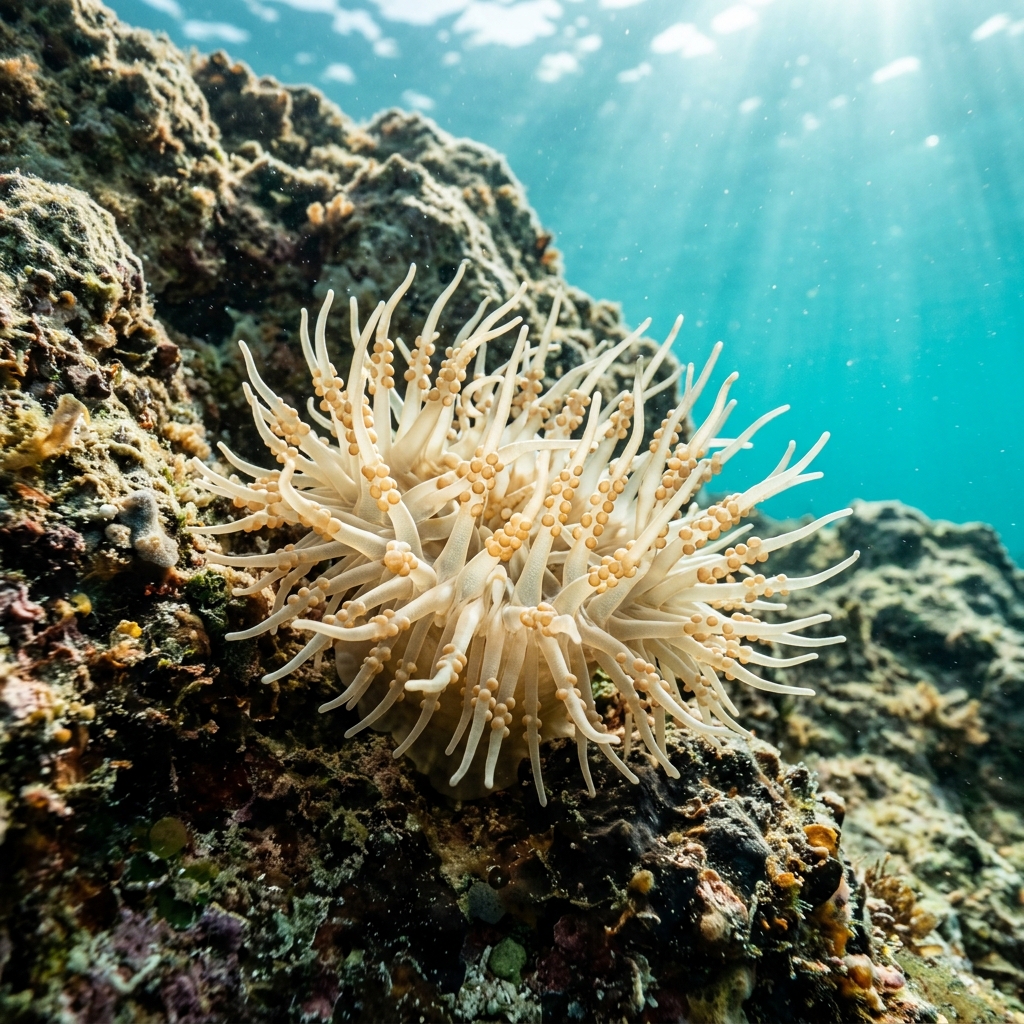
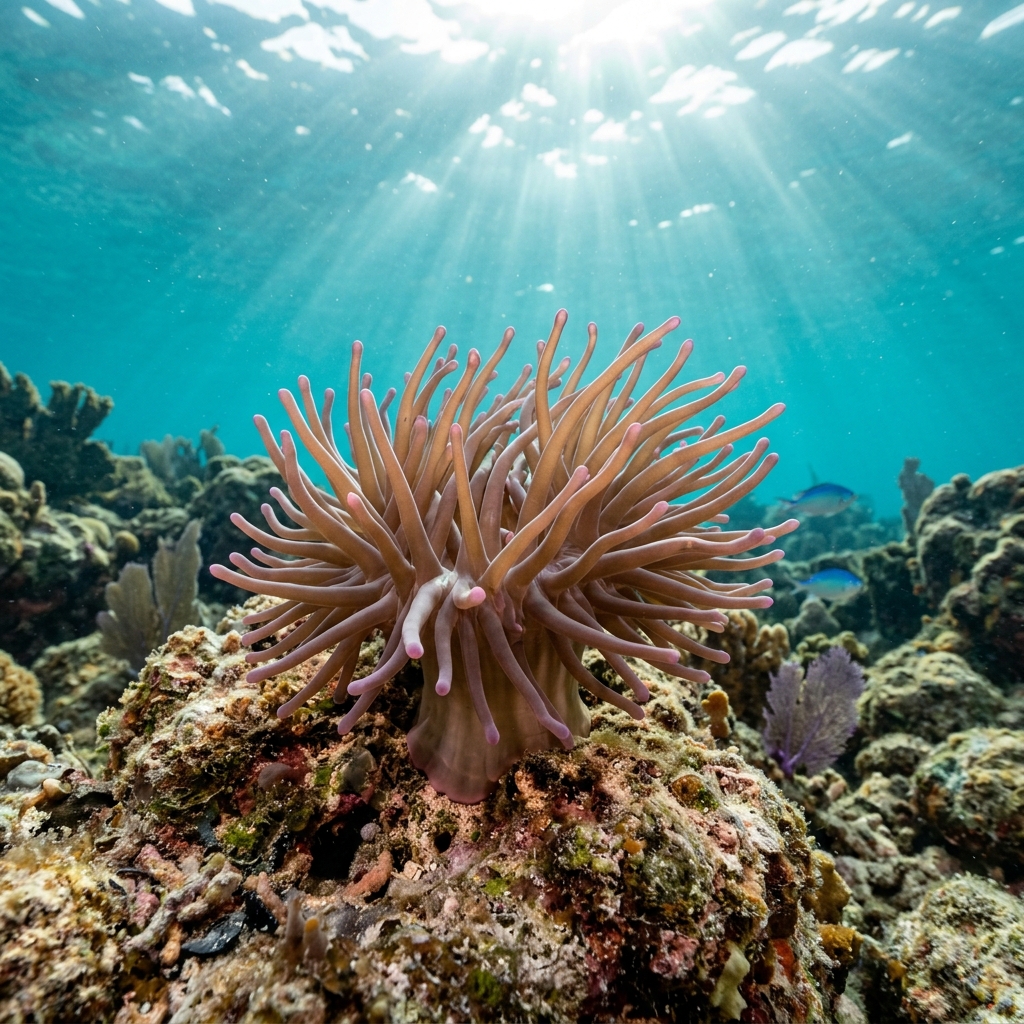
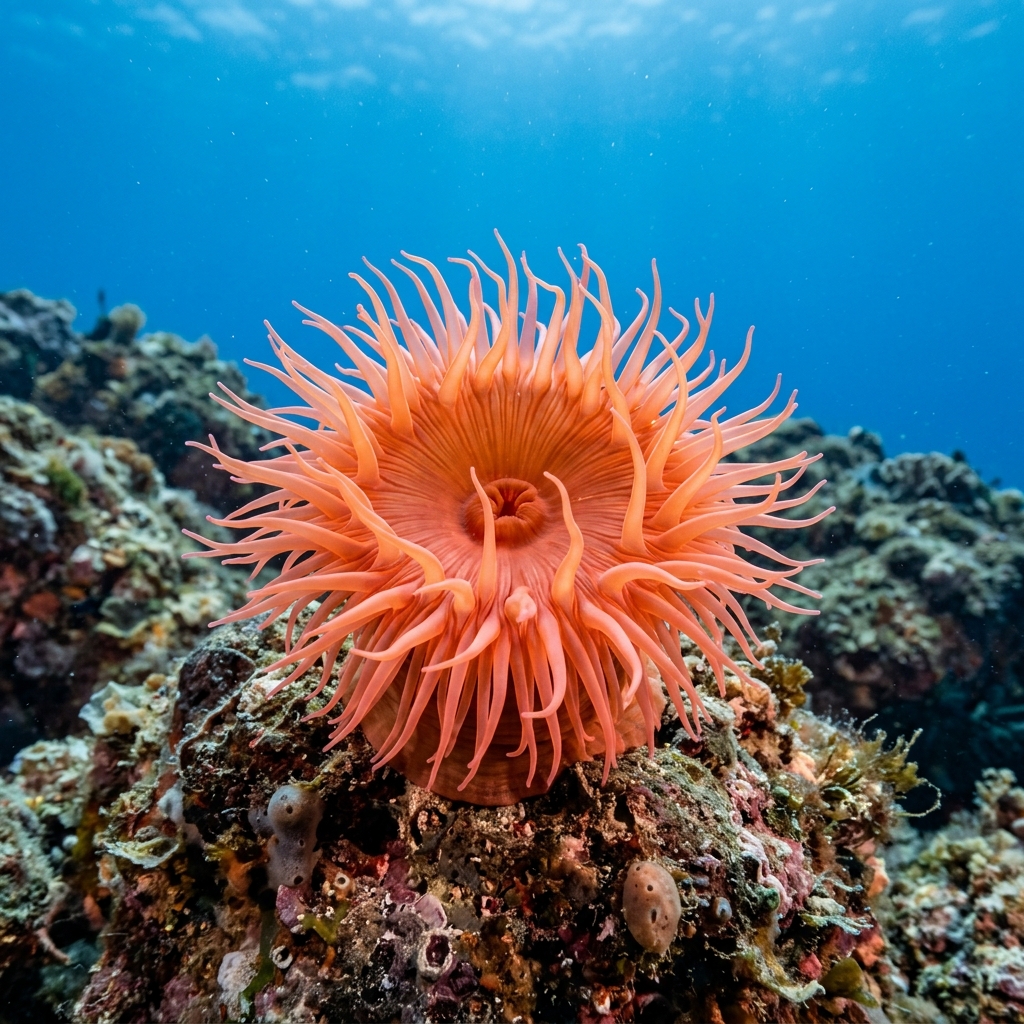
Anemones anchor to hard surfaces by a muscular base (called a pedal disc) and present a ring of tentacles radiating from a central mouth. Colours vary enormously across the group, from the vivid orange columns of plumose anemones to the jewel-like blues and greens of smaller species, but the column-and-tentacle body plan is consistent. Most encountered by divers sit between 5 and 30 cm across when fully extended; a disturbed animal contracts into a tight blob that looks nothing like its open form. The tentacles are the key field mark: arranged in multiples of six and often translucent, they give the animal its flower-like silhouette.
When conditions are calm, anemones hold their tentacles wide open, drifting them gently in the current to intercept passing zooplankton and small organisms. Approach slowly and they will ignore you entirely; knock or shadow them suddenly and the whole animal contracts into a deflated lump in seconds, which can be startling the first time you see it. Feeding activity tends to peak at night, but you will regularly find them open and active on daytime dives wherever current runs across the reef.
Many anemone species host symbiotic partners, most famously clownfish, which live unharmed among the stinging tentacles and drive away parasites in return for shelter. In temperate waters, look instead for anemone shrimp or small crabs living in the same arrangement. Spotting one of these guests is a reliable sign the anemone is healthy and its tentacles are fully deployed.
No strong seasonal pattern emerges from the data, so anemones can be treated as a year-round encounter in their range. The observed water-temperature niche of 8 to 17 °C matches the cool temperate seas of northern Europe and the North Atlantic coast, where conditions remain within that band for much of the year.
Reef neighbours a diver could mistake it for. Use the identification notes above to tell them apart.
Sightings are spread across a wide band of cool temperate seas, with the strongest site coverage in the United Kingdom, France, and the United States. Brittany and Normandy, South Coast England, and Scotland's west coast are particularly well-represented regions, alongside Nova Scotia and the Bay of Fundy in Canada and Germany's northern coastline. Ireland's southwest coast and Norway's fjords also feature strongly.
Mapping where Sea Anemone is logged…
Sea anemones are widely distributed across cool temperate seas. The strongest dive-site coverage is in the United Kingdom, France, and the United States, with Brittany and Normandy, South Coast England, Nova Scotia and the Bay of Fundy, and Scotland's west coast among the most reliably logged regions. Germany's northern coastline, Ireland's southwest coast, and Norway also feature regularly.
No clear seasonal peak has emerged from logged sightings, so anemones are effectively a year-round encounter across their range. They are comfortable in water temperatures from 8 to 17 °C, which describes the cool temperate seas of northern Europe and the North Atlantic for much of the year.
They pose a low but real risk. Their tentacles can sting on contact, usually producing mild skin irritation, though sensitive individuals may react more strongly. Keep a comfortable distance, avoid touching them with bare skin or gloves, and rinse any contact area with seawater rather than rubbing it.
Look for a fleshy column anchored to rock with a ring of translucent tentacles arranged around a central mouth. Colours vary widely across species, but the radially symmetrical tentacle crown is the consistent field mark. A contracted anemone collapses into a featureless blob, so try not to disturb them before you get a good look. Tube-dwelling relatives like Cerianthus look similar but live in a soft tube buried in sediment rather than attaching directly to rock.
Most species encountered on recreational dives range from a few centimetres to around 30 cm across when fully open. Larger species such as the plumose anemone can form impressive colonies on current-swept walls, while jewel anemones are often only 1 to 2 cm across. Size alone is not a reliable identification tool across the group.
Yes, though that partnership is mainly a tropical-reef phenomenon. The clownfish is coated in a mucus that prevents the anemone's stinging cells from firing, letting it shelter safely among the tentacles. In temperate waters, look for a similar arrangement with small shrimp or crabs tucked at the base of the column.
Site and sighting data is aggregated from diver logs, iNaturalist and GBIF. For taxonomy and conservation status:
Cerianthus
1,879 sites