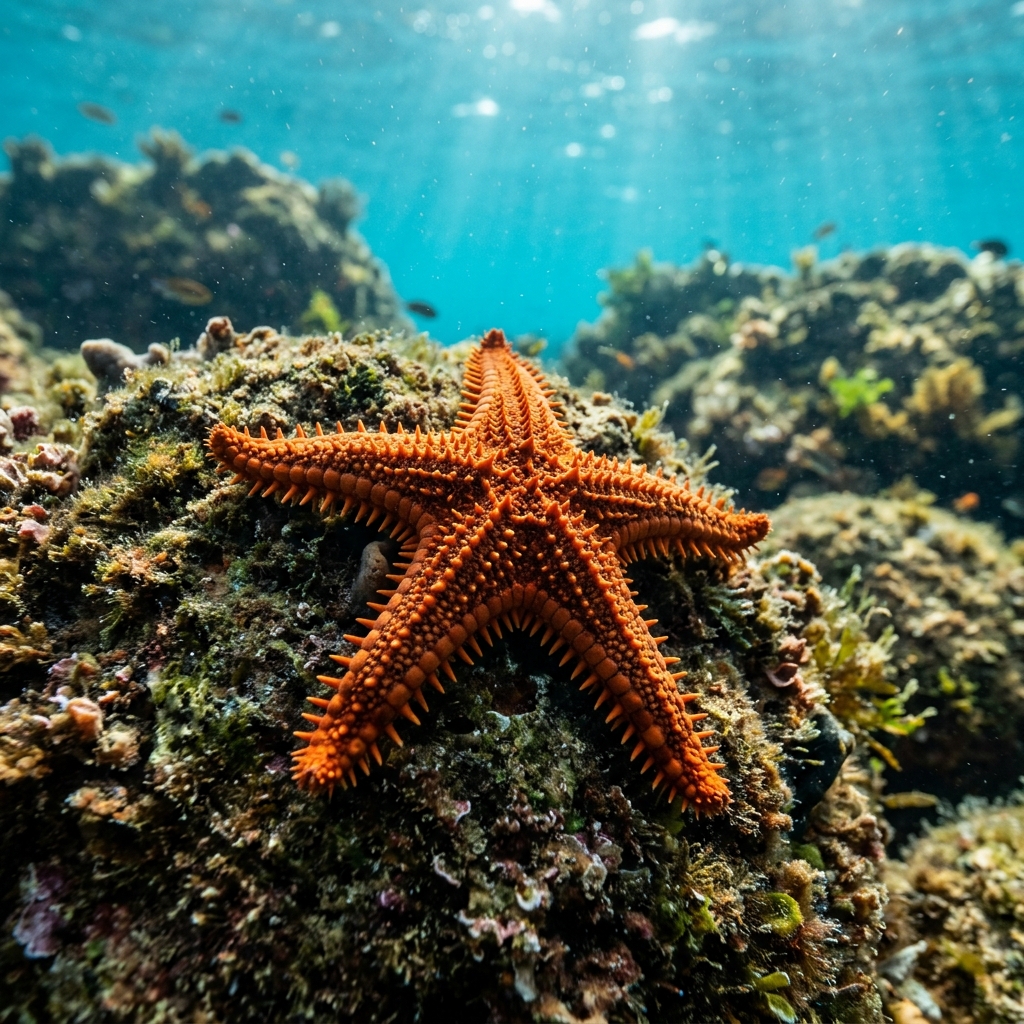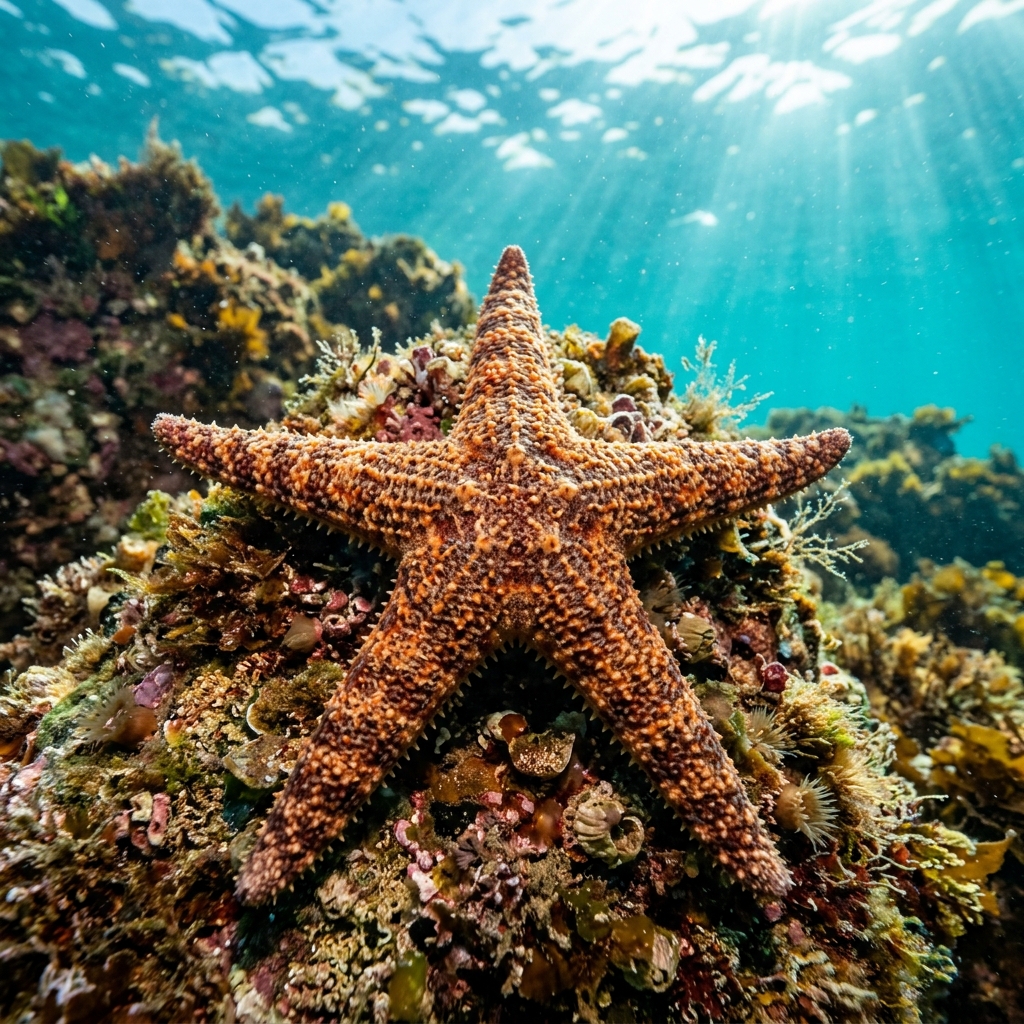
Evasterias troschelii
Spot mottled star in cold Pacific waters from British Columbia to Alaska. Common at dive sites along Canada's coast in 8-13 °C water, Dec, Jul.
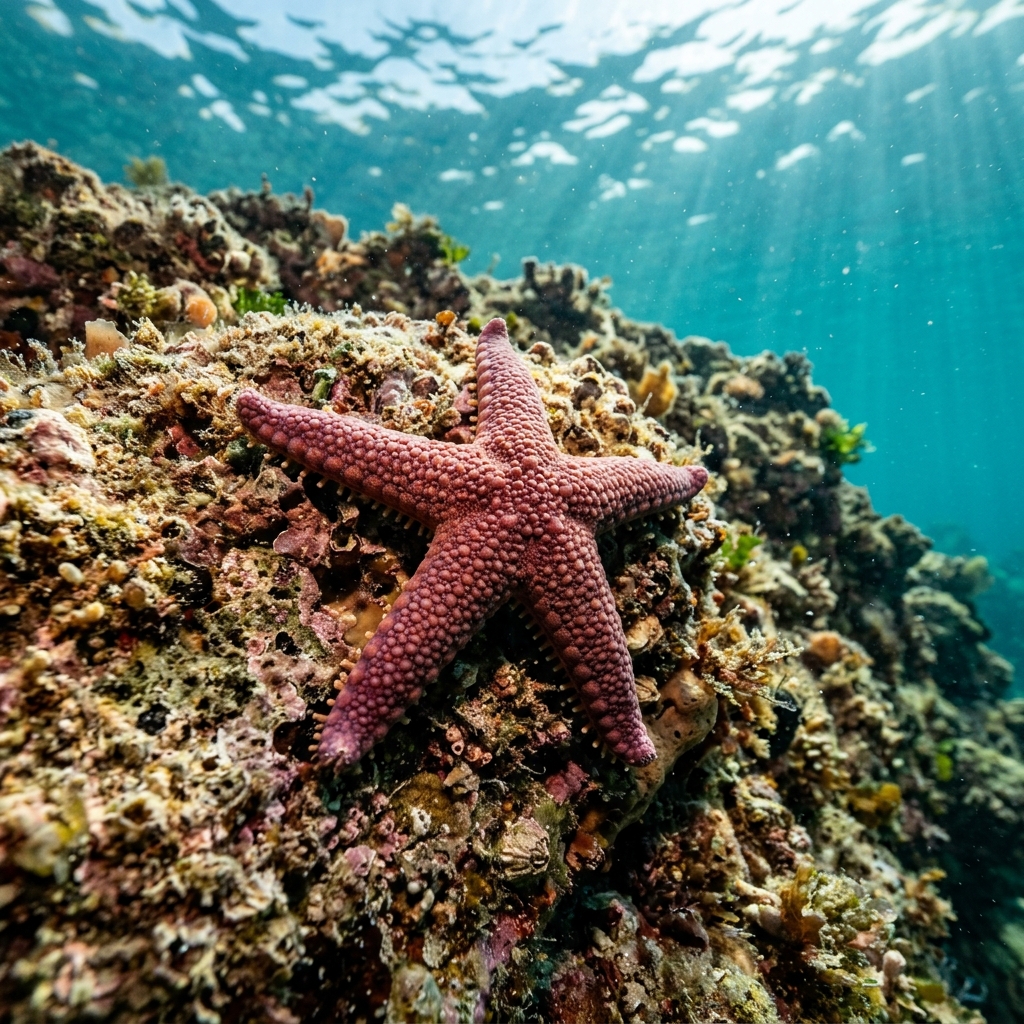
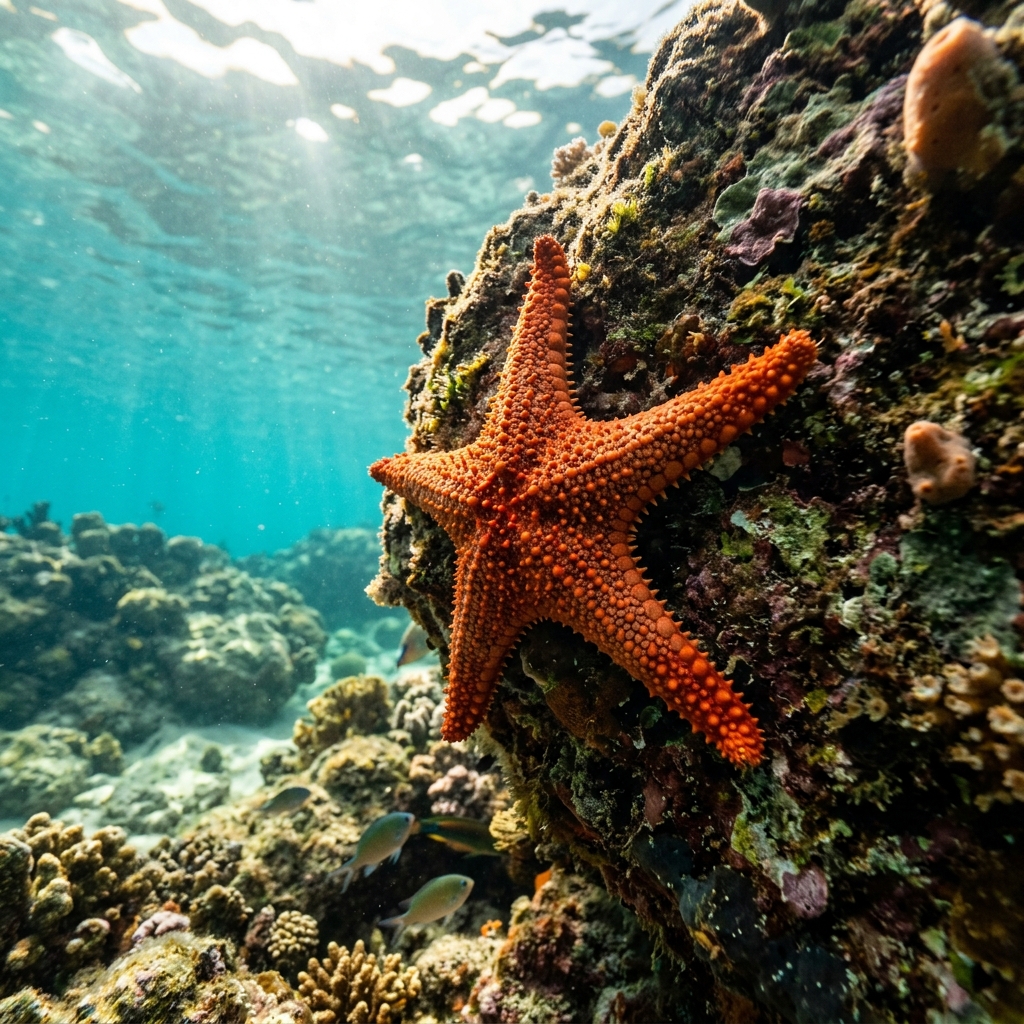
Look for a five-armed sea star with an irregular, blotchy pattern of browns, oranges, and greys that gives the animal its name, no two individuals look quite the same. The arms are relatively slender and taper to a point, and the aboral (top) surface is covered in small pale spines arranged in a rough webbed pattern. In cold, low-visibility Pacific water, the mottled colouration against rock can make it easy to overlook; look for the textured spine pattern to confirm the ID.
Like most sea stars, mottled stars are unconcerned by divers and simply carry on moving slowly across rocky substrates or foraging along the seafloor. You will typically find them on hard reef or boulder fields, often partially tucked into crevices or hauling themselves over encrusted rock in search of prey. There is no need for a cautious approach for your own sake, but avoid touching or moving them, handling sea stars causes stress.
Mottled stars are active predators of bivalves (clams and mussels), using their tube feet to prize shells apart and then everting (turning inside out) their stomachs directly into the prey to digest it externally.
Northern Hemisphere sightings concentrate between December and July, suggesting it is most reliably encountered through the colder winter and spring months. This lines up with its observed water-temperature niche of roughly 8 to 13 °C.
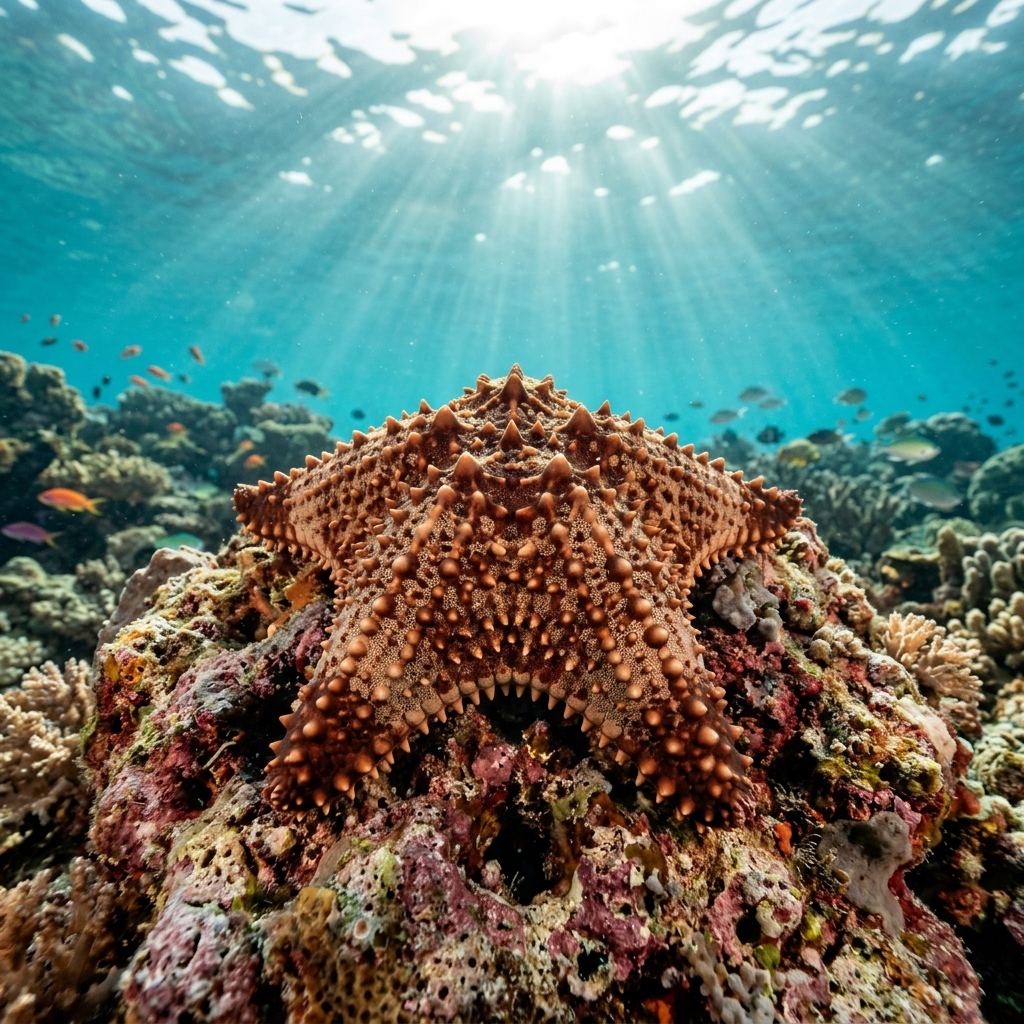
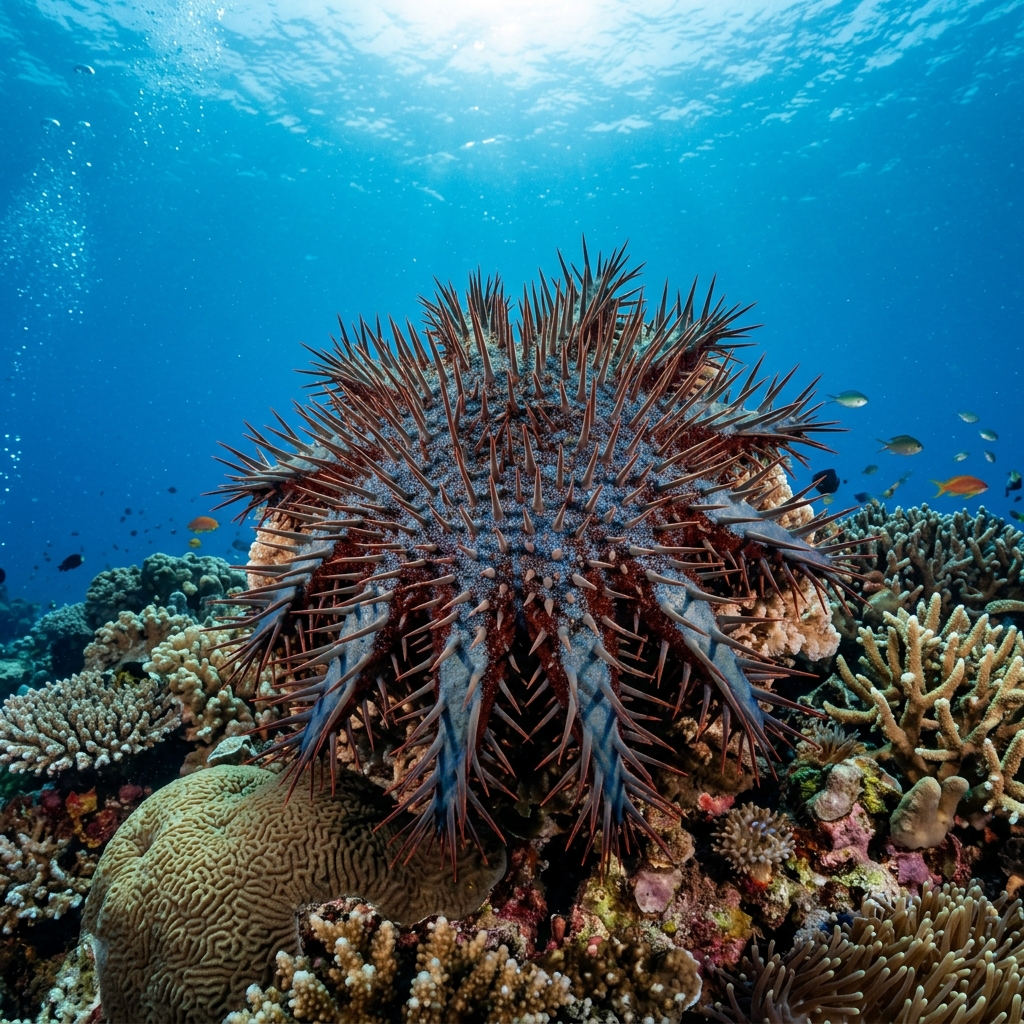
Reef neighbours a diver could mistake it for. Use the identification notes above to tell them apart.
The mottled star is overwhelmingly a Pacific North American species, with the vast majority of logged sightings coming from British Columbia's coast and the Pacific Coast of the United States, including Alaska. Russia's Far East and Japan's Sea of Japan coastlines also hold populations, making this essentially a North Pacific cold-water specialist.
Mapping where Mottled Star is logged…
British Columbia's coast is by far the most reliable place to find them, with strong populations also recorded along the US Pacific Coast and into Alaskan waters. Smaller populations exist in Russia's Far East and Japan's Sea of Japan. All these locations share cold, temperate Pacific water.
Logged sightings in the Northern Hemisphere peak between December and July, so winter through early summer is your best window. This corresponds to the coldest water periods along the British Columbia and Pacific US coastlines, right in the species' preferred temperature range of 8 to 13 °C.
Look for a five-armed sea star with irregularly blotched brown, orange, and grey colouration, the mottled pattern is the key feature. The arms are slender and pointed, and the upper surface has a noticeable webbed spine pattern. The irregular blotching distinguishes it from the more uniformly coloured purple sea star.
No. Mottled stars pose no threat to divers whatsoever. Simply observe them without touching, as handling sea stars can damage the mucus layer that protects them from infection.
Mottled stars prey mainly on bivalves such as clams and mussels. They use hundreds of tiny tube feet to apply sustained force and prise the shell open, then evert their stomach directly into the prey and digest it externally before retracting the stomach back in.
Site and sighting data is aggregated from diver logs, iNaturalist and GBIF. For taxonomy and conservation status:
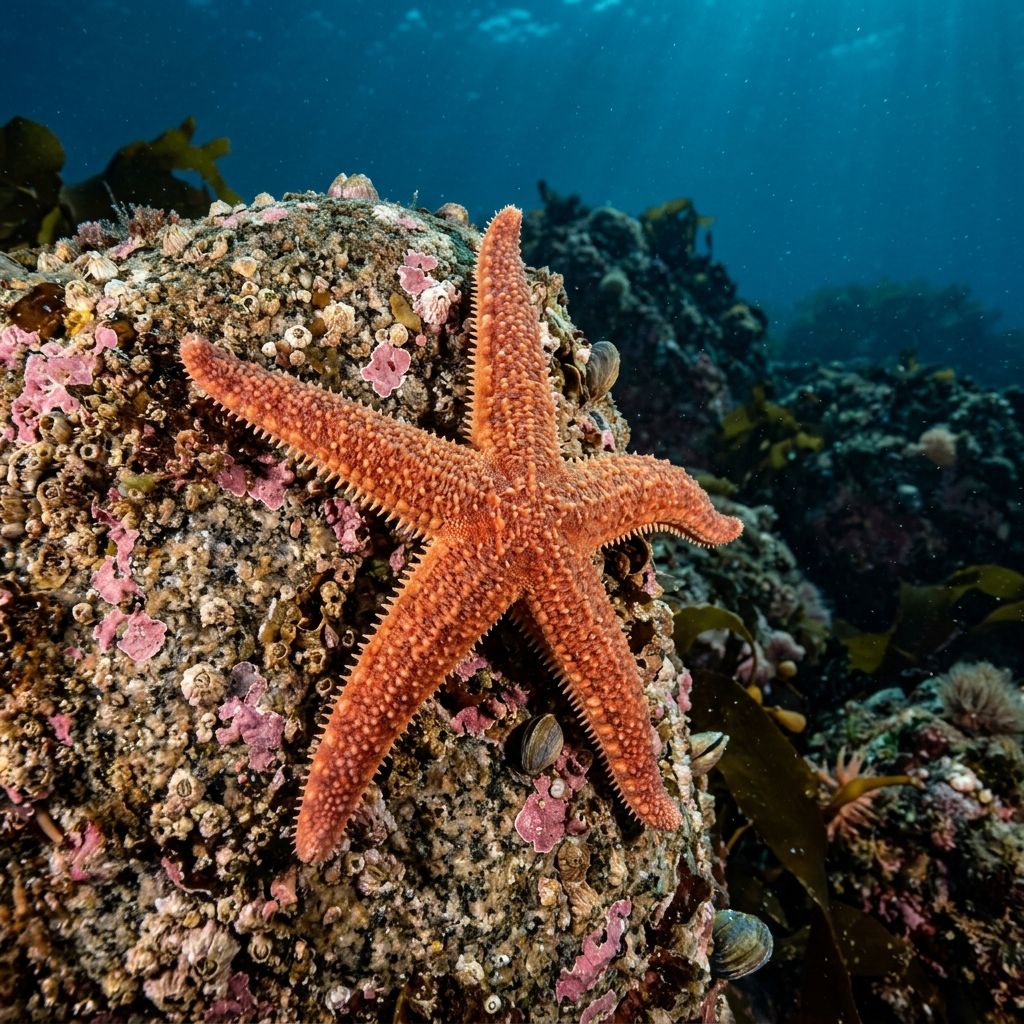
Common Sea Star
2,271 sites