Chaetodon trifascialis
Spot the Chevron Butterflyfish on reefs in Queensland, Réunion and French Polynesia. ID tips, sighting odds, and best dive conditions inside.
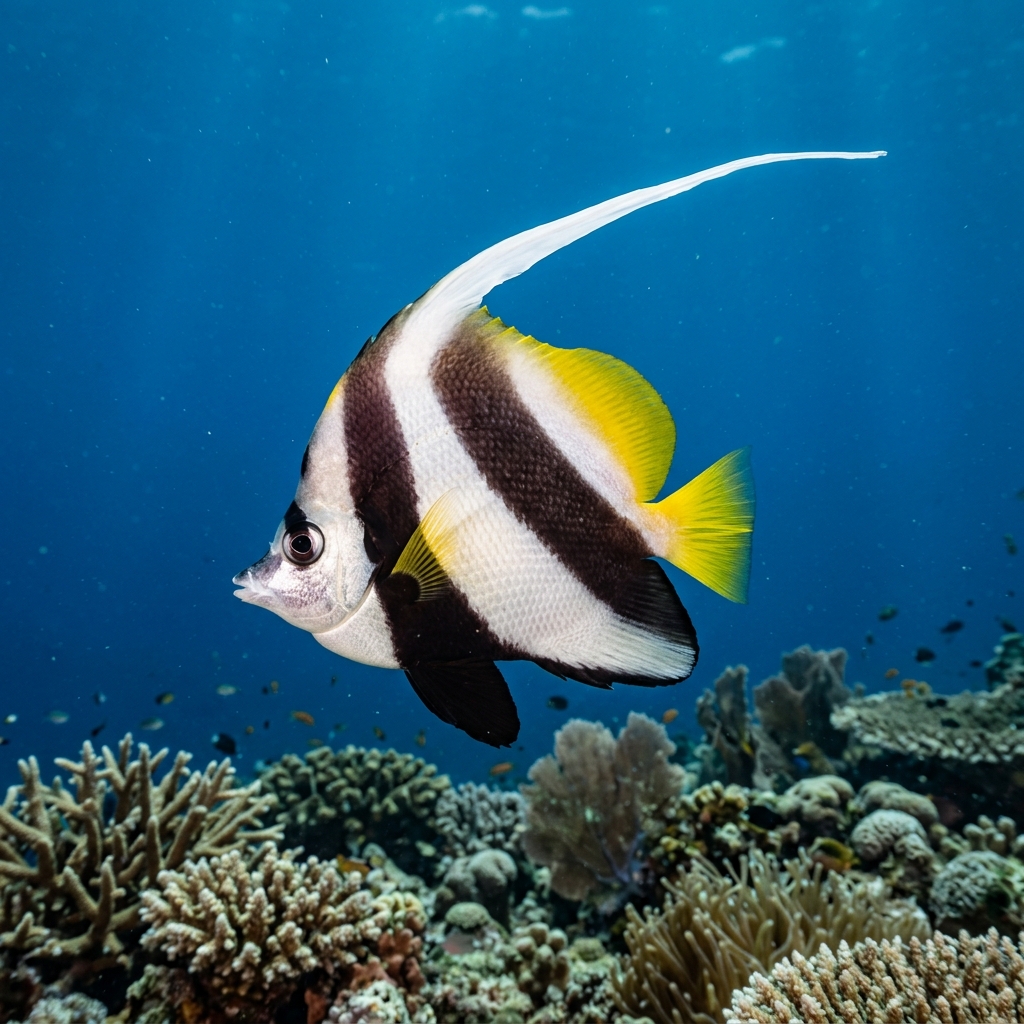
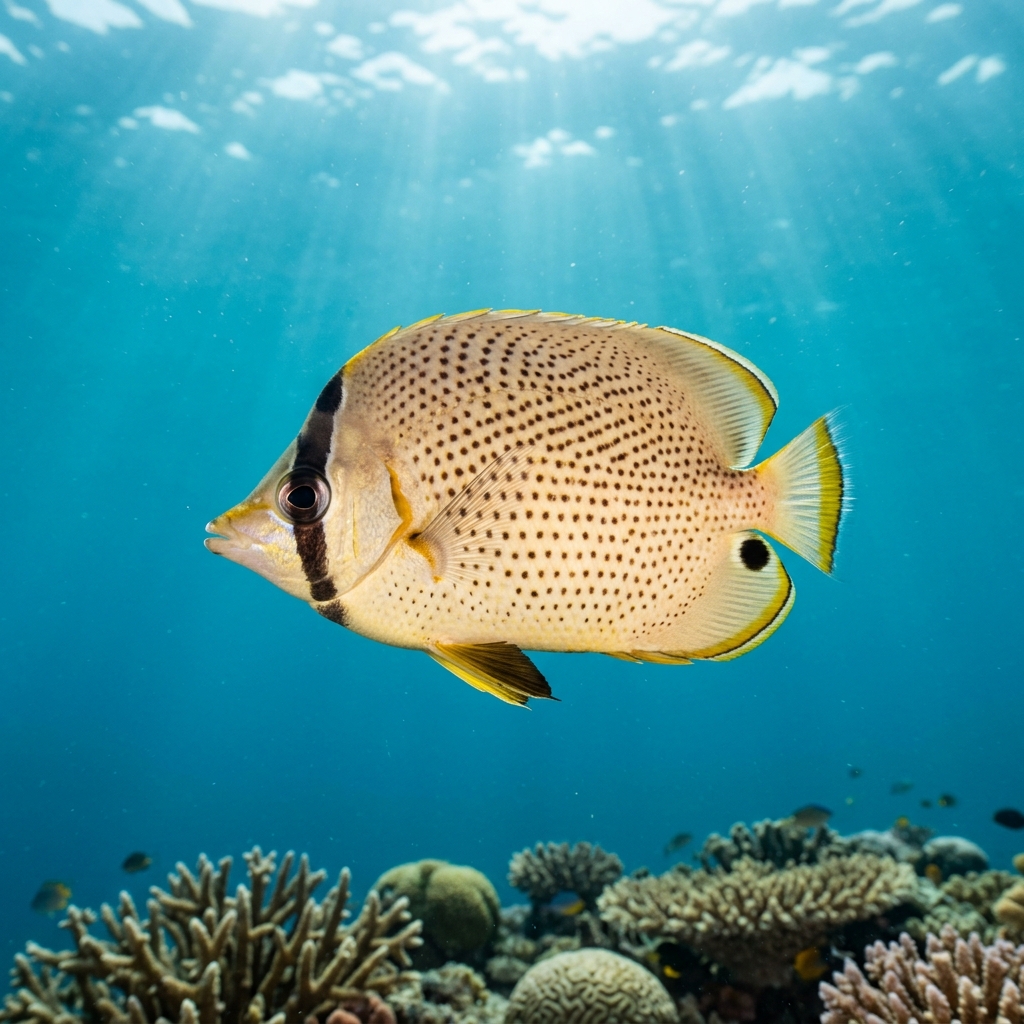
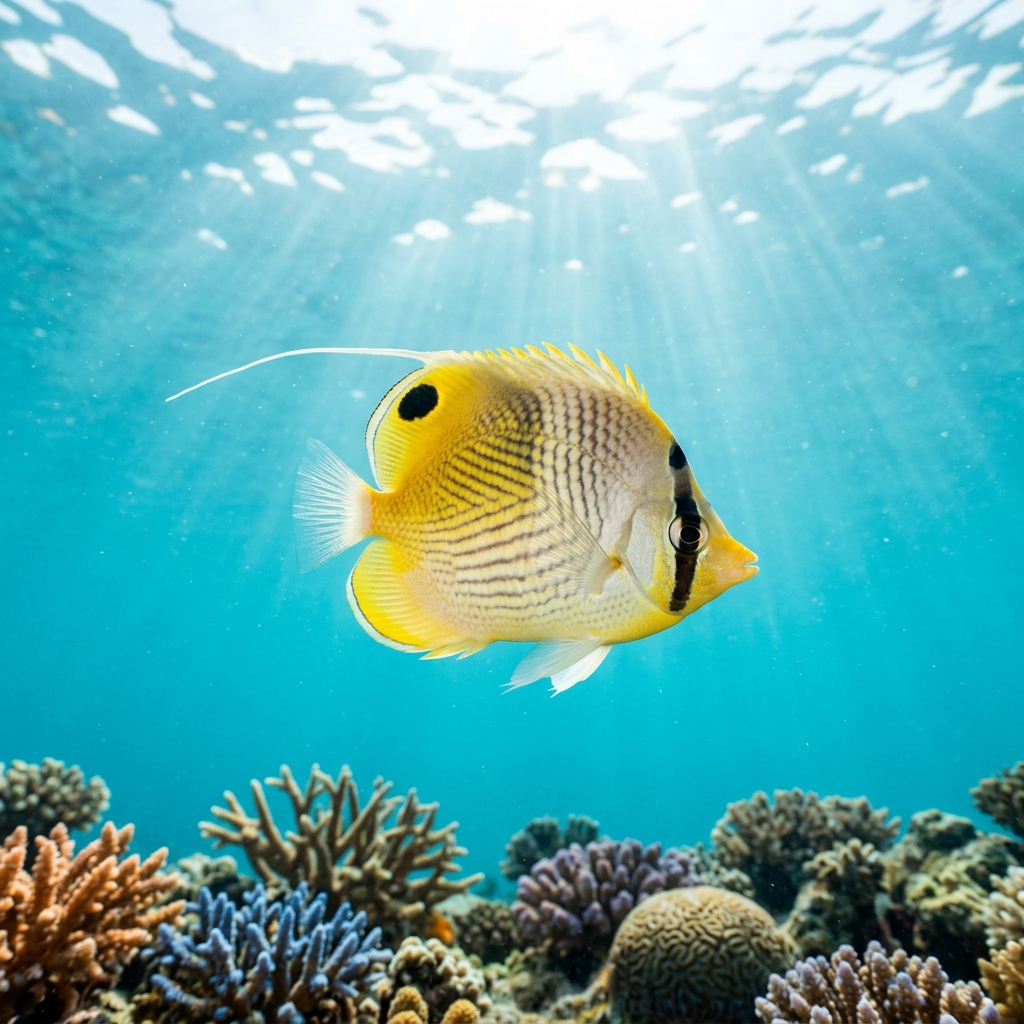
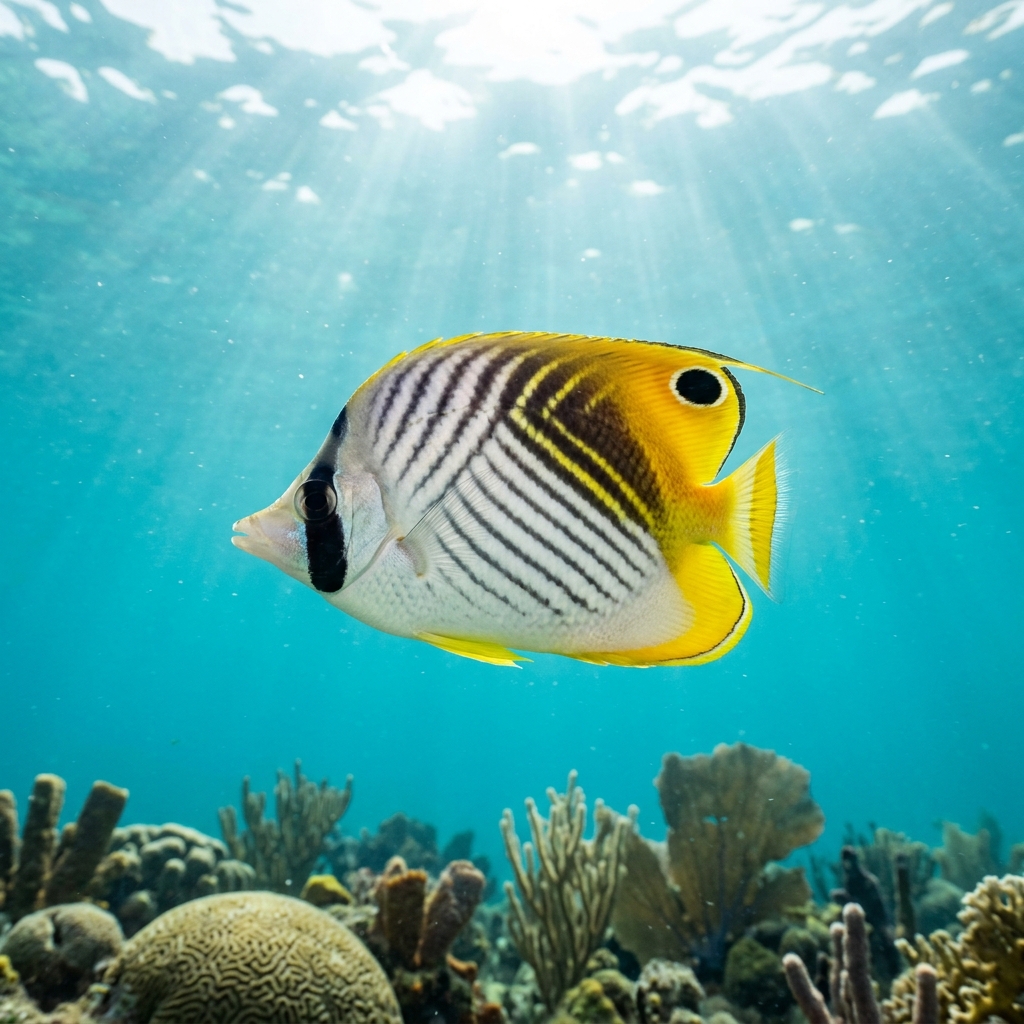
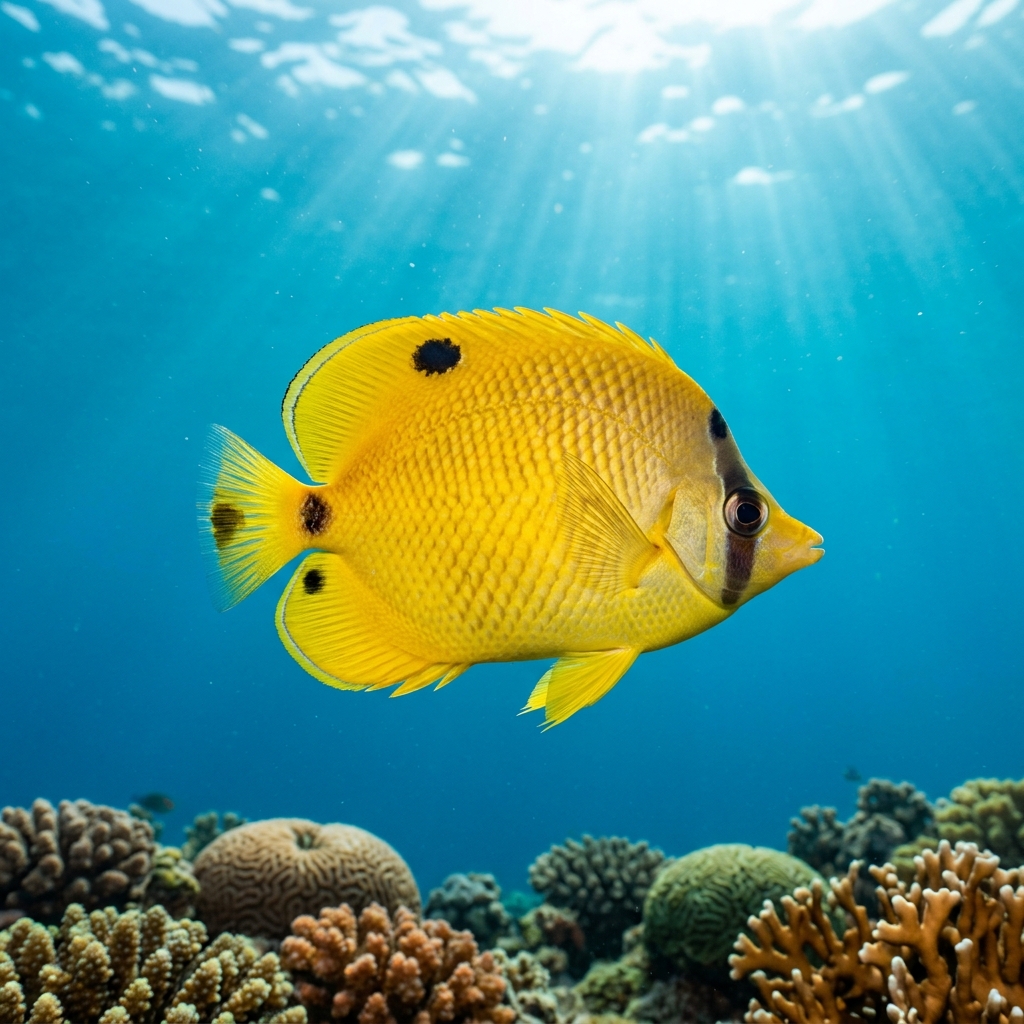
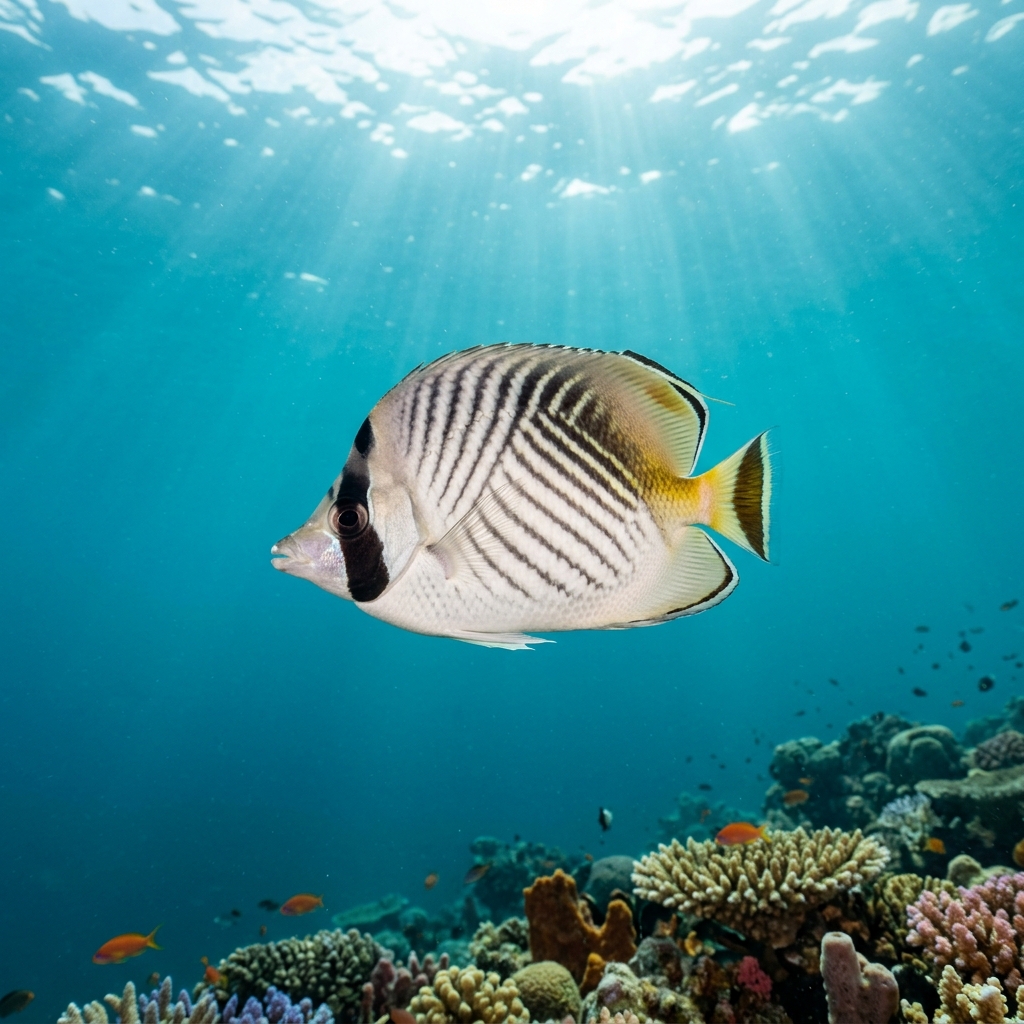
Bold, dark chevron (V-shaped zigzag) lines running diagonally across a white to pale-yellow body give this butterflyfish its name and make it one of the easier chaetodontids to pin down underwater. Look for a dark stripe through the eye, a black-edged orange tail, and a very compressed, disc-shaped body typical of the family. Juveniles carry a prominent black spot near the rear of the dorsal fin that fades as they mature. At reef depth the chevron pattern is the single clearest field mark; no other common butterflyfish shares it.
Almost always spotted in close association with Acropora table corals, which it picks at for coral polyps; if you find a healthy Acropora table, scan the edges carefully. It tends to stay tight to the reef structure and will drift just out of reach when approached, rarely fleeing but rarely allowing a close approach either. Sightings are generally solitary or in pairs.
Chevron butterflyfish are among the most strictly corallivorous (coral-eating) of all butterflyfish, feeding almost exclusively on the living polyps of Acropora table corals. This dietary specialisation means their presence is a direct indicator of healthy hard coral cover, and their decline in an area often signals coral degradation before other signs become obvious.
No strong seasonal peak has emerged from the data, so it can be treated as year-round across its range. It is observed in water temperatures from 22 to 28 °C, which covers tropical and subtropical reef conditions throughout most of its recorded locations.
Most logged in Australia, particularly across Queensland's Great Barrier Reef sites and along the Western Australian coast, which together account for the majority of recorded sightings. Réunion and French Polynesia (especially around Tahiti) are the next strongest regions, with a smaller presence in the Egyptian Red Sea around Safaga and a single site record in Bali.
Mapping where Chevron Butterflyfish is logged…
The strongest sighting records come from Queensland and Western Australia, Réunion, and French Polynesia around Tahiti. Smaller numbers of sightings have been logged in the Egyptian Red Sea near Safaga and in Bali. Your best bet is a healthy Acropora-rich reef in any of those regions.
There is no clear seasonal peak in the available data, so sightings are spread across the year. It is comfortable in water temperatures from 22 to 28 °C, which describes tropical and warm subtropical reefs year-round across its known range.
Look for the bold dark chevron or herringbone zigzag pattern across a white body, a dark eye-stripe, and an orange tail edged in black. That chevron pattern is unique among commonly encountered butterflyfish and is clearly visible at typical reef depths. Juveniles add a black spot near the rear dorsal fin.
Chevron butterflyfish reach around 18 cm in length, though they appear smaller underwater because of their thin, disc-shaped body. They are a mid-sized butterflyfish and typically look roughly palm-sized on the reef.
They are currently listed as Near Threatened. Their very specialised diet of Acropora coral polyps makes them more sensitive to coral bleaching and reef loss than most butterflyfish, so populations can decline quickly when hard coral cover drops.
They are dedicated corallivores that feed almost exclusively on the living polyps of Acropora table corals. This extreme dietary specialism is unusual even among butterflyfish, most of which have a broader diet, and it ties the species closely to the health of hard coral reefs.
Site and sighting data is aggregated from diver logs, iNaturalist and GBIF. For taxonomy and conservation status: