Abudefduf bengalensis
Silver body, five bold black bars: a reef regular in Peninsular Malaysia and Queensland, seen year-round in 25-29C water.
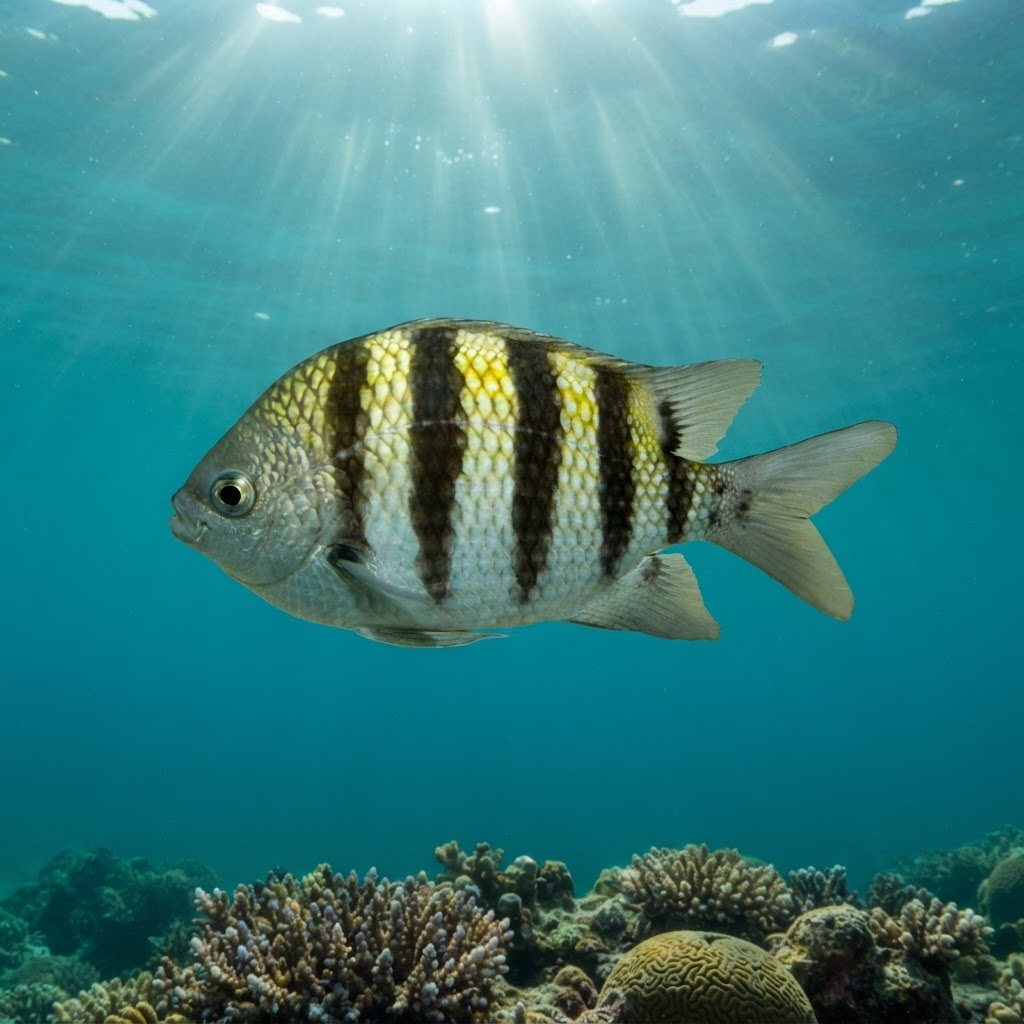
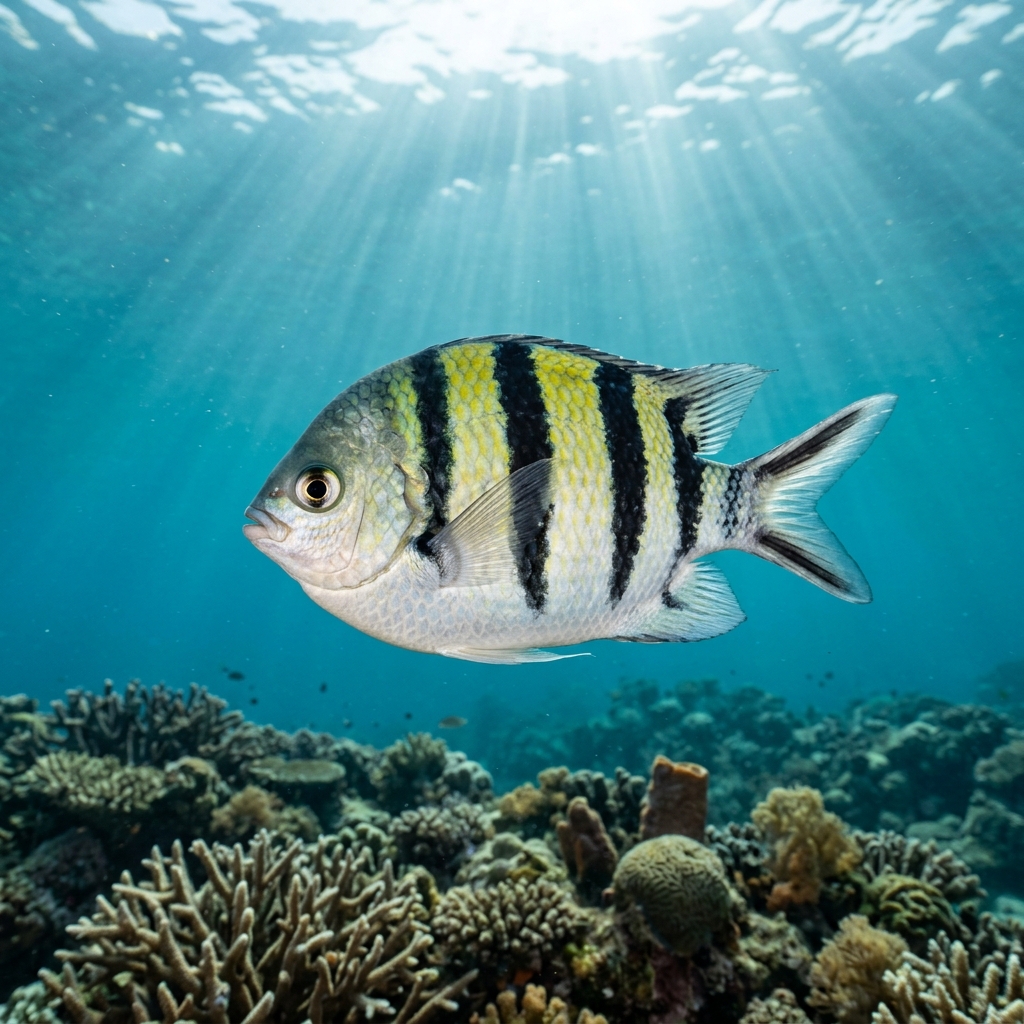
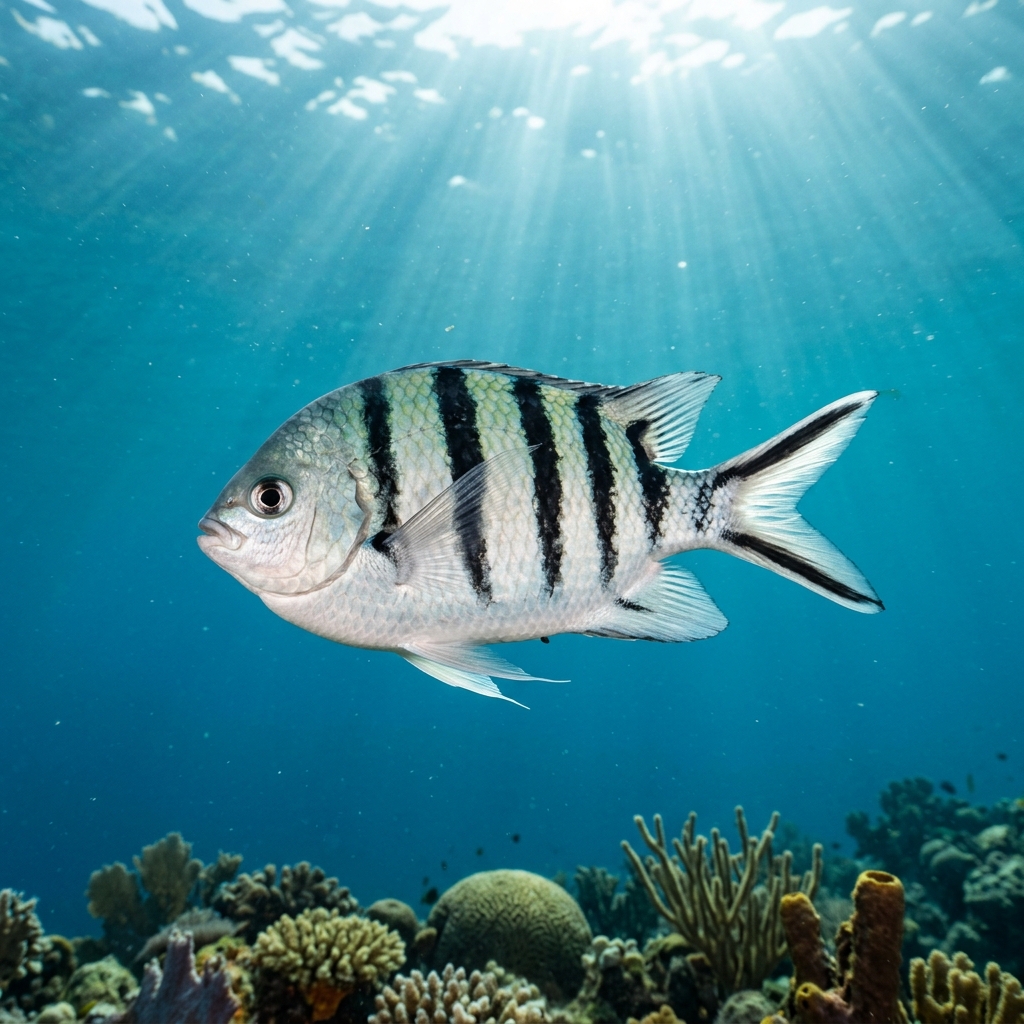
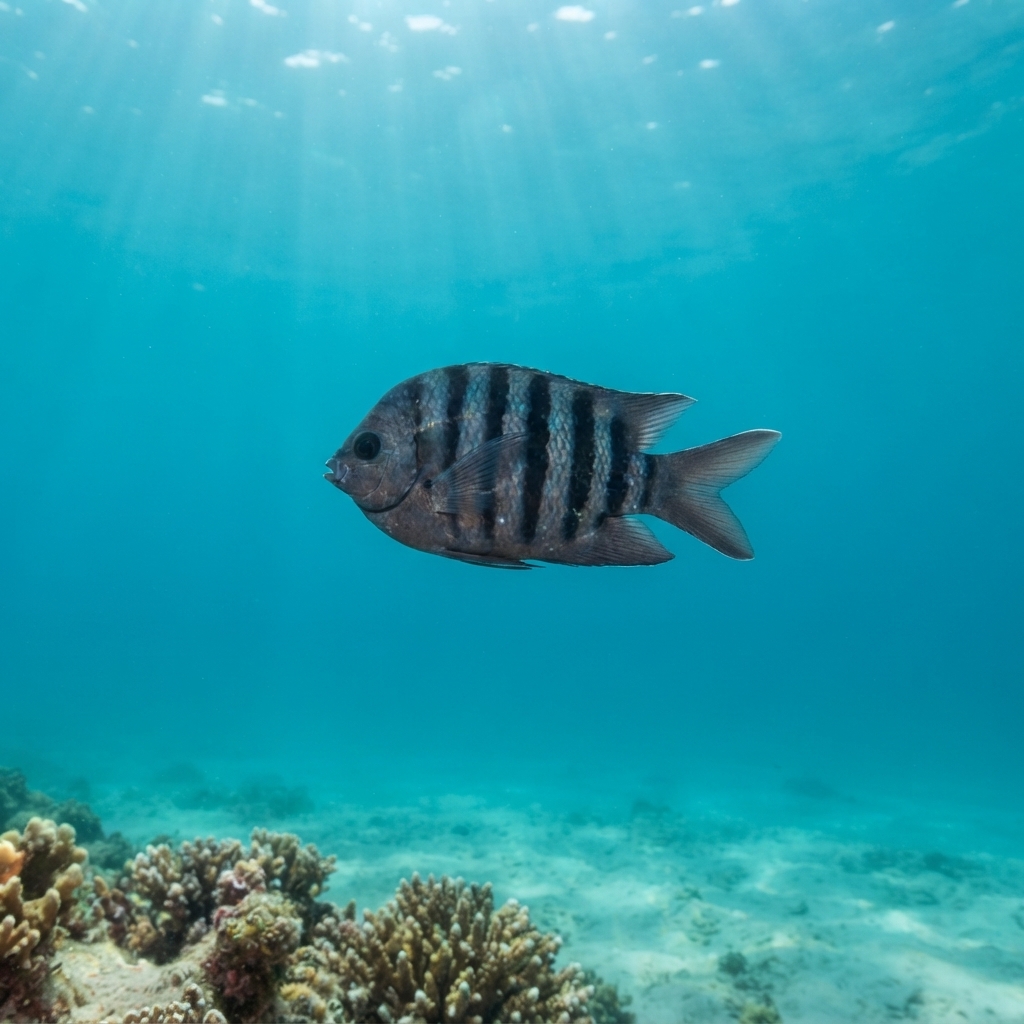
Silvery-white body crossed by five bold black vertical bars, deepest and most distinct along the upper back and fading toward the belly. Body shape is the classic damselfish oval, compact and deep-bodied, topping out around 11 cm, so it reads as a small, fast-moving fish rather than anything bulky. Look for a slightly yellow-green wash on the upper back in bright light, which helps separate it from plainer black-and-white bar patterns on the reef.
Found hovering and darting over shallow reef flats and coral heads, usually in the 1 to 6 m range where light and food are plentiful. Divers typically see it in loose groups picking at algae and small invertebrates on the reef surface, holding position over a patch it seems to know well rather than roaming widely. It's generally unbothered by divers at a normal distance, though individuals guarding a nest site can get noticeably bolder and will dart toward anything that lingers too close.
Like other Abudefduf damselfish, breeding individuals lay eggs directly onto a cleaned patch of reef or rock, and the guarding fish will chase off far larger animals, including divers, that drift over the nest.
Comfortable across a 25 to 29.3 C range, so it's a year-round fixture on the shallow reefs it inhabits with no strong seasonal pattern in the sighting data.
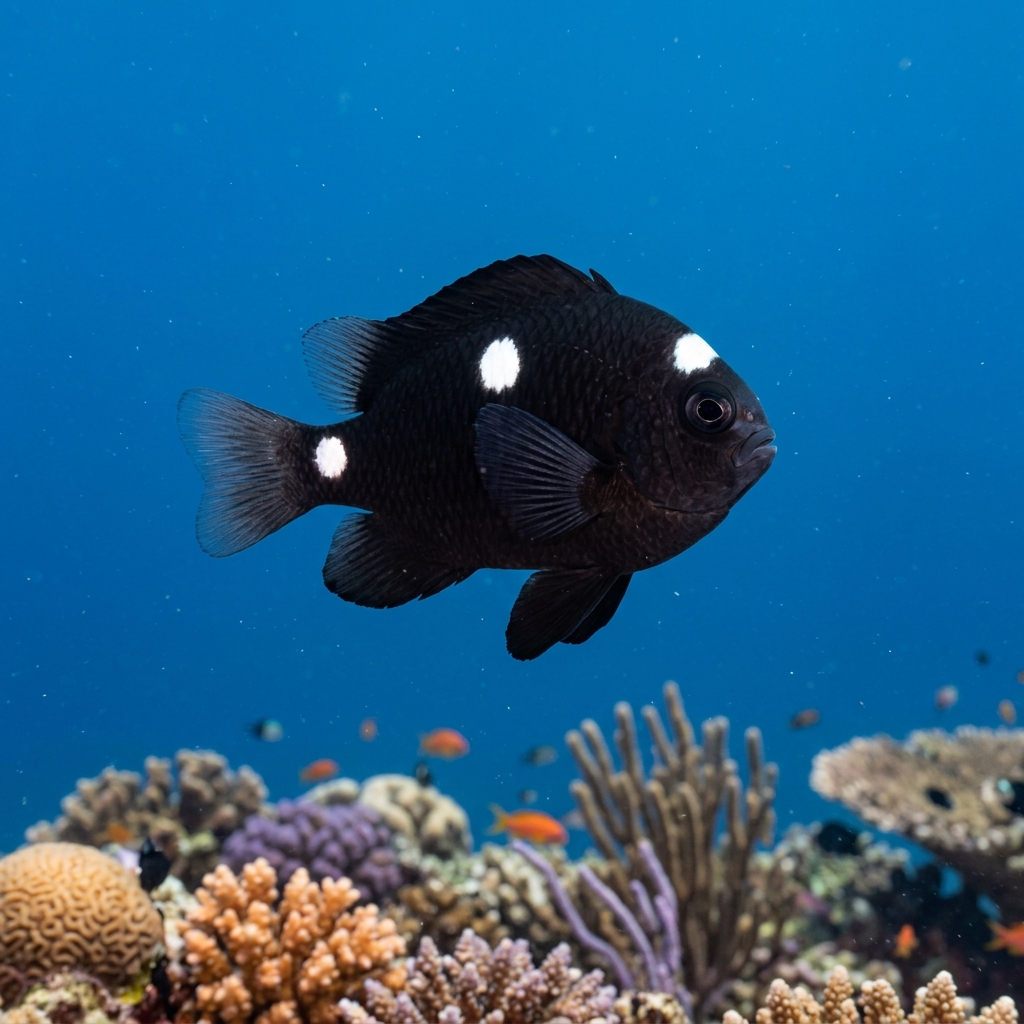
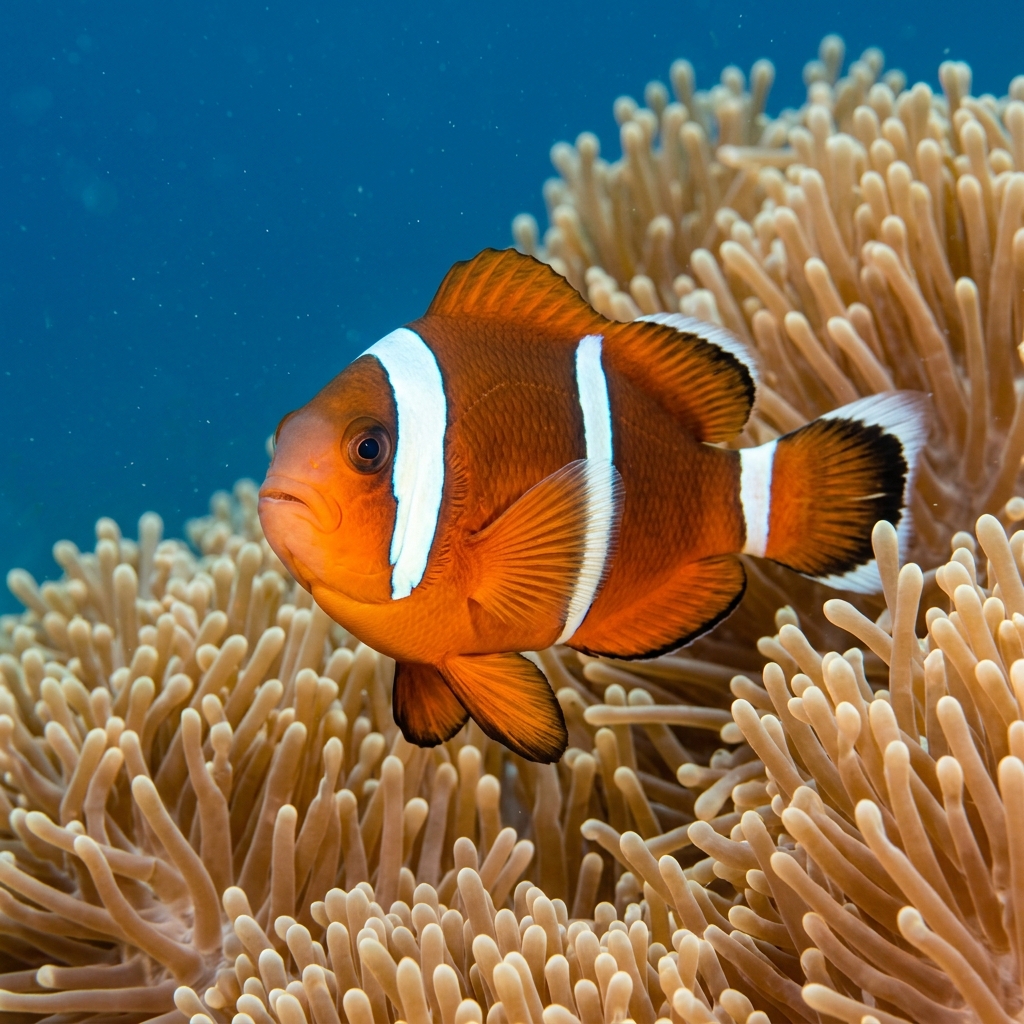
Reef neighbours a diver could mistake it for. Use the identification notes above to tell them apart.
Most reliably logged in Peninsular Malaysia's East Coast and Sabah, and a strong presence across Queensland and New South Wales in Australia. Also a regular sighting in Thailand around Koh Tao, Koh Chang and Koh Lipe, plus Sihanoukville in Cambodia and reef sites in the Philippines, India, Hong Kong and Taiwan.
Mapping where Bengal Sergeant is logged…
It's most commonly logged on shallow reefs in Peninsular Malaysia's East Coast and Sabah, across Queensland and New South Wales in Australia, and around Koh Tao, Koh Chang and Koh Lipe in Thailand. It also turns up regularly in Cambodia, the Philippines, India, Hong Kong and Taiwan.
There's no strong seasonal pattern in the sightings, and it sits comfortably in 25 to 29.3 C water, so it's a fixture on shallow tropical reefs all year round.
Look for a silvery body crossed by five bold black vertical bars, a compact oval damselfish shape, and a size that tops out around 11 cm. A faint yellow-green tint on the upper back in good light is a useful extra clue.
They reach around 11 cm, making them a small, quick-moving reef fish rather than anything you'd mistake for a larger damselfish or angelfish.
No, they pose no danger to divers. Nest-guarding individuals can dart aggressively at anything passing too close to their eggs, but this is a startle-and-chase display, not a threat.
Site and sighting data is aggregated from diver logs, iNaturalist and GBIF. For taxonomy and conservation status:
Dascyllus
3,697 sites