Taeniura lymma
Spot the Bluespotted Fantail Ray in Sharm el Sheikh, the Perhentians or Sulawesi. Warm-water reefs, shallow depths, vivid blue spots, here's where and when.
Safety warning
Like all stingrays, this species carries a venomous spine at the base of its tail. It will not actively attack a diver, but an accidental step on a resting ray or a cornered animal can result in a serious puncture wound. Keep a respectful distance, never handle or pin it, and avoid hovering directly above it, that posture can cause it to bolt and whip its tail upward.
If you're stung
Venomous tail barbGeneral first-aid guidance, not a substitute for professional medical care. In an emergency, call your local emergency number.
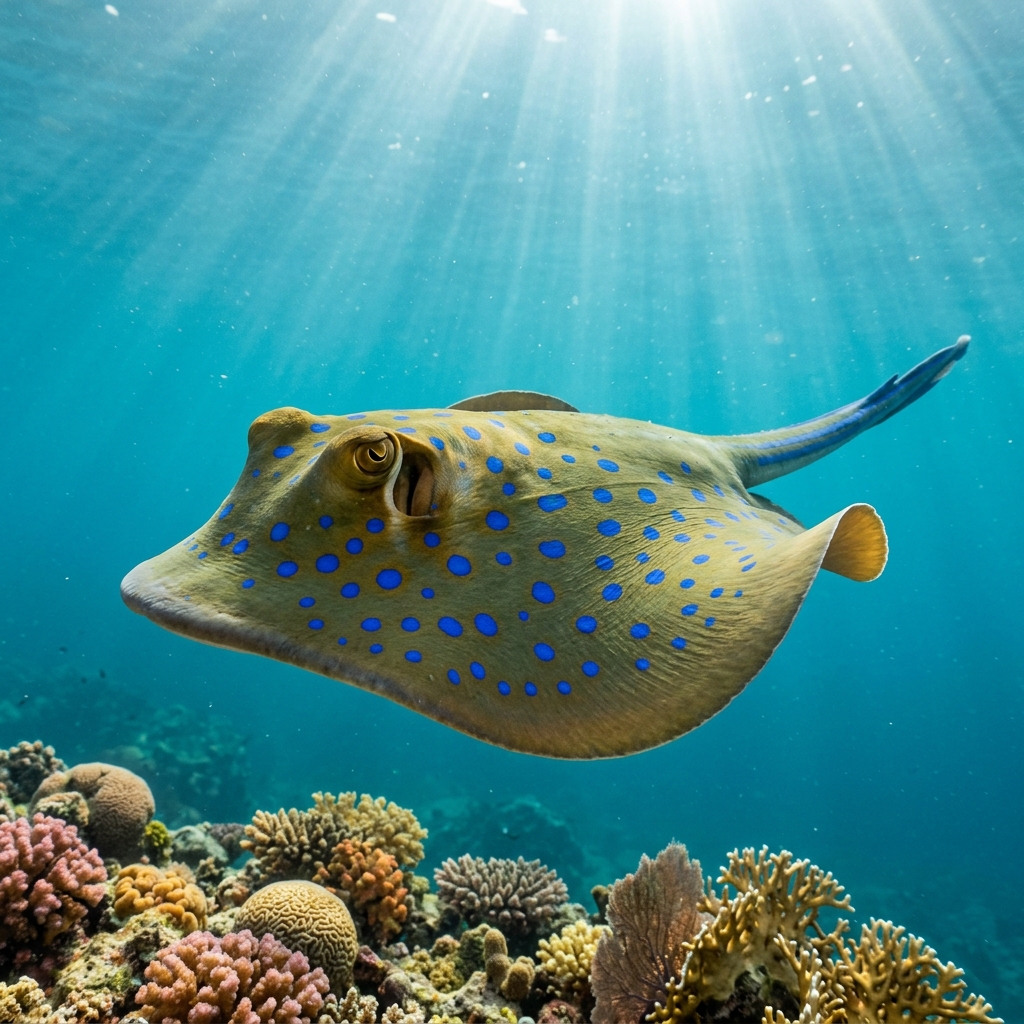
Those electric-blue spots on an oval, olive-to-golden-yellow disc are the giveaway, nothing else on a shallow reef looks quite like it. At around 24 cm across the disc, it sits small enough to tuck under ledges or into sandy pockets between coral heads. A bright blue stripe runs along each side of the tail, reinforcing the ID even as the ray swims away from you. The disc has a very rounded, fan-like trailing edge that distinguishes it from the more diamond-shaped stingrays.
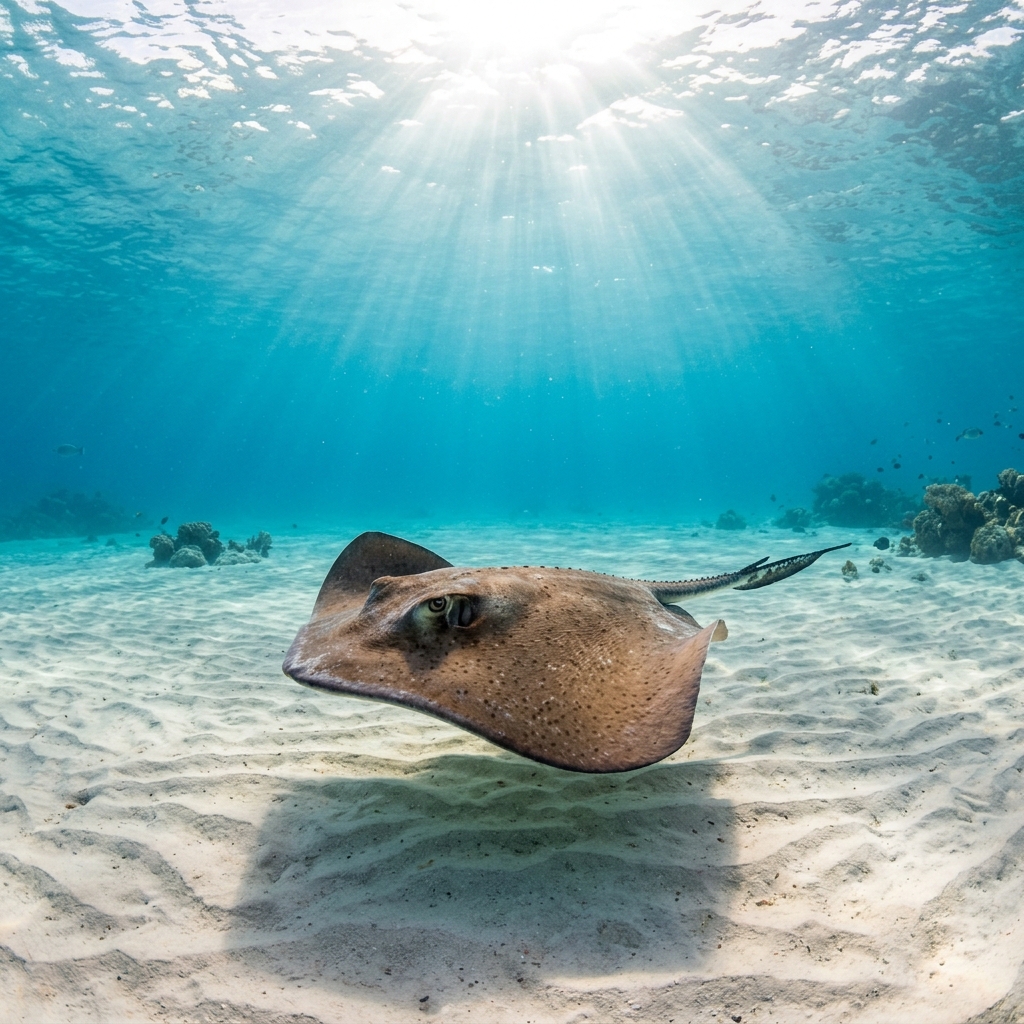
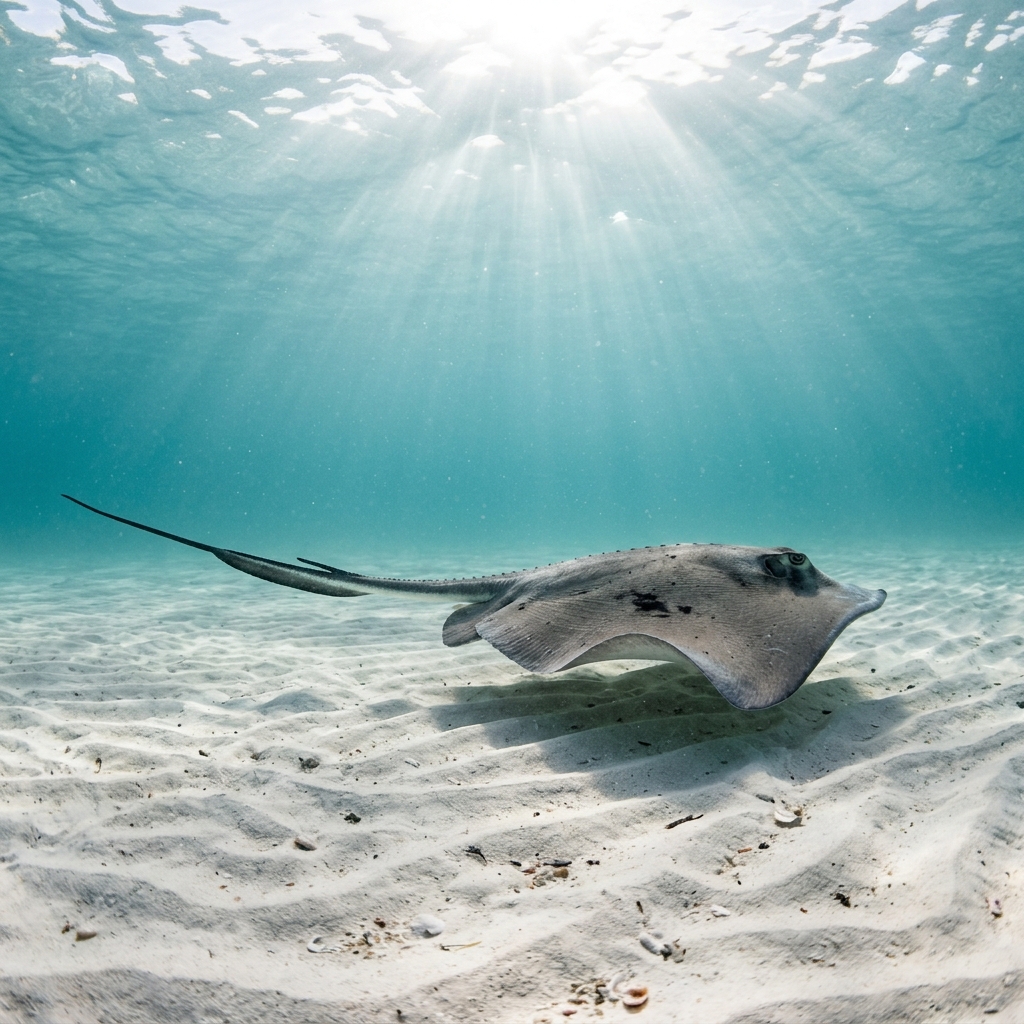
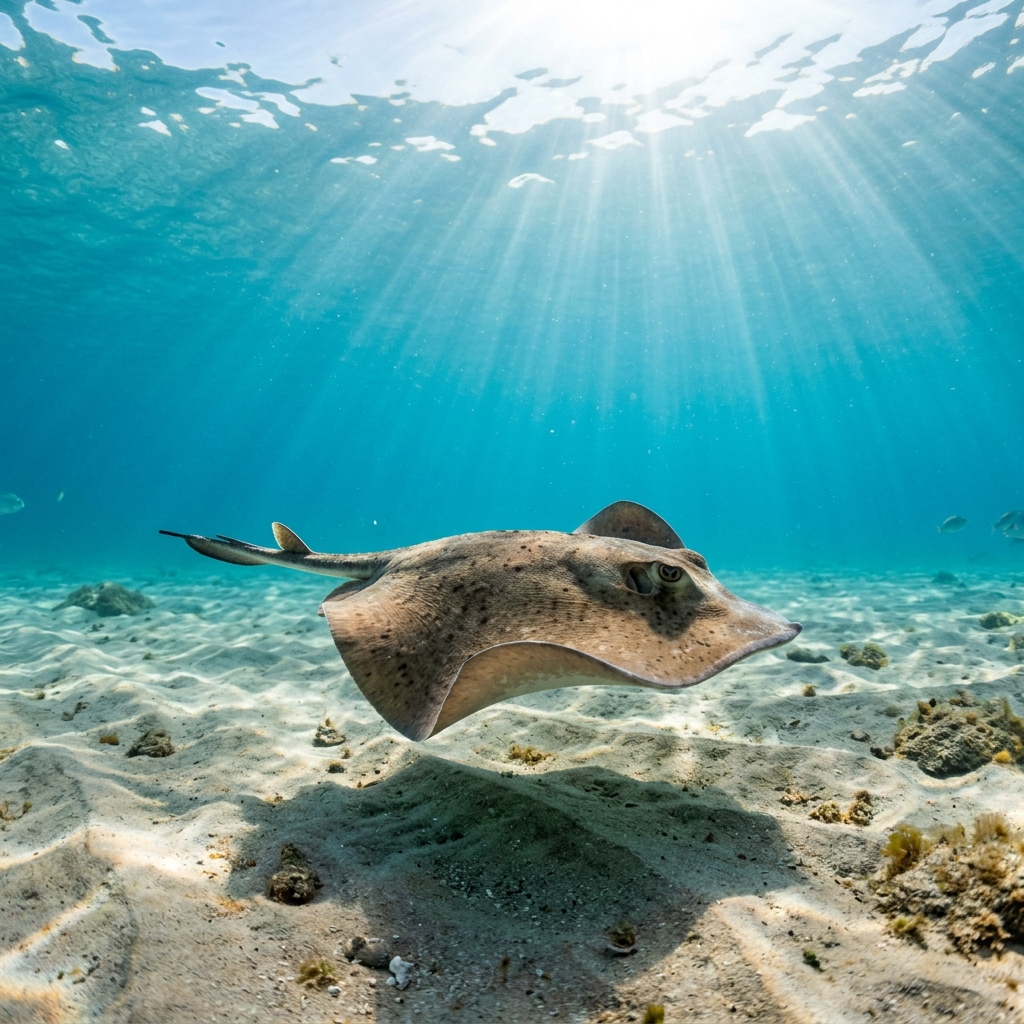
Most encounters happen on sandy patches and rubble zones between coral heads, where these rays cruise slowly or press their snouts into the substrate to flush out buried invertebrates and crustaceans. They are active during the day and will typically glide unhurriedly away if you approach too closely, chasing them achieves nothing and stresses the animal. Occasionally you'll find a small group resting or foraging together, which is more likely during the mating season.
During high tide, groups of bluespotted fantail rays move into very shallow seagrass beds and sandy inshore areas to forage, retreating to deeper reef crevices as the tide drops, so your chances of an encounter can shift noticeably over just a few hours.
In the Northern Hemisphere, sightings concentrate from March through January, making only February a notably quieter month in destinations like Egypt, Malaysia, and the Philippines. Southern Hemisphere sites in Australia show no concentrated season, reflecting a year-round warm-water presence suited to its 25-29 °C temperature niche.
Most commonly logged across the Red Sea and Indo-Pacific, with Egypt leading the pack, especially around Sharm el Sheikh and Marsa Alam. Malaysia is a strong second, with solid sightings across the Perhentian and Redang Islands, Tioman, and West Sabah. Indonesia rounds out the top tier, particularly in Sulawesi and the Nusa Tenggara and Banda Sea region.
Mapping where Bluespotted Fantail Ray is logged…
The Red Sea is one of the most reliable places to find them, particularly around Sharm el Sheikh and Marsa Alam in Egypt. Malaysia, especially the Perhentian and Redang Islands, Tioman, and West Sabah, and Indonesian sites in Sulawesi and the Banda Sea are also strong bets. The species is logged across a wide swathe of the Indo-Pacific.
In northern-hemisphere destinations like Egypt, Malaysia, and the Philippines, sightings are most concentrated from March through January. February is the quietest month in those regions. At Australian sites in the south, they appear year-round with no strong seasonal peak.
They are not aggressive, but they do carry a venomous tail spine. The real risk is an accidental sting if a resting ray is startled underfoot or feels cornered. Give them space, never touch them, and avoid looming over them from above.
Look for a small, round-edged disc in olive-yellow or golden tones covered in vivid electric-blue spots, with blue stripes running along the sides of the tail. The rounded, fan-shaped disc edge sets it apart from more angular stingrays. At around 24 cm across, it is noticeably compact.
Disc width typically reaches around 24 cm, making this one of the smaller stingrays you are likely to meet on a reef dive. The tail adds considerable length beyond that, but the body itself is compact enough to shelter comfortably under a coral ledge.
They are carnivores that target small invertebrates, worms, and crustaceans buried in sandy or rubble substrates. Watch for the characteristic nose-down, slow-fanning behaviour as they blow water and sand aside to expose prey, it is one of the more engaging feeding behaviours you can observe on a shallow reef.
Site and sighting data is aggregated from diver logs, iNaturalist and GBIF. For taxonomy and conservation status:
Porcupine Ray
1,536 sites