Tridacna squamosa
Spot the Fluted Clam on reefs in Queensland, the Red Sea and beyond. Recognised by its scalloped shell edges and vivid mantle, found in 22-29 °C waters.
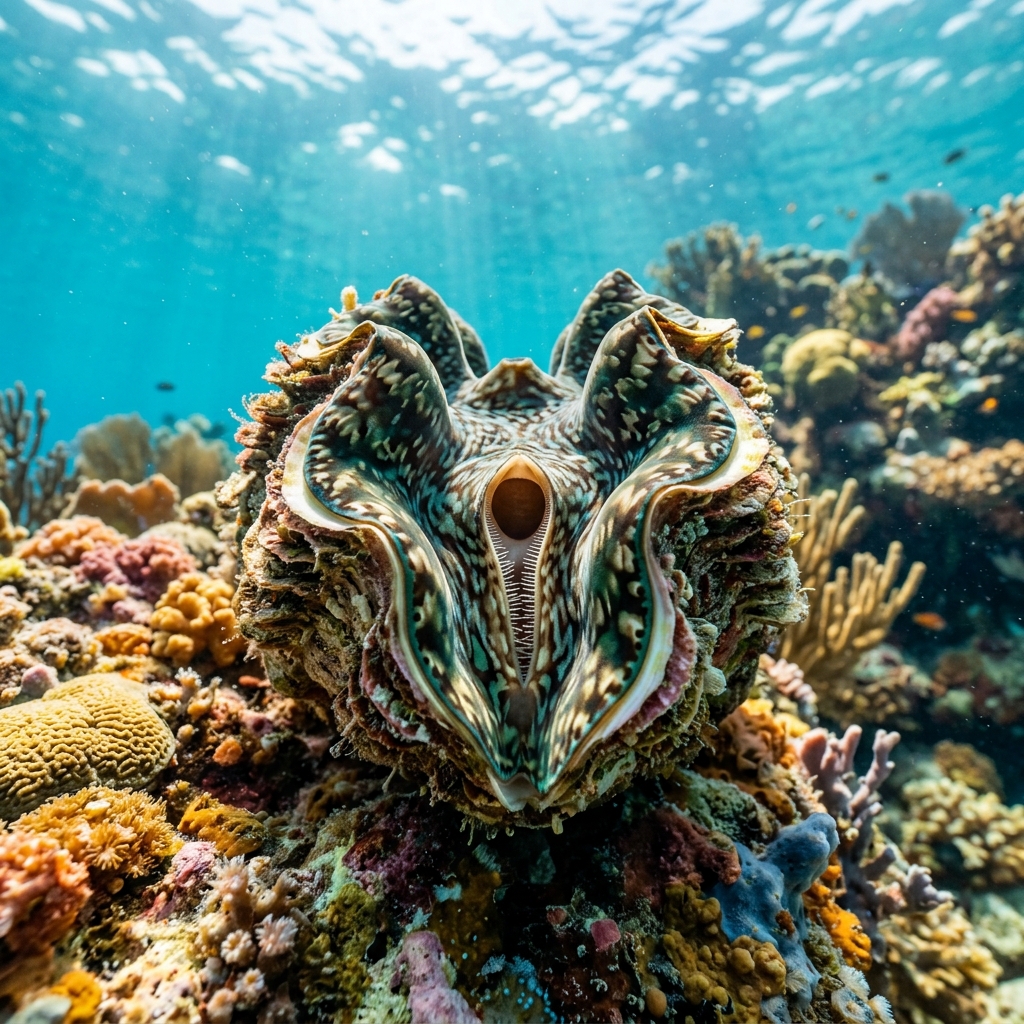
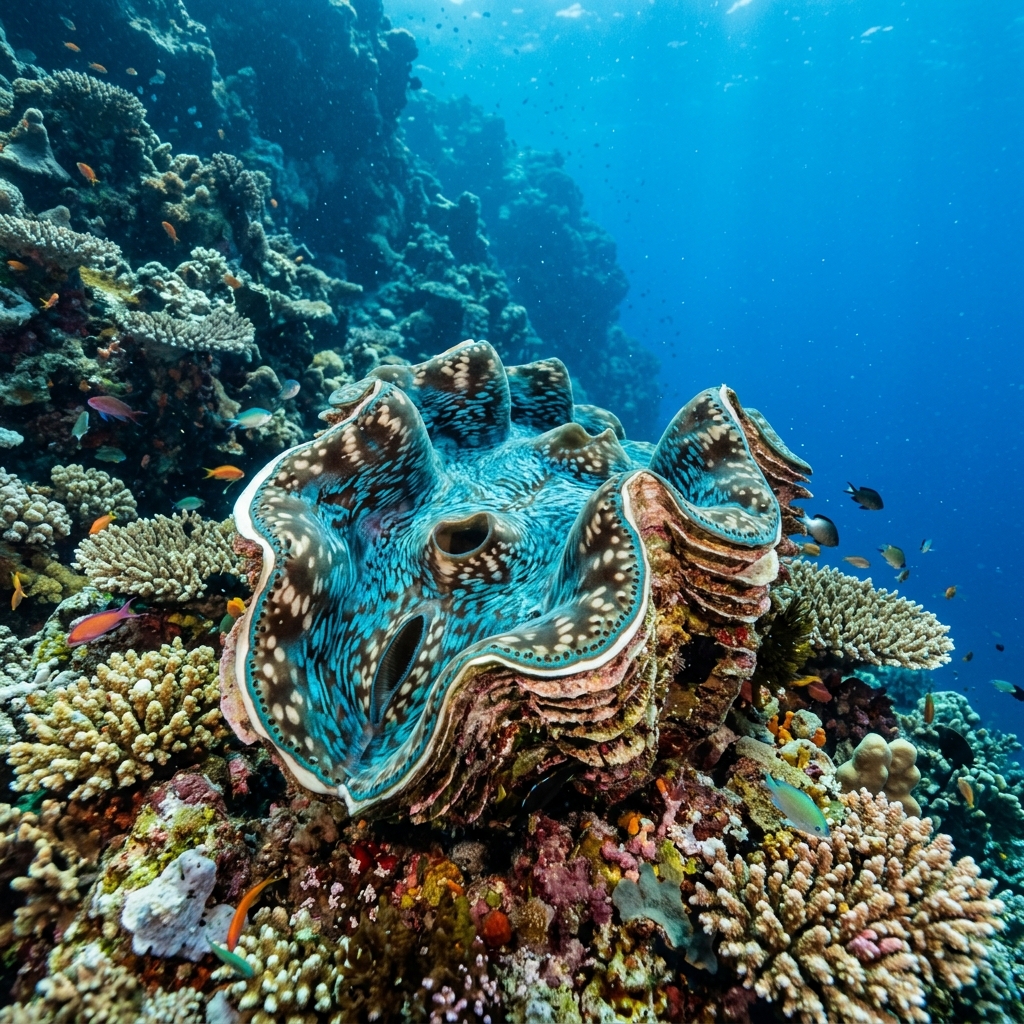
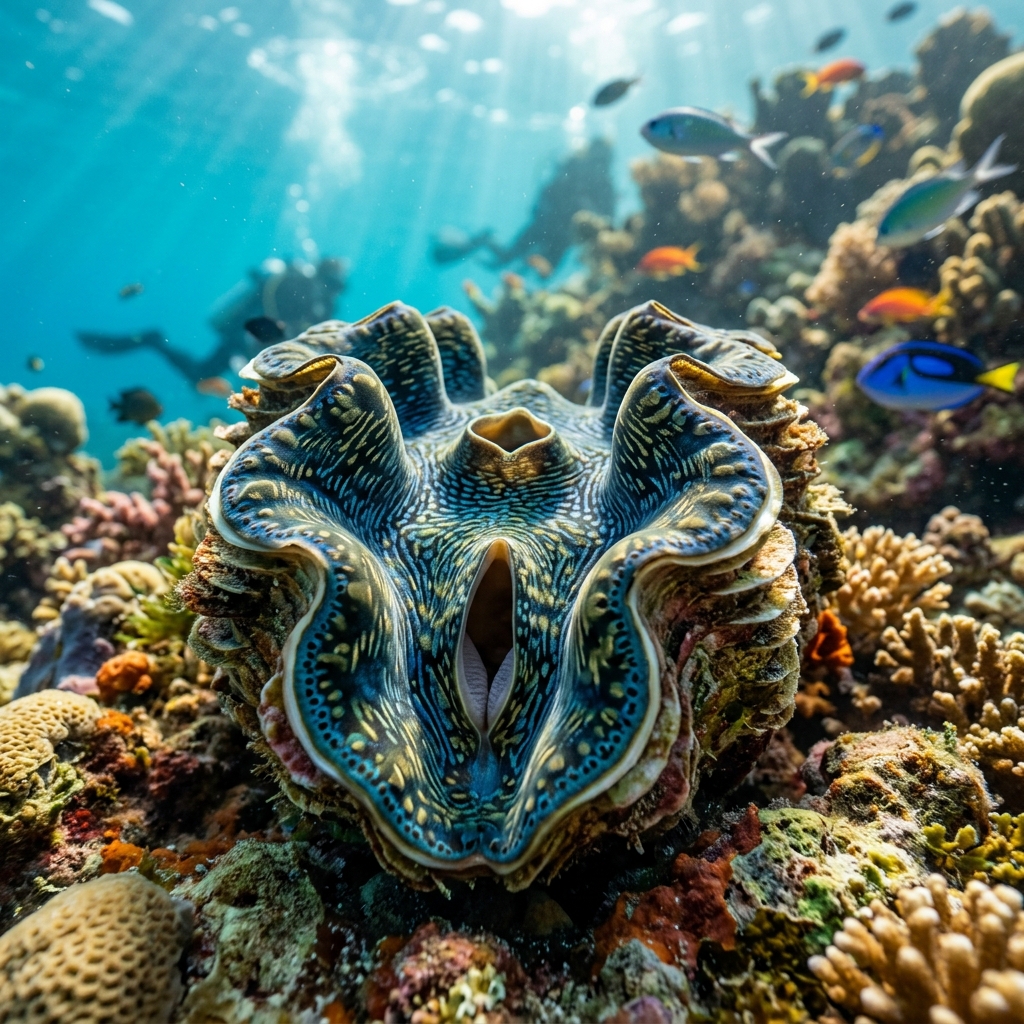
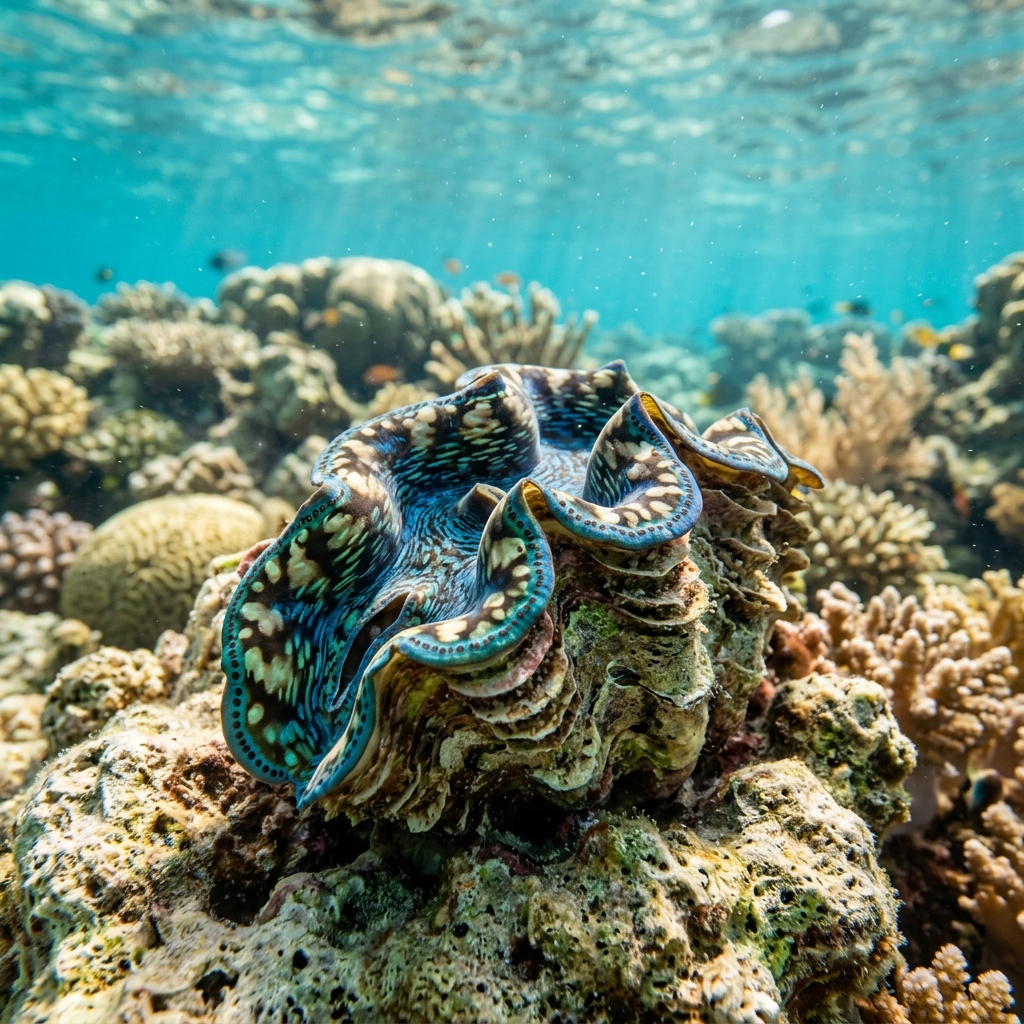
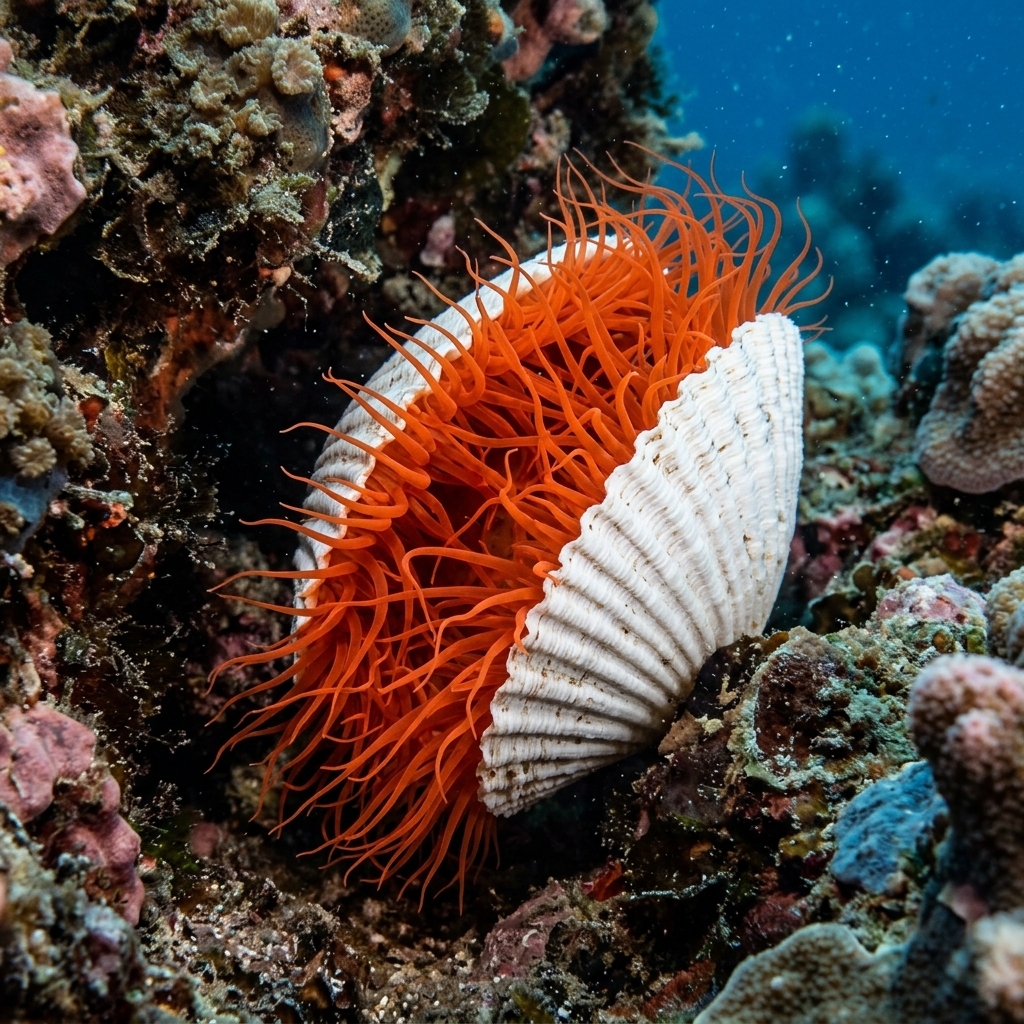
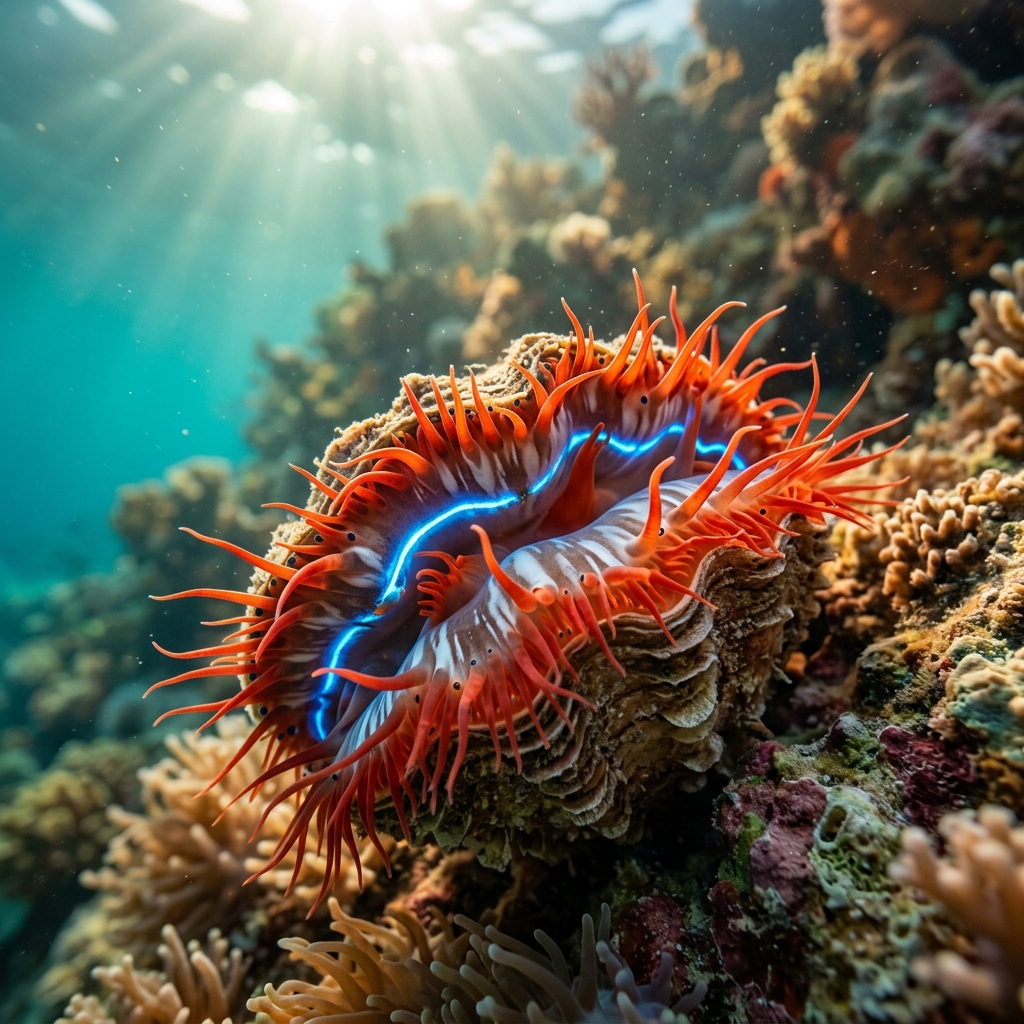
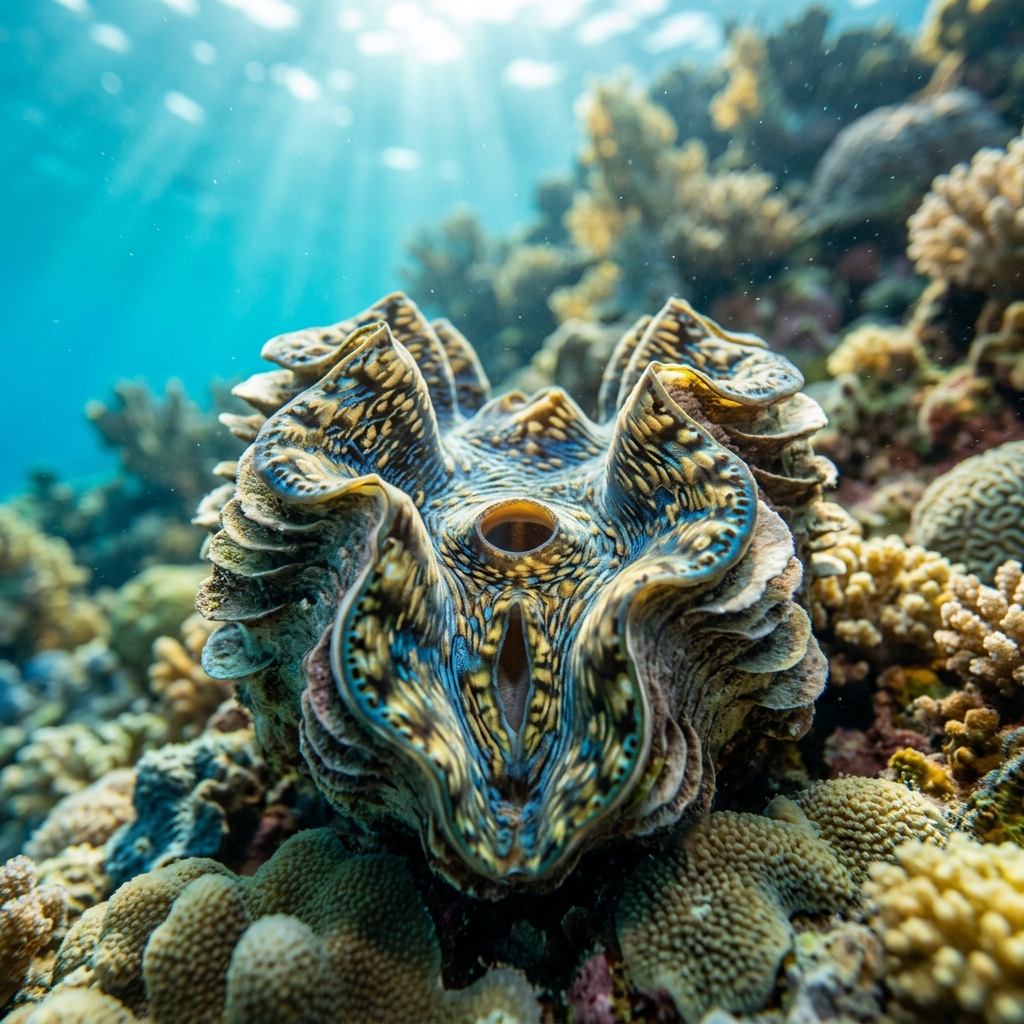
Look for the distinctive wavy, scalloped ridges running along the shell valves, these fluted folds are the single best field mark and give the species its name. The exposed mantle (the fleshy tissue visible between the open shell halves) displays rich patterns of green, blue, brown, or gold, often with a bumpy or iridescent texture. Shells are broadly oval and typically smaller than the famous Giant Clam, making size a useful secondary cue. Like all tridacnids, it sits fixed to the reef substrate, orientated so the mantle faces the light.
Fluted Clams spend their lives anchored to hard substrate, coral bommies, reef flats, and rubble slopes, and feed primarily via photosynthetic algae (zooxanthellae) living inside the mantle. When you approach, the mantle slowly withdraws and the shell valves close; moving in calmly and giving the animal space will keep it open longer. Sightings tend to be solitary individuals rather than clusters, so once you spot one, take a moment to appreciate the mantle colouring before it retreats.
The vivid mantle colours are not pigment alone, the clam hosts millions of symbiotic algae called zooxanthellae, and its mantle is packed with light-focusing cells that help those algae photosynthesise, essentially turning the clam into a living solar panel.
No clear seasonal peak has emerged from the sighting data, so treat it as a year-round resident. Its observed water-temperature range of roughly 22 to 29 °C fits the consistently warm conditions found on Indo-Pacific and Red Sea reefs throughout the year.
Reef neighbours a diver could mistake it for. Use the identification notes above to tell them apart.
Australia is the strongest country for sightings, with Queensland and Western Australia together accounting for the bulk of logged encounters. Egypt's Red Sea coast is the second major hotspot, particularly around Safaga and Sharm el Sheikh, with additional records from Marsa Alam. Smaller numbers of sightings come from Thailand's Gulf coast, the Philippines, and New Caledonia.
Mapping where Fluted Clam is logged…
The most reliable places to look are Queensland and Western Australia in Australia, and the Egyptian Red Sea around Safaga and Sharm el Sheikh. Smaller numbers of sightings have been recorded in Thailand, the Philippines, and New Caledonia. Warm Indo-Pacific reef systems are your best bet overall.
There is no identifiable seasonal peak in the sighting records, so they can be encountered throughout the year. Water temperatures between roughly 22 and 29 °C suit them, which describes typical conditions on tropical reefs year-round across both the Indo-Pacific and the Red Sea.
The defining feature is the series of pronounced wavy ridges, or flutes, along the shell valves, no other common tridacnid has ridges quite this bold and scalloped. Pair that with the colourful patterned mantle (greens, blues, and golds are common) and a broadly oval shell that is noticeably smaller than the Giant Clam.
Tridacna squamosa typically reaches around 40 cm in shell length, though some individuals can grow somewhat larger. They are considerably smaller than the Giant Clam (Tridacna gigas), which can exceed 1 metre, making size a useful clue when the two species share a reef.
No. Fluted Clams pose no threat to divers. When approached they simply close their valves slowly. The old story of clams trapping divers applies to extremely large Giant Clams and is largely mythologised; a Fluted Clam at roughly 40 cm presents no risk whatsoever.
Site and sighting data is aggregated from diver logs, iNaturalist and GBIF. For taxonomy and conservation status:
Elongate Clam
2,091 sites