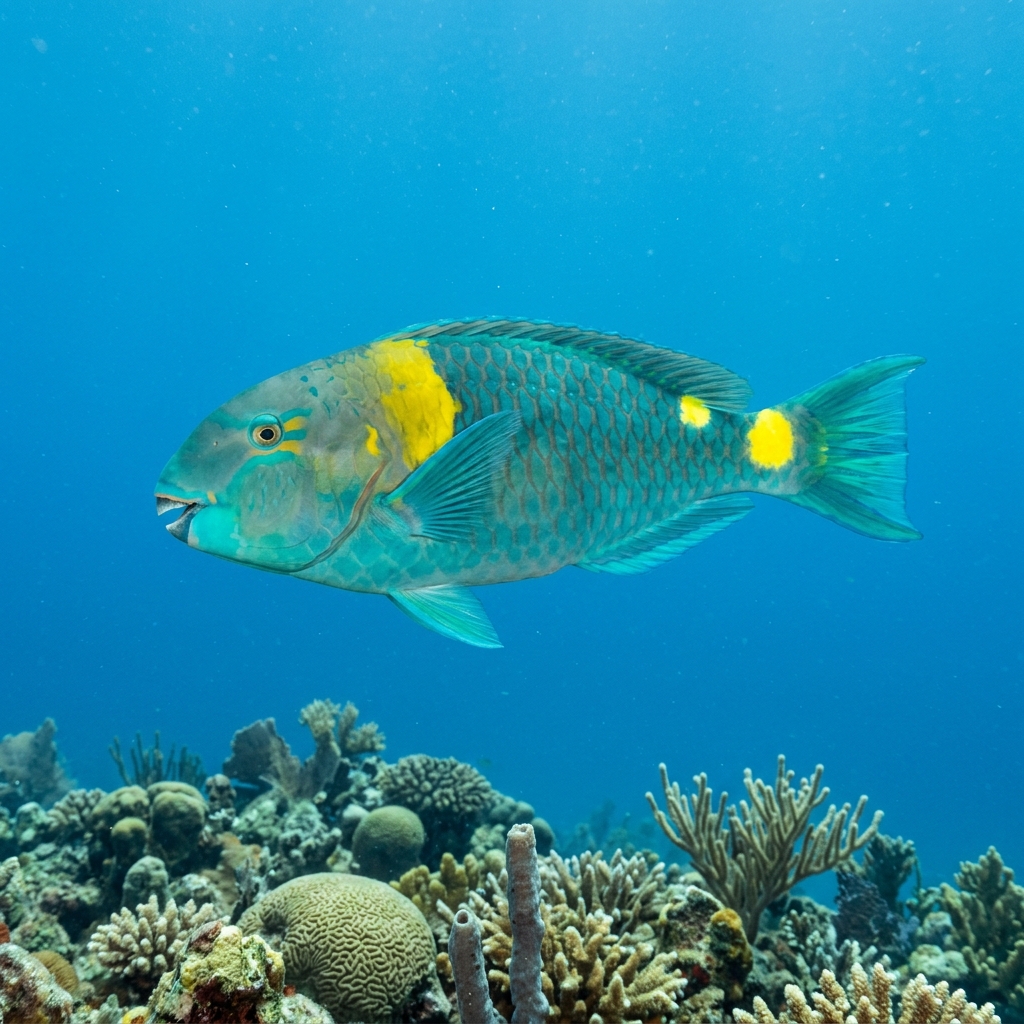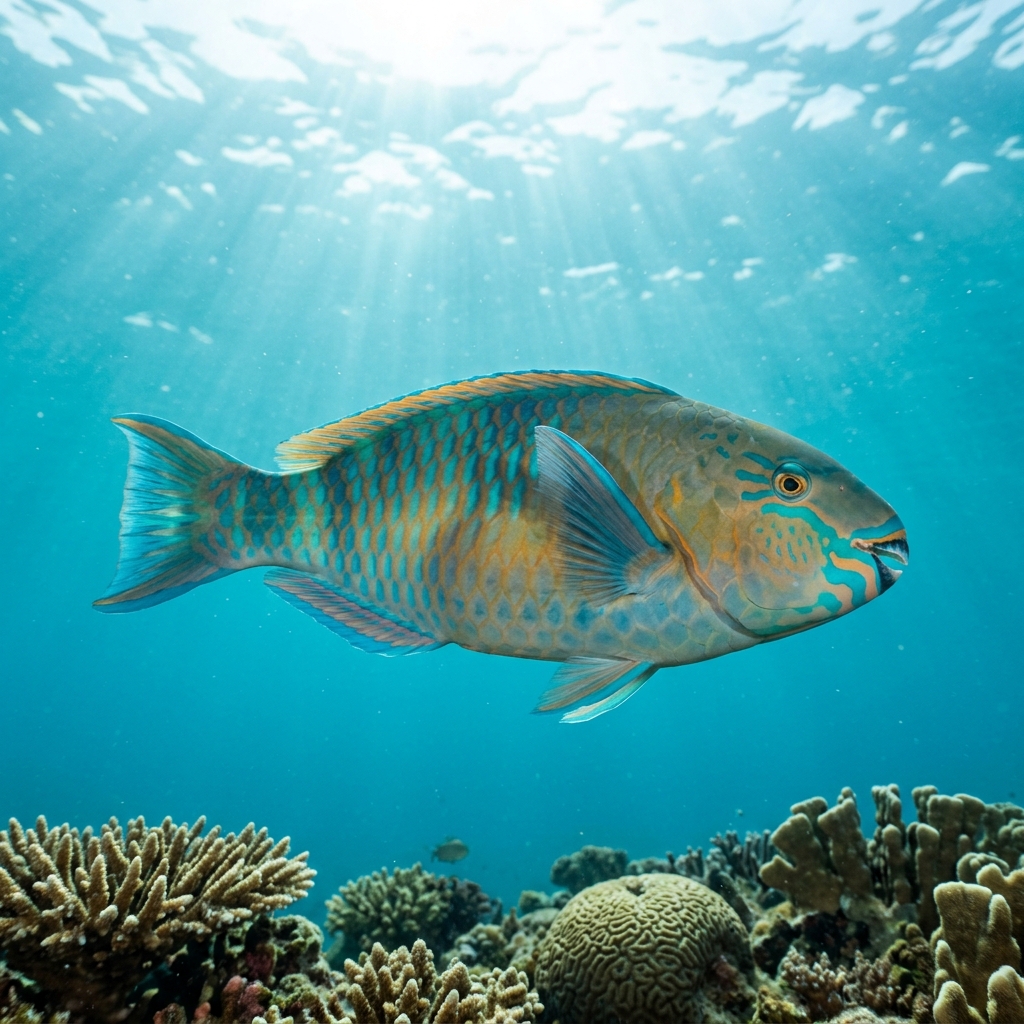
Scarus ghobban
Spot Blue-barred Parrotfish across the Galapagos, Perhentian Islands, and Gulf of Thailand. Present year-round in 23-29 °C tropical waters.
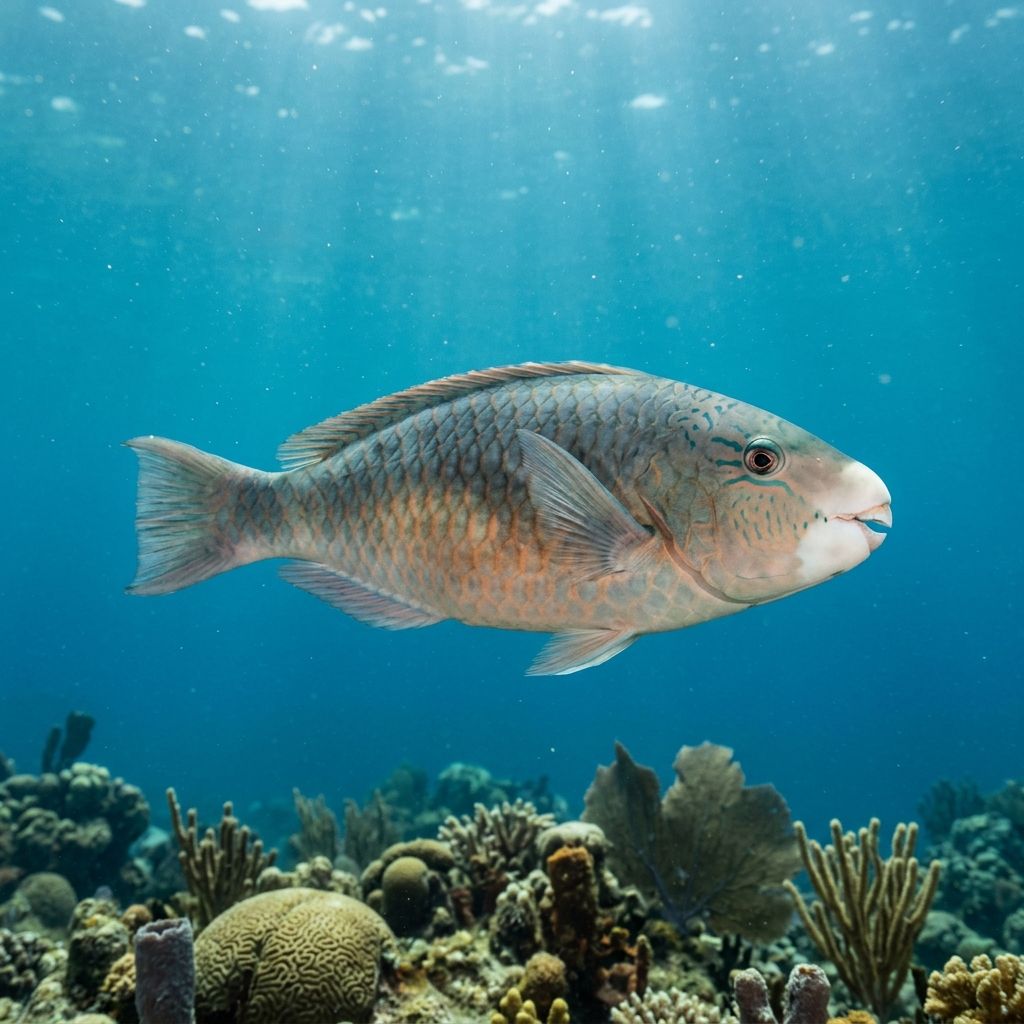
A stocky, medium-to-large parrotfish recognised by its blue-green scales overlaid with irregular orange or salmon-pink scale edges, giving a scale-by-scale mosaic effect rather than bold stripes. The fused beak-like teeth (the parrotfish's defining feature) are blue-green, and the face typically shows a warm orange or yellowish wash around the snout. Females and juveniles tend toward a duller brownish-orange, while fully terminal-phase males show the most vivid blue and orange contrast.
Usually spotted grazing steadily over hard coral or rocky substrate, using its fused beak to scrape algae and coral material; you will often hear the crunch before you see the fish. It tends to move purposefully and largely ignores divers, making patient observation straightforward. Look along the upper reef slope and shallower rubble zones rather than in the open water column.
Like other parrotfish, blue-barred parrotfish excrete the coral rubble they ingest as fine white sand, contributing meaningfully to the sandy sediment found on and around tropical reefs.
In Northern Hemisphere destinations, including Southeast Asia and Mexico, it is present year-round with no concentrated peak season, so any time works. Southern Hemisphere sites such as Queensland and Western Australia see sightings concentrated between September and February, aligning with the austral spring and summer.
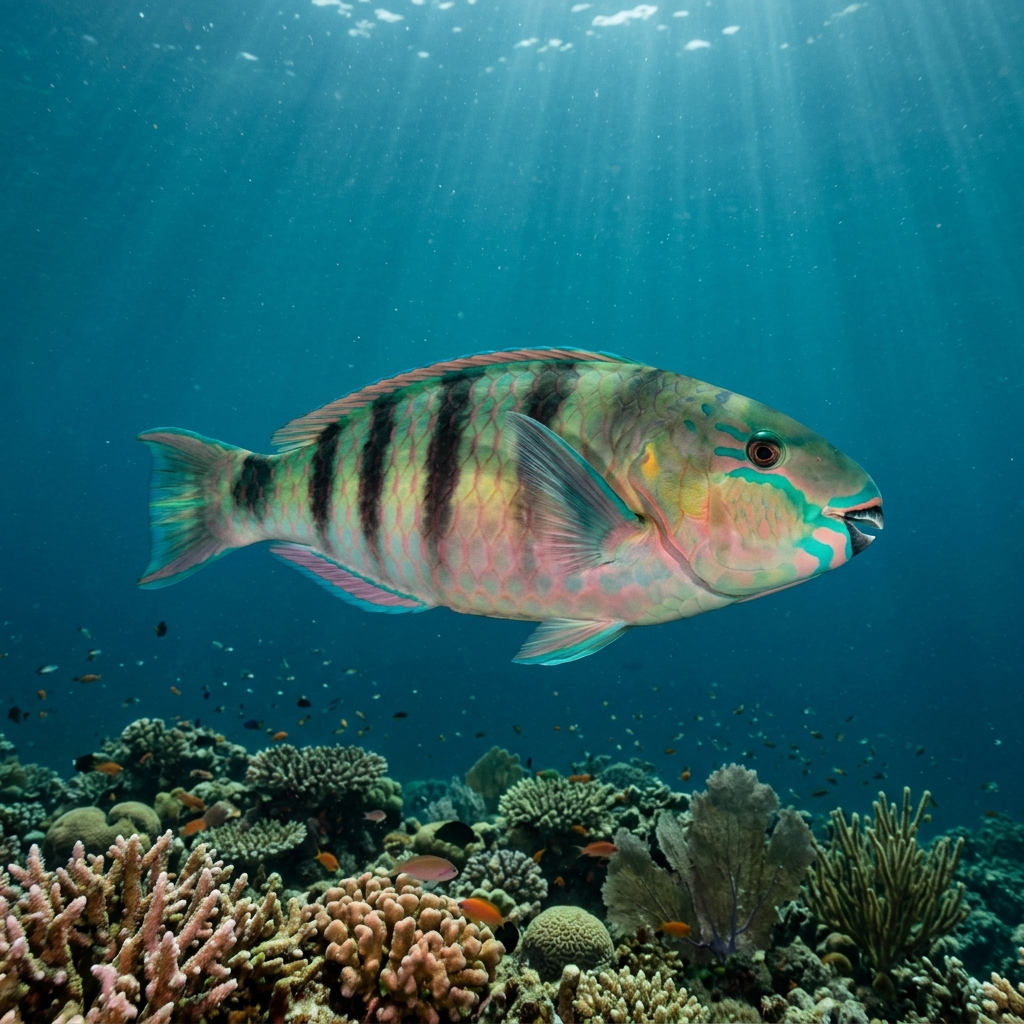
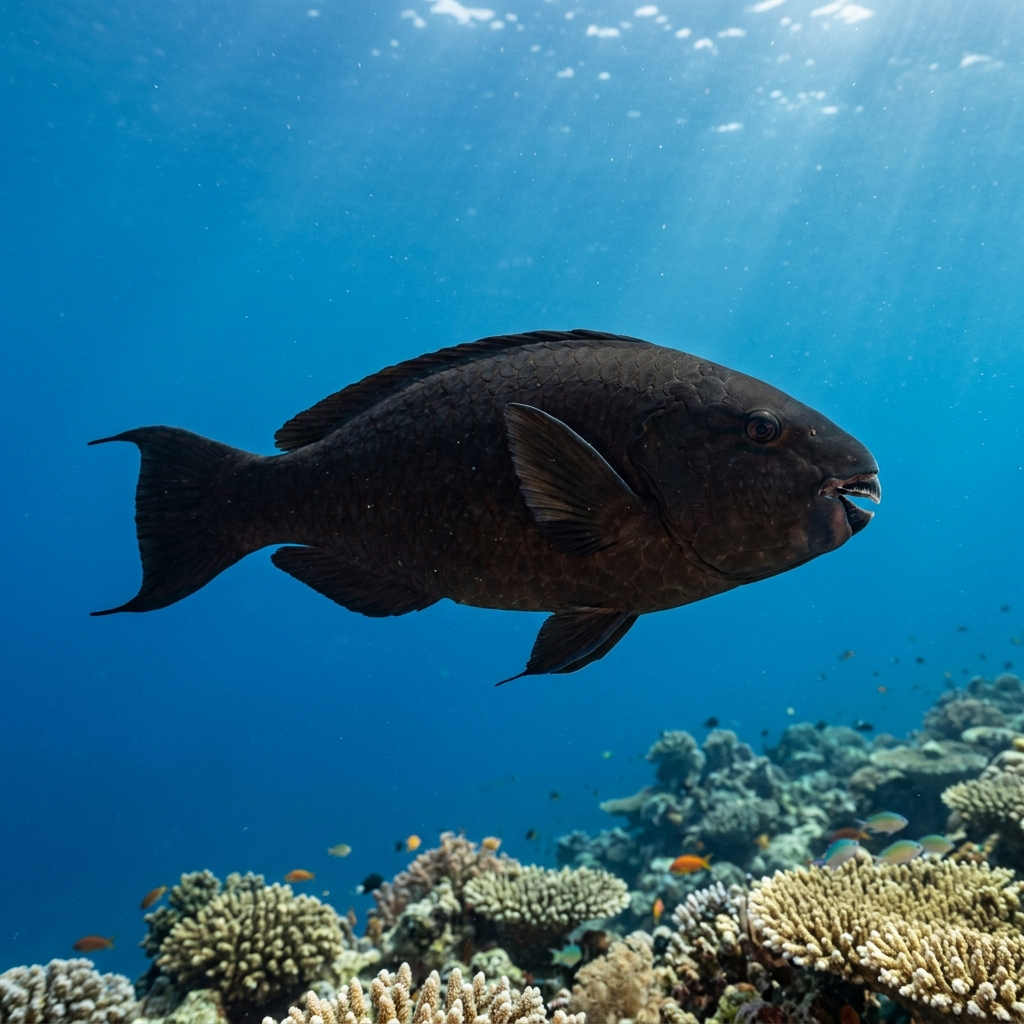
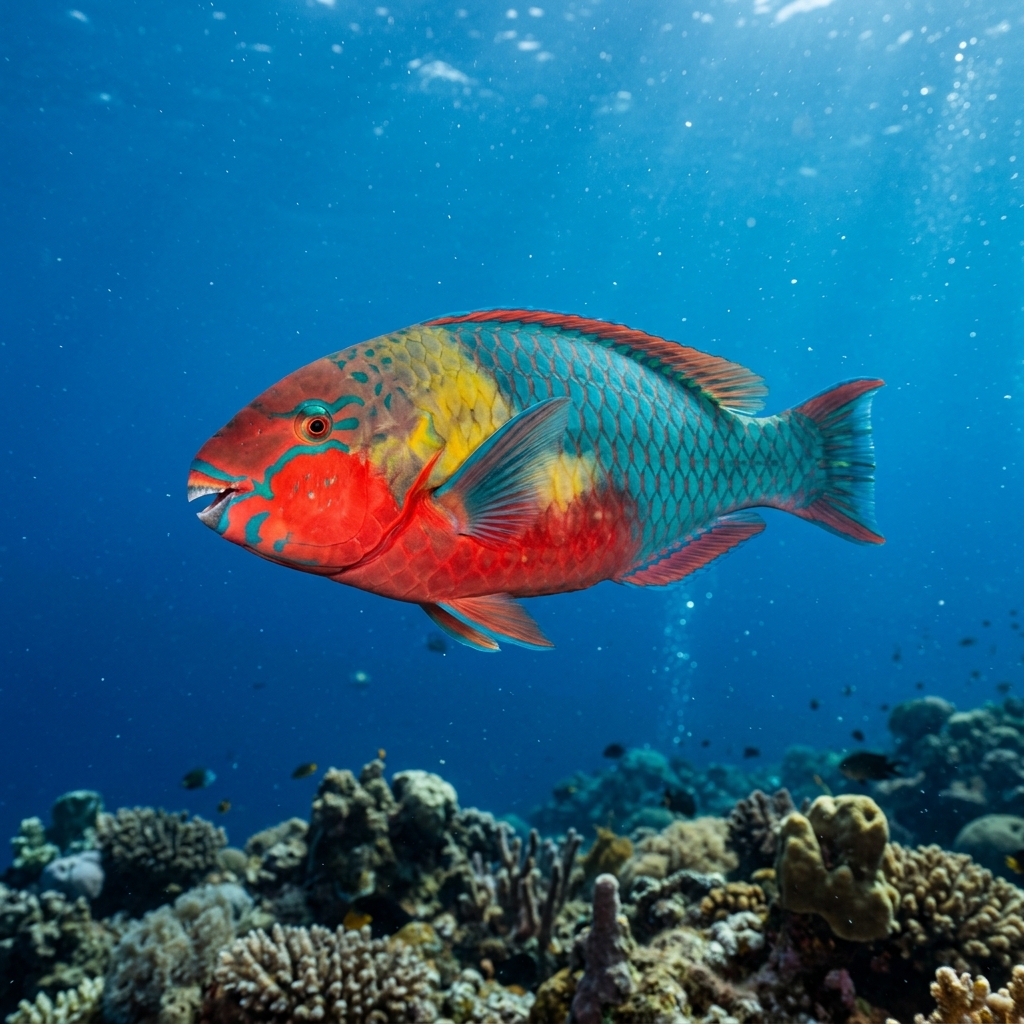
Reef neighbours a diver could mistake it for. Use the identification notes above to tell them apart.
Most consistently logged in Malaysia, particularly around the Perhentian and Redang Islands and Pulau Tioman, and in Thailand's Gulf of Thailand South region, making Southeast Asia the strongest area for sightings. Australia, especially Queensland and Western Australia, is another reliable destination, alongside standout populations at the Galapagos Islands in Ecuador and around Baja California in Mexico.
Mapping where Blue-barred Parrotfish is logged…
Strong sightings come from Malaysia's Perhentian and Redang Islands and Pulau Tioman, Thailand's Gulf of Thailand South, Queensland and Western Australia, the Galapagos Islands, and Baja California. The species is logged across a wide stretch of the Indo-Pacific and eastern Pacific.
In Southeast Asia and Mexico it is present year-round with no clear seasonal peak, so timing is flexible. If you are diving in Australia or other Southern Hemisphere sites, September through February is the period when sightings are most concentrated.
Look for a stocky parrotfish with a blue-green body where each scale has an orange or salmon-pink margin, creating a mosaic pattern. The beak is blue-green and the face shows a warm orange wash. Females and juveniles are duller and more brownish, which can cause confusion with related species.
Most divers log it as uncommon rather than a guaranteed sighting, though it is recorded as common at a meaningful number of sites, particularly in Malaysia and Thailand. Patience and slow movement along reef edges improve your odds considerably.
Site and sighting data is aggregated from diver logs, iNaturalist and GBIF. For taxonomy and conservation status:
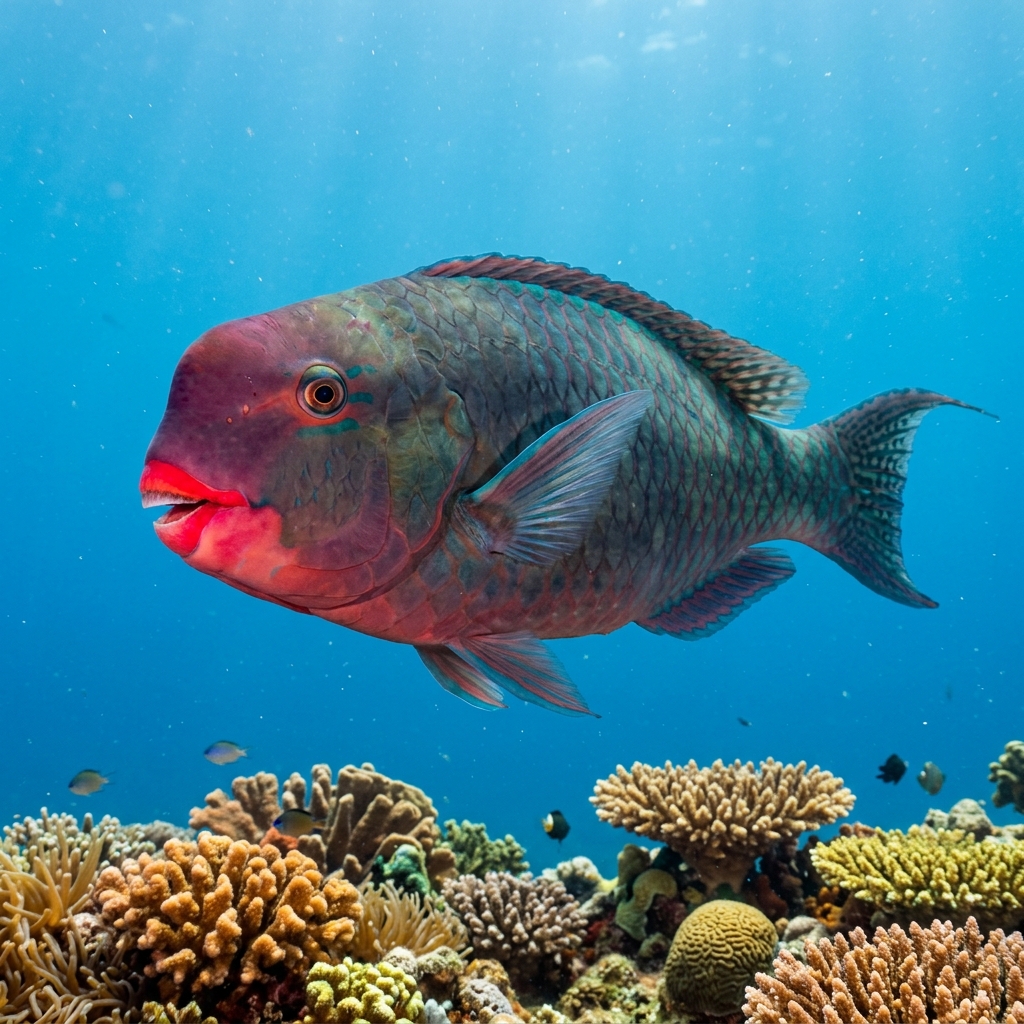
Redlip Parrotfish
2,789 sites