Plectorhinchus chaetodonoides
Spot Harlequin Sweetlips on reefs across the Philippines, Indonesia and Malaysia. Year-round sightings in warm Indo-Pacific waters from 25-29 °C.
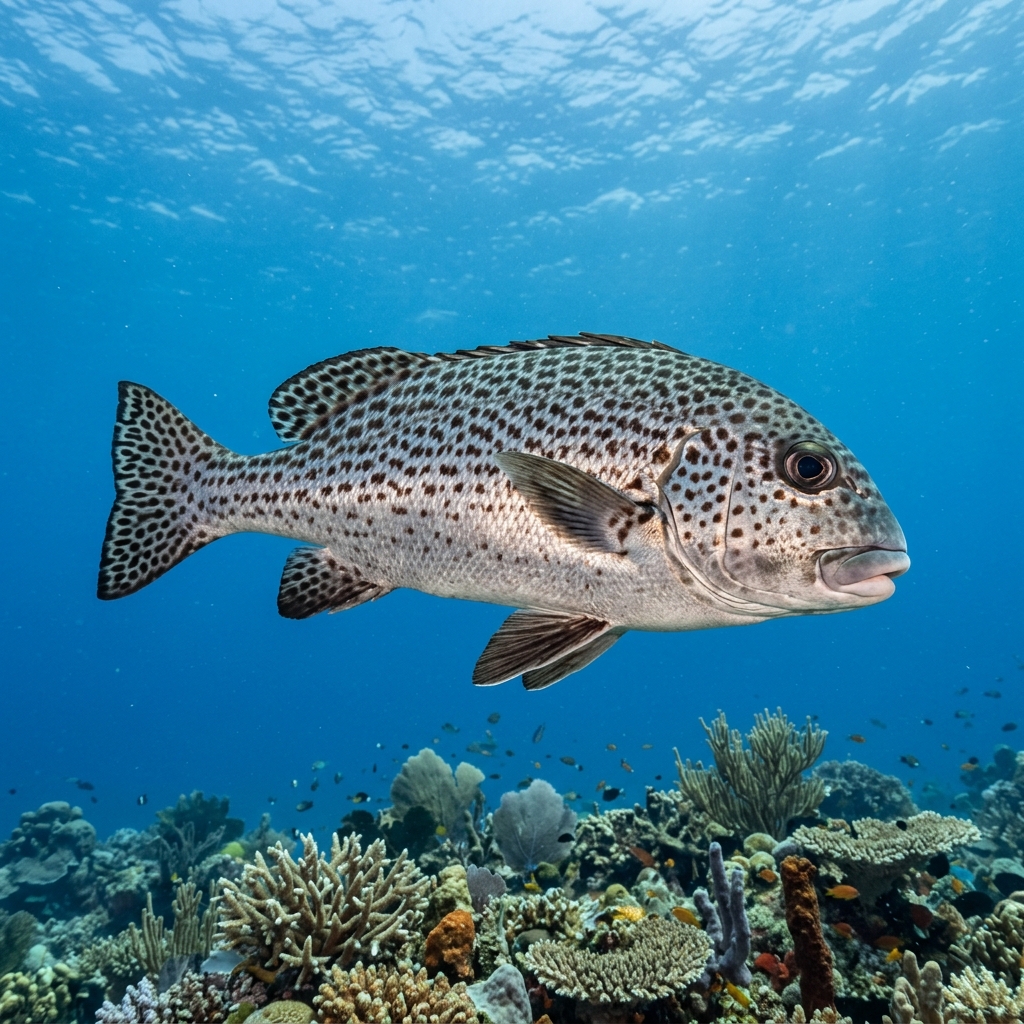
Adults are hard to miss: a white or pale grey body plastered with large, irregular dark brown to black spots, including on the fins, giving a polka-dot effect unlike almost anything else on a tropical reef. They grow to around 50 cm, roughly the length of a forearm, with the thick, rubbery lips that give the sweetlips family their name. Watch for a gentle, rocking side-to-side sway as they swim, a movement distinctive enough to identify them even at a distance.
During the day, harlequin sweetlips typically hover in small loose groups beneath ledges or overhangs, swaying gently and doing very little in an obvious hurry. They are shy fish, approach slowly and diagonally rather than head-on, or they will quietly back into the reef. After dark they become active hunters, picking over the sand and rubble for small invertebrates.
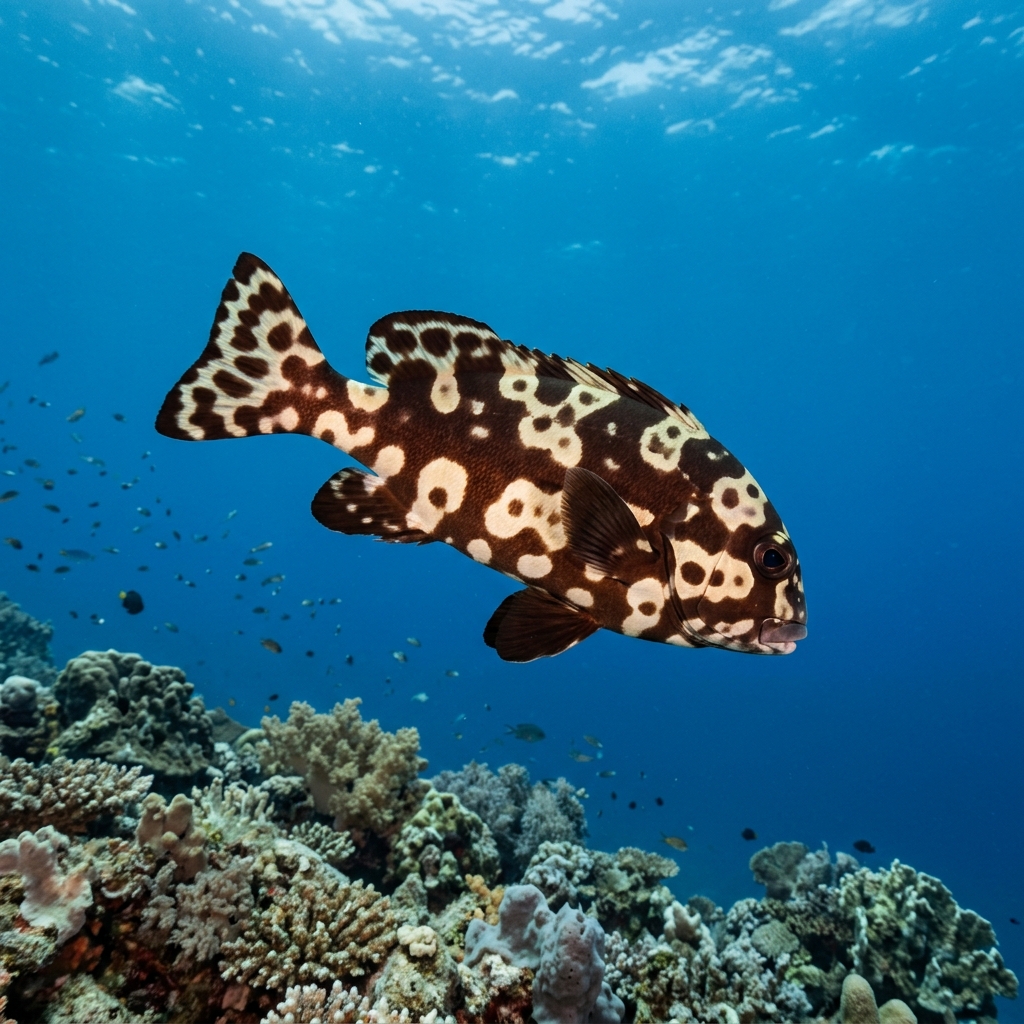
Juveniles bear almost no resemblance to the spotted adults: they are deep brown to black with large cream or white blotches, and they swim with an exaggerated full-body wriggle that mimics the movement of a toxic flatworm, likely as a defence against predators.
Present year-round in both the Northern and Southern hemispheres with no concentrated season. Their preference for warm water between roughly 25 and 29 °C keeps them on tropical Indo-Pacific reefs throughout the calendar, so there is no bad month to look for them.
Most logged across the Philippines and Indonesia, with particularly strong records in the Visayas (Central, East, and North), Palawan and Apo Reef, Sulawesi, and Bali. Malaysia is another reliable bet, especially around Pulau Tioman, and Queensland, Australia rounds out the top tier. Beyond those, Palau, the Maldives, Thailand, and Micronesia all have solid site coverage.
Mapping where Harlequin Sweetlips is logged…
The Philippines and Indonesia are the top destinations, with strong sighting records across the Visayas, Palawan, Sulawesi, and Bali. Malaysia's Pulau Tioman, Queensland in Australia, and sites in Palau, the Maldives, and Thailand are also solid choices across the broader Indo-Pacific.
They are present year-round across both hemispheres with no peak season. As long as you are diving in warm tropical reef conditions, typically 25 to 29 °C, you have a reasonable shot any month of the year.
Look for a pale body covered in bold dark brown or black spots that extend onto the fins, thick fleshy lips, and a gentle side-to-side rocking swim. At around 50 cm, the spotted pattern is unique among reef fish in their range and essentially unmistakable once seen.
They typically reach around 50 cm in length, roughly the size of a large forearm. Adults are noticeably deep-bodied, which makes them look bulkier than their length alone suggests.
Juveniles are dark brown with large white blotches and swim with a dramatic full-body wriggle, thought to mimic a toxic flatworm and deter predators. As they grow, the pattern gradually breaks up into the many smaller spots of the adult, and the exaggerated wiggle fades into the adult's gentle sway.
Site and sighting data is aggregated from diver logs, iNaturalist and GBIF. For taxonomy and conservation status:
White Grunt
1,680 sites