Scolopsis bilineata
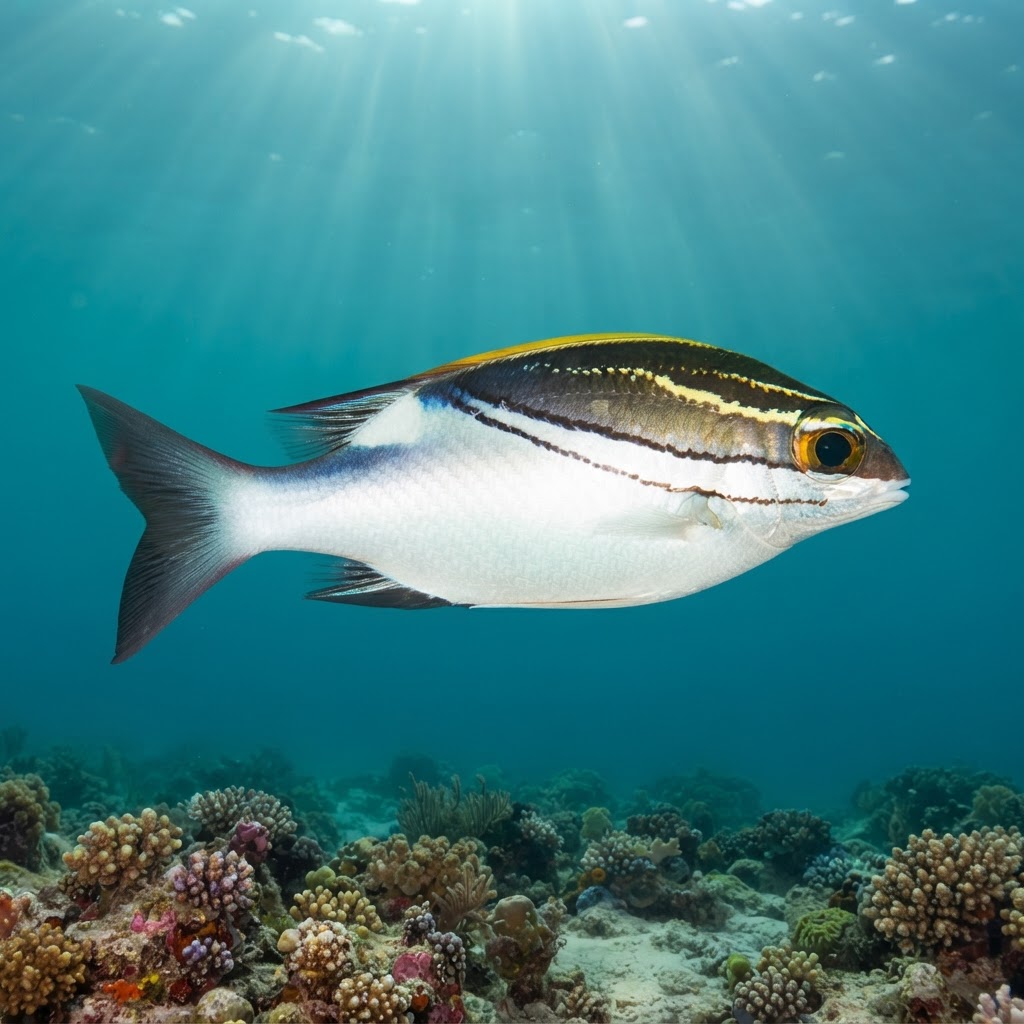
Spot the yellow saddle-blotch and black eye-bar of the bridled monocle bream on reefs from the Maldives' Central Atolls to Bali, year-round in 25-29C water.
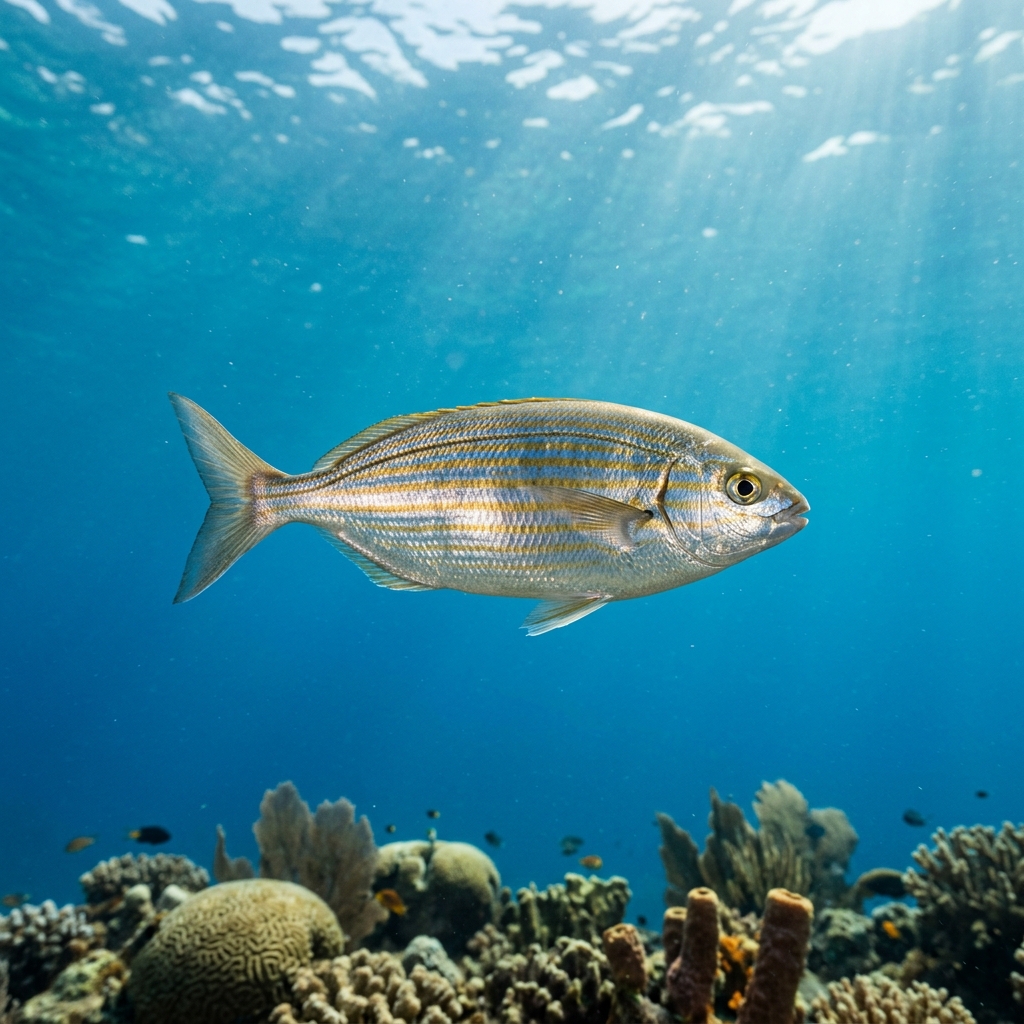
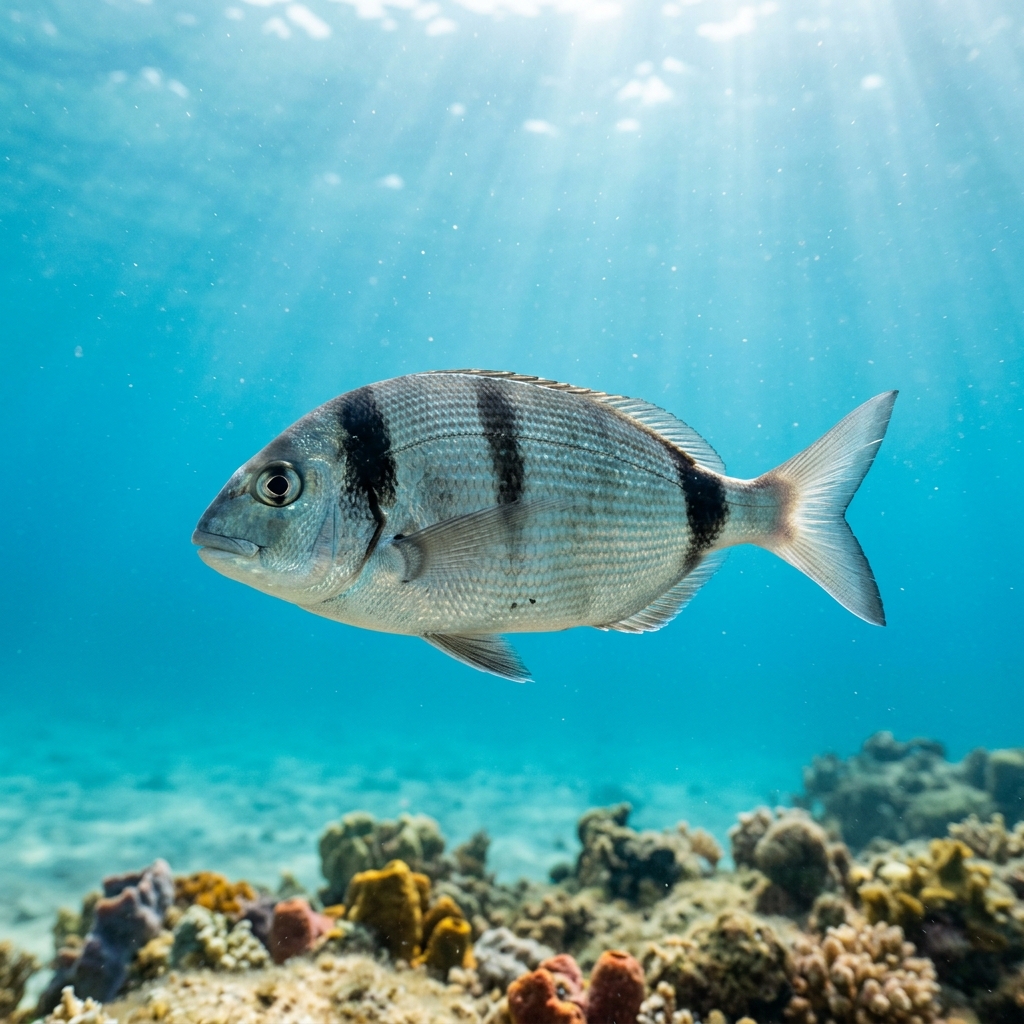
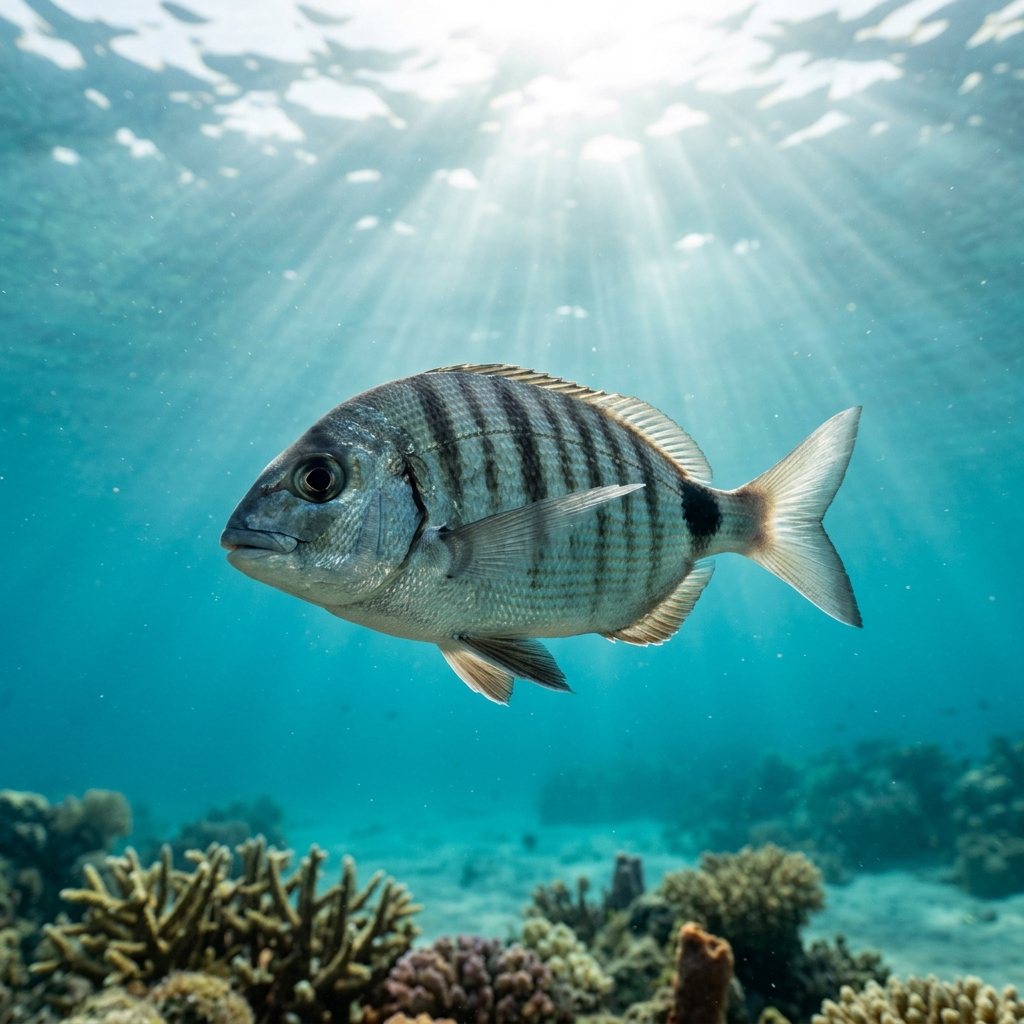
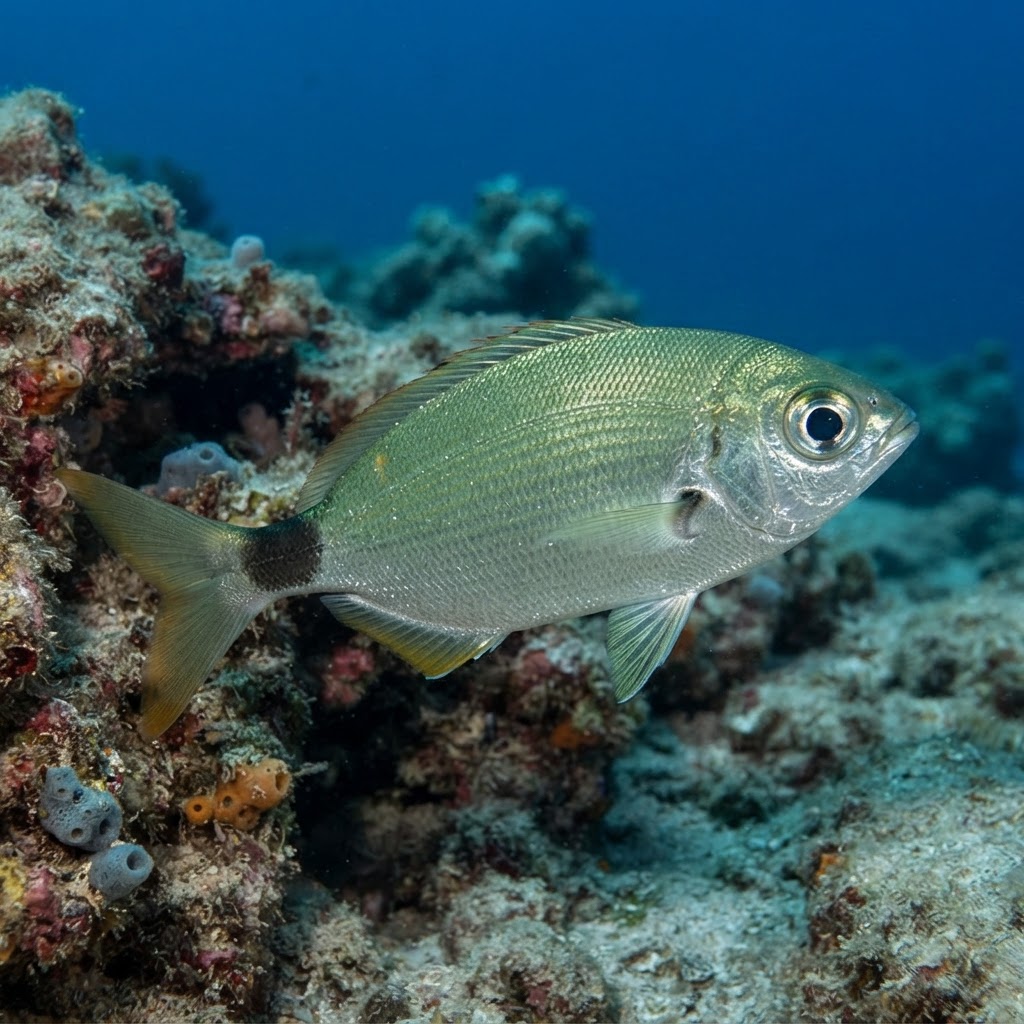
A slim, silvery-white fish around 17 cm with a bold black bar running diagonally through the eye, giving it the 'bridled' look. Look for a bright yellow saddle-shaped blotch on the upper back near the tail, which flashes on and off as the fish tilts. Juveniles are more strikingly patterned, with a black stripe running the length of the body and a false eye-spot near the tail that fades as they mature.
Usually seen picking over sand patches and rubble near coral heads, hunting small invertebrates by sight rather than schooling. It tends to hover just above the substrate, darting down to grab prey, and pays little attention to divers who keep a normal distance. Most sightings are on the reef flat or upper slope in shallow to moderate depth rather than deep water.
That yellow saddle patch is not decorative, it can be switched on or off depending on the fish's mood and activity, a trick used by several nemipterid species to signal or camouflage on the fly.
Comfortable in 25 to 29.3C water year-round, so there is no real season to plan around, just pick any month for the regions above.
Most reliably logged in the Maldives, especially the Central Atolls, and a strong presence across the Philippines' Visayas and Indonesia's Bali and Nusa Tenggara regions. Also a regular find in Malaysia (Peninsular East Coast and Sabah), Queensland reefs in Australia, and Okinawa in Japan, making it one of the more widely distributed reef fish across the Indo-Pacific.
Mapping where Bridled Monocle Bream is logged…
They turn up across the Indo-Pacific, with the strongest sightings in the Maldives' Central Atolls, the Visayas in the Philippines, and Bali and Nusa Tenggara in Indonesia. Malaysia's east coast and Sabah, Queensland in Australia, and Okinawa in Japan are also reliable spots.
There is no strong seasonal pattern in the sightings data. They live comfortably in 25 to 29.3C water, so they are present on tropical reefs throughout the year.
Check for a slim white to silvery body around 17 cm long, a black diagonal bar through the eye, and a yellow saddle-shaped patch near the tail that can appear and disappear. It usually hovers close to sand or rubble rather than swimming in open water.
They grow to around 17 cm, a modest, easy to overlook size that makes the eye-bar and yellow saddle patch the key things to look for.
No, they pose no threat to divers and are simply small carnivorous reef fish that ignore people going about their business nearby.
The yellow saddle blotch near the tail is a controllable colour patch the fish can turn on or off, likely used for signalling or quick camouflage shifts while foraging over sand and rubble.
Site and sighting data is aggregated from diver logs, iNaturalist and GBIF. For taxonomy and conservation status:
Saddled Bream
3,846 sites