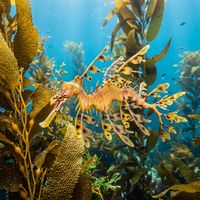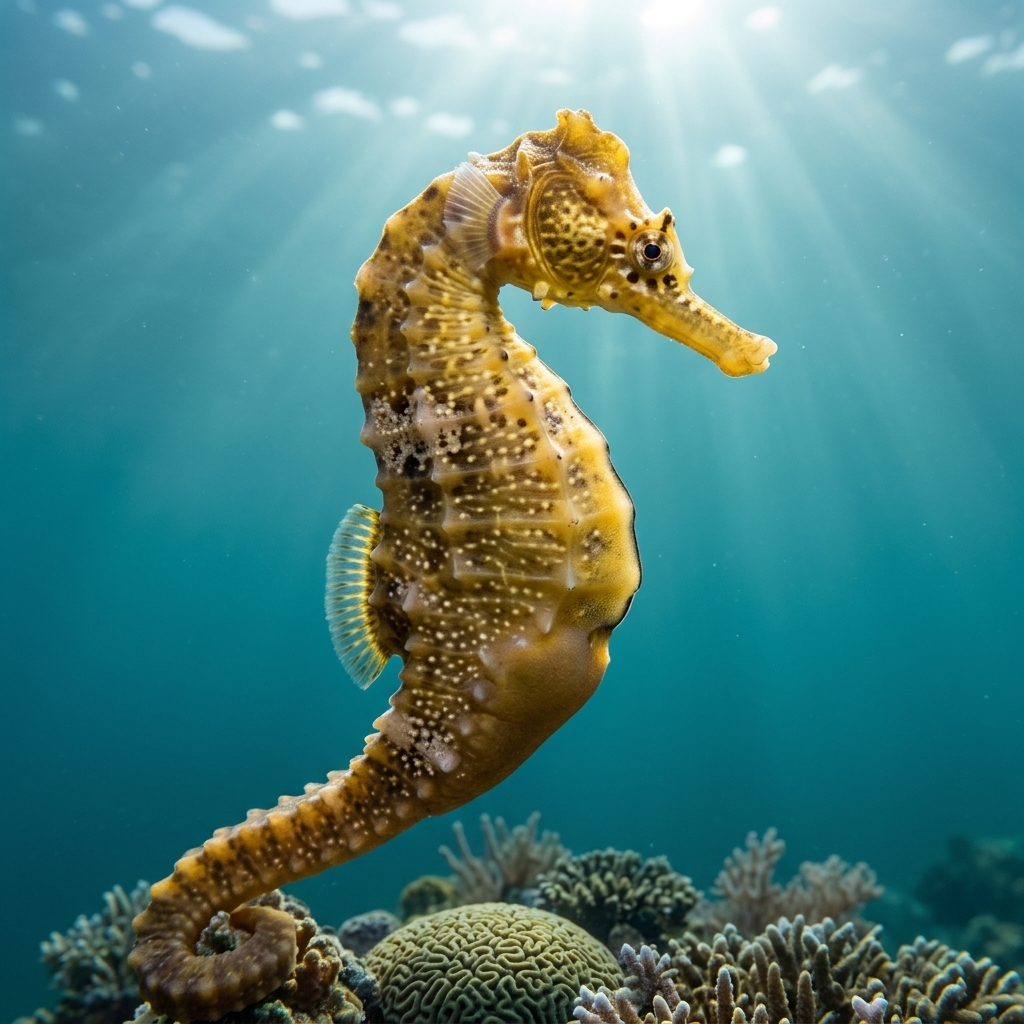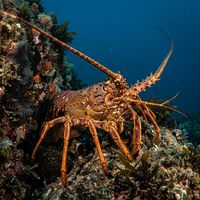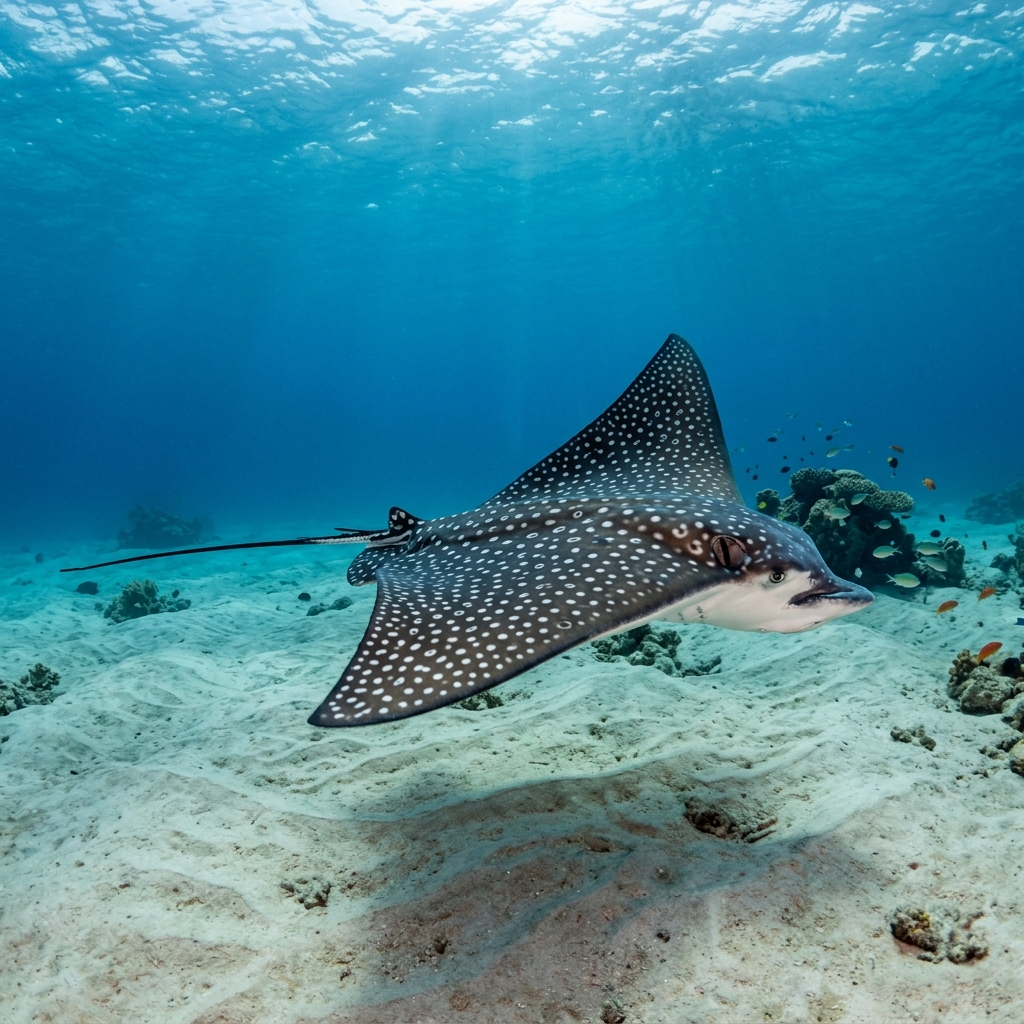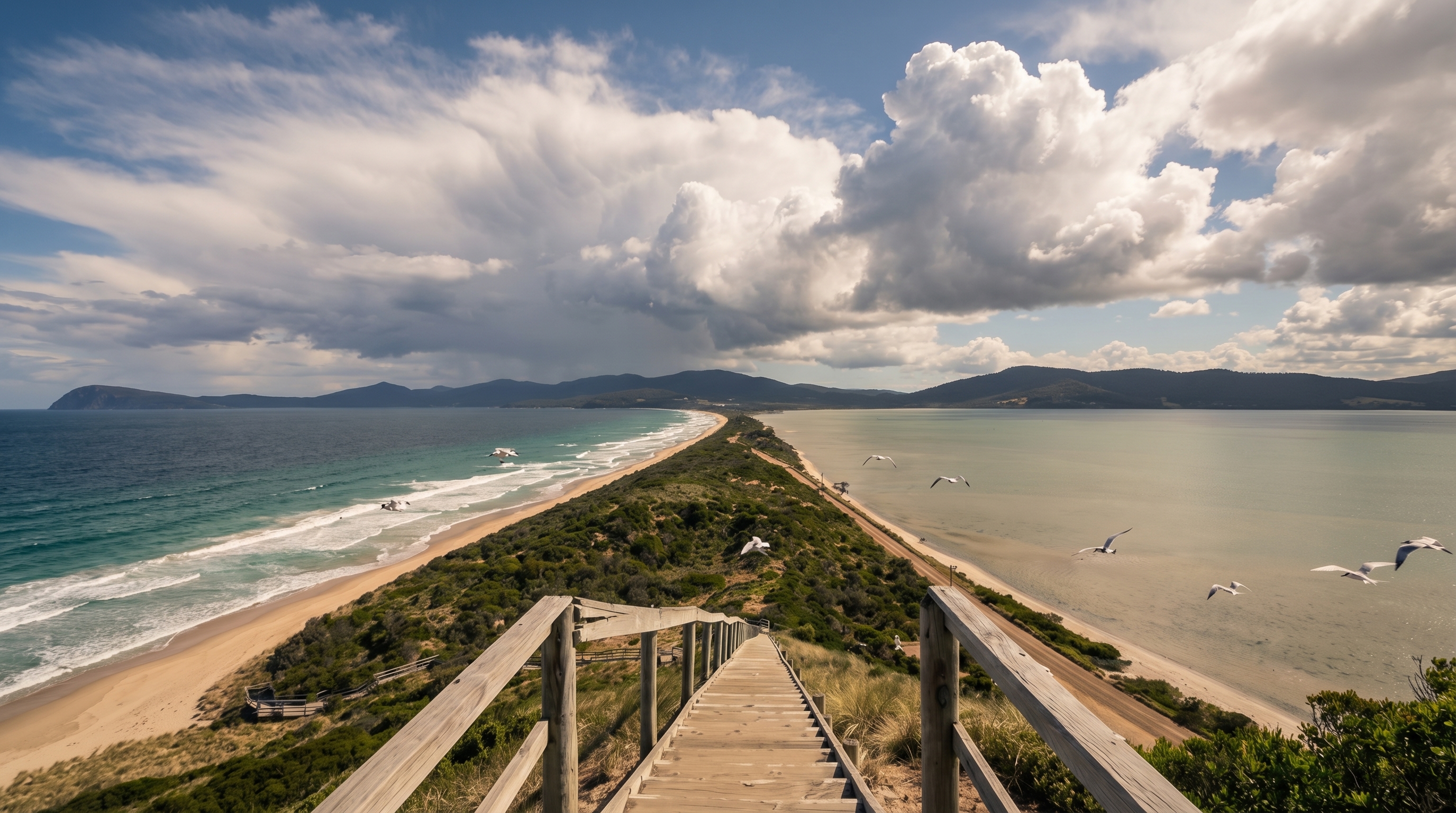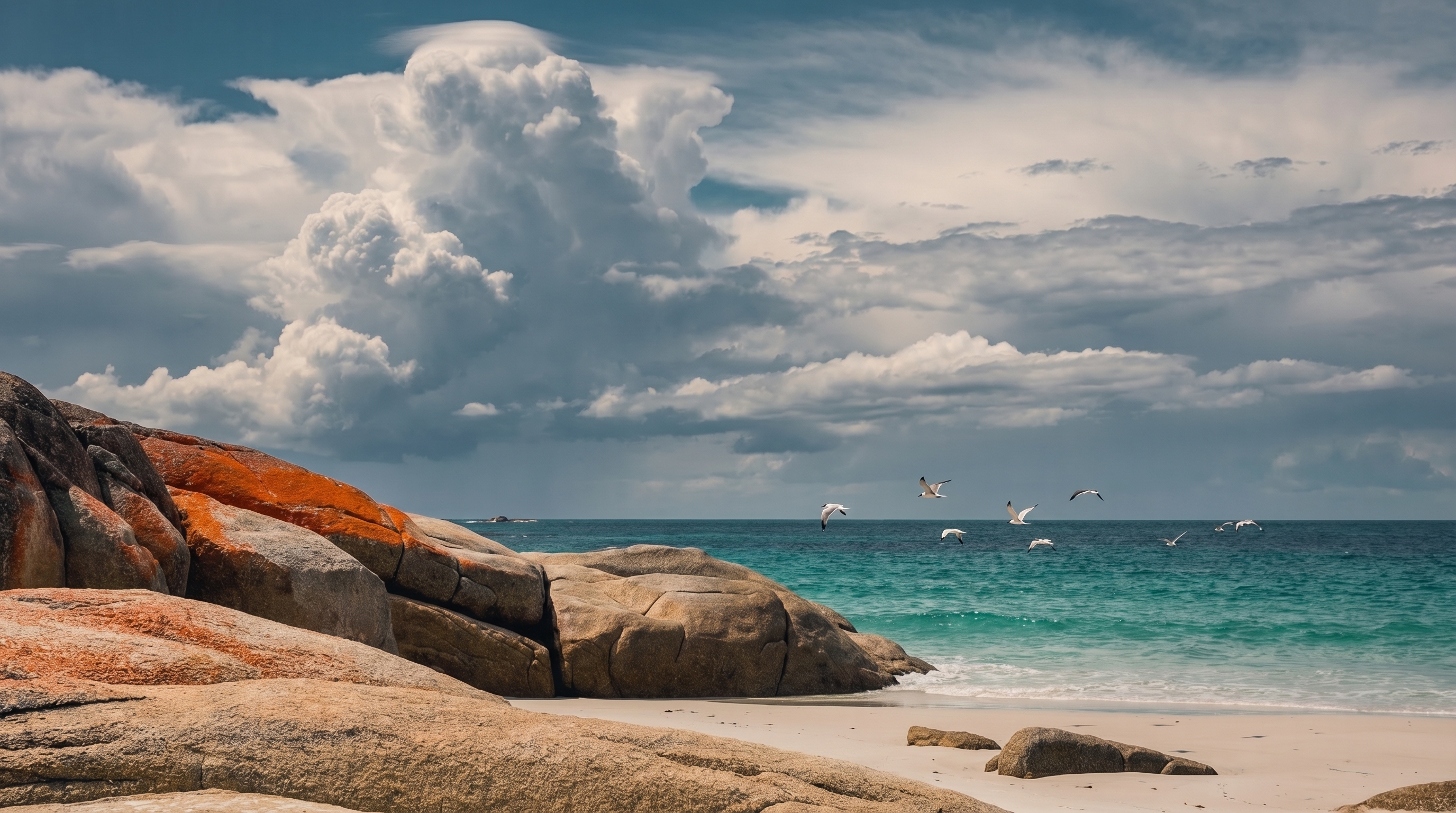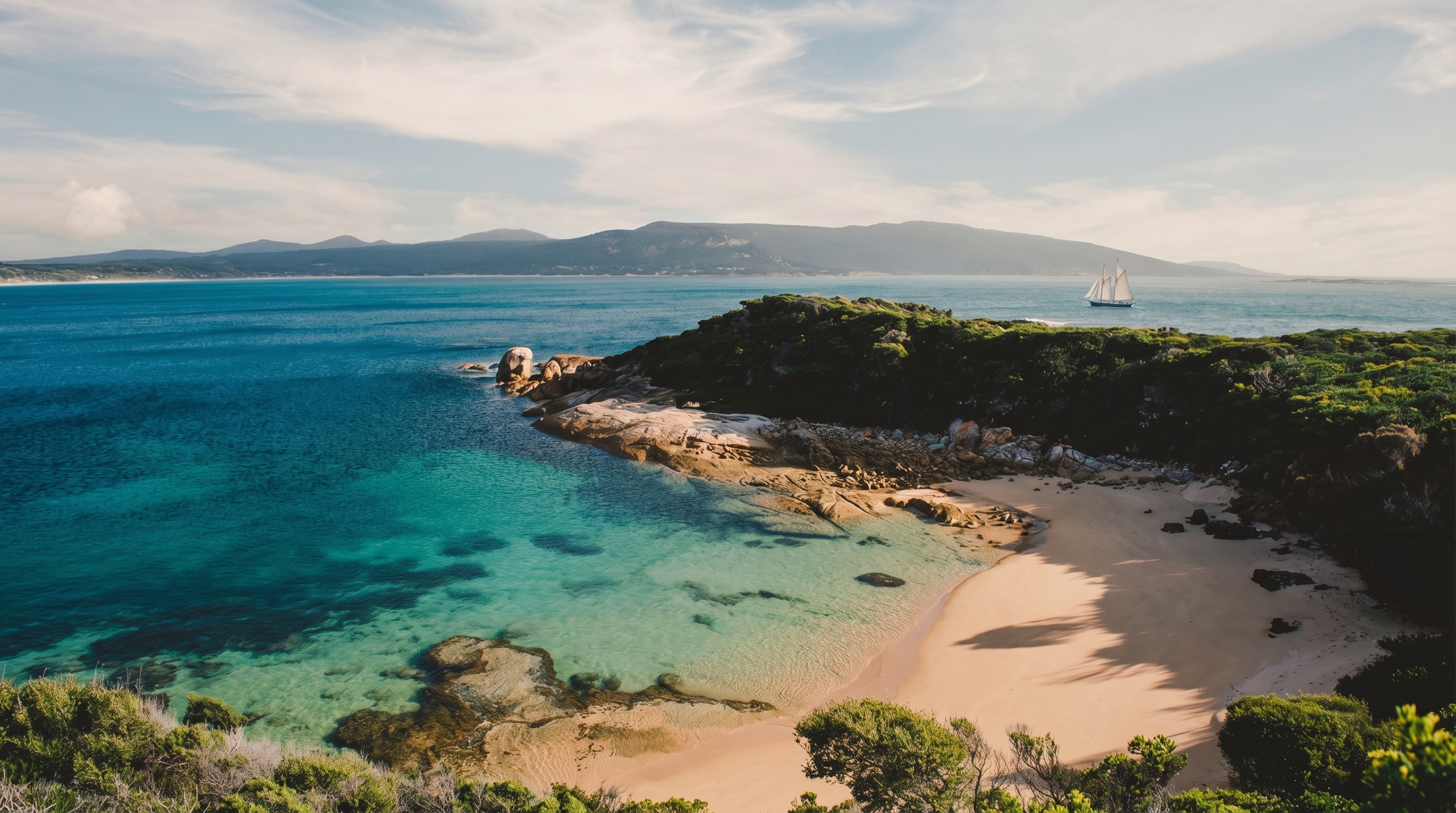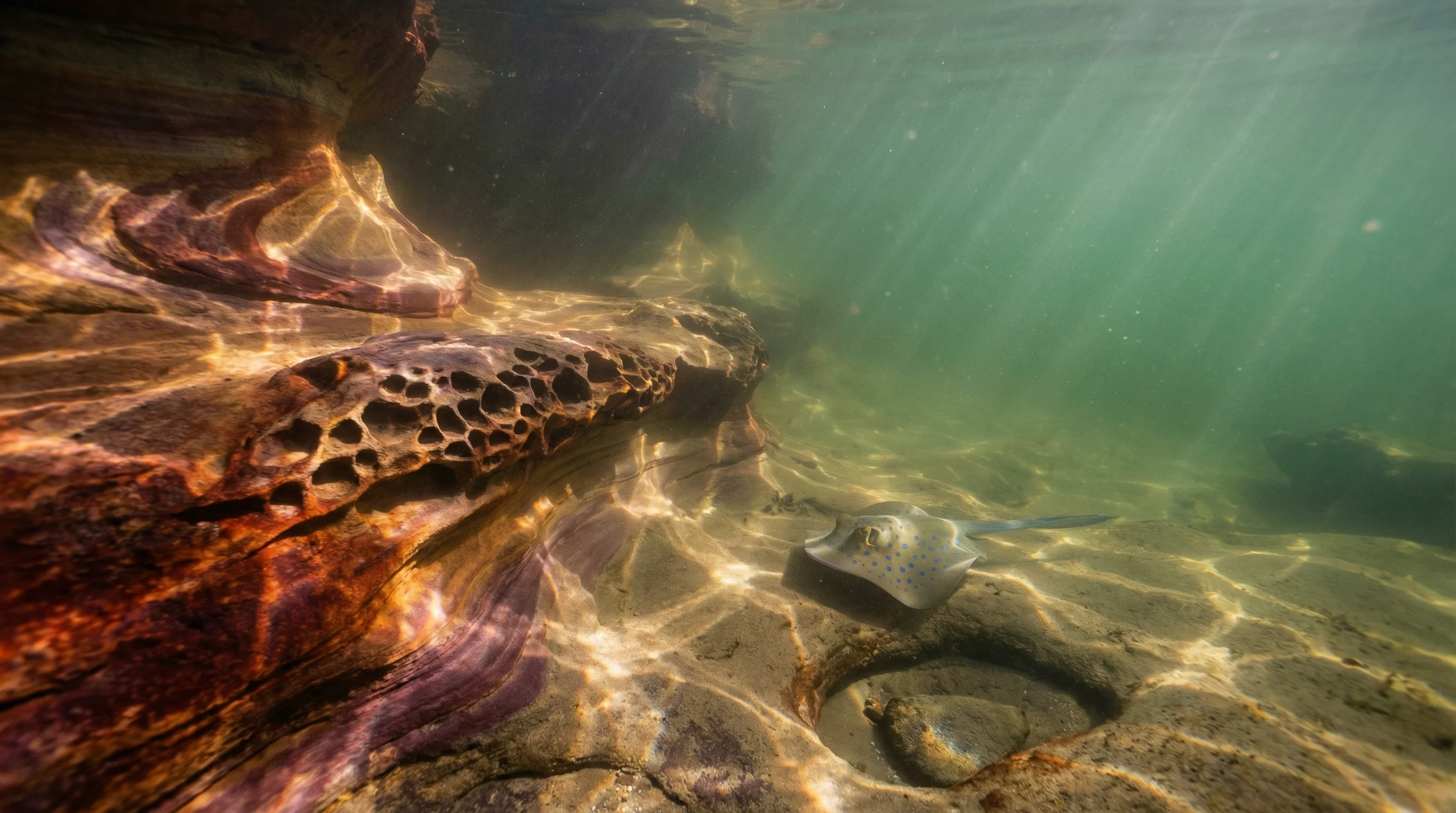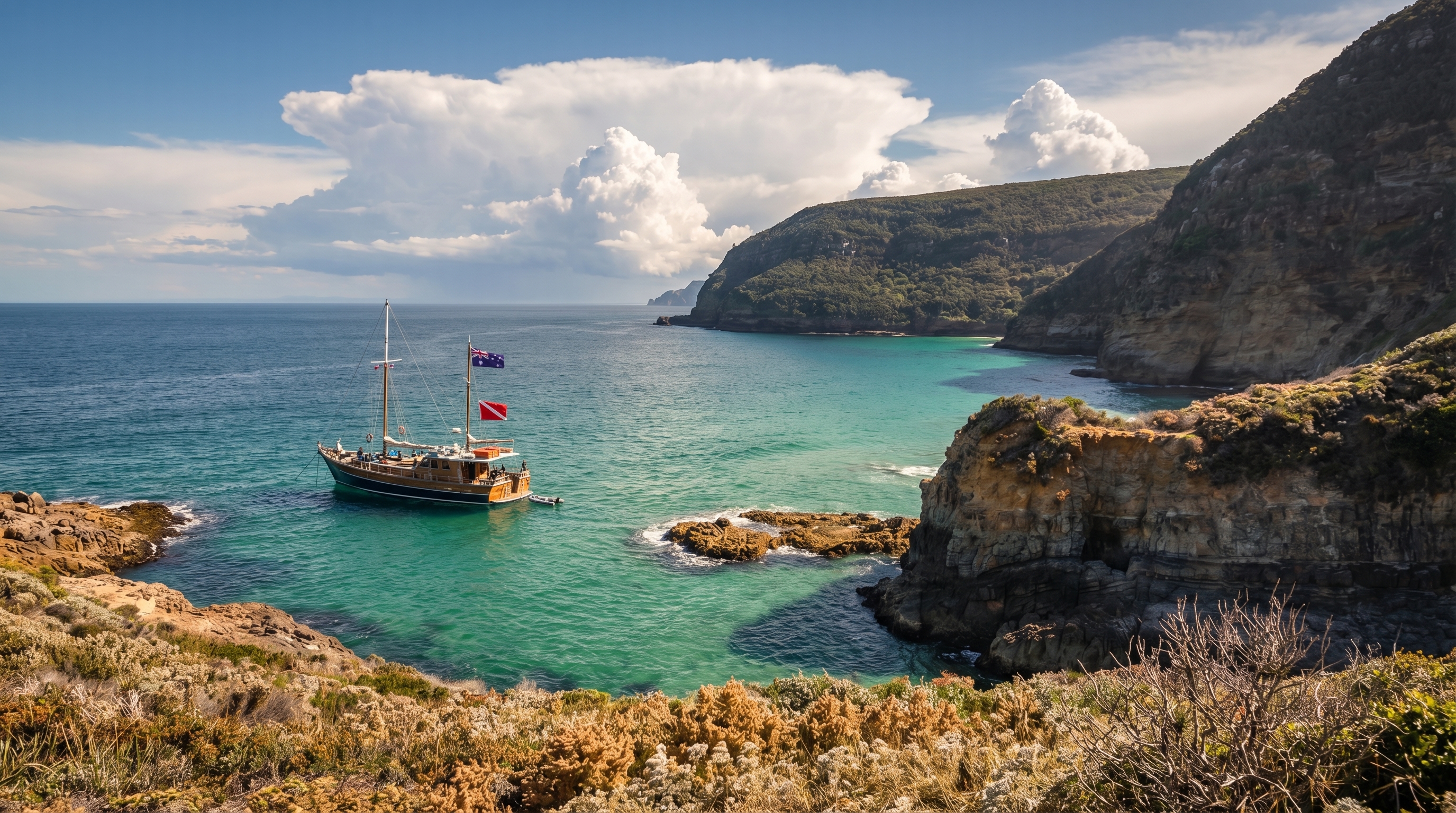
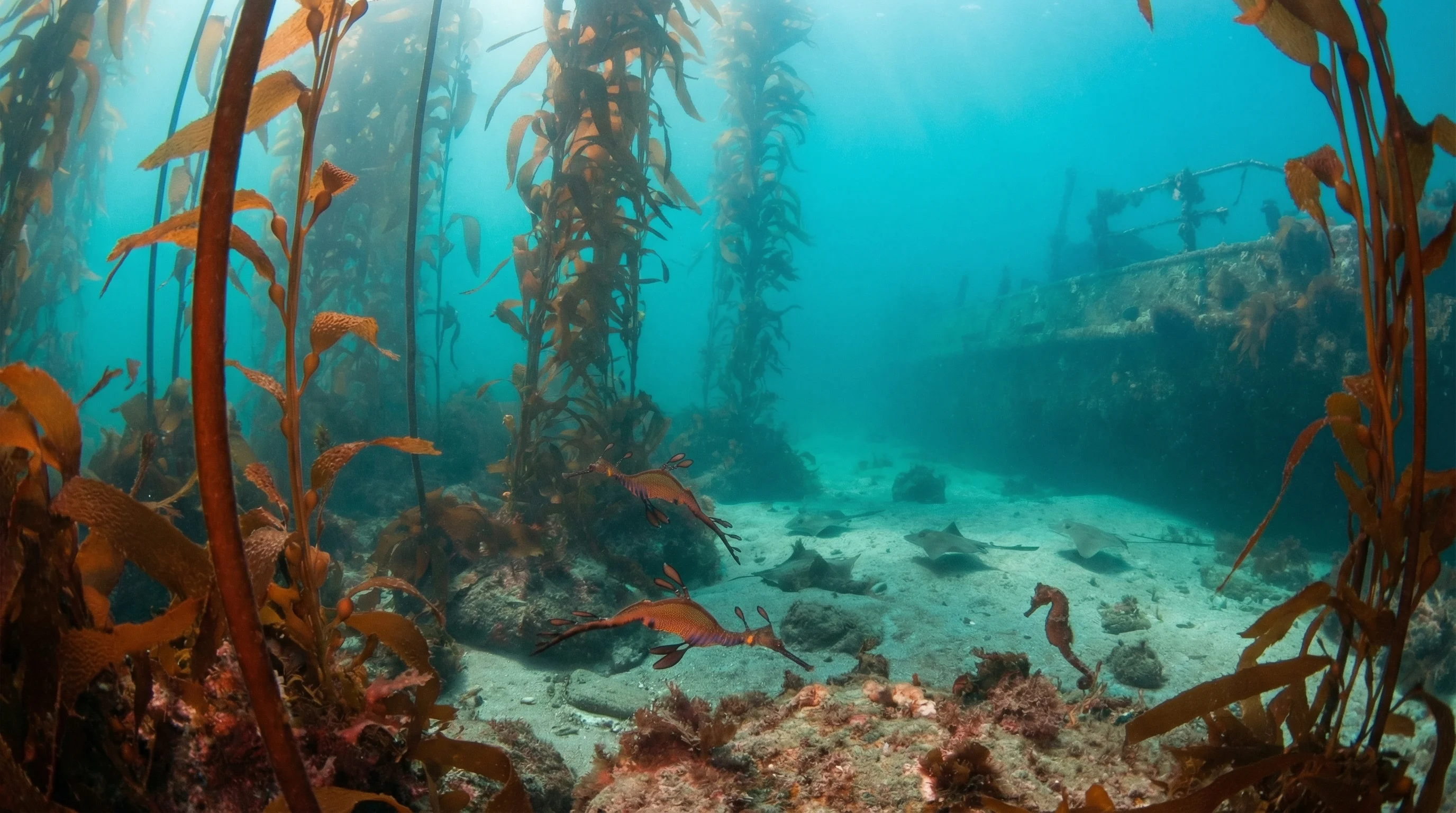
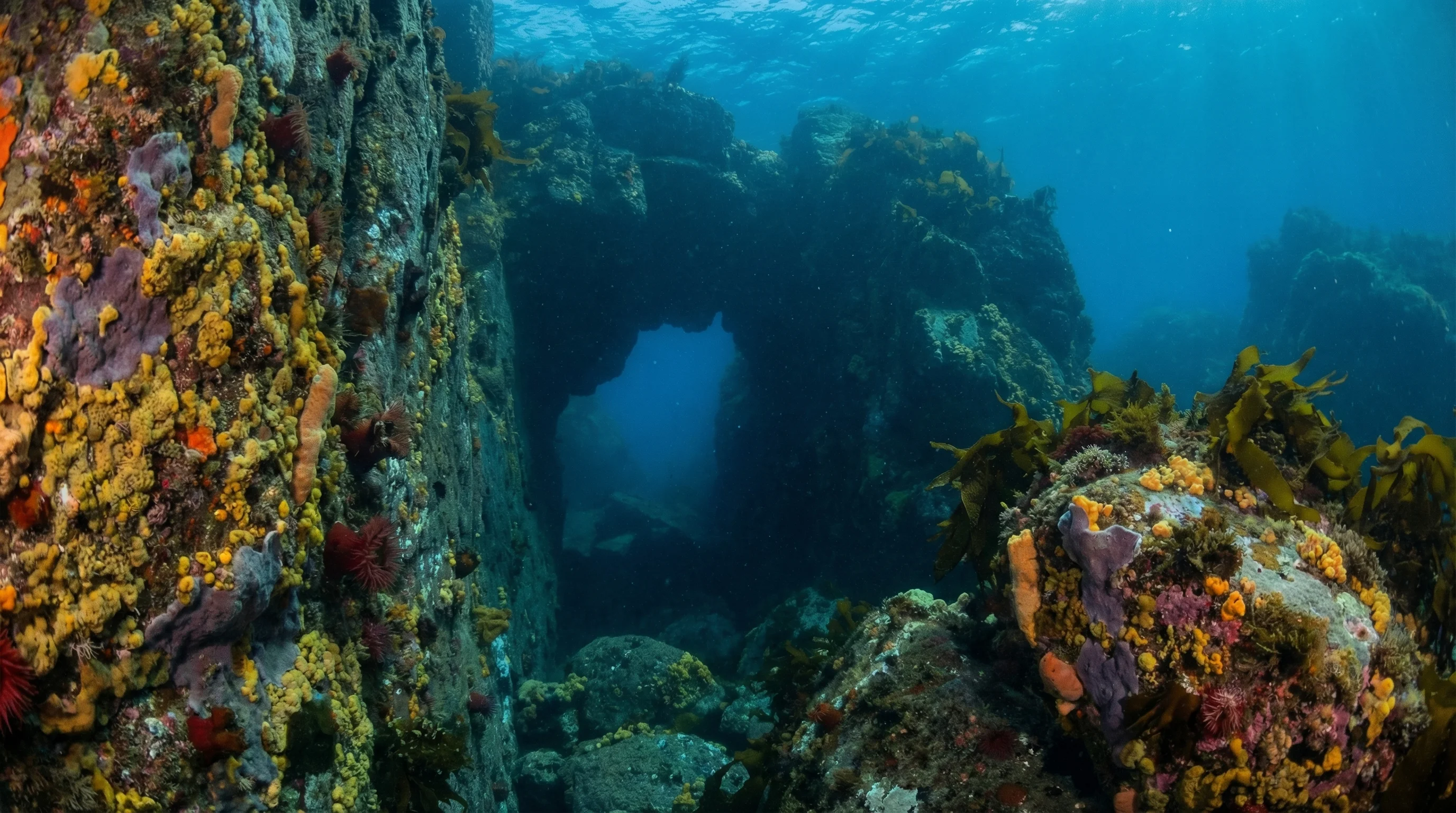
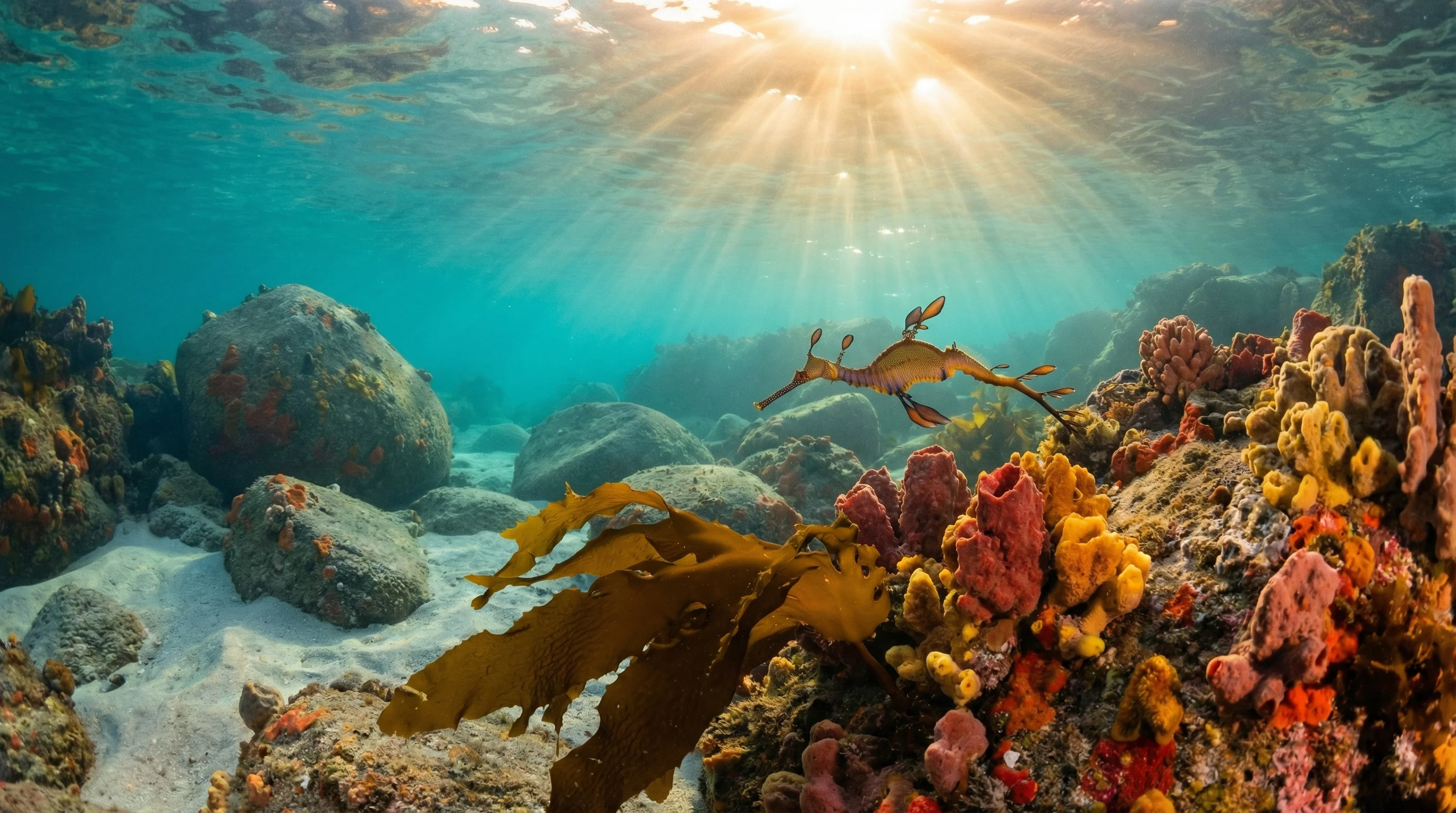
The Tasman Peninsula offers a compelling mix of kelp forest, reef, wall, cave and wreck diving across two distinct sub-areas: Fortescue Bay and Eaglehawk Neck. Shore entries make many sites accessible without a boat, while deeper boat dives reveal dramatic drop-offs and cave systems. Water runs cool year-round, peaking in late summer and dropping sharply through winter. Signature species include the Weedy Seadragon, Pot-bellied Seahorse, Bobtail Squid and Eagle Ray, alongside ever-present Sea Star and Southern Rock Lobster.
2 areas
Monthly water temperature across Tasman Peninsula's sites, from satellite sea-surface data corrected for depth. The band shows the site-to-site spread.
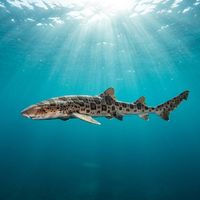
Water temperatures peak in late summer and ease off steadily through autumn into a cold winter trough, with September typically the coolest month. The warmest months also attract the strongest diver activity, and visibility can be exceptional during settled summer conditions. Winter diving is for those comfortable in cold water, but rewards patient divers with quieter sites and good shark encounters.
7 operators
Kingston, Australia
Hobart, Australia
Cambridge, Australia
25 more sites to explore
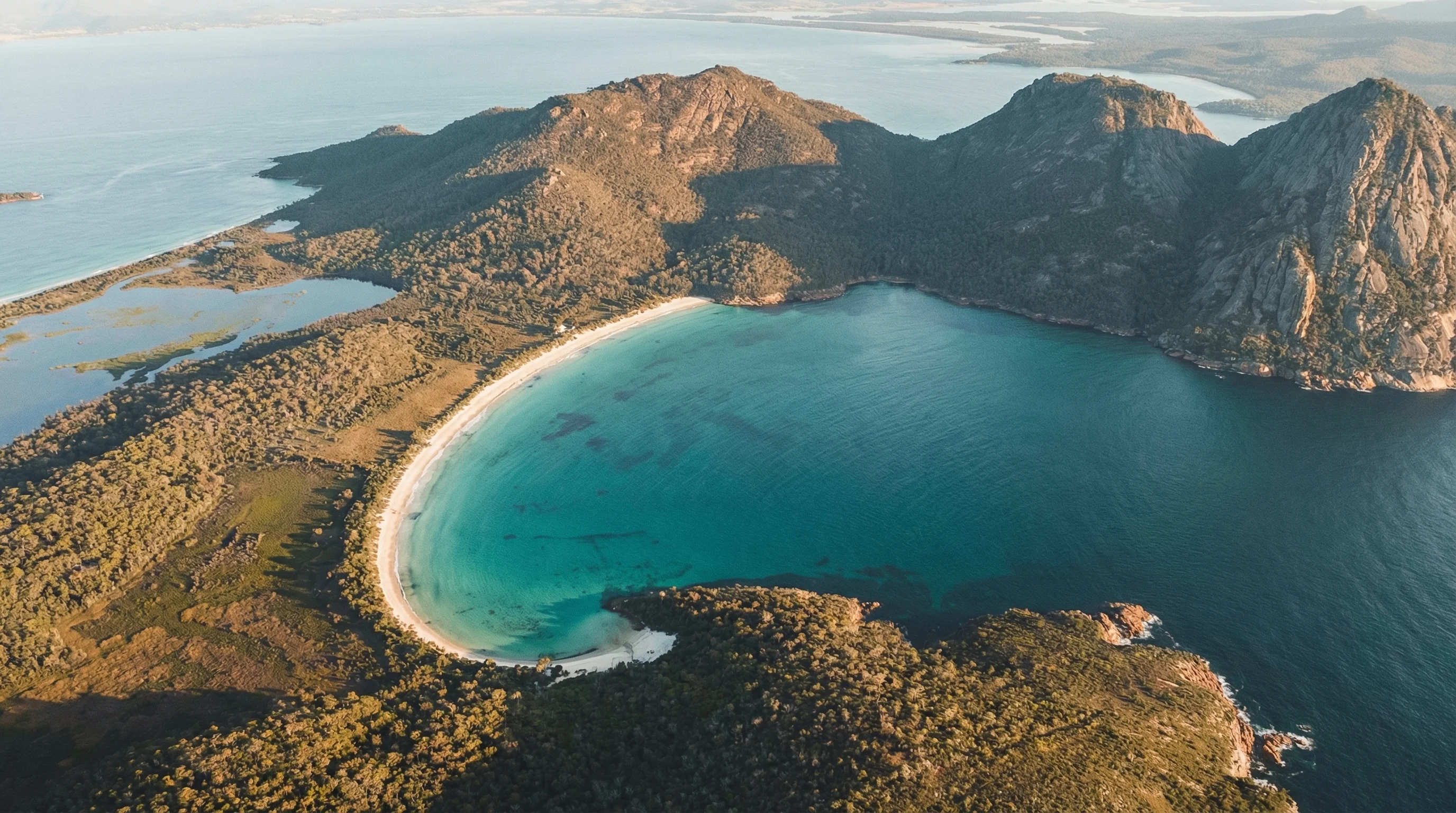
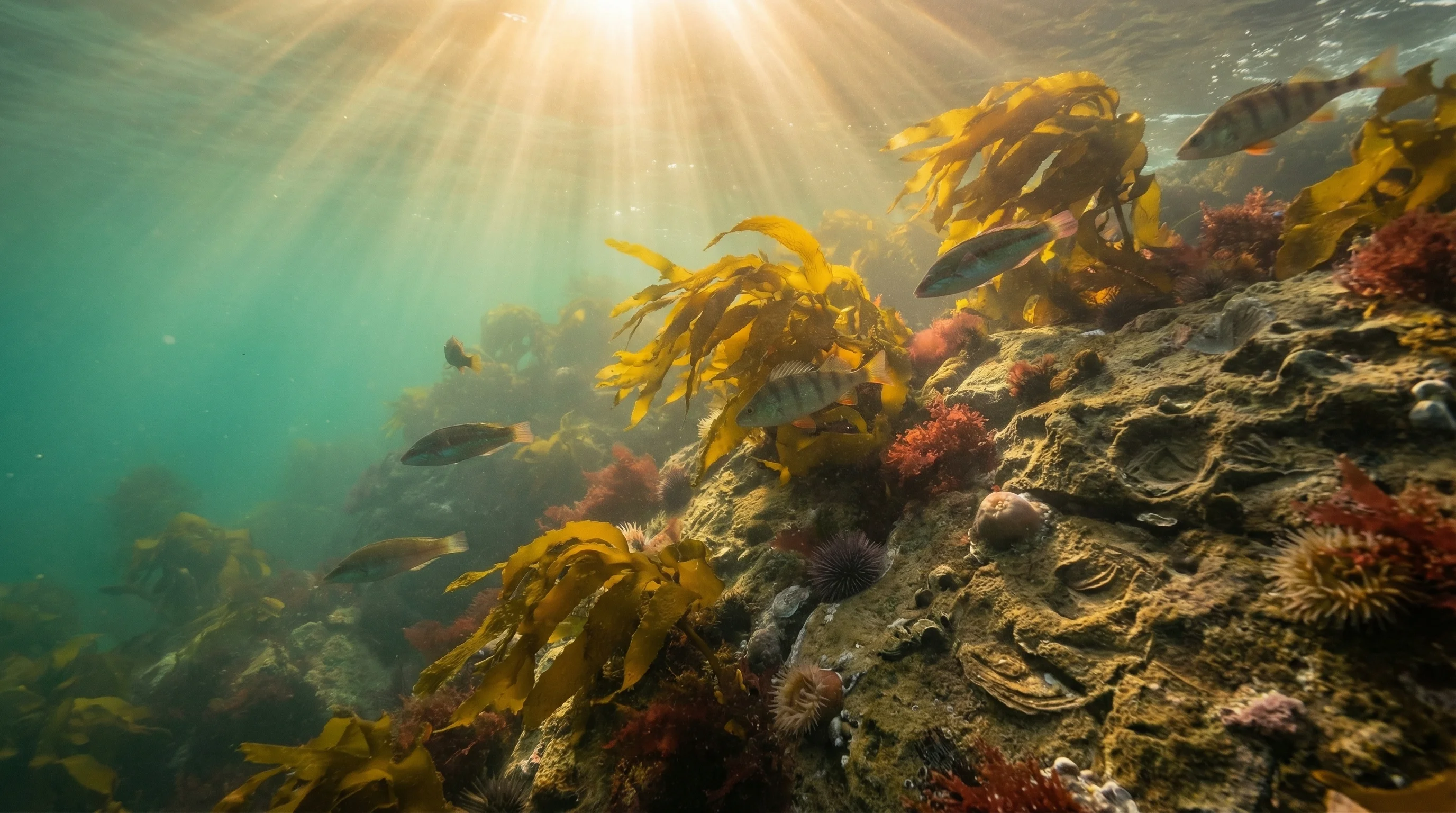
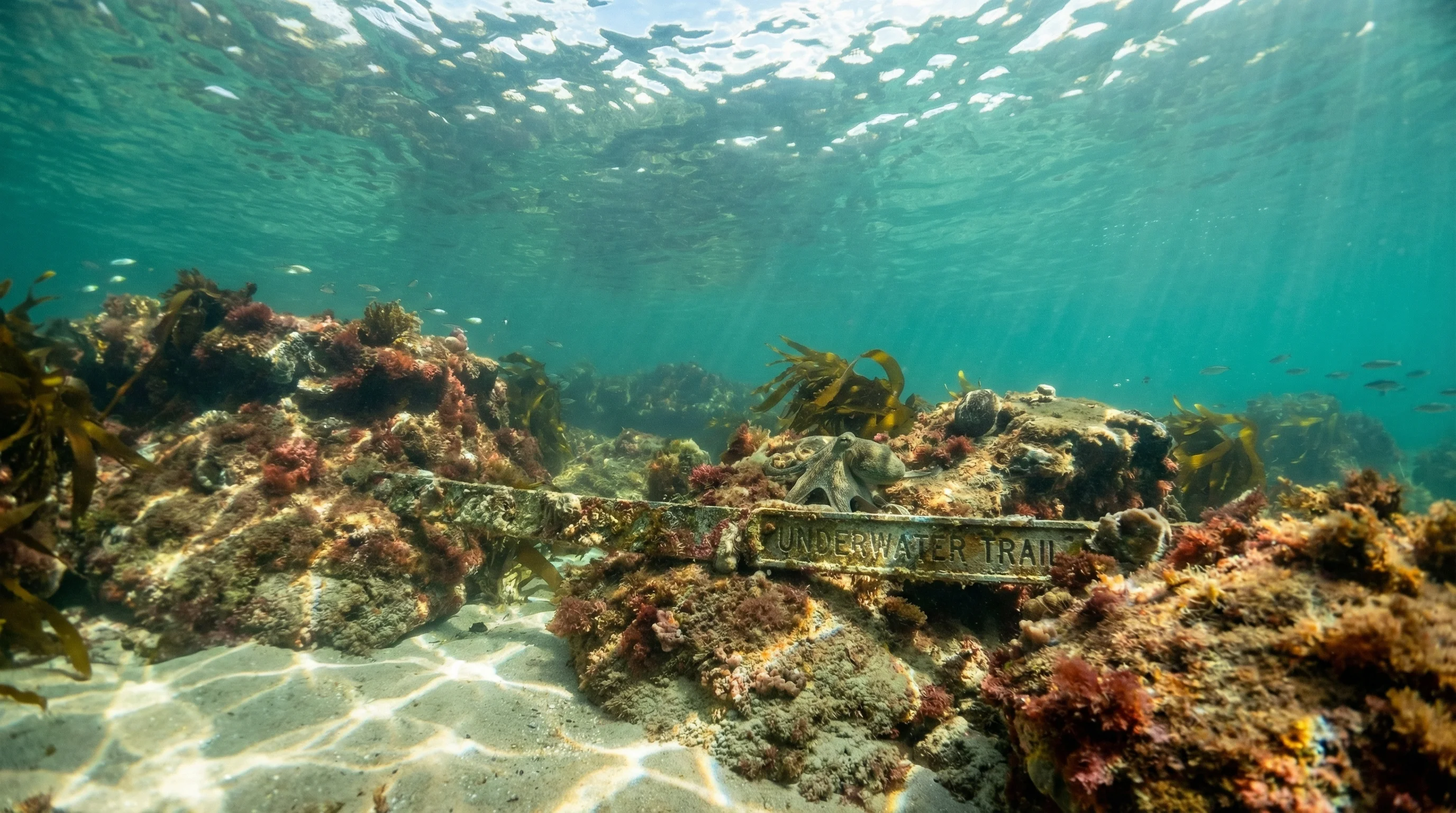
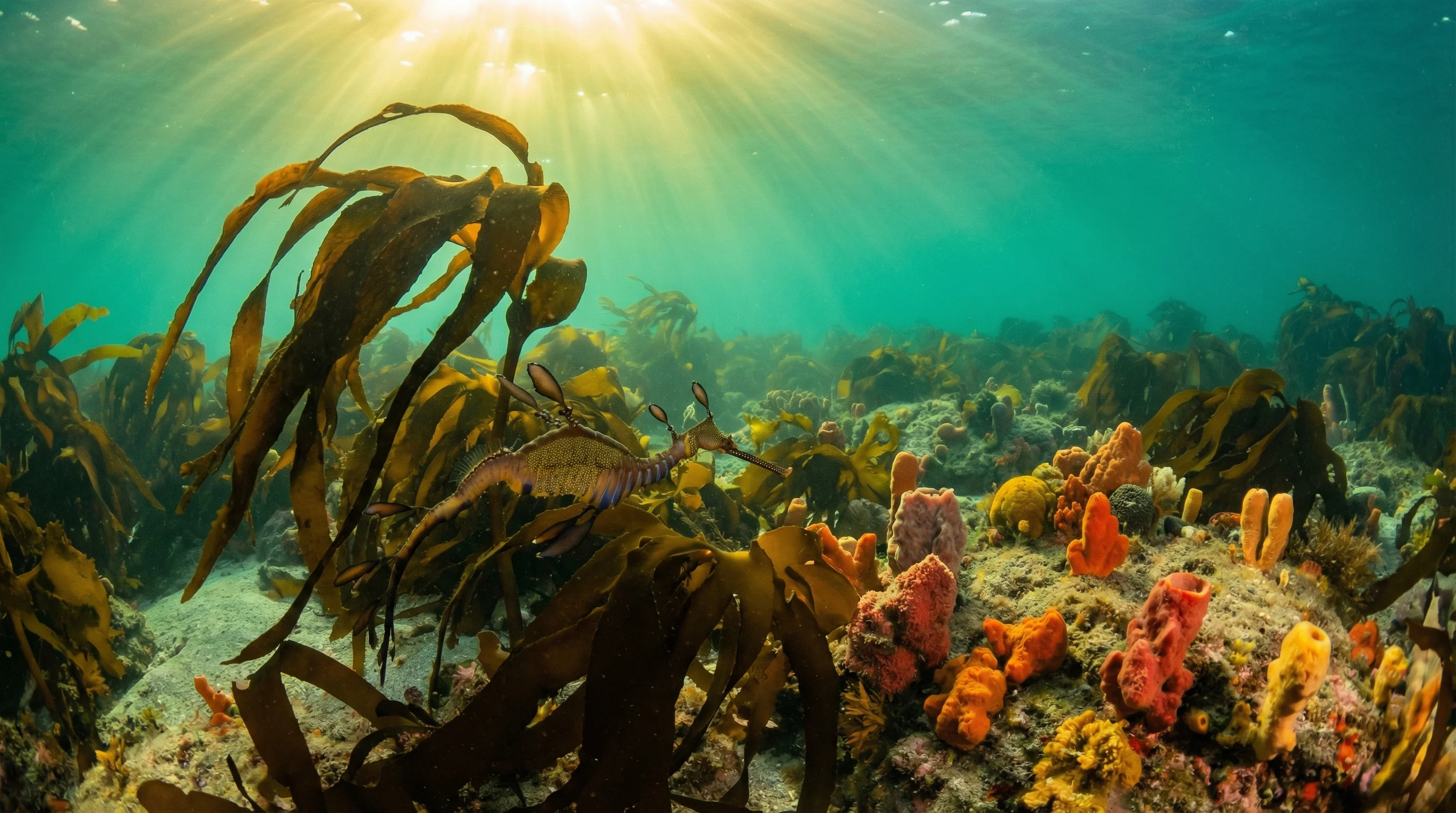
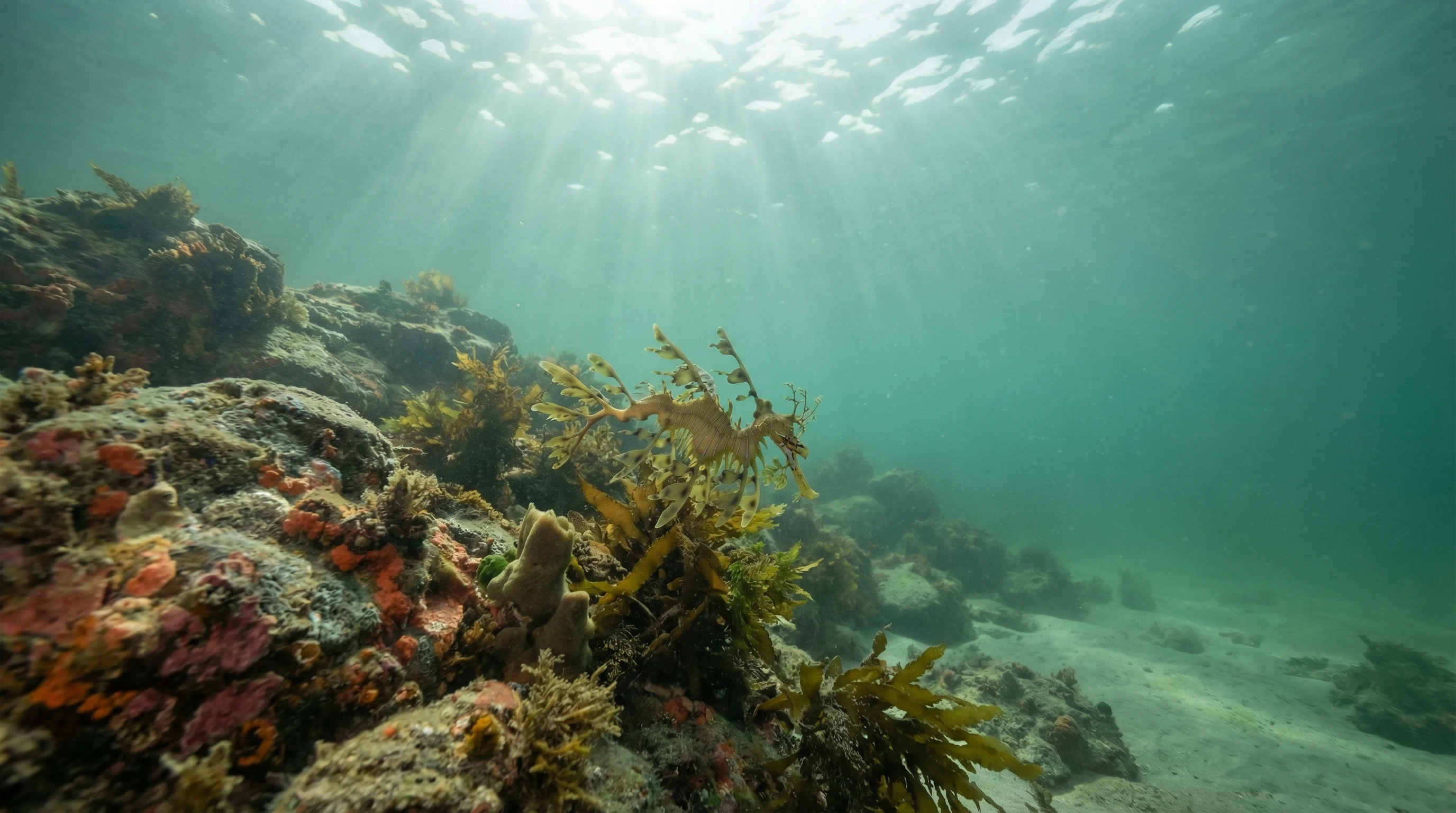
Shore and boat diving on the Tasman Peninsula, with Weedy Seadragon, Pot-bellied Seahorse, kelp forest and caves in one compact bay.
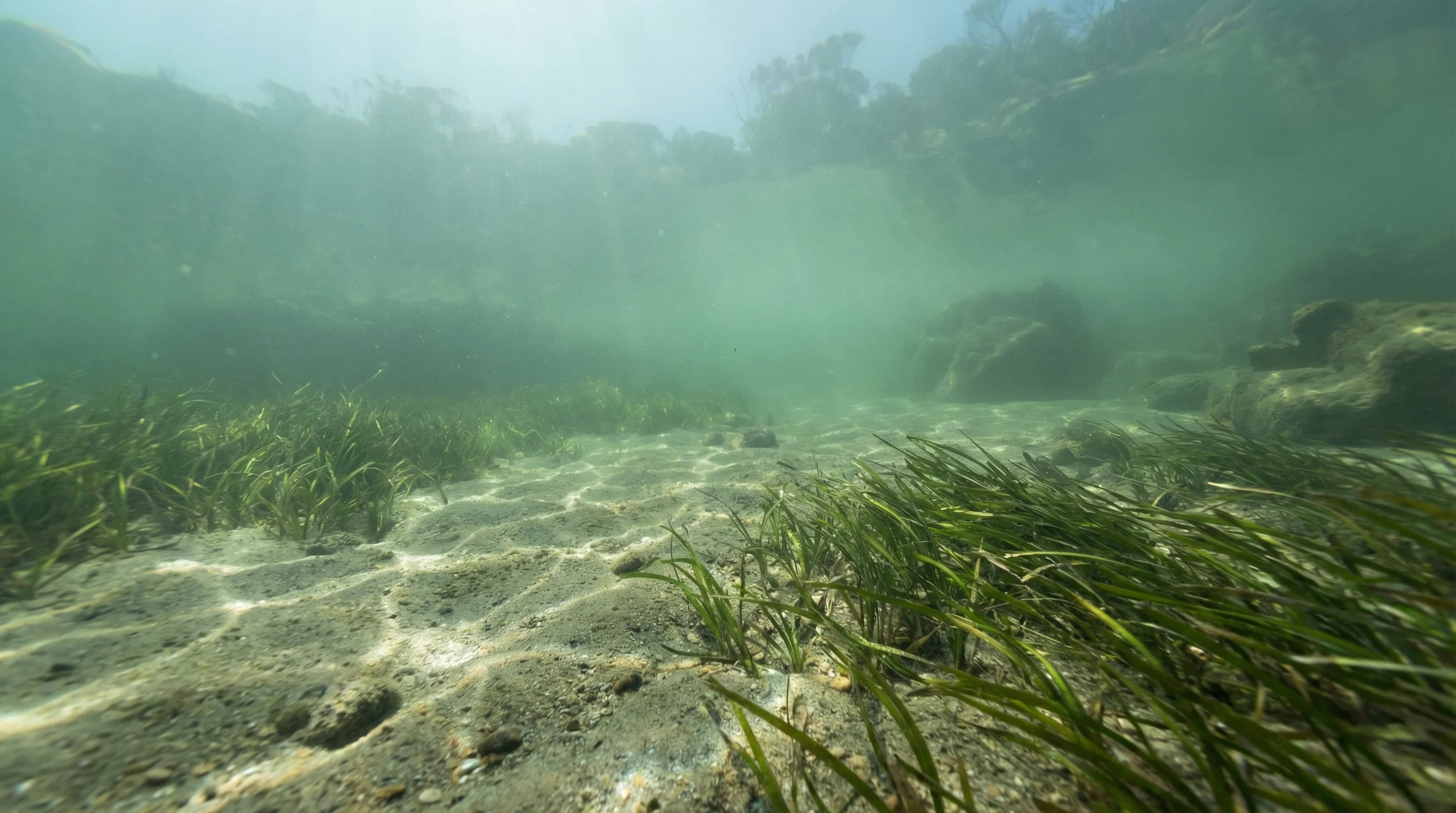
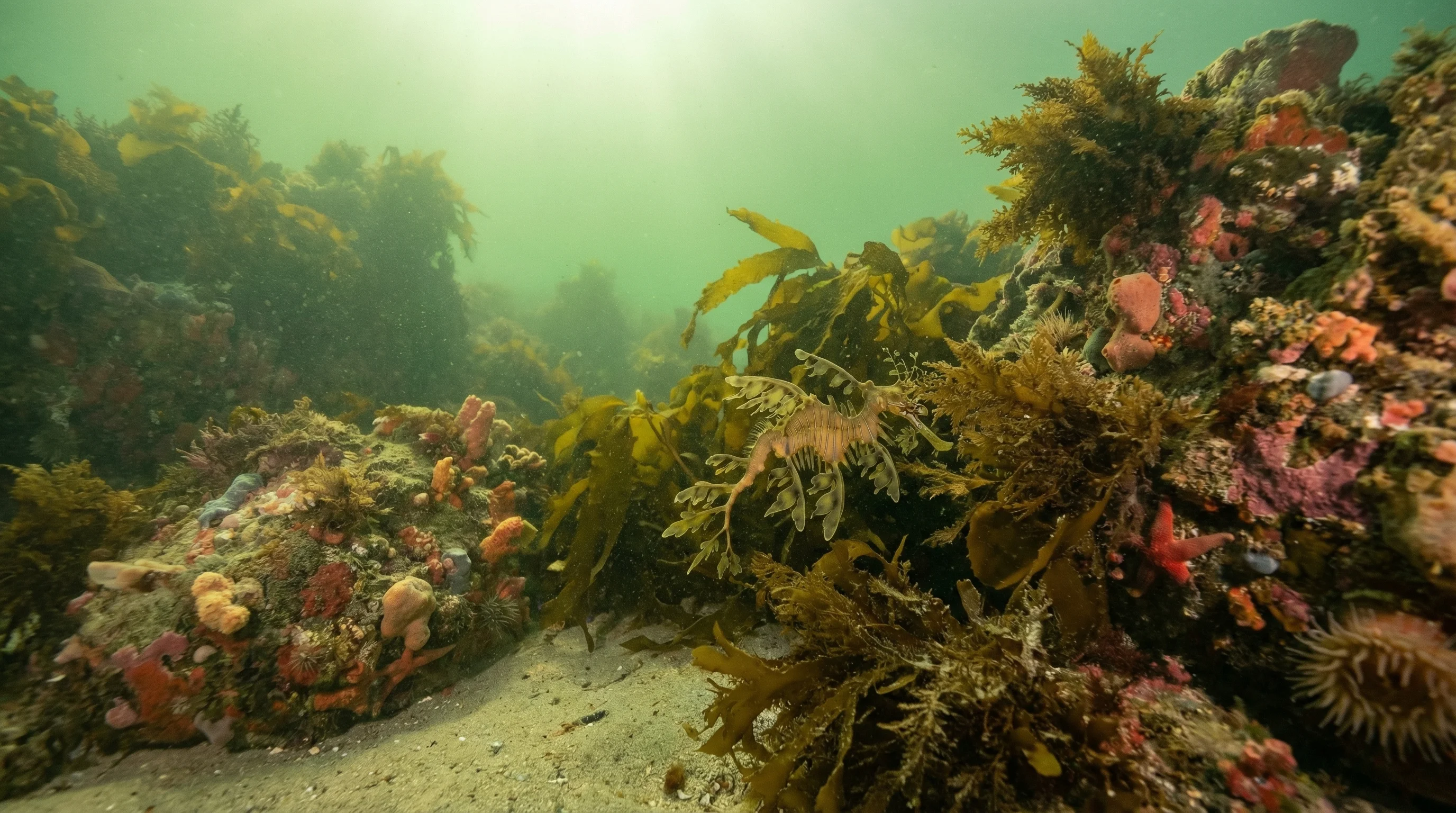
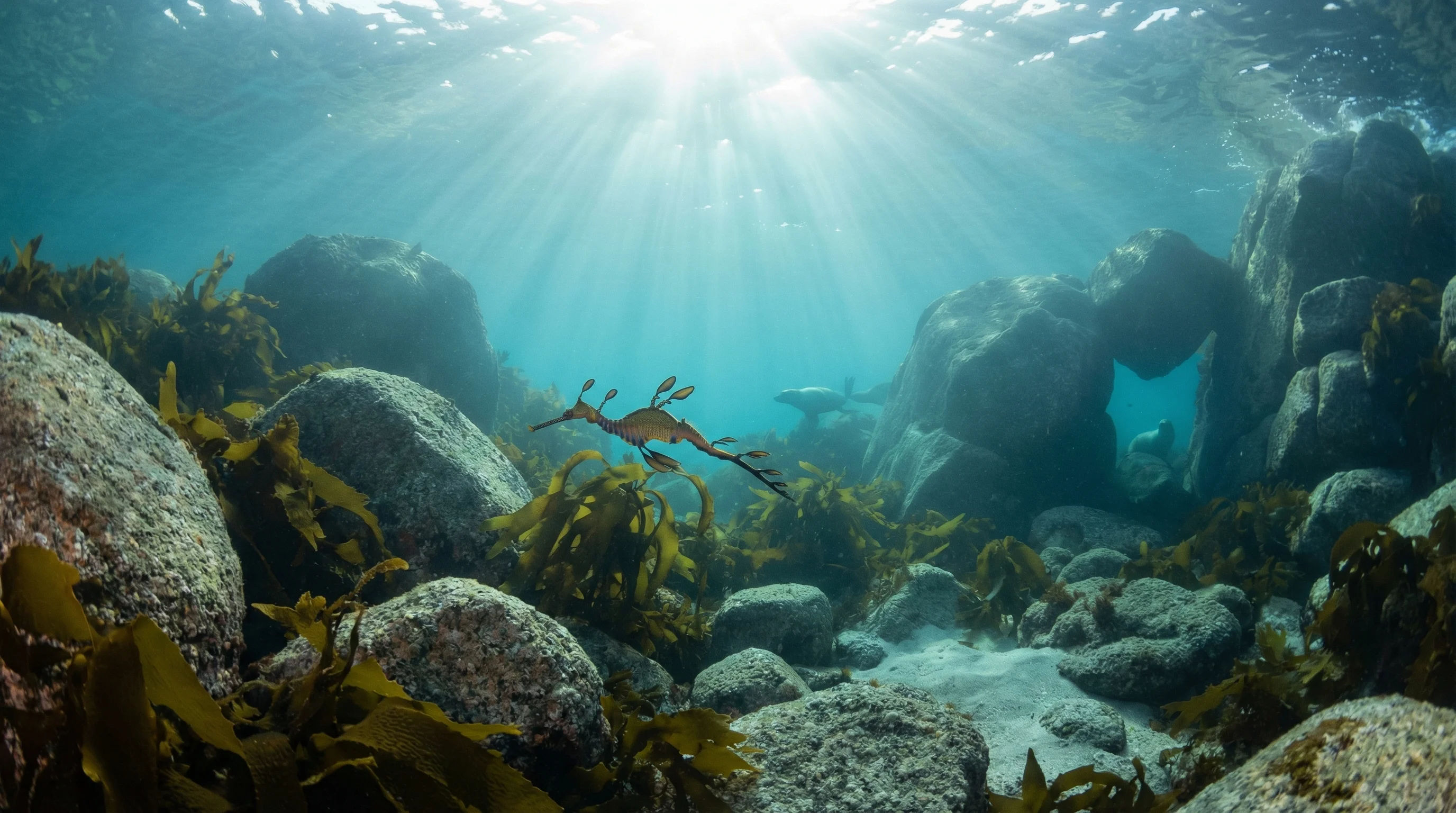
Water temperature around Tasman Peninsula ranges from about 12°C in September to 18°C in February, based on satellite sea-temperature data for its dive sites.
In the warm season (about 18°C) a 5mm suit is comfortable in Tasman Peninsula; in the coldest months (about 12°C) step up to a 7mm or semi-dry suit.
Fin maps 27 sites in Tasman Peninsula (25 scuba diving sites and 18 snorkelling spots, with some suited to both), organised into 2 areas.
Across Tasman Peninsula's dive sites, January, February, March, April and December are most often reported as the best months to visit.
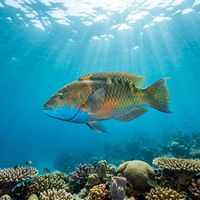
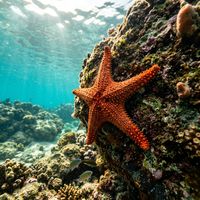
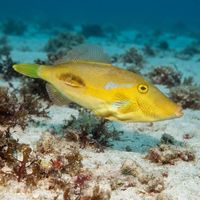
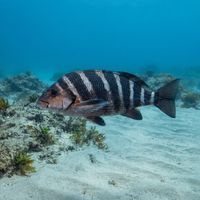
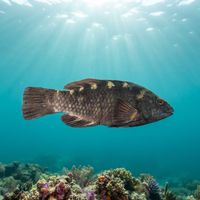
The peninsula hosts a wide range of temperate species. Southern Rock Lobster and Sea Star are seen on almost every dive, while Blue Throated Wrasse and Klipfish are common across the reef. Keep an eye out for the Weedy Seadragon and Pot-bellied Seahorse in kelp and reef areas, and the Bobtail Squid and Eagle Ray add to the list of notable sightings.
Yes, in part. Fortescue Bay is rated as a beginner-level site with shore entry, shallow reef and kelp forest diving. Waterfall Bay, by contrast, involves boat access and reaches greater depths with walls and cave systems, making it more appropriate for intermediate divers. Beginners will find plenty to explore without venturing to the more demanding sites.
Fortescue Bay centres on accessible shore diving across reef, kelp forest and a wreck, with a gentle profile suited to a wide range of divers. Eaglehawk Neck is the other main sub-area and offers a different character, with operators such as Eaglehawk Dive Centre running trips from there. Between the two areas, the peninsula covers a broad range of site types and skill levels.
Many sites can be reached directly from shore, which makes the region particularly convenient. Fortescue Bay is the standout example, offering shore entry to reef and kelp forest diving. Some of the more dramatic sites, such as Waterfall Bay with its walls and caves, require a boat. Several local operators including Tasmanian Divers, GoDive and Go Dive Tasmania run boat charters to these sites.