Acanthaluteres vittiger
Find toothbrush leatherjackets on temperate reefs from Tasmania to Western Australia, in cool 15-20C water, year-round.
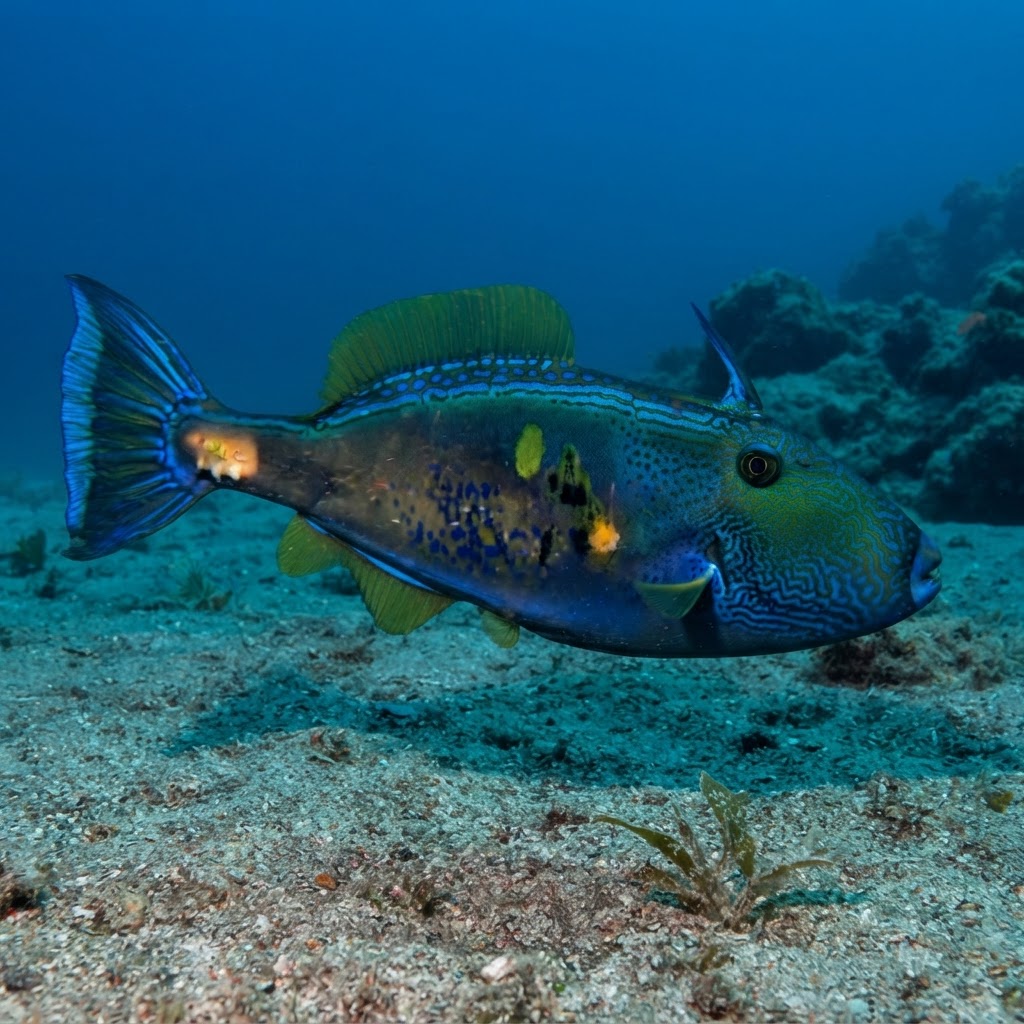
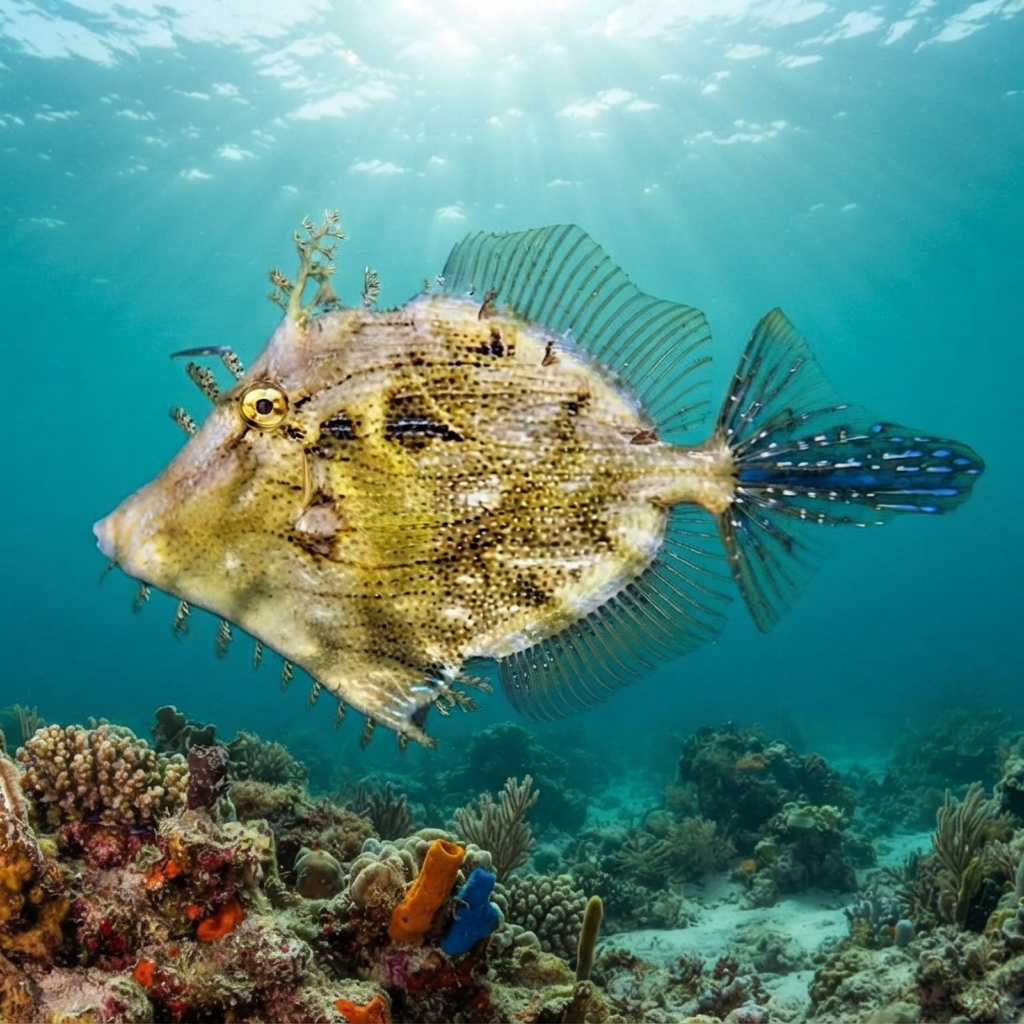
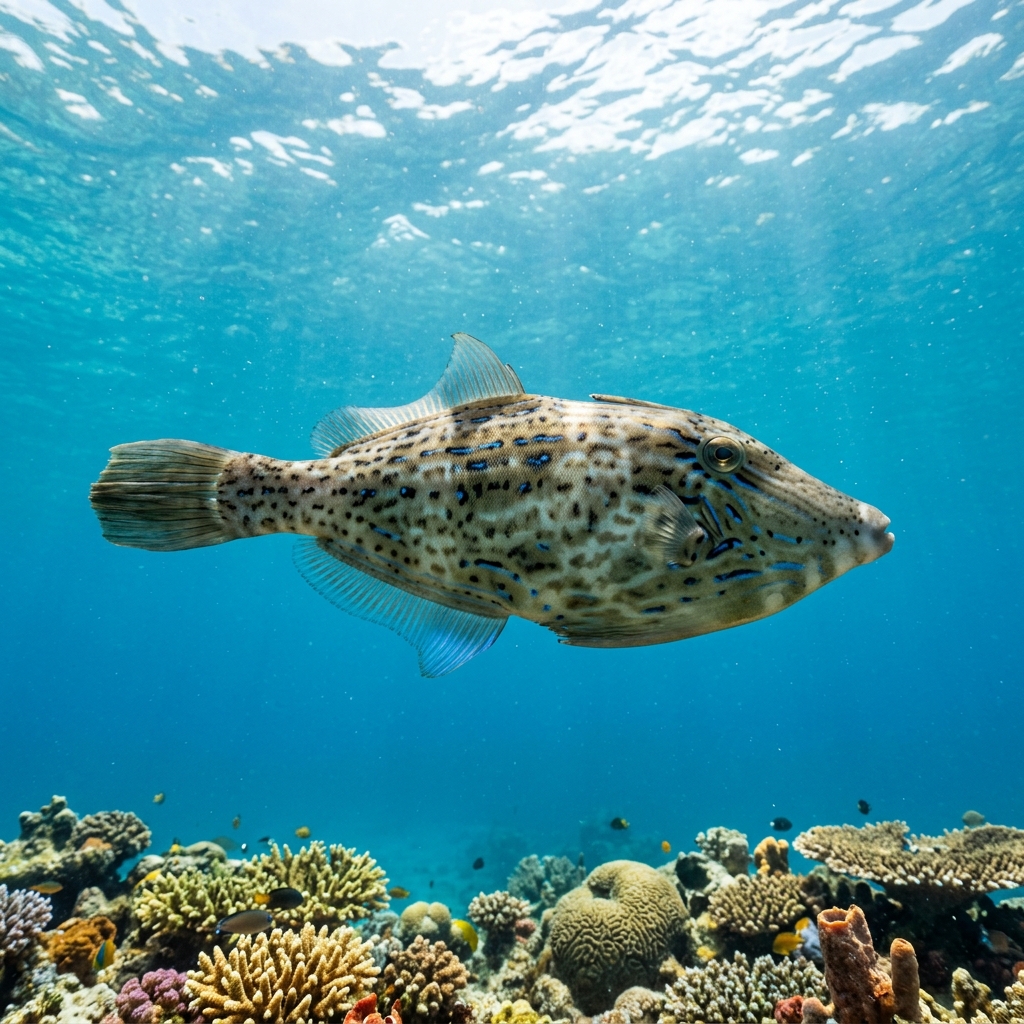
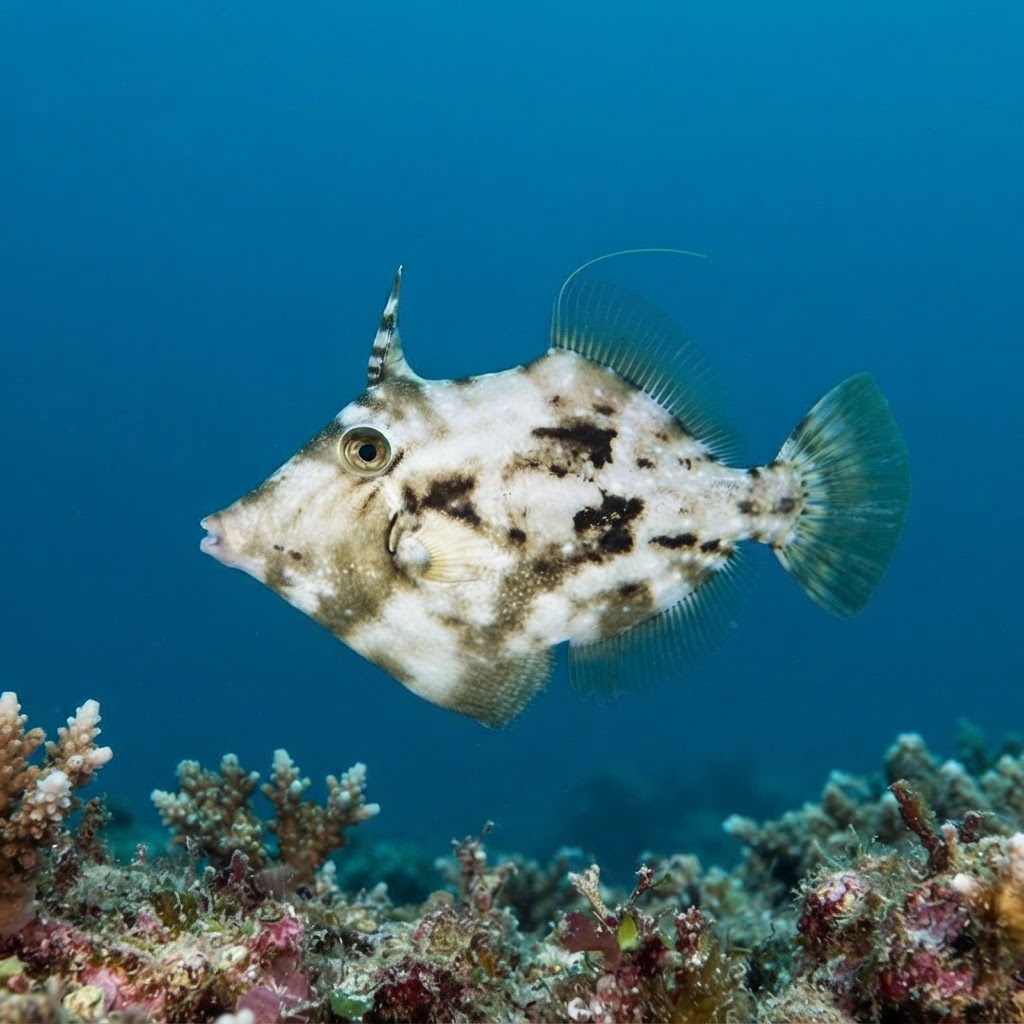
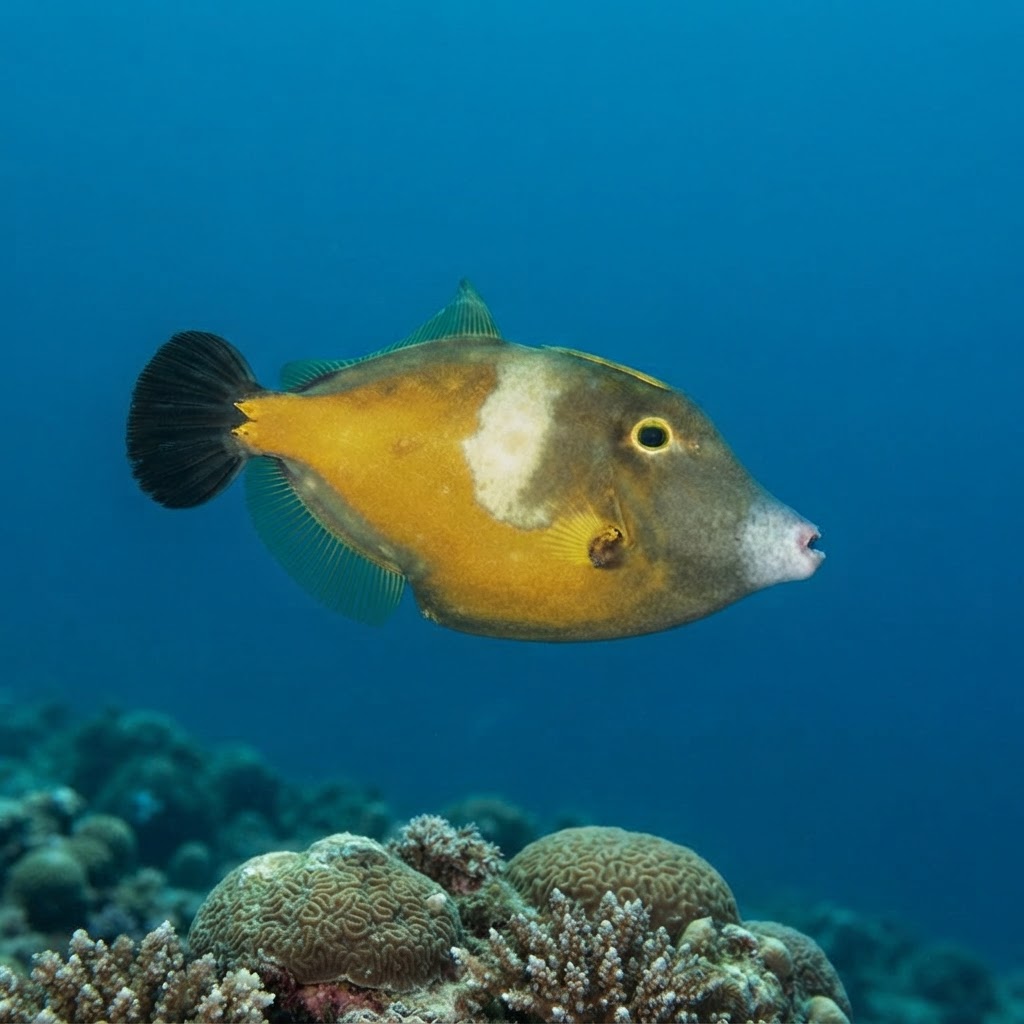
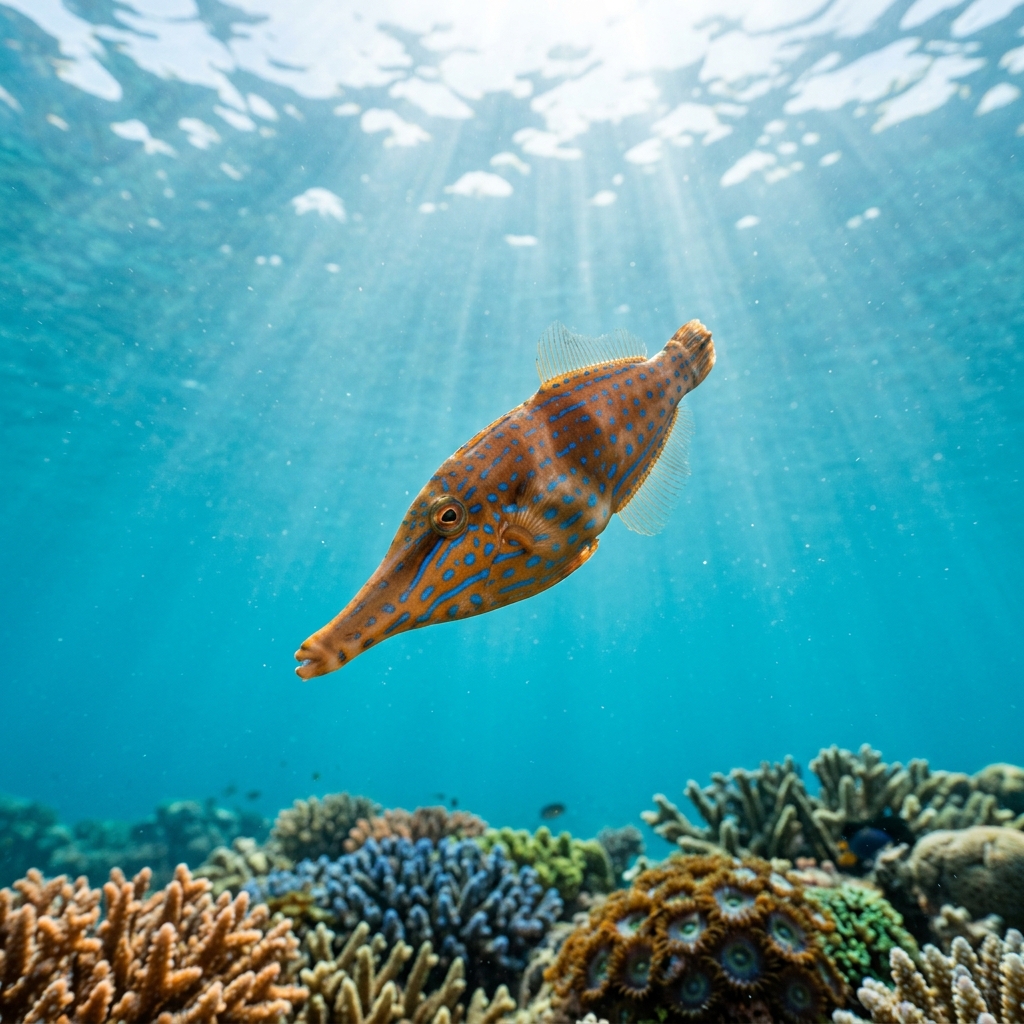
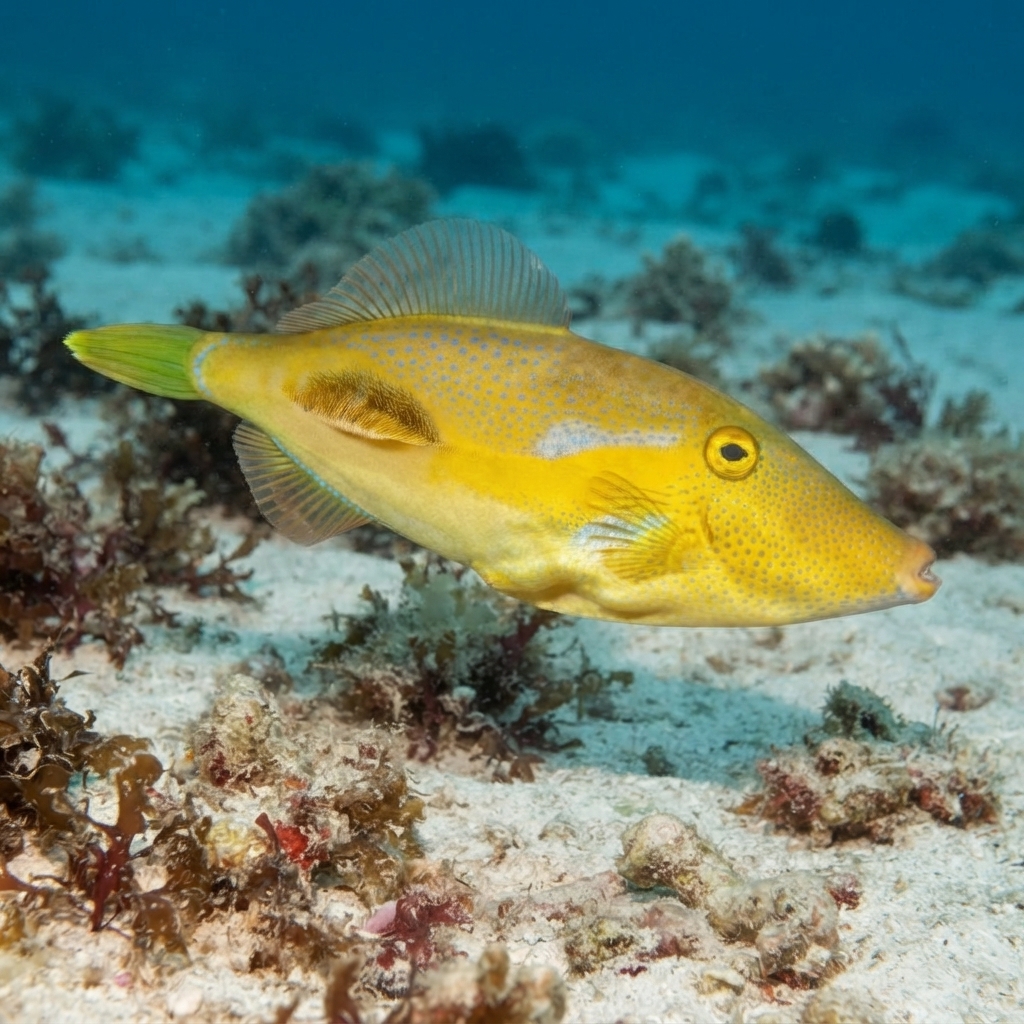
A slim, laterally flattened body around 24 cm long, mottled in brown, olive and grey tones that blend into weedy reef backgrounds. Look for the small, spine-like first dorsal ray set just behind the eyes, a classic filefish trait, and a narrow, slightly upturned snout used for picking at algae. It swims with slow, hovering movements of its rear dorsal and anal fins rather than fast tail strokes, which is often the first clue you are looking at a leatherjacket rather than a typical reef fish.
Divers most often find it hovering low over rocky reef and weedy ground, picking at algae with unhurried, almost stationary movements. It relies on its drab, mottled colouring to sit still and blend in rather than bolt when a diver approaches, so a slow, patient look over kelp and reef rubble is usually how you notice one. It is logged as uncommon or rare at most sites, so treat any sighting as a nice find rather than a given.
Like other filefish, it can lock that small first dorsal spine upright using a second bony trigger ray behind it, wedging itself into a crevice so predators cannot easily pull it out.
Sightings are reported year-round with no strong seasonal pattern in the data, which fits its comfort range of roughly 14.6 to 20.6 C, temperatures that persist across the southern Australian dive season most of the year.
Reef neighbours a diver could mistake it for. Use the identification notes above to tell them apart.
Australia is the only place this species is logged diving, with Tasmania standing out as the strongest region, followed by New South Wales and Victoria. South Australia and Western Australia also produce reliable but less frequent sightings, so it is very much a southern Australian temperate-reef fish rather than a tropical one.
Mapping where Toothbrush Leatherjacket is logged…
It is best known from southern Australian temperate reefs, with Tasmania the strongest area for sightings, followed by New South Wales, Victoria, South Australia and Western Australia.
There is no strong season in the sighting data, so it is considered a year-round find on southern Australian reefs where water sits between roughly 15 and 20 C.
Look for a slim, flattened body about 24 cm long in mottled brown and olive tones, a small spine behind the eyes, and slow, hovering fin movements over rocky or weedy reef.
They reach around 24 cm in length, a modest, slender size typical of filefish found on temperate rocky reefs.
No, they pose no danger to divers and simply drift off or hold still among reef structure when approached.
Site and sighting data is aggregated from diver logs, iNaturalist and GBIF. For taxonomy and conservation status:
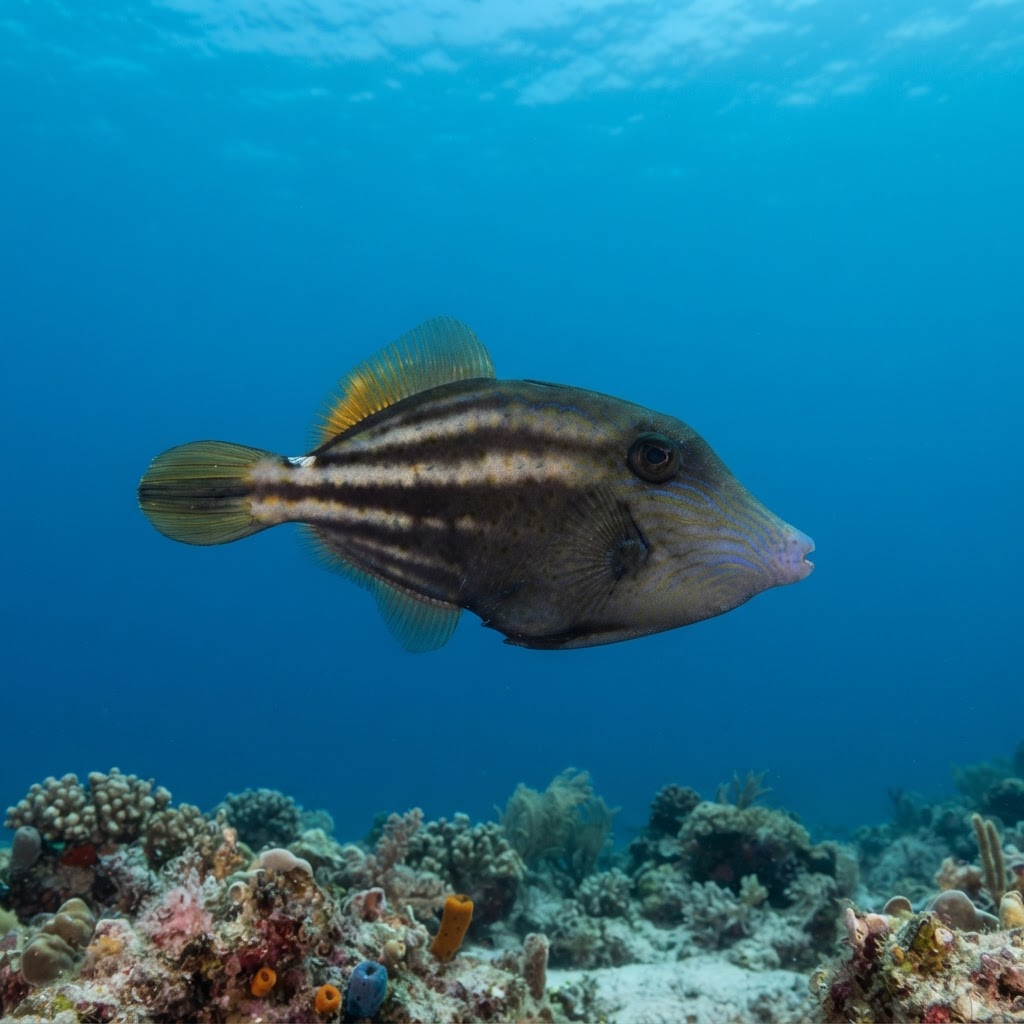
Orangespotted Filefish
836 sites