Notolabrus fucicola
Spot Purple Wrasse year-round in 11-19C water off New Zealand's North Island and Tasmania reefs.
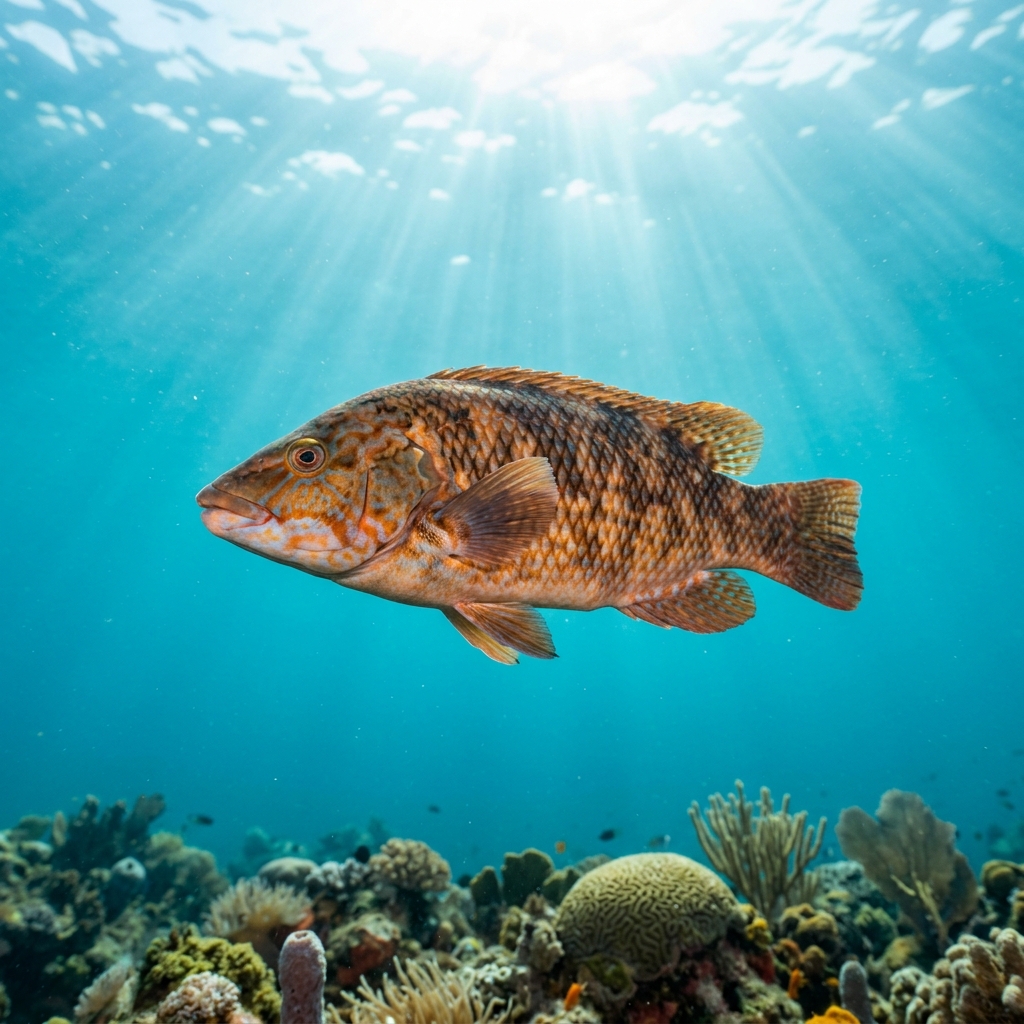
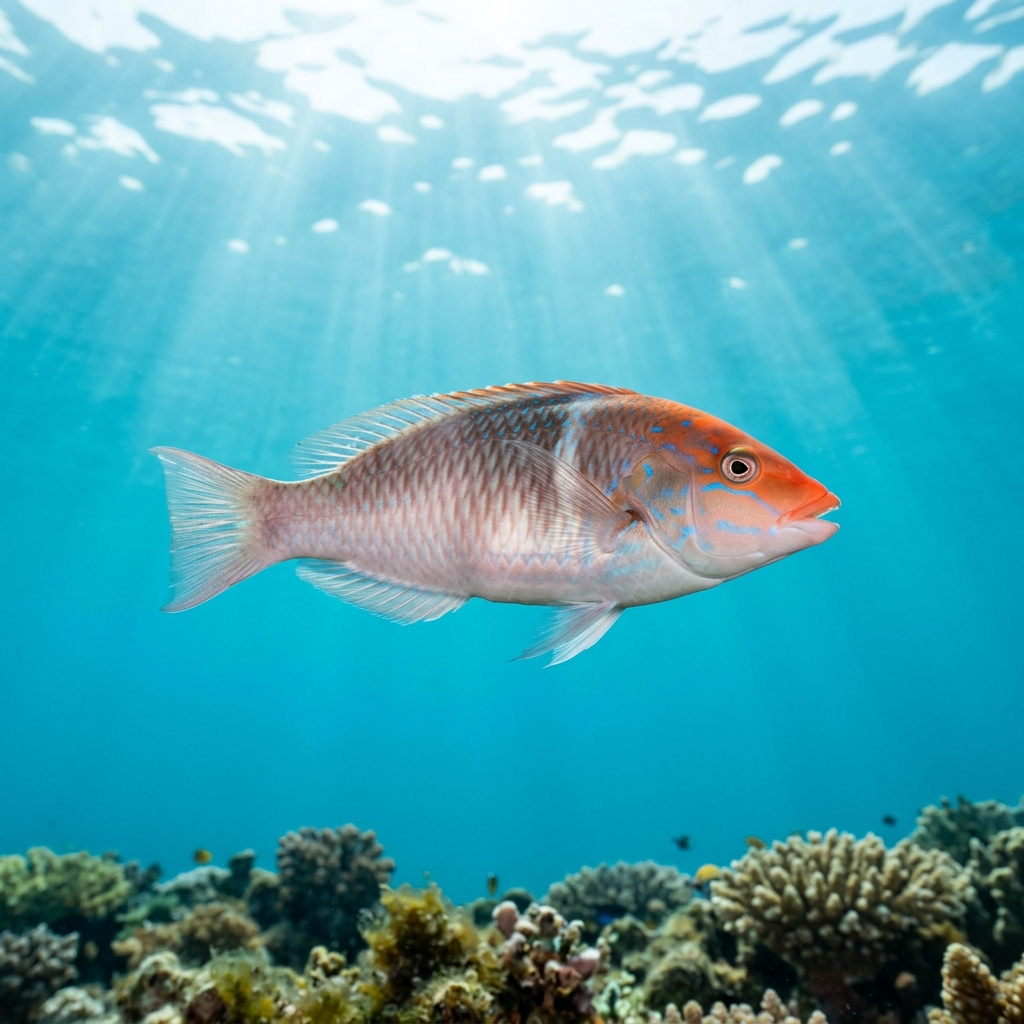
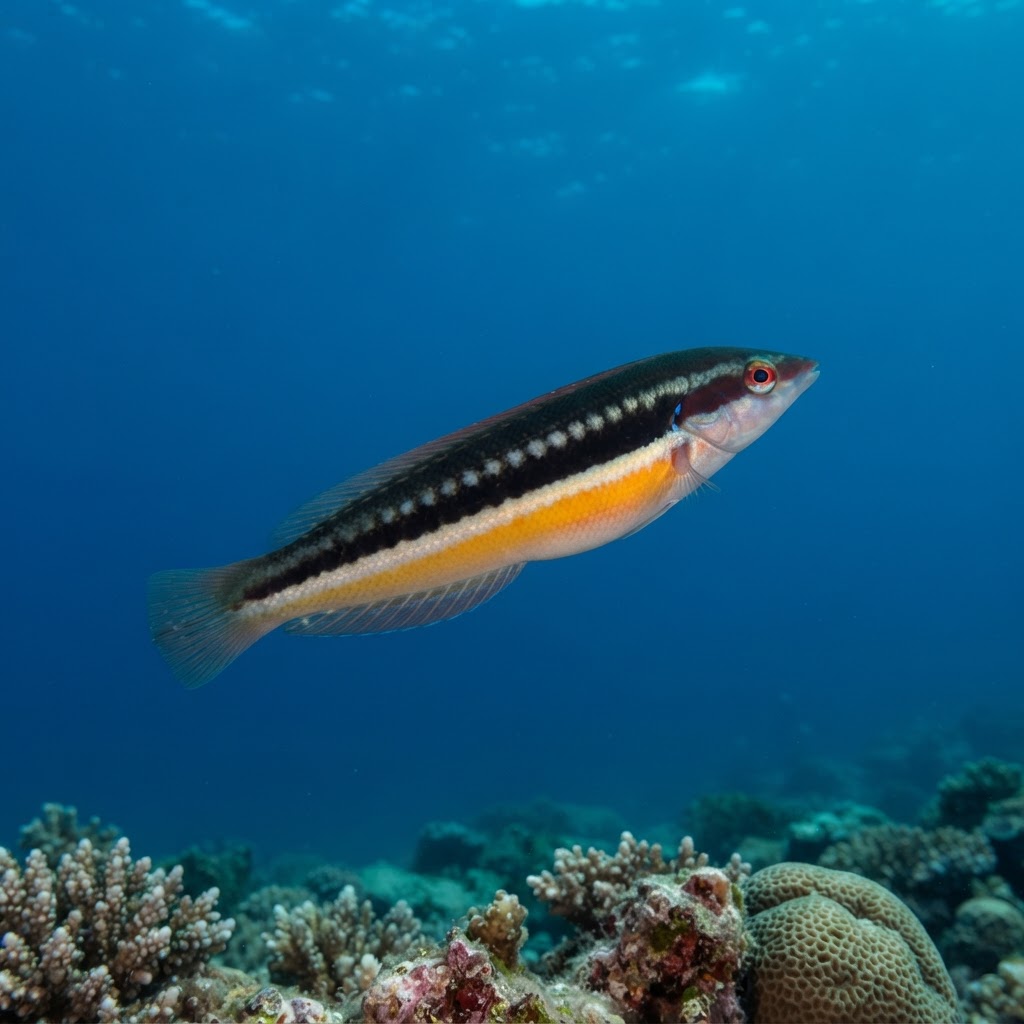
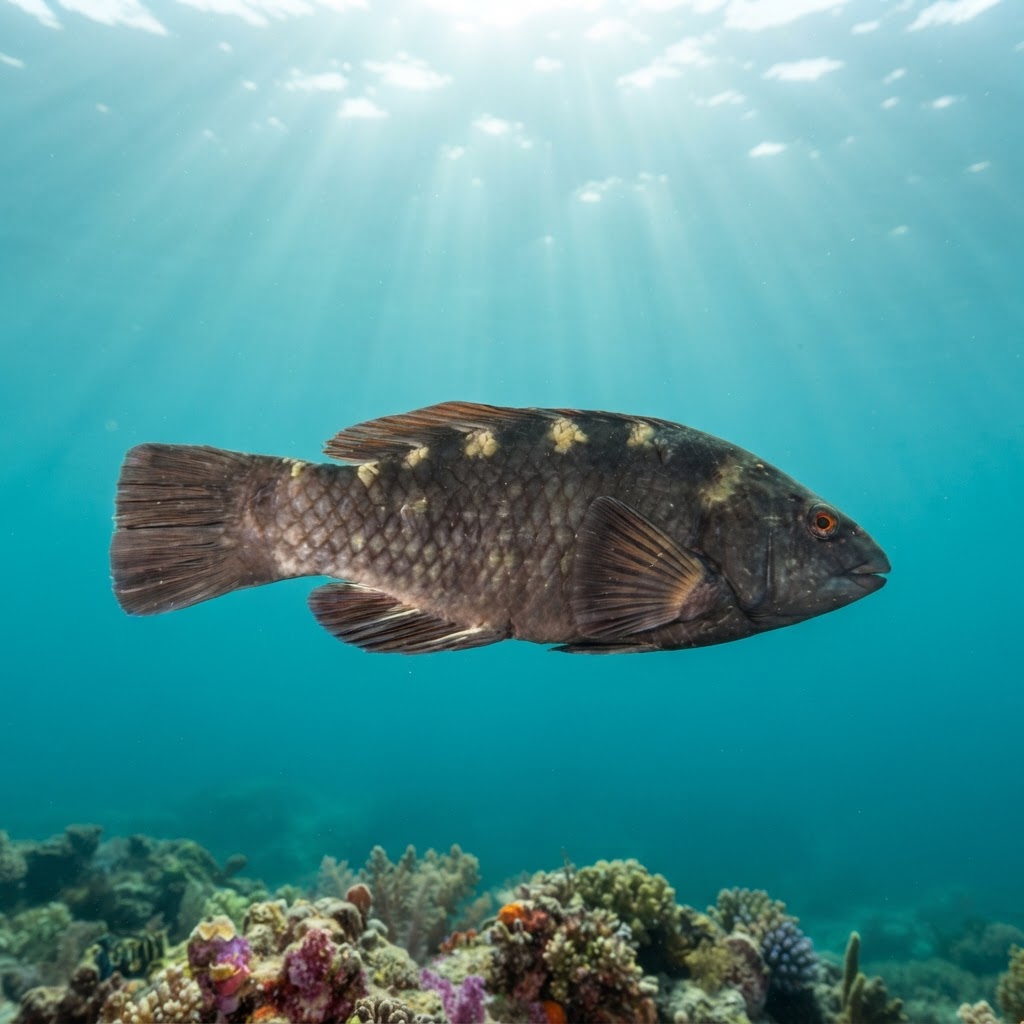
A stocky, torpedo-shaped wrasse to about 26 cm, usually seen cruising close to rock and reef structure rather than in open water. Colour runs from dark olive-green to brown with a pale, sometimes bluish, band or blotch pattern along the flank, though tone varies enough between individuals that pattern is a more reliable cue than colour alone. It has a fairly blunt head and thick body compared to slimmer wrasse species, and swims with a distinctive rowing motion of the pectoral fins.
Divers most often find this wrasse patrolling close to rock walls, kelp edges and reef crevices, picking at invertebrates rather than schooling in open water. It tends to hold its ground or duck into cover rather than bolt, and is logged as uncommon at most sites, so a sighting usually means a slow look along a rocky ledge rather than a quick swim-past. Most reports come from temperate reef habitat rather than deep or open-water settings.
Like many wrasses it hunts by picking small invertebrates such as crustaceans and molluscs off rock and reef surfaces, using strong jaws rather than speed to catch prey.
Sightings run year-round with no detected seasonal peak, consistent with a fish comfortable across the 11.4 to 19.1C range logged at dive sites. Expect a fair chance of an encounter on any dive to a suitable reef, in any month.
Most reliably logged in New Zealand, especially around the North Island, with a solid secondary population on the South Island. Australian sightings concentrate in Tasmania, with a smaller scatter of records from Victoria.
Mapping where Purple Wrasse is logged…
New Zealand is the strongest bet, particularly the North Island, with the South Island also producing regular sightings. In Australia, Tasmania is the main region, with occasional records from Victoria.
There is no clear seasonal pattern in the sightings, so it is considered a year-round species at the temperate reefs it inhabits. Water temperatures logged with sightings range from about 11 to 19C, spanning most of the diving season in these regions.
Look for a stocky, blunt-headed wrasse around 26 cm with olive-green to brown colouring and a pale band or blotch along the body, usually hugging rock or reef structure rather than swimming in open water.
They typically reach around 26 cm, making them a mid-sized wrasse rather than a giant of the family.
No, they pose no danger to divers and are simply reef-associated carnivores that feed on small invertebrates.
Site and sighting data is aggregated from diver logs, iNaturalist and GBIF. For taxonomy and conservation status:
Bird Wrasses
3,632 sites