Jasus edwardsii
Spot Southern Rock Lobster in Tasmania and New Zealand's cool 11-19°C waters. Here's where divers find them and how to recognise them on the reef.
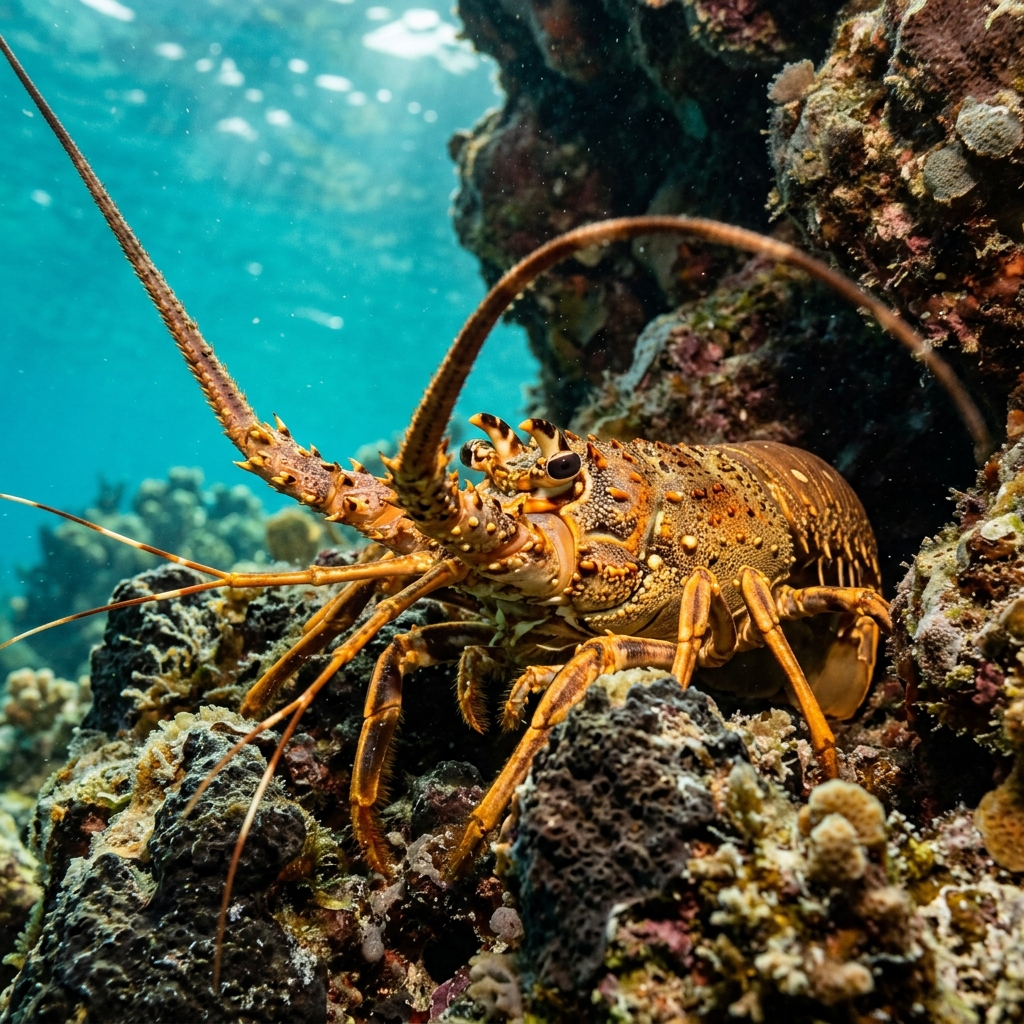
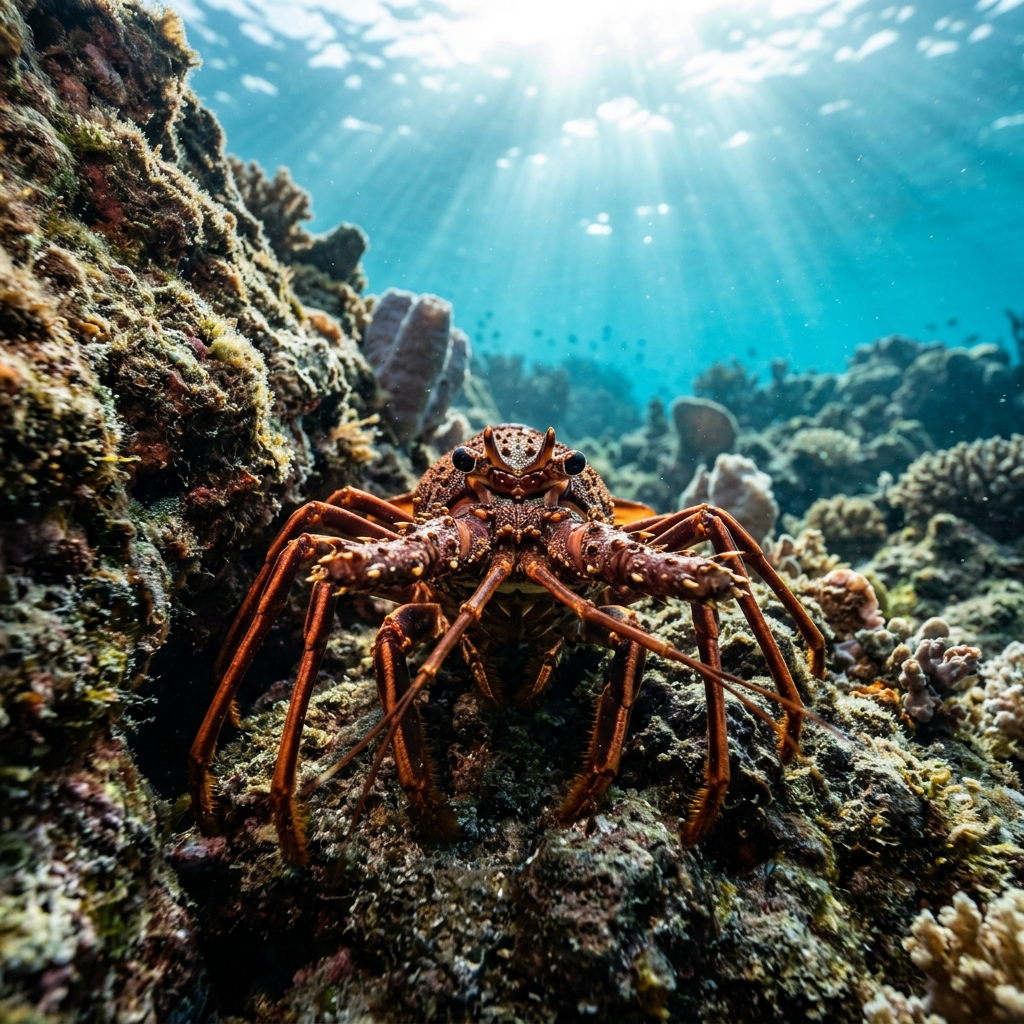
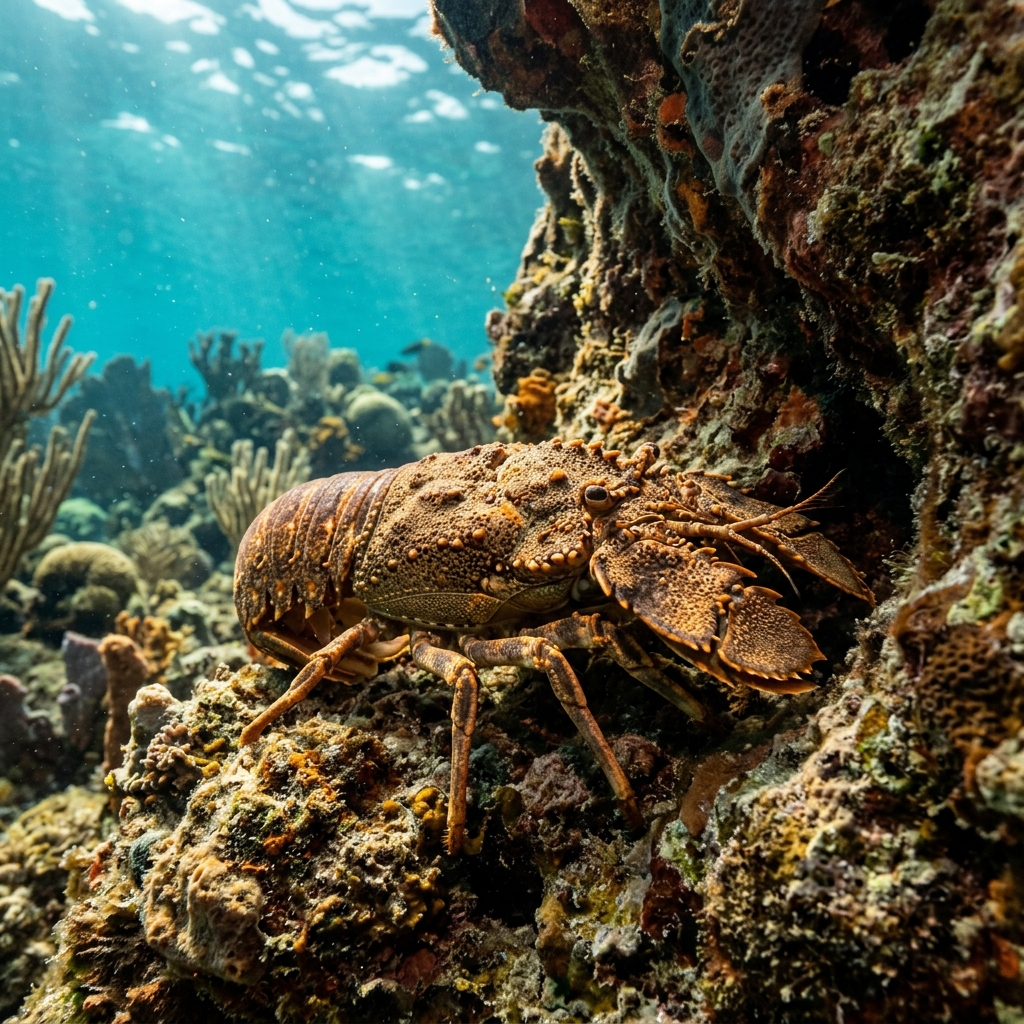
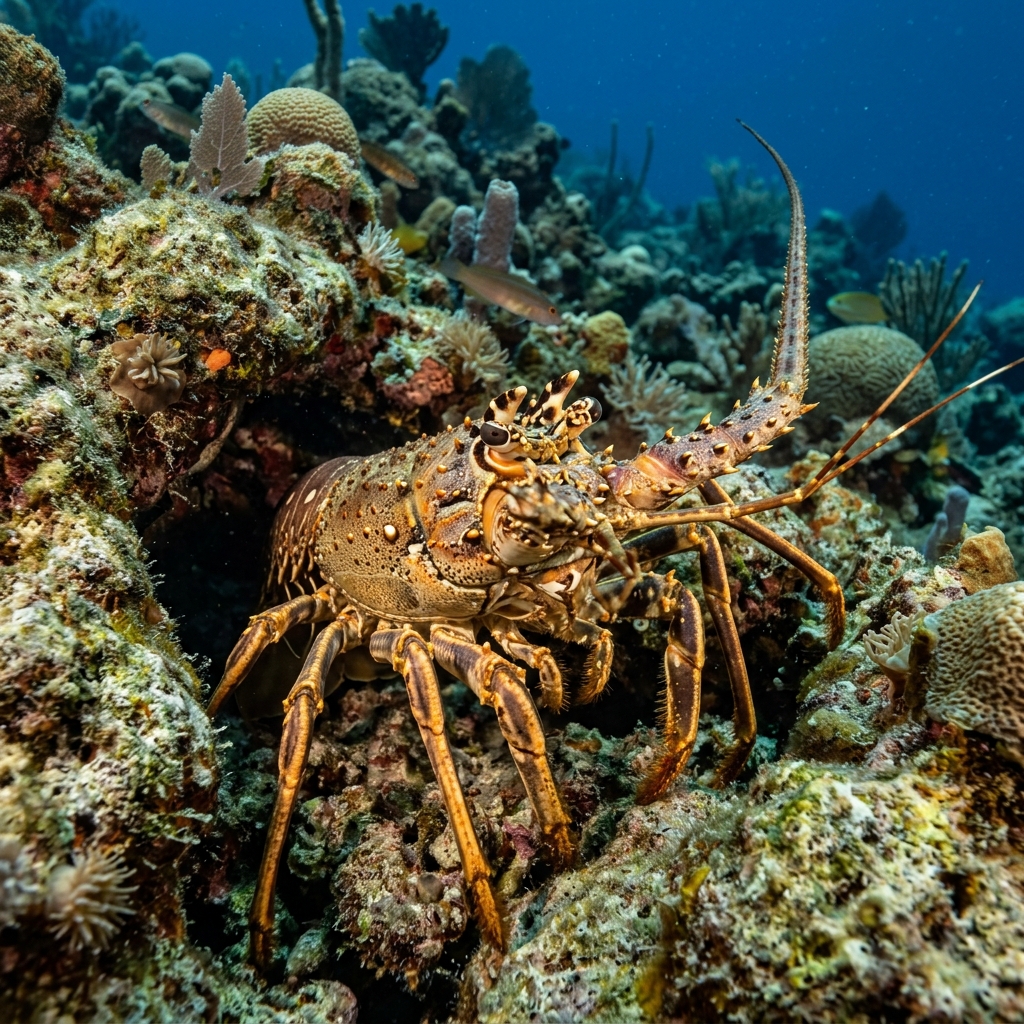
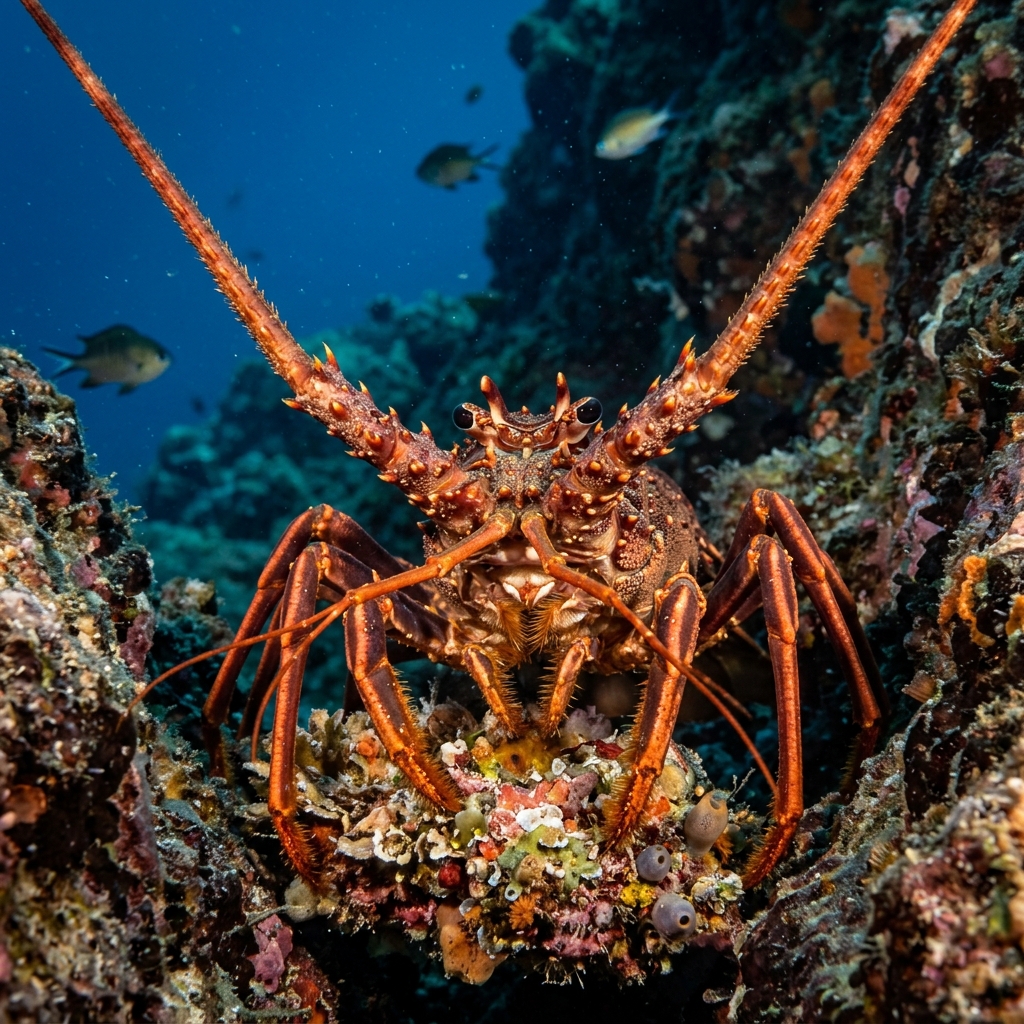
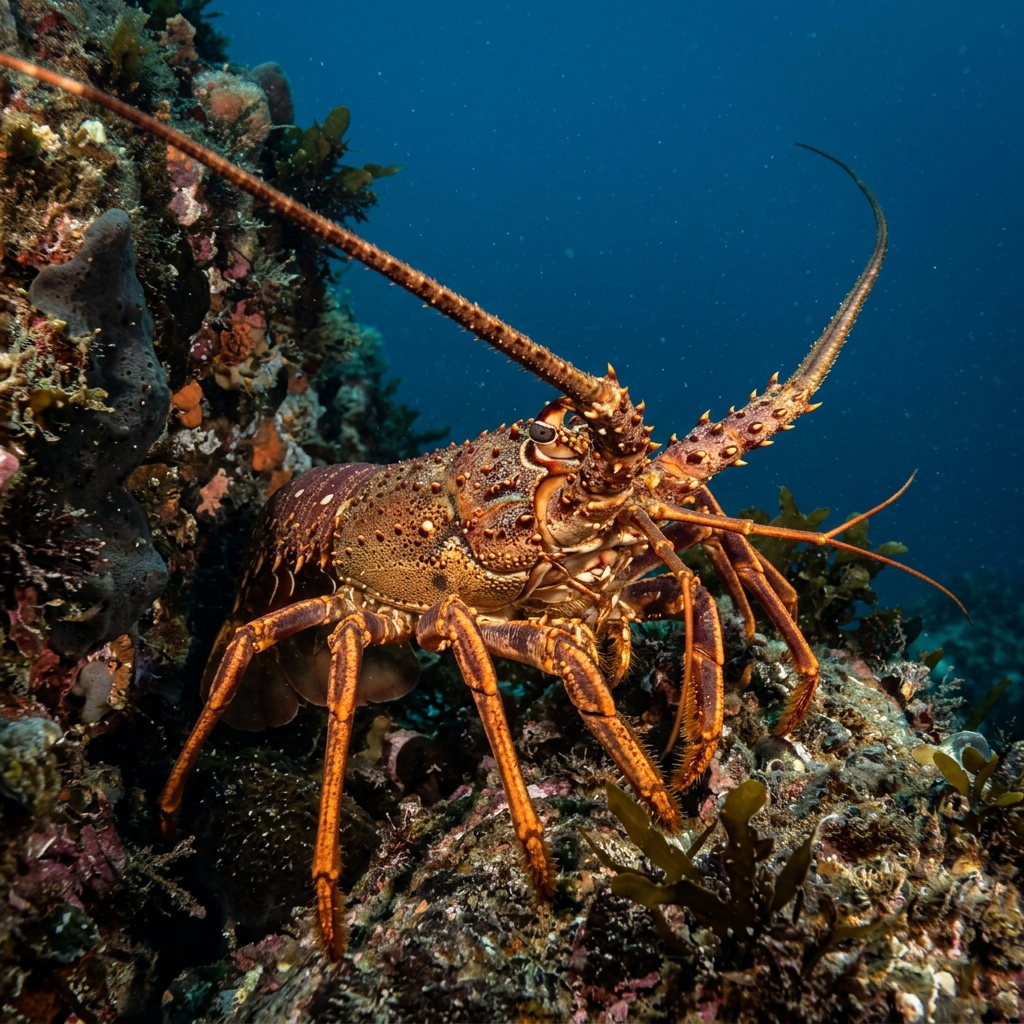
A large, spiny lobster with a vivid brick-red to orange body covered in pale spots and long, banded antennae that can exceed the body length. In the water it looks chunky and robust, typically 30-40 cm long, tucked into a rocky crevice with only the antennae and front legs visible. Unlike true clawed lobsters, it has no large front claws, the main giveaway underwater. Females show a broader, rounded tail fan and small feathery pleopods (paired abdominal appendages) visible on the underside when they turn.
During daylight hours this lobster retreats deep into rock crevices and boulder piles, so most daytime encounters are a pair of long, banded antennae poking out of a crack. Approach slowly and stay low; a hurried approach sends it reversing further into the rock instantly. Night dives offer the best opportunity to watch it out in the open, picking over the reef for small invertebrates.
Southern rock lobsters grow very slowly and can live for decades, large individuals may be well over 20 years old, which helps explain why sites with heavy take pressure quickly see their numbers drop to rare status.
No clear seasonal peak has emerged from diver records, so encounters are possible year-round. The species favours cool water, observed between roughly 11 and 19°C, so the temperate reef conditions that define its range are consistent across seasons.
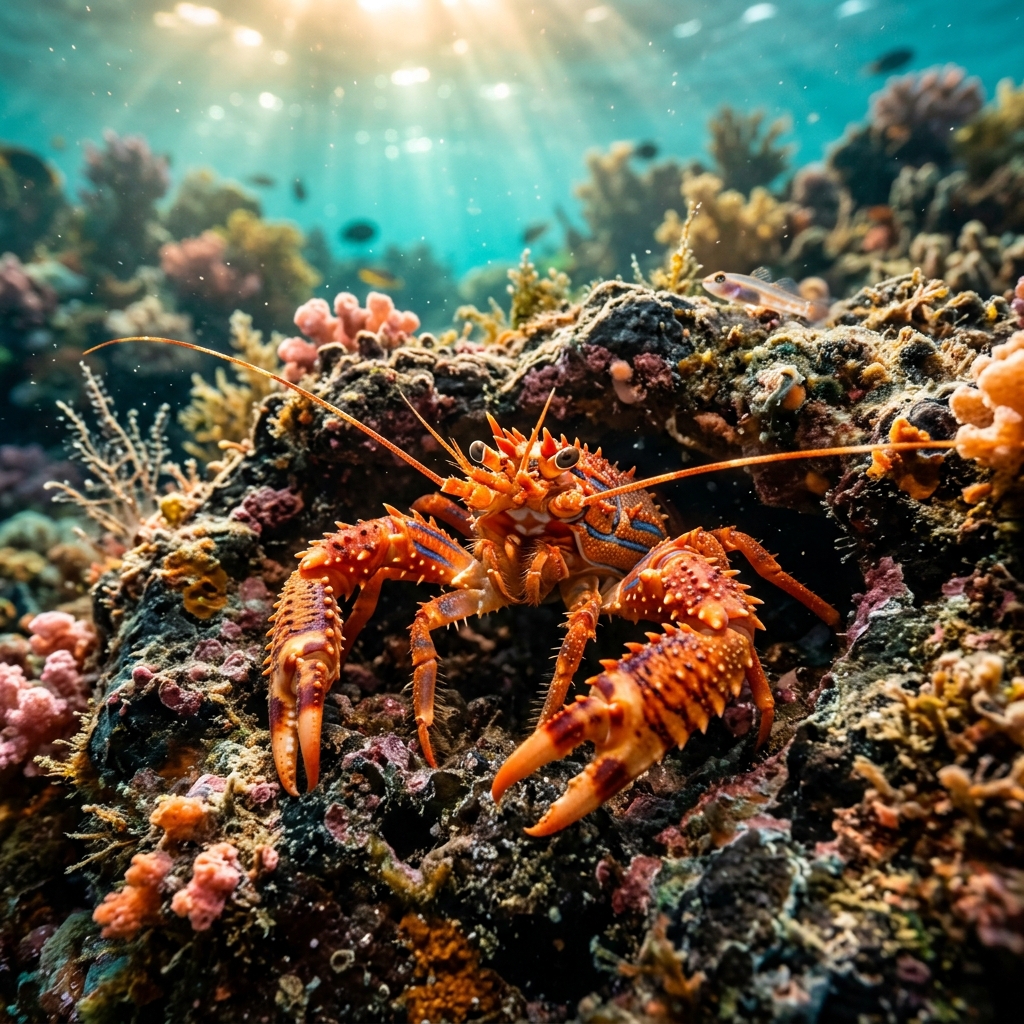
Reef neighbours a diver could mistake it for. Use the identification notes above to tell them apart.
Most sightings come from Australia and New Zealand, with the strongest concentration in Tasmania and South Australia on the Australian side, and Central New Zealand and Northland and Auckland in New Zealand. Victoria and the Coromandel and Bay of Plenty coast also return regular records, making the southern temperate coastlines of both countries the places to focus your search.
Mapping where Southern Rock Lobster is logged…
The best chances are along the temperate reefs of Tasmania and South Australia in Australia, and around Central New Zealand and the Northland and Auckland coastline in New Zealand. Victoria and the Coromandel and Bay of Plenty regions also produce sightings. Rocky reef dives in 5-30 m are your most productive starting point.
Diver records do not show a strong seasonal peak, so they can be encountered at any time of year. Night dives are far more productive than daytime dives because the lobsters come out of their crevices to feed after dark.
Look for a large, bright brick-red to orange crustacean with pale spots and very long banded antennae, resting in or just inside a rocky crevice. The complete absence of large front claws distinguishes it from true clawed lobsters. The Western Rock Lobster of Western Australia looks similar but has a more purple-brown hue and is found in a different region.
Most divers encounter individuals around 30-40 cm in body length, though older animals can exceed that. The long antennae can add considerably to the apparent size, sometimes doubling the visual impression of the animal.
No. They are not aggressive and pose no real risk to divers. They do have spiny shells and will flick their tail powerfully to escape if grabbed, so leave them alone and avoid reaching into crevices where they shelter.
They are naturally shy, spend daylight hours hidden inside rock crevices, and tend to be uncommon to rare at most sites. Their cool-water habitat in southern Australia and New Zealand also means fewer recreational divers in the water to log sightings. A slow, quiet approach and a torch for checking crevices improve your odds considerably.
Site and sighting data is aggregated from diver logs, iNaturalist and GBIF. For taxonomy and conservation status:
Caribbean Spiny Lobster
2,209 sites