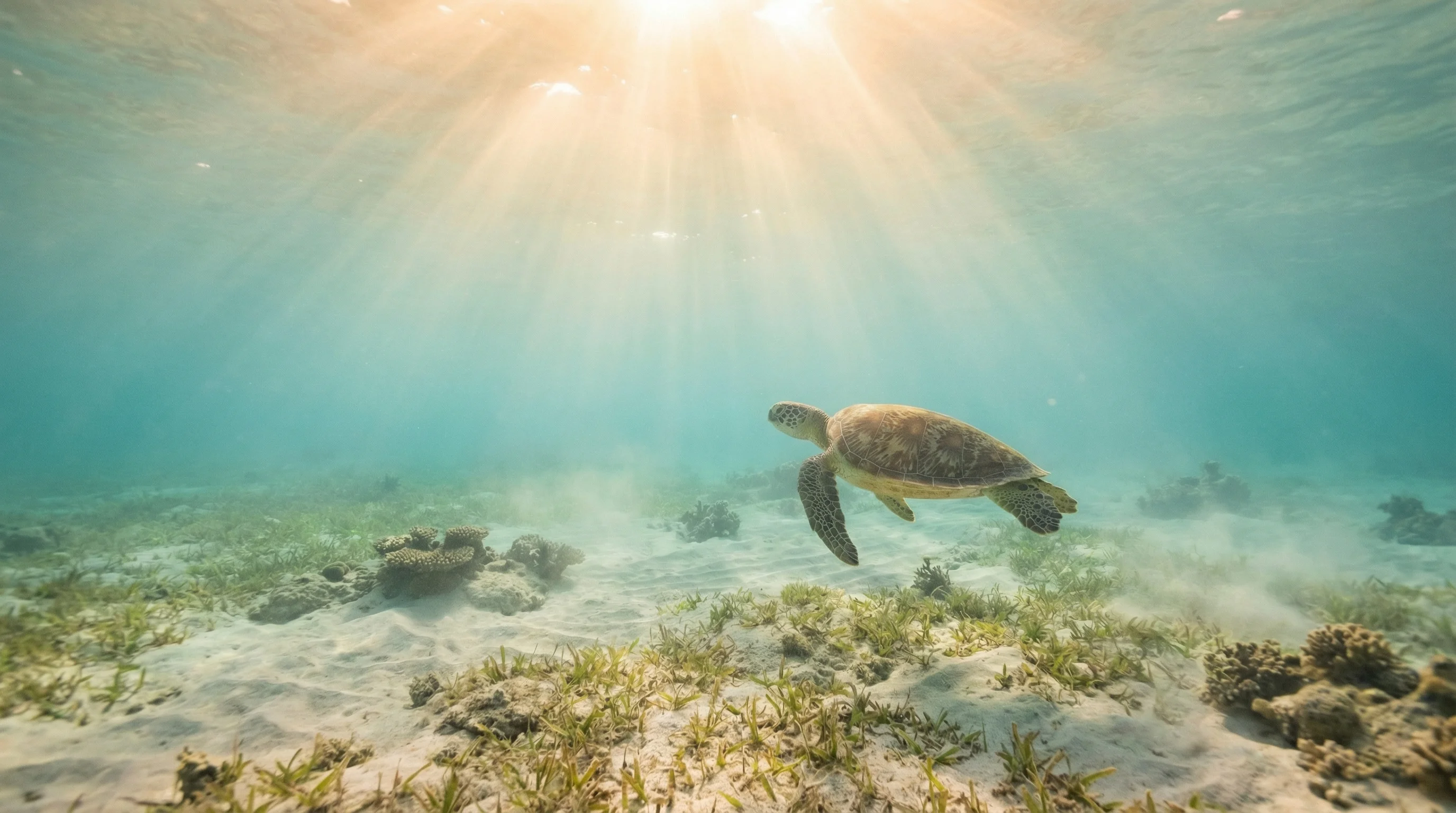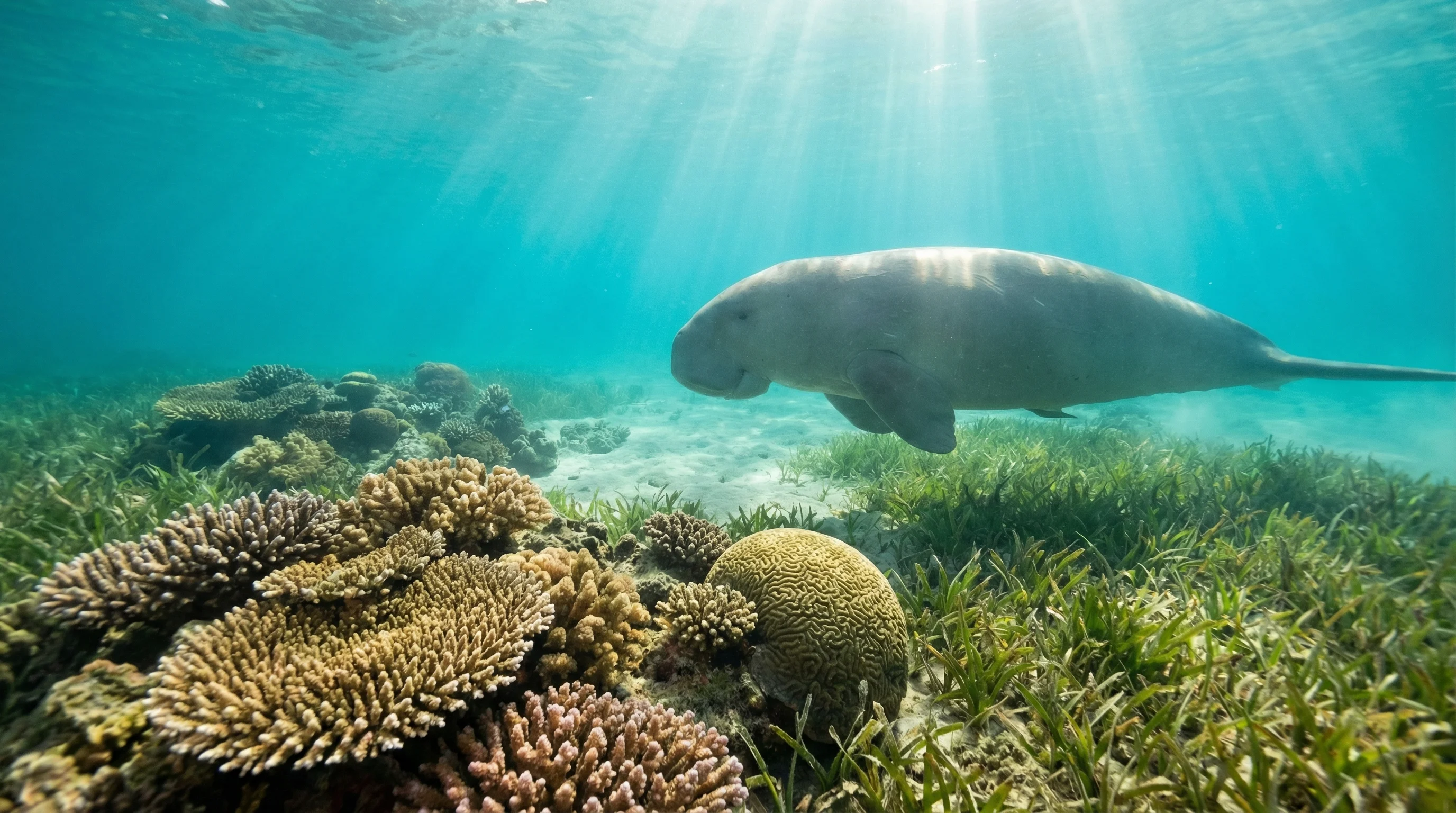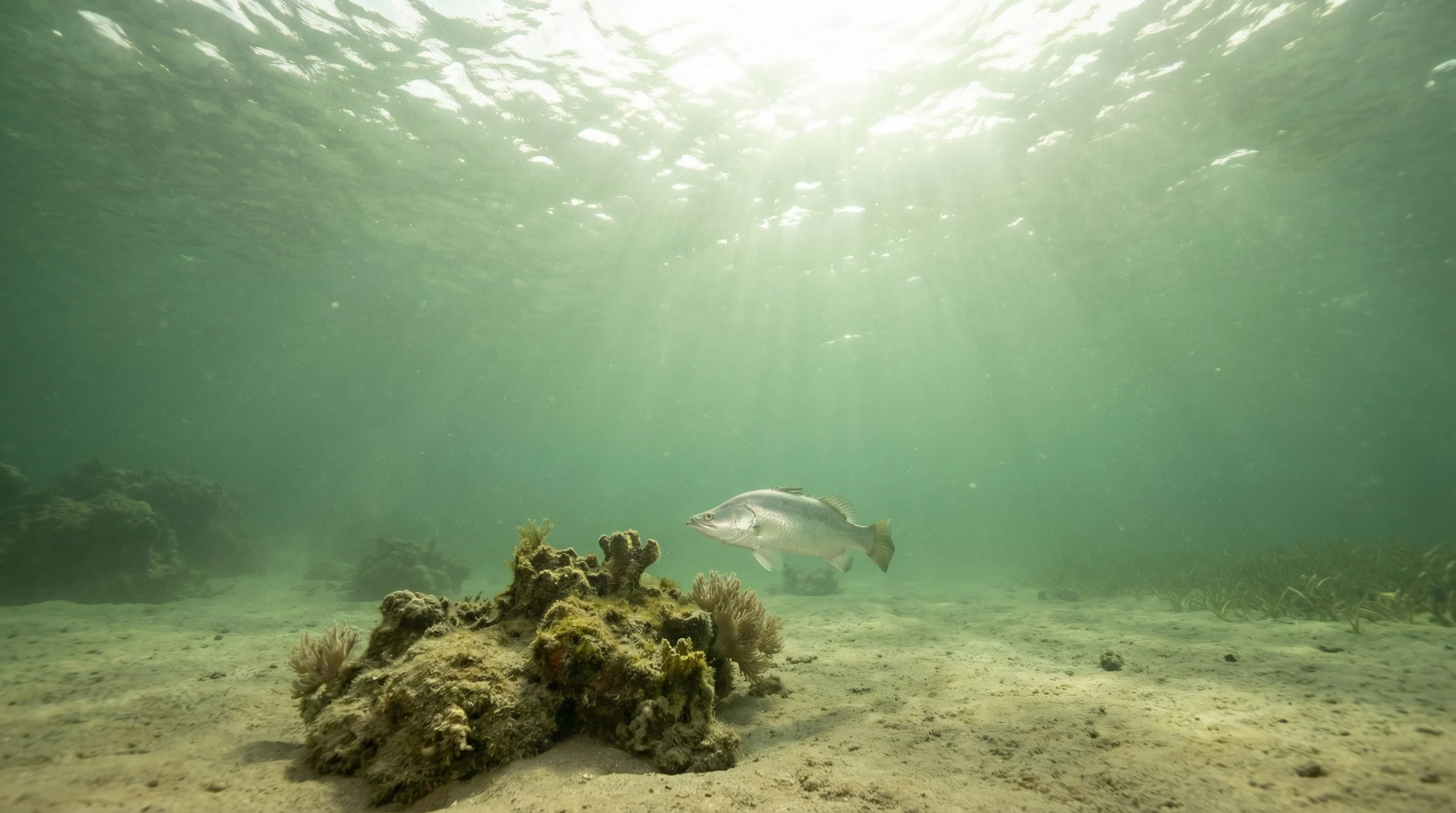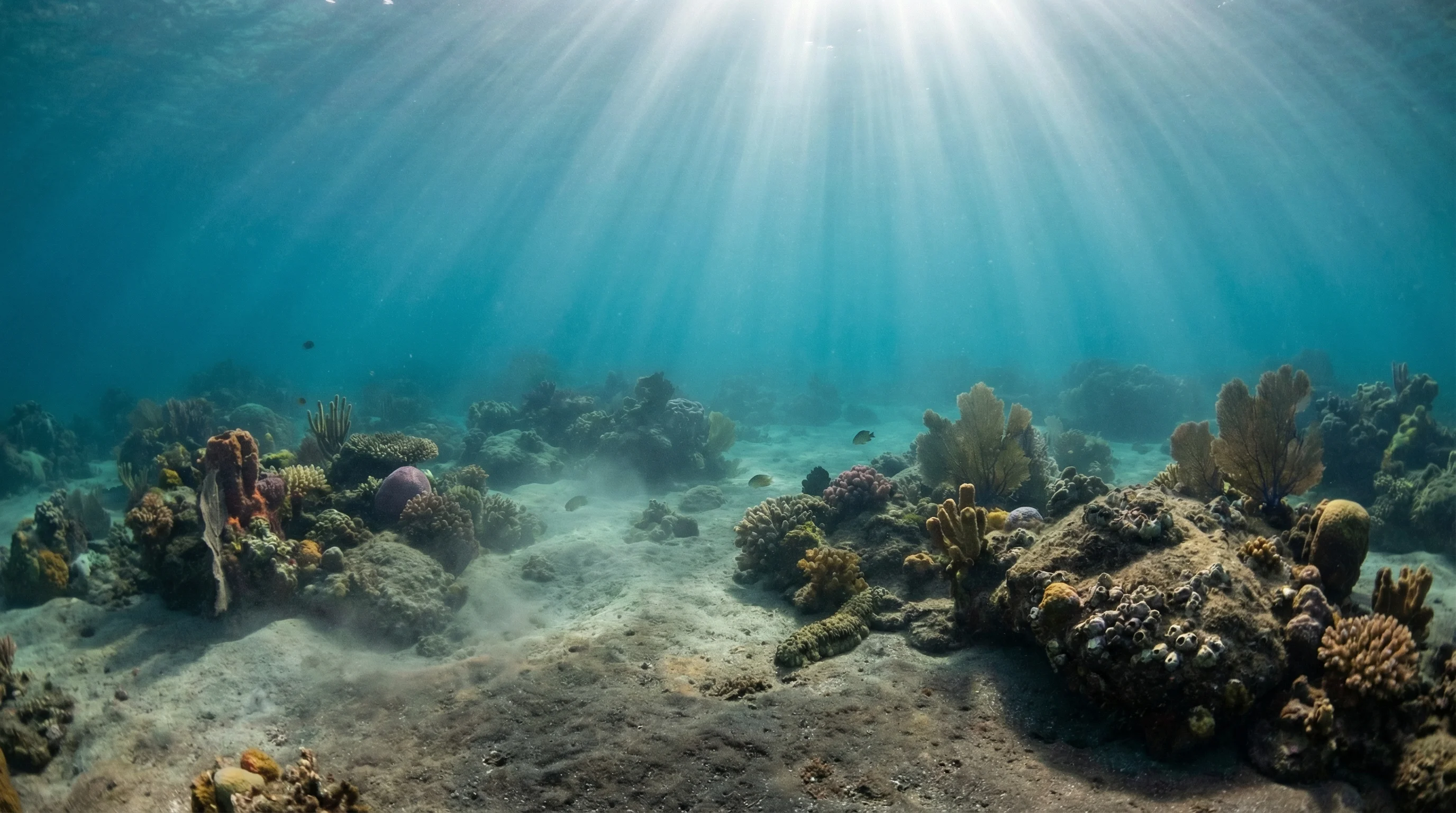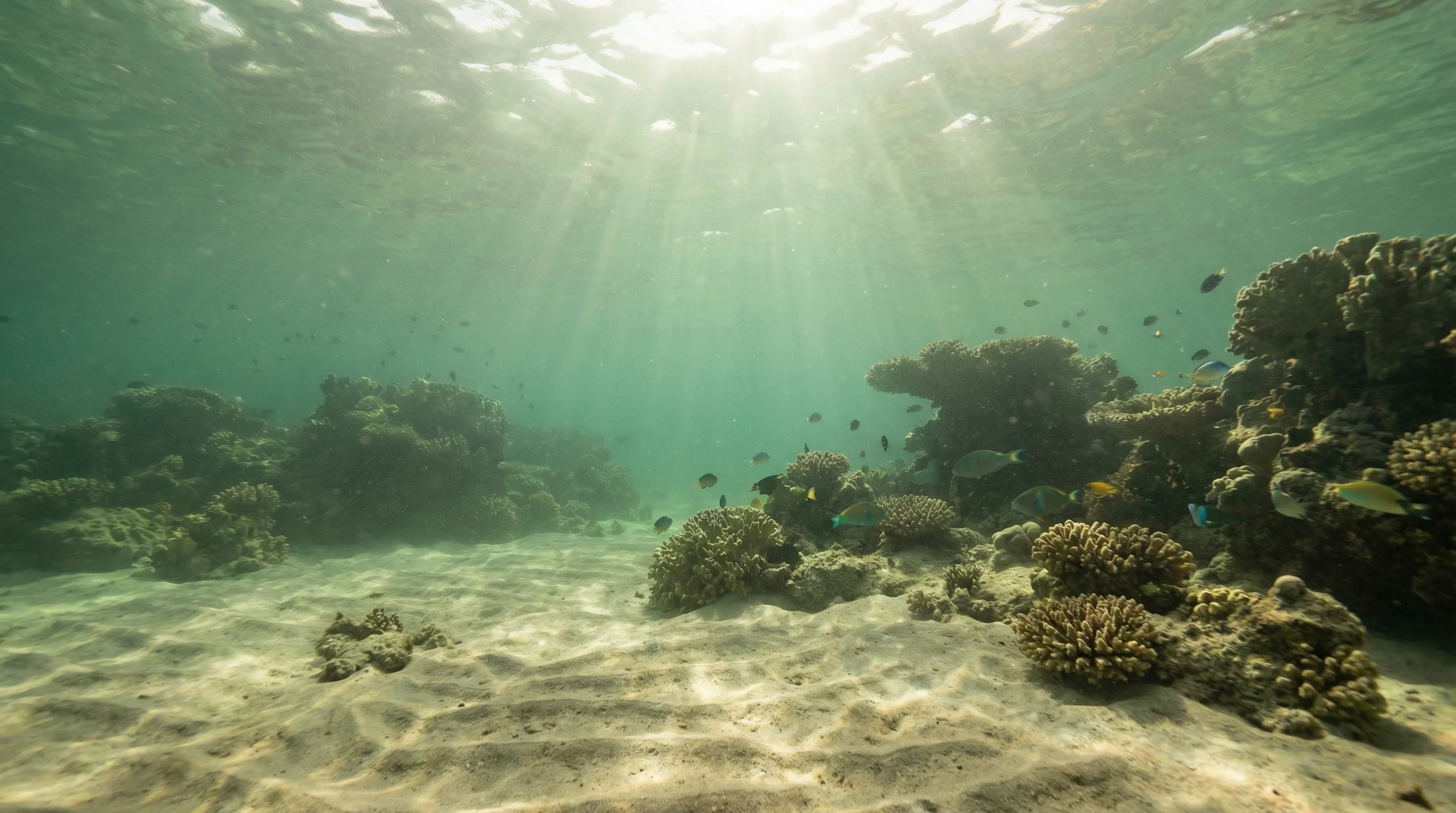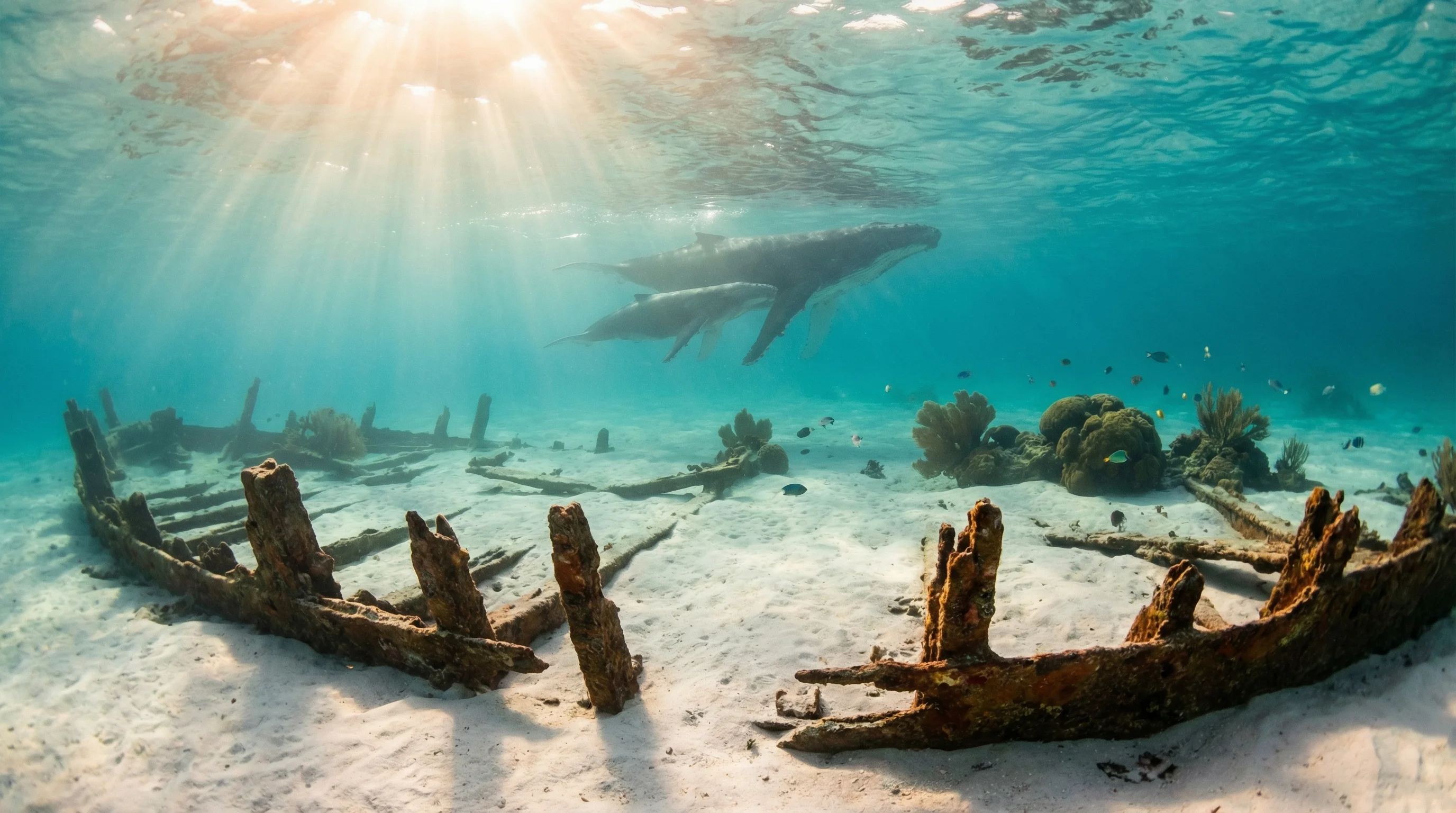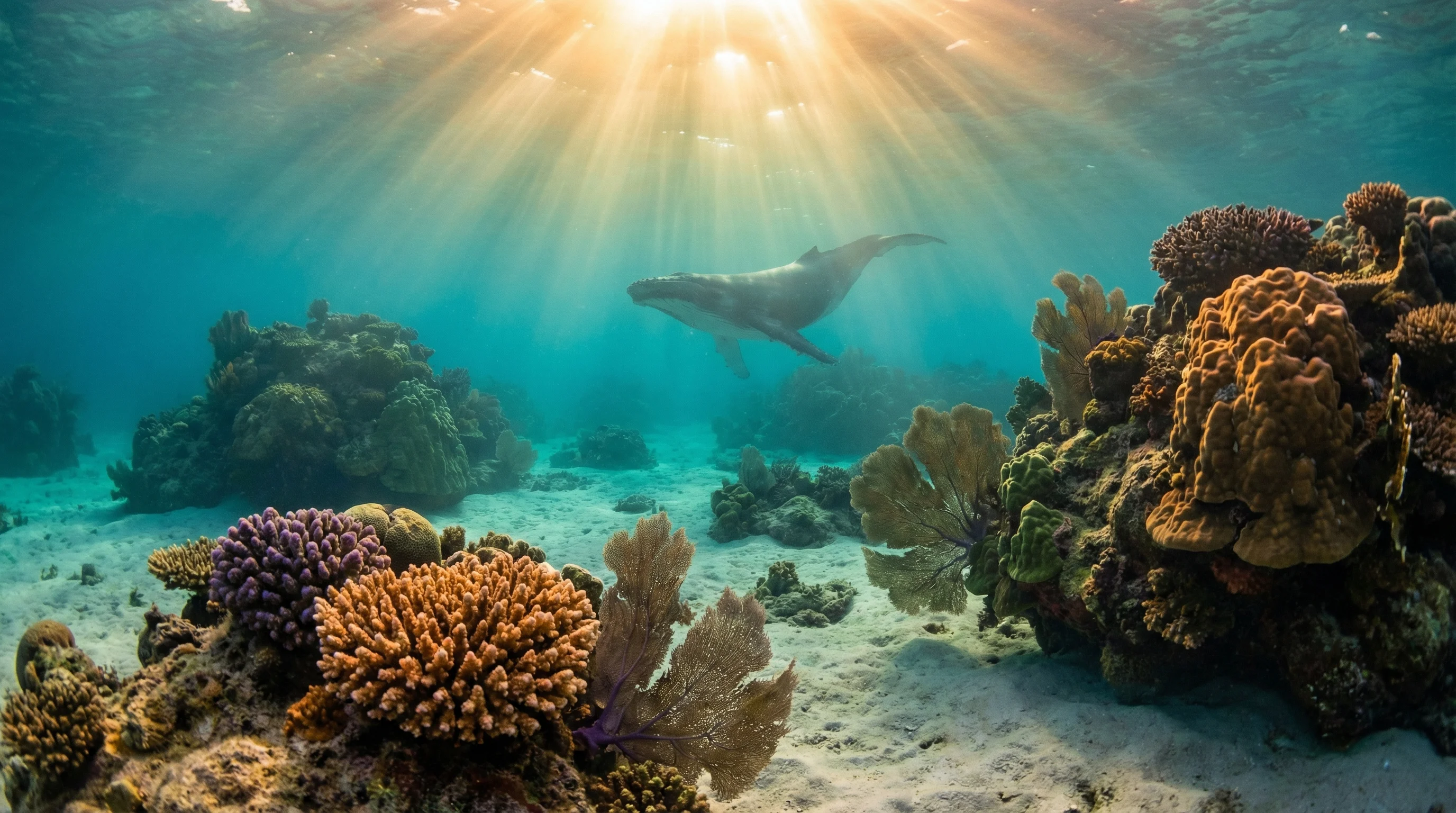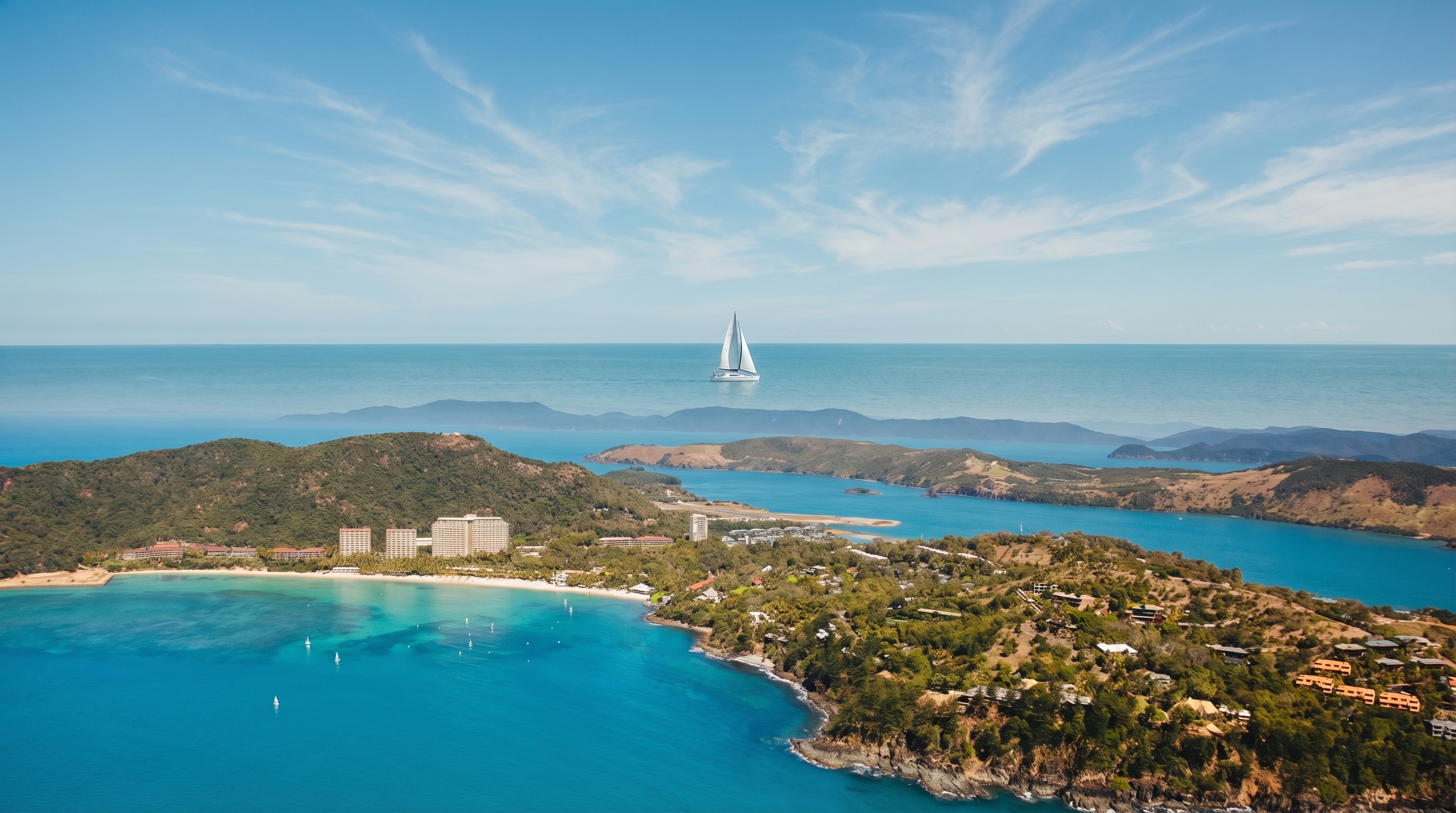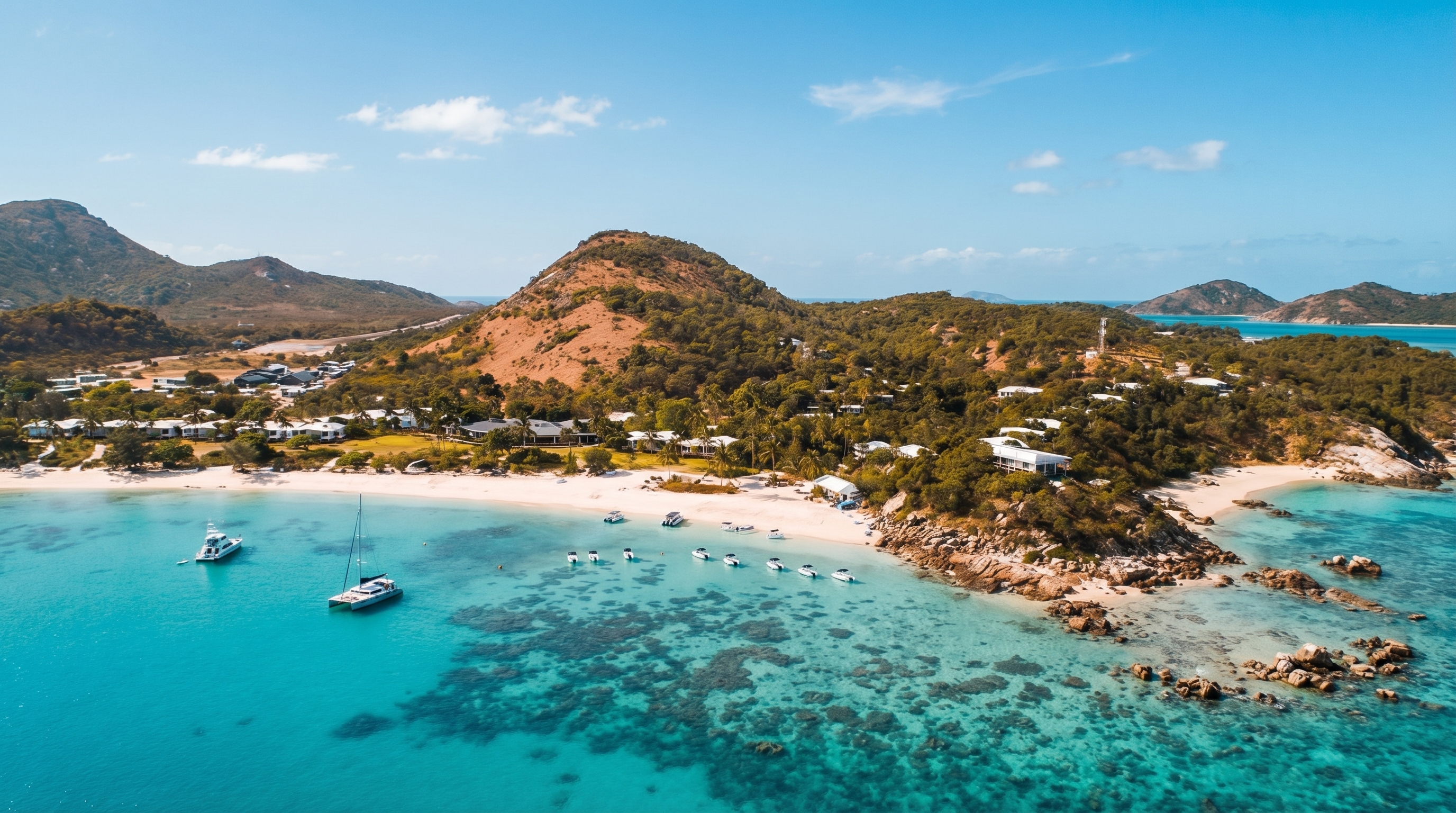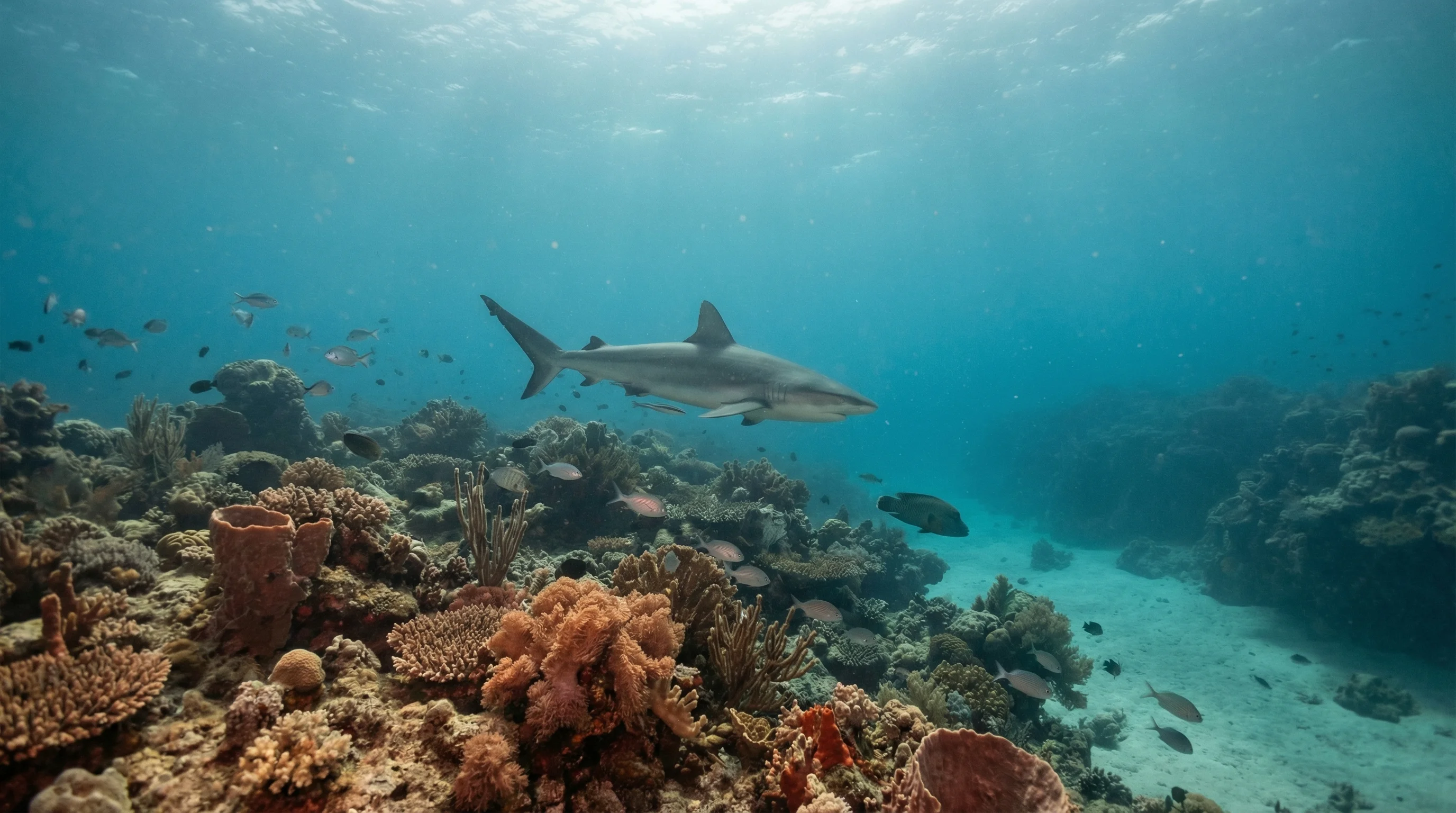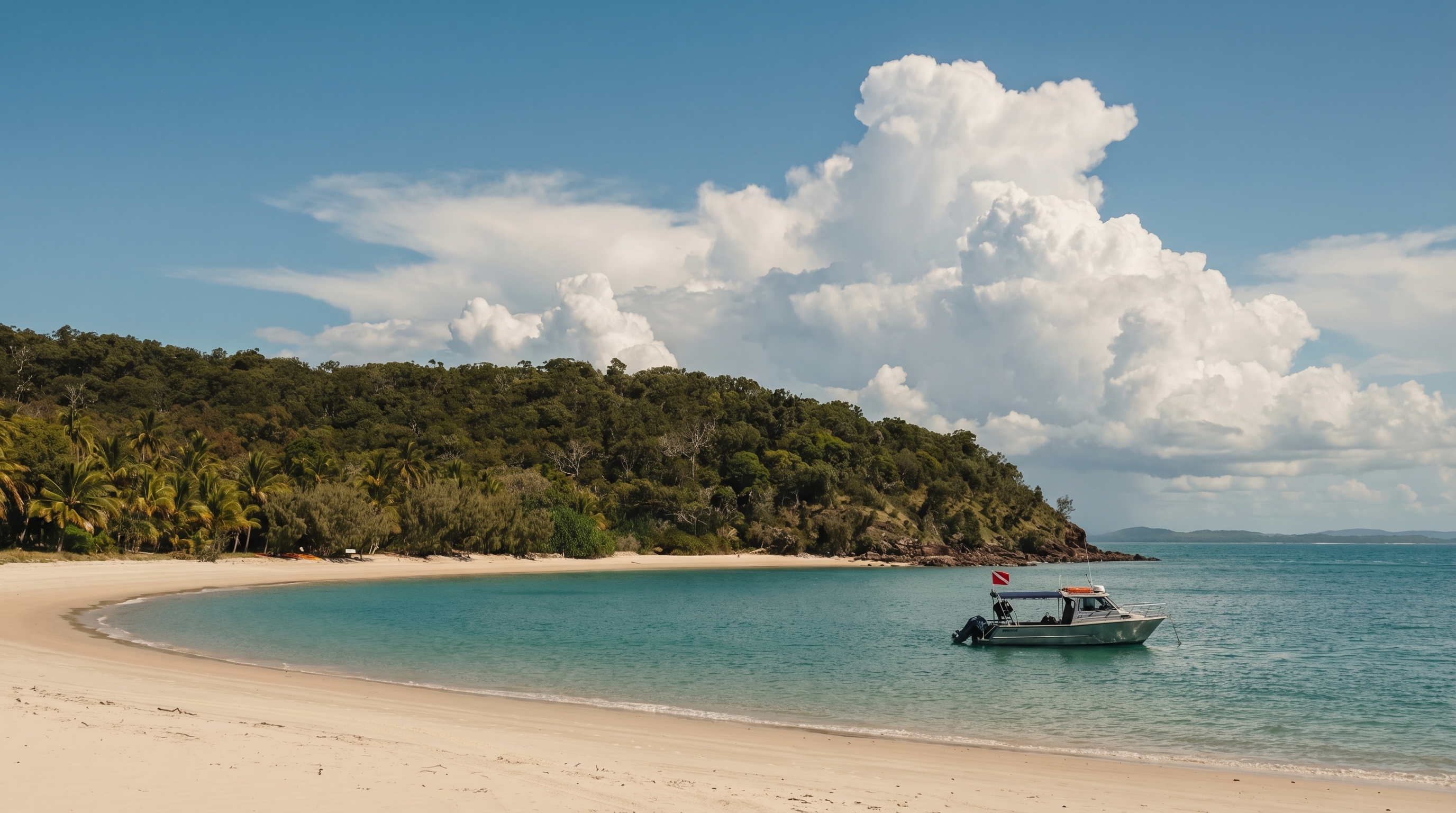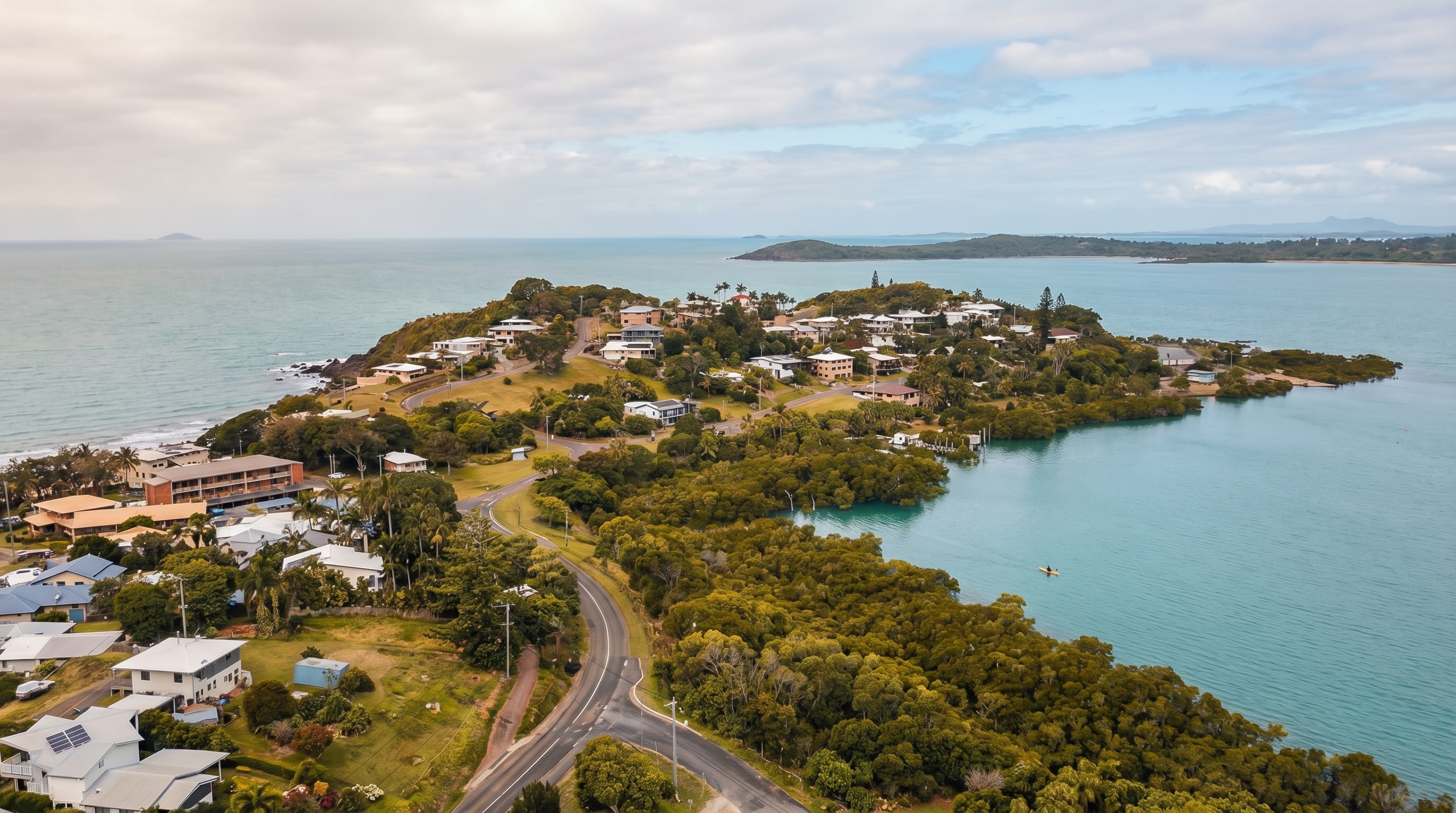
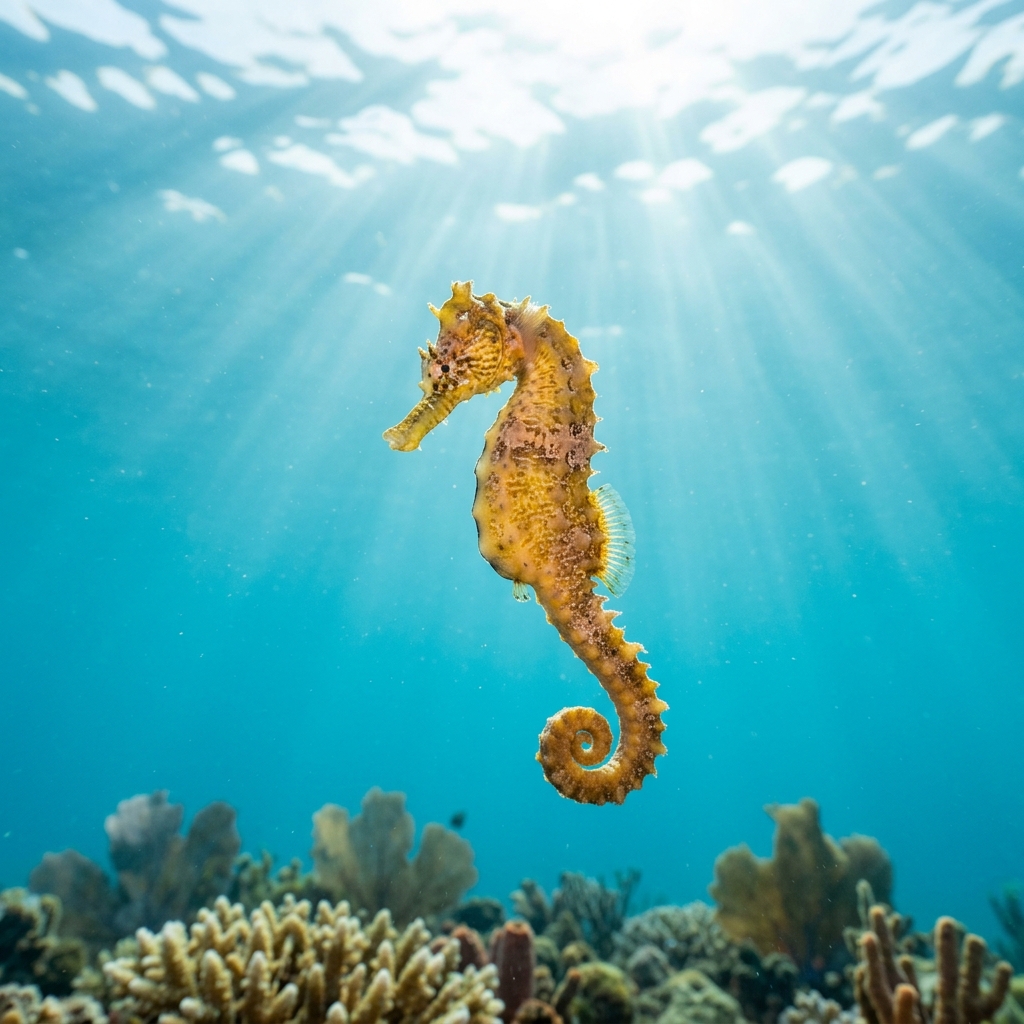
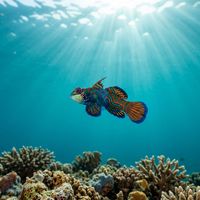
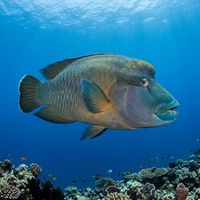
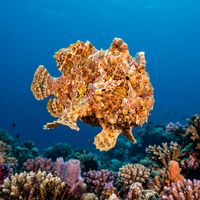
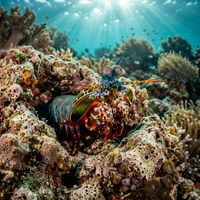
Sarina Coast is a stretch of Central Queensland coastline bordering the Coral Sea, with nine sites ranging from beach and boat entries across reef, seagrass, and a wreck. Sites are all shallow, making them accessible to beginners and intermediate divers. Water temperatures follow a tropical pattern, warmest from late summer into autumn and cooler through the middle of the year. The dry season from June to November tends to offer better visibility and more settled weather, and it is the more practical time for reef diving in the region. The species list includes whitetip reef shark, Napoleon wrasse, ornate wobbegong, green sea turtle, shovelnose ray, and peacock mantis shrimp. Divers and snorkellers should be aware that jellyfish, including dangerous species, are present, and crocodiles have been recorded in the area.
Monthly water temperature across Sarina Coast's sites, from satellite sea-surface data corrected for depth. The band shows the site-to-site spread.
Water reaches its warmest in late summer and cools to its mildest around mid-winter, though temperatures remain comfortably tropical year-round. The dry season brings more settled conditions and generally cleaner water, making it the recommended window for most sites in the area.
Water temperature around Sarina Coast ranges from about 21°C in July to 29°C in February, based on satellite sea-temperature data for its dive sites.
In the warm season (about 29°C) a rash guard or 3mm shorty is comfortable in Sarina Coast; in the coldest months (about 21°C) step up to a 5mm suit.
Fin maps 9 sites in Sarina Coast (7 scuba diving sites and 3 snorkelling spots, with some suited to both).
Across Sarina Coast's dive sites, May, June, July, August, September and October are most often reported as the best months to visit.
9 more sites to explore