Antennarius hispidus
Spot hairy frogfish across the Philippines, Indonesia and Queensland in warm 24-29 °C waters. Here's how to recognise this shaggy ambush predator underwater.
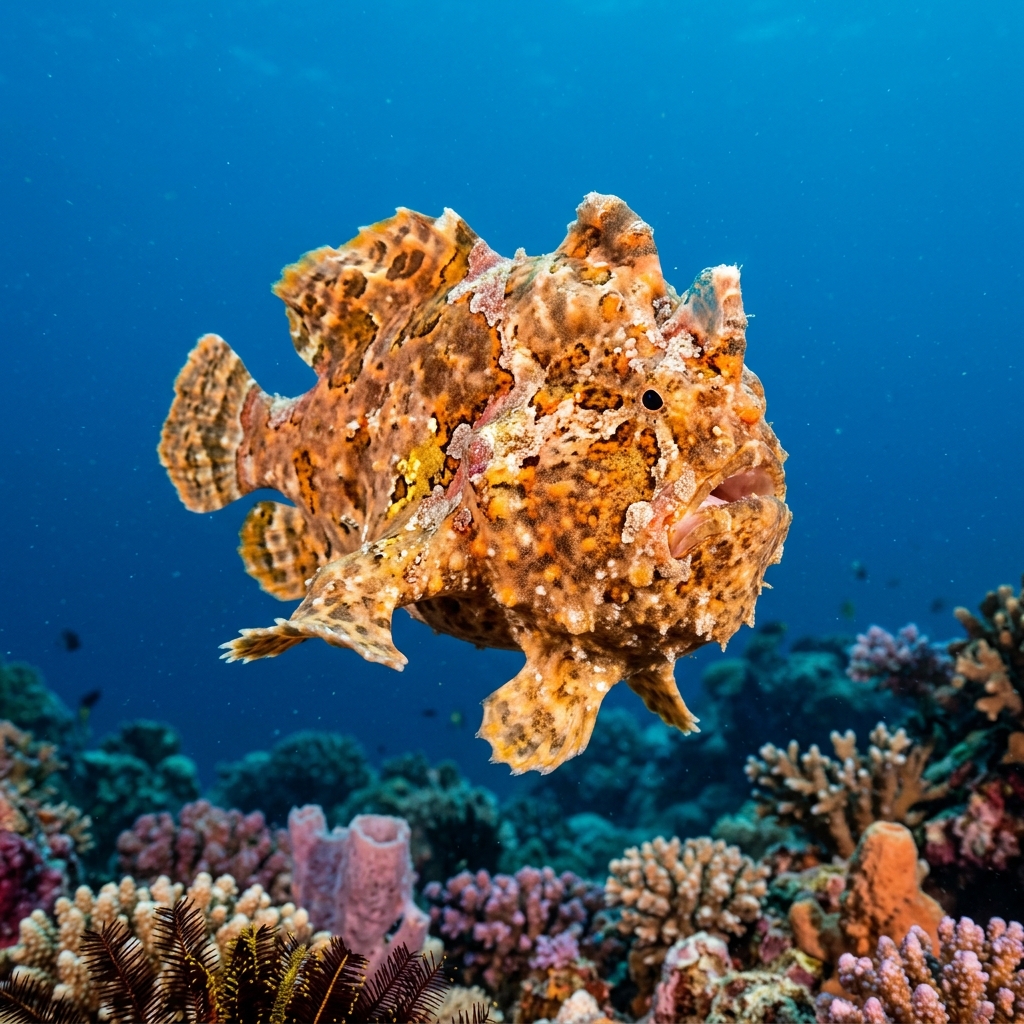
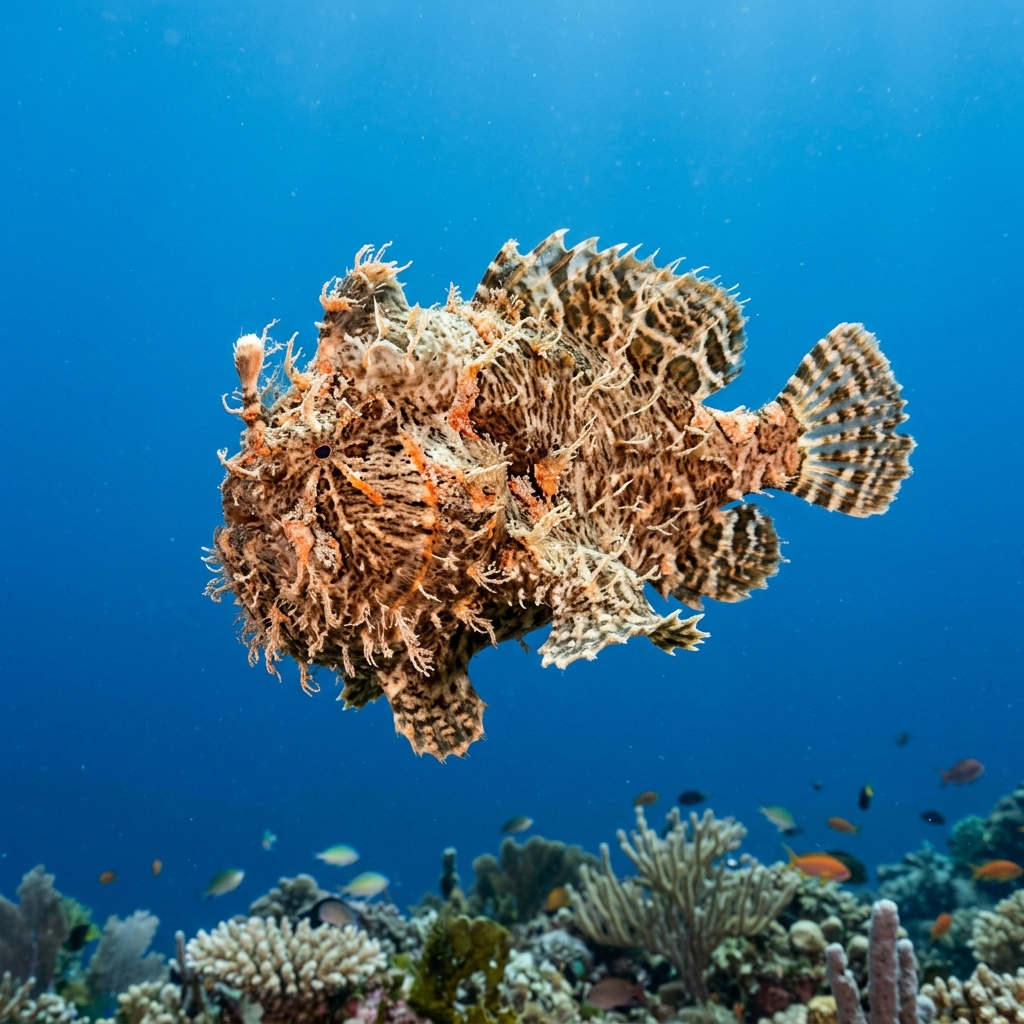
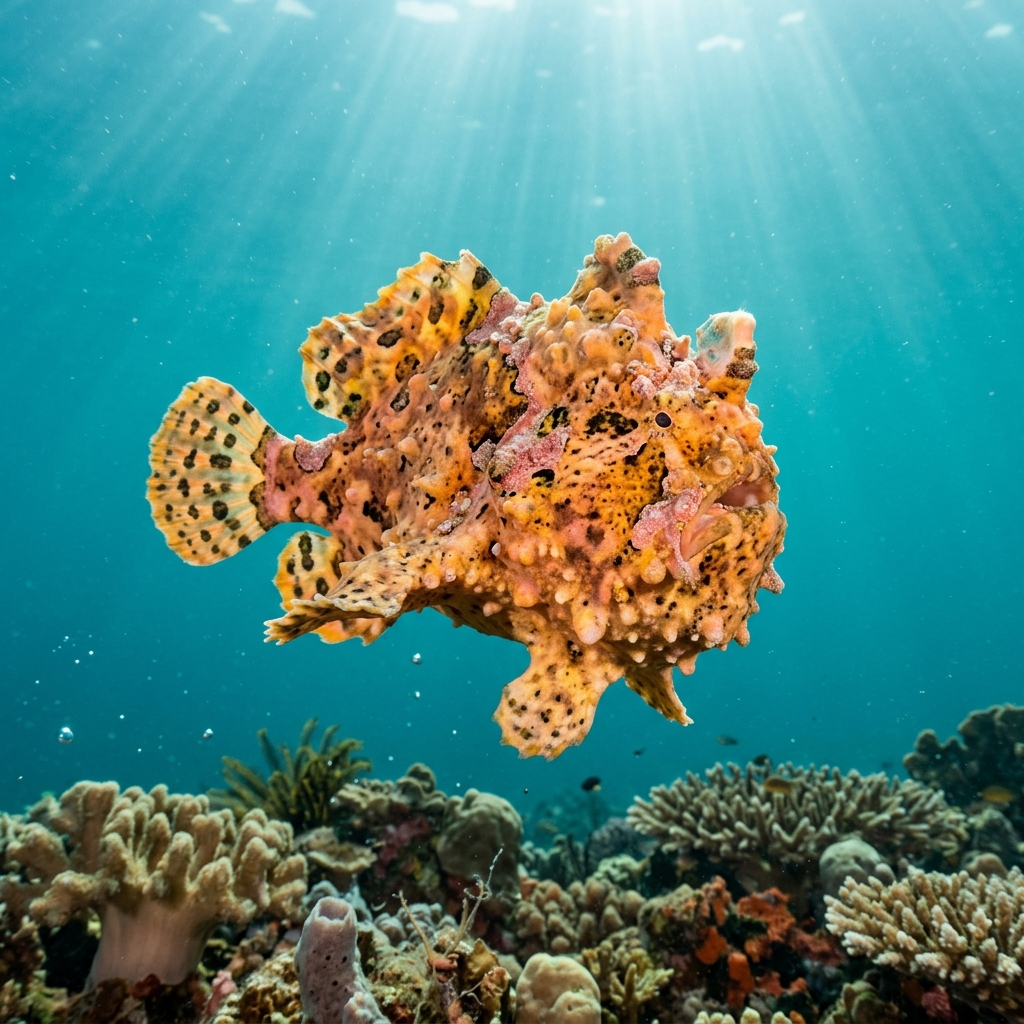
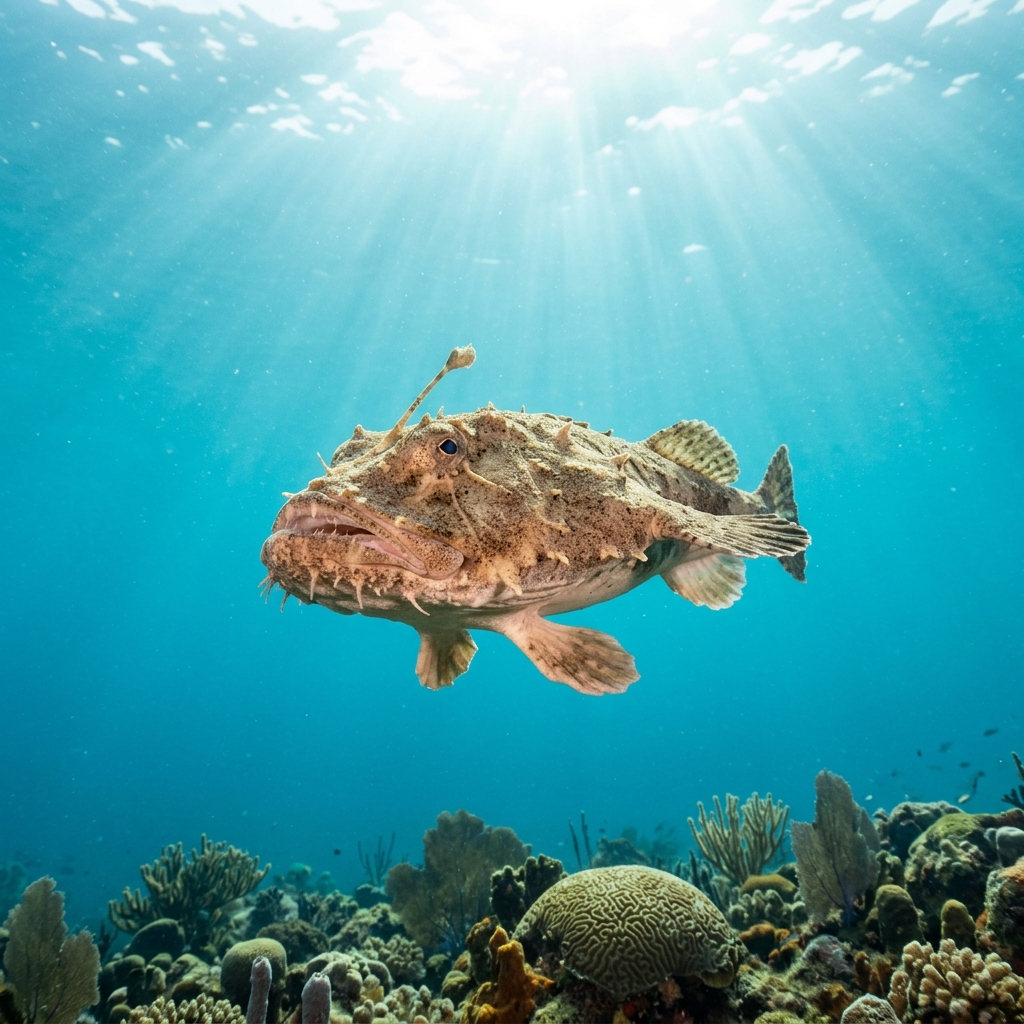
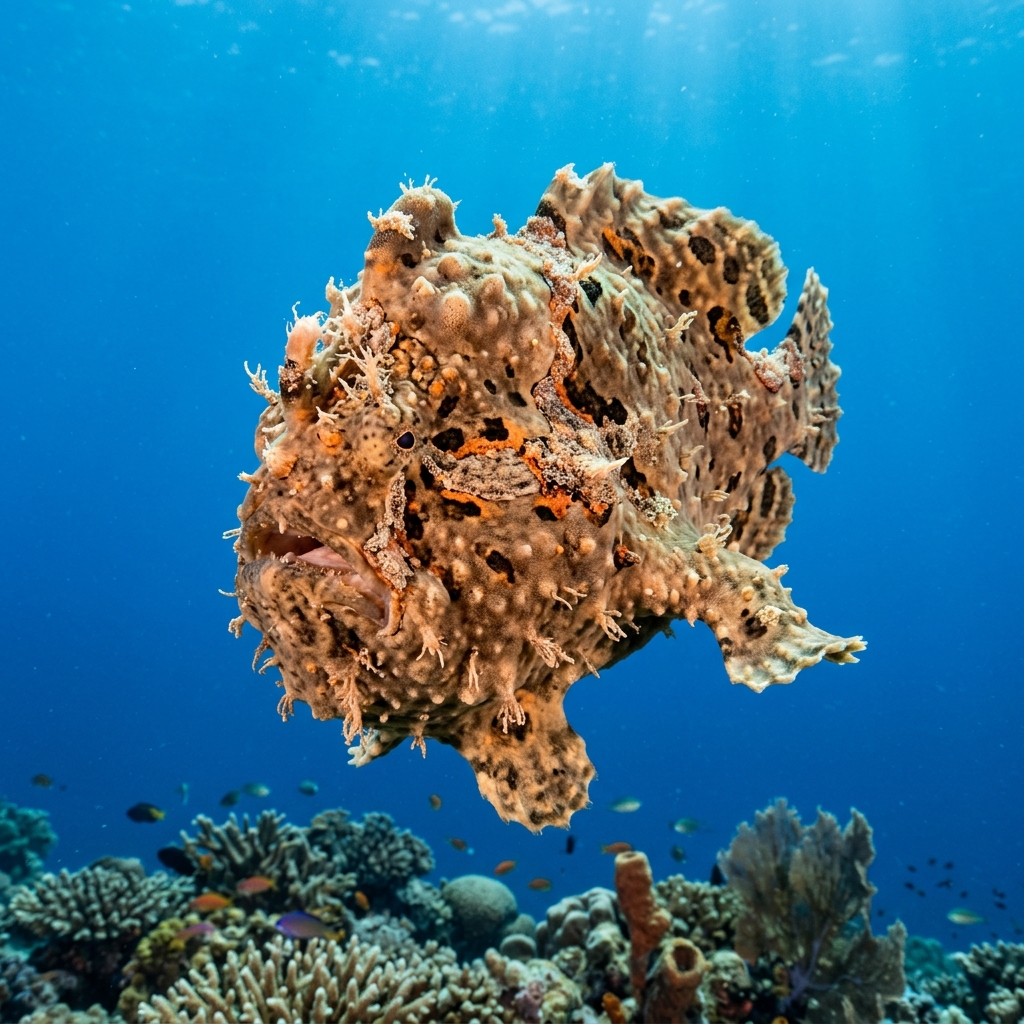
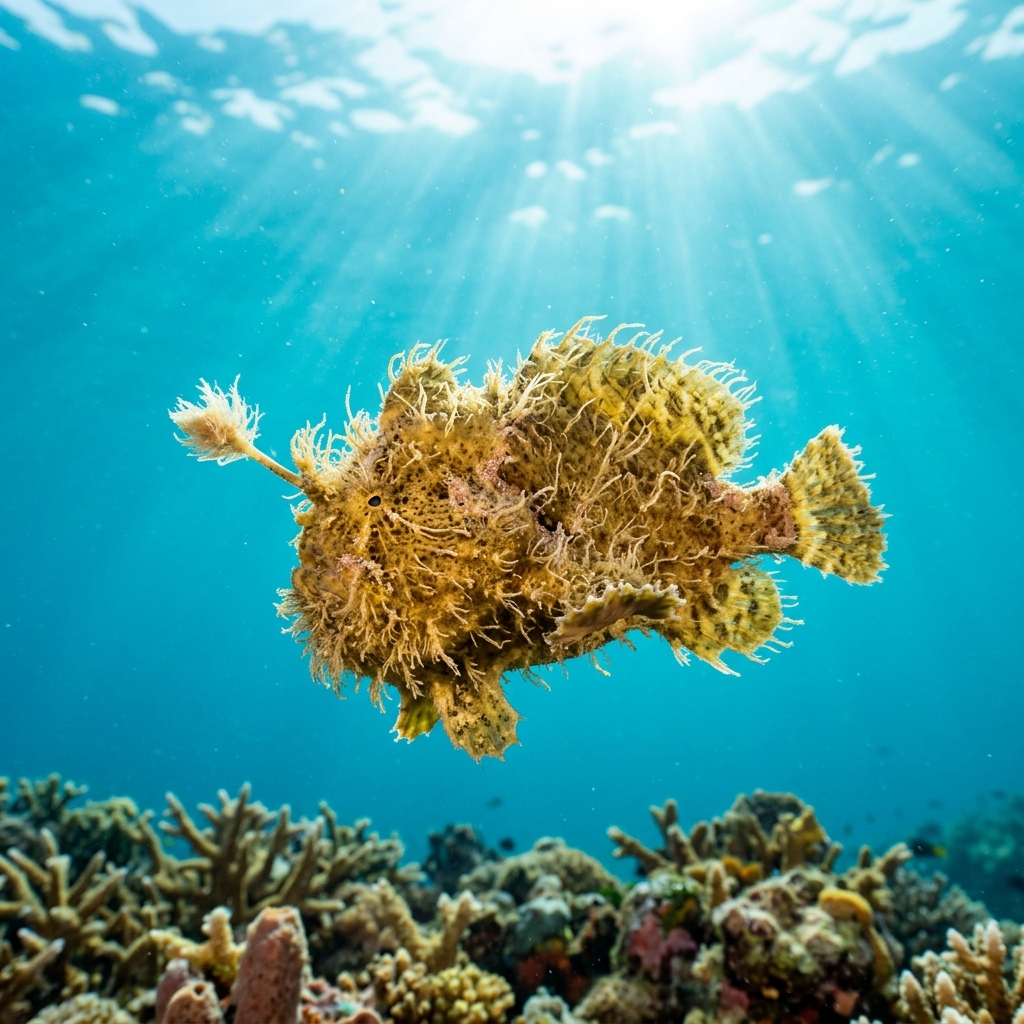
Covered in long, hair-like skin appendages (dermal spinules) that break up its outline and make it look less like a fish than a clump of algae or sponge, this is the frogfish most likely to fool you at first glance. Colouration varies widely from pale yellow and white to orange, brown, or nearly black, often matching whatever encrusting growth it has settled on. The body is stocky and globular, typical of frogfish, with pectoral fins used like hands to grip the substrate. Look for the distinctive lure (the esca) dangling above the mouth, which it uses to attract prey.
Hairy frogfish are classic sit-and-wait predators, parking themselves on sponges, coral rubble or algae-covered rock for long periods without moving. They are rarely skittish around divers but may slowly shuffle away if approached too closely, using their pectoral fins to "walk" rather than swim. Sightings tend to be brief encounters with a stationary animal, so scanning slowly along rubble and mixed-growth reef edges pays off.
Frogfish can engulf prey up to their own body size in a single strike that takes as little as six milliseconds, one of the fastest predatory strikes of any vertebrate. If a hairy frogfish is gently waving its lure, it is actively hunting and worth watching.
No strong seasonal peak has emerged from the data, so treat it as a year-round species on tropical reefs. Its observed temperature range of 24 to 29 °C fits comfortably within the permanent warm-water belt across its core range.
Reef neighbours a diver could mistake it for. Use the identification notes above to tell them apart.
Most commonly logged across the Philippines and Indonesia, with the Visayas, Palawan and Apo Reef in the Philippines and the Maluku and Bali regions of Indonesia among the strongest areas. Australia, particularly Queensland, is also well represented, as are Thailand, Malaysia and Mozambique, making it a species to watch for throughout the tropical Indo-Pacific.
Mapping where Hairy Frogfish is logged…
The strongest populations are recorded in the Philippines (especially the Visayas and Palawan), Indonesia (Maluku, Bali and Sumatra), and Queensland, Australia. Thailand, Malaysia and Mozambique also have notable records, covering much of the tropical Indo-Pacific.
No seasonal peak has been identified from dive records, so they can be encountered year-round. They favour water temperatures between about 24 and 29 °C, which prevails continuously across most of their tropical range.
Look for a globular, lumpy fish covered in long shaggy skin filaments that make it resemble a clump of algae or sponge rather than a fish. Colour is highly variable but the hair-like appendages and hunched, pectoral-fin-walking posture are the key features to look for.
Precise size data are limited for this species, but like most members of its family they are relatively compact, typically fitting within the palm of your hand. Their shaggy outline can make them look larger or smaller depending on how well they are camouflaged.
It uses a modified dorsal spine tipped with a fleshy lure, which it waves to attract curious fish or crustaceans. Once prey is close enough, the frogfish opens its mouth explosively, creating suction that draws the prey in within milliseconds, one of the fastest strikes in the animal kingdom.
Site and sighting data is aggregated from diver logs, iNaturalist and GBIF. For taxonomy and conservation status:
Giant Frogfish
1,292 sites