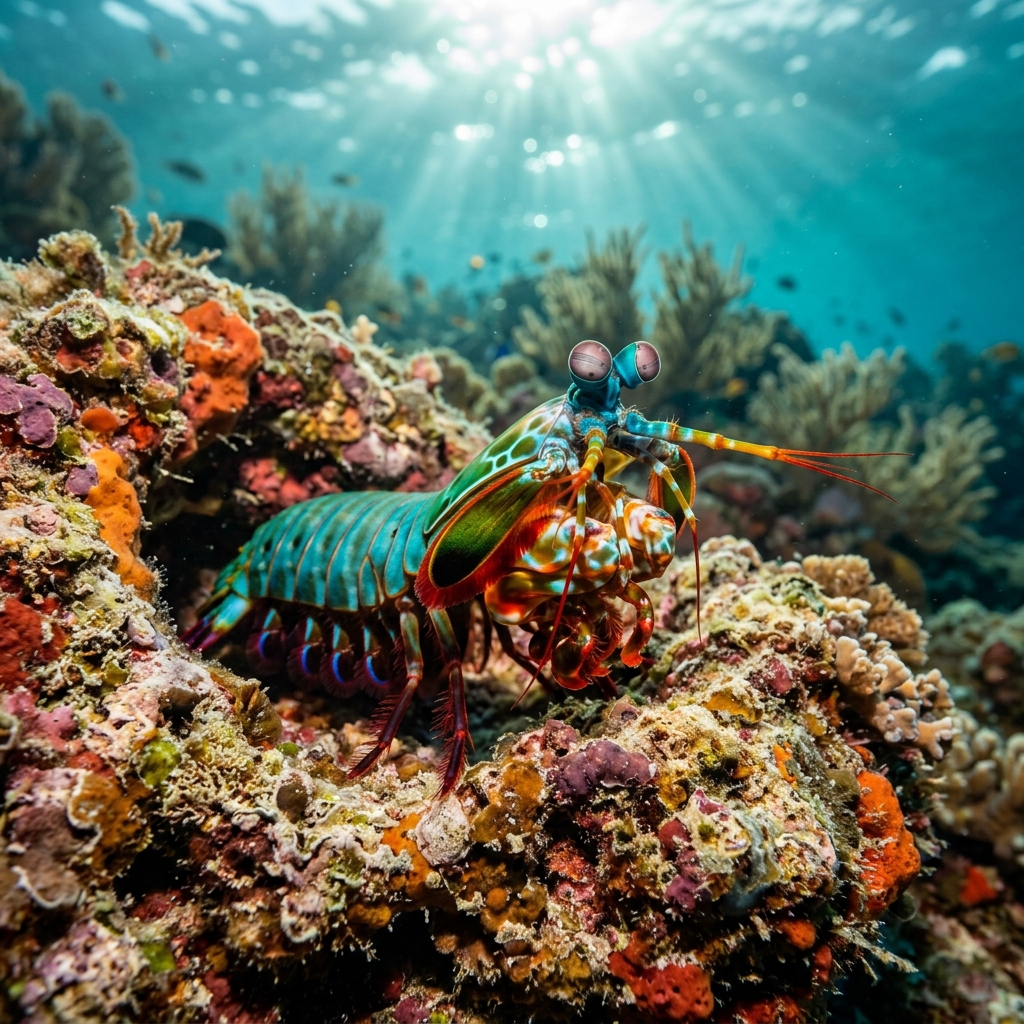
Odontodactylus scyllarus
Spot peacock mantis shrimp across the Philippines, Bali and Zanzibar in 24-29°C water. Here's where divers find them and what to look for.
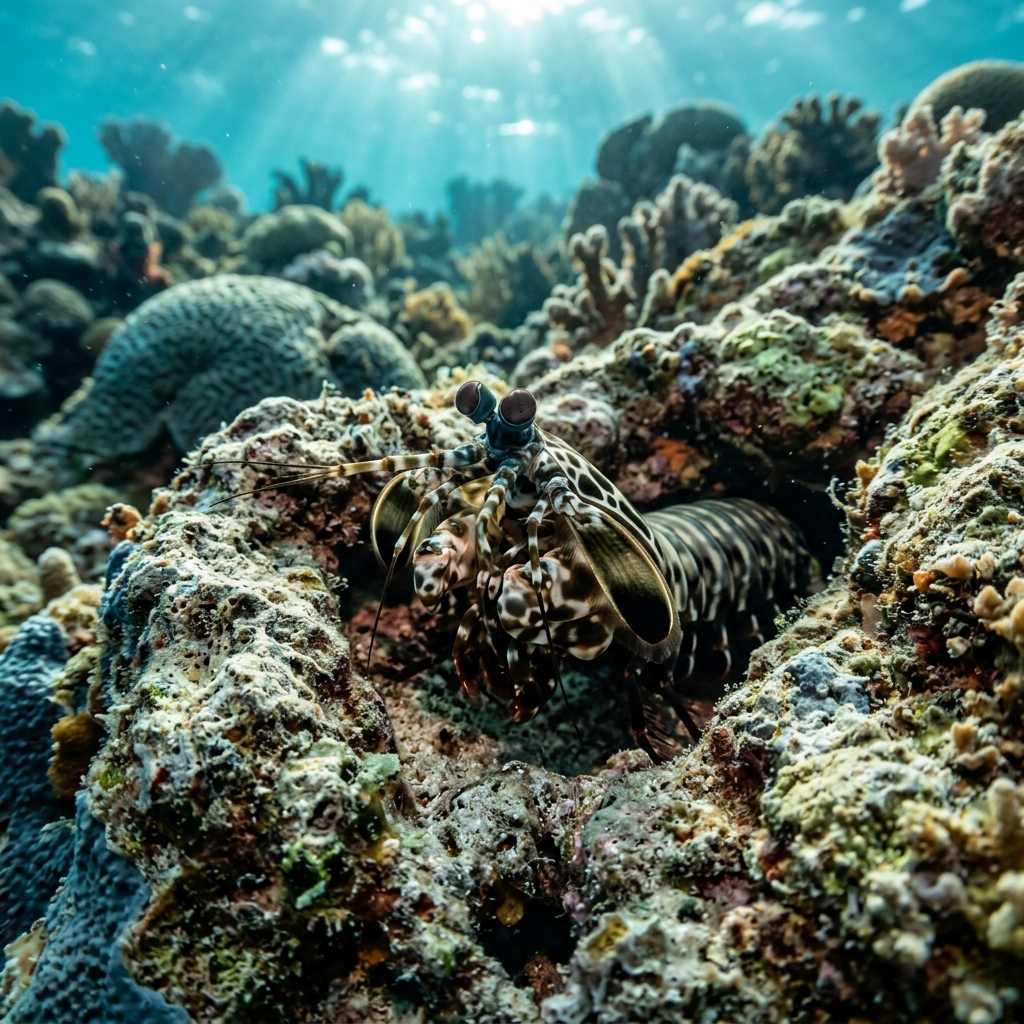
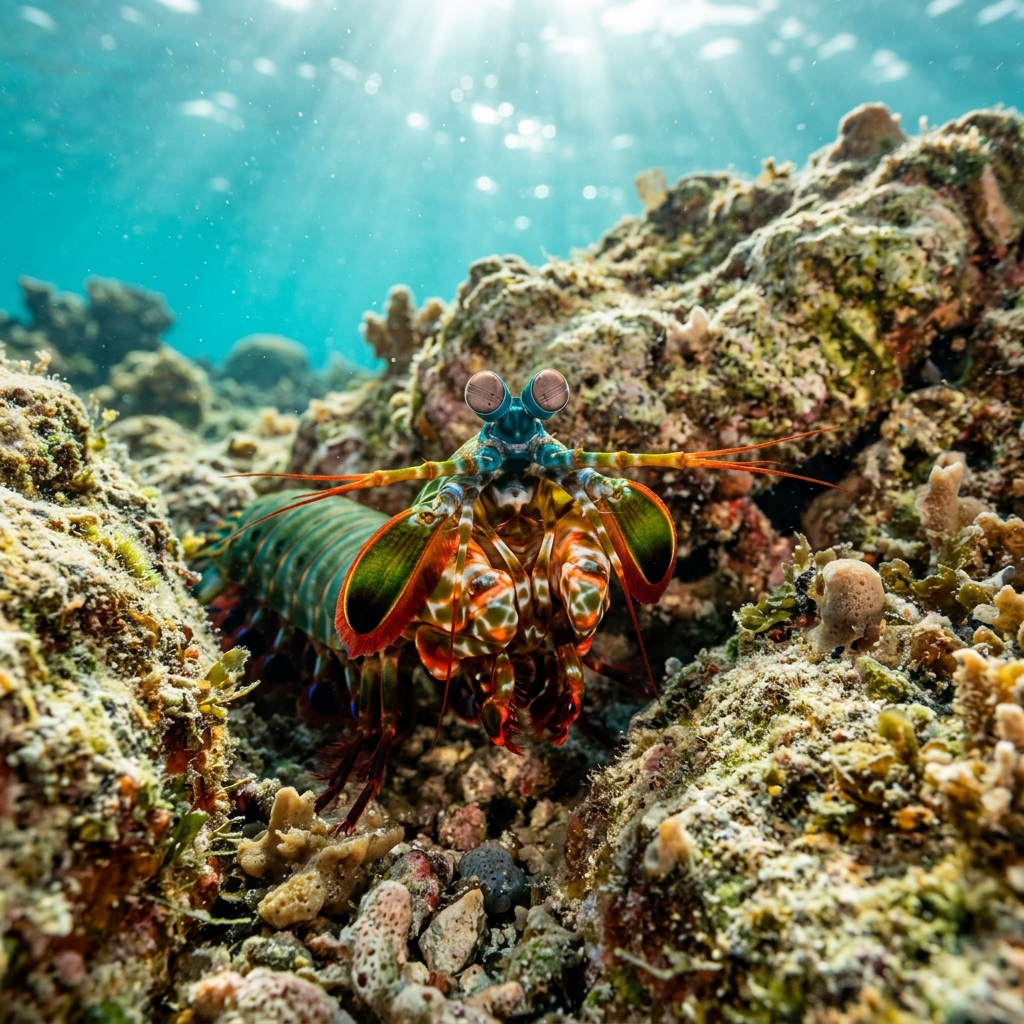
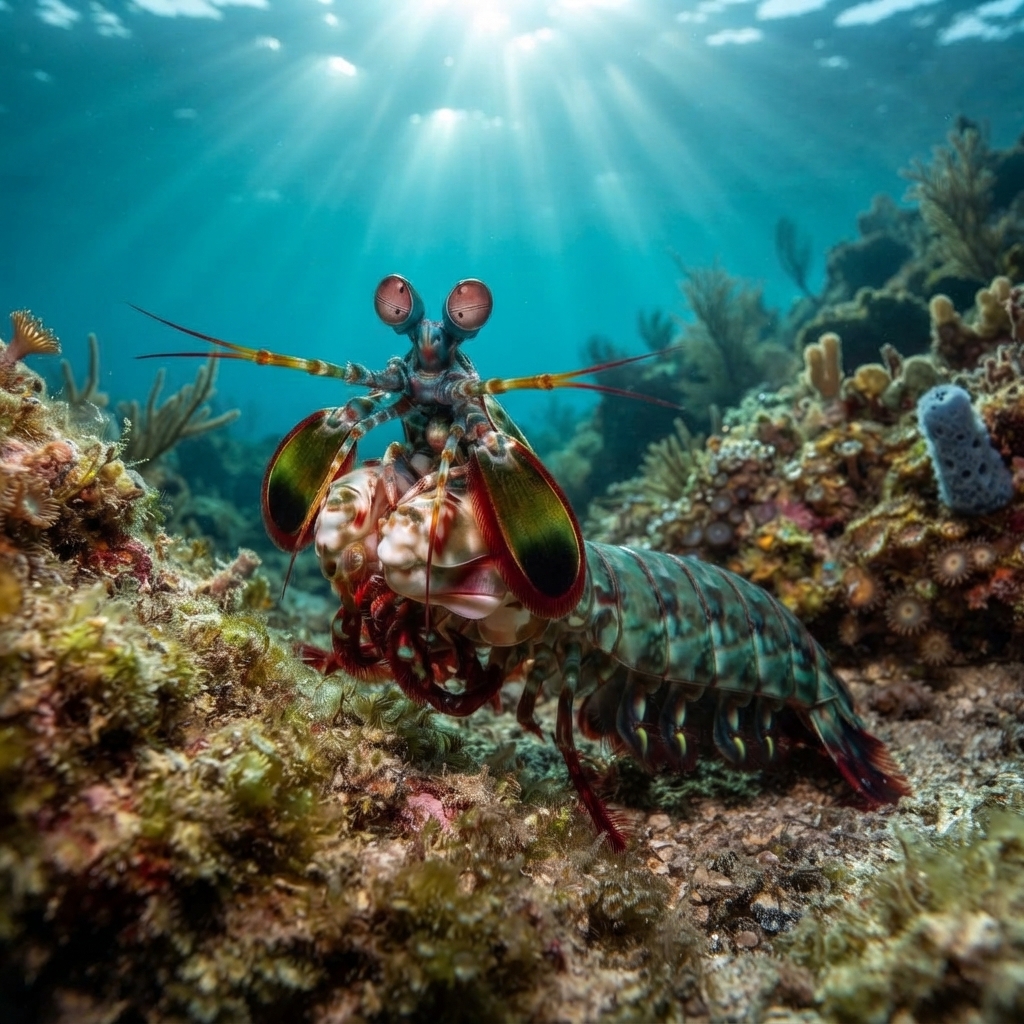
Few reef creatures are as visually arresting: look for a lobster-sized crustacean, typically 15-18 cm long, wearing a patchwork of bright green, red, orange and blue across a segmented body. The shield-like carapace (the hard plate covering the head and thorax) is a mottled peacock-green, and the swimmerets (small paddle-like limbs underneath) flash vivid blue and orange. Two large, independently moving compound eyes on stalks are the clearest field mark at any distance. Spotted most often at or just inside the entrance of a sandy burrow between coral or rubble.
Peacock mantis shrimp are burrow-dwellers: you find them peering out from a self-excavated hole in sand or rubble, rarely venturing far unless hunting. Most daylight encounters involve an animal sitting motionless at the burrow mouth, watching you with those swivelling eyes, if you approach too quickly it retreats backwards and disappears. Move slowly, stay low, and give it a minute; curiosity often wins and it will re-emerge.
Those compact forearms are not just for show: peacock mantis shrimp are "smashers", clubbing prey such as crabs and snails with a strike that accelerates faster than a bullet and generates cavitation bubbles (collapsing pockets of vapour that deliver a second shockwave). The impact can crack aquarium glass and has been recorded at forces of several hundred newtons.
In the Southern Hemisphere (Australia, Mozambique, Tanzania) peacock mantis shrimp are present year-round, which fits their preference for consistently warm water between roughly 24 and 29°C. Northern Hemisphere sites such as the Philippines and Thailand see sightings concentrate between September and April, so that window is the safer bet in those regions.
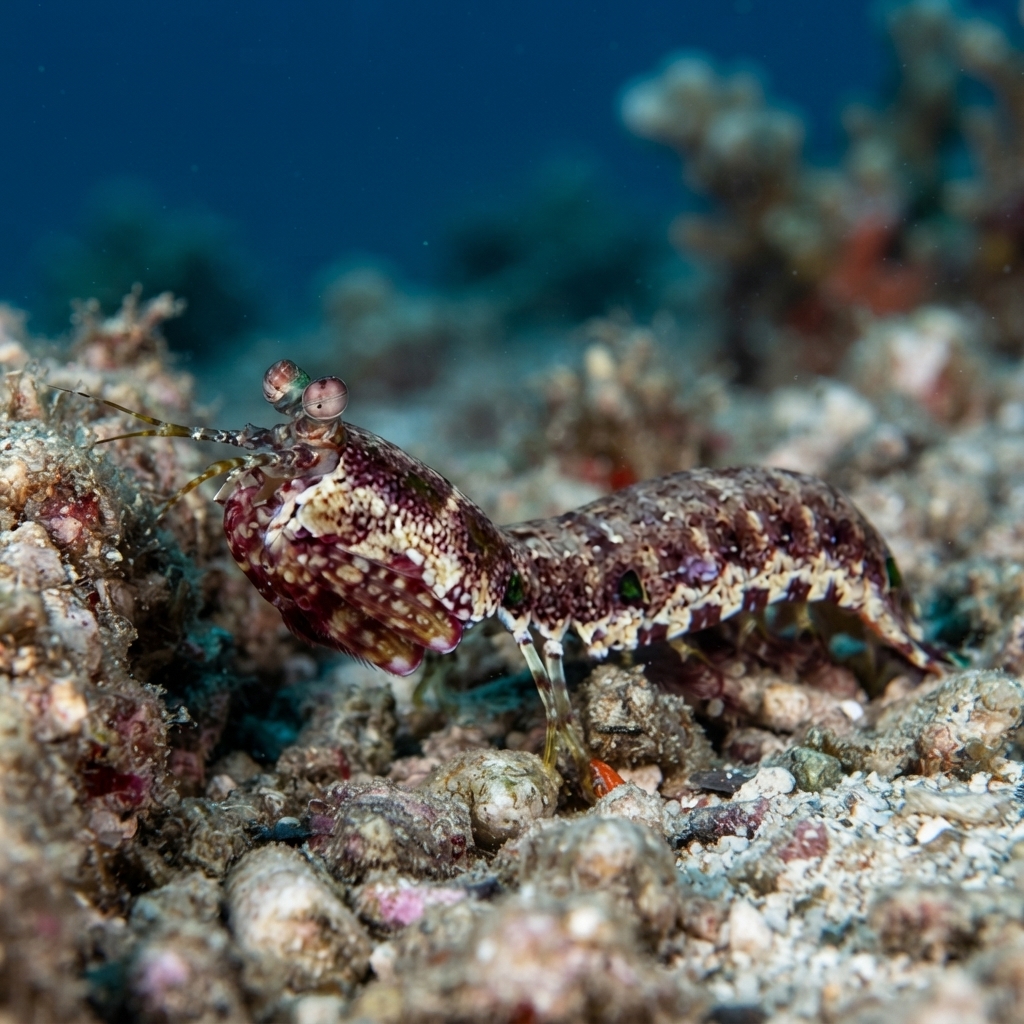
Reef neighbours a diver could mistake it for. Use the identification notes above to tell them apart.
Most commonly logged in the Philippines, where the Visayas and northern Luzon account for the largest share of sightings, and in Indonesia, with Bali, Lombok and Java forming another strong hub. Beyond Southeast Asia, reliable sightings come from Queensland in Australia, Sipadan and East Sabah in Malaysia, Zanzibar in Tanzania, and across Mozambique and the Maldives.
Mapping where Peacock Mantis Shrimp is logged…
The strongest populations are logged in the Philippines (especially the Visayas and Luzon), Bali and Lombok in Indonesia, and Queensland, Australia. They are also reliably found around Sipadan in Malaysia, Zanzibar in Tanzania, Mozambique, and the Maldives, essentially anywhere with warm Indo-Pacific reef and sandy rubble habitat.
On Southern Hemisphere reefs such as Australia, Mozambique and Tanzania they turn up year-round. For Northern Hemisphere destinations like the Philippines and Thailand, sightings concentrate between September and April, making that the preferred window.
Look for a chunky, elongated crustacean with a vivid green-and-orange carapace, banded body segments and bright blue swimmerets. The independently rotating eyes on stalks are unmistakable. It will almost always be sitting at or just inside a burrow in sand or rubble rather than swimming in open water.
Adults typically reach around 15-18 cm in length, making them one of the larger mantis shrimp species and noticeably bigger than most of the drab brown species divers encounter. Their bulky, armoured build makes them look even more substantial underwater.
Peacock mantis shrimp are classed as smashers, using calcified clubs rather than spearing appendages. The strike accelerates at extreme speed, generating cavitation bubbles whose collapse delivers a second shockwave after the initial impact. This is strong enough to shatter crab shells and crack aquarium glass, and it is why you should not handle them bare-handed.
Site and sighting data is aggregated from diver logs, iNaturalist and GBIF. For taxonomy and conservation status:
Dotted Mantis Shrimp
26 sites