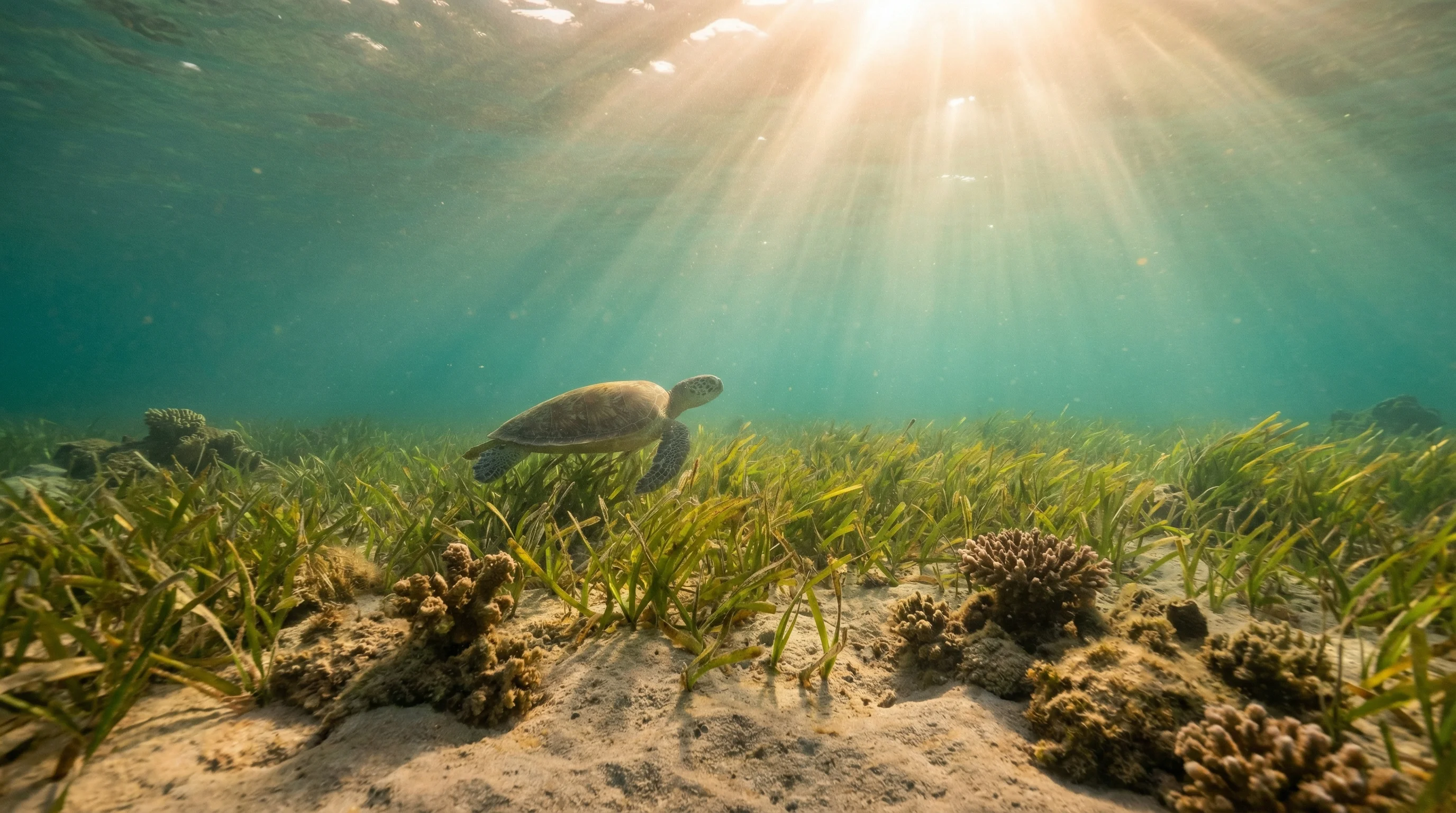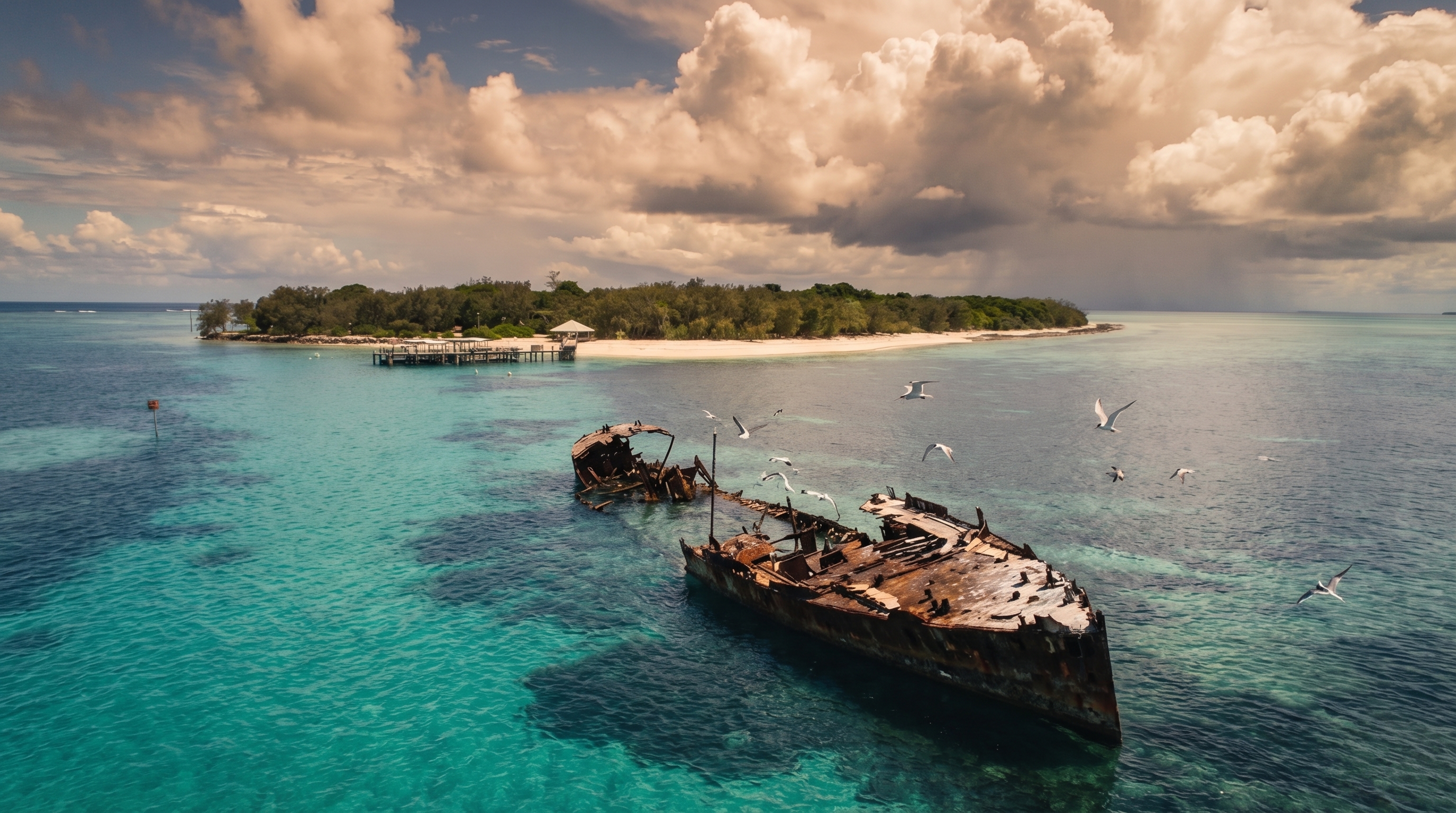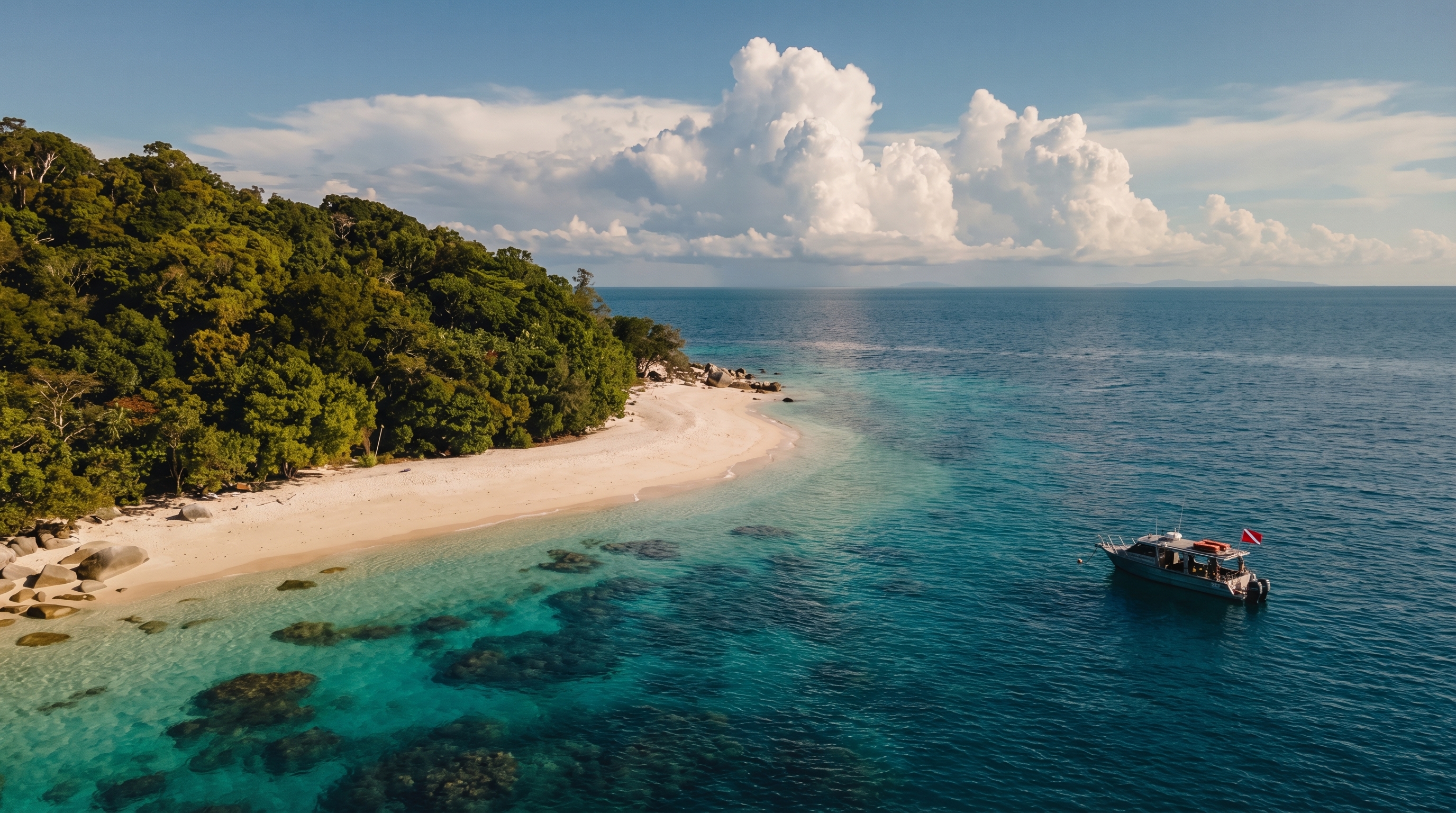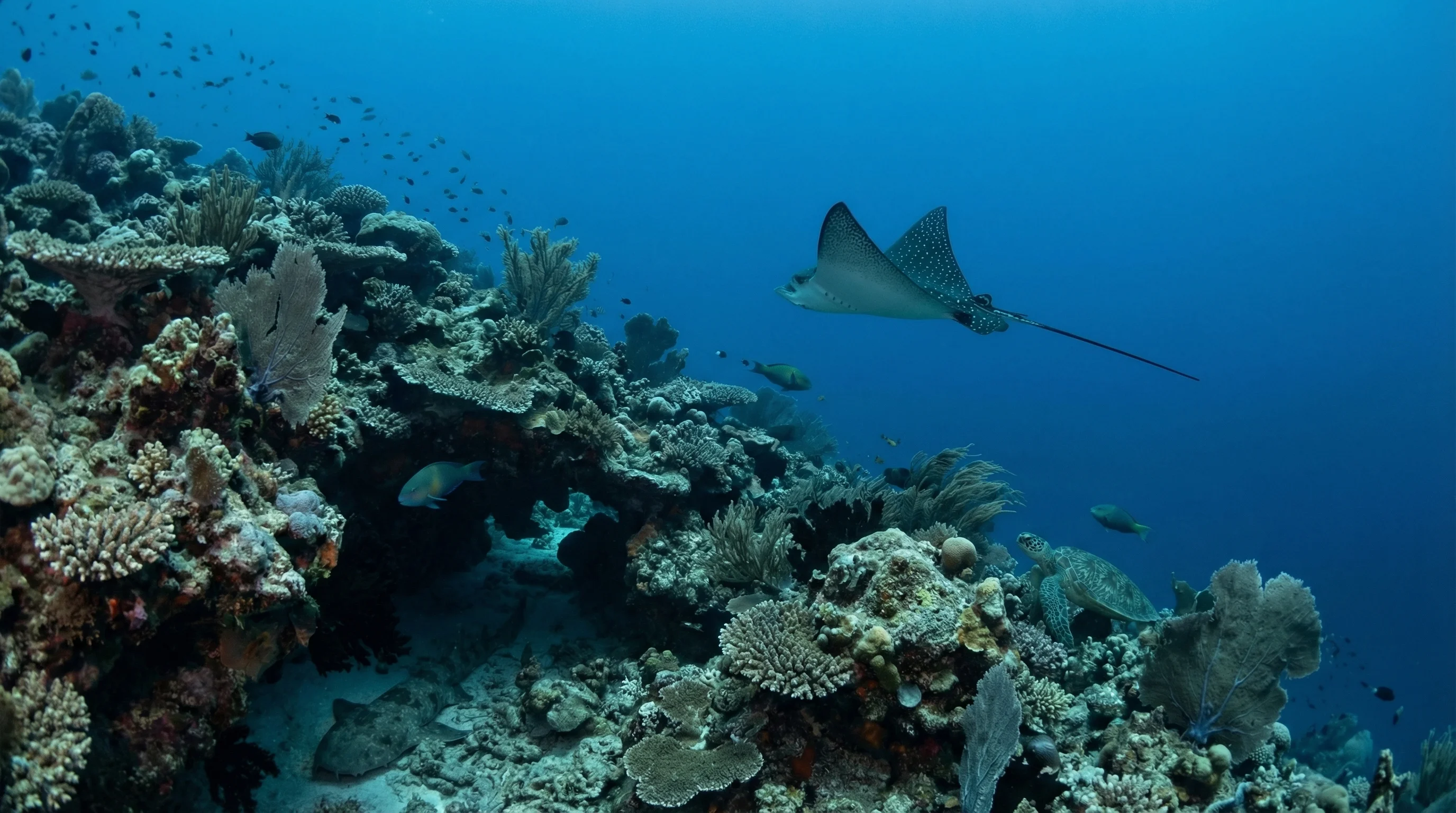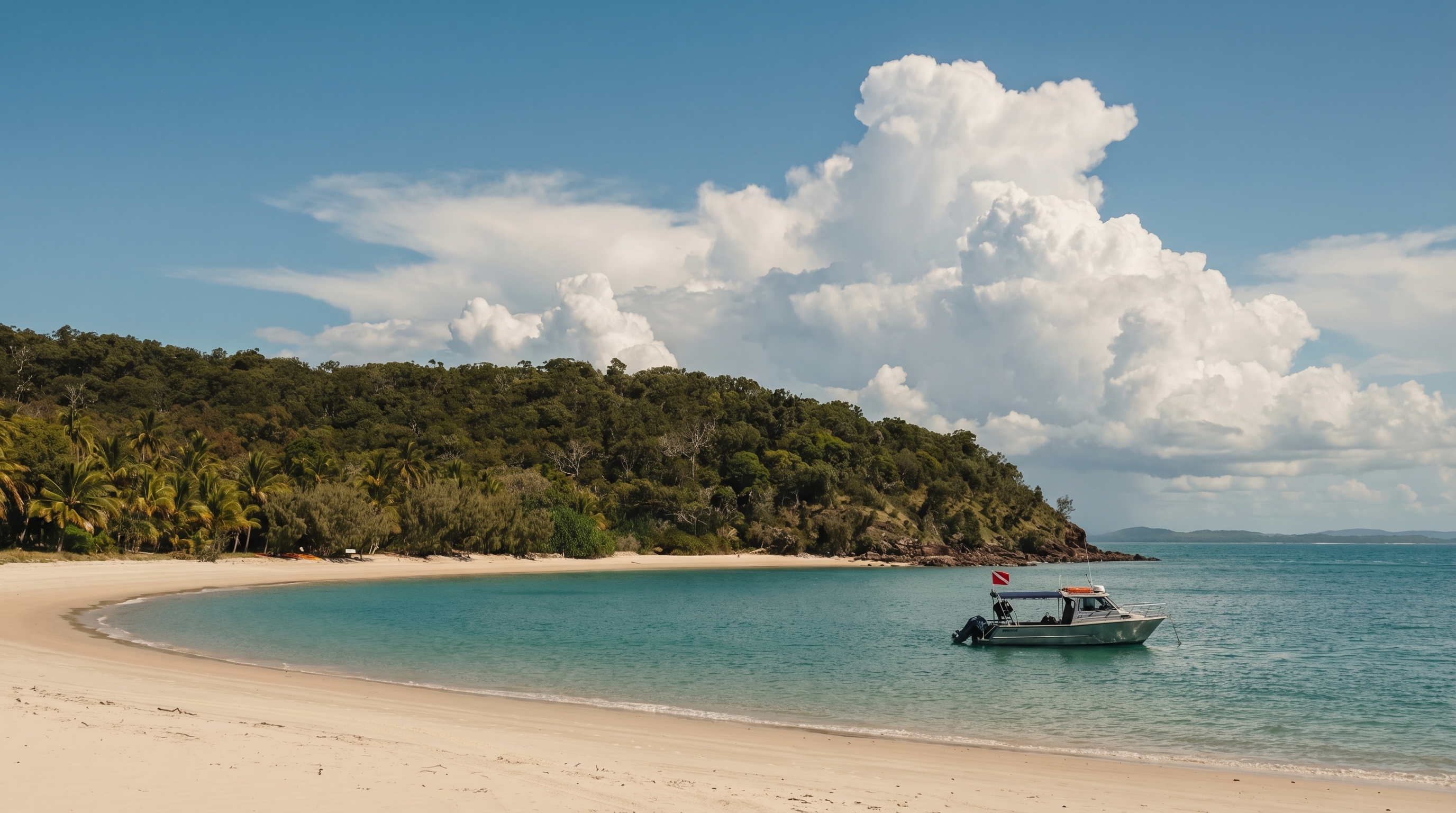
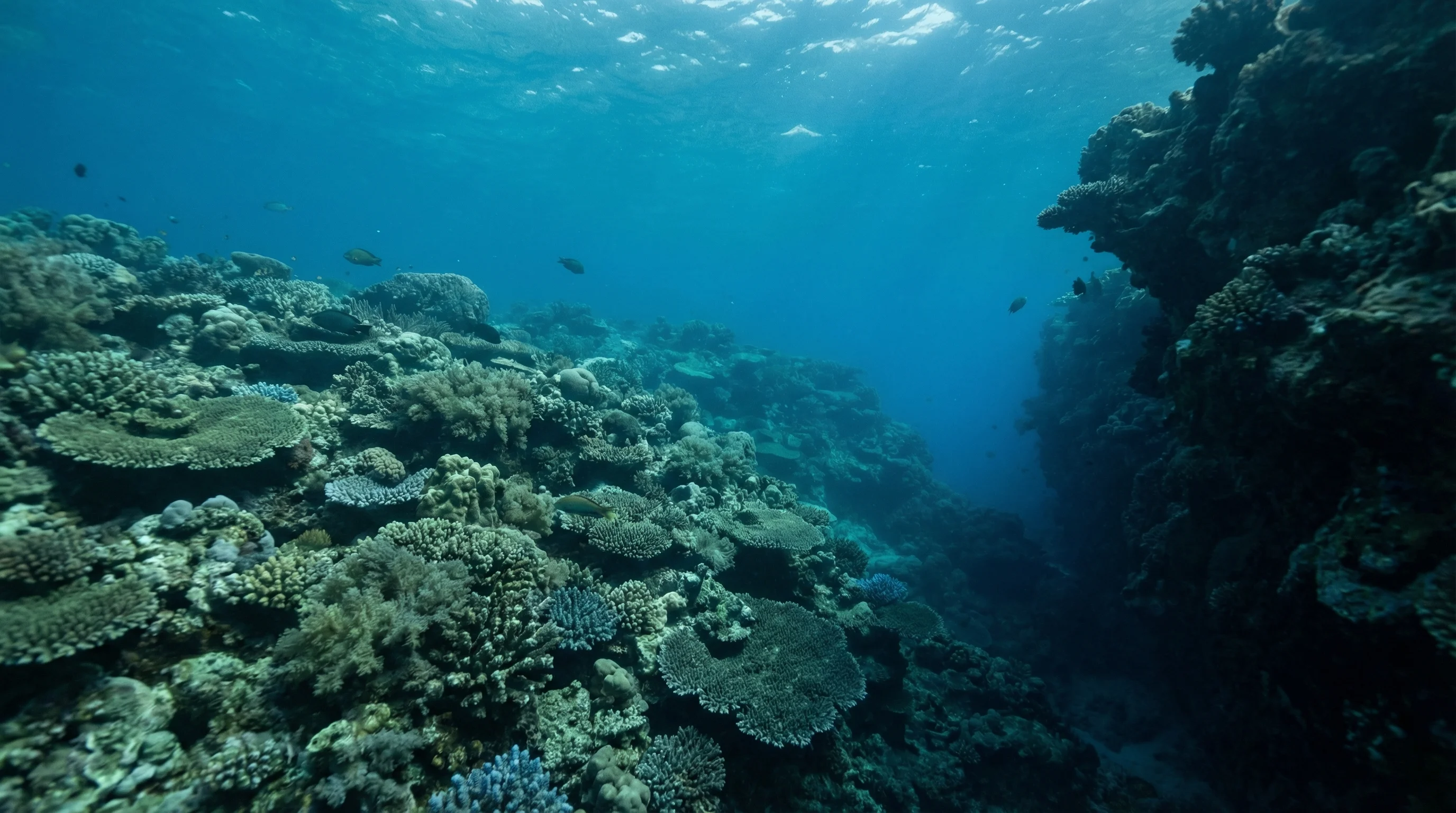
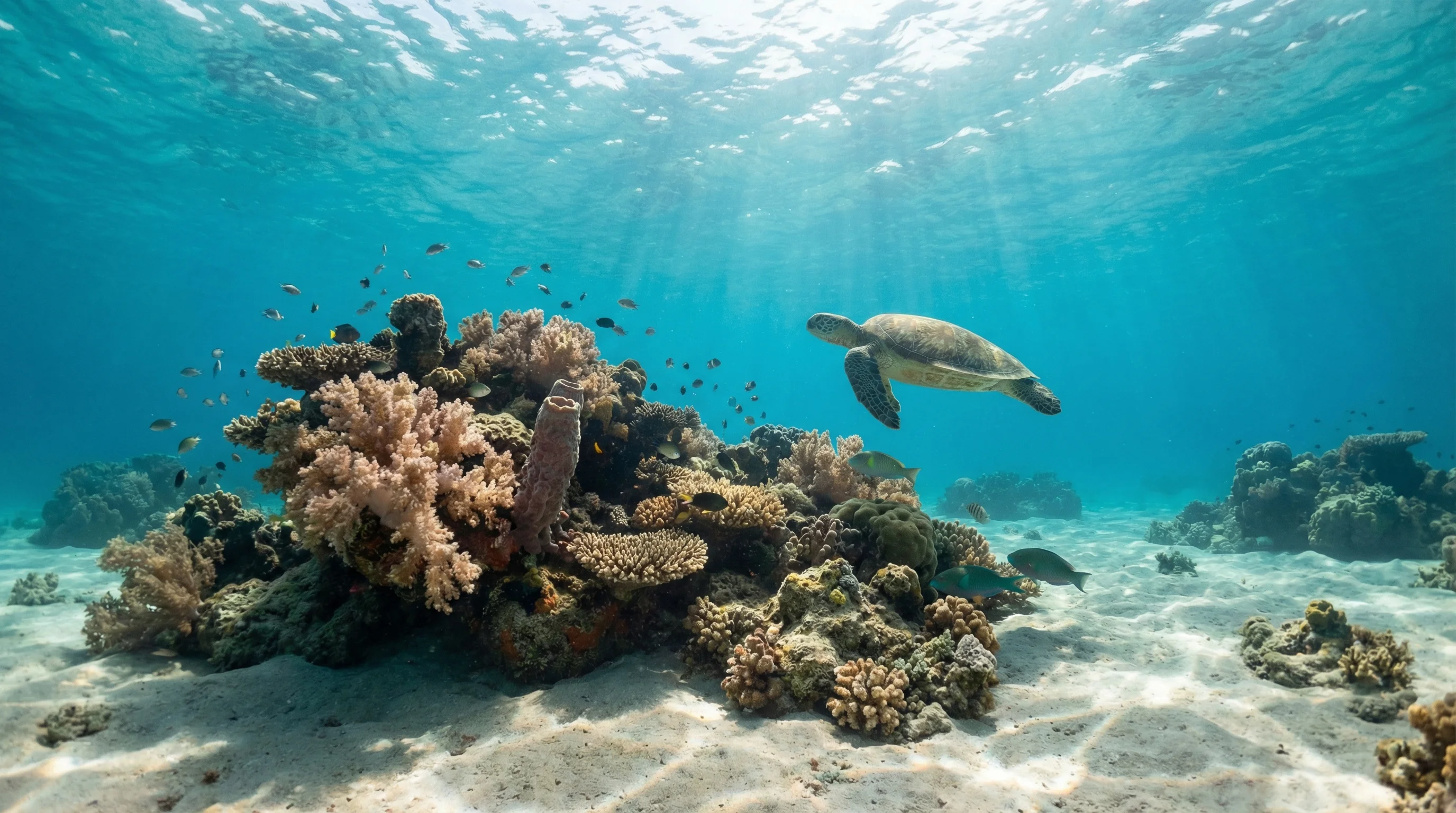
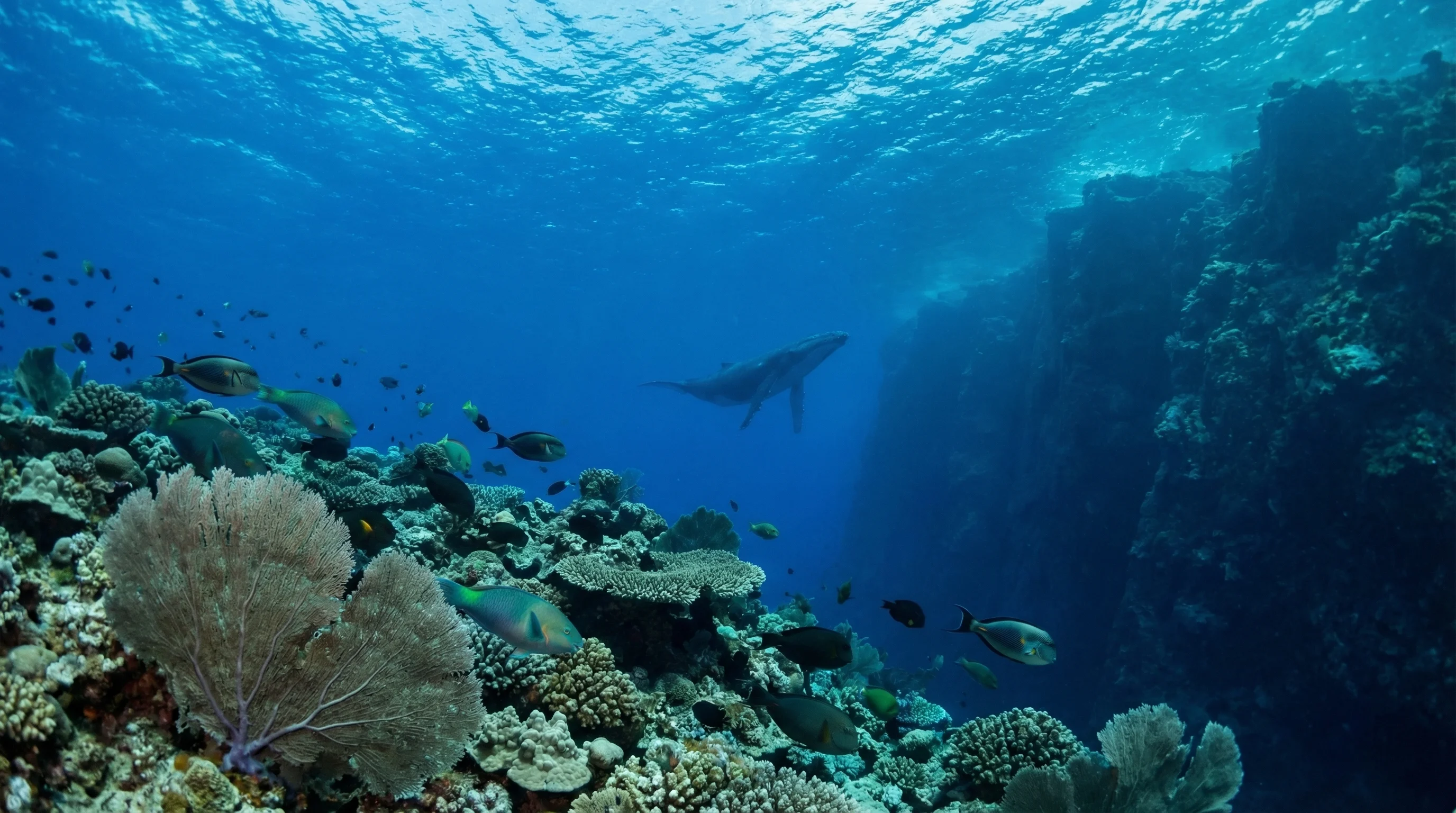
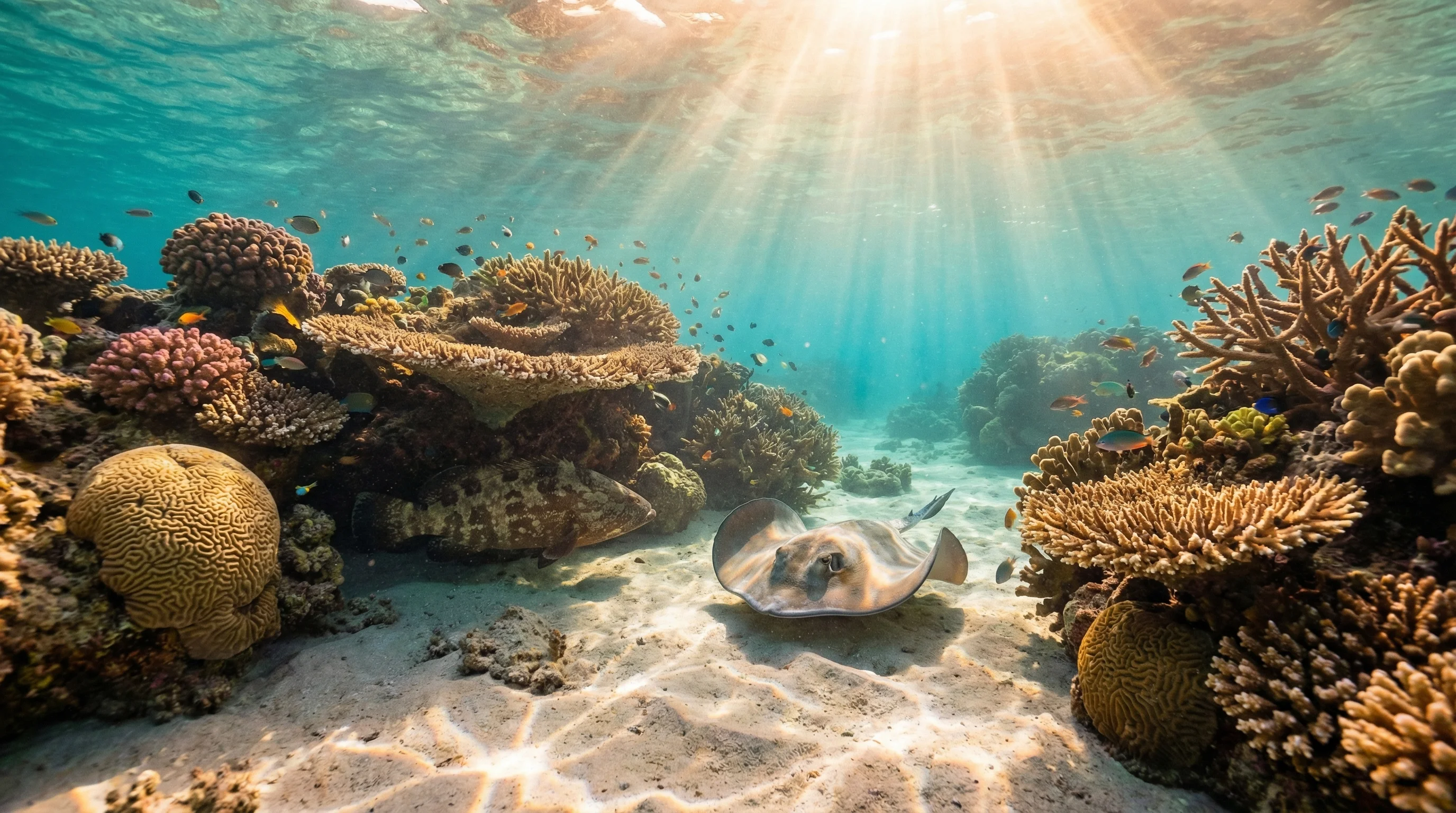
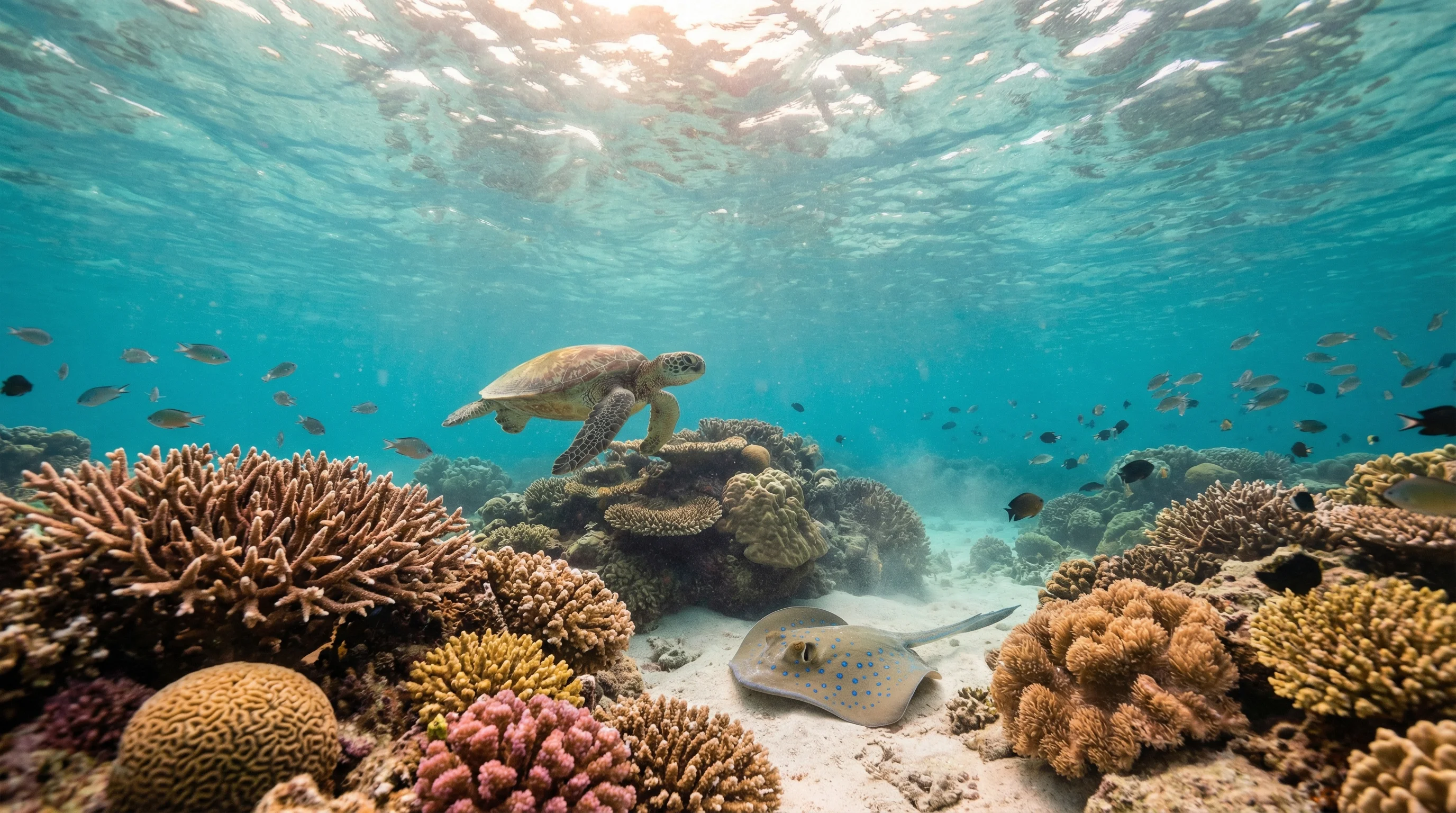
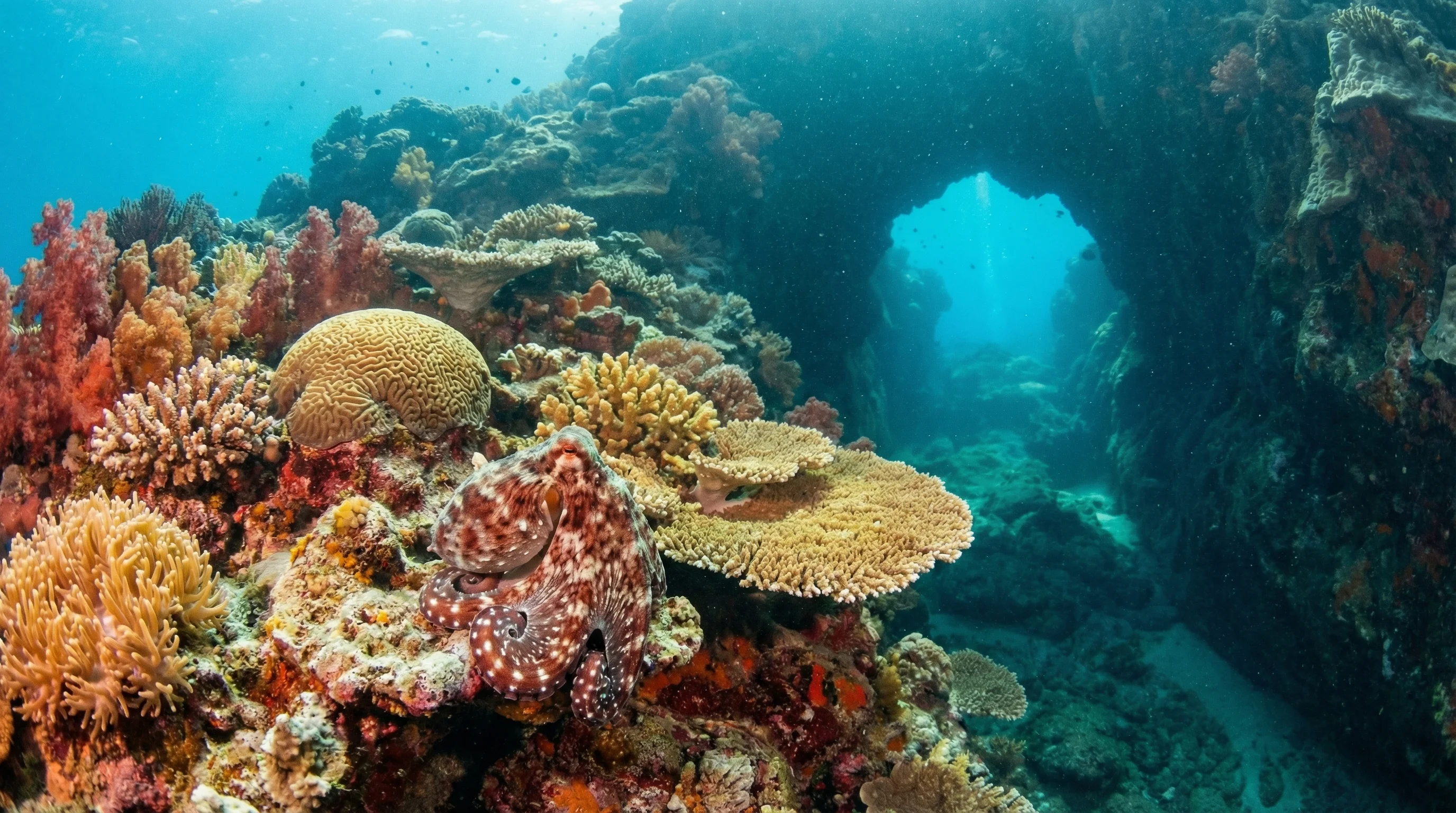
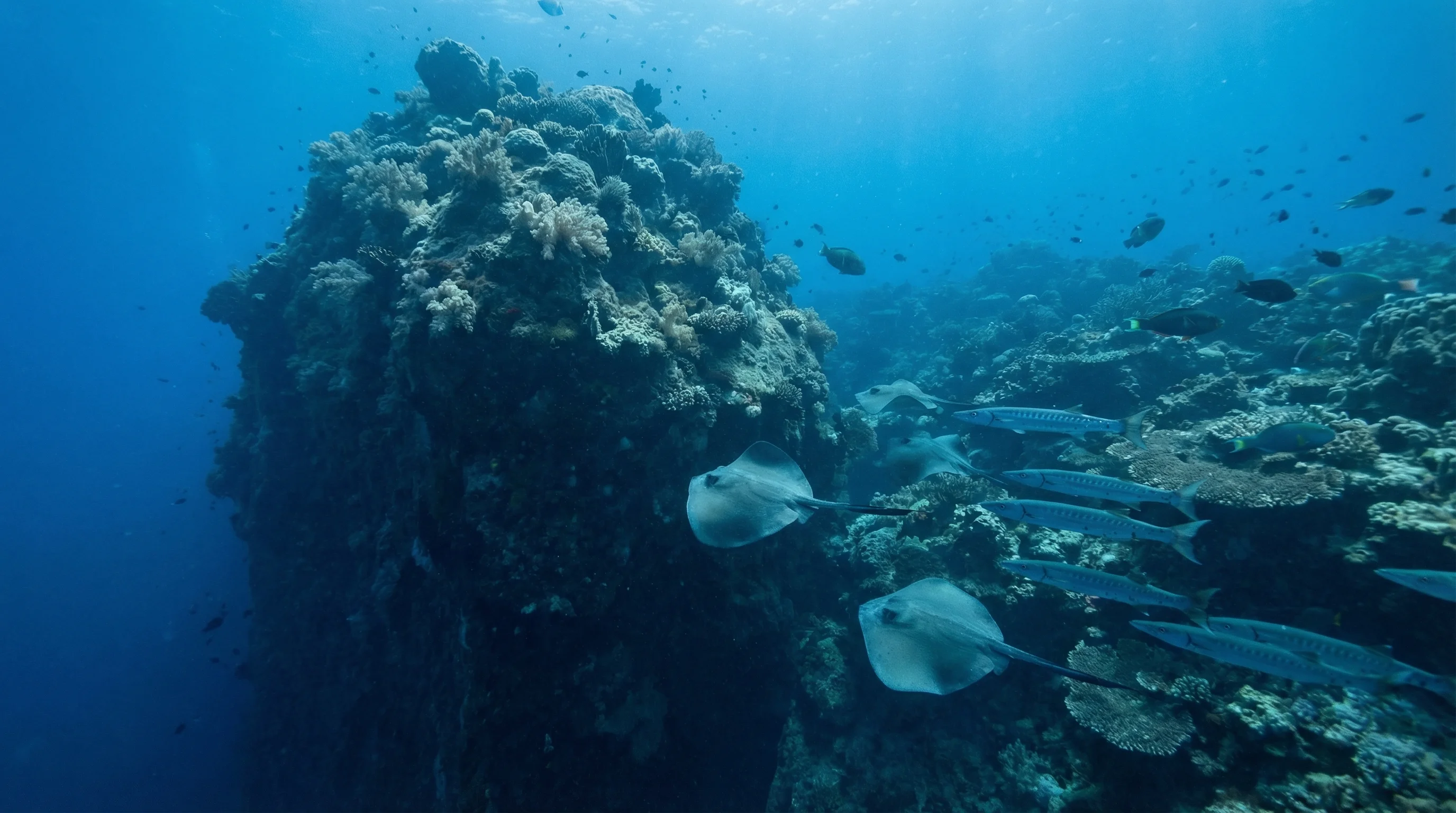
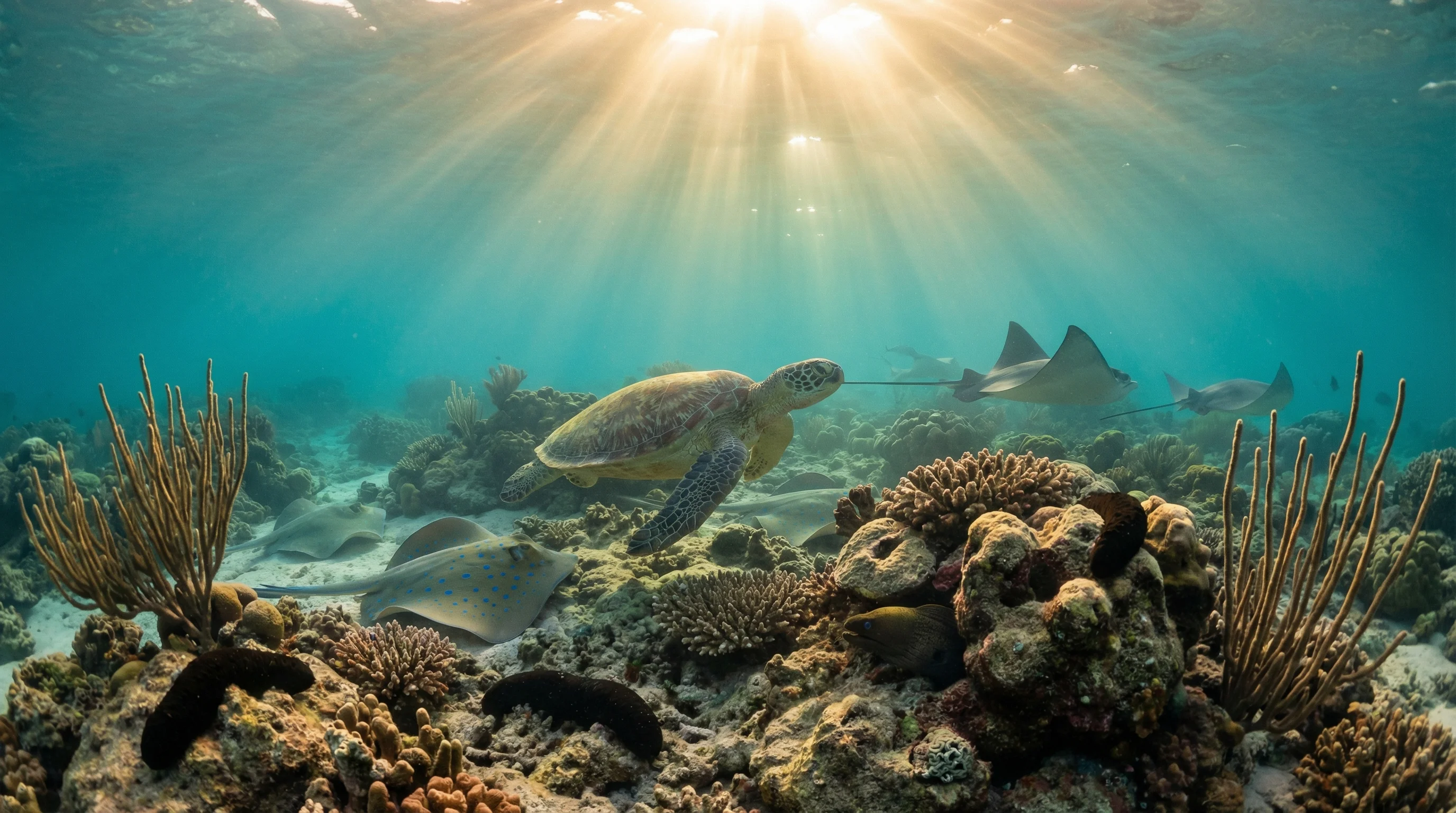
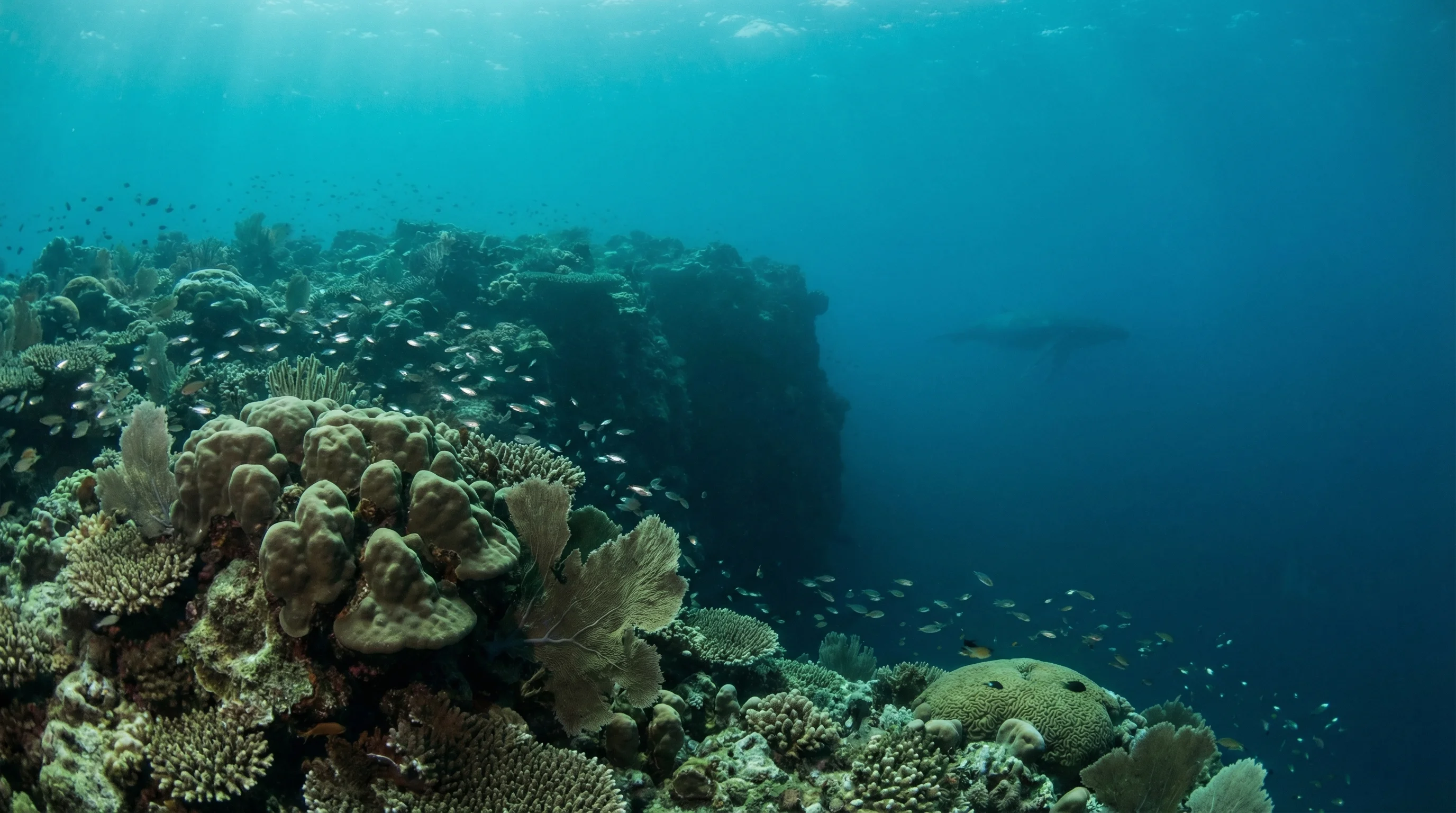
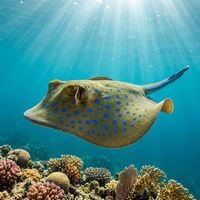
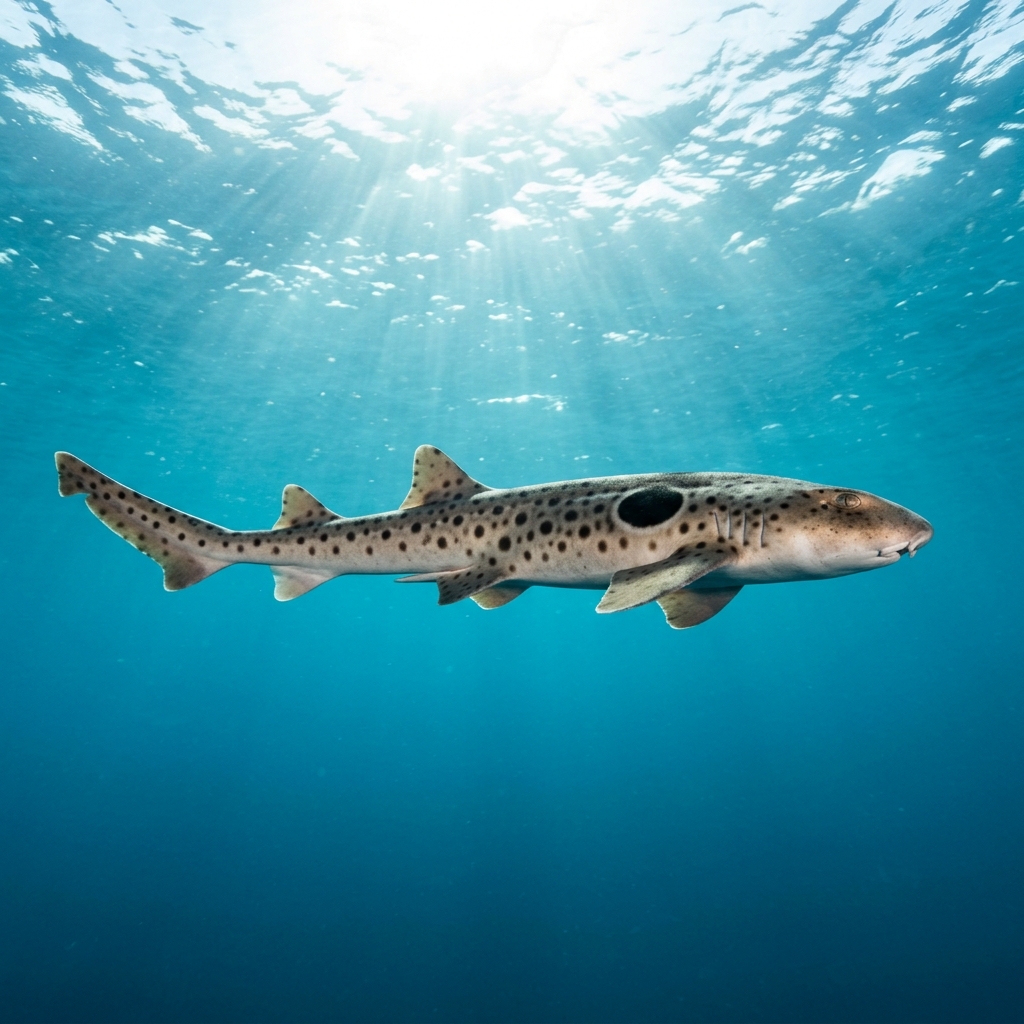
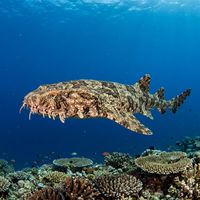
The Keppel Islands split across two sub-areas: Great Keppel Island, which holds the bulk of the sites, and Middle Island. Reef diving dominates, ranging from shallow beginner bays to deep walls and a current-swept pinnacle at Egg Rock suited to advanced divers. Signature species include the Hawksbill Sea Turtle, Epaulette Shark, Bluespotted Fantail Ray, and Ornate Wobbegong. An artificial reef and wreck at Observatory adds variety for snorkellers and new divers alike.
2 areas
Monthly water temperature across Keppel Islands's sites, from satellite sea-surface data corrected for depth. The band shows the site-to-site spread.
Water is warmest from December through March, then cools noticeably into the middle of the year before recovering through spring. The best-months data points strongly to the cooler, clearer period from April through October as the preferred window for diving. Exposed sites such as Egg Rock carry strong currents and suit experienced divers, while sheltered bays offer calmer conditions year-round.
7 operators
Australia
Australia
Australia
4 more sites to explore
Water temperature around Keppel Islands ranges from about 20°C in July to 28°C in January, based on satellite sea-temperature data for its dive sites.
In the warm season (about 28°C) a rash guard or 3mm shorty is comfortable in Keppel Islands; in the coldest months (about 20°C) step up to a 5mm suit.
Fin maps 16 sites in Keppel Islands (15 scuba diving sites and 9 snorkelling spots, with some suited to both), organised into 2 areas.
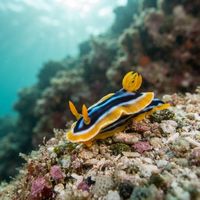
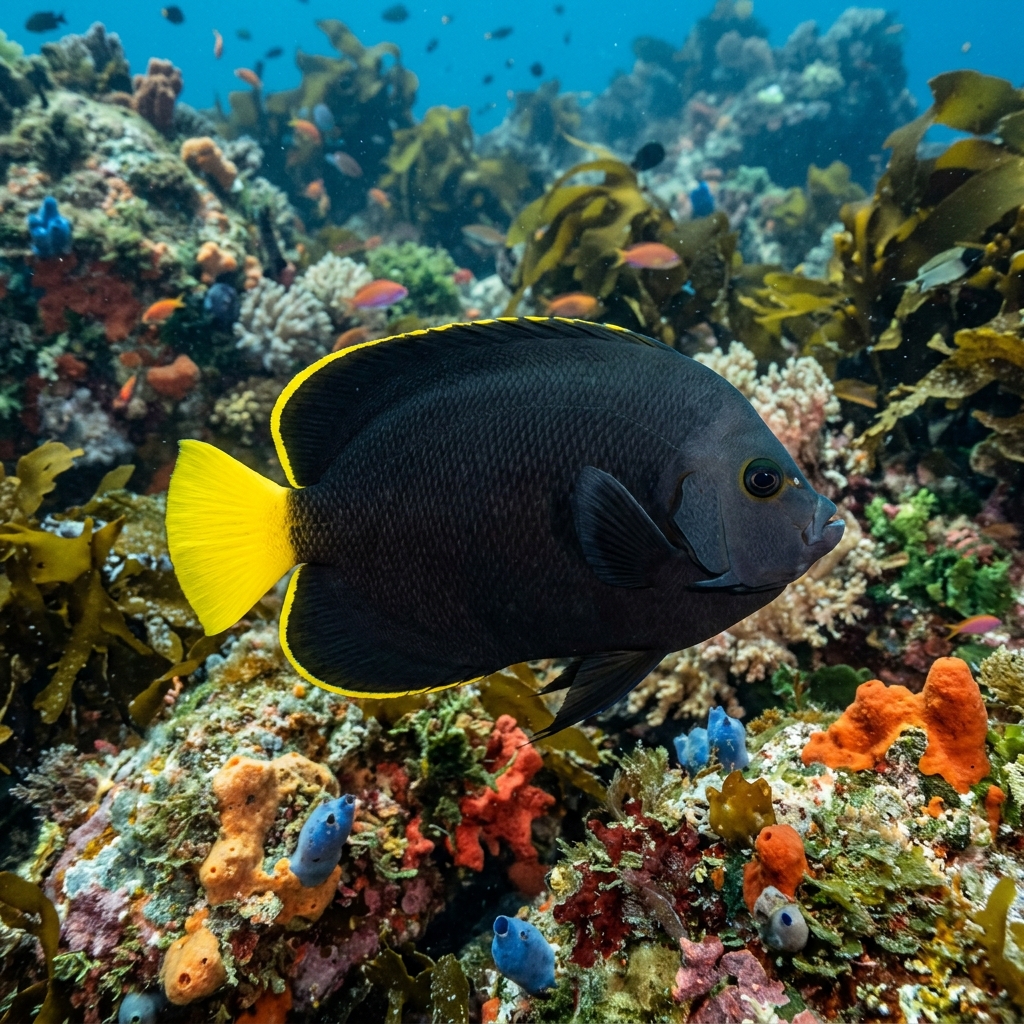
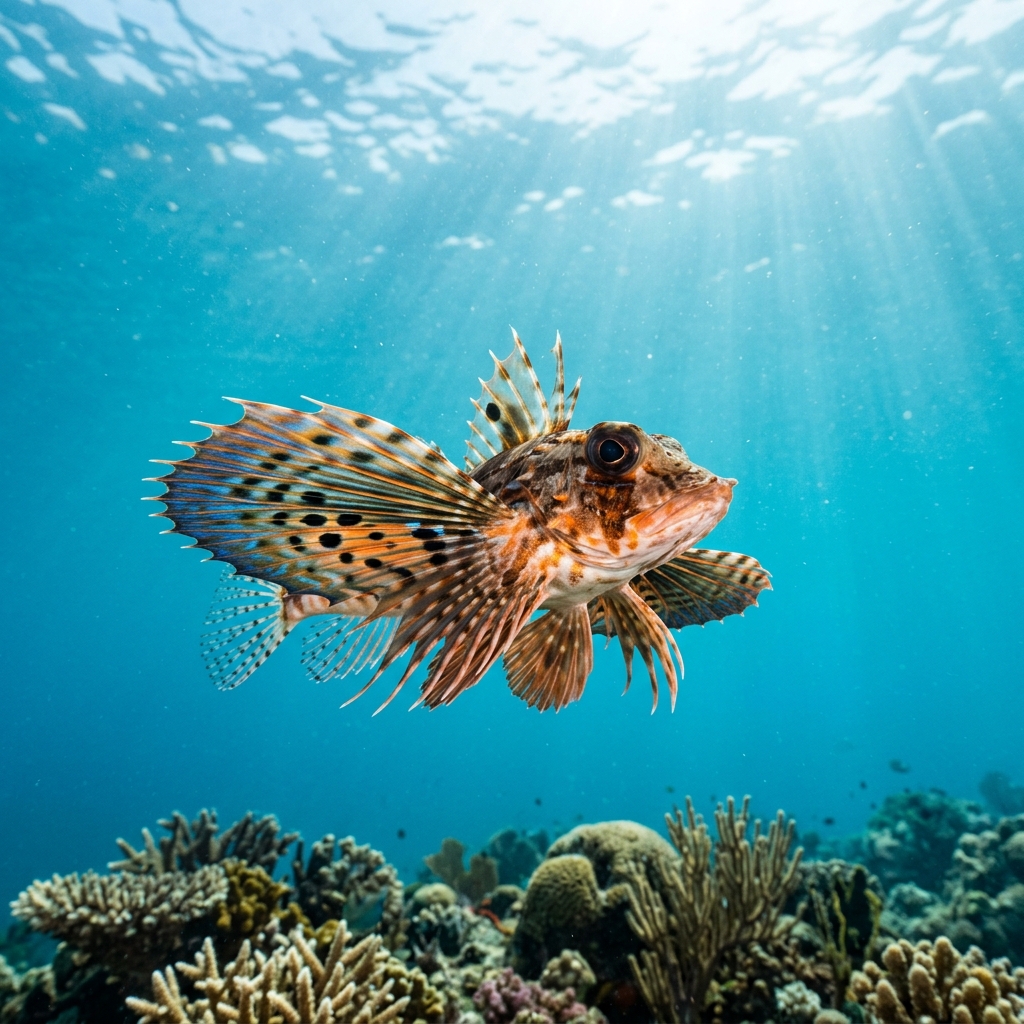
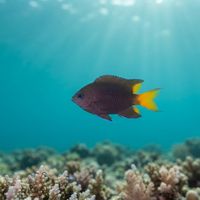
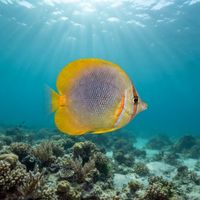
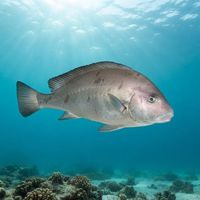
The Keppel Islands have a strong observation record across a wide range of species. Hawksbill Sea Turtle, Epaulette Shark, and Bluespotted Fantail Ray are all very commonly sighted. Bottom-dwelling species such as Ornate Wobbegong and the unusual Oriental Flying Gurnard turn up regularly, alongside reef fish including Coral Trout, Painted Sweetlips, and Golden-striped Butterflyfish.
A good portion of the sites here are rated for beginners, including Monkey Beach, Butterfish Bay, and the shallow wreck and artificial reef at Observatory. Many of these are also snorkel-friendly, with calm, protected conditions and shallow reef starting at the surface. More challenging sites like Egg Rock are reserved for advanced divers due to strong currents and greater depth.
Great Keppel Island accounts for the majority of sites and covers the widest range of experiences, from sheltered beginner reefs to deeper walls and the advanced pinnacle at Egg Rock. Middle Island has fewer sites but includes Monkey Beach, a beginner-friendly protected bay, and Observatory, a shallow artificial reef and wreck that works well for both divers and snorkellers.
Most sites in the Keppel Islands are boat-access only, and several operators serve the area including Keppel Dive and Water Sports, Keppel Explorer, Keppel Dive and Snorkel, Funtastic Cruises, and Freedom Fast Cats. A handful of sites such as Monkey Beach and Butterfish Bay offer both shore and boat entry, giving more flexibility for those already on the island.