Synchiropus splendidus
Spot a mandarinfish on a reef dive in the Visayas or Sulawesi. Know when to look, how to ID it, and what makes it unlike any other fish on the reef.
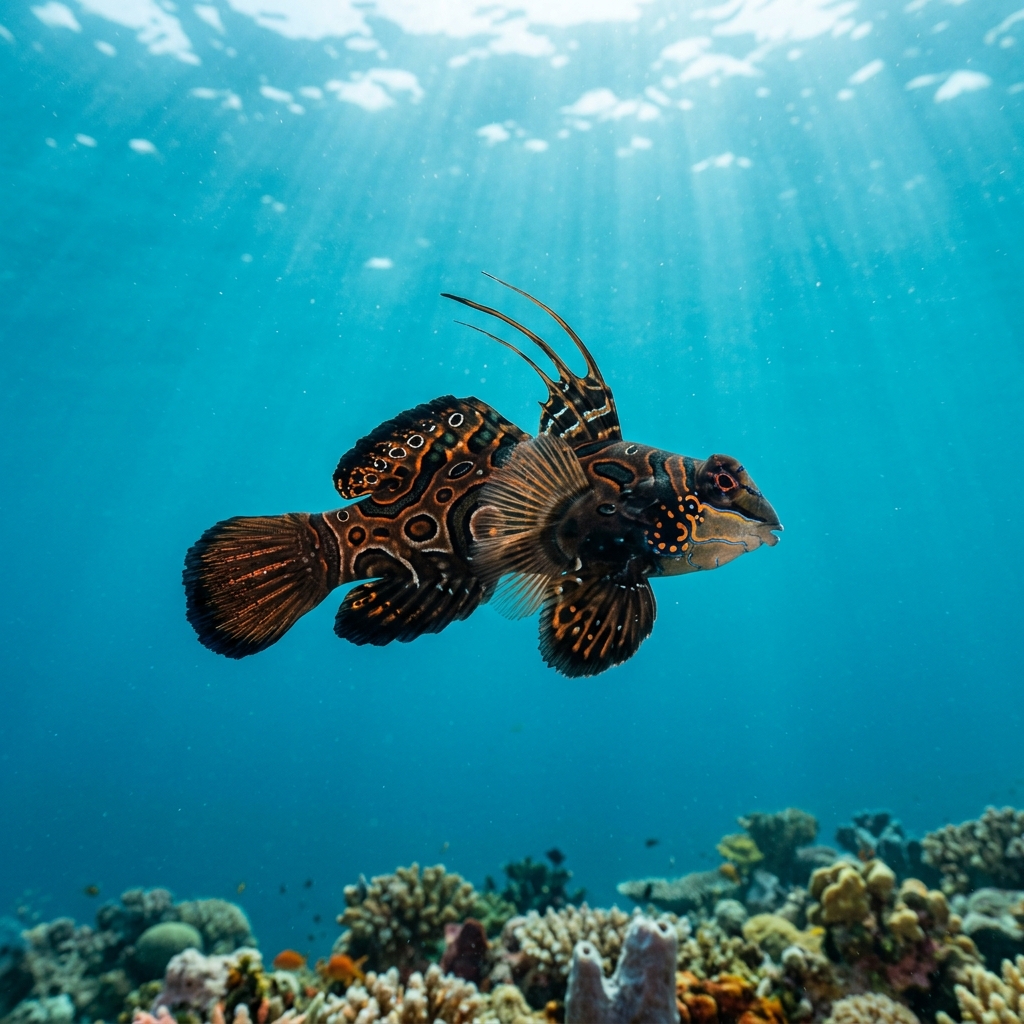
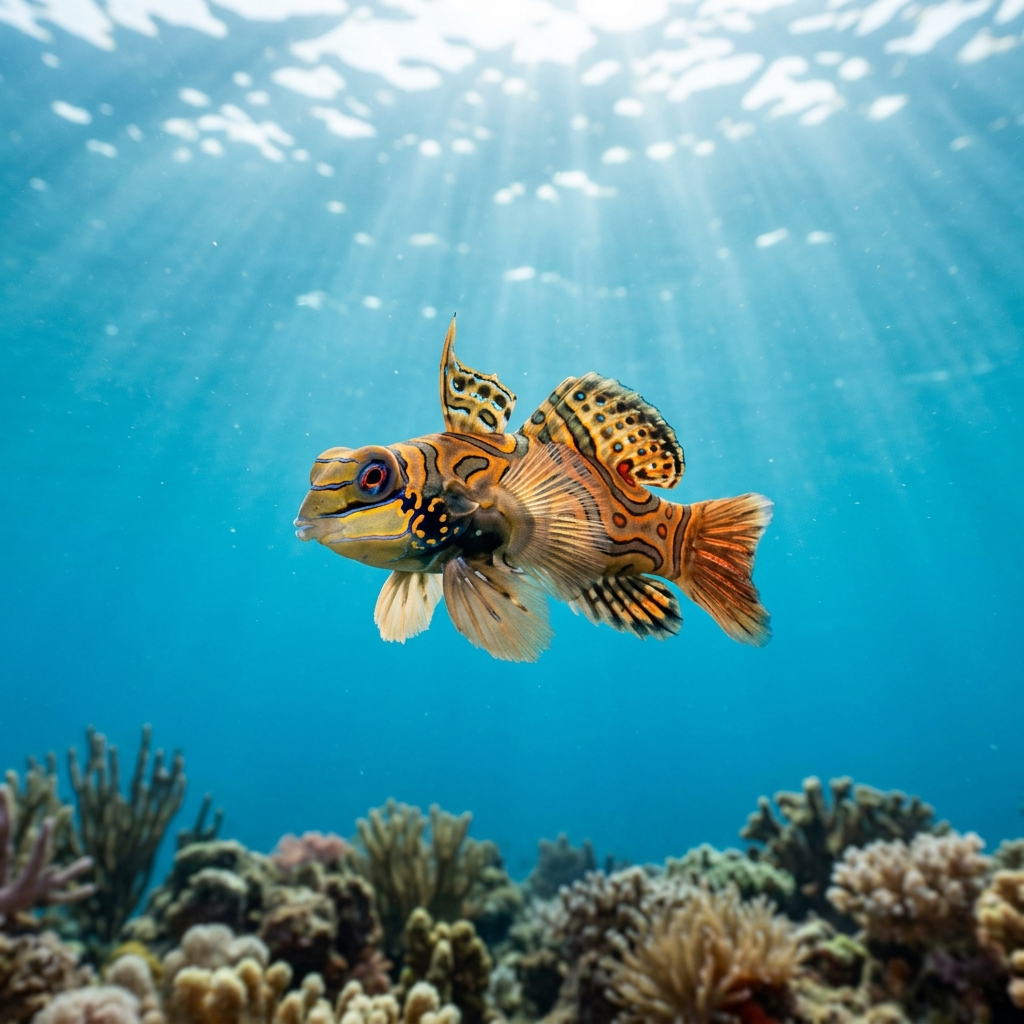
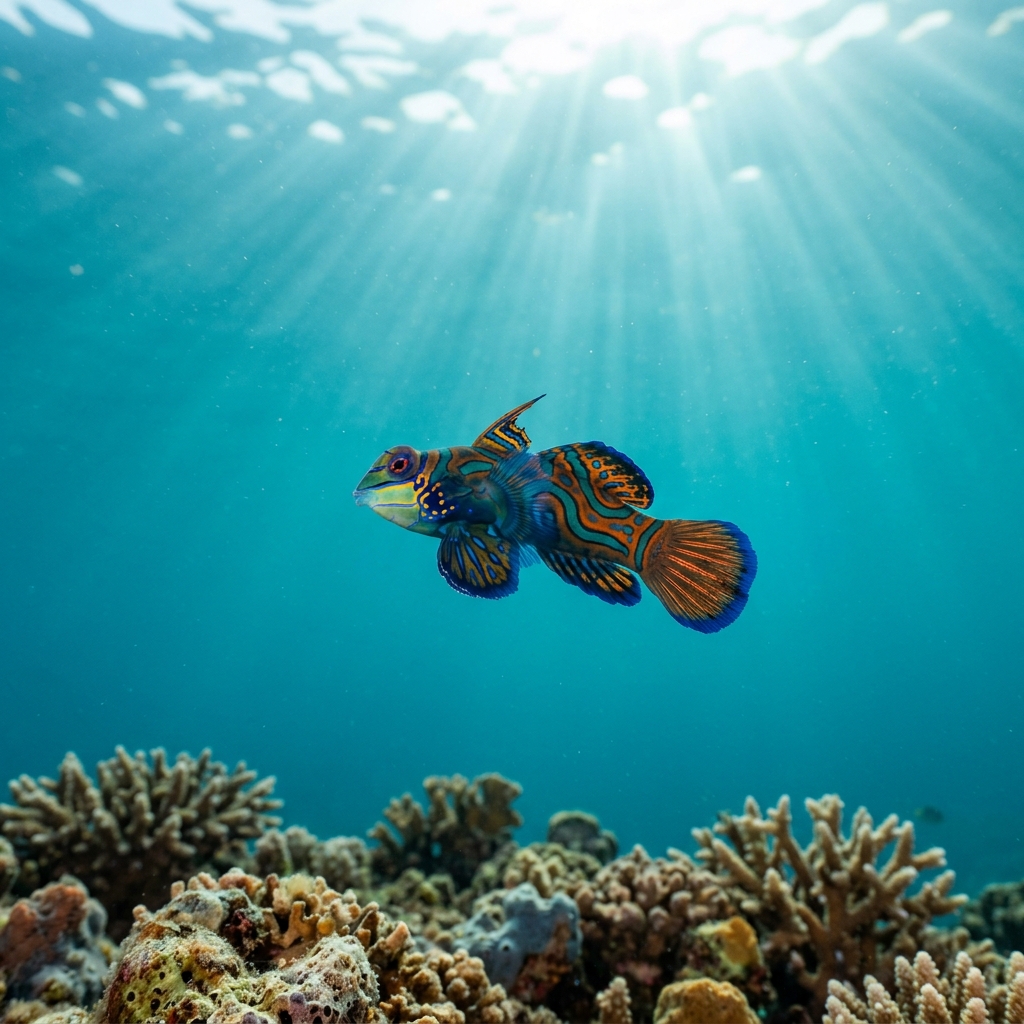
No fish on the reef looks remotely like this one. The body is covered in a swirling mosaic of electric blue, orange, and green lines on a dark background, making it unmistakable at close range. At roughly 4 cm it is tiny, so you need to look carefully into rubble and branching corals rather than scanning open water. Males are noticeably larger than females and carry a tall, pointed first dorsal spine that sticks up like a flag above the back.
Mandarinfish spend the day sheltering inside rubble piles and dead coral heads, and are rarely seen in open water. The classic encounter is at dusk, when they emerge to feed and pair up, often hovering just above the rubble for a few minutes before retreating again. They are not particularly wary, but they are small and fast; slow, patient observation from a low angle beats chasing them.
Mandarinfish are one of the only vertebrates known to produce blue colouration directly from specialised cells (cyanophores) rather than through diet or structural light tricks, which is why that blue is so saturated and unlike anything else on the reef.
Northern hemisphere data shows sightings concentrate between January and May. The species sits comfortably in 25 to 29 °C water, so it is present year-round on tropical reefs; the January, May peak likely reflects calmer conditions and more diver activity at key sites rather than any absence outside those months.
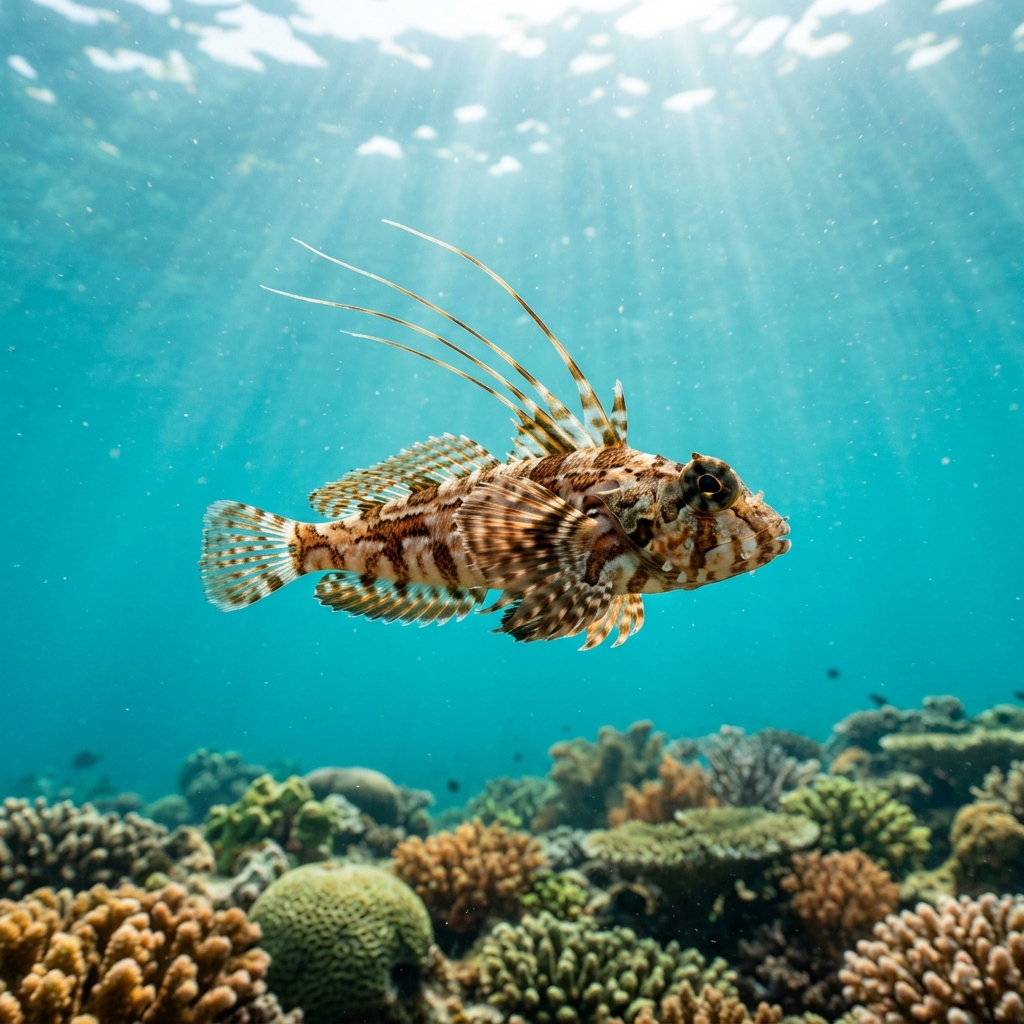
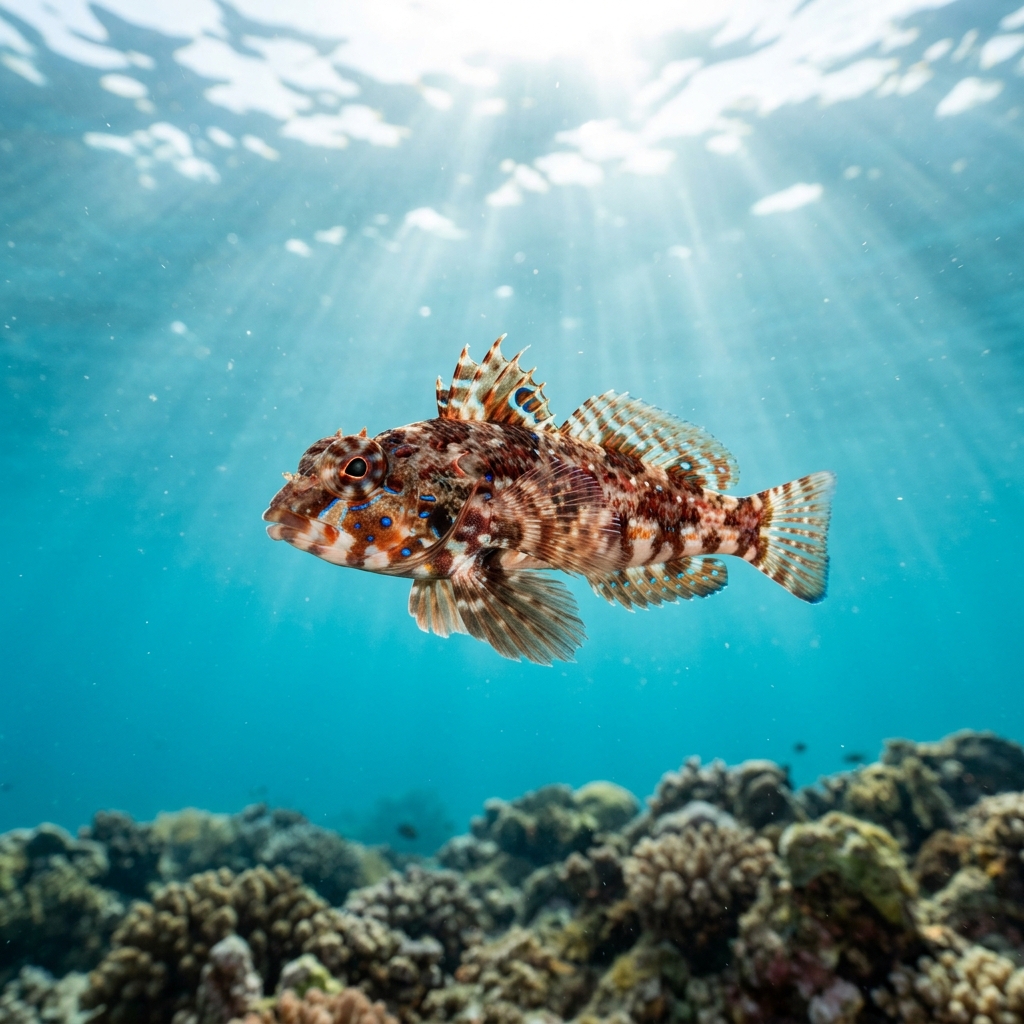
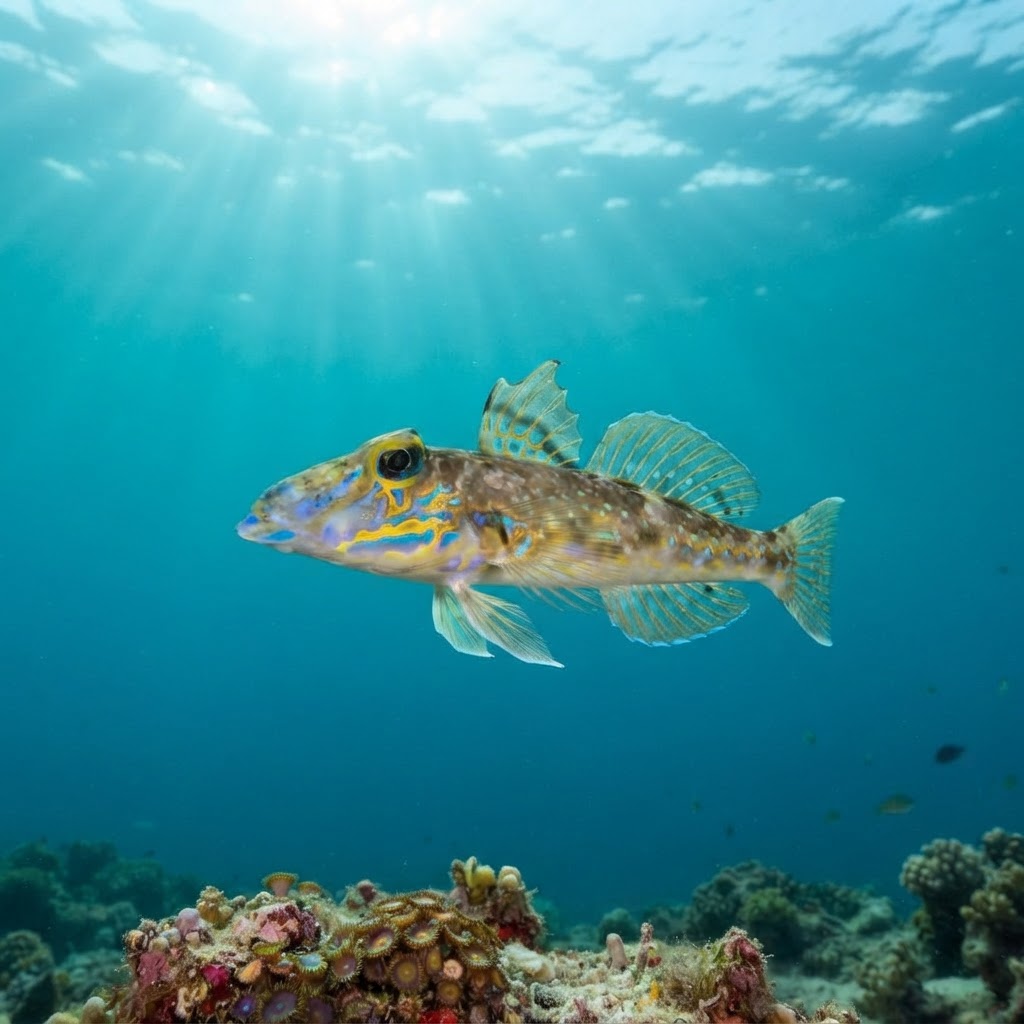
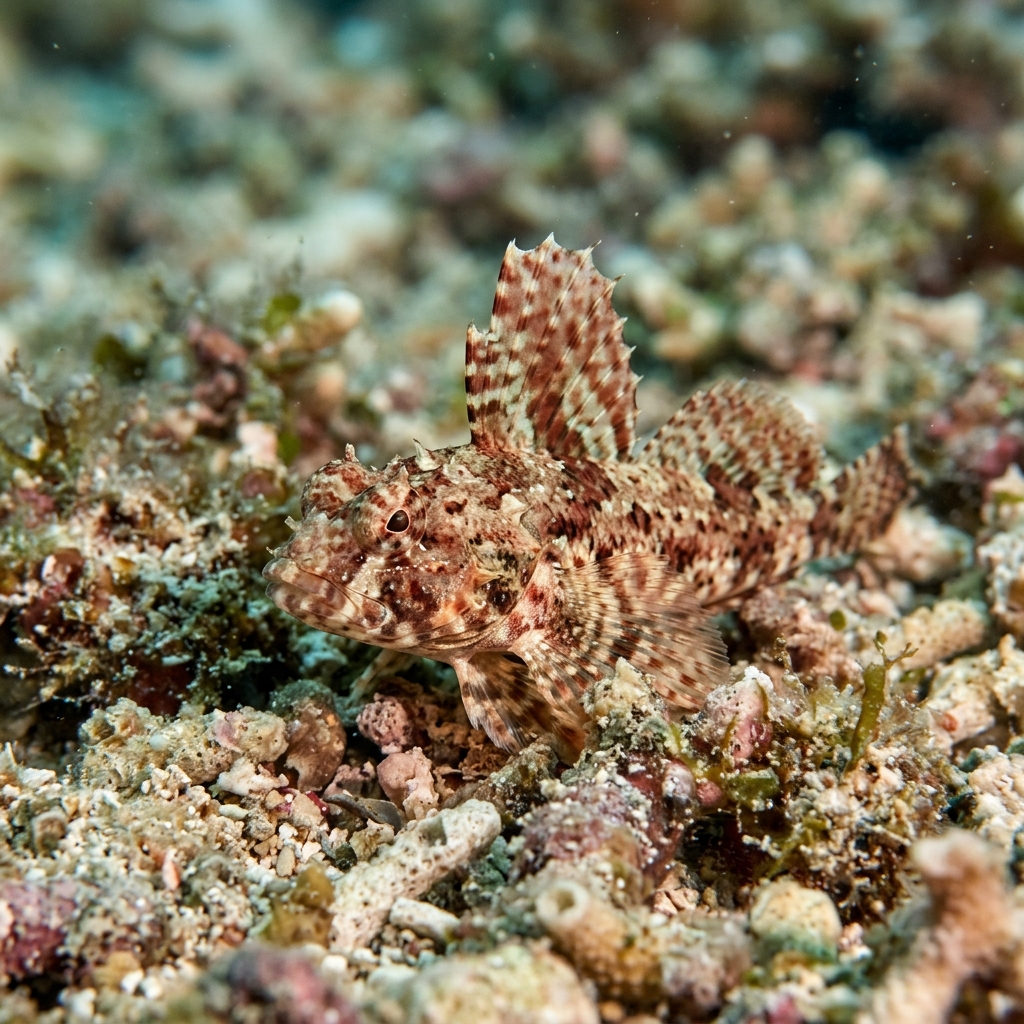
Reef neighbours a diver could mistake it for. Use the identification notes above to tell them apart.
The mandarinfish is most commonly logged across the Philippines and Indonesia, with the strongest concentrations in the Visayas (both east and central), Palawan and Apo Reef, and the reefs of Sulawesi. Australia's Queensland sites and Micronesia also produce reliable sightings, and there are solid records from Palau, Malaysia, and Fiji.
Mapping where Mandarinfish is logged…
The best-documented sites are in the Philippines and Indonesia. Within the Philippines, the Visayas and Palawan and Apo Reef stand out; in Indonesia, Sulawesi and Bali are reliable. Micronesia, Palau, Queensland in Australia, and Malaysian reefs also have strong populations.
Diver records from northern hemisphere sites concentrate between January and May. Regardless of season, the best time of day is always dusk, when mandarinfish leave their rubble shelters to feed and mate for a brief window of around 20 to 30 minutes.
The swirling mosaic of electric blue, orange, and green on a dark body is unique among reef fish. It is tiny, around 4 cm, and stays close to rubble or dead coral. Males have a tall pointed first dorsal spine that projects above the back; females are smaller and lack this feature.
Adults typically reach around 4 cm. That small size means they are easy to overlook among rubble; looking for movement rather than colour often helps you spot one first.
The colour serves as a warning to predators. Unusually for a vertebrate, the vivid blue comes from cyanophores, specialised pigment cells, rather than from diet or reflected light. The fish also secretes a foul-tasting mucus, so the colours are an honest signal that it is worth avoiding.
Site and sighting data is aggregated from diver logs, iNaturalist and GBIF. For taxonomy and conservation status:
Fingered Dragonet
64 sites