Solenostomus paradoxus
Spot ornate ghostpipefish in the Visayas and Bali between Jan, Jul. Tips on ID, depth, and where divers log them most.
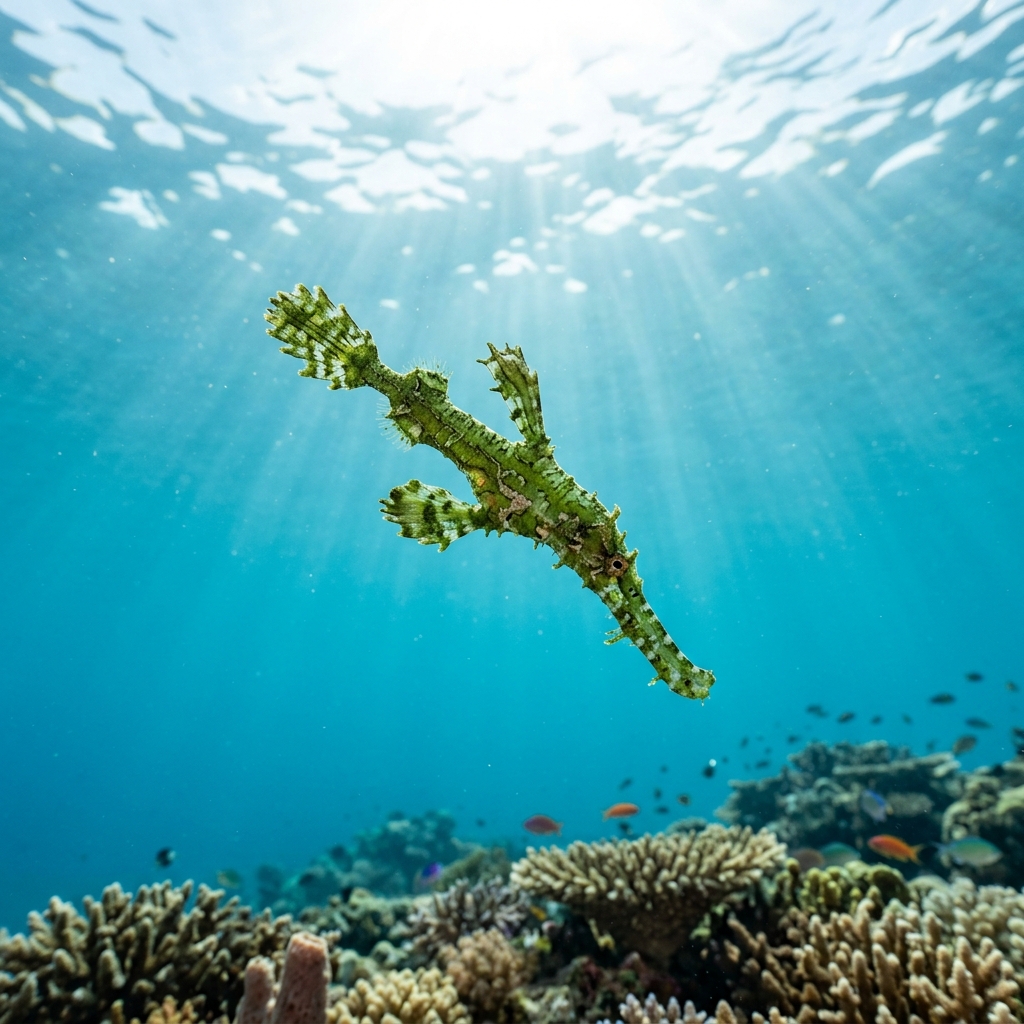
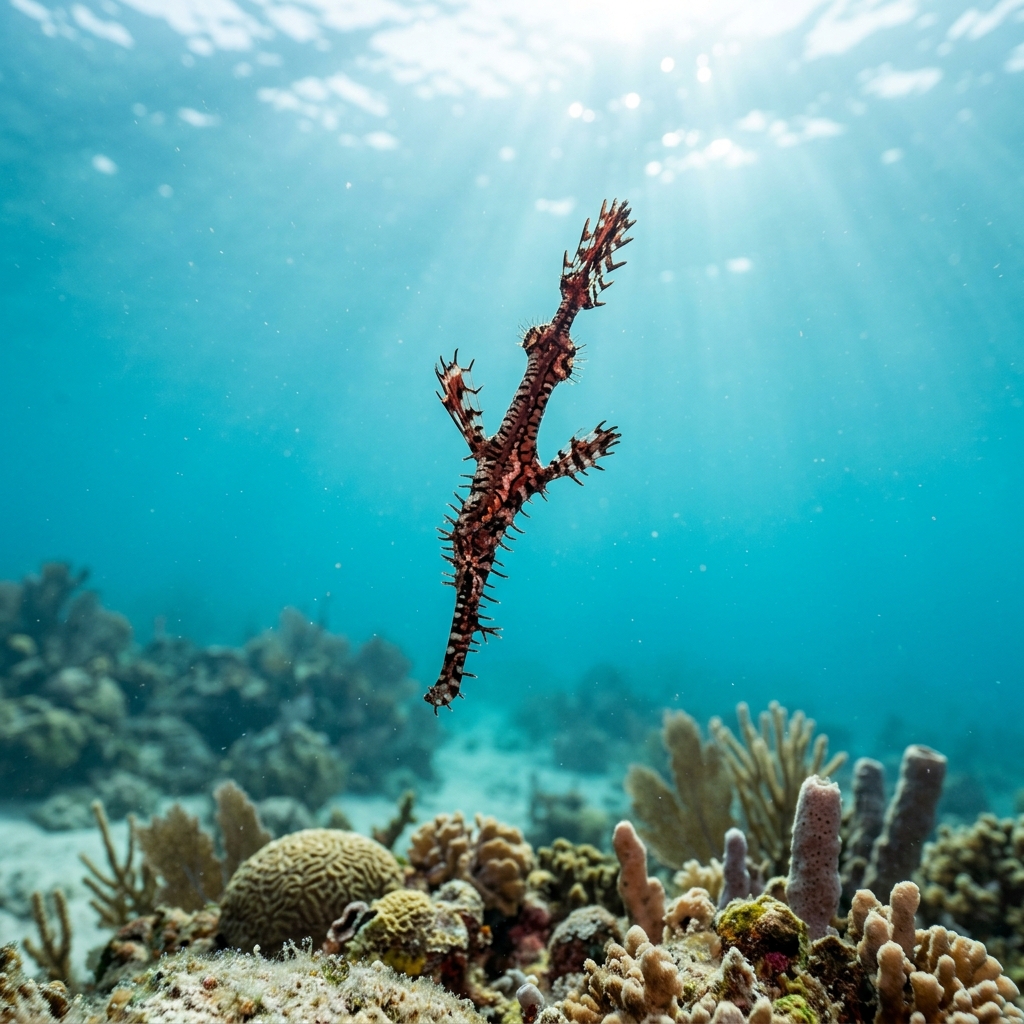
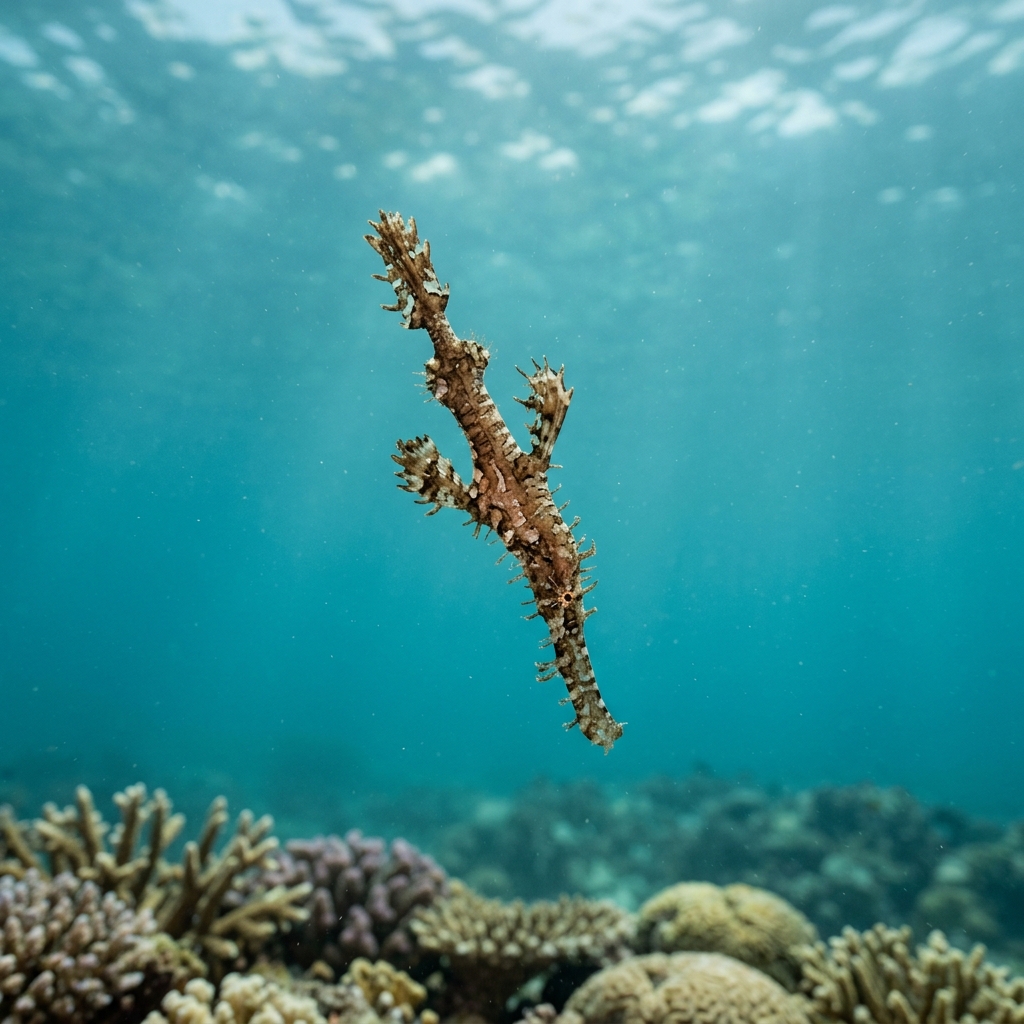
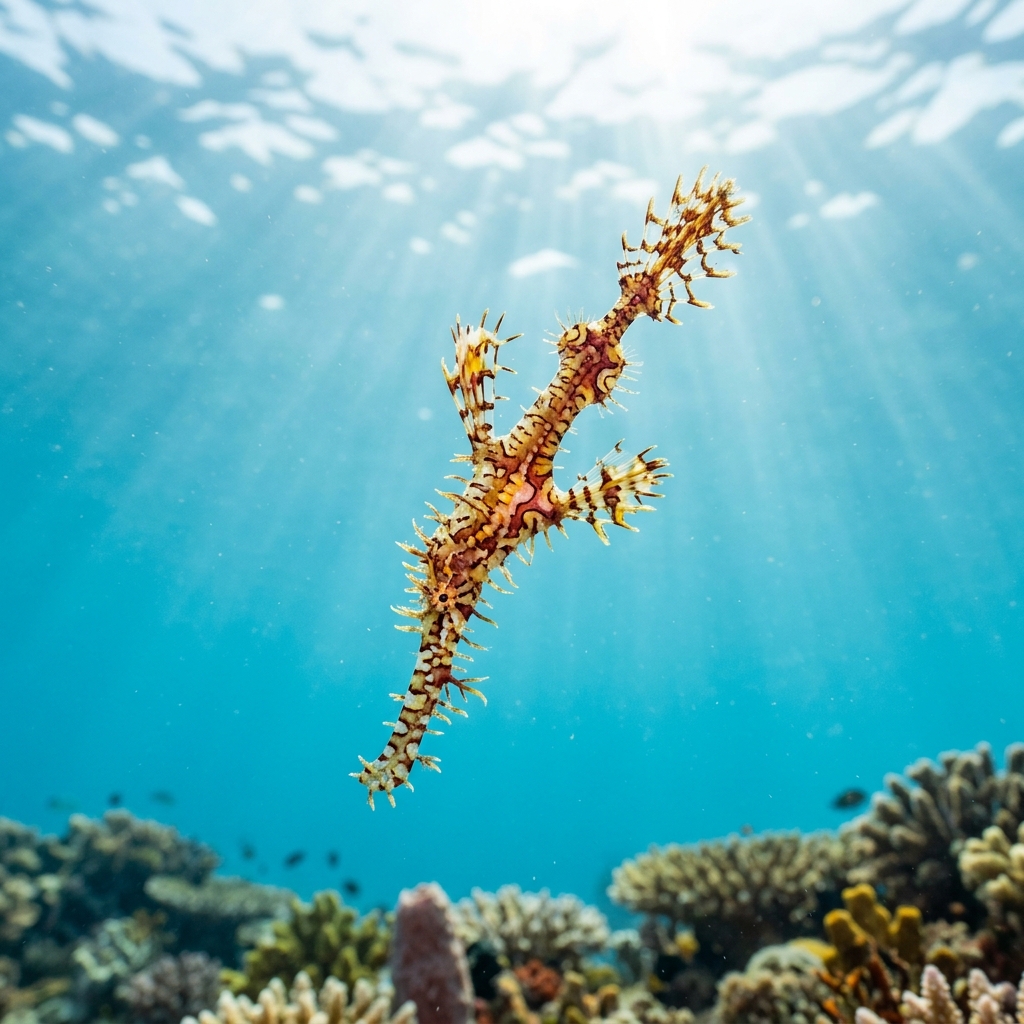
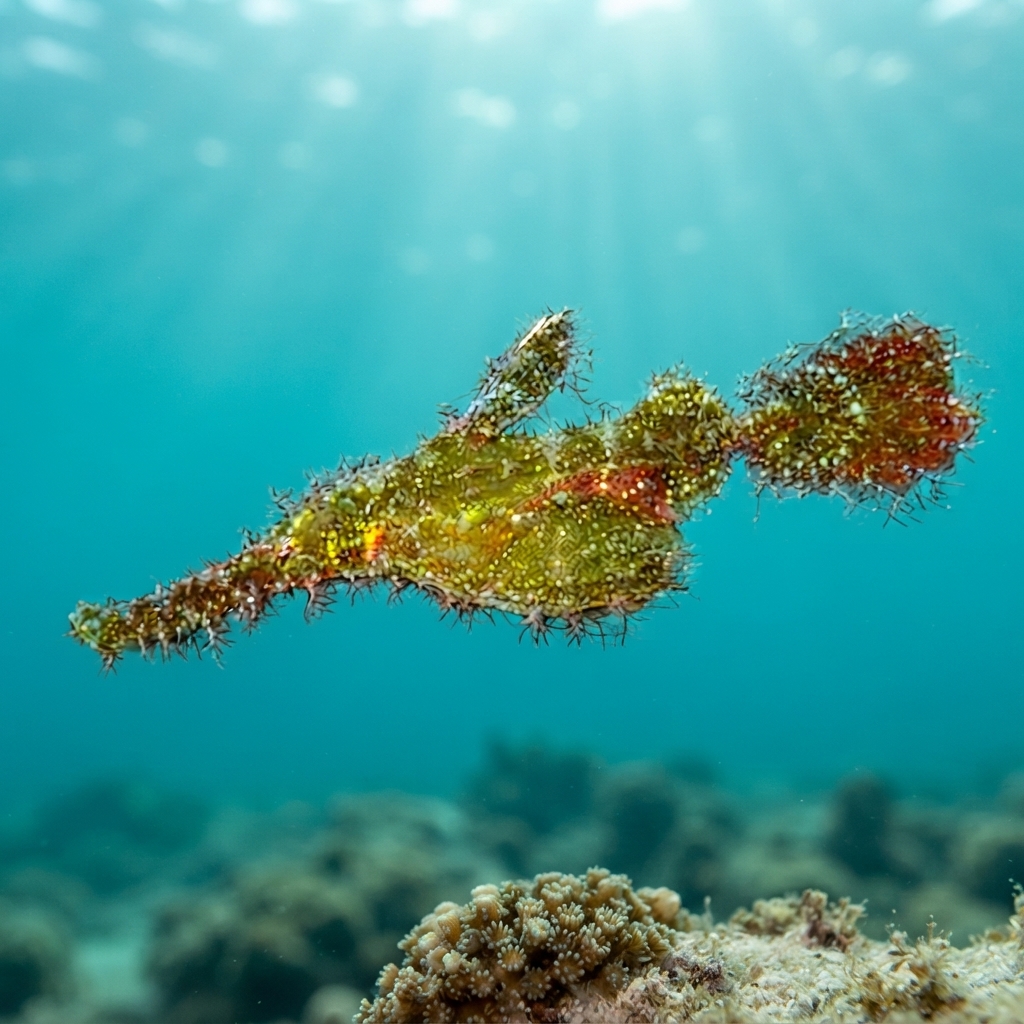
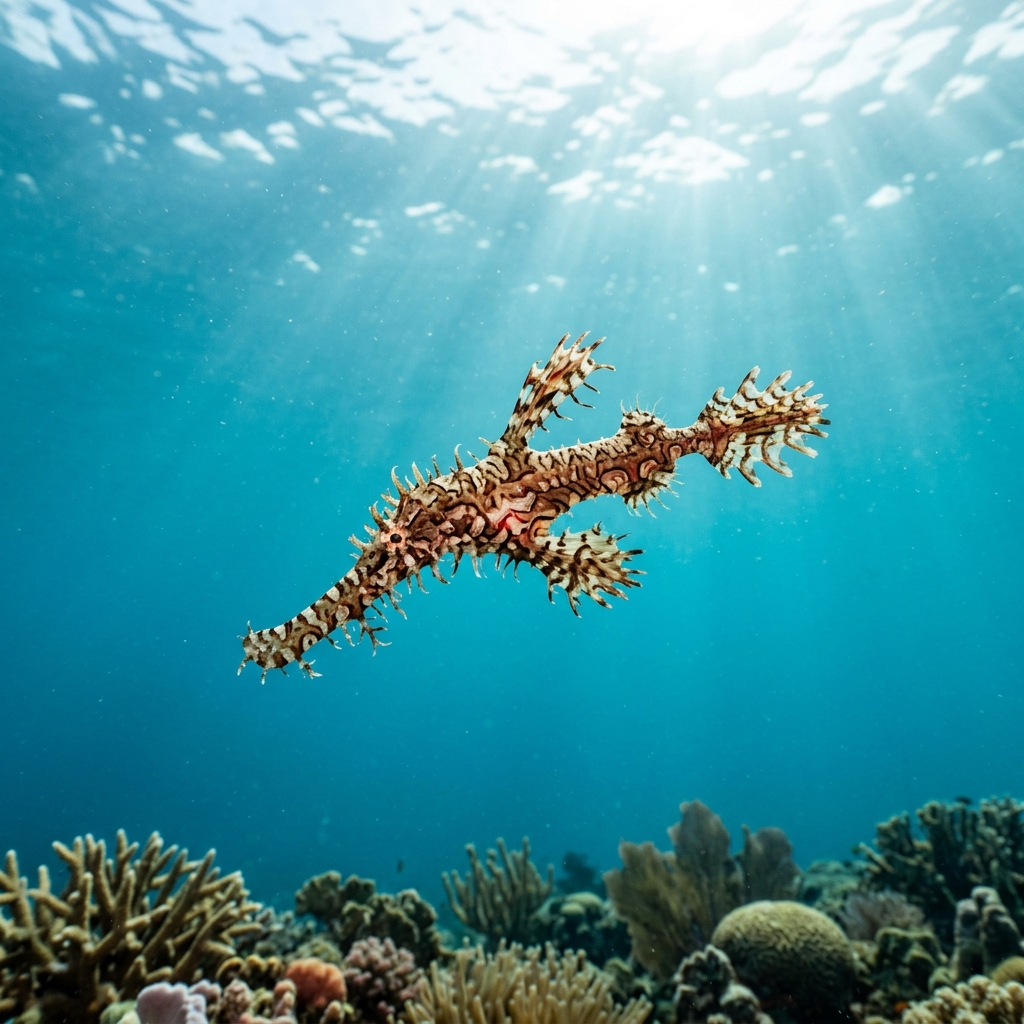
Roughly 8 cm long, the ornate ghostpipefish has an elongated, laterally flattened body covered in elaborate skin filaments and spiny fin rays that make it look more like a piece of debris than a fish. Colouration is highly variable, red, white, black, yellow, or mottled combinations, typically matching the crinoid (feather star) or soft coral it rests against. The large, upward-angled snout and fan-like pectoral fins are the key underwater cues to lock onto. Females are noticeably larger and carry a brood pouch formed by their fused pelvic fins along the belly.
Ornate ghostpipefish are almost always seen hovering motionless, head-down at an angle, in or alongside a crinoid, soft coral, or sea fan, a posture that makes them nearly invisible until you know the jizz (the overall impression of shape and stance). They drift very slowly with gentle fin movements and tend to stay put when a diver approaches, relying on camouflage rather than flight. Pairs are often found together on the same host animal, making a patient search of a single crinoid worthwhile.
Unusually for fish, it is the female that broods the eggs: she holds them in a pouch formed by her enlarged, fused pelvic fins until they hatch, while the smaller male fertilises and guards the clutch from nearby.
In Northern Hemisphere destinations such as the Philippines and Japan, sightings concentrate from January through July. In Southern Hemisphere sites such as Queensland, Australia, the peak runs from July to November.
Reef neighbours a diver could mistake it for. Use the identification notes above to tell them apart.
Most consistently logged across the Philippines, particularly in the Visayas Central, Visayas East and North, and Luzon regions, which together account for the bulk of real diver sightings. Indonesia comes in strongly behind, with Sulawesi, Bali and Lombok among the most productive areas. Australia (Queensland), Malaysia, and Japan also feature regularly in logged sightings.
Mapping where Ornate Ghostpipefish is logged…
The Philippines, especially the Visayas, and Indonesia are where divers log them most reliably. Sulawesi, Bali, and Lombok are strong Indonesian options. Queensland (Australia), Malaysia, Japan, and Thailand also feature in real sighting records.
In the Philippines, Japan, and other Northern Hemisphere sites, January through July is when sightings peak. For Queensland and other Southern Hemisphere locations, July to November is the concentrated season.
Look for a small (roughly 8 cm), flattened fish with spiny, filament-covered fins hovering head-down in a crinoid or soft coral. The large fan-like snout, elaborate skin tags, and habit of mimicking reef debris are the giveaways. Colour alone is unreliable as it varies widely to match the host organism.
Adults typically reach around 8 cm. Females tend to run slightly larger than males. Their small size and excellent camouflage mean they are easy to overlook even when right in front of you.
Unlike most fish where the male broods (as in seahorses), female ornate ghostpipefish carry the eggs in a pouch formed by their enlarged, fused pelvic fins. This is one of the traits that makes the Solenostomidae family stand out from their pipefish relatives.
Site and sighting data is aggregated from diver logs, iNaturalist and GBIF. For taxonomy and conservation status:
Ghost Pipefish
249 sites