Antennarius pictus
Spot painted frogfish in the Philippines, Indonesia, and Maldives. Tips on ID, when to look, and what to expect at 25-29 °C reef sites.
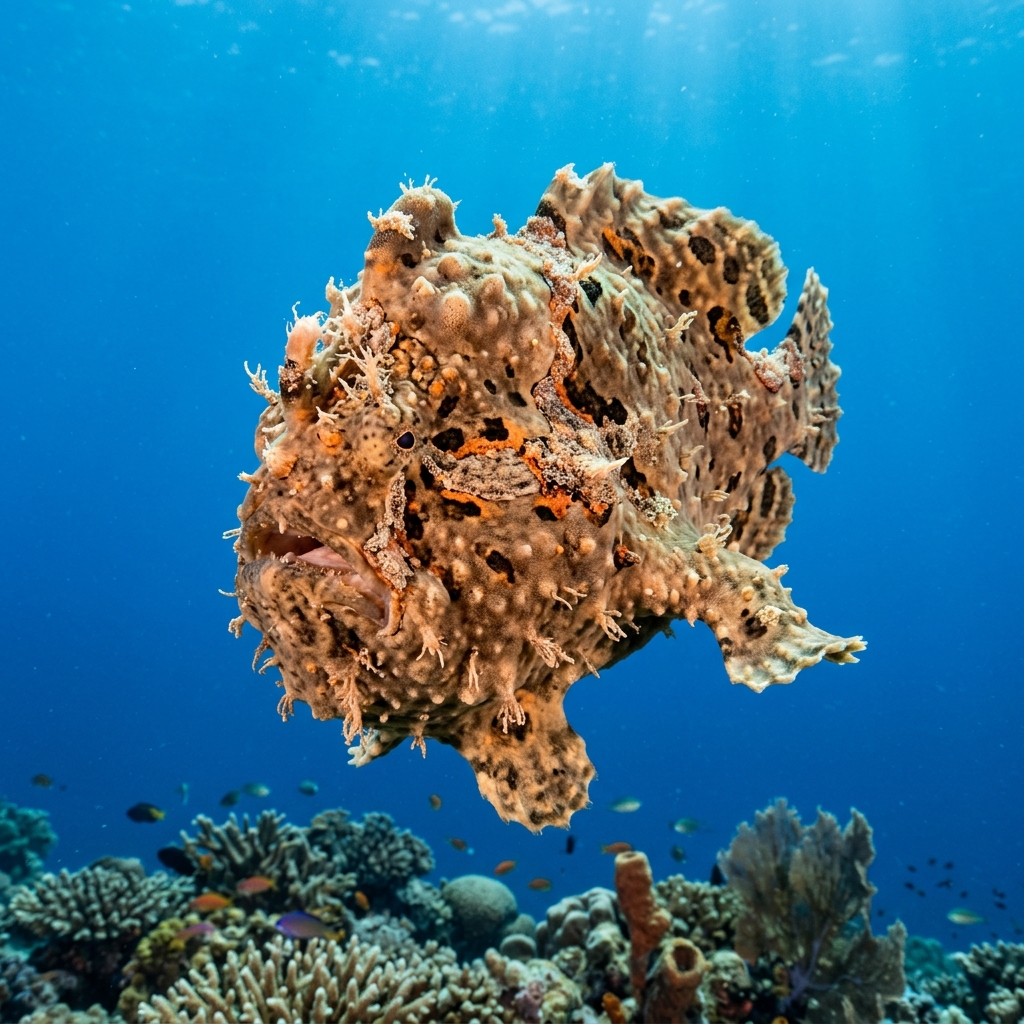
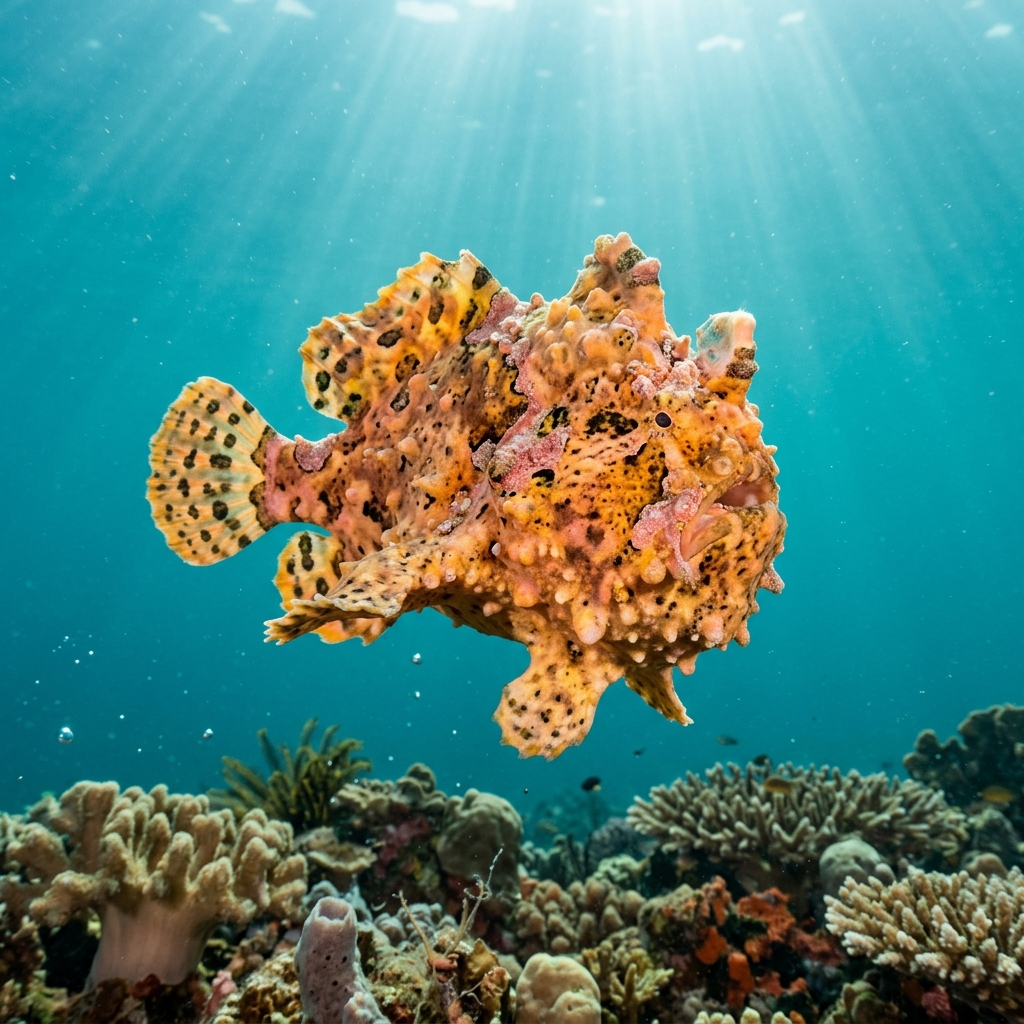
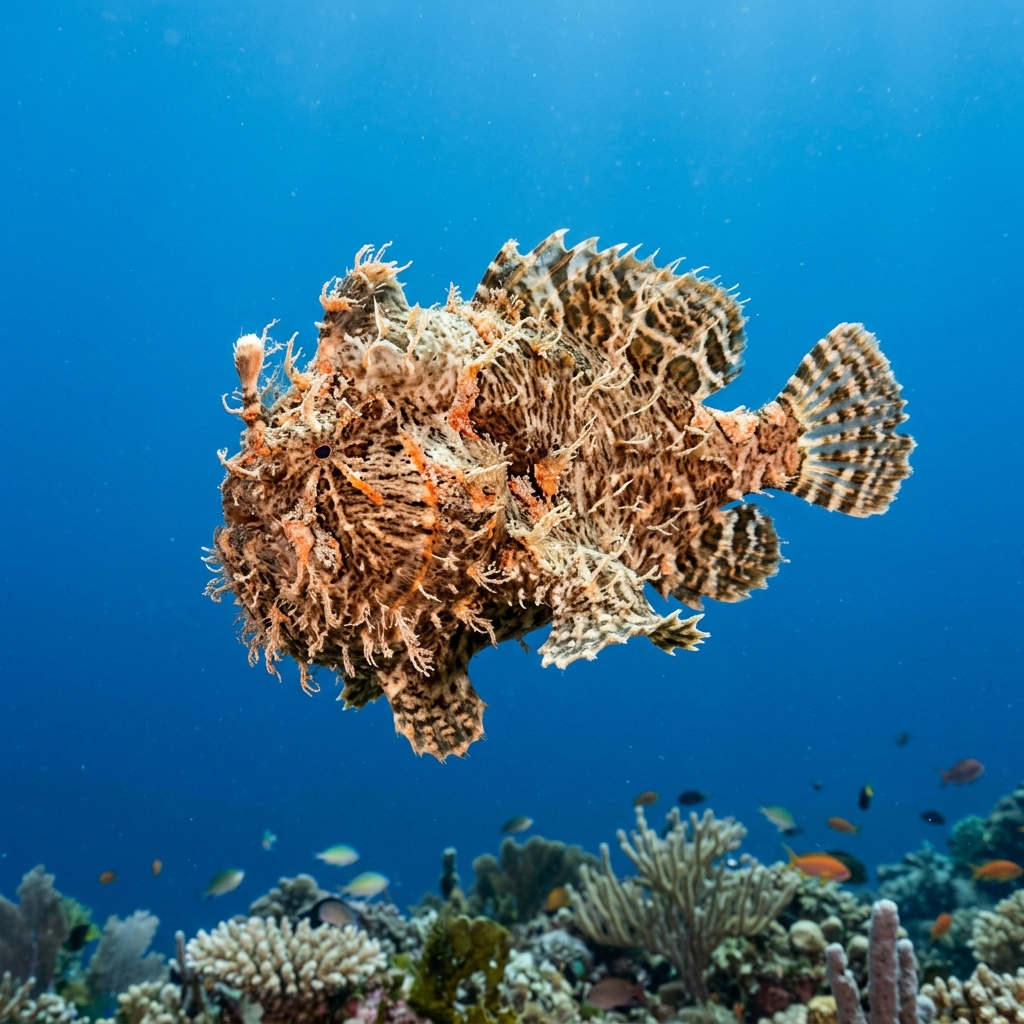
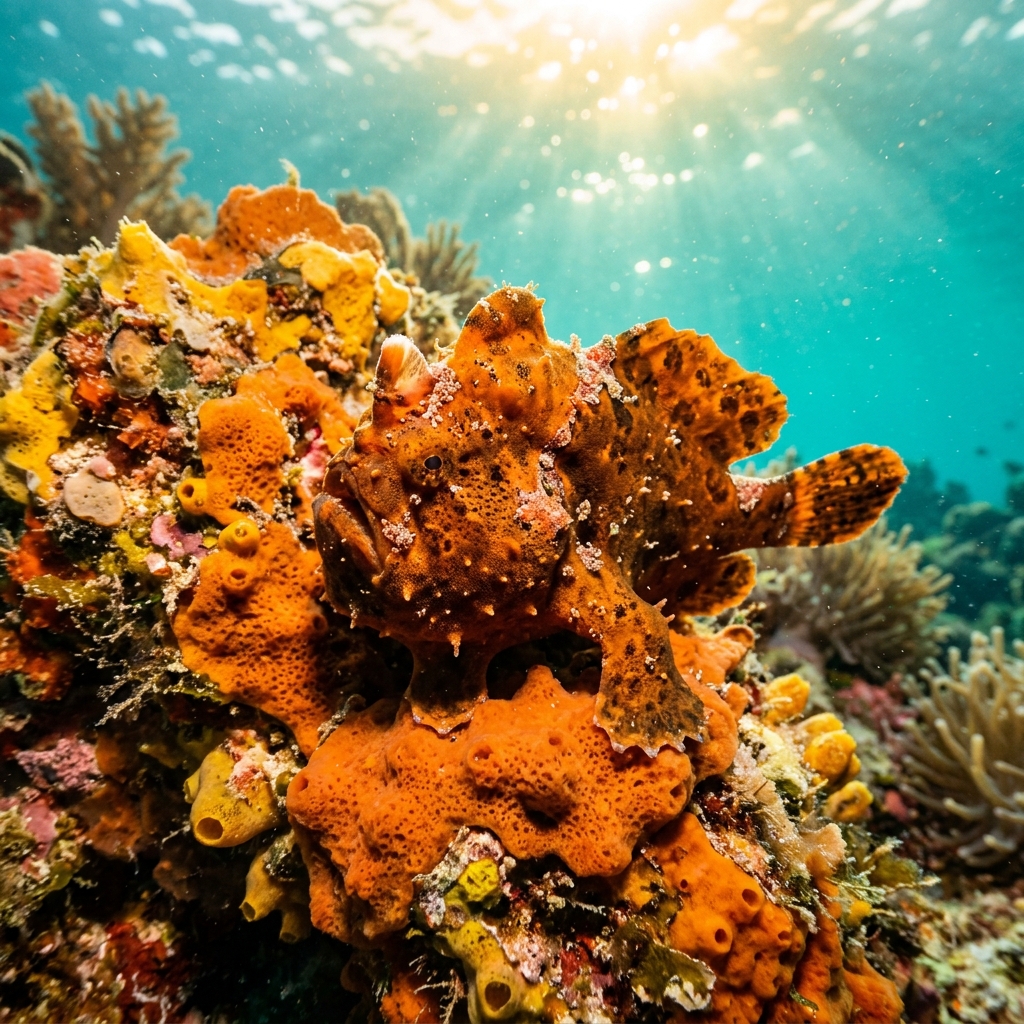
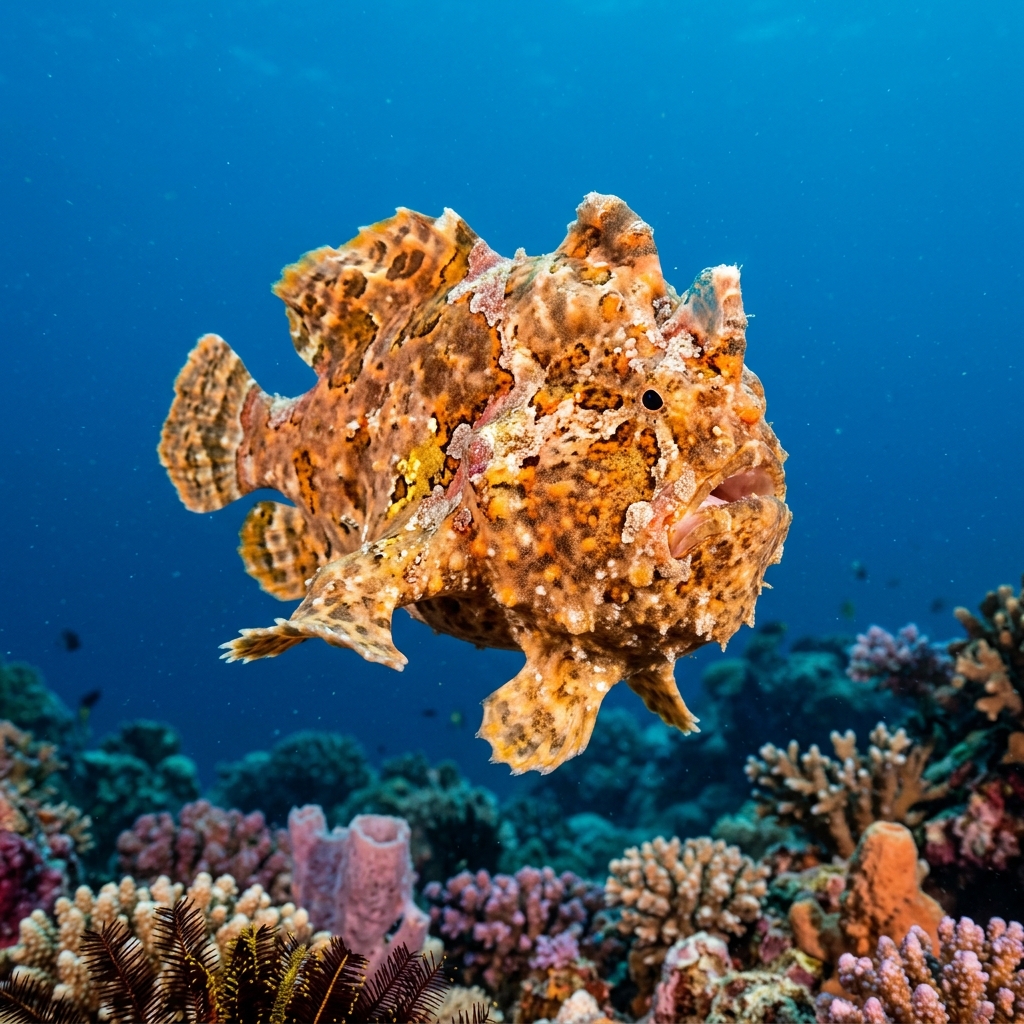
A rotund, fist-sized fish (up to about 21 cm) with a loose, warty skin that it uses as a canvas for extreme camouflage, matching sponges, corals, or rubble almost perfectly. The key field mark is the pattern of dark-ringed spots called ocelli (eye-spots) scattered across the body, which distinguishes it from most other frogfish. Colour is wildly variable, running from yellow and orange through white, red, and near-black, so shape and those ocelli matter more than hue. Watch for the modified first dorsal spine, the illicium, which it waves above its mouth as a lure.
Painted frogfish spend most of their time completely motionless, pressed against a sponge or coral head that matches their colouring almost perfectly, blink and you'll swim straight past one. They are ambush predators, so when you do find one it is usually parked in the same spot for days or even weeks, making a return dive worthwhile. They rarely bolt from divers, but approaching too fast or close can cause them to shuffle awkwardly away; slow, calm movement from a distance is the way to enjoy a proper look.
Painted frogfish can swallow prey close to their own body size whole; their stomach expands dramatically and the strike itself takes as little as six milliseconds, making it one of the fastest predatory strikes of any vertebrate.
In the Northern Hemisphere, sightings concentrate from February through June and again from August through December, suggesting a short mid-year lull around July. In the Southern Hemisphere, the peak runs December through March, aligning with the warm austral summer when water temperatures sit comfortably within the species' preferred 25-29 °C range.
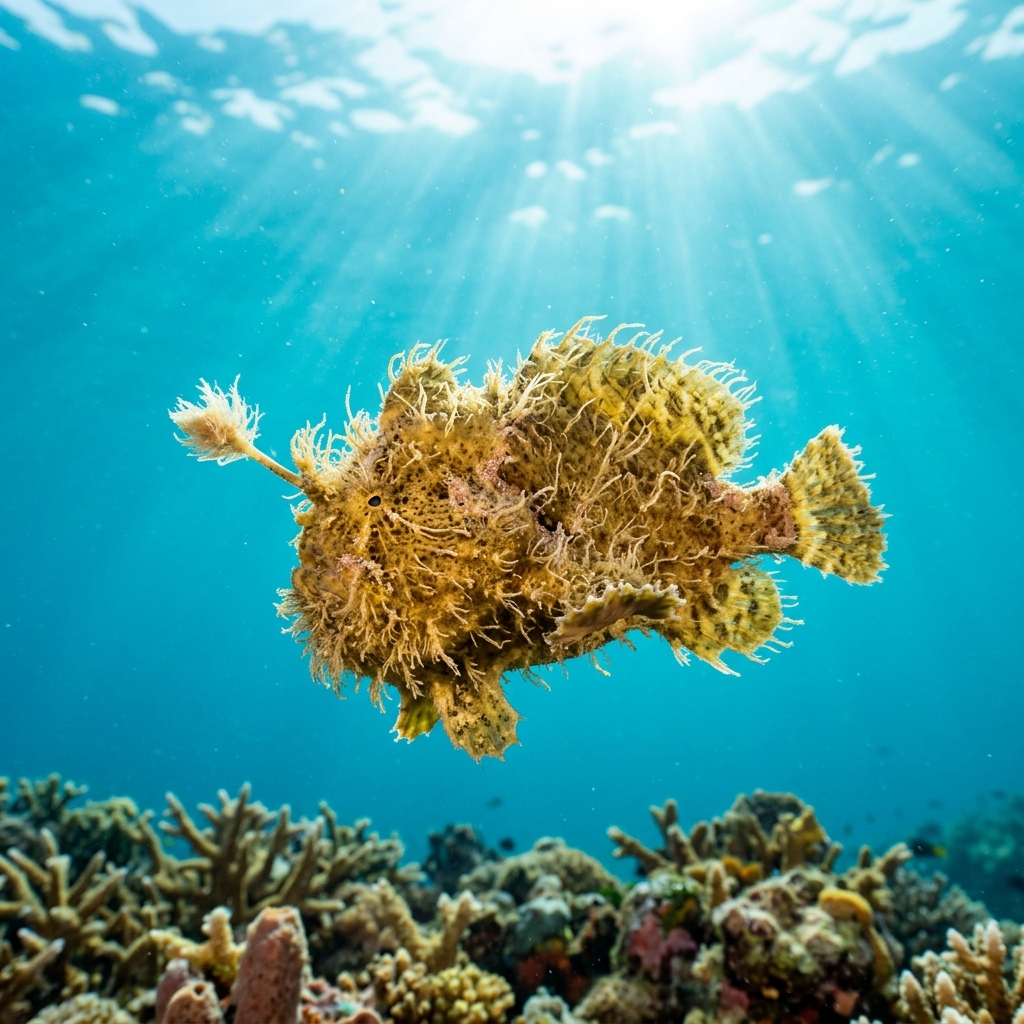
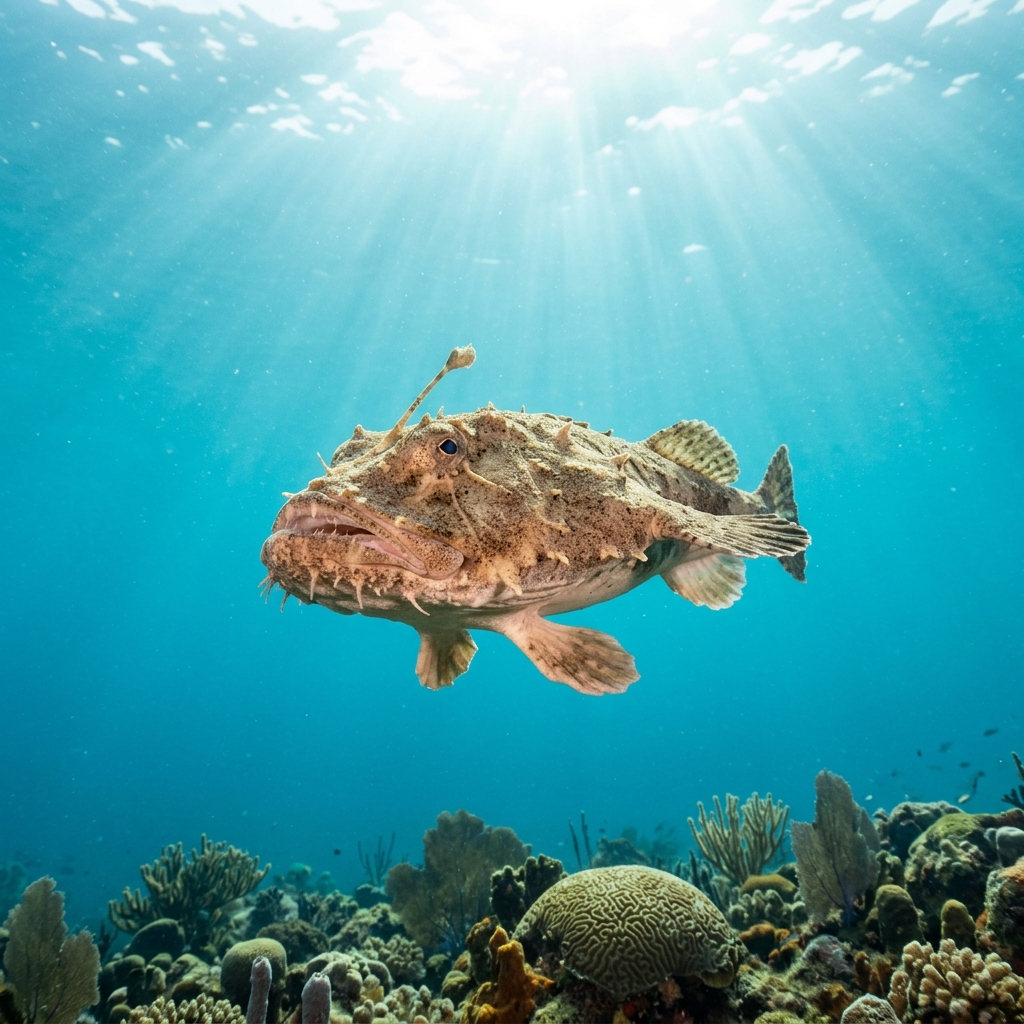
Reef neighbours a diver could mistake it for. Use the identification notes above to tell them apart.
Most commonly logged across the Indo-Pacific, with the strongest concentrations in the Philippines (especially the Visayas and Luzon), Sulawesi and Maluku in Indonesia, and the North and Central Atolls of the Maldives. Australia's Queensland sites, Malaysian reefs, and Japan also appear regularly in logged sightings. If frogfish are on your agenda, the Philippines and Indonesia give the widest choice of sites.
Mapping where Painted Frogfish is logged…
The Philippines, Indonesia, and the Maldives account for the bulk of logged sightings, with the Visayas, Sulawesi, and the North and Central Atolls being stand-out regions. Queensland in Australia, Malaysian Borneo, and southern Japan are also reliable areas. It is a wide-ranging Indo-Pacific reef species, so most warm-water dive destinations in the region offer a chance.
In the Northern Hemisphere, sightings are strongest from February to June and August to December. Southern Hemisphere divers do best from December through March. Because the species favours warm tropical reefs in the 25-29 °C range, it is present year-round at many sites, but the periods above represent when divers log them most consistently.
Look for the dark-ringed ocelli (eye-spots) scattered across the body, these are the most reliable field mark separating it from similar frogfish. The body is lumpy and roughly round, up to about 21 cm, and colour alone is useless since individuals range from bright yellow to deep red to near-black. The fishing-rod lure (illicium) waved just above the mouth is another giveaway when the fish is actively hunting.
They typically reach around 21 cm, roughly the size of a large fist. Their bulky, compressed shape makes them look even chunkier in the water than that measurement suggests.
It uses a modified spine on its head as a fishing lure, waving it gently to mimic a small worm or shrimp. When prey comes within range the frogfish opens its enormous mouth and sucks the victim in by rapidly expanding its body cavity, completing the strike in milliseconds, one of the fastest feeding strikes recorded in any vertebrate.
Site and sighting data is aggregated from diver logs, iNaturalist and GBIF. For taxonomy and conservation status:
Hairy Frogfish
988 sites