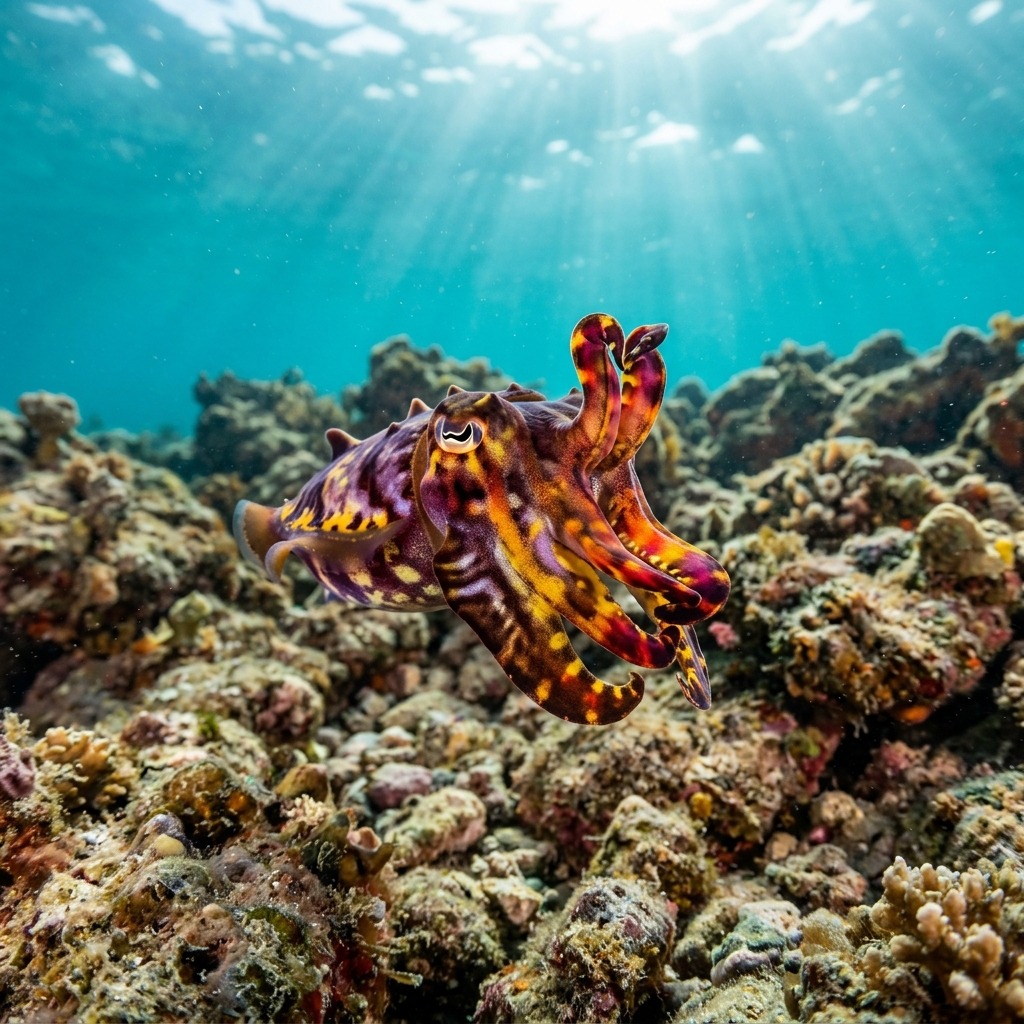
Ascarosepion pfefferi
Spot flamboyant cuttlefish in Queensland, the Visayas or Sulawesi. Active hunters seen walking the seafloor, most logged Feb, Apr in northern sites.
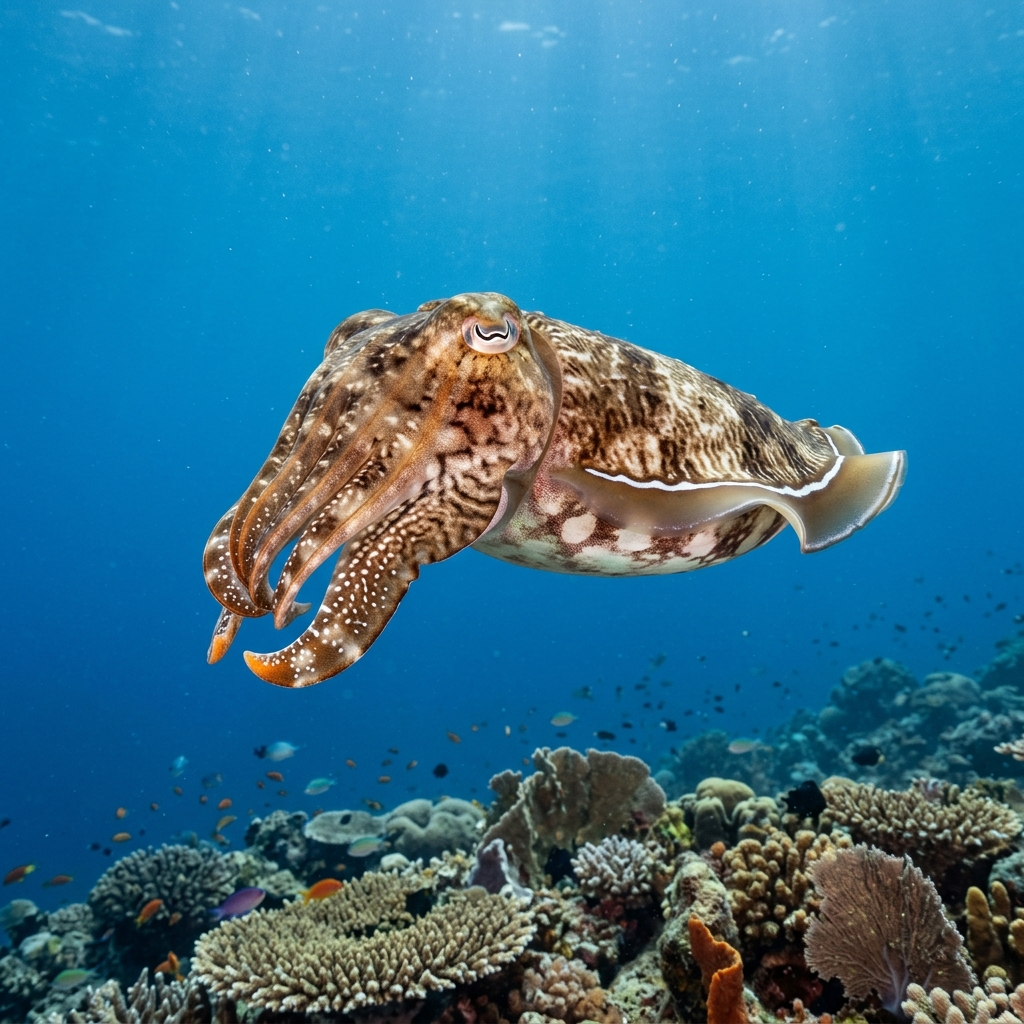
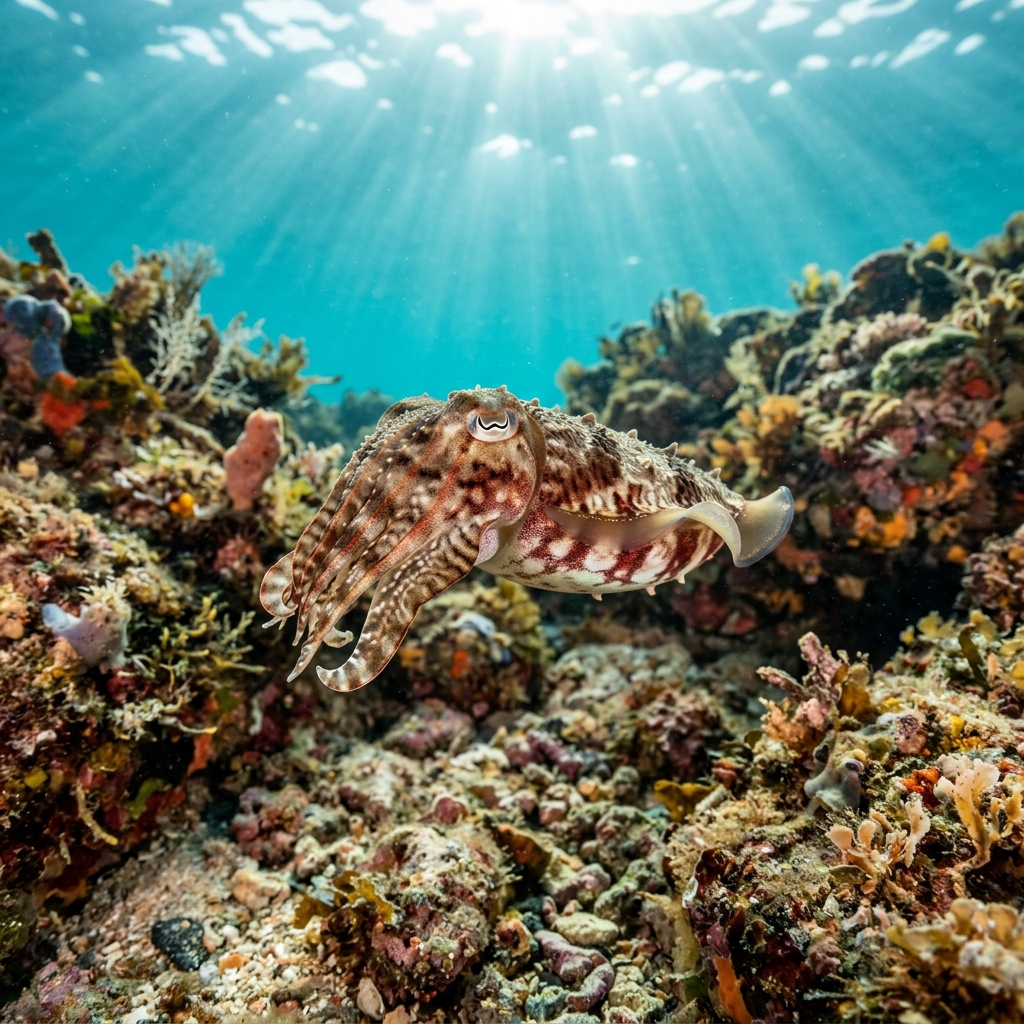
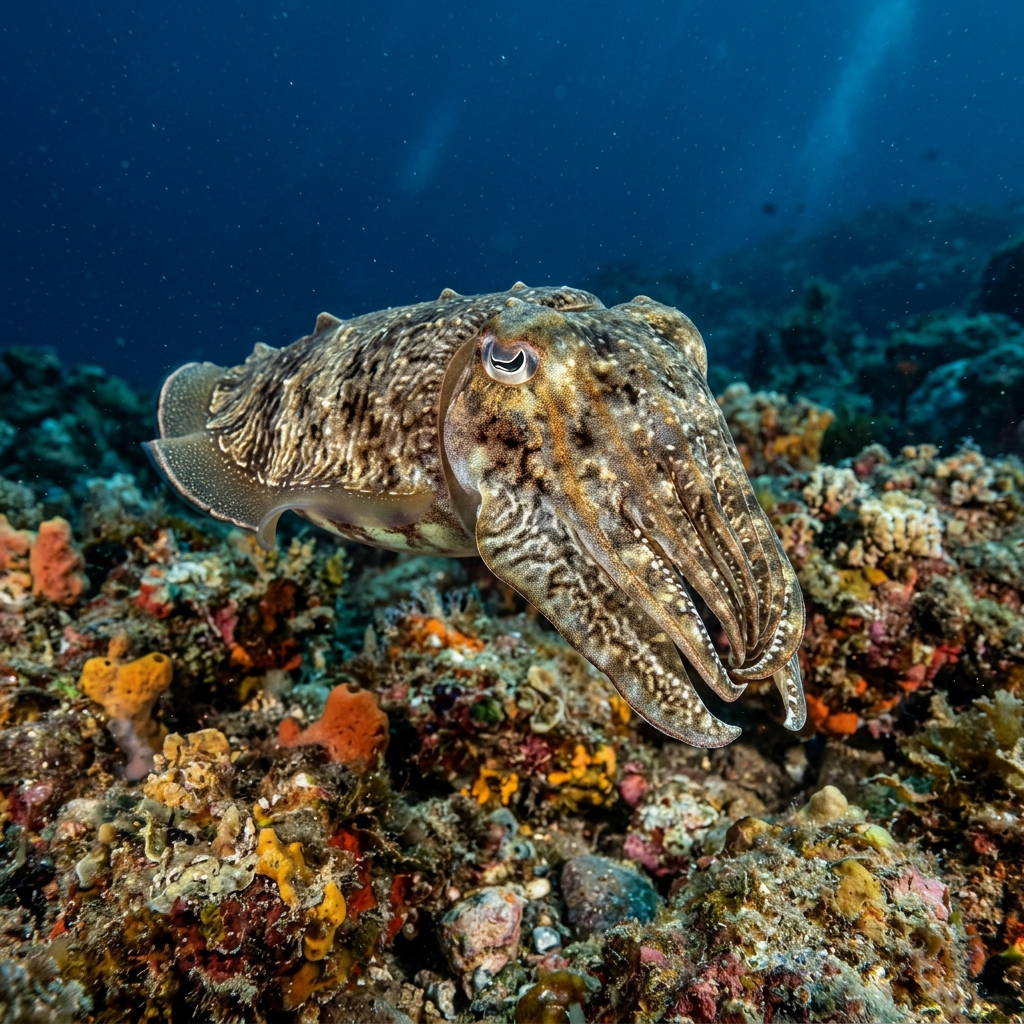
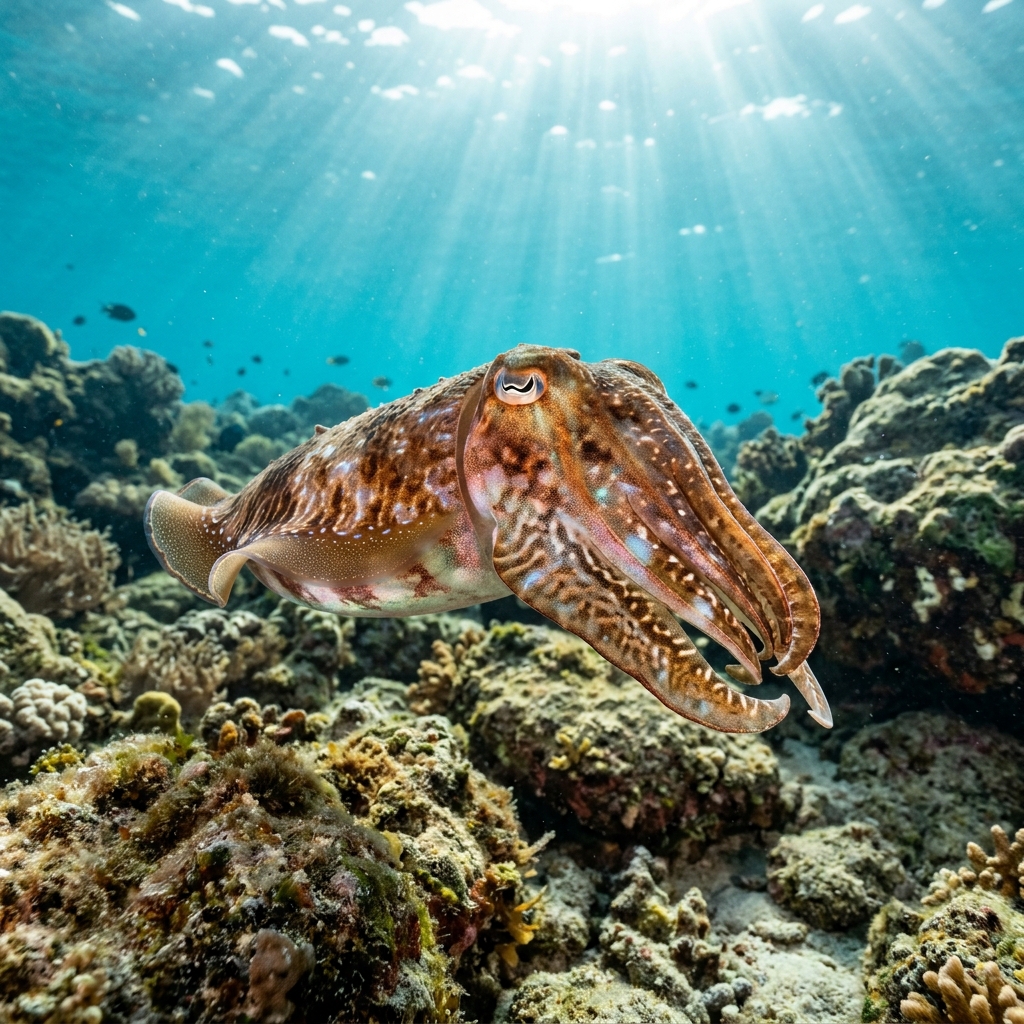
No other cuttlefish flashes quite like this one: rapid, rippling waves of yellow, red, dark brown and white pulse across its skin almost continuously. It is a small species, and its habit of 'walking' across sandy or silty substrate using modified arm tips and fin undulations rather than swimming makes it immediately distinctive. Look for the intensely bright yellow patches around the mantle margin and the dark brown saddle patterns that shift as it moves.
Spot one and it will likely be on the move, prowling sandy or silty bottoms with that characteristic walking gait as it hunts small crustaceans and fish. It tends to notice divers and may pause to observe you cautiously from a short distance, skin cycling through colour patterns the whole time. Stay low, move slowly, and resist the urge to approach quickly, a spooked individual will jet away and vanish into the substrate in seconds.
Unlike most cephalopods, flamboyant cuttlefish flesh contains a toxin, making it one of the very few cuttlefish known to be poisonous. The vivid, non-stop colour display is thought to be honest warning signalling (aposematism), advertising that toxicity to potential predators rather than serving as camouflage.
At northern hemisphere sites the data shows sightings concentrated in February through April. Australian and Indo-Pacific populations inhabit warm water between roughly 22 and 29 °C, so tropical sites can produce encounters year-round when conditions are right.
Reef neighbours a diver could mistake it for. Use the identification notes above to tell them apart.
Most commonly logged across Australia, particularly in Queensland and the Northern Territory, with strong populations also recorded throughout the Philippines, especially the Visayas, and in Sulawesi, Indonesia. Malaysia's Sipadan and East Sabah coast adds another reliable patch of sightings, making the Coral Triangle and northern Australian waters the core of its observed range.
Mapping where Flamboyant Cuttlefish is logged…
The strongest concentrations of diver sightings come from Queensland and the Northern Territory in Australia, the Visayas in the Philippines, and Sulawesi in Indonesia. Sipadan and East Sabah in Malaysia are also well-regarded spots. This is fundamentally a Coral Triangle and northern Australian species.
At sites in the northern hemisphere, such as the Philippines, sightings cluster between February and April. At Australian and Indonesian sites the warm, stable water temperatures mean encounters are possible throughout the year, though local conditions and muck-diving site quality matter as much as season.
The non-stop pulsing waves of yellow, red, dark brown and white across the skin are unlike any other cuttlefish you are likely to encounter. Its small size and its habit of walking along the bottom on modified arm tips rather than swimming clinch the ID. No other species in the same region combines both features.
No, they pose no direct threat to divers. However, their flesh is known to be toxic, so this is a look-but-don't-handle species. Admire from a respectful distance and they are completely safe to observe.
It uses two modified lower arm pairs and rippling fin movements to creep across soft sandy and silty bottoms as it hunts. This slow, deliberate walking style helps it stalk prey at close range. It can still swim when startled, but walking is its preferred mode when actively foraging.
Site and sighting data is aggregated from diver logs, iNaturalist and GBIF. For taxonomy and conservation status:
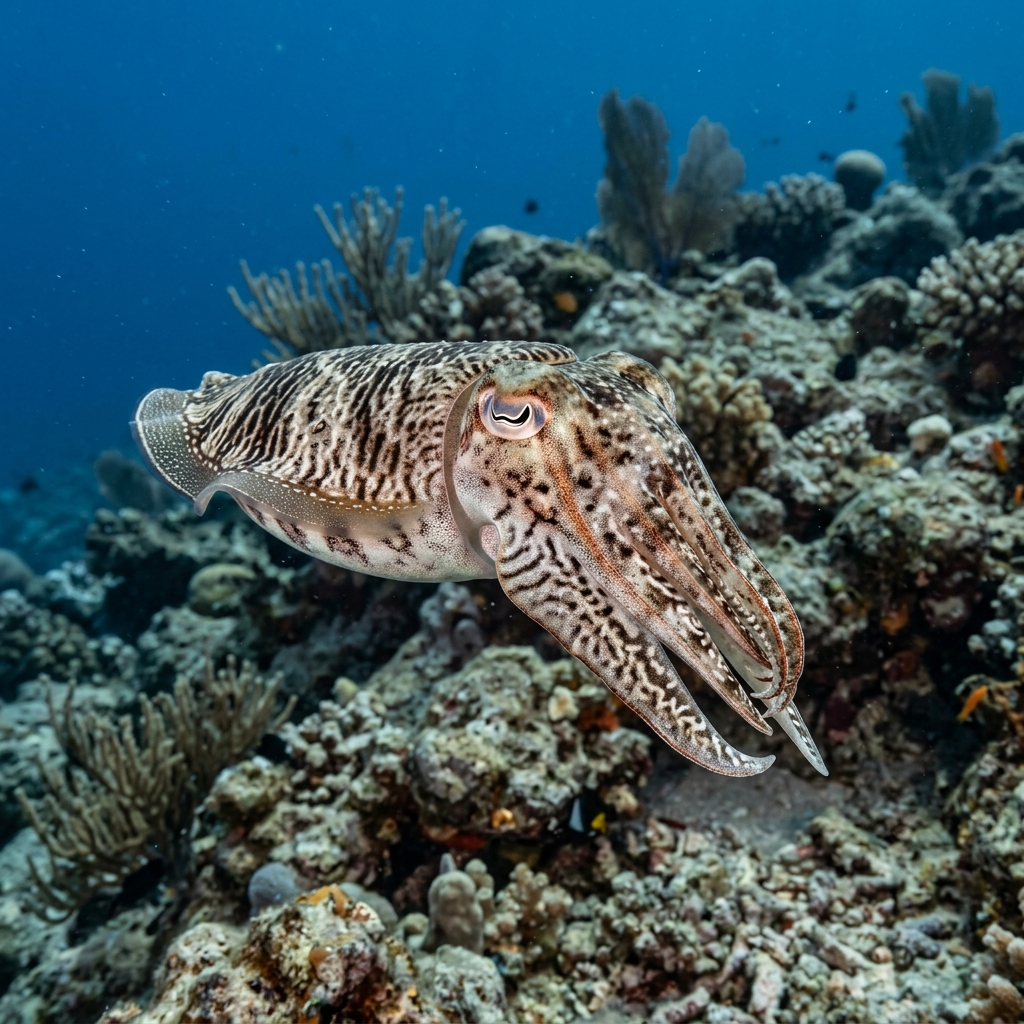
Pharaoh Cuttlefish
925 sites