Nautilus pompilius
Spot the chambered nautilus in Queensland, Fiji, or New Caledonia. Tips on depth, crepuscular timing, and ID for divers chasing this rare cephalopod.
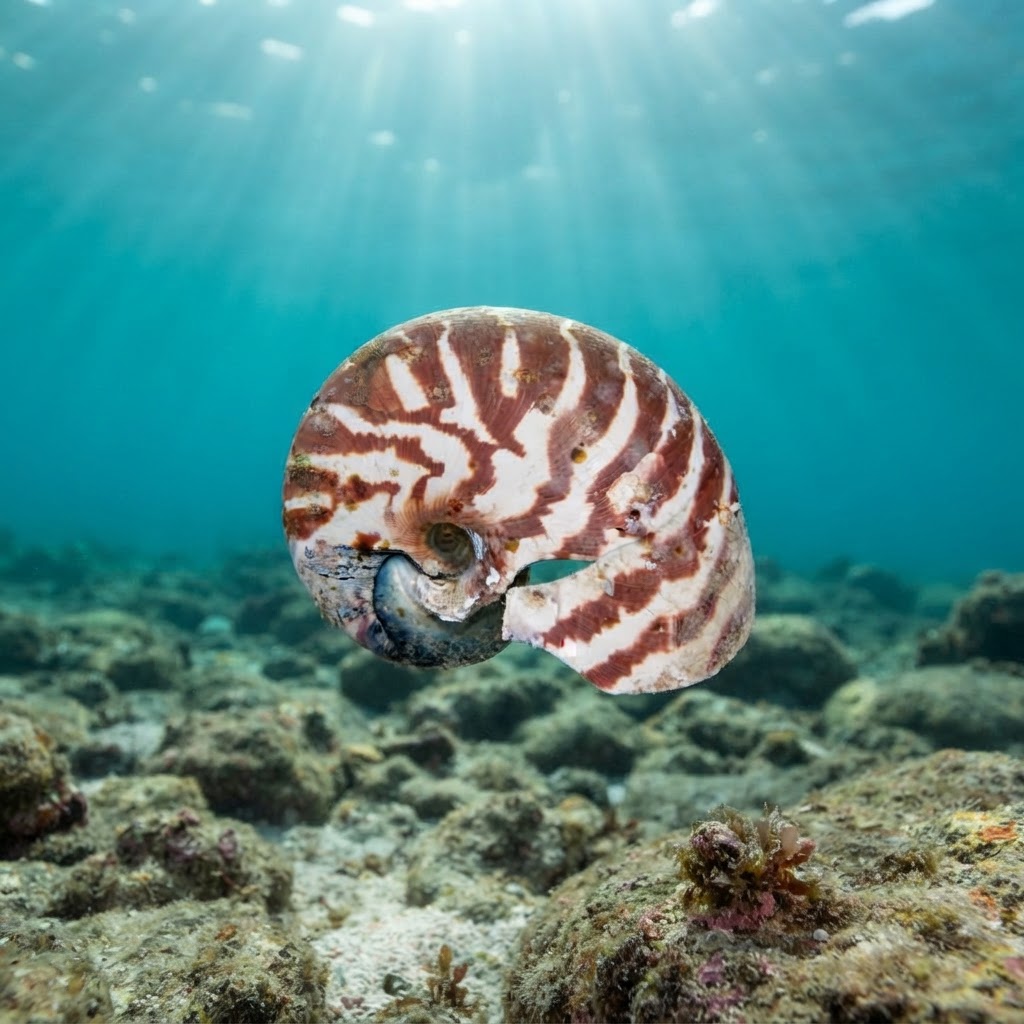
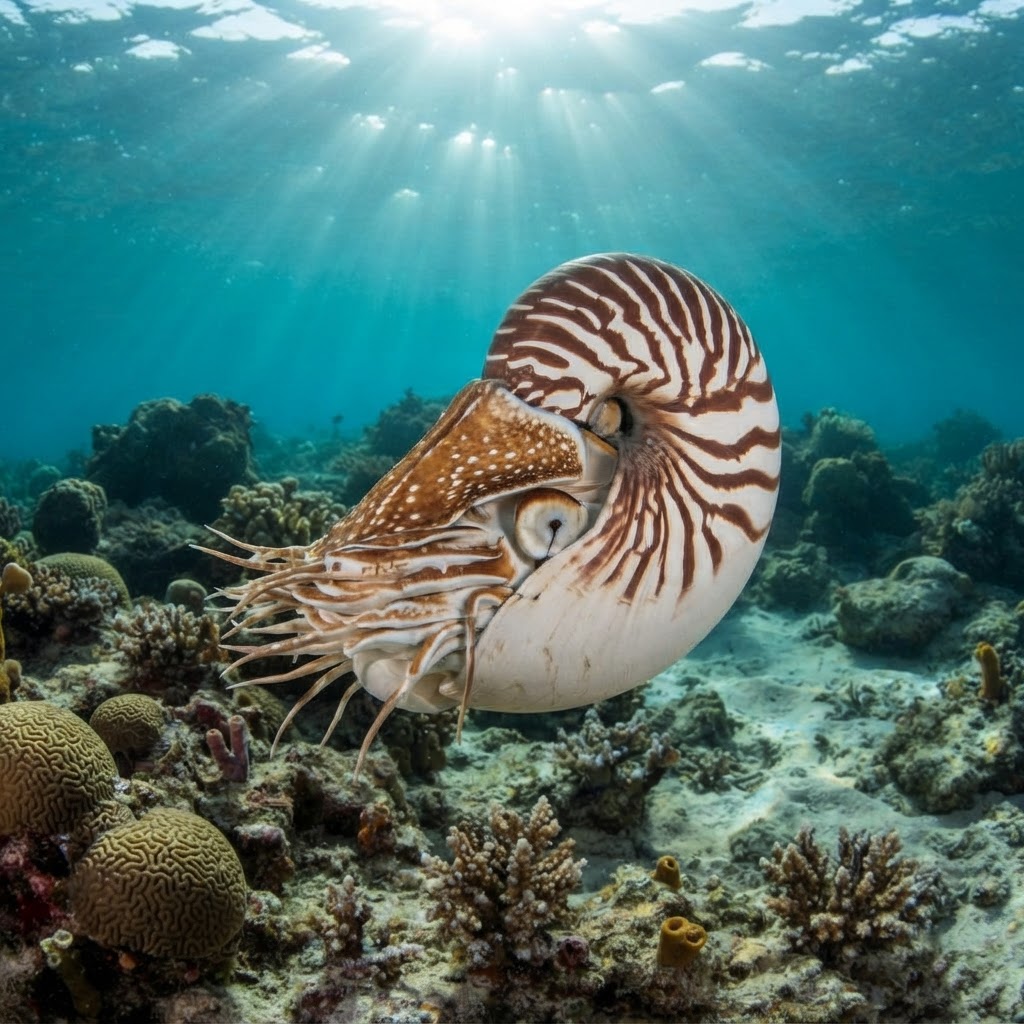
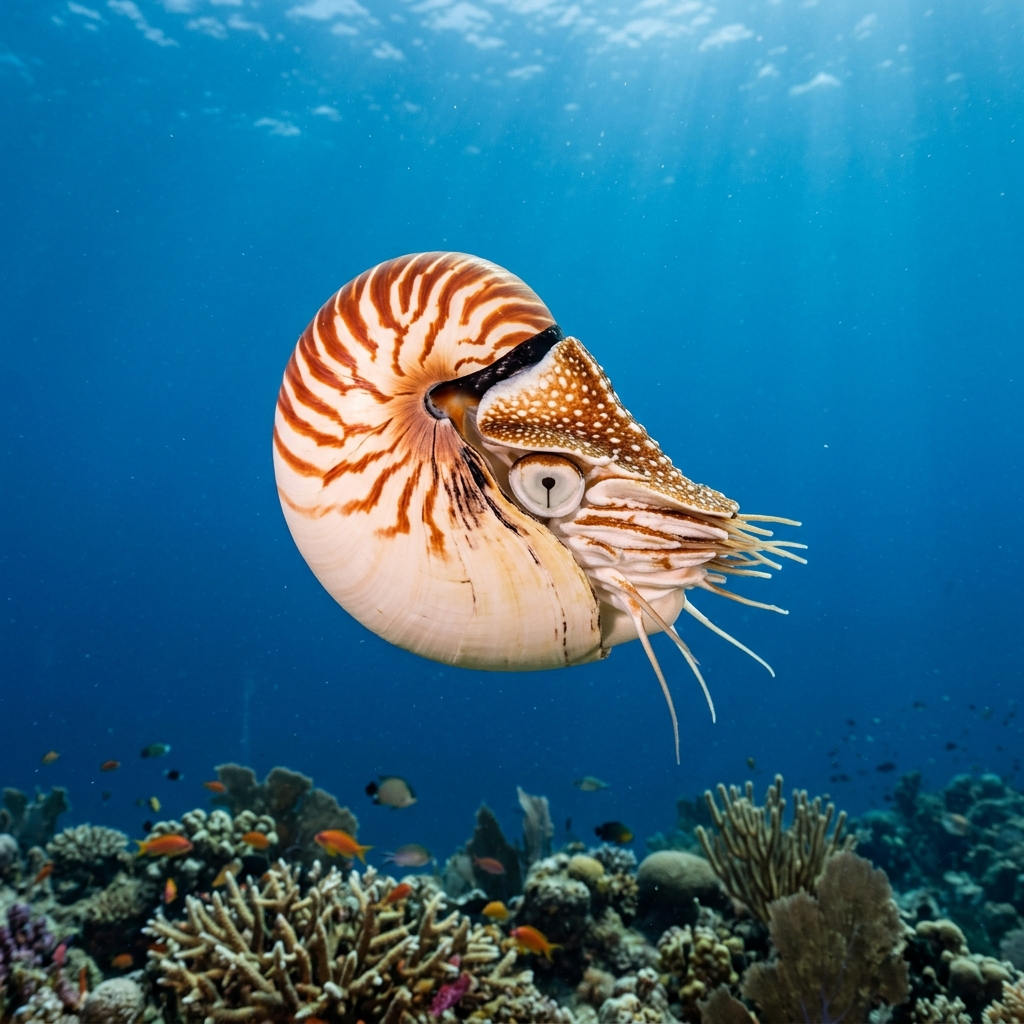
Hard to mistake once you see it: a coiled, cream-coloured shell banded with reddish-brown stripes, roughly the size of a large grapefruit at around 15 cm across. Unlike any other reef animal, it moves by jet propulsion with a curtain of thin tentacles trailing from a soft-bodied head. The shell's smooth, rounded profile and bold striping are the keys underwater; no other animal in its range looks anything like it.
Crepuscular (most active around dusk and dawn) and a slow, deliberate hunter, it works the reef slope and floor searching for crustaceans and carrion. It tends neither to bolt from divers nor to approach them; a slow, unhurried presence on your part gives the best chance of an extended look. Sightings are uncommon and typically solitary, though occasionally a small cluster of individuals turns up foraging on the same section of reef.
The shell is divided internally into gas-filled chambers that act as a buoyancy device, allowing the nautilus to rise toward the reef at night and sink back to deeper water during the day, sometimes descending past 300 m.
No clear seasonal peak has emerged from the data, so nautilus can be treated as a year-round possibility across its range. It tolerates a broad temperature band of roughly 18 to 27 °C, which spans both tropical and subtropical reef systems where it is most often reported.
The vast majority of logged sites sit in Australia, with Queensland and Western Australia accounting for most records; the Great Barrier Reef region is the strongest starting point. Fiji (particularly Viti Levu and Kadavu), New Caledonia (around Bourail and Nouméa), and Tonga are the next most represented countries, with a handful of sites also recorded in Japan's Amami and Ogasawara islands.
Mapping where Nautilus is logged…
The best-documented dive regions are in Queensland and Western Australia, followed by Viti Levu and Kadavu in Fiji, and sites around Bourail and Nouméa in New Caledonia. Tonga and Japan's Amami and Ogasawara islands also have recorded sites. Sightings are uncommon wherever they occur, so any encounter should be considered a real stroke of luck.
There is no confirmed seasonal peak in the data, making nautilus a year-round target across its range. Your best tactic is timing a dive to dusk or dawn, when nautilus are most active and move up from deeper water onto the reef slope to forage.
Nothing on the reef resembles it. Look for a large, smooth coiled shell cream-coloured with reddish-brown stripes, about 15 cm across, moving steadily on jet propulsion with a cluster of thin tentacles visible at the opening. The rounded shell profile and bold banding make it unmistakable.
Adults typically reach around 15 cm in shell diameter, roughly the size of a large grapefruit. In the water the trailing tentacles make the animal look somewhat larger, but the shell itself is compact compared to many reef cephalopods.
Nautilus pompilius is currently listed as Near Threatened. Populations recover slowly because the species matures late and produces few offspring. Shell collection for the ornamental trade is a significant pressure, and divers can help by reporting sightings and avoiding purchase of nautilus shell products.
The shell is divided into sealed gas-filled chambers connected by a thin tube called a siphuncle. By adjusting the ratio of gas to fluid in these chambers the animal controls its buoyancy, letting it rise toward shallower reef areas at night and sink back to depths exceeding 300 m during the day without expending energy on swimming.
Site and sighting data is aggregated from diver logs, iNaturalist and GBIF. For taxonomy and conservation status: